


Business
Union calls off strike for further talks on future of Welsh steel


THE UNITE UNION has decided to call off a strike planned for July 8 to allow for further discussions about the future of the UK’s largest steelworks at Port Talbot in Wales. The Pembrokeshire Herald has been informed that this decision comes amid concerns over the potential accelerated closure of the site’s remaining blast furnaces.
Owners Tata had previously warned of the possibility of bringing forward the closure of both remaining blast furnaces, citing safety concerns due to a staff walkout. Unite’s proposed strike had drawn criticism from other unions, who feared it would hasten the shutdown of blast furnace number four, initially scheduled for closure in September.

Both the Community and GMB Unions were hoping to use the time until September to negotiate an extension of the furnace’s operational life, potentially under a new government.
The UK government has pledged a £500m grant to develop a new £1.25bn electric arc furnace. This new furnace, designed to recycle scrap metal, is less energy-intensive but will require significantly fewer staff. The closure of both blast furnaces would result in the loss of 2,800 jobs, whereas extending the life of one furnace could save 2,000 of those jobs until the new electric arc furnace is operational, a process that could take up to three years.
Sources close to the situation told the BBC that Unite had given Tata an excuse to accelerate job losses by planning the strike. However, Unite officials refuted this, claiming their action “had helped focus minds” and resulted in a victory by ensuring further talks after the upcoming election.

In a letter from Tata to the unions, the company had already agreed to further discussions post-election. Alun Davies, national officer for the Community union, commented: “Tata have confirmed that if the strike is called off they are ready to resume discussions on a potential memorandum of understanding. The truth is Tata never walked away from those discussions, and at our last meeting on 22 May all unions agreed to conclude the negotiations and put the outcome to our members. Community would welcome resuming those discussions, but we regret that zero progress has been made since 22 May.”
Officials from other unions criticised Unite, stating that their actions had caused “nothing but chaos” and financial losses for their members. This comment refers to an earlier overtime ban that Unite implemented without consulting other unions.
Union officials admit there is no guarantee Tata will agree to extending the life of the blast furnace beyond its scheduled shutdown in September. However, they express hope that if Labour wins the election, their manifesto commitment to invest £2.5bn in the steel industry could provide a crucial lifeline.

Samuel Kurtz MS, Welsh Conservative Shadow Minister for Economy and Energy, commented on the latest developments: “We welcome any discussions that bring both the steelworkers and Tata to the table to iron out how best jobs can be supported in the short term, as an early closure of the blast furnaces will bring additional distress to communities already dealing with enough as it is.”

He further criticised the Welsh Labour government, saying, “The Welsh Labour government have only paid lip service to Tata’s workforce, failing to contribute a penny to the transition board, and UK Labour’s manifesto says nothing on what it would do differently to support Port Talbot’s steelworkers.”
Unite general secretary Sharon Graham said: “This is a significant development in the battle to protect jobs and the long-term future of steel making in South Wales. Investment from Labour secured by Unite will be key to the future of the site.
“This breakthrough would not have come about without the courage of our members at Port Talbot who were prepared to stand up and fight for their jobs. Workers were simply not prepared to stand idly by while steel making ended and their communities were laid to waste.

“It is essential that these talks progress swiftly and in good faith with the focus on fresh investment and ensuring the long-term continuation of steel making in South Wales.”


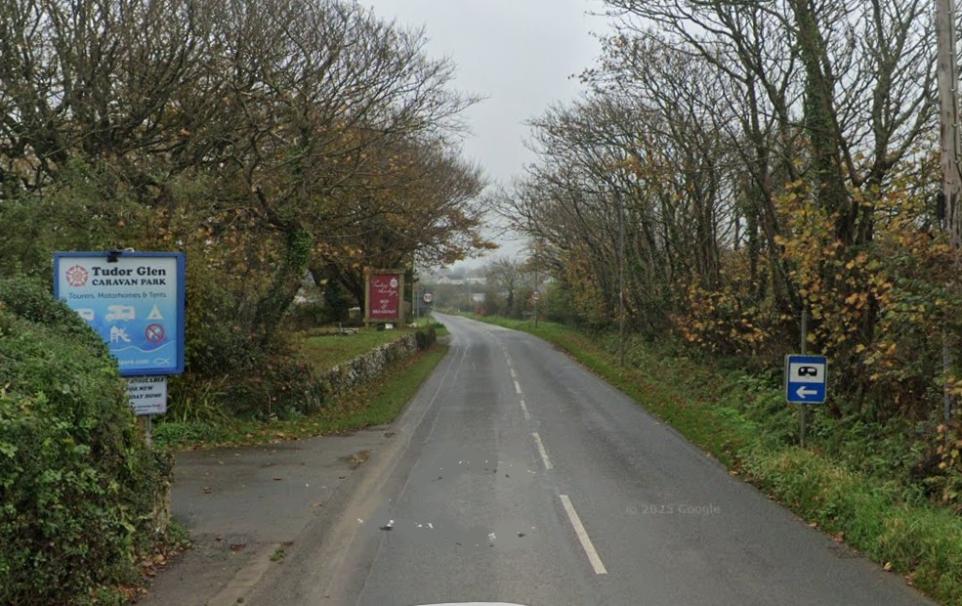
A CALL for a Pembrokeshire caravan site to be allowed static caravans in lieu of touring ones, which the applicant says was allowed back in 1988, has been submitted to the national park.
In an application to Pembrokeshire Coast National Park, Keith Stevens of Tudor Glen Caravan Park, Jameston, through agent Lambe Planning & Design Ltd, seeks a certificate of lawfulness of an existing use of the site to establish the status of a 1988 planning permission.
Essentially what that means is the applicant is seeking confirmation of details of that permission as to whether it includes static or touring caravans.
A supporting statement says: “Tudor Glen Caravan Park is a long-established family owned and operated Holiday Park. The Park extends to approximately six acres and caters for families within static caravans, touring caravans, motorhomes and tents.
“The Park is exceptionally well run and achieved the 2025 runner up award for Best Family Campsite South Wales. The Park has a range of modern purpose-built facilities including a heated swimming pool, laundrette, dedicated play area, games room and full amenity facilities.”
Covering the 1988 approval of removing two previous conditions connected to the site, granting permission for up to 50 caravans and occupancy of March 1 to January 9, it says: “It does not stipulate that the caravans must be removed from the site during the ‘close period’ as would be the case if the consent related to touring caravans,” adding: “It is therefore clear that the intentions of that planning application and the consent granted relates to the siting of up to 50 caravans and not specifically touring caravans.
“If that consent were to be partially restricted to touring, a touring condition would have been imposed and / or a condition requiring that the caravans must be removed from the site during a close period – it doesn’t.”
It concludes: “Whilst the park has been operated on the basis of providing both Static Caravan and Touring Caravan Pitches, [the 1988] Planning Approval clearly gives permission for any type of caravan which complies with the Legal Definition of a Caravan.
“That permission does not restrict the type of unit to either static or touring caravans and does not restrict the layout of the holiday park it is therefore concluded that [the 1988 permission] allows for the siting of any unit which complies with the legal definition of a caravan, and does not restrict the layout or location of the units.
“The applicant therefore seeks confirmation from the LPA to that effect via this Certificate of Lawful (proposed) Use application.”
The application will be considered by park planners at a later date.

A CALL for an extra sign advertising a Pembrokeshire holiday park, adding to exiting unauthorised ones, which planners say would create “visual clutter and intrusion” and a distraction to drivers, has been refused.
In an application to Pembrokeshire Coast National Park, permission was sought, through Lakeside Signs Limited, for an additional sign advertising Haven’s Lydstep Beach Village, near Tenby, the sign proposed for North Lodge where the holiday park joins the main road.
Pembrokeshire County Council’s highways authority raised no concerns regarding the specific location of the sign, but said “there remains a broader concern regarding the cumulative impact of signage along this section of highway,” adding: “The increasing proliferation of signs in this location has the potential to create a visually cluttered environment, which may distract drivers and, in turn, give rise to road safety implications.”
A Park officer report recommending refusal said: “Currently, there are eight flagpoles, one A-frame banner type sign, one pole mounted panel sign, and a further panel sign, located behind the stone wall on the western side of the park’s entrance. None of these advertisements have the benefit of advertisement consent.”
It added: “The increasing number of signs in this location has the potential to create a distraction to drivers, which may result in road safety implications. In addition, the proliferation of signage would create clutter that would result in visual intrusion in this countryside location affecting amenity. As such, the recommendation is to refuse.”
It went on to say: “Whilst it is not deemed that the proposed advertisement would result in harm being caused to the specific special qualities of this area, there are concerns that the display of this advertisement would, along with the remainder of the advertisements, which are unauthorised, result in a proliferation of advertisements, which in turn would cause visual clutter and intrusion.
“This is especially problematic in a countryside location where development is strictly controlled. Should the existing signage be consolidated and rationalised, the Authority may support the proposed sign, however, currently, any additional signage would not be deemed appropriate.”
The application was refused on the grounds that it would, along with the exiting signage, “result in visual clutter and intrusion which would detract from the visual amenity of this countryside location, and would result in potential distraction to drivers, which in turn would rise to road safety implications”.

SAUNDERSFOOT’S Coal Building interpretation centre could soon host the third store for Welsh cheesecake business The Cheesecake Guy Ltd, in plans before the national park.
In an application to Pembrokeshire Coast National Park, Craig Taylor of Merthyr Tydfil-based The Cheesecake Guy Ltd seeks a change of use of part of Saundersfoot’s Cambrian Terrace Coal Building interpretation centre to create a small retail unit.
On its website, The Cheesecake Guy says of its business and products: “Established in 2019, The Cheesecake Guy is all about delivering indulgent, handcrafted cheesecake desserts with a twist. While we offer a range of sweet treats, our specialty — and customer favourite — is the signature cheesecake jar.
“Made with quality ingredients and packed with rich, creamy layers, our jars are the perfect dessert for any occasion. Whether you’re treating yourself or sharing with others, The Cheesecake Guy brings a spoonful of happiness to every bite.”
While no supporting statement has yet been published for the Saundersfoot proposal, the application says the scheme would employ two full-time members of staff, operating 10am-6pm Mon-Sat, and 10-5 on Sundays and bank holidays.
It says the proposed site is currently a mixed-use retail and gift shop, having previously been used as office space.
It adds: “This is a space within a building that is still trading, the space we are wanting a change of use was last used by Persimmon Homes as an office space.”
Of the scheme itself it says it will involve “retail sales of pre-prepared desserts and merchandise,” adding there will be “no on-site manufacturing or heavy processing,” with “equipment limited to display fridges and freezers”.
If approved, the Saundersfoot site would be the third outlet for The Cheesecake Guy, with sites in Merthyr, and, more recently, Newport Market.
After that store opened following redevelopment of Newport’s Victorian market, Craig Taylor, of The Cheesecake Guy, said: “We are very excited to be part of the new development in Newport Market alongside some other amazing small businesses.
“We feel this is definitely the next step in the right direction after our Merthyr Tydfil store taking off so well.”
For its Newport site, The Cheesecake Guy says: “We specialise in creating a wide variety of cheesecake desserts that cater to all tastes. Our menu features popular favourites that have won the hearts of many, alongside exciting new creations designed to keep your taste buds satisfied.

“Whether you’re a classic cheesecake lover or an adventurous foodie, we promise a cheesecake experience like no other. Each cheesecake is made with the utmost care, ensuring a rich, creamy texture and a burst of flavour in every slice (or jar!).”
The Saundersfoot proposal will be considered by park planners at a later date.



News20 hours ago
Plaid Cymru celebrates historic victory as Rhun ap Iorwerth arrives at Cardiff Bay
CROWDS gathered outside the Senedd as Plaid Cymru leader Rhun ap Iorwerth arrived in Cardiff Bay following his party’s historic...


Crime21 hours ago
Police standoff ends after four-hour incident in Pembroke Dock
ELIZABETH COURT SCENE STOOD DOWN AFTER DOMESTIC INCIDENT A FOUR-HOUR police standoff in Pembroke Dock has ended with a 21-year-old...


Crime1 day ago
Teen denies attempted murder of Milford Haven teacher
TEENAGER REMANDED AHEAD OF JULY TRIAL A 15-YEAR-old boy has denied attempting to murder a teacher during a stabbing incident...


News2 days ago
Catastrophe for Labour as Plaid and Reform reshape Welsh politics
ELUNED MORGAN LOSES SEAT AS OLD CERTAINTIES ARE SWEPT AWAY THE VOTERS of Wales have delivered one of the most...


News2 days ago
Labour wiped out in Ceredigion Penfro as Plaid tops poll and First Minister loses seat
Shock result sends political shockwaves across Wales as Reform also surges in historic Senedd count LABOUR suffered one of the...


News2 days ago
Labour deputy says party ‘will not form next Welsh Government’
LABOUR FACES HISTORIC DEFEAT AS COUNTING CONTINUES ACROSS WALES LABOUR’S Deputy Leader in Wales has effectively conceded the Senedd election,...

News2 days ago
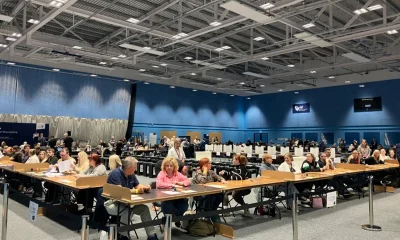
Counts underway in historic Senedd election
Wales waits for results as first election under new voting system reaches count stage COUNTING is underway across Wales today...


Charity3 days ago
Chief’s Tour honours fallen officers with 75-mile Pembrokeshire ride
Dyfed-Powys Police team raises thousands for bereaved police families charity A TEAM of officers and staff from Dyfed-Powys Police cycled...


Crime3 days ago
Racial abuse suspect barricaded himself inside Johnston lodge
ARMED police were called to a supported accommodation building in Johnston after a man allegedly barricaded himself inside a room...


Crime3 days ago
Milford Haven woman denies causing suffering to cat
Jury hears evidence over alleged failure to seek treatment for tumour A MILFORD HAVEN woman has denied causing unnecessary suffering...
-

 News5 days ago
Baby in critical condition after Fishguard emergency
-

 News4 days ago
Former housing officer admits drink-driving in Pembrokeshire retail park
-

 Crime4 days ago
Job loss threat for convicted Pembrokeshire drug-driver
-

 Crime4 days ago
Milford motorist disqualified for drug-driving
-

 Crime4 days ago
Police tip-off leads to driving ban for Milford motorist
-
Crime3 days ago
Racial abuse suspect barricaded himself inside Johnston lodge
-

 Crime4 days ago
Delivery driver caught twice over legal drink-drive limit
-

 Community4 days ago
Sixth-former firefighter balances schoolwork with saving lives