


News
General Election 2024: Everything you need to know as the polls close

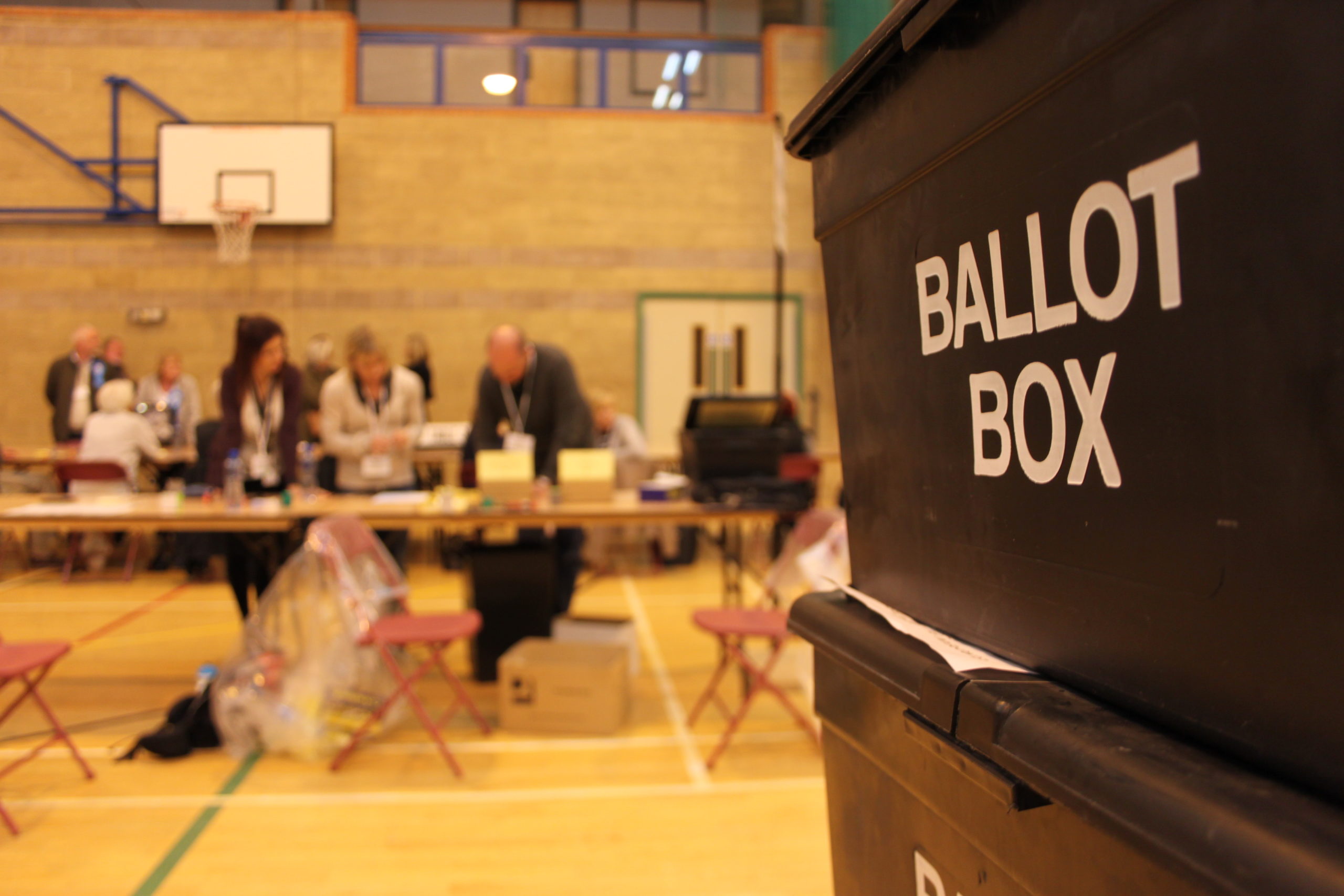
Polling stations were open from 7am to 10pm, with the much-anticipated exit poll expected at shortly afterwards. This election is critical not only for the nation as a whole but also for Wales, where key battles are being fought across several constituencies.


Key figures await results
Following the exit poll, Rishi Sunak and Sir Keir Starmer will be eagerly awaiting results from the nation’s 650 constituencies. Opinion polls throughout the six-week campaign have consistently predicted a significant Labour majority, with some suggesting Sir Keir could surpass Tony Blair’s historic victory in 1997. In Wales, Labour’s stronghold is under scrutiny, with the party looking to maintain or even expand its influence.
In a potential blow to the Conservatives, a recent Telegraph poll indicated that Mr. Sunak could become the first sitting Prime Minister to lose his seat in a general election. The impact of such an event would be felt across the UK, including in Wales, where Conservative seats are also at risk.
Tracking the results

Results will start to trickle in from around 11.30pm, with most constituencies declaring their outcomes in the early hours of the next day. The first declaration in 2019 came at 11.27pm from Newcastle City Council. This year, Blyth and Ashington is expected to be the first to announce around 11.30pm, followed closely by Houghton and Sunderland South at 11.45pm.
In Wales, results will be closely watched in constituencies such as Cardiff North, a seat that has seen significant campaigning from both Labour and the Conservatives. Early results here could indicate broader trends across the country.
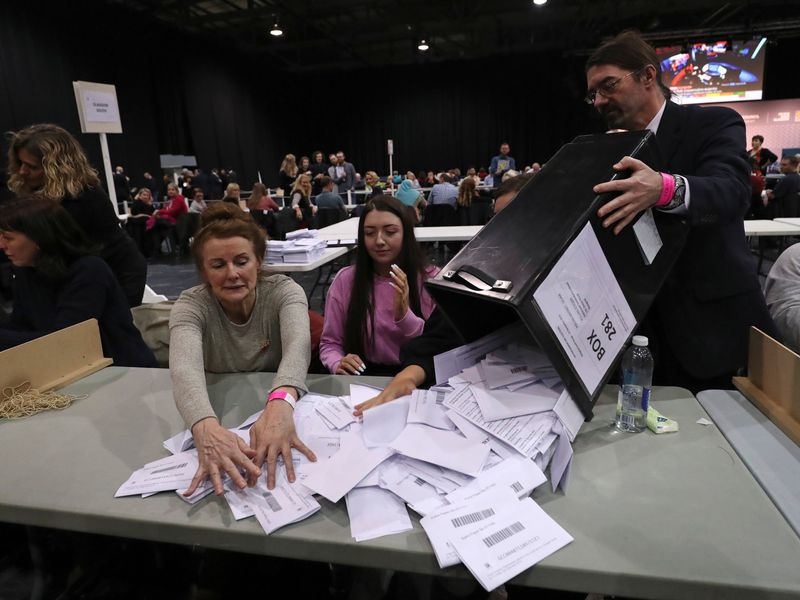
Key Welsh constituencies to watch
Several Welsh constituencies will be key indicators of the election’s outcome. In Cardiff North, Labour’s Anna McMorrin is defending a majority against a strong Conservative challenge. In Wrexham, the Conservatives are hoping to retain the seat they won in 2019 for the first time in history.

Other significant Welsh constituencies include:
- Swansea West: Traditionally a Labour stronghold, any significant shift here could signal wider changes in voter sentiment.
- Ceredigion: Held by Plaid Cymru, this seat is a battleground for multiple parties, reflecting the unique political landscape of Wales.
- Monmouth: A Conservative seat since 2005, Labour is hoping to make gains here, reflecting a broader strategy to win back seats lost over the past decade.
Constituencies to watch across the UK

Key results will be eagerly anticipated, particularly around 4am when Rishi Sunak’s Richmond and Northallerton seat results are expected. Predictions indicate he may face an unprecedented defeat. Similarly, Sir Keir Starmer’s result in Holborn and St Pancras is expected shortly after.

Top Tory figures such as Sir Jacob Rees-Mogg, Grant Shapps, and Jeremy Hunt will also learn their fates during the night. Jeremy Corbyn, now standing as an independent in Islington North, will discover if he retains his seat.
Detailed timetable
- 11pm: Blyth and Ashington, Houghton and Sunderland South.
- Midnight: Basildon and Billericay, Broxbourne, Sunderland Central, Swindon South.
- 1am: First results from Scotland, providing an early indication of SNP’s performance.
- 2am: Results from key constituencies including North West Essex, Burnley, and Redcar.
- 3am: Major declarations from Tory strongholds and Labour’s contested seats.
- 4am: Critical results for Rishi Sunak, Sir Keir Starmer, and key Reform UK candidates.
Major political movements
This election could reshape the political landscape, with Reform UK making significant strides. Notable figures like Nigel Farage and Richard Tice will find out if their efforts have secured them a seat in the Commons. In Wales, the influence of Reform UK and other smaller parties like the Green Party and Liberal Democrats will be under the spotlight, particularly in areas where they have focused their campaigns on local issues and dissatisfaction with the main parties.
Welsh political landscape
Wales has traditionally been a Labour stronghold, but recent elections have shown an increasing willingness among voters to explore alternatives. The Conservatives made significant inroads in 2019, capturing seats like the Vale of Clwyd and Wrexham. This election will test whether these gains were temporary or indicative of a longer-term shift.
Plaid Cymru, advocating for Welsh independence and greater autonomy, remains a significant force, particularly in rural and Welsh-speaking areas. Their performance in this election will be crucial in determining the future political direction of Wales.
Welsh voter sentiment
Voter sentiment in Wales has been shaped by a range of issues, including economic recovery post-COVID, healthcare, and local governance. The impact of Brexit, while less dominant than in previous elections, still plays a role in voter decision-making, especially in border constituencies.
The response to the handling of the COVID-19 pandemic by both the UK and Welsh governments is also a key factor. The Welsh Labour government’s distinct approach compared to the UK government’s policies will be scrutinized by voters as they head to the polls.
Potential upsets and final declarations
As dawn approaches, the final results will reveal whether Labour’s projected success holds true and if the Liberal Democrats can achieve any last-minute upsets in traditionally Conservative areas. In Wales, attention will focus on whether Labour can reclaim seats lost to the Conservatives in 2019 and if Plaid Cymru can expand its influence.
The Liberal Democrats are hoping for a resurgence in places like Montgomeryshire, a seat with a history of Liberal representation. Meanwhile, the Greens are targeting constituencies where environmental issues are particularly resonant.
Conclusion
Stay tuned to herald.wales and pembrokeshire-herald.com for live updates and comprehensive coverage of this pivotal election night. With the potential for significant shifts in both the UK and Welsh political landscapes, this election promises to be one of the most consequential in recent history. As results come in, the political future of Wales and the UK will become clearer, setting the stage for the next phase of governance and policy direction.














FOUR people have pleaded not guilty to the murder of a 17-year-old boy.
Ricardo Elliot, aged 27, Connor Palfrey, aged 24, Elexi Manny, aged 24, and Georgie Mears, aged 18, appeared before Merthyr Tydfil Crown Court on Friday (March 20), where each denied killing Tristan Shae Kerr.
Emergency services were called to a property in Abertridwr, Caerphilly, at around 5:45pm on Wednesday (Feb 5) following reports that a teenage boy had suffered serious injuries. Despite efforts, Tristan was pronounced dead at the scene.
The court heard that the teenager is alleged to have been attacked with a so-called “zombie knife” measuring approximately nine to ten inches in length.
During the hearing, the four defendants spoke only to confirm their personal details and enter their pleas.
A trial is due to begin on August 3 and is expected to last around six weeks. A further pre-trial review has been scheduled for July 24.
All four defendants were remanded in custody.
Paying tribute after his death, Tristan’s family described him as a “deeply loved son, grandson, nephew, cousin and friend.”
They said he was quick-witted, with a love for motorbikes and adventure, adding that he had a natural energy that lit up every room and drew people towards him.

Defendant admitted using Xbox without informing police as required under court order
ANTHONY COOMBES, aged 26, of Sand Banks, Broad Haven, appeared before Llanelli Magistrates’ Court on Thursday (Mar 20) charged with breaching a sexual harm prevention order.
The court heard that between February 26 and March 19, 2026, at Haverfordwest, Coombes repeatedly breached the order by using an Xbox device without informing police within three days, as required.
The offences relate to a sexual harm prevention order imposed at Swansea Crown Court on October 20, 2021.
Coombes indicated guilty pleas to the offences at the first hearing.
Magistrates committed the case to Swansea Crown Court for sentence.
He was remanded in custody ahead of the next hearing, which is due to take place at 9:00am on Friday, April 3, at Swansea Crown Court.
The court refused bail on the grounds that he was likely to offend, citing the nature and seriousness of the offences and his previous record and character.
A pre-sentence report was ordered.

Police say death not suspicious as 46-year-old arrested over alleged Class A drug supply
A MAN has died following a medical emergency at a property in Haverfordwest, police have confirmed.
Emergency services were called at 3:18pm on Wednesday (March 18) after a report of a medical incident.
A man was pronounced dead at the scene.
Dyfed-Powys Police said the man’s next of kin have been informed and are being supported by officers.
The death is not being treated as suspicious at this time.
However, police confirmed that a man, aged 46, was arrested on suspicion of being concerned in the supply of Class A drugs.
He has since been released under investigation while enquiries continue.
No further details about the deceased have been formally released.



Crime22 hours ago
Publican jailed for six years for supplying cocaine and cannabis
Milford Haven man sentenced at Swansea Crown Court following drug dealing operation A MILFORD HAVEN publican has been jailed for...


Local Government1 day ago
Poverty summit highlights support efforts across Pembrokeshire
A SUMMIT bringing together key organisations from across Pembrokeshire has highlighted both the scale of local poverty and the work...


Education2 days ago
Milford Haven school plans unveiled but funding not yet secured
PLANS for a new £100 million school in Milford Haven have been unveiled, but the project has not yet secured...


News2 days ago
Council unveils plans for new state-of-the-art secondary school in Milford Haven
PEMBROKESHIRE COUNTY COUNCIL has revealed plans for a new state-of-the-art school in Milford Haven, promising modern, inspiring learning spaces for...


Health2 days ago
NHS waiting list falls — but cancer delays and diagnostic backlog worsen
Record progress claimed by Welsh Government as critics warn key targets are still being missed THE NHS in Wales has...


Crime3 days ago
Rapist jailed after ‘abhorrent’ attacks on woman and children
Haverfordwest man told police “women won’t have sex without force” A HAVERFORDWEST man who raped a woman and a young...


News3 days ago
Reform secures first Pembrokeshire councillor in Hakin by-election win
Late Reform candidate takes seat as independent surge and Labour withdrawal shape contest REFORM UK candidate Scott Thorley has won...


News4 days ago
Scott Thorley elected as Pembrokeshire’s first Reform councillor
REFORM UK candidate Scott Thorley has won the Hakin by-election after securing 179 votes. The full result is as follows:...


News4 days ago
Police confirm man has died after being recovered from River Cleddau
Major emergency response in town centre after concerns raised for man in water A MAN has died after being recovered...


Community4 days ago
Davies and Kurtz urge groups to seek employability funding
Community organisations in Pembrokeshire encouraged to apply for new grants supporting skills and job access LOCAL Senedd Members Samuel Kurtz...
-

 News7 days ago
Rayner and Lammy visit Wales to discuss justice and community safety
-

 News6 days ago
Fishguard linked to allegations in Many Tears Animal Rescue investigation
-

 News4 days ago
Emergency services flood Haverfordwest after reports of person in river
-

 Local Government7 days ago
Investigation confirmed after inspectors visit Many Tears Animal Rescue
-

 Crime3 days ago
Mother given community order after admitting child cruelty offence
-

 News4 days ago
Senedd vote to ban greyhound racing hailed as ‘landmark moment’ by charities
-

 Sport7 days ago
Wales end Six Nations losing run with bonus-point win over Italy
-

 Crime6 days ago
Man cleared of sexual assault allegation after magistrates rule no case to answer