


News
WRU explores potential Anglo-Welsh rugby competition


THE WRU is actively exploring the possibility of a future Anglo-Welsh competition. Multiple sources from both England and Wales have confirmed that preliminary discussions have occurred between key figures on both sides of the Severn Bridge.
Currently, the WRU is still under contract with the United Rugby Championship (URC) for a few more years, where it also holds stakeholder status. One proposal under consideration involves merging the URC with the Gallagher Premiership to create an Anglo-Welsh conference.
WRU Chairman Richard Collier-Keywood, when questioned about these talks by Wales Online, refrained from commenting directly but acknowledged the interest. “I’m totally aware that most Welsh people would want competition against England, and that does feel like a good direction of travel,” he said.
“At present, we remain committed to the URC. There are downsides and positives to the URC, and we aim to enhance the situation from a Welsh perspective. Our priority is to ensure stability for our four clubs and secure a sound future for them over the coming years. Once this is achieved, we can revisit and discuss future goals.”
Within Welsh rugby circles, there is a strong desire for more regular Anglo-Welsh fixtures. The URC has struggled to engage the broader public, and fixtures with English clubs would likely be more appealing and cost-effective compared to trips to South Africa or Ireland. Increased regular attendance is also anticipated.

“I’m totally cognisant that most Welsh people would want jeopardy against England, and most English people would want jeopardy against Wales,” Collier-Keywood continued. “However, we are currently committed to the URC for a few more years. It’s early days, but all options are on the table. There are benefits and downsides to the URC, and we aim to improve the situation from a Welsh rugby perspective.”
The WRU’s primary goal is to ensure the survival of its four professional clubs – Cardiff, Dragons, Ospreys, and Scarlets – which face an estimated £29 million funding gap over the next five years. Previously, the WRU indicated that without a plan to bridge this funding gap by autumn, they would consider triggering the two-year notice clause on the Professional Rugby Agreement. This could mean cutting a team or implementing a tiered funding model. However, Collier-Keywood insists that retaining all four professional clubs remains the WRU’s priority.
“The arrangements we are looking at with the clubs retain four teams,” he said. “This is our stated objective because we believe four teams are necessary to consistently achieve our goal of being in the top five in the world. Reducing the number of teams would make this objective more challenging.
“The gaps mentioned are the figures we believe need bridging to maintain four competitive teams. These numbers reflect the stretch goals for our teams to be competitive in their competitions. I am optimistic we will reach this goal. We have positive engagement with the four clubs. While it’s not solely the WRU’s decision, as the clubs are privately owned, we are in good and positive dialogue to reach a favourable outcome.”
Collier-Keywood also called on regional team fans to support their teams. “The biggest thing fans can do to help is to attend matches. I recognise it’s a virtuous circle – if your team is winning and performing well, you’re more likely to attend. We need to boost our supporter base, make it vibrant, and have them present at matches.”
All four professional clubs are currently bound by a salary cap of £4.5 million, with allowances for two marquee signings outside the cap. Collier-Keywood is optimistic about increased funding for the clubs in the near future. “Absolutely, I do,” he said when asked about the potential for increased funding. “While it’s a tough ask for the very next season, we aim to ensure our teams are competitive in the years to come.”
The WRU’s exploration of an Anglo-Welsh competition represents a potential shift in the rugby landscape, promising exciting prospects for both Welsh and English rugby fans.




As Henry Tufnell MP joins calls for a solution, questions remain over harbour access, pedestrian safety and who can legally authorise the event
WITH Tenby Summer Spectacular still at risk, attention is now turning to a simple but crucial question: who actually has the power to save it?
The much-loved charity event, run by Tenby Round Table, has become one of the town’s biggest summer attractions, bringing thousands of people into the harbour area and raising money for local good causes.

But organisers have warned that the event may not be able to go ahead unless outstanding concerns over pedestrian safety and access around the harbour are resolved.
Henry Tufnell MP has now added his voice to calls for a solution, saying he is “very concerned” that the event is at risk.
The local MP said he had written several times to Pembrokeshire County Council over the past few months to help resolve the outstanding issues, and that his office met with the council this week to press for progress.
Mr Tufnell said he welcomed the council’s public statement confirming its support for the Spectacular, and said he would continue speaking to the council, Tenby Round Table and police.
At the heart of the row is a practical but important issue: how the harbour area can be made safe for thousands of visitors while still allowing access for residents, businesses and emergency services.
Pembrokeshire County Council has said it supports the event and wants it to go ahead. It has also said it has not directed organisers to cancel.
However, Tenby Round Table has said one key legal question remains unanswered after months of discussions.
That question appears to be whether the organisers can legally control or restrict access in the harbour area in the way required to satisfy safety concerns.
For an event of this size, the issue is not simply whether the council, police or organisers want it to happen. The question is whether the right legal powers, safety plans and permissions are in place.
The council has a role through licensing and public safety. The police may advise on safety, traffic and crowd management. The organisers are responsible for putting forward an event plan that can be safely delivered.

That means no single person can simply “save” the Spectacular by saying it should go ahead.
Instead, the event now appears to depend on whether the council, police and Tenby Round Table can agree a workable solution over harbour access, crowd control and emergency arrangements.
The row has also sparked strong reaction online, with many residents frustrated at the possibility of losing one of Tenby’s best-known summer events.
Supporters say the Spectacular is not only a family night out, but an important boost for traders and a major charity fundraiser.
Others have argued that safety concerns cannot simply be brushed aside, particularly when large crowds gather in a confined harbour setting.
Mr Tufnell said: “The Tenby Summer Spectacular is an incredible event run by the Tenby Round Table for our community, supporting local businesses and raising hundreds of thousands of pounds for charity.
“Like many of you, I am very concerned to see that the event is at risk of not going ahead.
“I have written several times to Pembrokeshire County Council to help resolve the outstanding issues regarding pedestrian safety and access around the harbour.
“I welcome the statement published by the council reinforcing their support for the Spectacular. I am reassured by their public commitment to finding a path forward.”
The coming days are now likely to be crucial.
For the event to be rescued, the key question is whether a legally sound and practical access plan can be agreed quickly enough for organisers to proceed with confidence.
Until then, the future of Tenby Summer Spectacular remains uncertain — not because there is a lack of public support, but because no one has yet produced a final answer to the question of who can lawfully control the harbour when thousands of people arrive.
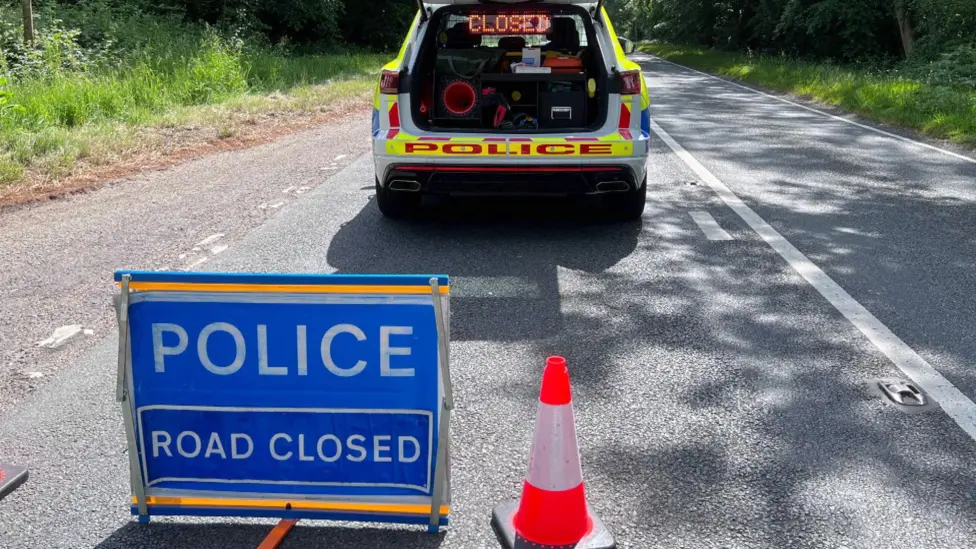
No suggestion of pursuit or contact between police vehicle and motorcycle, force says
A VOLUNTARY referral was made to the Independent Office for Police Conduct following the fatal A4075 crash which claimed the life of 22-year-old Callum Hanson.
Dyfed-Powys Police has confirmed the referral was made because a police vehicle was in the vicinity of the collision, which happened between Canaston Bridge and Yerbeston on Wednesday (Jun 17).
The force said the referral was made to ensure full transparency and independent oversight.
However, police have stressed that there is no suggestion of an active pursuit or any contact between the police vehicle and the motorcycle at the time of the incident.
The IOPC has now referred the matter back to Dyfed-Powys Police for an internal investigation by the force’s Professional Standards Department.
A Dyfed-Powys Police spokesperson said: “A voluntary referral was made to the Independent Office for Police Conduct in relation to this case, due to the presence of a police vehicle in the vicinity.
“This was to ensure full transparency and is a standard requirement in order to ensure independent oversight.
“There is no suggestion of an active pursuit or any contact between the motorbike and the police vehicle at the time of the incident.
“Due to this, the IOPC have referred the matter back to Dyfed-Powys Police for an internal investigation by the Professional Standards Department.
“While PSD carry out their enquiries it would not be appropriate to comment on the matter further.
“The thoughts of Dyfed-Powys Police remain with Callum’s family and friends at this time, and we would still ask that anyone with information about the incident contacts the force.”
Callum, from Haverfordwest, died in hospital following the collision involving a grey Kia Sorento and a white Yamaha motorcycle. A 22-year-old woman who was travelling as a pillion passenger was also taken to hospital.

His family later paid tribute to him as a “kind, loving” young man who lived life to the fullest despite his own personal challenges.
They said he was deeply caring and had spent the last month looking after his grandad, who had also recently passed away.
Callum had a passion for gaming and motorbikes and was training to become a mechanic at college.
Police are continuing to appeal for witnesses or anyone with dashcam footage from the A4075 between Canaston Bridge and Yerbeston at around 6:15pm on Wednesday (Jun 17).
Anyone with information is asked to contact Dyfed-Powys Police online, by emailing [email protected], by calling 101, or by direct message on social media.
Quote reference 362 of June 17.

ALMOST one in four working-age people in Wales are economically inactive, according to the latest labour market figures.
The Welsh Government’s June labour market overview shows the economic inactivity rate in Wales was 24.8% for people aged 16 to 64.
That is down 0.6 percentage points on the previous quarter, but up 0.6 percentage points over the year. The UK rate stood at 21.0%.
Economic inactivity refers to people who are not in work and are not classed as unemployed because they are not actively seeking work or are not available to start.
The figures have prompted criticism from the Welsh Conservatives, who said Wales’ economy was failing to grow strongly enough.
Janet Finch-Saunders MS, Shadow Minister for Enterprise, Connectivity and Energy, said: “These latest figures show the Welsh economy has continued to flatline with too many people economically inactive.
“We urgently need welfare reform to get people off benefits and into work, where they can pay their taxes and help generate more revenue to invest in better public services.
“The new Plaid Cymru government needs to focus relentlessly on creating the conditions for businesses to start up and expand because this is the only way to grow the Welsh economy and make Wales more prosperous.”
The latest statistics also show Wales’ unemployment rate was 3.8%, up 0.3 percentage points on the quarter but down 0.9 percentage points over the year. The UK unemployment rate was 4.9%.
The Welsh Government said evidence from a range of sources suggested the Welsh labour market was following a similar trend to the UK as a whole.
It also said Cabinet Minister for Enterprise, Connectivity and Energy Adam Price was keen to meet the Office for National Statistics to discuss the reliability of labour market data for Wales.
The issue is likely to remain politically significant because economic inactivity affects the size of the workforce, business recruitment, tax receipts and pressure on public services.

Across Wales, inactivity can include people out of work because of long-term illness, caring responsibilities, study, early retirement or other reasons. For rural and coastal areas, including Pembrokeshire, the challenge is often linked to the availability of suitable jobs, transport, skills and seasonal work.


Health12 hours ago
Senedd backs call to rule out hospital downgrades after heated NHS debate
Reform UK amendment passes as West Wales hospital fears remain central political issue THE SENEDD has backed a call for...

News15 hours ago
Coastguard callout payments axe sparks fears for coastal communities
VOLUNTEER coastguards across the UK are set to lose callout payments, prompting concern over the future resilience of emergency cover...


Farming16 hours ago
Rural Wales ‘left out’ of net zero debate, warns carbon entrepreneur
A WELSH carbon entrepreneur has warned that rural Wales risks being left behind in the national conversation about net zero....


Local Government1 day ago
Tenby Spectacular row continues as organisers say key question remains unanswered
Round Table says legal clarity over pedestrian access is still holding up event plan TENBY ROUND TABLE has welcomed Pembrokeshire...


Community2 days ago
Manorbier fire scandal: Council’s payout just £63,777 after school destroyed
PEMBROKESHIRE COUNTY COUNCIL has accepted an insurance settlement which leaves it with just £63,777.07 after the catastrophic fire which destroyed...


News2 days ago
Bus overturns in major incident near Kidwelly
All passengers rescued as emergency services remain at scene A BUS overturned on the A484 between Kidwelly and Ferryside on...


Community3 days ago
Tenby Summer Spectacular cancelled amid council row over harbour access
Organisers say popular charity events cannot safely go ahead without clear powers to control crowds TENBY ROUND TABLE has announced...


News4 days ago
Motorcyclist dies after four-vehicle crash on A40 in Carmarthenshire
A MOTORCYCLIST has died following a four-vehicle collision on the A40 between St Clears and Whitland. Dyfed-Powys Police said the...


News4 days ago
Rhun ap Iorwerth urges new deal for Wales after Starmer quits
First Minister says next Prime Minister must focus on greater powers, fair funding and respect for Wales’ democratic mandate FIRST...

News4 days ago
How Labour’s landslide victory unravelled in just two years
Prime Minister announces resignation after losing support within his own party as Andy Burnham emerges as overwhelming favourite to take...
-

 Health5 days ago
Woman jailed assaults on police, harassment and XL Bully possession
-

 Crime5 days ago
Milford Haven woman spared jail despite string of shop thefts
-

 Community4 days ago
The gentle giant behind the tattoos
-

 Crime11 hours ago
Police appeal after reported rape at Young Farmers rally
-

 Crime5 days ago
Spittal man to stand trial accused of ABH
-

 Crime5 days ago
Carmarthenshire pensioner, 86, accused of causing prostitution for gain
-
 Entertainment4 days ago
Harbour Fest to bring music, food and maritime magic to Milford Waterfront
-
 Community6 days ago
Cabinet to review recent decision on crematorium services at special meeting