


News
Eluned Morgan voted in as Wales’ first female First Minister

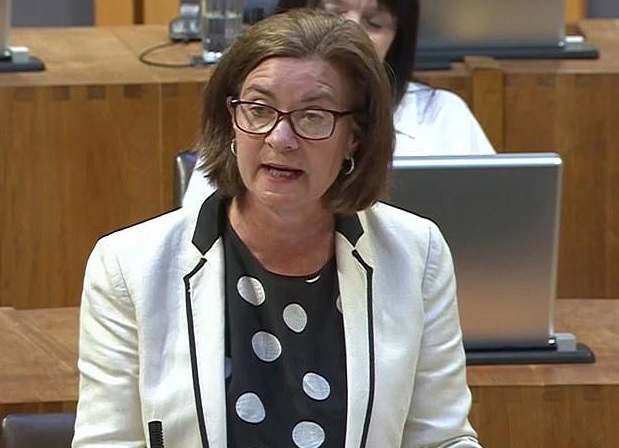
Eluned Morgan has been voted in as Wales’ first female First Minister, taking the reins at a critical juncture for the country. With the official confirmation occurring today, Ms Morgan becomes the sixth person to hold the role. Eluned Morgan was elected Welsh Labour leader on 24 July after Vaughan Gething triggered the second leadership contest of the year for the party by standing down. The process, expected to stretch into autumn, was expedited as Mrs Morgan was the sole candidate and thus elected unopposed.
In her inaugural speech as First Minister, Mrs Morgan expressed that it was the “greatest honour of my life” to be Wales’ first female MS, a statement met with applause. Reflecting on her upbringing in Ely, Cardiff, she shared how her early experiences of inequality shaped her commitment to listening and addressing the concerns of all communities.
Mrs Morgan reiterated her vision for a “fairer, greener and more prosperous” Wales, highlighting her dedication to public service spanning 30 years, from the European Parliament to Westminster, and the Senedd. She pledged to be a “listening First Minister, not just to those who shout the loudest” and to lead a government driven by “a sense of service and respect for the people I serve.”
Addressing the internal challenges within the Labour group, she emphasised her focus on issues that genuinely impact communities. She spoke of creating opportunities for everyone to contribute to Wales’ shared success, regardless of background, and stressed the importance of restoring public trust in politics. “Our differences can be a source of strength, not division,” she remarked, underscoring her commitment to inclusivity.
Plaid Cymru leader Rhun ap Iorwerth congratulated Mrs Morgan, noting the historic significance of her appointment. He reiterated his party’s call for an early election, citing Labour’s internal conflicts and the need for a mandate under the new leadership. He questioned how Mrs Morgan would reset the relationship between the Welsh and UK governments and address the pressing challenges Wales faces.

Conservative group leader Andrew RT Davies also extended his congratulations, acknowledging the “significant moment” and the new dynamic a female First Minister brings. He raised concerns about the challenges ahead and the need for engagement with Parliament during the recess. Mr Davies asked about the energy Mrs Morgan would bring to her new role and sought clarification on the functioning of the deputy First Minister.
Mrs Morgan concluded her speech with a commitment to lead a government that is proactive and responsive to the needs of the Welsh people. She highlighted her dedication to fighting poverty through economic growth, improving the NHS and education system, and addressing the climate and nature emergencies.
As Wales’ new First Minister, Eluned Morgan steps into her role with numerous challenges but also significant opportunities to shape the future of the nation. Her historic appointment marks a new chapter in Welsh politics, bringing a fresh perspective and a commitment to inclusivity and progress.
Today’s Senedd vote, required to formally appoint her as First Minister, was conducted via a roll call, with members allowed to vote remotely due to the summer break. The final tally saw Eluned Morgan securing 28 votes, with Andrew RT Davies obtaining 15 votes, and Rhun ap Iorwerth receiving 12 votes. There was one abstention out of the 56 votes cast in total. Here is a detailed breakdown of the votes:

- Rhys ab Owen MS (Ind): Rhun ap Iorwerth
- Mick Antoniw MS (Labour): Eluned Morgan
- Mabon ap Gwynfor MS (Plaid Cymru): Rhun ap Iorwerth
- Rhun ap Iorwerth MS (Plaid Cymru): Rhun ap Iorwerth
- Natasha Asghar MS (Conservatives): Andrew RT Davies
- Hannah Blythyn MS (Labour): Eluned Morgan
- Dawn Bowden MS (Labour): Eluned Morgan
- Jayne Bryant MS (Labour): Eluned Morgan
- Cefin Campbell MS (Plaid Cymru): Rhun ap Iorwerth
- Hefin David MS (Labour): Eluned Morgan
- Alun Davies MS (Labour): Eluned Morgan
- Andrew RT Davies MS (Conservatives): Andrew RT Davies
- Gareth Davies MS (Conservatives): Andrew RT Davies
- Paul Davies MS (Conservatives): Andrew RT Davies
- Jane Dodds MS (Lib Dem): Abstain
- Mark Drakeford MS (Labour): Eluned Morgan
- James Evans MS (Conservatives): Andrew RT Davies
- Rebecca Evans MS (Labour): Eluned Morgan
- Janet Finch-Saunders MS (Conservatives): Andrew RT Davies
- Luke Fletcher MS (Plaid Cymru): Rhun ap Iorwerth
- Peter Fox MS (Conservatives): Andrew RT Davies
- Heledd Fychan MS (Plaid Cymru): Rhun ap Iorwerth
- Russell George MS (Conservatives): Andrew RT Davies
- Vaughan Gething MS (Labour): Eluned Morgan
- Tom Giffard MS (Conservatives): Andrew RT Davies
- John Griffiths MS (Labour): Eluned Morgan
- Lesley Griffiths MS (Labour): Eluned Morgan
- Llyr Gruffydd MS (Plaid Cymru): Rhun ap Iorwerth
- Siân Gwenllian MS (Plaid Cymru): Rhun ap Iorwerth
- Mike Hedges MS (Labour): Eluned Morgan
- Vikki Howells MS (Labour): Eluned Morgan
- Altaf Hussain MS (Conservatives): Not voting
- Jane Hutt MS (Labour): Eluned Morgan
- Huw Irranca-Davies MS (Labour): Eluned Morgan
- Mark Isherwood MS (Conservatives): Andrew RT Davies
- Joel James MS (Conservatives): Andrew RT Davies
- Julie James MS (Labour): Eluned Morgan
- Delyth Jewell MS (Plaid Cymru): Rhun ap Iorwerth
- Elin Jones MS (Plaid Cymru): No vote as presiding officer
- Laura Anne Jones MS (Conservatives): Andrew RT Davies
- Samuel Kurtz MS (Conservatives): Andrew RT Davies
- Jeremy Miles MS (Labour): Eluned Morgan
- Darren Millar MS (Conservatives): Andrew RT Davies
- Eluned Morgan MS (Labour): Eluned Morgan
- Julie Morgan MS (Labour): Eluned Morgan
- Sarah Murphy MS (Labour): Eluned Morgan
- Lynne Neagle MS (Labour): Eluned Morgan
- Peredur Owen Griffiths MS (Plaid Cymru): Rhun ap Iorwerth
- Rhianon Passmore MS (Labour): Eluned Morgan
- Adam Price MS (Plaid Cymru): Rhun ap Iorwerth
- Jenny Rathbone MS (Labour): Eluned Morgan
- David Rees MS (Labour): No vote as deputy presiding officer
- Sam Rowlands MS (Conservatives): Andrew RT Davies
- Jack Sargeant MS (Labour): Eluned Morgan
- Ken Skates MS (Labour): Eluned Morgan
- Carolyn Thomas MS (Labour): No vote
- Lee Waters MS (Labour): Eluned Morgan
- Joyce Watson (Labour): Eluned Morgan
- Buffy Williams (Labour): Eluned Morgan
- Sioned Williams (Plaid Cymru): Rhun ap Iorwerth
Alasdair McDiarmid, Assistant General Secretary for steelworkers’ union Community, said: “We congratulate Eluned Morgan on becoming Wales’ new First Minister, and the first woman to hold the role. This represents a significant moment for the labour movement in Wales and the UK. Eluned’s long record of public service and her strong commitment to social justice make her an ideal fit for the role.
“As the leading union representing workers at Tata Steel, we are working closely with Welsh Government to support our members at Port Talbot, Llanwern and Trostre, and all downstream sites during this uncertain and challenging time.
“Indeed, our workplace reps and officials from Port Talbot held a productive meeting with the incoming First Minister and Deputy First Minister last week. During that meeting, they were assured that the new leadership team recognises the critical importance of the steel industry to the Welsh economy and to communities across South Wales, and that the Welsh Labour Government – working with the UK Labour Government – will be doing everything in its power to stand with our steelworkers and safeguard the future of the sector. We welcome that strong commitment, and look forward to working closely with First Minister Eluned Morgan and her team to deliver for our members.”

Community is the steelworkers’ union. More steelworkers are members of Community than any other union, and the union represents the vast majority of workers impacted by Tata’s decarbonisation plans in South Wales.










TWO WOMEN were arrested following a disturbance at the Mount Estate in Milford Haven on Saturday night (May 9).
The Herald understands the arrests followed an altercation involving four people.
Video circulating on social media shows two women lying face down on the ground outside while handcuffed and restrained by police officers.
In the footage, officers can be heard telling one woman that she is being arrested on suspicion of assaulting police.
Both women were then taken away, each flanked by officers.
Other women can be seen speaking to those detained while they remain on the ground.
The Herald has contacted Dyfed-Powys Police for further details, including confirmation of the number of arrests, the nature of the incident, and whether anyone was injured.
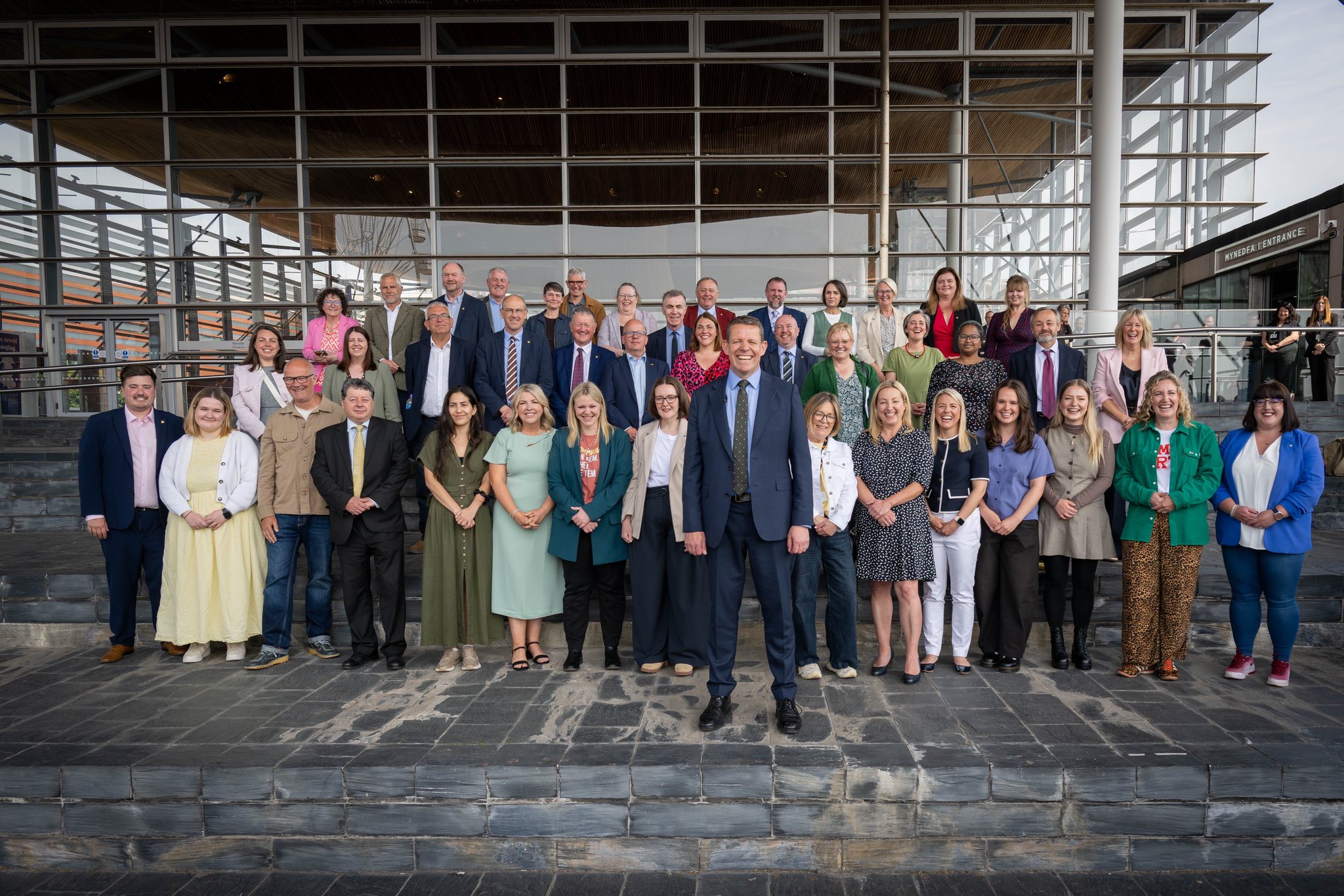
WALES has entered a new political era after voters delivered the biggest political upheaval since devolution.
Plaid Cymru emerged as the largest party in the Senedd, Reform UK surged into second place, and Welsh Labour was reduced to its worst result since the creation of Welsh devolution in 1999.
The result ends Labour’s long dominance of Welsh politics and leaves Cardiff Bay facing weeks of negotiations over who will form the next Welsh Government.
Labour dominance ends
For the first time since the Senedd was created, Labour is no longer the largest party in Wales.
The party fell to just nine seats in the expanded 96-member chamber, a result which has sent shockwaves through Welsh politics.
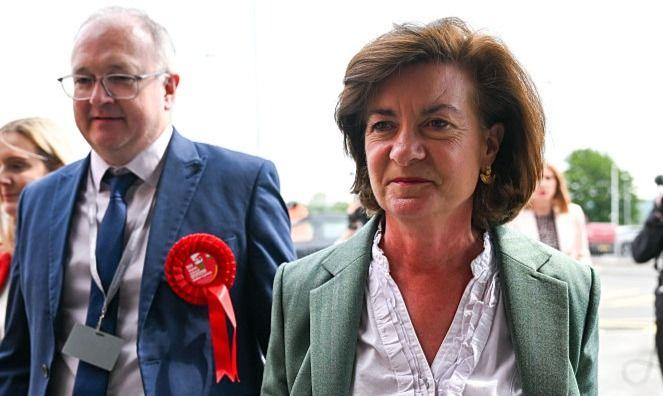
First Minister Eluned Morgan also lost her own seat in Ceredigion Penfro before announcing that she would stand down as Welsh Labour leader.
The scale of the defeat reflects deep public frustration over the NHS, public services, the cost of living, and the perception that Welsh Labour had run out of energy after decades in power.
Ken Skates has now been appointed interim Welsh Labour leader as the party begins what is likely to be a long and painful rebuilding process.
Plaid’s historic breakthrough
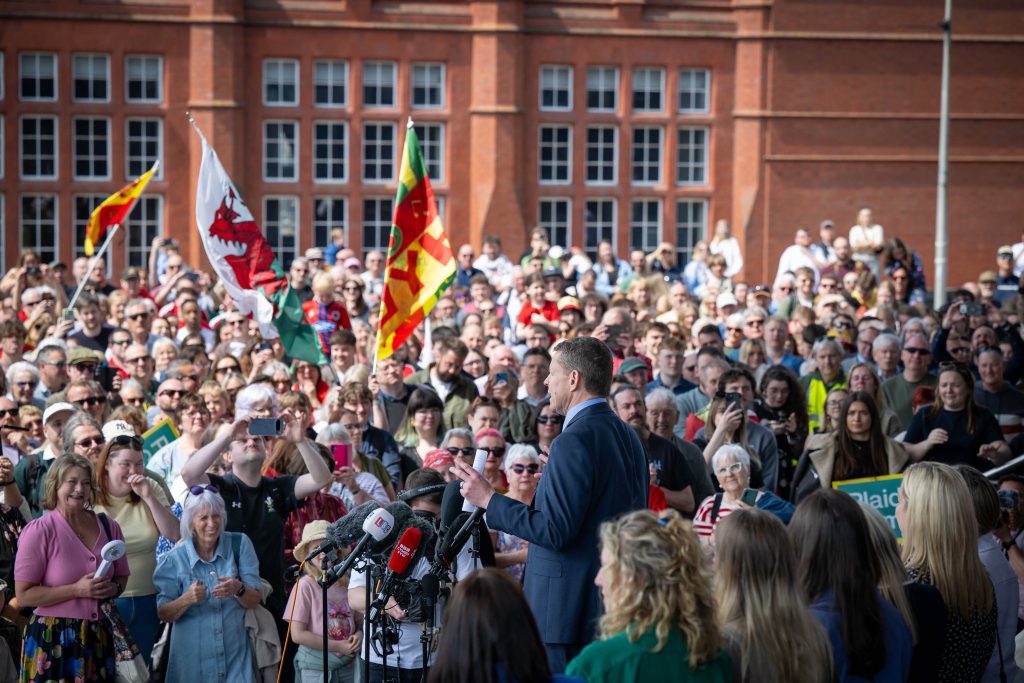
Plaid Cymru finished as the largest party with 43 seats, a landmark result for Rhun ap Iorwerth and his party.
It is the closest Plaid has ever come to forming a government in Wales, and gives the party the clear first opportunity to try to lead the next Welsh Government.
However, Plaid fell short of the 49 seats needed for an outright majority.
That means Rhun ap Iorwerth must now decide whether to seek a formal coalition, a confidence-and-supply arrangement, or attempt to govern as a minority administration.

The party campaigned strongly on the NHS, childcare, housing, rural Wales and economic renewal. It must now show that it can move from opposition into government and turn those promises into delivery.

Reform becomes major force
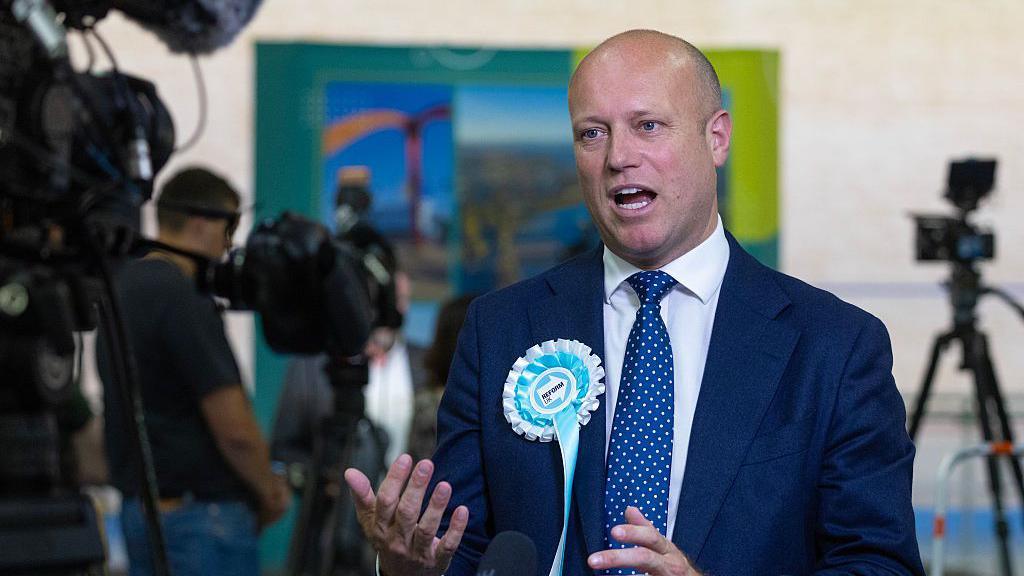
The other major story of the election was the dramatic rise of Reform UK.
The party won 34 seats, becoming the second-largest group in the Senedd and reshaping the political map across Wales.
Reform made major gains in former Labour heartlands, particularly in areas where voters have become disillusioned with Cardiff Bay politics and traditional party loyalties.
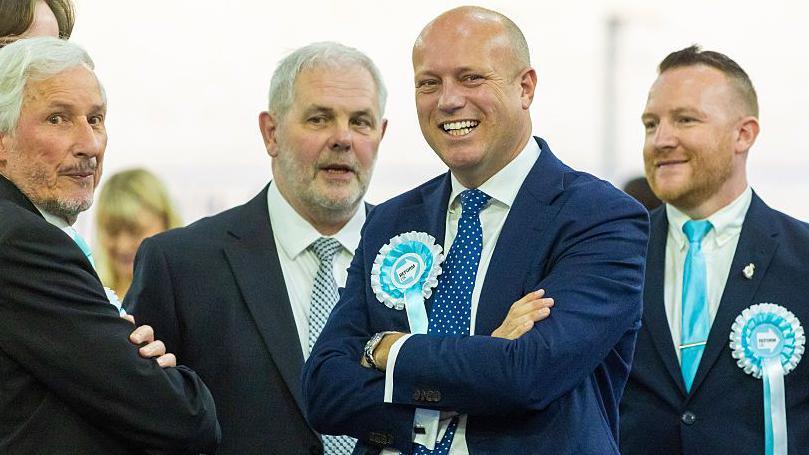
Its success means the next Senedd will be noisier, more confrontational, and far less predictable than before.
Reform will now have a large platform from which to challenge Plaid Cymru, Welsh Labour and the Conservatives on public services, immigration, the economy, and the future direction of Wales.
Smaller parties gain ground
The Conservatives were reduced to seven seats, leaving them much diminished after years of trying to present themselves as the main alternative to Labour.
The Wales Green Party won two seats, giving the party its first real foothold in the Senedd.
The Welsh Liberal Democrats won one seat, ensuring they remain represented in Cardiff Bay.
The new electoral system, which expanded the Senedd from 60 to 96 members and introduced 16 larger constituencies electing six MSs each, helped create a far more proportional result.
It has also produced a chamber in which smaller parties and tactical negotiations will matter more than ever.
What happens next?
The key issue now is who can command enough support to govern.
Plaid Cymru, as the largest party, will be expected to lead the process of forming an administration.
But without a majority, every major vote will matter. Budgets, major laws, confidence votes and key policy decisions will all require careful negotiation.
A formal deal with another party may prove difficult. A minority Plaid government is possible, but it would need support from other MSs to survive.
That means the next few weeks could be decisive for the future of Wales.
A changed country
This was more than a bad night for Labour or a breakthrough for Plaid and Reform.
It was a clear sign that Welsh politics has changed.
Old loyalties have weakened. Voters who once backed the same party for generations have shown they are prepared to move. The next Senedd will be more divided, more unpredictable, and more difficult to control.
For Wales, the message is stark.
The Labour era is over. Plaid Cymru now has its greatest opportunity yet. Reform UK has arrived as a major force. And whoever forms the next Welsh Government will have to prove quickly that change means more than a different set of faces in Cardiff Bay.

Major project will create new visitor attraction, events space, museum and improved town links
HAVERFORDWEST Castle is on course to reopen in 2028 following a major redevelopment project aimed at transforming the historic site into a high-quality visitor attraction.
County Councillor Thomas Tudor, who represents the Castle Ward in Haverfordwest, recently visited the site to see the progress being made.
He said: “As County Councillor for the Castle Ward in Haverfordwest, it was lovely to visit the Haverfordwest Castle Redevelopment Project and see the progress that has been achieved.
“I am very much looking forward to the Castle reopening in 2028.”

The project will see the mediaeval castle conserved for future generations, while the Inner Bailey has been landscaped so it can host events for up to 500 people.
These could include concerts, plays, craft fairs, Christmas markets and other community events.
The wider castle grounds are also being improved, with new interpretation explaining the history of the site, as well as family-friendly activities.
The building which houses Haverfordwest Museum, the Governor’s House, is being conserved, while the museum exhibition inside will be completely refurbished and modernised.

The former gaol building will also be transformed into a visitor attraction telling the story of Pembrokeshire’s past and future in an interactive and family-friendly way.
The attraction will include a café, shop, community spaces and exhibition areas.
Work is also taking place to improve the physical route between the castle and the town centre at Castle Back, with better signage planned to help visitors find the castle and navigate Haverfordwest more easily.
The castle is expected to reopen in 2028.




News1 day ago
Plaid Cymru celebrates historic victory as Rhun ap Iorwerth arrives at Cardiff Bay
CROWDS gathered outside the Senedd as Plaid Cymru leader Rhun ap Iorwerth arrived in Cardiff Bay following his party’s historic...


Crime1 day ago
Police standoff ends after four-hour incident in Pembroke Dock
ELIZABETH COURT SCENE STOOD DOWN AFTER DOMESTIC INCIDENT A FOUR-HOUR police standoff in Pembroke Dock has ended with a 21-year-old...


Crime1 day ago
Teen denies attempted murder of Milford Haven teacher
TEENAGER REMANDED AHEAD OF JULY TRIAL A 15-YEAR-old boy has denied attempting to murder a teacher during a stabbing incident...

News2 days ago
Catastrophe for Labour as Plaid and Reform reshape Welsh politics
ELUNED MORGAN LOSES SEAT AS OLD CERTAINTIES ARE SWEPT AWAY THE VOTERS of Wales have delivered one of the most...

News2 days ago
Labour wiped out in Ceredigion Penfro as Plaid tops poll and First Minister loses seat
Shock result sends political shockwaves across Wales as Reform also surges in historic Senedd count LABOUR suffered one of the...

News2 days ago
Labour deputy says party ‘will not form next Welsh Government’
LABOUR FACES HISTORIC DEFEAT AS COUNTING CONTINUES ACROSS WALES LABOUR’S Deputy Leader in Wales has effectively conceded the Senedd election,...

News2 days ago
Counts underway in historic Senedd election
Wales waits for results as first election under new voting system reaches count stage COUNTING is underway across Wales today...

Charity3 days ago
Chief’s Tour honours fallen officers with 75-mile Pembrokeshire ride
Dyfed-Powys Police team raises thousands for bereaved police families charity A TEAM of officers and staff from Dyfed-Powys Police cycled...


Crime3 days ago
Racial abuse suspect barricaded himself inside Johnston lodge
ARMED police were called to a supported accommodation building in Johnston after a man allegedly barricaded himself inside a room...

Crime3 days ago
Milford Haven woman denies causing suffering to cat
Jury hears evidence over alleged failure to seek treatment for tumour A MILFORD HAVEN woman has denied causing unnecessary suffering...
-

 News5 days ago
Baby in critical condition after Fishguard emergency
-

 News4 days ago
Former housing officer admits drink-driving in Pembrokeshire retail park
-
 Crime4 days ago
Job loss threat for convicted Pembrokeshire drug-driver
-
 Crime4 days ago
Milford motorist disqualified for drug-driving
-

 Crime4 days ago
Police tip-off leads to driving ban for Milford motorist
-
Crime3 days ago
Racial abuse suspect barricaded himself inside Johnston lodge
-

 Community4 days ago
Sixth-former firefighter balances schoolwork with saving lives
-
 Crime4 days ago
Delivery driver caught twice over legal drink-drive limit