


News
Police launch urgent new appeal following collision in Steynton


Dyfed-Powys Police have issued a new urgent appeal for information following a serious road collision that took place on Neyland Road, Steynton, on the evening of Wednesday, August 21.
The incident, which occurred at approximately 8:40pm, involved a silver Honda motorcycle and a male pedestrian.
The pedestrian sustained serious injuries and is currently in a critical condition in hospital.
Emergency services, including an air ambulance, were quickly dispatched to the scene. The road, near the Horse and Jockey pub junction, was closed throughout the night as officers conducted their investigations.
In a statement provided to The Pembrokeshire Herald, Dyfed-Powys Police urged members of the public to come forward with any information that could aid their ongoing investigation.

The police are particularly interested in hearing from anyone who may have dash cam or CCTV footage from the area at the time of the incident.
The police are appealing to the public to report any relevant information through the following channels:
- Online: Visit Dyfed-Powys Police Contact
- Email: [email protected]
- Phone: Call 101
- Social Media: Send a direct message via social media platforms
For those who wish to remain anonymous, information can also be provided to Crimestoppers by calling 0800 555111 or by visiting Crimestoppers UK.
The investigation is ongoing, and the police are keen to ensure that anyone who witnessed the collision or has any details, no matter how small, comes forward.

Every piece of information could prove vital in determining the circumstances that led to this tragic event.
Our thoughts are with the injured man and his family during this difficult time.
Further updates will be provided as the investigation progresses.














A FORMER Haverfordwest Blues junior has earned international honours after being selected to represent Wales Under-20 rugby union team in their fixture against England.
Osian Williams, who began his rugby journey at Haverfordwest Rugby Football Club, will pull on the red jersey this evening in what marks a proud milestone for both the player and the Pembrokeshire club that helped develop his talent.
Club members said the call-up reflects years of hard work, commitment and steady progress through the ranks, with Williams recognised locally for his determination and performances on the pitch from a young age.
A spokesperson for Haverfordwest RFC said the whole club is “incredibly proud” to see one of their own step onto the international stage.
They added that it is always special to watch former junior players progress to represent their country, describing Williams’ selection as “fully deserved” and an inspiration to the next generation coming through the Blues’ youth setup.

The match against England provides a stern test for the young Welsh side, but for Williams and his family it is also a moment to savour after years of dedication to the sport.
Friends, coaches and former teammates are expected to be cheering him on from Pembrokeshire as he makes his mark in Welsh colours.
Photo caption:
Osian Williams has been selected to play for Wales Under-20s against England (Pic: Supplied).


Officers called to Hawkstone Road property as investigation continues and residents urged to come forward
DYFED-POWYS POLICE officers have launched a murder investigation following the sudden death of an eighty-five-year-old man at a property in Hawkstone Road, Pembroke Dock.
Emergency services were called at approximately 1:30pm today (Friday, Feb 6).
Officers attended the scene and enquiries are ongoing to establish the full circumstances of the death.
A man in his forties has been arrested on suspicion of murder and remains in police custody.
Residents can expect to see an increased police presence in the area while the investigation continues.
Anyone with information that could assist officers is urged to come forward.
Information can be provided online, by 101.
Quote reference: 212 of February 6.
Alternatively, reports can be made anonymously to Crimestoppers on 0800 555111 or via their website.


Precautionary measures activated at Ysgol Brynteg after morning disturbance outside gates
CARMARTHENSHIRE pupils were kept inside classrooms after a precautionary lockdown was triggered at Ysgol Brynteg on Friday morning (Feb 6), marking the second west Wales secondary school to enter lockdown in the same week.
Police were called shortly after 9:00am following reports of a verbal altercation outside the school grounds.
Officers from Dyfed-Powys Police attended and the Llanelli school activated its safeguarding procedures while the situation was assessed.
No weapons were reported, no injuries have been confirmed and there have been no arrests at this stage. The incident is understood to have involved a dispute outside the site rather than inside the school itself.
Pupils remained indoors under staff supervision while officers made checks. Once police were satisfied there was no ongoing risk, the lockdown was lifted and lessons continued as normal.
A spokesperson said the measure was purely precautionary.
The incident comes just days after armed officers were deployed to Milford Haven School following a serious assault on a teacher, prompting a temporary closure and widespread concern among parents.
While the circumstances in Llanelli were far less severe, the two events occurring so close together have heightened anxiety among families across west Wales.
Schools routinely use lockdown procedures when there is any uncertainty or potential threat nearby, even if the risk later proves minimal. The approach is designed to err on the side of caution and protect pupils while emergency services investigate.
Parents were informed that Brynteg was safe and operating normally once the situation had been resolved.
There is currently no indication that pupils inside the school were directly involved in the disturbance.
The Herald understands enquiries are ongoing.

Both incidents underline how quickly everyday school days can be disrupted, and how safeguarding responses are increasingly becoming part of standard practice across Welsh schools.
Anyone with information about the Llanelli incident is asked to contact police.



Crime1 hour ago
Man arrested for murder following death of pensioner in Pembroke Dock
Officers called to Hawkstone Road property as investigation continues and residents urged to come forward DYFED-POWYS POLICE officers have launched...

Crime4 hours ago
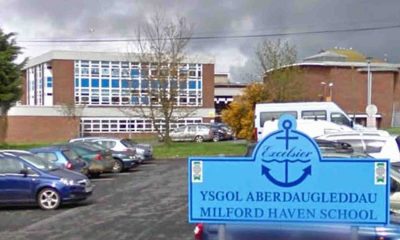
Teacher discharged as Milford School to reopen Monday after serious assault
Deputy head praises ‘calm and professional’ staff and pupils during lockdown A TEACHER injured in a serious incident at Milford...


Crime23 hours ago
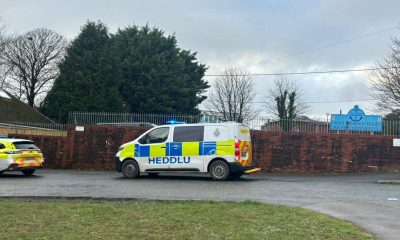
Teacher discharged as police step back from Milford Haven school after assault
Teenager remains in custody as school closes and patrols increased to reassure community POLICE have confirmed they are no longer...

Crime1 day ago
Teacher injured and teenager arrested for attempted murder at Milford Haven School
Lockdown triggered as pupil allegedly attacks staff member with weapon – boy, 15, held on suspicion of attempted murder A...


international news1 day ago
Pembrokeshire women conquer Atlantic in epic 3,000-mile row
PEMBROKESHIRE’S all-female rowing crew Merched y Mor have completed one of the hardest endurance challenges on the planet after crossing...


Crime2 days ago
Sex offender jailed after living off grid in Pembrokeshire and refusing to register
Man walked into police station after months avoiding authorities A CONVICTED sex offender who told police he intended to live...


Crime2 days ago
More rape and sexual assault survivors to get right to challenge dropped cases
New review scheme to be rolled out across CPS Cymru-Wales following successful pilot SURVIVORS of rape and serious sexual assault...


Crime3 days ago
Man spared jail after admitting child abuse image offences
Police seized devices after intelligence linked Pembrokeshire address to illegal cloud storage accounts A 23-YEAR-OLD Pembrokeshire man has avoided immediate...


Community3 days ago
Cleddau at heart of major water reforms as ministers promise ‘fundamental reset’
New regulation plan aims to tackle pollution, sewage spills and ageing infrastructure COMMUNITIES along the River Cleddau could see tighter...


Crime3 days ago
Man caught in hotel sting after trying to meet girl, 13
Laugharne defendant confronted by paedophile hunters at St Clears Travelodge before suspended jail term at Swansea Crown Court A LAUGHARNE...
-
Crime2 days ago
Sex offender jailed after living off grid in Pembrokeshire and refusing to register
-

 Health1 day ago
Health board targets rise in steroid and gym drug use across west Wales
-

 News3 days ago
Princess of Wales visits historic Pembrokeshire woollen mill
-
Crime1 day ago
Teacher injured and teenager arrested for attempted murder at Milford Haven School
-

 Health5 days ago
Doctor struck off after sexual misconduct findings at Withybush Hospital
-

 Crime3 days ago
Hakin man’s appeal delayed again as Crown Court seeks guidance on insurance law
-

 News5 days ago
Herald journalists to feature in true-crime documentary on local lockdown murder
-

 Education6 days ago
Industry insight helps marine cadets chart career course