


Politics
Second homes council tax levels to drop in Pembrokeshire


SECOND homes council tax premiums in Pembrokeshire are to drop from the current 200 percent rate to 150 percent, despite warnings it could lead to a council tax rise next year of as much as 14 percent.
At today’s October 17 meeting of Pembrokeshire County Council’s full council, two attempts to lower the second homes council tax premium in Pembrokeshire were made, with members hearing the changes could lose the council between £2.6m and £5.2m, and could increase next year’s overall council tax rise to as much as 18.8 percent.
Pembrokeshire is currently expected to see an 11.14 percent council tax rise in the next financial year.
Second-home owners, since this financial year, have been paying a 200 percent premium on their council tax, effectively a treble rate, following an increase from the previous 100 percent (or double rate) premium.
Under Welsh Government legislation, local authorities are able to increase the council premium on second homes to as much as 300 percent, effectively a quadruple rate.

Long-term empty properties in the county are also currently charged a premium council tax rate: 100 percent after 24 months, 200 percent after 36 months, and 300 percent after five years.
At the October 17 meeting of Pembrokeshire’s full council, members were recommended to back the premium remaining at the current 200 percent, with the long-term empty property rates also remaining at the current levels, and to write to Welsh Government asking for a reduction in the 182-day criteria for holiday lets rate relief.
At the meeting, two alternative proposals for a lower second homes premium rate were brought before members; a 100 percent premium by Conservative group leader Cllr Di Clements, and 150 percent by Independent Group (IPG) leader Cllr Huw Murphy.
Members were told by director of resources Jon Haswell that a reduction of the premium to 100 percent would lead to additional financial pressures to the council of £5.2m, which would lead to a predicted council tax increase of 18.87 percent against an expected general increase of 11.14 percent.

Cabinet member for finance, Cllr Joshua Beynon moved the recommendations be backed, adding: “Every 25 percent reduction would reduce the amount raised by the council by £1.3m, already we have a very difficult financial situation, that is the reality of local government finance, we are stretched in terms of demand for services.”
Cllr Clements, in her amendment, said the council was using second-home-owners as “cash cows,” with the revenue raised used to fund the general budget.
“This policy is a blunt tool, for me it’s about fairness and proportionality.

“I question the financial sustainability of this local authority if it relies on these council tax powers; when second home-owners throw in the towel where will the council go?
“In relation to second home-owners the message [we send] is clear: ‘We don’t want you’.”
Cllr Tony Wilcox said that any reduction in the rate for second-home-owners would impact on ordinary council tax-payers in the county.
“Why are we penalising 85-95 percent of our own people to pander for a political point?” he asked, adding: “The overwhelming majority of our residents aren’t affected by this, we are going to penalise the majority.
“I really can’t see how we are contemplating really high council tax rises for the majority of our county.”
Cllr Clement’s amendment was defeated; Cllr Murphy’s own amendment then being heard, with Conservative group member Cllr Aled Thomas, urging his fellow Conservatives to support the independent group, saying: “This is a half-way step, I would hope the group would put their vote behind the IPG.”
Council leader Cllr Jon Harvey, who said Cllr Murphy had previously been supportive of the 200 percent rate, warned: “On this proposal we are talking about £2.6m loss to the council, or about three-and-a-half percent on council tax. What additional services are you prepared to cut, or are you prepared to increase council tax over and above?
“I am not prepared to justify to our residents why I voted to reduce second homes tax and then put that burden or service cuts on them, they certainly will be worse off in my opinion if this goes through.”
After Cllr Murphy’s ammended was backed, a later proposal by Cllr Alan Dennison to change the empty property premium to 300 percent after two years was deferred, being considered by the council tax working group before coming before Cabinet at its December meeting.
Members also agreed to write to Welsh Government asking them to reduce the 182 days let threshold.


THE NUMBER of senior Pembrokeshire councillors holding the top finance job in recent years came under the spotlight at the July meeting of the council.
A submitted question by Cllr Alan Dennison, heard at the July meeting of Pembrokeshire County Council asked: “Since my election in 2022, this administration has experienced a turnover of four finance cabinet members, averaging one per year.”
Those four Cabinet members with responsibility for finance were: Cllr Alec Cormack, Cllr Joshua Beynon, Cllr Alistair Cameron, and former leader Cllr Jon Harvey who has now assumed the finance role.
Cllr Dennison’s question added: “This high turnover raises concerns about the stability of the council’s financial management, particularly in light of the current fiscal challenges and in light of the recent announcement by Finance Cabinet Member number 3 [Cllr Cameron] that under this administration there has been a staggering 97 per cent increase in council tax rates since 2017, in contrast to a mere 37 per cent rise in the inflation rate.
“Could the Leader explain the rationale behind these frequent changes in leadership and what apparent benefit this has to the Pembrokeshire ratepayers?”
Back in May, a previous submitted question by Cllr Dennison asked for the increase in council tax levels since 2017.
Cllr Cameron had responded by saying the level of council tax for a Band D average property had increased by 95.7 per cent in that time.
For the 2026 to ’27 financial year, the county council part of council tax levels in the county rose by 4.6 per cent, equivalent to an extra £76 for the average Band D property, less than half last year’s increase.
The previous year saw Pembrokeshire’s council tax increased by 9.35 per cent, lower than that year’s Cabinet recommendation of 9.85 per cent.
The previous year to that saw a 12.5 per cent rise on top of previous increases of 12.5 per cent, 9.92 per cent, five per cent, 3.75 per cent, five per cent and 7.5 per cent.
The overall council tax bill is made up of the county council element, the largest part, the Dyfed-Powys Police precept, and individual town or community council elements.
Responding to Cllr Dennison’s question at the July meeting, new leader Cllr Tessa Hodgson pointed out that he had got “his facts and figures wrong,” as she had only had cabinet member for finance under her leadership, Cllr Harvey, who was “doing a great job”.

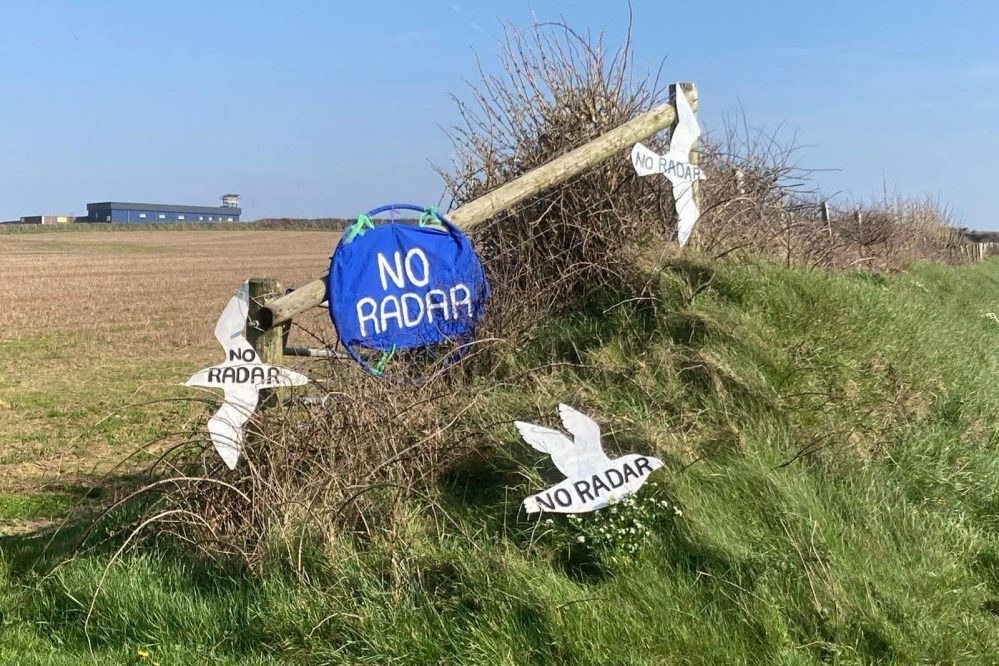
THE CONTENTIOUS DARC ‘space radar’ scheme in Pembrokeshire is to be decided by Welsh Government rather than county planners, just days before it was to be debated by them.
In an application submitted earlier this year to Pembrokeshire County Council following a public consultation, the Ministry of Defence wants to install 27 radar antenna and a long list of associated works at Cawdor Barracks, Brawdy for a worldwide network of sensors called the Deep Space Advanced Radar Concept (DARC) to track active satellites and other objects which would utilise three sites worldwide, part of the AUKUS trilateral security partnership, in the USA, the UK and Australia “enabling 360-degree coverage of the sky at all times of day and under any weather conditions”.
In late 2023, Cawdor Barracks was identified as the preferred UK site by the-then UK Defence Secretary, Grant Shapps.
A supporting statement says of the DARC scheme: “This capability is critical to protect and defend the services provided by satellites, ensuring continuity and resilience against collisions or debris-related incidents.
“Without DARC, the UK faces a significant risk of losing access to these vital services, which would have severe consequences for national security, economic stability, and public safety.”
St Davids City Council members unanimously opposed the pre-application consultation proposals, and public objectors have raised concerns with protests taking place outside the barracks and County Hall, Haverfordwest earlier this year, and the scheme before county planners attracted more than 1,000 objections.
Pembrokeshire-based Jerome Flynn, famous for his roles in Soldier Soldier, Robson & Jerome and more recently Game of Thrones has described the scheme as “the most unspeakably abominable planning application led by the US military, backed by Donald Trump to place 27 radar dishes right on the edge of our beloved coastal national park”.
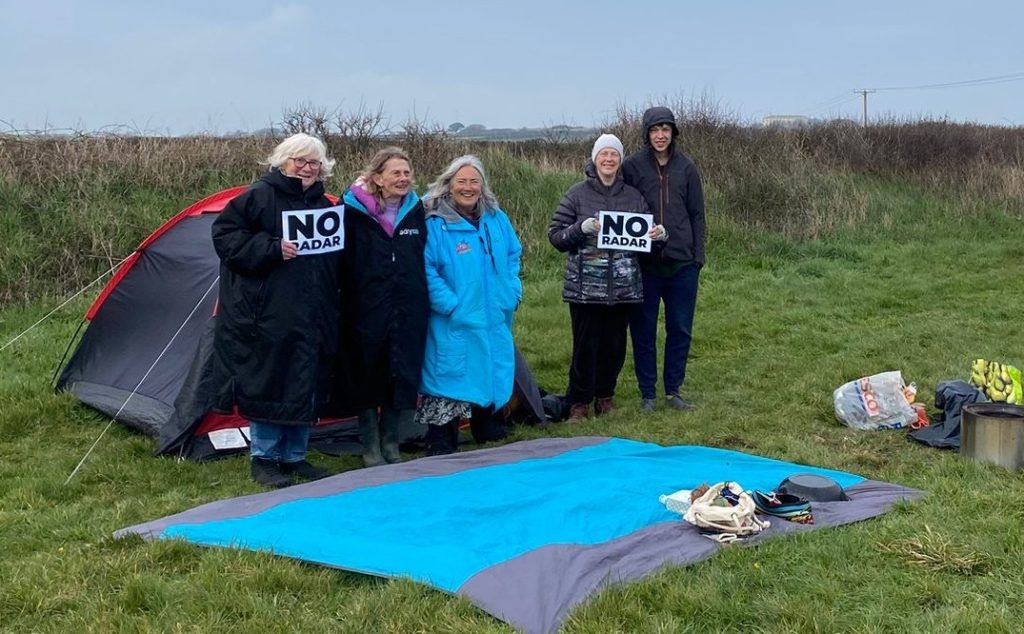
Campaign group PARC against DARC, set up in 2024 to oppose the scheme which it has described as the militarisation of space, submitted an official request to ‘call in’ the application for DARC radar to the newly formed Plaid Cymru Welsh Government.
A ‘call-in’ means the application could be decided at Welsh Government level rather than by county planners.
The application was due to go before Pembrokeshire County Council’s next planning committee, on July 28, but has now been ‘called in by Siân Gwenllian MS, Minister for Local Government, Housing and Planning.
The Cabinet Minister’s letter to Pembrokeshire County Council calling in the application says: “The proposed development raises national security issues given the strategic defence nature of the proposal and is a novel planning issue.
“The proposal potentially conflicts with national policy in relation to landscape, ecology, sustainability and placemaking.

“A decision on the proposal may be controversial beyond the immediate locality, and there is already considerable public interest in the proposal.
“All these matters lead the Cabinet Minister to conclude the development is of more than local importance and the application should be determined by the Welsh Ministers.”
A PARC against DARC spokesperson, welcoming the ‘call-in,’ said: “As we made in our case to Welsh ministers, the DARC proposal is part of a weapons system designed to track and target satellites belonging to other countries around the world.
“It is being developed for the US Space Force, which was created under Donald Trump, at a time when US military spending has doubled since he took office. That is why DARC has been described as a significant escalation in the militarisation of space.”
A planned demonstration at County Hall, Haverfordwest, due to be held on July 28 when Pembrokeshire planners were to deliberate on DARC, is to go ahead as “a vigil in support of Welsh Government’s call-in decision,” PARC against DARC has said.
A spokesman for Pembrokeshire County Council said the call-in had been received on July 21.
“As such the application is transferred to the Welsh Ministers for a decision and the application will no longer be presented to the council’s planning committee at its meeting scheduled for July 28.
“The council now awaits confirmation from the Welsh Ministers regarding the procedure and timetable that will be adopted for their consideration of the application.
“Further information will be provided once the council has been formally notified of the next steps in the decision-making process.”
A CALL to bring to an end a special Pembrokeshire council panel which decides whether some planning applications should be considered by councillors rather than planning officers is to be discussed further.
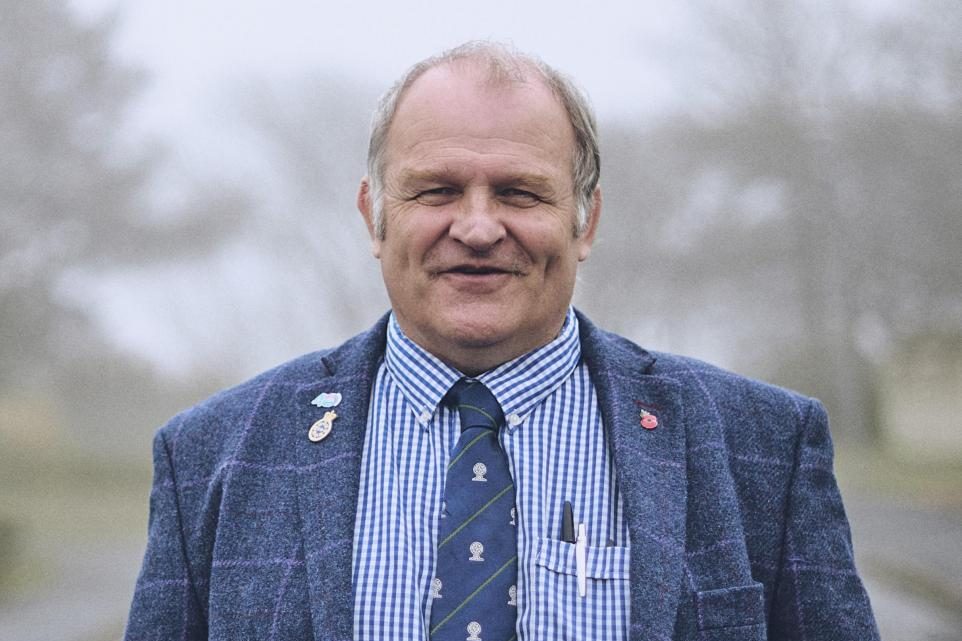
A notice of motion submitted by Councillor Huw Murphy to the July meeting of Pembrokeshire County Council asked: “That council consider disbanding the Planning Delegation Panel (PDP) and review the current arrangements so that planning applications delegated to officers for refusal, where a member requests further consideration, are referred directly to the Planning Committee rather than first being considered by the PDP.”
His supporting statement said: “Under the current arrangements within Pembrokeshire County Council, where a planning application has been delegated to officers and a refusal is recommended, the local county councillor may request that the application be considered by the PDP.
“The PDP then determines whether the application should proceed to full planning committee. It is considered that this additional stage introduces unnecessary bureaucracy into the planning process, leading to increased delays and costs for applicants.
“The current process can also be perceived as limiting democratic oversight, as applications may be refused by the panel without being considered by full planning committee, whose elected members bring local knowledge, experience transparency and democratic accountability to planning decisions.
“By comparison, the Pembrokeshire Coast National Park Authority, which is responsible for planning across more than 30 per cent of the land area of Pembrokeshire, does not operate a planning delegation panel. Instead, planning matters are considered through its established planning procedures, and this approach appears to function effectively without the need for a PDP.”
His supporting statement ended: “The removal of the PDP should simplify decision-making, reduce bureaucracy, improve transparency and democratic accountability, and reduce the workload of Democratic Services.”
At the July meeting, members agreed the notice of motion would be referred to the council’s constitutional review committee for further consideration.



Crime10 hours ago
Murder investigation launched into death of Pembrokeshire man in 1991
A 67-YEAR-OLD man has been arrested on suspicion of murder after new potential evidence emerged in connection with a death...


Community14 hours ago
‘Paying £29 to reach a cashpoint is absurd’: Narberth’s urgent ATM appeal
Residents, businesses and visitors are being urged to provide evidence after two High Street cash machines were removed, leaving the...


Crime1 day ago
Haverfordwest man jailed for seven years for historic rape and sexual assault of girl
A HAVERFORDWEST man has been jailed for seven years after being convicted of raping and indecently assaulting a girl during...


News1 day ago
Burnham more willing to listen on Welsh devolution, says First Minister
Rhun ap Iorwerth says he will press the new Prime Minister for powers over policing, railways and Wales’ natural resources...


Crime2 days ago
Women jailed after man chased through Milford home and attacked with knives
Kelly Rees receives further 27-month sentence while already serving prison term for notorious taxi robbery TWO women have been jailed...


Crime2 days ago
Mother headbutted and clawed police officers after threatening social worker
Court shown body-worn footage of violent confrontation at Goodwick property A COURT has been shown police body-worn footage capturing the...


Crime2 days ago
Man, 37, found dead following major police response in Pembroke Dock
Death not being treated as suspicious as police make statutory referral to IOPC following active investigation A 37-YEAR-OLD man has...


Community3 days ago
Household Cavalry drum horse returns home to Pembrokeshire for final farewell
Dyfed Willa Rose, who became Major Juno and the first mare to serve as a Household Cavalry Drum Horse, was...


News3 days ago
Jo Stevens out as Welsh Secretary as Burnham reshapes government
Cardiff East MP repeatedly visited Pembrokeshire to champion clean energy jobs, but her successor inherits unresolved questions over Milford Haven’s...


Crime4 days ago
Teen cleared of attempted murder but guilty of GBH after Milford teacher stabbed
Jury returns 11-1 majority verdict on charge of causing grievous bodily harm with intent, with sentencing set for September 3...
-

 Crime2 days ago
Drunken rail passenger tried to headbutt police after being refused travel
-
Crime2 days ago
Women jailed after man chased through Milford home and attacked with knives
-
News1 day ago
Burnham more willing to listen on Welsh devolution, says First Minister
-
Crime1 day ago
Haverfordwest man jailed for seven years for historic rape and sexual assault of girl
-
Crime2 days ago
Mother headbutted and clawed police officers after threatening social worker
-

 Community2 days ago
Senior councillors to consider call for ‘impartial investigation’ into Manorbier school closure
-

 Community1 day ago
£447,000 investment to train next generation of planners in Wales
-

 Entertainment2 days ago
Aerial circus show exploring identity and belonging comes to Torch Theatre