


Business
Rising living costs are increasing credit card usage


The recent cost of living crisis has affected millions of people across the UK, with 46 million people reporting that their cost of living has increased since November 2021. Costs are continuously on the rise, and unfortunately many people are struggling to pay bills on time, or at all, and afford basic necessities like food, clothes, and heating.
In order to get by, more and more people are using alternative methods to make ends meet. This includes buy now, pay later schemes, relying on credit cards, or taking out personal loans. Whilst this can work for some in the short term, it has the possibility of leading to long term implications like debt and a bad credit rating.
Increased reliance on credit cards
When used responsibly, credit cards can be a great tool for spreading costs and could help with building a better credit score. However, the pressures of inflation has led to a significant growth in credit card usage, with a 0.8% rise in total credit card spending year-on-year in the UK.
More people are having to use credit cards to get by on a day-to-day basis which is leaving some people in debt. In fact, outstanding credit card debt reached £70.1 billion – an increase of 7.02% in the year to April 2024.
Once you’re in debt it can be incredibly difficult to get out of it. You need to have enough income to cover your living costs and day-to-day expenses as well as your debt in order to start reducing it. Unfortunately, the inflated living costs are making it even more difficult for people to break the cycle of debt, and are leading to poor credit scores.

How a bad credit score can affect you
Carrying a lot of debt or failing to make payments on time could affect your credit rating. This, in turn, can lead to several complications regarding some financial products or your ability to rent.
You are less likely to be accepted for mortgages and loans
Bad credit makes you look less appealing to mainstream lenders, who will be less likely to offer you a loan or accept a mortgage application as they view you as high risk. Similarly, a landlord or estate agent may be unlikely to consider a rent application for the same reason.
Qualifying for a credit card may be difficult
Like with loans, lenders will check for debt and a low credit rating. If your credit score is poor and you have a significant amount of debt, it’s much more likely that your credit card application will be refused.
Getting car finance can be tricky
Getting car finance is another difficulty when you have bad credit. Lenders will be much less inclined to offer you car finance if you have higher risk factors such as debt and a history of missed payments.

Fortunately, there are still ways to finance a car with bad credit. It’s important to note that whilst it is possible to get car finance even with a bad credit score, you do need to be sensible about it. Always do your research around which car would be suitable for you and what will match your budget.
You might face larger interest rates
If you do get accepted for a loan, mortgage, or credit card whilst you have bad credit, it’s not unusual for your repayments to be much higher than that of someone with a good credit rating. Lenders do this as a way to better protect themselves since the risks they are taking are higher when someone has a poor credit history.
Your car insurance premiums could be higher
A bad credit score could lead to higher auto insurance premiums. Whilst it’s unlikely you’ll ever be rejected for insurance based on your credit score, it is likely you will have less available options and the premiums on offer could be much more costly.

Financial products can still be beneficial
When used correctly, credit cards, loans, and other financial products can be advantageous in helping you make larger purchases such as cars or houses. However, it’s important to note that whilst they can be a good tool for spreading costs, it’s essential to conduct thorough research when considering a financial product as you are responsible for your own credit.

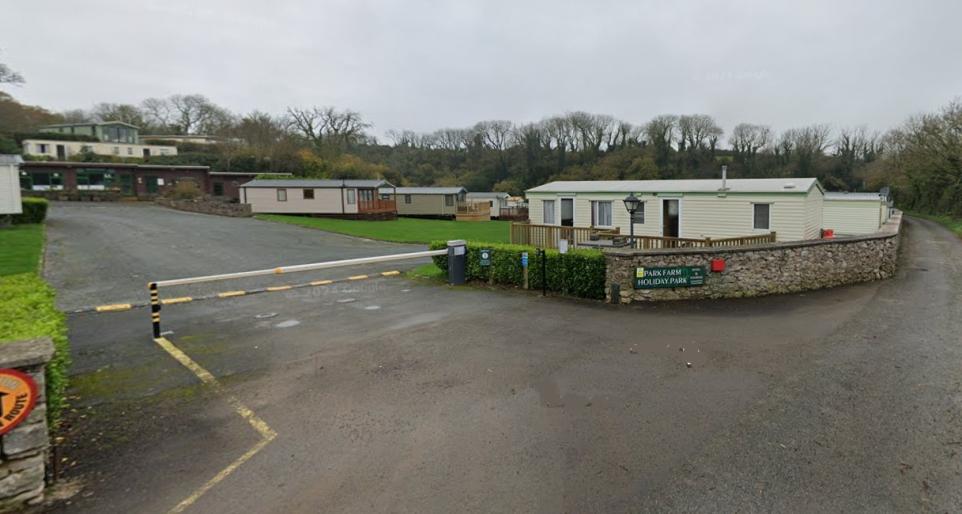
A CALL to allow a Pembrokeshire caravan park to change part of its site from touring vans to static units without a formal planning application has been refused.
In an application to Pembrokeshire Coast National Park, Norfolk-based Park Farm Opco Ltd, through Chipping Norton-based agent Laister Planning Limited, sought a Lawful Development Certificate for the proposed stationing of static caravans in lieu of touring caravans, year-round, at Park Farm Holiday Park, Manorbier.
A supporting statement accompanying the application said: “The purpose of this application is to confirm that the touring caravans so permitted for year-round occupation on the western field at Park Farm, are capable of being replaced by static caravan pitches without effecting a material change of use. There is no specific number of touring or static caravans which is being sought at this juncture.”
It says Park Farm Holiday Park comprises of two areas, area A having some 61 owner-occupied static caravans, and area B used for touring caravan pitches and tents.
Planning permission was originally granted way back in 1956 for the caravan site, on a temporary basis, a Lawful Development Certificate for an existing use for the use of the site for up to 70 static caravans granted in December 1998, mainly covering area A.

The statement said the lawfulness of siting caravans year-round was previously confirmed by the park in 2024 “use as a campsite for touring caravans (not including twin-unit static caravans) and tents which shall be occupied for holiday use only and used as temporary, non-permanent units on a year-round basis”.
Of the proposals, it said: “The site is currently used for the stationing of touring caravans all year round. Most of the caravans on the site are stationed on what is called a ‘seasonal’ basis, where the owners leave them permanently stationed on the site and use them as holiday homes, paying an annual ‘seasonal’ fee.
“The proposed use of the site is to replace the permanently stationed touring caravans with permanently stationed static caravans. No specific number is provided, as no number is provided in any of the existing certificates, but it is anticipated that the total number of caravans in the application site will inevitably be reduced as the caravans are generally larger.
“There would be no other change in the way the site is operated, and the intention is to use the caravans for holiday purposes.”
An officer report recommending the certificate of lawfulness for the change be refused, saying it was “not satisfied that the evidence accompanying the application is sufficient to establish that the proposed use would be lawful”.
It said that while lawfulness certificates for tourers had been granted “it is considered that the siting of single-unit statics in lieu of those tourers, as now proposed, would be inconsistent with the lawful use of the site, and cannot be considered lawful in the same way,” adding “the changes proposed would result in a definable character change to the site of a magnitude that would be sufficient to amount to a material change of use requiring planning permission”.
The application for a certificate of lawfulness was refused on the grounds “the proposed use of the site would represent a material change of use requiring planning permission for which no permitted development rights exist, meaning a specific grant of planning permission is needed in order for the scheme to proceed”.


A PADDLEBOARDING and canoeing company’s call for an extension to a boat shed at Pembroke’s South Quay, below its historic castle, has been given the go-ahead by county planners.
In an application to Pembrokeshire County Council, G Booth of Paddle West CIC, through agent James Dwyer Associates, sought permission for an extension to the stone-built boathouse, adjacent to the cliff on South Quay fronting the Mill Pond, Pembroke.
A supporting statement said: “It is intended to erect a single storey ‘lean-to’ building, or ‘shed’ for the storage of boats, such as canoes and kayaks, and related equipment, on a vacant space adjacent to the existing stone-built boathouse.”
It added: “The boathouse and the intended adjacent boat storage shed is located, as is to be expected, in close proximity to water, the Mill Pond. The Mill Pond is the main area of activity for Paddle West, a Community Interest Company, providing boating activities, kayaking, canoeing and paddle boarding, frequently for young people and families.”
It went on to say: “It is intended that the structure would be lightweight, erected on the exiting hard standing. The ‘shed’ would be used for the storage of boats and related equipment.”
With regard to the historic setting, it added: “Although the stone-built boathouse appears not to be listed, it is recognised that the walls above are listed and together they are a piece.
“Accordingly, through form and external materials proposed, timber cladding and profile sheet roofing, the aim is to ensure that the structure would be subservient and muted and not detract or compete with the visual aesthetic of the boathouse or historic walls. In effect the addition would blend into the background.”
The application, supported by Pembroke Town Council, was conditionally approved by county planners.
The boathouse is sited near to the new Henry Tudor Centre in South Quay, which is due to open in Spring 2027.

The centre, expected to receive around 30,000 visitors a year, will tell the story of Henry Tudor, son of Pembroke, his Welsh ancestry and his impact on our national story, Welsh culture and our wider British heritage.
The restored derelict South Quay buildings will also house a new library and community café, and a healthcare, social services and supported employment facility in the adjoining premises.


A NEW café has opened in Newport, Pembrokeshire, bringing Caribbean flavours to the seaside town — with affordable bed and breakfast accommodation also planned for the near future.
Ty Bert Caribbean Kitchen has opened in the former youth hostel at the old school on Lower St Mary Street.
The venture is being run by Newport local Roberta James, who hopes to reopen the building’s five bedrooms as budget accommodation as soon as possible.

The café, which opened earlier this month, serves Caribbean dishes including jerk chicken, barbecue pork belly and goat curry, alongside more traditional options such as baked potatoes, tea, coffee, hot chocolate, cold drinks and cake.
Roberta said the idea began after she responded to a Facebook post by Newport Town Council asking what the hostel, which had been closed since Covid, could be used for.

Soon afterwards, she was putting together a business plan and submitting it to Pembrokeshire County Council, drawing on her family’s background in catering and hospitality.
“I wanted to bring it back as a hostel but also have a place for the community and somewhere to use for events and groups,” she said.

The Caribbean theme was inspired by a holiday to Antigua.
Roberta said: “I am a foodie and I loved the food there. It was simple and flavoursome.”

She is recreating those flavours with the help of her friend Jason, who is from the Caribbean.
Box meals are available to eat in or take away, with protein mains served with rice, potato, coleslaw and salad for £12.95.
“The menu is perfect for families or for people that like a bit of spice and something a bit different,” Roberta said.
Customers have already been taking meals down to the beach or Parrog, while those eating in can use the downstairs café seating or a large family-friendly room upstairs, complete with big tables and board games.
Roberta said: “The response has been really good. We have had a lot of the locals coming in. They have been really supportive.
“During the Easter holidays we had tourists coming in. They really enjoyed having something different and reasonably priced.”
Ty Bert Caribbean Kitchen is currently open from Friday to Monday, from 12:00pm to 8:00pm, with plans to open on Thursdays later in the season. Diners are also welcome to bring a bottle with their meal.
Roberta said she hopes to open the hostel as soon as possible. Painting parties have already been held to freshen up the two dormitory rooms, two double rooms and one family room.
She is now waiting for Pembrokeshire County Council, which is leasing the property to her, to repair the boiler.
Roberta said transforming the former hostel into boutique budget accommodation, while creating the café, had been a real community effort, with friends and local businesses pitching in.
“There have been lots of lovely people in the community offering to help,” she said. “They want us to succeed, which is really nice.”
More information is available on the Ty Bert Facebook page.



News21 hours ago
West Wales coracle fishermen raise alarm over suspected sewage pollution
A CENTURIES-old fishing tradition on the River Towy could be under threat after coracle fishermen reported suspected sewage pollution entering...


Community2 days ago
Scooter rally brings colour and nostalgia to Tenby
TENBY is buzzing with the sights and sounds of classic scooters this Bank Holiday weekend as the Welsh National Scooter...


Entertainment2 days ago
Haverfoodfest returns to Haverfordwest town centre today
HAVERFORDWEST town centre is expected to be busy today as Haverfoodfest 2026 returns for a full day of food, drink,...


Crime3 days ago
70-year-old denies assault and restraining order breach
A PENSIONER from Pembroke Dock has denied breaching a restraining order and assaulting another man. Henry Howlett, 70, of Market...


News4 days ago
Conservatives target two seats in new Ceredigion Penfro constituency
Paul Davies and Sam Kurtz say health, farming and transport are key as they seek return to the Senedd CONSERVATIVE...


Community4 days ago
Milford Haven Beer Fest returns to waterfront this May
EVENT WILL FEATURE 34 DRINKS, LIVE MUSIC AND STREET FOOD MILFORD HAVEN is preparing to raise a glass as Beer...


Community5 days ago
Cancer patients targeted with parking fines outside Haverfordwest support centre
Adam’s Bucketful of Hope says vulnerable users, elderly volunteers and charity drivers have paid more than £1,000 after Ateb introduced...


Charity5 days ago
Row erupts at Spitfire museum after Reform poster displayed at charity premises
A HAVERFORDWEST museum has become caught up in a political row after Reform UK campaign material was photographed inside the...


Crime5 days ago
Pembrokeshire man charged with making hundreds of indecent images of children
A PEMBROKESHIRE man has appeared before magistrates charged with making hundreds of indecent images of children. David Lewis, 42, is...


Crime6 days ago
Man appears in court charged over death of Blood Bike Wales volunteer
FAMILY WATCHED FROM PUBLIC GALLERY AS CASE SENT TO CROWN COURT A PEMBROKESHIRE man has appeared before magistrates charged with...
-

 Local Government6 days ago
Fishguard children’s home application is a ‘legal test’, not planning merits decision
-

 Community4 days ago
Dogs removed after welfare concerns at Milford Haven property
-

 Crime6 days ago
Drink-driver hit bicycle and failed to stop
-

 Crime5 days ago
Pembrokeshire hairdresser avoids prison after pub assault
-
Crime5 days ago
Pembrokeshire man charged with making hundreds of indecent images of children
-

 Business5 days ago
Handcrafted garden furniture built to last across Pembrokeshire
-
Charity5 days ago
Row erupts at Spitfire museum after Reform poster displayed at charity premises
-
Community5 days ago
Cancer patients targeted with parking fines outside Haverfordwest support centre