


News
Inflation and election hit Pembroke regeneration plan


A PLAN to regenerate Pembroke town centre must be cut following delays caused by the General Election and an almost one-third increase in the cost of construction.
The Council’s Cabinet will consider an update on the Westgate to Eastgate scheme on Monday, January 13.
The County Council originally applied for around £11.5m from the Levelling Up Fund in June 2022. Although that bid was unsuccessful, the Council was invited to reapply in a further funding round and succeeded. The £11.5m cost of the project is 90% funded by the UK Government’s Levelling Up Fund. The Council is due to contribute 10% of that figure.
However, even though the Council succeeded in resubmitting its application early in 2024, the General Election in July stalled further progress. At the end of November last year, the Labour Government in Westminster issued a final memorandum committing to the expenditure.
In the two years since the original application, inflation has increased the project’s construction costs by 30%, underlining – again – that the consumer price index is a nonsensical measure for determining public authorities’ costs.

The Council contends that interventions at Pembroke would help stimulate the town’s economy. The town is experiencing increasing market failure due to increased vacancies in the retail centre, a poor mix of uses and significant leakage to other centres. The regeneration scheme would strengthen the visitor market and capitalise on the current visitor economy for Pembroke Castle, which bypasses the town centre.
Pembroke has the smallest number of commercial units (81) of Pembrokeshire’s six main towns and a high proportion of vacant units (17.3%).
The Cabinet report says: “The private sector will not provide the improvements to wayfinding and public realm improvements that are required to change the nature of the visitor experience. The lack of private sector development resulting from low values and low demand means that the potential of any private sector contributions is limited.”
In the absence of private sector interest, the Council believes public funding is the only tool it has to regenerate Pembroke’s ailing town centre and support new enterprises.

The project has three work schemes. Its primary focus is improving connections between the Commons Road, where most visitors park, and the town centre. The alleys and cut-throughs will be improved, and visitors will be signposted towards Pembroke’s Main Street and Mill Pond.
To increase visitors’ time spent in the town centre, the Council will improve its public spaces and green spaces and fund the renewal of St Mary’s Bells, a noted feature of Pembroke town.
At the town’s East End, the former school building will be stripped back to a shell state and partially refitted in readiness for future use, while steps will be taken to improve vehicular access along Well Hill.




A HEALTH board has been criticised by Audit Wales after GP contracts worth more than £10m were awarded without sufficient due diligence checks.
Aneurin Bevan University Health Board allowed a GP partnership associated with eHarley Street Primary Care Solutions to take on eight GP contracts in south-east Wales, with a combined annual value of around £10.1m.
Audit Wales said the board should have carried out greater scrutiny before approving the arrangements, including checks on financial resilience, workforce plans, business risks and the partnership’s ability to manage several practices at once.
However, the watchdog found no evidence of fraud and noted the board was dealing with significant pressure in general practice, including vacant contracts and limited interest from other bidders.
The report said weaknesses in governance and scrutiny contributed to later disruption and uncertainty for patients and staff when problems emerged.
Concerns included financial and workforce pressures, unpaid invoices, and issues relating to tax and pension payments. Some contracts were later handed back, requiring the health board to step in to protect services.
Natasha Asghar MS, Welsh Conservative Shadow Cabinet Minister for Health and Social Care, said the findings were “deeply concerning”.
She said: “Patients and staff were left facing disruption and uncertainty because proper scrutiny was not carried out before these contracts were awarded.
“The Welsh Conservatives believe lessons must be learned to ensure robust checks are in place, protect frontline services and restore confidence in primary care across Wales.”
Aneurin Bevan University Health Board accepted the recommendations and said it had already strengthened its processes.
Audit Wales said the case highlighted the need for stronger checks before GP contracts are transferred, particularly when a single partnership is taking on multiple practices in a short period.
Concerns raised after mass stranding stretches hundreds of yards along shoreline
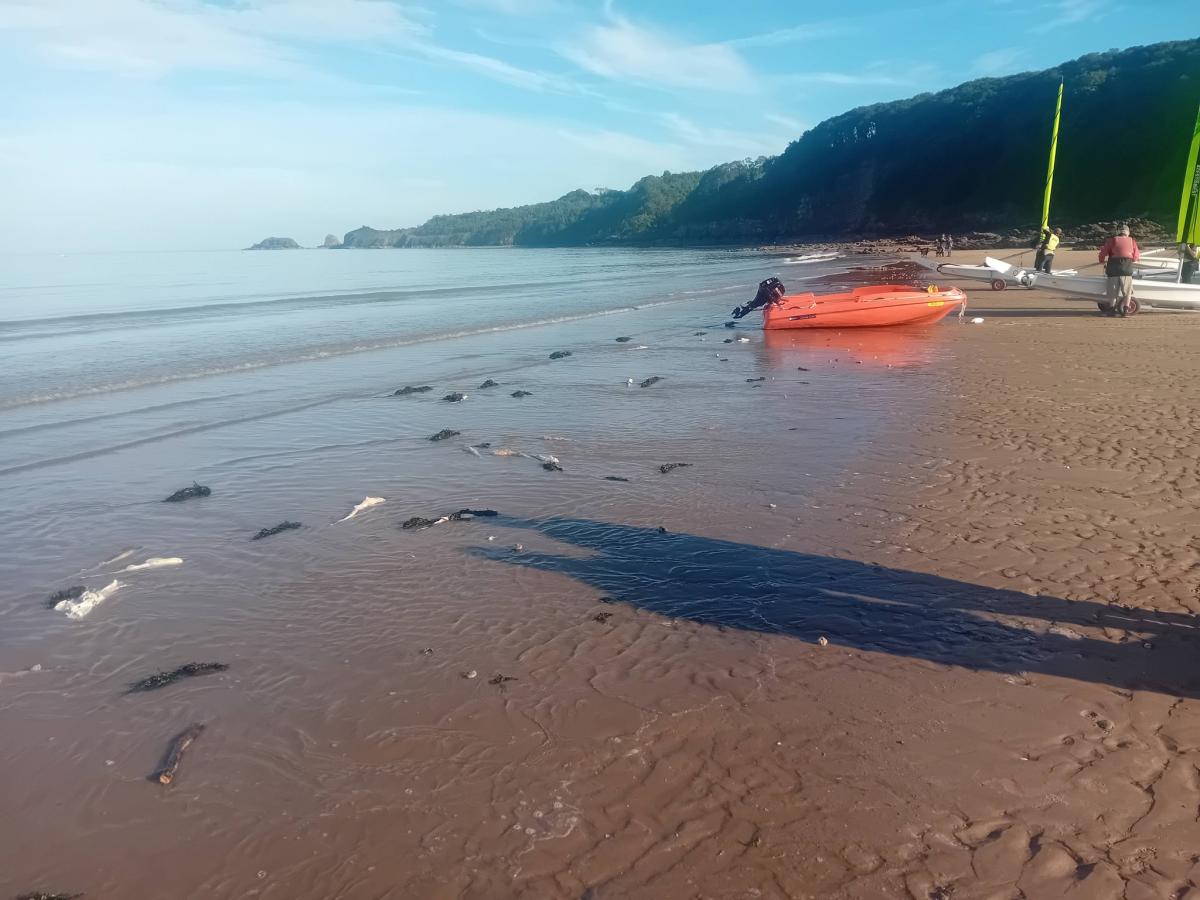
HUNDREDS of dead dogfish have washed up on a Pembrokeshire beach in a strange incident that has left locals and visitors searching for answers.
The fish, believed to be dogfish — a small species belonging to the shark family — were discovered scattered along Saundersfoot Harbour Beach on Thursday (May 21), with one witness estimating the carcasses stretched for around 500 yards.
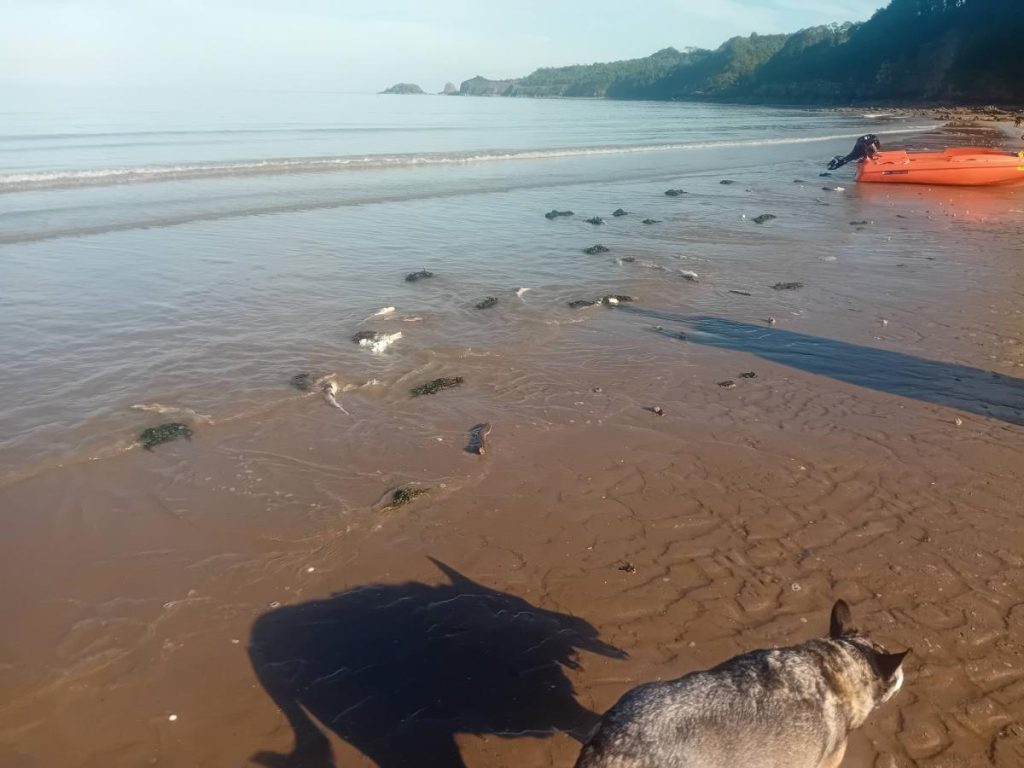
Holidaymaker Colin Hill, who came across the scene, said the scale of the wash-up was shocking, with large numbers of fish appearing to have washed in at roughly the same time.
While the exact cause remains unclear, early indications suggest the fish may have been discarded at sea before drifting ashore on changing tides.
Natural Resources Wales (NRW), which attended the scene, said there was no sign of a pollution incident.
A spokesperson for NRW told The Herald: “We investigated reports of dead fish at Saundersfoot and found no evidence of a pollution incident.
“The fish appear to be dogfish, and this is likely linked to fishing by-catch being discarded at sea.
“Tides have since cleared the majority from the shoreline and no wider environmental impacts were identified.”
Fishing link suspected
Marine experts say one of the most likely explanations is that the dogfish were unintentionally caught by fishing vessels targeting more commercially valuable species before being thrown back into the sea.
Dogfish, also known as catsharks, are common around the Pembrokeshire coast but are not generally landed commercially in large numbers.
However, local marine conservationist Cliff Benson of Sea Trust Wales said the scale of the incident appeared unusual.
“We quite often see dogfish or catsharks seemingly intent on suicide and beaching themselves, though nobody seems to know why,” he said.

“However, this is on a different scale and looks like they might have been caught by some fishing boat that was hoping to catch more commercial species and thrown overboard dead.”
He added that pollution was another possible explanation, although less likely if only one species had been affected.
Not the first time
Pembrokeshire has seen smaller incidents involving dead dogfish washing ashore before, but similar mass strandings elsewhere in Wales have previously been linked to fishing activity.
In one case at Burry Port in 2019, fisheries experts suggested dead dogfish found on the shoreline had likely been dumped following the clearing of fishing nets. In Barry in 2021, hundreds more washed up, some still attached to hooks and tackle.
For now, the mystery remains unresolved — although NRW believes discarded fishing by-catch is the most likely explanation.
Caption:
Hundreds of dead dogfish washed up on Saundersfoot Harbour Beach on Thursday (Pic: Colin Hill).
Lifesaving charity warns of cold water shock risk despite rising temperatures
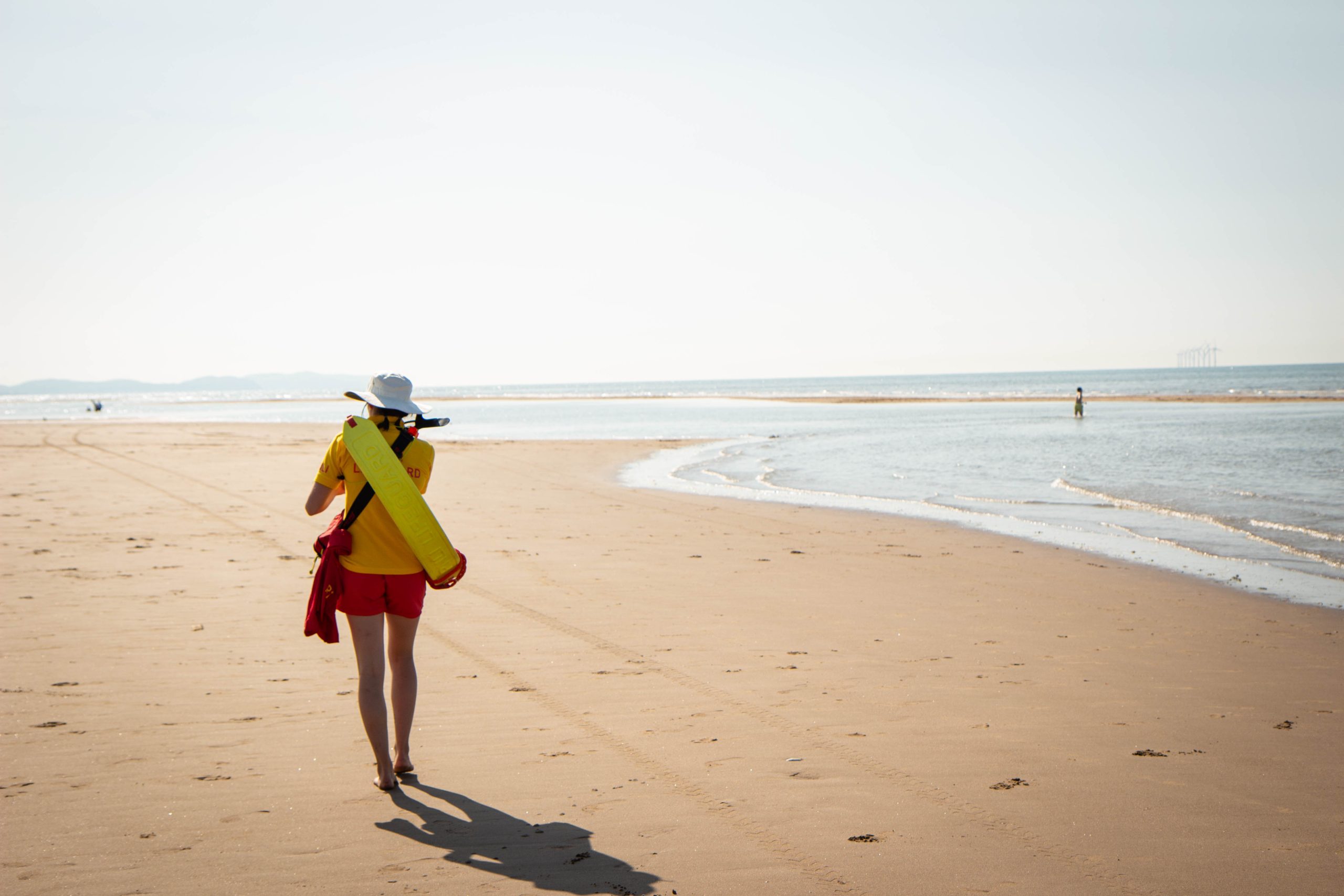
THE RNLI is urging people planning trips to the coast over the Bank Holiday weekend to choose lifeguarded beaches and follow essential water safety advice as warm weather draws crowds to the seaside.
With temperatures expected to rise across Wales, the lifesaving charity has warned that, although conditions may appear ideal, the sea remains dangerously cold and poses a serious risk of cold water shock.
The RNLI says the safest place to swim is between the red and yellow flags at lifeguarded beaches.
In Pembrokeshire, RNLI lifeguards will be on patrol at Whitesands, Newgale Central and Tenby South Beach throughout the May half-term, operating daily between 10:00am and 6:00pm.
Other lifeguarded beaches across Wales include Langland, Caswell, Aberavon, Pembrey, Three Cliffs and Port Eynon in Swansea; Barry Island, Coney Beach, Trecco Bay and Rest Bay in Bridgend; Llangrannog and Borth in Ceredigion; and Rhyl and Prestatyn in Denbighshire.
The RNLI is encouraging anyone unable to visit a lifeguarded beach to check local conditions before setting off, including tide times, weather forecasts and any safety signage.
Chris Cousins, the RNLI’s Regional Water Safety Lead, said: “There will likely be a huge number of people visiting the coast this weekend and we want everyone to remember Float to Live advice, which could save lives.
“Instinctively, most people who find themselves struggling in the water will begin to gasp, panic and try to swim or thrash about.
“We’re urging people to ignore this instinct and remember to float. Tilt your head back with your ears submerged, relax and try to breathe normally, and move your hands and legs to help you stay afloat if needed.”
He added that practising floating in a supervised setting, such as a swimming pool, could help prepare people in case they find themselves in difficulty.
‘Phone, Float, Throw’
The RNLI is also reminding the public to remember the “Phone, Float, Throw” guidance if they see someone struggling in the water.
People are advised to call 999 or 112 and ask for the Coastguard, encourage the casualty to float on their back, and throw something buoyant to them, such as a life ring.

The charity recently relaunched its “Float to Live” campaign, citing new research suggesting younger adults, particularly Generation Z, may underestimate the dangers posed by the coast.
According to the RNLI, there were 193 accidental drowning deaths in the UK in 2024, with men accounting for 84 per cent of fatalities. Men aged between 20 and 29 represented the highest risk group.
The RNLI’s beach lifeguard service is marking its 25th anniversary this year.
For more information on staying safe at the coast, visit the RNLI’s Float to Live campaign.



Local Government2 days ago
Youngest mayor in century takes office in Haverfordwest
Randell Izaiah Thomas-Turner makes history as town’s first millennial mayor and first from a diverse background HAVERFORDWEST has welcomed a...


Community2 days ago
Pembroke Fair set to return after last year’s success
STALL HOLDERS INVITED AS HORSE DRIVE PLANNED PEMBROKE Fair is set to return this weekend following the success of last...


Crime2 days ago
Neyland man accused of running over traffic worker’s foot
Jury hears conflicting accounts over roadworks incident in Milford Haven A NEYLAND man has appeared before Swansea Crown Court accused...

Community2 days ago
New pilot boat Llanion dedicated at emotional Milford Haven ceremony
Vessel dedicated at Mackerel Quay as Port marks major investment in safety and resilience MILFORD HAVEN’S new state-of-the-art pilot vessel...


Local Government2 days ago
Police and GoSafe to target speeding in Newport and Dinas
RESIDENTS’ concerns over speeding and anti-social driving have prompted planned enforcement action in the Newport and Dinas areas. Dyfed-Powys Police...

Community3 days ago
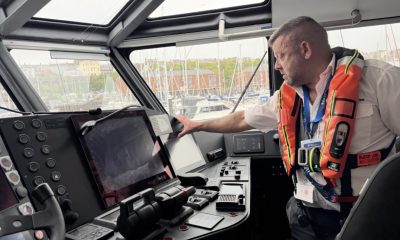
Safety first as Milford Haven’s new pilot boat marks end of troubled chapter
Gary Solomon, who was aboard St Davids during the 2016 collision, helped shape new self-righting vessel Llanion from conception to...


Crime3 days ago
Cocaine courier caught with £15,000 haul in Pembroke Dock
Defendant transported high-purity drugs from Cardiff to Pembrokeshire for £210 A PEMBROKESHIRE man caught transporting more than £15,000 of high-purity...


News4 days ago
Car bursts into flames near Redberth Croft as road closed after incident
Nobody injured after vehicle fire near A477 prompts emergency response A CAR was destroyed by fire near the entrance to...


News4 days ago
Welsh Labour unveils new Senedd spokesperson team
Ken Skates says Labour group will hold Plaid Cymru government to account WELSH Labour’s interim leader Ken Skates MS has...


Cymraeg4 days ago
Two new Milford Haven schools could be built and open by 2032
NEW SCHOOLS in Milford Haven won’t be built before 2030 at the earliest, and 2032 for a planned Welsh Medium...
-
 Community7 days ago
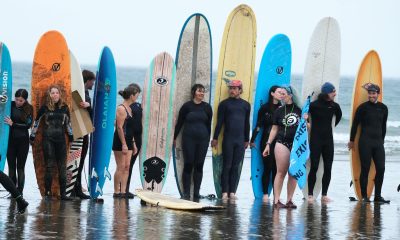
Surfers take sewage protest to Broad Haven beach
-

 News20 hours ago
Watchdog criticises health board over £10m GP contract checks
-

 Crime3 days ago
Farm owner in court after 26 dogs removed over welfare concerns
-

 News2 days ago
Paul Davies meets Openreach Cymru at the Senedd to discuss Full Fibre rollout
-
 Crime3 days ago
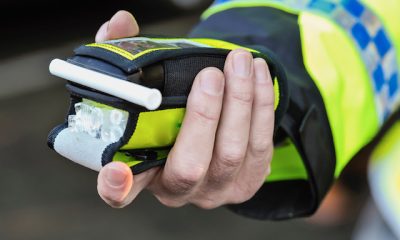
Tree surgeon sentenced for failing to provide breath test
-

 Crime3 days ago
Pembrokeshire teenager admits driving almost four times over drug-drive limit
-

 News3 days ago
Milford man admits handling stolen goods from three local properties
-

 Crime5 days ago
Builder jailed for £82,000 fraud affecting 18 victims