


Business
Wales Tourism Alliance criticises Mark Drakeford’s visitor levy evidence


THE WALES TOURISM ALLIANCE has strongly criticised comments made by Cabinet Secretary for Finance, Mark Drakeford, during his evidence session to the Welsh Government Finance Committee regarding the proposed Welsh Visitor Levy. The WTA argues that Drakeford’s remarks misrepresent the scale of the tourism industry and downplay the potential economic consequences of the levy.
What is the visitor levy?

The proposed Visitor Levy, commonly referred to as the “tourism tax,” would allow local authorities in Wales to introduce a charge on visitors staying in overnight accommodation. The Welsh Government argues that this levy would help support local infrastructure and services used by tourists. However, industry representatives and local businesses fear that it will deter visitors, particularly in key tourism-dependent areas such as Pembrokeshire.
Pembrokeshire, home to one of Wales’ most popular tourist destinations, Tenby, relies heavily on tourism revenue. Business owners, accommodation providers, and tourism operators in the county have expressed significant concerns that the levy could put off visitors, leading to reduced spending in local shops, restaurants, and attractions. Many have pointed out that, with the cost-of-living crisis already squeezing holiday budgets, an additional charge could push visitors to choose alternative destinations outside Wales.
Employment figures disputed
Drakeford claimed that the tourism and hospitality sector in Wales employs “a million” people and would not struggle to absorb the loss of several hundred jobs due to the levy. He also suggested that many tourism jobs are seasonal, have flexible hours, and are high-churn, implying that job losses would be manageable.
However, the WTA strongly disputes these figures, citing Welsh Government data that places the number of people employed in the sector at approximately 159,000. Given this significantly lower number, the loss of even a few hundred jobs would be far more impactful than Drakeford suggests. Furthermore, the WTA argues that seasonal and part-time jobs play a crucial role in providing employment opportunities, particularly for young people and those with caregiving responsibilities, such as parents and carers—groups that may struggle to find work in other sectors.

Concerns over data reliability
Drakeford also accused industry representatives, including the WTA, of selectively using worst-case scenario data in their evidence to the committee. The WTA rejects this claim, arguing that the data underpinning the Visitor Levy’s economic impact assessment is flawed and unreliable.
This concern was echoed by Professor Calvin Jones, the author of the Welsh Government’s own Visitor Levy Economic Impact Assessment. In his evidence to the Finance Committee, Jones stated: “We know very little about how the tourism economy in Wales works… we know very little about what drives visitors to come to Wales; we know almost nothing about how much they’re spending when they’re here… there isn’t even any data anymore on… how much is spent on accommodation… it should be a very uncomfortable place for Senedd Members to be when they’re trying to make policy or audit policy on tourism.”
Impact on families and educational visits
Drakeford defended the inclusion of children in the Visitor Levy by comparing it to VAT on sweets, arguing that children are not generally exempt from taxation. However, the WTA points out that this analogy is flawed, as children’s clothing, shoes, and books are zero-rated for VAT in the UK. The WTA also highlights that many other countries with tourism taxes exclude under-18s from such charges.
The per-person nature of the levy means that families will be disproportionately affected. For instance, two adults staying in accommodation for a week would pay a levy of £21, whereas a family of six would pay £63 for the same stay. Moreover, the WTA raises concerns that the levy will also apply to children on school trips and educational visits, adding an extra financial burden on families and schools.
Impact on Pembrokeshire’s tourism sector
Pembrokeshire businesses, particularly those in coastal tourist hotspots like Tenby, Saundersfoot, and St Davids, are among those voicing the strongest opposition to the levy. Many fear that it will discourage visitors from choosing Welsh destinations, instead opting for other parts of the UK or even holidaying abroad.
Tourism plays a vital role in Pembrokeshire’s economy, providing employment for thousands and sustaining local businesses. According to industry figures, over 4 million visitors come to Pembrokeshire each year, contributing hundreds of millions to the local economy. Hospitality providers in the region have warned that the levy could have serious repercussions, particularly for independent hotels, B&Bs, and campsites that rely on high occupancy levels during peak season to remain viable year-round.
A local B&B owner in Tenby, speaking to The Herald, said: “We are already seeing the effects of rising costs on bookings. If people are being asked to pay extra on top of accommodation prices, they will simply look elsewhere. We rely on repeat visitors and families who come year after year—this levy could drive them away.”

Wider economic impact
Drakeford dismissed the idea that the Visitor Levy would contribute to the cumulative challenges faced by the tourism and hospitality sector, stating that these issues “do not collide on all of the sector.”
The WTA strongly disagrees, asserting that tourism is a holistic industry where changes in one area inevitably impact others. They highlight several pressures already affecting tourism businesses, including:
- The 182-day rule for self-catering properties.
- National Insurance increases.
- The removal of furnished holiday let tax relief.
According to the WTA, these combined factors are already forcing many small, locally-run self-catering businesses to close, further weakening the sector and putting more jobs at risk.
WTA’s final response
Rowland Rees-Evans, Chair of the WTA, criticised Drakeford’s approach, stating: “We are disappointed that Mr Drakeford is dismissing the valid concerns raised by industry experts and academics and making claims that are factually incorrect.
Many people in Wales are unaware that the Visitor Levy will apply to anyone staying in ‘Visitor Accommodation’—including children on educational visits and people working away from home, even if they already live in Wales.
The bottom line is that the Visitor Levy will cost people in Wales money and jobs—even in the best-case scenario presented by the Welsh Government. Mr Drakeford seems content to push through a policy that is poorly conceived, offers no guaranteed financial benefit to Wales, and threatens hundreds of jobs in an industry that employs over 20% of the workforce in some parts of the country.
Given the current economic climate, it is difficult to understand why the person responsible for managing the Welsh budget would consider imposing such a levy at this time.”
The debate over the proposed Visitor Levy continues, with industry representatives calling for more robust data, a clearer assessment of economic consequences, and a reconsideration of its implementation before the policy is finalised.


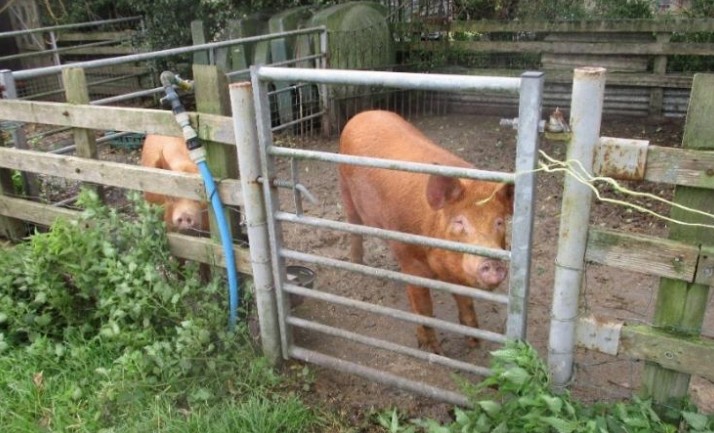
A CALL to allow a Pembrokeshire farm to keep welfare facilities to care for rare breed breeding Tamworth pigs has been given the go-ahead.
In an application to Pembrokeshire County Council, Sharron Nicolas, through agent Hayston Developments & Planning Ltd, sought a certificate of lawfulness permission for the creation of a welfare flat within a previously-approved agricultural building, plus a rear lean-to extension and the erection of two further sheds at Fairybank Fields Farm, Bethesda, near Clynderwen.
An application for a certificate of lawfulness allows an applicant to keep a development if they can provide proof of occupancy or use, without any enforcement taking place, over a prolonged period.
The previous agricultural building application was granted back in 2003.

A supporting statement accompanying the application said the two-level welfare unit in the 2003-granted shed “contains the necessary elements to allow overnight stays which are essential when the pigs are farrowing.”
It added: “Mr Allan and Mrs Sharron Nicholas have been owners of Fairybank Fields since 1998. Unfortunately, Mr Nicolas died in February 2025. Although managing the farm at Bethesda, they lived at Pleasant View, Cold Blow, Narberth meaning a round trip of some 12 miles per visit – a visit which was required on a daily basis because of the need to feed and generally care for their animals – which were and still are rare breed pigs together with a number of beef cattle.
“It is essential that the pigs require continuous care when farrowing or when there are other pressures on animal health. When such occasions occurred, it was the practice of Mr Nicholas to spend the night at the farm and to use the welfare provision.”
It said Mr Nicholas would have spent approximately three months’ worth of nights (circa 90 nights) staying over at Fairybank Fields – a period of some 12 years when the bedroom above had been created to late 2024 when his brother assisted Mrs Nicholas in caring for the pigs as Mr Nicholas was too ill.
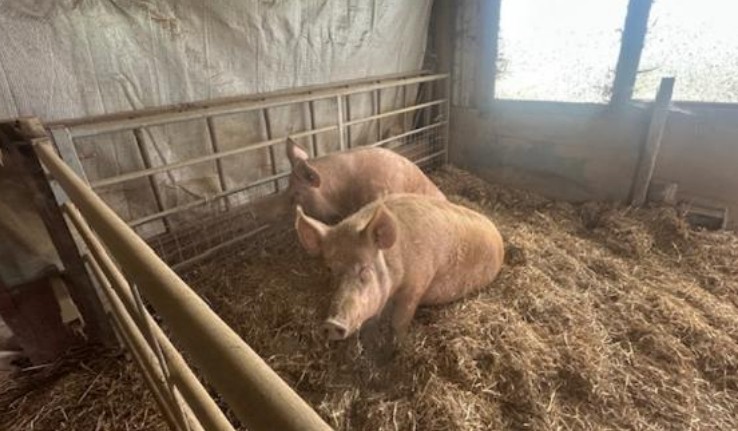
It went on to say: “Whilst the principal activity at the Farm is the breeding of the rare breed, the Tamworth Pig of which there are only currently 290 breeding sows in the UK, Mr and Mrs Nicholas also have had beef cattle on their farm and Mrs Nicholas intends to re-start that element in 2026.”
An officer report recommending approval said a site visit had been undertaken finding no evidence of the unit being occupied as a separate residential dwelling, nor as a primary residence.
It said a range of evidence was submitted in support of the application, including a detailed timeline, aerial imagery and multiple witness statements “which consistently indicate that the rear extension to Building 1 was constructed circa 2008, Shed 2 was completed in September 2012 and Shed 3 was erected in 2015”.
It said historic aerial photographs and witness statements demonstrated “on the balance of probability, that the operational development was substantially completed well in excess of four years prior to the submission of the application and has not been subject to any material interruption,” considered to be lawful by virtue of immunity from enforcement action.

It was granted approval on that basis.
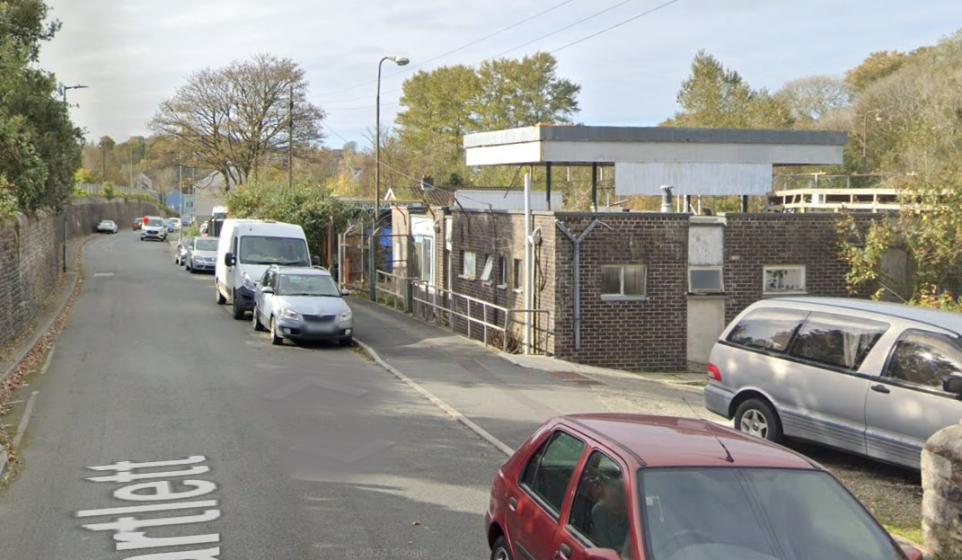
A FRESH call to allow the retrospective conversion of office space to a chocolate factory, a beauty salon and laundrette has been submitted after a previous refusal.
In an application refused by Pembrokeshire County Council in March, Mr M Williams, through agent Preseli Planning Ltd, sought retrospective permission for the subdivision of an office on land off Scotchwell Cottage, Cartlett, Haverfordwest into three units forming a chocolate manufacturing, a beauty salon, and a launderette, along with associated works.
A supporting statement, for the chocolate manufacturing by ‘Pembrokeshire Chocolate Company,’ as part of the scheme said: “The operation comprises of manufacturing of handmade bespoke flavoured chocolate bars.
“Historically there was an element of counter sales, but this has now ceased. The business sales comprise of online orders and the delivery of produce to local stockist. There are no counter sales from the premises.”
It said the beauty salon “offers treatments, nail services and hairdressing,” operating “on an appointment only basis, with the hairdresser element also offering a mobile service”.
It said the third unit of the building functions as a commercial laundrette and ironing services known as ‘West Coast Laundry,’ which “predominantly provides services to holiday cottages, hotels and care homes”.
The application was refused on the grounds it represents an unjustified out of centre use with regard to the salon and nail bar, “insufficient information has been provided to justify the loss of B1 employment floorspace,” and “the introduction of a hairdressing salon and nail bar, uses typically found within established shopping centres, into this out of centre location would undermine the strategic role, vitality, and viability of Haverfordwest town centre”.
Since then, a resubmitted application aimed at addressing the reasons for refusal has been lodged.
A supporting statement with that resubmitted application says it has “included additional evidence in terms of a sequential assessment, financial viability and client needs to justify the mixed-use unit having an out-of-town centre location, which is of a scale that would not undermine the vitality and viability of the town centre and has a saturation of similar services being offered”.
It adds: “The application has also provided additional evidence to justify the loss of 70 square metres of a B1 unit not being harmful to employment land provision in the settlement, where adequate alternative provision remains.”
It says the scheme “would represent a suitable re-use of the building, which would not undermine the vitality and viability of the town centre or result in harmful loss of employment land,” and would not “result in any significant harmful impacts upon neighbouring amenity or the character of the area”.
The latest application will be considered by county planners at a later date.


A POPULAR Pembrokeshire music shop is changing the way it operates, with Main Street Music confirming it will no longer trade as a retail shop from September 1.
The business said there will be an immediate 15% sale on all stock, but stressed that Main Street Music is not disappearing completely.
The owner said the decision had been made “with a heavy heart”, adding that the shop’s closure as a retail outlet would be a loss for Pembrokeshire as the county’s last professional guitar dealership.
He said his long-term passion had always been making musical instruments, something he had done since his teenage years, later receiving scholarships and a fellowship for his studies.
After college, he was given the opportunity to buy the business at the age of 24.
He said: “I have had an amazing time running this shop, giving it everything I’ve got, met some wonderful people and sold some incredible guitars.”
Although the business itself remains successful, he said tighter retail margins, dealership pressures and rising costs had made it difficult to grow in a way that would allow him to employ others and spend more time in the workshop.
The shop will eventually reopen as an appointment-only workshop and showroom for handmade guitars and repairs.
Current repair work will continue on a case-by-case basis by appointment only.
Main Street Music thanked customers for their support over recent years, saying the owner was proud of where the shop had been taken.
Caption:
Main Street Music will close as a retail shop from September 1, but will continue as an appointment-only workshop and showroom for handmade guitars and repairs.




Sport13 hours ago
Long Course Weekend gets underway in Tenby as thousands head for county
Three days of swimming, cycling and running begin with The Wales Swim at North Beach THOUSANDS of athletes and supporters...


Climate16 hours ago
Welsh waters, Westminster profits: Crown Estate row reignited in Wales
PLAID CYMRU has renewed calls for the Crown Estate to be devolved to Wales after figures showed income linked to...


News22 hours ago
Reform MS: ‘I felt like shouting get out of the water’
Paul Marr says children playing in streams at Pembrokeshire beaches deserve better protection from pollution risks REFORM UK MS Paul...


Health2 days ago
Senedd backs call to rule out hospital downgrades after heated NHS debate
Reform UK amendment passes as West Wales hospital fears remain central political issue THE SENEDD has backed a call for...


News2 days ago
Coastguard callout payments axe sparks fears for coastal communities
VOLUNTEER coastguards across the UK are set to lose callout payments, prompting concern over the future resilience of emergency cover...

Farming2 days ago
Rural Wales ‘left out’ of net zero debate, warns carbon entrepreneur
A WELSH carbon entrepreneur has warned that rural Wales risks being left behind in the national conversation about net zero....


Local Government3 days ago
Tenby Spectacular row continues as organisers say key question remains unanswered
Round Table says legal clarity over pedestrian access is still holding up event plan TENBY ROUND TABLE has welcomed Pembrokeshire...


Community3 days ago
Manorbier fire scandal: Council’s payout just £63,777 after school destroyed
PEMBROKESHIRE COUNTY COUNCIL has accepted an insurance settlement which leaves it with just £63,777.07 after the catastrophic fire which destroyed...


News4 days ago
Bus overturns in major incident near Kidwelly
All passengers rescued as emergency services remain at scene A BUS overturned on the A484 between Kidwelly and Ferryside on...


Community5 days ago
Tenby Summer Spectacular cancelled amid council row over harbour access
Organisers say popular charity events cannot safely go ahead without clear powers to control crowds TENBY ROUND TABLE has announced...
-

 Health7 days ago
Woman jailed assaults on police, harassment and XL Bully possession
-

 Crime2 days ago
Police appeal after reported rape at Young Farmers rally
-

 Crime7 days ago
Milford Haven woman spared jail despite string of shop thefts
-

 Community6 days ago
The gentle giant behind the tattoos
-

 Crime7 days ago
Spittal man to stand trial accused of ABH
-

 Crime7 days ago
Carmarthenshire pensioner, 86, accused of causing prostitution for gain
-

 Entertainment6 days ago
Harbour Fest to bring music, food and maritime magic to Milford Waterfront
-
Health6 days ago
Welsh Government refuses to halt Withybush and Bronglais service review