


Crime
Child sexual crime in Pembrokeshire: Perception vs. reality


IN RECENT years, concerns have grown among Pembrokeshire residents regarding the perceived high number of child sexual offences in the area. High-profile cases and anecdotal evidence have contributed to speculation that the Dyfed-Powys region, particularly Pembrokeshire, experiences these crimes at a higher rate than other parts of the UK. But do the statistics support this perception?

National overview
The Crime Survey for England and Wales (CSEW) for the year ending March 2022 estimated that 2.3% of adults aged 16 years and over had experienced sexual assault (including attempts) in the previous year. Police in England and Wales recorded 193,566 sexual offences, the highest level on record. Among these, 103,055 identifiable child sexual abuse (CSA) offences were reported.
Key findings include:
- Gender Dynamics: 82% of offenders were male, while 79% of victims were female.
- Offender Age: 52% of young perpetrators (aged 10 to 17) abused other children, with 14 being the most common age.

How do Dyfed-Powys figures compare nationally?
Statistical analysis of CSA cases in Dyfed-Powys presents a complex picture. While any number of such crimes is concerning, data does not indicate that the area is significantly worse than the rest of the country.
In the year leading up to March 2023:

- Dyfed-Powys Police recorded 192 crimes related to child sexual abuse images—the lowest among Wales’ four police forces.
- When adjusted for population, Dyfed-Powys had 37 offences per 100,000 residents, the lowest rate in Wales. In comparison:
- South Wales Police recorded 74 per 100,000.
- North Wales Police recorded 76 per 100,000.
- Gwent Police recorded 84 per 100,000, the highest in Wales.
Between 2018 and 2023, Dyfed-Powys recorded 13 cases where sexual offences led to the sentencing or cautioning of an under-18, showing a marginal increase. Over six years, police recorded six allegations of rape and 61 allegations of sexual assault against children under 10, lower than North Wales, which recorded 20 rapes and 33 sexual assaults for the same age group.
Despite these figures, Dyfed-Powys Police have expressed concerns about a rise in online child exploitation. In 2018, for example, an estimated 55-58% of rape cases in the region involved victims under 18, demonstrating the significance of CSA within overall sexual crime.
The Pembrokeshire picture
Pembrokeshire has been a focal point for CSA cases within Dyfed-Powys.
Between September 2022 and September 2023, Pembrokeshire recorded the second-highest number of reported sexual offences in Dyfed-Powys, accounting for almost a quarter of all cases in the region. Several high-profile cases have reinforced public concerns, including the jailing of Paul Chesher (Milford Haven) and ex-mayor Terry Judkins (Pembroke Dock).
Additionally, historical abuse remains a significant factor. The December 2024 review into Caldey Abbey on Caldey Island revealed extensive historical CSA by members of the monastic community, contributing to long-term concerns about safeguarding failures.

Why Wales records higher CSA rates
While Pembrokeshire’s CSA rates are concerning, it is important to consider broader factors influencing these statistics across Wales:
- Rural policing challenges: Dyfed-Powys covers a vast rural area, making detection and prevention harder than in urban regions.
- Improved reporting and safeguarding: Higher CSA reports may result from stronger safeguarding policies and greater awareness rather than increased offending.
- Historical cases coming to light: Reviews of past offences, such as the Caldey Island scandal, have increased overall CSA statistics in recent years.
- Variability in support services: Limited access to specialist victim support in rural Wales may delay investigations and reporting.
Notably, in 2022, Dyfed-Powys had one of the highest rates of child sexual exploitation per capita in Wales, highlighting ongoing concerns.

Reporting and underreporting
CSA is frequently underreported due to stigma, fear, and the relationship between victim and perpetrator. This underreporting can create discrepancies between actual prevalence and recorded cases.
Are offenders being moved to Pembrokeshire?
A common local concern is that convicted sex offenders are being relocated to Pembrokeshire. However, there is no official evidence to support this claim.
As of March 2022:
- 587 convicted sex offenders were managed under Multi-Agency Public Protection Arrangements (MAPPA) in Dyfed-Powys.
- This number has increased from 514 in 2020 to 587 in 2022.
- Dyfed-Powys recorded 126 sex offenders per 100,000 people, in line with the national average.
- Unlike other forces, Dyfed-Powys Police have rejected all applications from offenders seeking removal from the sex offenders register.
While the increasing number of registered offenders is concerning, the rise likely reflects improved detection and reporting rather than a deliberate relocation policy.
Protests highlining the issue in Pembrokeshire

In Pembrokeshire, public protests against the presence of sex offenders in local communities have been notable, often amplified through social media and press coverage. These demonstrations have played a significant role in shaping public perception regarding the prevalence of child sex offenders in the area.
Notable protests in Pembrokeshire
- Milford Haven protest (December 2024): Approximately 70 residents gathered in Wentworth Close, Milford Haven, protesting the bail release of Jamie Hughes, who had pleaded guilty to possessing over 400 Category A child abuse images—the most severe classification. The protest led to a substantial police presence, including armed response units, to maintain order.
- Burton demonstration (January 2025): Around 40 individuals assembled outside a residential address in Burton, objecting to the bail granted to a man accused of abusing a baby. The peaceful protest highlighted community concerns over the suspect’s presence in their vicinity.
- Hubberston incident (December 2024): A large protest occurred in Hubberston, where residents expressed outrage over a man released on bail after pleading guilty to possessing child abuse images. The situation escalated to the point where police had to remove the individual from his residence for his safety.
Influence of media and social platforms
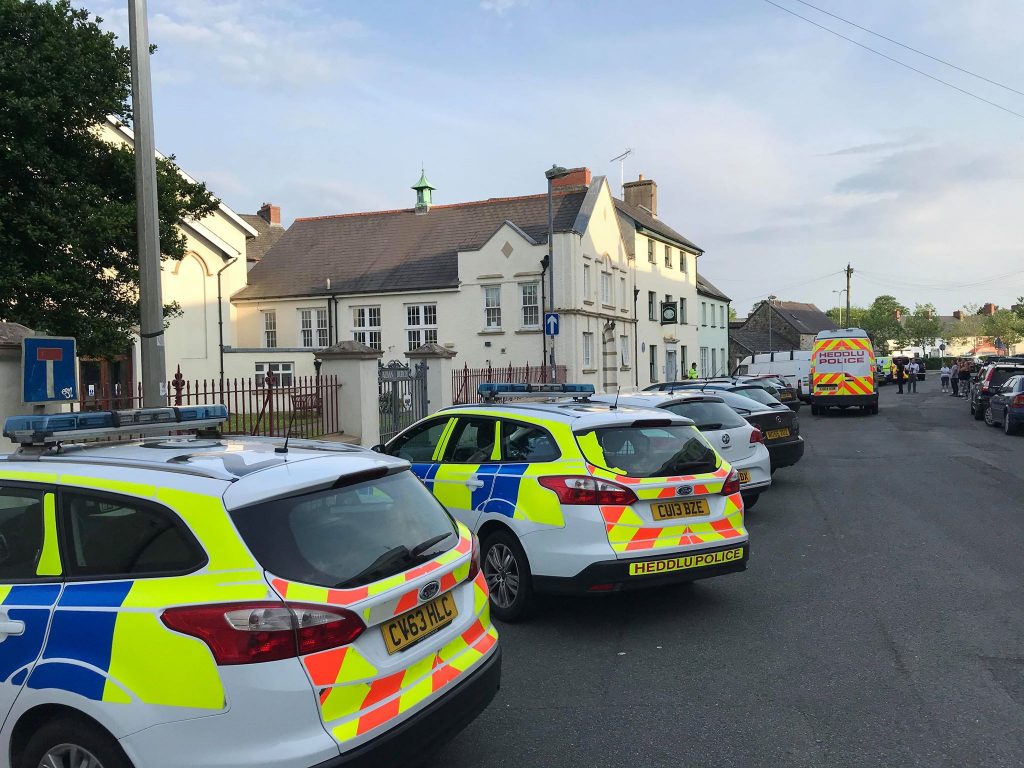
These protests have been extensively covered by local and regional media outlets. Social media has further amplified these events, with live broadcasts and widespread sharing increasing their visibility. This extensive coverage contributes to heightened public awareness and concern, potentially leading to the perception that child sex offenders are more prevalent in Pembrokeshire than statistics alone might suggest.
Research indicates that media portrayals can significantly influence public perceptions of crime, often leading to misconceptions about the frequency and nature of offences. For instance, sensationalized reporting can create a perception gap, where the public believes crime rates are higher than official statistics indicate.
In Pembrokeshire, the combination of high-profile protests, extensive media coverage, and the viral nature of social media content has likely contributed to a heightened perception of the prevalence of child sex offenders in the community. While community vigilance is crucial, it’s essential to balance public concern with factual data to avoid unnecessary fear and ensure informed discussions on public safety.
Conclusion
There is no conclusive evidence that Pembrokeshire experiences higher CSA rates than other parts of the UK. However, the county has seen significant cases, contributing to local fears. High-profile convictions, historical abuse revelations, and an increasing number of registered sex offenders have fueled public concern.
Authorities continue to strengthen policies such as Operation Soteria Bluestone, aimed at improving investigations. Police anticipate further rises in online CSA cases, emphasizing the need for ongoing vigilance. With public concern still high, transparency and continuous crime analysis will remain essential to safeguarding children and addressing community fears.














A 35-YEAR-OLD man stole almost £800 worth of goods from Tesco Extra in Haverfordwest to fund his alcohol and gambling addictions, a court has heard.
Five thefts from same store
Luke Brunton, 35, visited the store on five separate occasions between February and May 2025, taking items including pillows, duvets, Lego sets, Pokémon cards, alcohol, crisps and a saucepan set.
The first theft took place on February 27, when Brunton stole four packs of pillows, a double duvet, a cool pillow, a cuddle cushion, a Batman Lego set and a BMW Lego set, worth £167.50.
On March 1 he returned and stole Pokémon cards valued at £144. Three days later, he stole Baileys, vodka, Jack Daniel’s, three pillows, crisps and a saucepan set, worth £192.69.
The final offence took place on May 21, when Brunton again stole alcohol, pillows and toilet roll. The value of those items was not given to the court.
Addictions reduced
Brunton, of St Lawrence Close, Hakin, Milford Haven, appeared before Haverfordwest magistrates this week, where he pleaded guilty to five charges of theft.
The court was told the offences also breached a conditional discharge imposed by Kent Court for previous theft matters.
His solicitor, Michael Kelleher, said: “At the time, he was drinking to excess and was also gambling to excess.
“The shoplifts funded those habits, both of which were addictions.”
Mr Kelleher said Brunton’s drinking and gambling had significantly reduced since the offending.
Brunton was sentenced to a 24-month community order. He must complete 15 rehabilitation activity requirement days and 66 hours of unpaid work.
He must also pay £761.79 compensation to Tesco, a £114 surcharge and £85 costs.

Driver was heading home after visiting former girlfriend when police stopped him on the A477
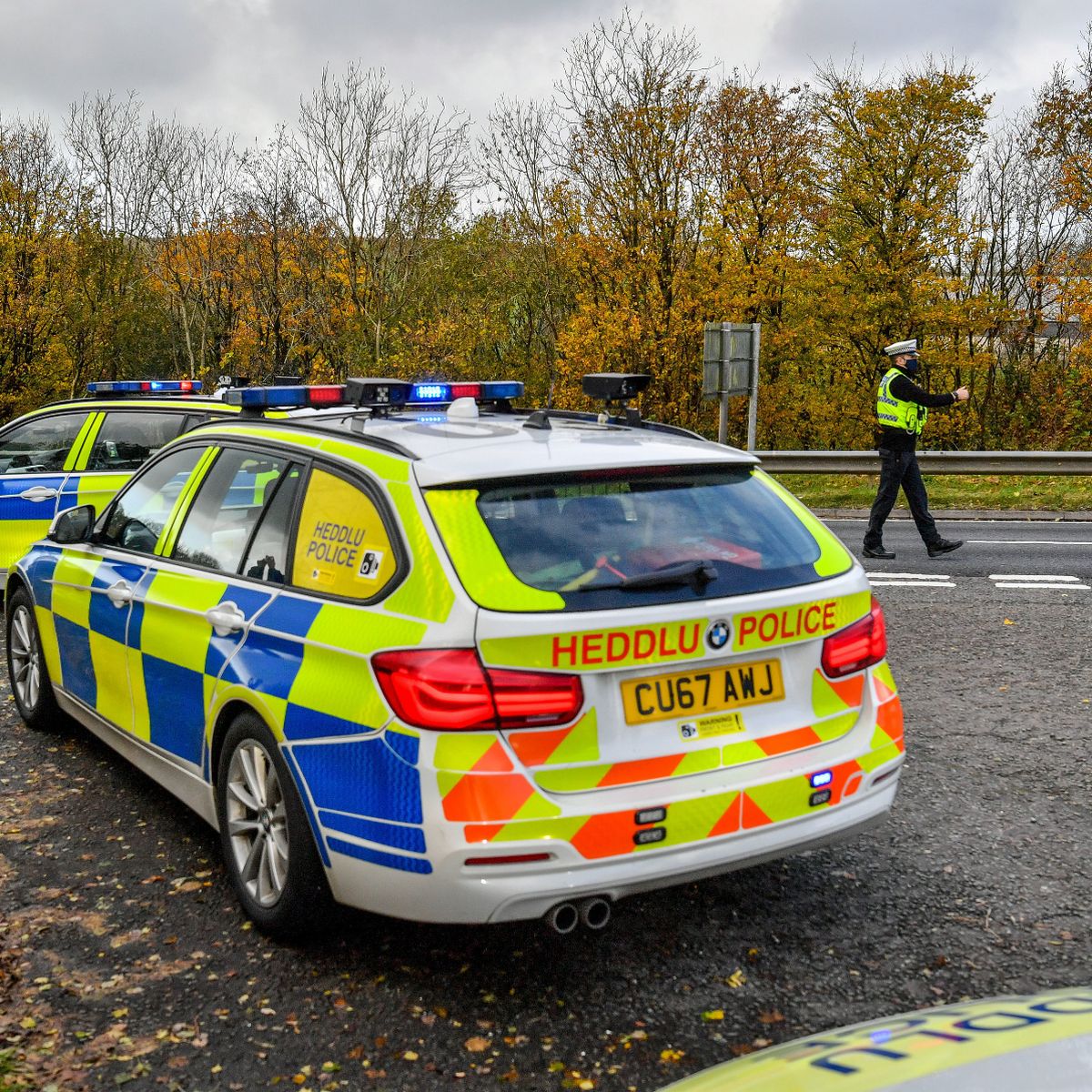
A WEST London motorist has been banned after being caught driving on the A477 in Broadmoor with a cocaine metabolite and cannabis in his system.
Danny Small, 32, was stopped by police carrying out routine checks at around 11:30am on January 28.
After providing a positive roadside drug swipe, Small was taken to a police station, where blood tests showed he had 157mcg of benzoylecgonine in his system. The legal limit is 50mcg.
He also had 2.9mcg of Delta-9 tetrahydrocannabinol in his system. The legal limit is 2mcg.
Small, of Little London Close, Uxbridge, appeared before Haverfordwest Magistrates’ Court this week, where he pleaded guilty to two drug-driving offences.
Probation officer Julie Norman told the bench that Small had been visiting his former girlfriend in Pembrokeshire and was driving home to Uxbridge at the time of the offence.
Ms Norman said Small was a regular cannabis and cocaine user.
“This helps treat his undiagnosed ADHD,” she said.
“He didn’t think the drugs would still have been in his system, as he’d consumed the drugs several days earlier. But drugs can often remain in the system for several weeks.”
Small was sentenced to a 12-month community order, during which he must complete 15 rehabilitation activity requirement days.
He was fined £80 and ordered to pay a £114 court surcharge and £85 costs. He was disqualified from driving for 15 months.

Pembroke Dock man was five times over the cannabis limit
A PEMBROKESHIRE carpenter has been banned from driving after being caught behind the wheel of his camper van while five times over the drug-drive limit.
James Toulouse, 35, was stopped by police shortly before midnight on December 20, 2025, as he drove his white Mercedes Vito along Buttermilk Lane in Pembroke.
“There was a strong smell of cannabis coming from the vehicle and the driver, who was James Toulouse, appeared glazed, as his eyes were red and bleary,” Crown Prosecutor Sian Vaughan told Haverfordwest Magistrates’ Court.
A roadside drug swipe proved positive. Further tests showed Toulouse had 11mcg of Delta-9 tetrahydrocannabinol in his system. The legal limit is 2mcg.
The court heard this was Toulouse’s second drug-driving offence in ten years.
Toulouse, of Clarence Street, Pembroke Dock, pleaded guilty to drug-driving.
He was represented by solicitor Michael Kelleher, who said the defendant works as a carpenter.
“Obviously it’s not going to be easy for him to carry on with his work, but he’s fully intending to do so,” he said.
Toulouse was disqualified from driving for 36 months. He was fined £350 and ordered to pay £85 court costs and a £140 surcharge.



Community15 hours ago
Manorbier fire scandal: Council’s payout just £63,777 after school destroyed
PEMBROKESHIRE COUNTY COUNCIL has accepted an insurance settlement which leaves it with just £63,777.07 after the catastrophic fire which destroyed...


News24 hours ago
Bus overturns in major incident near Kidwelly
All passengers rescued as emergency services remain at scene A BUS overturned on the A484 between Kidwelly and Ferryside on...


Community2 days ago
Tenby Summer Spectacular cancelled amid council row over harbour access
Organisers say popular charity events cannot safely go ahead without clear powers to control crowds TENBY ROUND TABLE has announced...


News2 days ago
Motorcyclist dies after four-vehicle crash on A40 in Carmarthenshire
A MOTORCYCLIST has died following a four-vehicle collision on the A40 between St Clears and Whitland. Dyfed-Powys Police said the...


News2 days ago
Rhun ap Iorwerth urges new deal for Wales after Starmer quits
First Minister says next Prime Minister must focus on greater powers, fair funding and respect for Wales’ democratic mandate FIRST...


News2 days ago
How Labour’s landslide victory unravelled in just two years
Prime Minister announces resignation after losing support within his own party as Andy Burnham emerges as overwhelming favourite to take...


News3 days ago
Long Course Weekend set to bring thousands to Pembrokeshire
Three days of swimming, cycling and running will once again transform Tenby into one of the UK’s biggest endurance sporting...


Community3 days ago
The gentle giant behind the tattoos
Pembrokeshire security worker Josh Davies praised for professionalism, kindness and proving first impressions can be wrong JOSH Davies is hard...


Charity4 days ago
Toy Story fans fill charity toy box at Haverfordwest cinema
Donations pour in for SNAP Specialist Play as families embrace Toy Story 5 launch A TOY STORY-themed charity appeal at...


Community4 days ago
Lord Rhys emerges from the mist in St Davids
Giant puppet begins historic journey marking 850 years since the first Eisteddfod MIST swirled around St Davids Cathedral on Friday...
-

 Crime6 days ago
Milford Haven man jailed for breaching domestic violence protection order
-

 News6 days ago
Crash on Freeman’s Way causes school-run chaos across Haverfordwest
-

 Health4 days ago
Woman jailed assaults on police, harassment and XL Bully possession
-

 Crime4 days ago
Milford Haven woman spared jail despite string of shop thefts
-

 Crime6 days ago
Portfield Gate man faces careless driving allegation after Tufton crash
-
Community3 days ago
The gentle giant behind the tattoos
-

 Local Government6 days ago
Pembrokeshire faces accessible housing shortage as 403 people wait for homes
-

 News7 days ago
Brexit at 10: How Britain was sold a dream that cost us dearly