


Crime
Carmarthenshire kidnap victim speaks out: ‘I thought I was going to die’


THE MUSIC producer lured to West Wales and brutally assaulted in a staged kidnap plot has spoken publicly for the first time, telling The Guardian of the terror he faced and the long road to recovery.
Itay Kashti, 45, was beaten, handcuffed, and left bleeding in a remote cottage in Carmarthenshire in August 2024, after being tricked into travelling from London for what he believed was a professional music camp. He said he feared he would never see his wife or children again.

“I thought: ‘This is it. I’m going to die and this is the end of my story.’ I felt it was the final scene from a movie. I was thinking about my children,” he told The Guardian’s Steven Morris in an emotional interview.
Three men – Faiz Shah and Mohammad Comrie, both 22, and Elijah Ogunnubi-Sime, 20 – were each sentenced last week to eight years and one month in custody after admitting kidnap at Swansea Crown Court.
The court heard the group deliberately targeted Mr Kashti because they believed he was wealthy and, according to the judge, possibly because of his Jewish heritage. “I was stigmatised and dehumanised,” said Mr Kashti. “The assumption was that a rich Jew lives in London, works in music, he must have money.”

He described how the men had posed as representatives of a music label and invited him to a songwriting camp in Wales. At first, the offer seemed legitimate. “They sounded a little bit green but they didn’t sound suspicious in any way,” he said. “The arrangement was that they would send a car to pick me up. They did mention I didn’t have to bring anything, but I took my Martin acoustic guitar.”
Upon entering the cottage in Llanybydder, he was ambushed. “Three guys, all masked, jumped at me and started hitting and kicking me on the head,” he said. “They said they were going to kill me. They chained me, handcuffed me to a pipe that came out of the radiator.”
Bloodied and terrified, he lay on the floor trying to make sense of what had happened and why. “I live a peaceful life and I’m not a political person. There was no reason to go for a person like myself.”
He later learned the attackers had panicked and fled. Using sheer determination, Mr Kashti freed himself, grabbed his phone – and his guitar – and escaped. “I didn’t want to leave the guitar. I dragged it along,” he said, showing bloodstains still visible on the case.
He hid in bushes and called his wife and police. Officers arrived within 20 minutes and launched a major operation, eventually finding the three men hiding in fields nearby. The response included a helicopter and specialist search teams.
Mr Kashti, originally from Israel and now a UK citizen, was left with serious facial injuries. His eyes were so swollen that he said he looked like a boxer after a brutal match. Doctors in Wales and at Moorfields Eye Hospital in London helped with his physical recovery.
But the emotional scars are taking longer to heal. “We all have a safety bubble. And that safety bubble has been burst for me,” he said. “When new people reach out, I have to be more vigilant. I’m more conscious of trouble that could emerge, danger that could happen. I guess it’s going to take me some time until I feel fully settled.”

Mr Kashti said most people didn’t know what he had been through. “You can’t just break it in a conversation and move on.”
Despite everything, he holds no hatred for his attackers. “I hope that the jail experience will turn them into better people. If they do turn into better people, then it was worth locking them up.”
His bravery in speaking out has been praised by supporters, including members of the Community Security Trust (CST), who have supported him since the attack. Police have also recognised his strength throughout the investigation and trial process.
The Herald understands the gang hoped to extort a million-pound ransom, though the plot quickly unravelled. The case has shocked both the music industry and the wider community, with many calling for greater awareness of the risks posed by online impersonation and targeted hate crimes.











A SPITTAL man is to stand trial accused of assaulting a man and causing actual bodily harm.
Robert Hedley, 41, of Wesley Way, Spittal, Haverfordwest, is charged with assaulting Liam Morley-Trivett at St Clears on August 30, 2025.
The case was before Haverfordwest Magistrates’ Court on Thursday (Jun 18).
Hedley was granted unconditional bail and is due to stand trial at the same court on Monday, June 29.
The trial is listed for 10:00am and has been given a time estimate of twenty minutes.

Repeat offender stole from Tesco, Home Bargains, Food Warehouse and petrol stations in wave of offences
A MILFORD HAVEN woman who admitted a series of shop thefts committed over a matter of weeks has been handed a suspended prison sentence by magistrates.
Marion Picton, aged 46, of Hawthorn Path, Milford Haven, appeared before Haverfordwest Magistrates’ Court on Wednesday (Jun 18) and pleaded guilty to eight theft offences and a drugs-related offence.
The court heard that Picton carried out a string of thefts at stores across Milford Haven between April and June this year.
Among the offences, Picton admitted stealing meat from Food Warehouse on Apr 23, food worth £60 from Victoria Filling Station on May 29, groceries from Home Bargains on Jun 7 and Jun 8, food from Victoria Filling Station on Jun 7 and Jun 9, groceries and non-food items worth £51.09 from Tesco on Jun 16, and food worth £32.50 from Food Warehouse on the same day.
She also admitted failing to attend an initial drugs assessment after testing positive for Class A drugs, including cocaine and opiates.
Magistrates were told the offences represented persistent repeat offending and had been committed while Picton was already subject to a court order.
The bench imposed an eight-week prison sentence, suspended for 18 months.
As part of the order, Picton must complete up to 15 rehabilitation activity days under the supervision of the Probation Service.
The court ordered her to pay compensation to several of the businesses affected, including Tesco, Home Bargains, Food Warehouse and Victoria Filling Station.
In sentencing, magistrates said the offences were serious enough to justify immediate custody but suspended the sentence because there was a realistic prospect of rehabilitation and Picton appeared motivated to address her addiction issues.
Picton was warned that any further offending during the 18-month suspension period could see the prison sentence activated.

A CARMARTHENSHIRE man has appeared before magistrates accused of making a bomb hoax and assaulting police officers.
Anthony Mold, 38, of Sandy Road, Llanelli, appeared before Llanelli Magistrates’ Court on Thursday (Jun 18).
Mold is charged with communicating false information by alleging that a bomb or other explosive substance was present at Dafen Police Station.
The allegation relates to an incident on May 6 this year.
The defendant also faces charges of assaulting two police officers, damaging a police vehicle, and breaching a Community Protection Notice.
Court records show the damage charge relates to a Dyfed-Powys Police vehicle.
Mold entered guilty pleas to the offences before the court.
District Judge M Layton remanded him in custody for the preparation of reports ahead of sentencing.
The case was adjourned until Thursday, July 2, when Mold is due to be sentenced at Llanelli Magistrates’ Court.



Charity8 hours ago
Toy Story fans fill charity toy box at Haverfordwest cinema
Donations pour in for SNAP Specialist Play as families embrace Toy Story 5 launch A TOY STORY-themed charity appeal at...


Community12 hours ago
Lord Rhys emerges from the mist in St Davids
Giant puppet begins historic journey marking 850 years since the first Eisteddfod MIST swirled around St Davids Cathedral on Friday...


News1 day ago
Tragic tribute paid to Haverfordwest man after A4075 collision
FAMILY REMEMBERS “KIND AND LOVING” CALLUM HANSON THE FAMILY of a 22-year-old man from Haverfordwest who died following a road...

News2 days ago
Motorcyclist, 22, dies in A4075 crash in Pembrokeshire
A 22-year-old woman remains in hospital after two-vehicle collision A MOTORCYCLIST has died following a serious two-vehicle crash on the...

Community2 days ago
Why police will be visiting every home in Pembrokeshire
New operation aims to knock on more than 257,000 doors across Dyfed-Powys over the next three years DYFED-POWYS POLICE has...


Crime3 days ago
Prisons at breaking point: MPs warn Wales is paying the price of a failing system
Frozen healthcare budgets, overcrowded jails, homelessness on release and mounting pressure on staff are undermining rehabilitation across Wales, according to...


News3 days ago
Brexit at 10: How Britain was sold a dream that cost us dearly
A decade after the referendum, the promised benefits remain hard to find while the economic costs are increasingly difficult to...


Crime3 days ago
Worcestershire man jailed after violent attack on woman in Tenby
Defendant was already serving a suspended sentence when serious assault took place A WORCESTERSHIRE man has been jailed for more...


Climate3 days ago
Offshore wind ‘could bring new generation of jobs to Milford Haven’
Pembrokeshire ports and Celtic Sea projects placed at centre of Wales’ green energy ambitions MILFORD HAVEN and Pembroke Dock could...


Community4 days ago
Police officer hailed hero after midnight sea rescue in Milford Haven
PC swam 100 metres offshore to save distressed woman heard calling for help in darkness A DYFED-POWYS POLICE officer has...
-

 Community6 days ago
Pembrokeshire Chess Club crowned Welsh champions
-

 Crime3 days ago
Milford Haven man jailed for breaching domestic violence protection order
-

 Local Government4 days ago
Security privately arranged by Mayor at Beating of the Bounds
-

 News2 days ago
Crash on Freeman’s Way causes school-run chaos across Haverfordwest
-

 Crime4 days ago
Man wanted by court after failing to attend hearing over alleged shop thefts
-
 Crime4 days ago
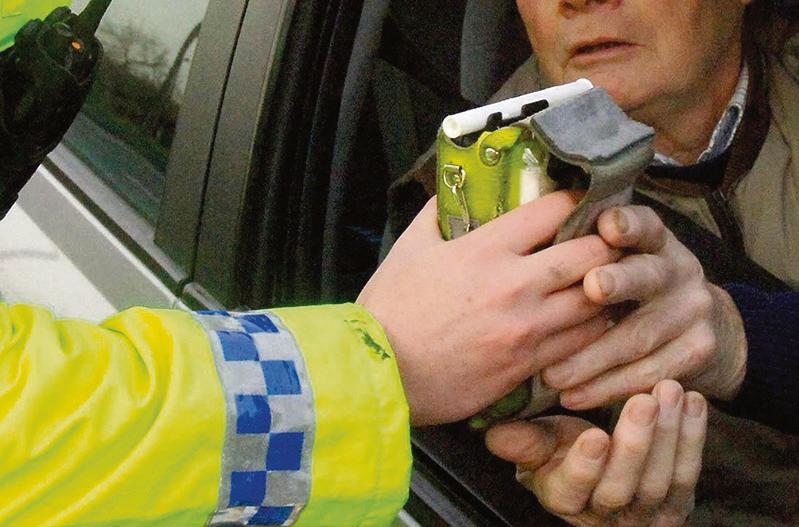
Man banned from roads after drink-driving offence
-

 Crime4 days ago
Man jailed after admitting strangulation and assaults
-
 Crime4 days ago
Man sentenced over stalking campaign and lock knife offence