


News
Build the M4 relief road – say Welsh Conservatives in Senedd debate

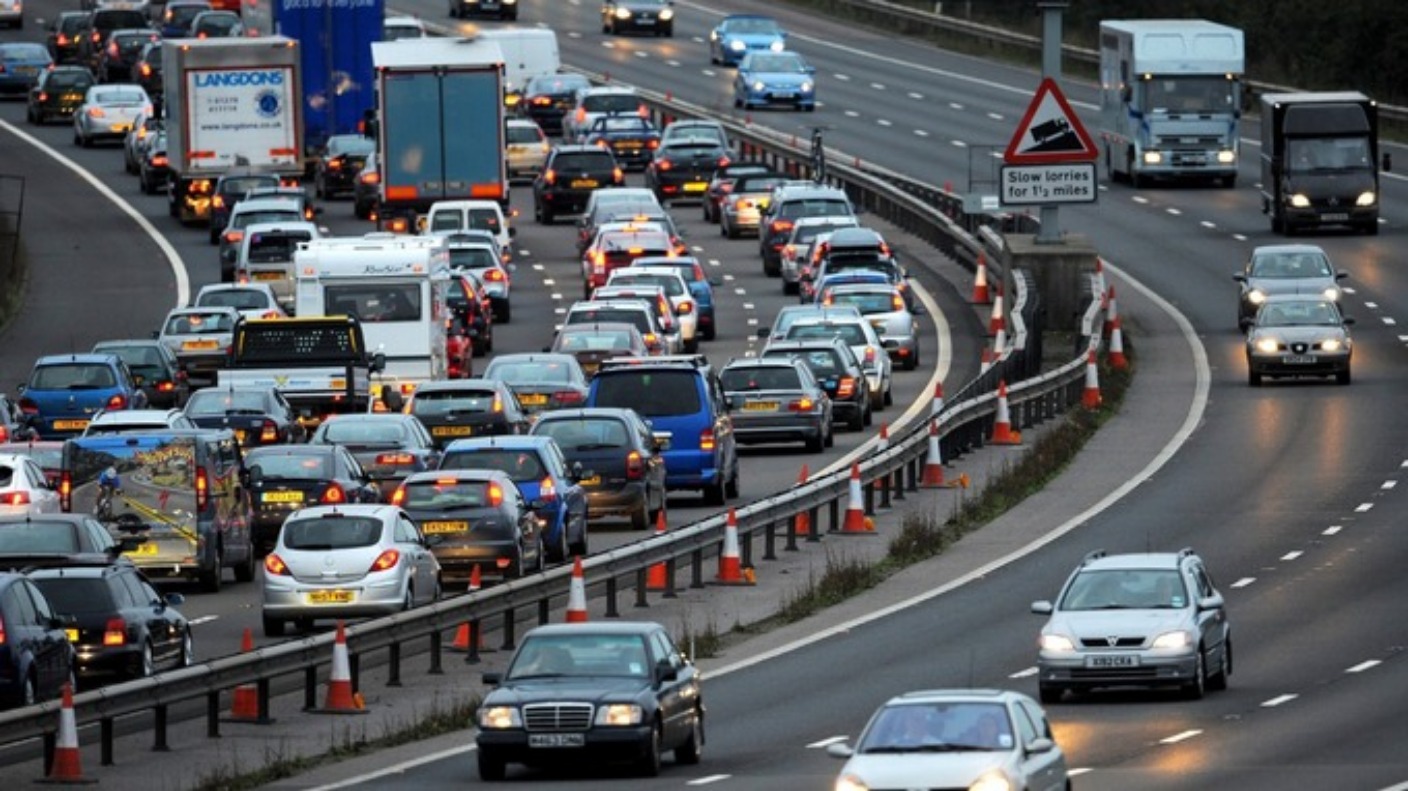
THIS month marks six years since the Welsh Labour Government formally cancelled the M4 relief road project near Newport — a decision that continues to divide opinion across Wales.
The proposed six-lane motorway, designed to bypass the heavily congested Brynglas Tunnels, was scrapped in June 2019 by First Minister Mark Drakeford. At the time, he cited the £1.4 billion cost, the ecological importance of the Gwent Levels, and the Welsh Government’s commitment to reduce emissions from transport.
Despite over £150 million of public money already spent on preparatory work and planning, the project was abandoned. It has since become a key battleground in the debate over infrastructure, the economy, and climate policy in Wales.
Welsh Conservatives: “Build it now”
This week, the Welsh Conservatives brought a motion before the Senedd urging ministers to revisit the decision and move forward with delivering the M4 relief road.
Sam Rowlands MS, Conservative Shadow Secretary for Finance, Transport and Infrastructure, said:

“Labour’s decision to scrap the M4 relief road wasted huge amounts of money and was an attack on Welsh motorists.
An M4 relief road would have alleviated traffic demands, whilst boosting our economy and investment into Wales.
Welsh Conservatives will always be on the side of motorists, and that’s why we’re calling for the M4 relief road to be delivered.”
Party leader Andrew RT Davies added that the relief road is essential if Wales is serious about attracting investment and improving productivity:
“We desperately need an M4 Relief Road, to improve transport infrastructure and attract investment into South Wales.”
Labour and Plaid: Environmental costs and funding gaps
The Labour-led Welsh Government has defended its stance, arguing that major roadbuilding projects are incompatible with the urgent need to reduce emissions and shift towards sustainable transport. The decision to scrap the project was reinforced by a wider moratorium on new roadbuilding, introduced in 2021.
Lee Waters MS, then Deputy Minister for Economy and Transport, was clear: “We won’t get to Net Zero unless we stop doing the same thing over and over again. Building more roads to deal with congestion is not a long-term solution.”

Plaid Cymru, meanwhile, has focused on funding, arguing that the UK Government has failed to provide the necessary infrastructure investment. Ben Lake MP told Parliament last week:
“This new money does not come close to the £1.8 billion owed to Wales. And simply, there’s no additional money for road infrastructure and to even revisit things like the M4 relief road.”
How did a road that hasn’t been built cost millions?
Although the M4 relief road was never constructed, the Welsh Government still spent more than £150 million of public money on the project — a figure that continues to raise eyebrows.
The costs stem not from construction, but from a wide range of preparatory and legal work undertaken over several years before the scheme was cancelled in 2019.
A significant portion of the money — over £15 million — was spent on compulsory purchase of homes and land along the proposed route. At least 29 residential properties were bought, some just weeks before First Minister Mark Drakeford pulled the plug. Two houses in particular were purchased in April 2019 for £575,000 and £400,000 respectively.
Millions more went into planning, environmental studies, traffic modelling, engineering designs, and the costs of the public inquiry — a legal process that included months of hearings and hundreds of pages of technical submissions.
Specialist consultants were hired to advise on road design, ecological mitigation, legal compliance, transport economics and flood risk — all of which are standard for major infrastructure proposals. These reports were produced in line with UK Government transport policy requirements and the Welsh Government’s own planning framework.
While no tarmac was ever laid, these upfront costs reflect the extensive legal, technical and bureaucratic groundwork required for a nationally significant road project. As critics have pointed out, hundreds of millions were spent only to cancel the scheme, with no visible infrastructure to show for it.
The properties bought under compulsory purchase are now being managed by the Welsh Government’s property division, with some rented out. However, their long-term use remains uncertain.
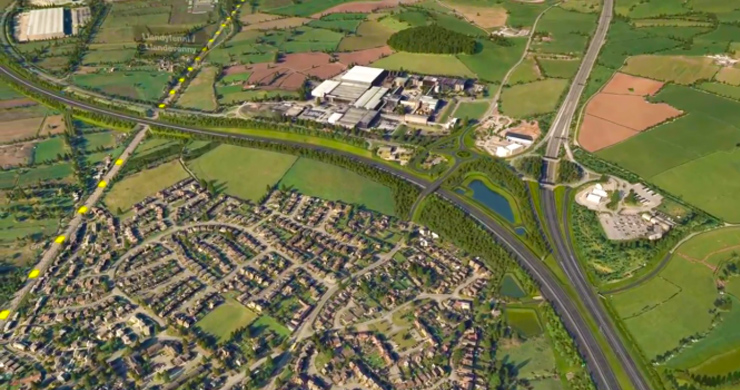
The cost of inaction
While some academics have cautioned that road projects can induce more traffic and fail to deliver long-term economic transformation, most experts agree that Wales has already lost hundreds of millions of pounds by not building the M4 relief road — and the costs continue to mount.
The Freight Transport Association warned in 2019 that cancellation could result in “hundreds of millions of pounds in lost private sector investment.”
A 2009 business case suggested the scheme would deliver £695 million in net benefits over its lifetime.
The CBI has repeatedly said that poor transport connectivity is one of the biggest barriers to attracting new business to South Wales.
The Welsh Government’s own 2016 report found that congestion on the M4 imposes significant costs on productivity, freight movement, and tourism — all of which act as a drag on economic performance.
Even critics of the original scheme concede that the current traffic bottleneck at the Brynglas Tunnels remains one of the worst in the UK, with the South East Wales Transport Commission ranking it as the 4th most congested urban motorway in Britain and among the top 50 in Europe.
Despite earlier warnings that the relief road might only offer short-term gains, the economic and logistical price of inaction is becoming harder to ignore.
The motion
The motion brought forward by the Welsh Conservatives reads:
To propose that the Senedd:
- Regrets that this month marks six years since the M4 relief road project was scrapped.
- Calls on the Welsh Government to deliver an M4 relief road.
Labour and Plaid Cymru are expected to vote against the motion, but the debate has once again brought national attention to the M4 corridor’s ongoing transport crisis — and the growing cost of not fixing it.


Organisers say popular charity events cannot safely go ahead without clear powers to control crowds
TENBY ROUND TABLE has announced that this summer’s Tenby Summer Spectacular events have been cancelled until further notice amid a dispute with Pembrokeshire County Council over crowd control at the harbour.
The events, which were due to take place on Sunday, August 16 and Sunday, August 30, have been a major feature of Tenby’s summer calendar for decades, drawing large crowds to the harbour for entertainment, food, drink and fireworks.
In a statement, Tenby Round Table said the decision had been made “with enormous sadness” and claimed it had been forced on organisers because of unresolved issues over the safe management of pedestrian access.
The organisation said it needed the council’s Public Realm department to use statutory powers to temporarily restrict pedestrian access through the event area when capacity is reached.
Organisers said the matter had first been raised with the council in September 2025 and again formally in writing in May 2026.
They said volunteers had attended meetings, commissioned professional health and safety consultants and worked on Event Management Plans, but claimed the council had still not provided a clear answer.
Tenby Round Table said: “PCC’s Public Realm department has had nine months to answer one question on safe and controlled access to the harbour. It has not done so.”
The group also alleged that recent written responses from the council contained factual inaccuracies and misleading statements about the relevant legislation.
It added that the council’s legal advice was understood to be provisional and still under internal review.
The cancellation is currently described as provisional, with organisers giving the council a final deadline of June 25 to provide what they describe as a clear, accurate and legally grounded answer.
Tenby Round Table said that if this is provided, it will do everything possible to reinstate the events.
The group said the Summer Spectacular had raised hundreds of thousands of pounds for local charities, sports teams, community groups and worthy individuals since it began.

It said the cancellation would be a devastating blow to those who benefit from the funds raised.
The statement added that organisers are still working with Dyfed-Powys Police and other relevant authorities ahead of a council licensing committee meeting in July, which is expected to consider whether the event licence should be renewed, amended or withdrawn.
The Herald has asked Pembrokeshire County Council for comment.


SUNSHINE, sea shanties and street food helped draw hundreds of visitors to Cardigan RNLI Lifeboat Station on Saturday (Jun 20).
The station’s Sea Shanty and Street Food Festival brought together families, supporters and visitors from across the region for a day of maritime music, food and community spirit.
Traditional sea shanty groups performed throughout the event, with songs echoing around the lifeboat station, while street food vendors served a range of refreshments.
The event also gave visitors the chance to learn more about the lifesaving work carried out by the RNLI and its volunteer crews.
Cardigan RNLI thanked the performers, food vendors, volunteers, sponsors and supporters who helped make the day a success.
Bruce Harris, Launch Authority and event organiser, said: “It was wonderful to see so many people come together to support the station, enjoy the entertainment, and celebrate our maritime heritage.
“The atmosphere throughout the day was fantastic, and we are incredibly grateful to everyone who attended, performed, volunteered, and contributed to such a memorable event.”
The RNLI is the charity that saves lives at sea. Its volunteers provide a 24-hour search and rescue service around the United Kingdom and Republic of Ireland coasts.
The charity operates 238 lifeboat stations in the UK and Ireland and more than 240 lifeguard units on beaches around the UK and Channel Islands.
Since the RNLI was founded in 1824, its lifeboat crews and lifeguards have saved more than 146,700 lives.

The Greater Manchester mayor has spent years outside Westminster, but Starmer’s resignation has placed him on the brink of Number 10
ANDY BURNHAM has spent years being described as Labour’s future. Today, that future appears to have arrived.
Following Sir Keir Starmer’s resignation announcement, the Mayor of Greater Manchester is now widely regarded as the overwhelming favourite to become Labour leader and Britain’s next Prime Minister.
For many people outside politics, Burnham is best known as the outspoken mayor who challenged Boris Johnson’s government during the COVID-19 pandemic. But his political career stretches back more than twenty years and includes some of the most senior jobs in government.
Born in Merseyside in 1970, Burnham grew up in a working-class family and has always remained closely associated with his northern roots. A lifelong Everton supporter, he has often spoken about the importance of community, public services and opportunity for ordinary families.
After studying English at Cambridge University, he worked briefly in journalism before entering politics. He was elected Labour MP for Leigh in Greater Manchester in 2001 and quickly became one of the party’s rising figures.
Under Tony Blair and Gordon Brown, Burnham climbed the ministerial ladder. He served as Chief Secretary to the Treasury, Culture Secretary and later Health Secretary, giving him experience across some of the most important departments in government.
His first bid for the Labour leadership came in 2010, after Labour’s general election defeat. He lost to Ed Miliband, but the campaign raised his profile significantly. Five years later, he ran again, only to be defeated by Jeremy Corbyn in the contest that transformed Labour politics.
Rather than remain on the Westminster backbenches, Burnham made a bold move in 2017 by standing for the newly created role of Mayor of Greater Manchester. He won comfortably and went on to become one of the most recognisable regional politicians in Britain.
His national profile grew sharply during the pandemic, when he publicly challenged the UK Government over restrictions and financial support for northern cities. His confrontation with Downing Street won him praise from voters who felt their communities were being ignored by Westminster.
Supporters say Burnham’s appeal lies in his ability to connect with traditional Labour voters while remaining acceptable to the party’s centre ground. They see him as authentic, approachable and more in touch with everyday concerns than many Westminster politicians.
Politically, Burnham has championed greater devolution, arguing that power should be moved away from London to regions and nations across the UK. He has also backed transport reform, stronger public services and economic policies aimed at spreading growth beyond the South East of England.
For Wales, a Burnham premiership would be watched closely. He would inherit a Labour Party still reeling from its collapse in the Senedd election, where Plaid Cymru emerged as the dominant force in Welsh politics.
His emphasis on devolution may be welcomed in Wales, but he would face immediate pressure to show that any new relationship with the nations of the UK is more than rhetoric.
Critics argue that Burnham can be short on detail and long on broad messages. Others point out that he has spent nearly a decade outside Westminster and would need to rebuild relationships quickly in Parliament.
Despite those concerns, few figures in Labour possess his combination of experience, public recognition and electoral success. His victory in the Makerfield by-election returned him to the House of Commons and immediately intensified speculation about Starmer’s future.
Now, with Starmer stepping aside, that speculation appears close to becoming reality.
If Burnham secures the Labour leadership without a serious challenger, as many expect, he will become Britain’s next Prime Minister and inherit a government facing economic pressure, political division and a public increasingly impatient for change.
For a politician who has spent years waiting in the wings, the moment may finally have arrived.



Community4 hours ago
Tenby Summer Spectacular cancelled amid council row over harbour access
Organisers say popular charity events cannot safely go ahead without clear powers to control crowds TENBY ROUND TABLE has announced...


News9 hours ago
Motorcyclist dies after four-vehicle crash on A40 in Carmarthenshire
A MOTORCYCLIST has died following a four-vehicle collision on the A40 between St Clears and Whitland. Dyfed-Powys Police said the...


News9 hours ago
Rhun ap Iorwerth urges new deal for Wales after Starmer quits
First Minister says next Prime Minister must focus on greater powers, fair funding and respect for Wales’ democratic mandate FIRST...


News10 hours ago
How Labour’s landslide victory unravelled in just two years
Prime Minister announces resignation after losing support within his own party as Andy Burnham emerges as overwhelming favourite to take...


News23 hours ago
Long Course Weekend set to bring thousands to Pembrokeshire
Three days of swimming, cycling and running will once again transform Tenby into one of the UK’s biggest endurance sporting...


Community1 day ago
The gentle giant behind the tattoos
Pembrokeshire security worker Josh Davies praised for professionalism, kindness and proving first impressions can be wrong JOSH Davies is hard...


Charity2 days ago
Toy Story fans fill charity toy box at Haverfordwest cinema
Donations pour in for SNAP Specialist Play as families embrace Toy Story 5 launch A TOY STORY-themed charity appeal at...


Community2 days ago
Lord Rhys emerges from the mist in St Davids
Giant puppet begins historic journey marking 850 years since the first Eisteddfod MIST swirled around St Davids Cathedral on Friday...


News3 days ago
Tragic tribute paid to Haverfordwest man after A4075 collision
FAMILY REMEMBERS “KIND AND LOVING” CALLUM HANSON THE FAMILY of a 22-year-old man from Haverfordwest who died following a road...

News4 days ago
Motorcyclist, 22, dies in A4075 crash in Pembrokeshire
A 22-year-old woman remains in hospital after two-vehicle collision A MOTORCYCLIST has died following a serious two-vehicle crash on the...
-

 Crime5 days ago
Milford Haven man jailed for breaching domestic violence protection order
-

 Local Government6 days ago
Security privately arranged by Mayor at Beating of the Bounds
-

 News4 days ago
Crash on Freeman’s Way causes school-run chaos across Haverfordwest
-

 Crime6 days ago
Man wanted by court after failing to attend hearing over alleged shop thefts
-
 Crime6 days ago
Man banned from roads after drink-driving offence
-

 Crime6 days ago
Man jailed after admitting strangulation and assaults
-

 Crime6 days ago
Drug trafficker must repay £33,000 after court rules he made nearly £500,000
-

 Crime6 days ago
Man sentenced over stalking campaign and lock knife offence