


Climate
Majority of Welsh adults open to solar – but myths blocking the sunshine savings


New Energy Saving Trust poll highlights opportunity and confusion over solar installations in Wales
AS the summer solstice nears, bringing the longest day of the year, a new survey by the Energy Saving Trust reveals that more than half of adults in Wales would consider installing solar panels—if cost weren’t a barrier.
In 2024 alone, over 15,000 new solar systems were installed across Wales. Yet despite rising interest, many still hesitate, with confusion over costs and effectiveness shading potential savings.
A poll conducted by YouGov for the Trust found that 60% of Welsh adults would consider solar panels if money were no object. However, 56% said they were put off by installation costs, and a quarter were unsure if panels would reduce their energy bills.
To tackle this uncertainty, the Energy Saving Trust has released updated guidance, including a revamped solar calculator to help households estimate installation costs, savings, and potential income from selling unused electricity back to the grid.
Joanna O’Loan, Knowledge Manager at the Energy Saving Trust, said: “Installing solar panels is a smart long-term investment. They work effectively across the UK—even in Wales—and combining them with battery storage and heat pumps can maximise benefits. The net zero home of the future will be powered by a mix of low-carbon technologies.”

Bright returns and real savings
The average installation cost for a domestic 3.5kWp solar system is now around £6,100, and depending on usage and location, homes in Aberystwyth could save £150–£370 annually on electricity bills.
Excess energy can be sold back to the grid through the Smart Export Guarantee (SEG) scheme, providing homeowners with an additional revenue stream. Adding battery storage—which allows energy to be saved for cloudy days or night-time use—can enhance these benefits. Around 48% of survey respondents said they would consider installing solar battery systems if money were no object.
Battery systems typically cost £5,000–£8,000, but can significantly reduce reliance on the grid, especially when paired with smart energy tariffs.
Environmental boost
While savings are a big driver, environmental concerns are not far behind. Over a third (37%) of respondents said they’d install panels to lower their carbon footprint. Solar can reduce emissions by 700–850kg of CO₂ per year, the equivalent of driving from London to Bristol 26 times.
Despite this, only 14% of Welsh respondents believed solar panels are very effective across the UK. The Trust aims to bust this myth, highlighting that modern panels generate electricity even on cloudy days.
Real-world success
Tim, who installed solar panels and battery storage at his Grade II-listed home in Somerset, reported £1,200 in savings in 2024 alone, by using a flexible tariff and charging batteries overnight.
In Malvern, Beth and Martin use their solar setup to power their home and electric vehicle: “It did take a few small changes—like doing the laundry overnight—but now it’s second nature. Solar has saved us money and made our home more sustainable.”

Try the solar calculator
Householders can now explore how much they could save using the Trust’s updated solar panel calculator, available on their website. By answering a few simple questions, users can receive estimates on installation costs, energy bill savings, and SEG earnings.
Visit: www.energysavingtrust.org.uk for more information and to use the calculator.

Countryside charity says renewables must be built in the right places
A WELSH countryside charity has backed offshore wind as a major opportunity for Wales, saying it can deliver clean energy, skilled jobs and coastal regeneration without putting unnecessary pressure on rural landscapes.
CPRW, The Welsh Countryside Charity, said comments by Cabinet Minister Adam Price in support of offshore wind marked a positive direction for Wales’ renewable energy future.
The charity said offshore wind offered one of the clearest ways for Wales to meet its future electricity needs while reducing pressure for large-scale onshore developments in sensitive upland areas, peatlands, productive farmland and rural communities.
The issue has become increasingly prominent across Wales as communities respond to major renewable energy proposals, including new-generation wind turbines, pylons, substations and grid infrastructure.
CPRW said it supported the transition to renewable energy, but argued that Wales needed a planned national strategy rather than a system which left rural communities reacting to speculative applications.
The Welsh Government has also identified offshore wind as a key economic opportunity, particularly around ports, supply chains, manufacturing, maintenance, skills and long-term energy infrastructure.
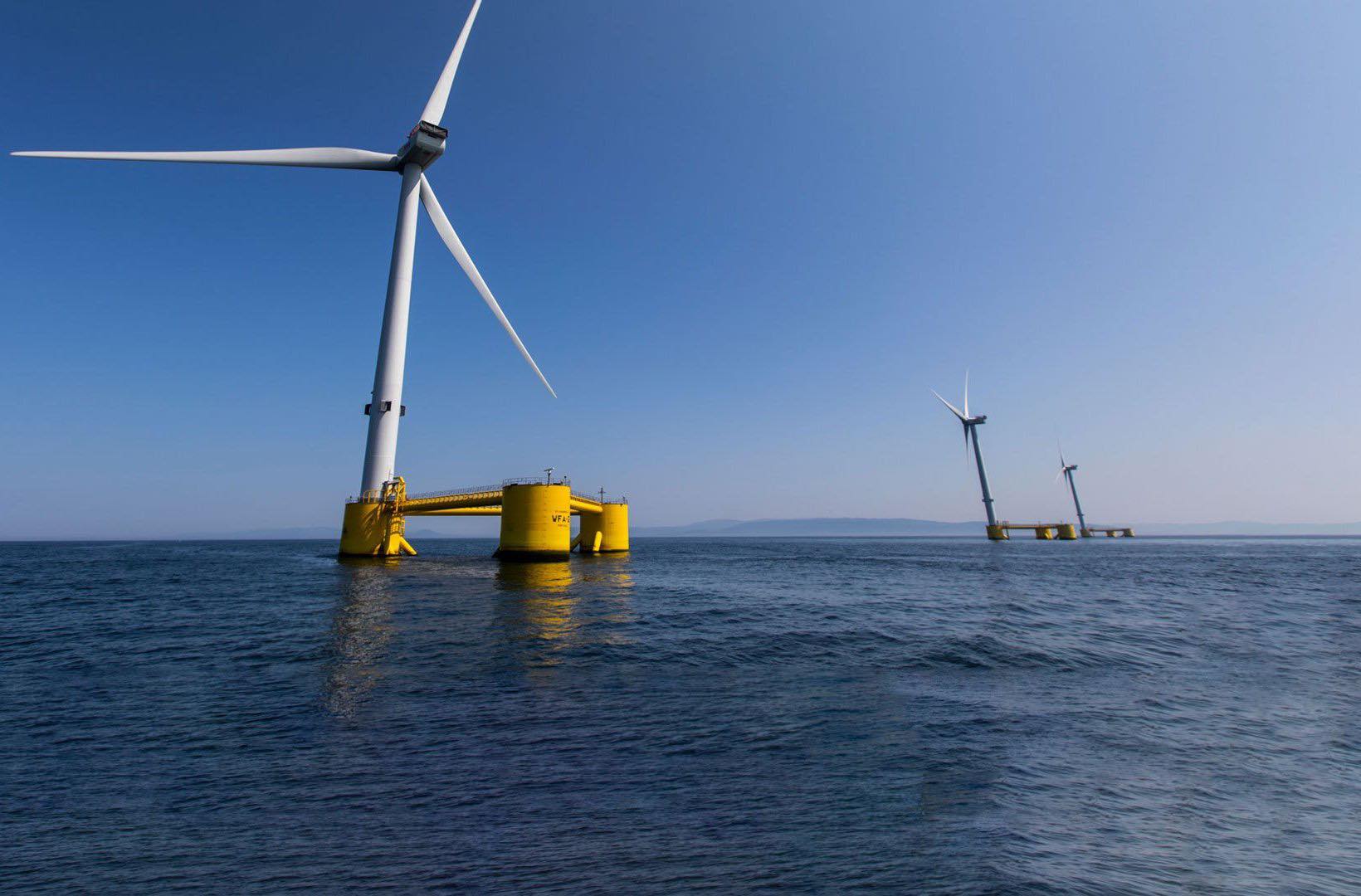
Floating offshore wind in the Celtic Sea is seen as especially important for south west Wales, with Milford Haven and Port Talbot both linked to future green energy and port development.
Dr Jonathan Dean, CPRW energy specialist, said: “Adam Price is making some very encouraging noises. Wales absolutely needs renewable energy, but we also need to be strategic about where it goes.
“Offshore wind has the potential to revitalise the economy in both north and south Wales, with genuine long-term service and support jobs linked to ports, maintenance, skills and supply chains.
“It can deliver clean electricity at the scale Wales needs, without forcing unnecessary trade-offs with our most valued landscapes, upland peat, rare habitats and rural communities.
“This should be the direction of travel for Wales: ambitious, strategic and offshore-led.”
CPRW said Wales must ensure that renewable energy development brings lasting benefit to Welsh communities, rather than simply exporting power and profit elsewhere.

Jonty Colchester, Chair of CPRW, said: “CPRW strongly supports the transition to renewable energy, but it must be planned properly and in the public interest.
“Offshore wind gives Wales a major opportunity to lead: creating skilled jobs, supporting coastal communities and delivering clean energy, while helping to protect the countryside and landscapes that are central to our national identity.
“We welcome the Minister’s comments and urge Welsh Government to put offshore wind, marine energy, grid modernisation and Welsh supply-chain benefit at the heart of a clear national energy strategy.”
The charity said offshore wind should sit alongside marine energy, grid upgrades and stronger community benefit arrangements.
It added that a strategic approach was needed to protect landscapes, nature and rural communities while still delivering the scale of clean power needed for the future.
CPRW, formerly known as the Campaign for the Protection of Rural Wales, has worked for nearly 100 years to protect rural landscapes and promote sustainable development.

Pembrokeshire ports and Celtic Sea projects placed at centre of Wales’ green energy ambitions
MILFORD HAVEN and Pembroke Dock could be at the heart of a new offshore wind boom after Wales’ new energy minister said the sector could drive jobs, investment and coastal regeneration.
Adam Price, the Cabinet Minister for Enterprise, Connectivity and Energy, told the Global Offshore Wind 2026 conference that Wales was “open for business” and ready to work with industry, the UK Government and The Crown Estate.

For Pembrokeshire, the announcement is particularly significant. The Milford Haven Waterway is already being positioned as a key base for floating offshore wind in the Celtic Sea, with Pembroke Port earmarked as a major renewables hub. Plans for a dedicated floating offshore wind storage compound at Pembroke Dock have already secured planning permission.
Mr Price said: “I believe that the offshore wind sector has the potential to deliver high quality sustainable career opportunities for people in Wales.
“The offshore wind sector has a key role to play in bringing about the regeneration of coastal communities in both north and south Wales.
“Our role is to remove the blockers faced by the sector — whether in planning, access to finance or infrastructure.”
The Celtic Sea floating wind programme is expected to create major supply chain opportunities for Welsh ports, engineering firms, vessel operators and training providers. Marine Energy Wales has said the first 4.5GW of floating offshore wind in the Celtic Sea could create more than 5,300 jobs during construction.
The Port of Milford Haven has previously said the Haven’s existing energy expertise, heavy engineering base and deep-water port facilities make it well placed to support the industry.
Mr Price also welcomed UK Government support for Port Talbot, but Pembrokeshire businesses will be watching closely to ensure Milford Haven and Pembroke Dock receive a fair share of the investment.
Jessica Hooper, Director of RenewableUK Cymru, said offshore wind was “Wales’ next big industrial opportunity”, adding that it could be worth almost £5bn to Welsh businesses and deliver more than 3,000 long-term secure jobs.
For Milford Haven, long associated with oil, gas and marine industry, floating offshore wind could mark the next chapter in the Haven’s energy story.

VISITORS to this year’s Royal Welsh Show are being encouraged to use public transport as organisers look to ease congestion and promote more sustainable travel.
The show takes place at the Royal Welsh Showground in Llanelwedd, Builth Wells, from July 20 to 23, and is expected to attract thousands of people from across Wales and beyond.
The Royal Welsh Agricultural Society said rail and bus services would provide convenient options for showgoers, with free shuttle buses running from Builth Road railway station to the showground, which is just over a mile away.
Discounted admission
Visitors travelling on the Heart of Wales Line with a valid rail ticket will be able to buy discounted show admission tickets from conductors and ticket offices along the route.
The discounted prices are £35 for adults and £11 for children. Children under 16 can travel free by train when accompanied by a fare-paying adult.
Transport for Wales said rail services would connect visitors from across Wales and the borders, including routes from Cardiff through some of Wales’ most scenic countryside. TrawsCymru bus services will also provide another option for those travelling to the event.
Family activities
Transport for Wales and Network Rail will also have an interactive stand at the show, offering family-friendly rail safety activities and entertainment.
Activities will include VR headset experiences, story time sessions, badge-making classes and rail safety performances. Builth Wells Male Voice Choir is also due to visit the stand on the first day of the show.
Children under 16 travelling to the show by train on the Heart of Wales Line will be able to collect a free activity sheet on board and hand in their completed artwork at the Transport for Wales stand for a chance to win a prize.
Visitors are being urged to plan their journeys in advance through the Transport for Wales website and journey planner.
Travel encouraged:
Visitors to the Royal Welsh Show are being urged to consider rail and bus services this year (Pic: RWAS).




Charity11 hours ago
Toy Story fans fill charity toy box at Haverfordwest cinema
Donations pour in for SNAP Specialist Play as families embrace Toy Story 5 launch A TOY STORY-themed charity appeal at...


Community15 hours ago
Lord Rhys emerges from the mist in St Davids
Giant puppet begins historic journey marking 850 years since the first Eisteddfod MIST swirled around St Davids Cathedral on Friday...


News2 days ago
Tragic tribute paid to Haverfordwest man after A4075 collision
FAMILY REMEMBERS “KIND AND LOVING” CALLUM HANSON THE FAMILY of a 22-year-old man from Haverfordwest who died following a road...


News3 days ago
Motorcyclist, 22, dies in A4075 crash in Pembrokeshire
A 22-year-old woman remains in hospital after two-vehicle collision A MOTORCYCLIST has died following a serious two-vehicle crash on the...


Community3 days ago
Why police will be visiting every home in Pembrokeshire
New operation aims to knock on more than 257,000 doors across Dyfed-Powys over the next three years DYFED-POWYS POLICE has...


Crime3 days ago
Prisons at breaking point: MPs warn Wales is paying the price of a failing system
Frozen healthcare budgets, overcrowded jails, homelessness on release and mounting pressure on staff are undermining rehabilitation across Wales, according to...


News3 days ago
Brexit at 10: How Britain was sold a dream that cost us dearly
A decade after the referendum, the promised benefits remain hard to find while the economic costs are increasingly difficult to...


Crime3 days ago
Worcestershire man jailed after violent attack on woman in Tenby
Defendant was already serving a suspended sentence when serious assault took place A WORCESTERSHIRE man has been jailed for more...


Climate3 days ago
Offshore wind ‘could bring new generation of jobs to Milford Haven’
Pembrokeshire ports and Celtic Sea projects placed at centre of Wales’ green energy ambitions MILFORD HAVEN and Pembroke Dock could...


Community4 days ago
Police officer hailed hero after midnight sea rescue in Milford Haven
PC swam 100 metres offshore to save distressed woman heard calling for help in darkness A DYFED-POWYS POLICE officer has...
-

 Community6 days ago
Pembrokeshire Chess Club crowned Welsh champions
-

 Crime3 days ago
Milford Haven man jailed for breaching domestic violence protection order
-

 Local Government5 days ago
Security privately arranged by Mayor at Beating of the Bounds
-

 News3 days ago
Crash on Freeman’s Way causes school-run chaos across Haverfordwest
-

 Crime4 days ago
Man wanted by court after failing to attend hearing over alleged shop thefts
-
 Crime4 days ago
Man banned from roads after drink-driving offence
-

 Crime4 days ago
Man jailed after admitting strangulation and assaults
-

 Crime4 days ago
Man sentenced over stalking campaign and lock knife offence