


Health
Maternity crisis deepens as Welsh Government escalates intervention at Swansea Bay

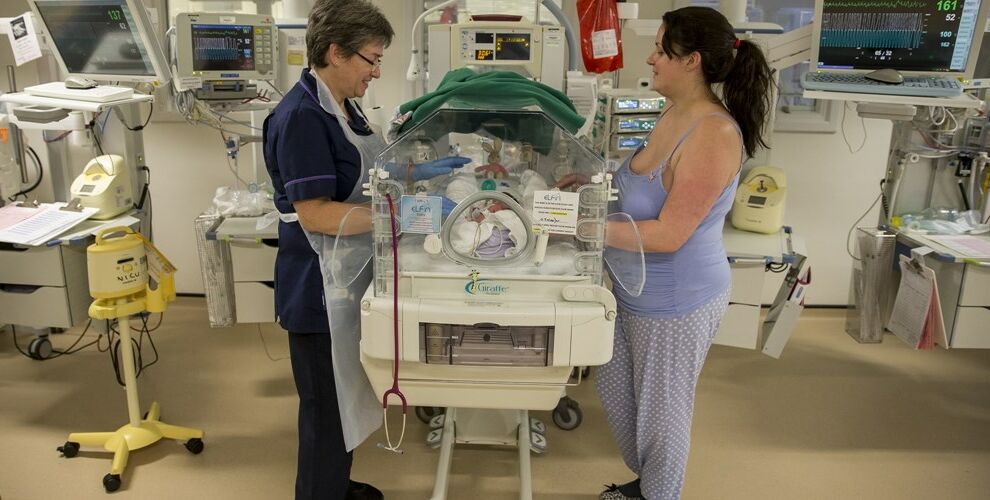
All-Wales review ordered after harrowing report reveals repeated failures
A NATIONAL review of maternity and neonatal care in Wales will begin this month, following a damning independent report into repeated failings at Swansea Bay University Health Board which left families grieving, traumatised, and demanding urgent reform.
Health Secretary Jeremy Miles confirmed on Tuesday (July 15) that the Welsh Government will accept all 11 recommendations from the report and has escalated Swansea Bay’s maternity and neonatal services to Level Four — the second-highest level of intervention. The announcement comes as families continue to speak out about avoidable harm, traumatic births, and failures in care between 2018 and 2023.
Among them is Gareth Morgan, 39, whose son sustained a brain injury during birth at Singleton Hospital. His wife, who was being treated for sepsis, underwent an emergency caesarean section. Their baby required intensive care.
“It was probably one of the worst points of my life as I thought both my son and my wife were going to die that day,” Mr Morgan said. It was not until a year later — and only after the health board wrote advising him to seek legal advice — that he learned of serious failings in his wife’s care.
“You go from thinking it was just bad luck to being angry and you want to find people accountable,” he said. “I’m riddled with trauma. Our family is riddled with the negative experience of what’s happened.”

Mr Morgan has now called for systemic changes, saying: “This isn’t about us as a family. This is about the wider picture. Because ultimately if you’re not changing something… then you’re complicit.”
Harrowing testimony, systemic problems
The independent review, led by Dr Denise Chaffer, found serious and repeated failings in both clinical care and the governance of services. It concluded that while many women had a positive experience, too many others reported traumatic births, lack of compassion, being ignored by staff, and enduring long-lasting psychological harm.
Failures highlighted include:
- Poor communication and cultural insensitivity
- Staff failing to listen to women during labour
- Inadequate foetal monitoring
- Delays in emergency responses
- A rigid and insensitive complaints process
The review also called for rapid access to psychological support for affected mothers and birthing partners, better triage systems, trauma-informed care, and compulsory training for maternity staff.

Despite some recent improvements in staffing, the report noted that turning high-level changes into visible frontline progress remains “a challenge”.
In December 2023, Healthcare Inspectorate Wales found Singleton Hospital’s maternity unit had failed to meet safe staffing levels over four years and lacked effective security to prevent baby abductions. Following public criticism and mounting complaints, the first chair of the maternity review resigned, prompting a broader and more transparent inquiry.
Llais, the national body representing patients in Wales, carried out its own investigation earlier this year, speaking to over 500 women. Its findings echoed the official review: widespread failures at every stage of maternity care, often resulting in long-term trauma and some women deciding not to have more children.

Welsh Government response
In his statement, Jeremy Miles issued an “unreserved apology” to all families let down by the health board and promised that lessons would be learned.
“This must never happen again,” he said. “All women and babies must receive good-quality, safe and compassionate care. Their voices must be heard during pregnancy and birth and they must be included in plans to improve services.”
An all-Wales maternity and neonatal services assessment, independently chaired, will begin this month and incorporate findings from Swansea Bay and other reviews across the UK, including the ongoing England-wide inquiry into maternity failings.
‘A call to action’
Dr Chaffer said the health board must continue to act at every level to rebuild trust and improve care.
“There is still much to be done… this report serves as a call to action,” she said.
Liz Rix, Executive Director of Nursing at Swansea Bay, accepted the findings in full and apologised. “The review does acknowledge some improvements… but there is more to do,” she said. “We will now develop an improvement plan and continue to listen to women and families.”
Midwives and campaigners urge action
The Royal College of Midwives described the Welsh Government’s response as a “significant step forward,” but warned that proper staffing and investment were urgently needed.
“This is owed to the families who have suffered unbearable loss,” said Julie Richards, RCM Director for Wales.
The Herald understands that while several internal audits had flagged problems within the health board over the past five years, decisive action was repeatedly delayed — contributing to ongoing harm.

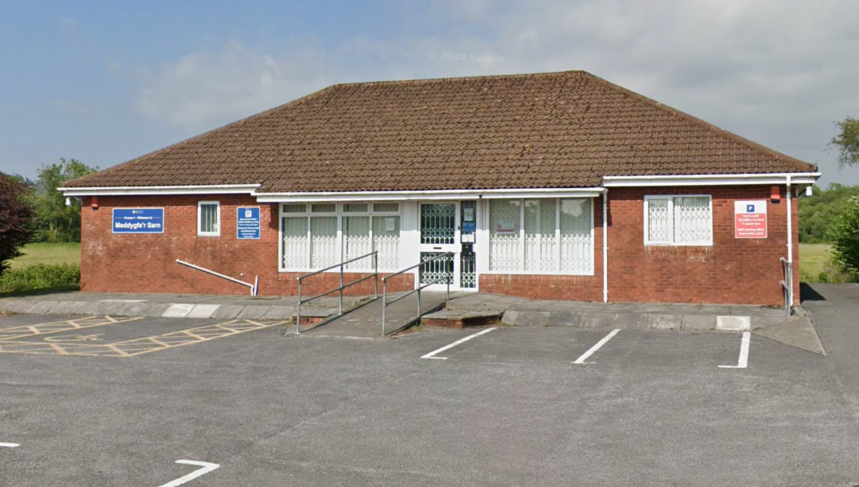
Health board accused of misleading claims over recruitment as pressure mounts ahead of final decision
A FREEDOM of Information disclosure has raised serious questions over plans to close Meddygfa’r Sarn in Pontyates, with claims the health board failed to properly attempt to recruit permanent doctors before recommending its shutdown.
The row centres on Hywel Dda University Health Board, which is due to make a final decision on the surgery’s future later this month.
An FOI response reveals that while the board cited a “lack of recruitment interest” in its January report, there is limited evidence of any recent, targeted recruitment campaign specifically aimed at the Pontyates practice.
Instead, the board confirmed that salaried GP roles were advertised in 2020 across its wider portfolio of managed practices — rather than as a focused effort to fill posts at Meddygfa’r Sarn itself. Those vacancies did not result in successful appointments.
‘No real attempt’
Independent Senedd candidate Carl Peters-Bond, who is also a patient at the surgery, has strongly criticised the health board, accusing it of presenting a misleading picture to justify closure.

He said: “They cited a lack of recruitment interest as justification for closing this surgery — but they never actually ran a proper recruitment campaign for it.
“Sending out general adverts years ago is not the same as making a serious, targeted effort to keep a vital community service alive.”
He also raised concerns about the consultation process, claiming it focused on the impact of closure rather than asking whether closure should happen at all.
Fully reliant on locums
The FOI confirms that Meddygfa’r Sarn currently has no salaried GPs and is entirely dependent on locum doctors.
While the health board says this model is unsustainable in the long term, the same disclosure shows several other managed practices across the region also rely heavily on locum staff — some to a significant degree.
Cost data included in the response suggests Meddygfa’r Sarn is not the most expensive practice per patient within the health board’s area.
Alternative options unclear
Another key issue raised by campaigners is the apparent lack of explored alternatives.

The FOI response indicates that the health board does not hold information on alternative local solutions, including potential relocation or different service models within the Pontyates area.
Campaigners argue this suggests closure was considered before all options had been properly examined.
A 52-page independent report submitted as part of the consultation process states that dispersing patients to other surgeries should only be considered as a last resort, after full recruitment efforts and capacity assessments have been carried out.
Health board position
Hywel Dda University Health Board maintains that the surgery, which serves around 4,350 patients, has faced long-standing recruitment difficulties and increasing reliance on temporary staff.
It says a Vacant Practice Panel concluded that dispersing patients to neighbouring surgeries would provide a more sustainable long-term solution.
The board has also acknowledged that transport and access concerns are likely to be a major issue for patients if the closure goes ahead, with a full Equality Impact Assessment expected to be considered before a final decision.
Decision later this month
The future of Meddygfa’r Sarn will be decided at a meeting of Hywel Dda University Health Board on Wednesday (May 28) at Yr Egin in Carmarthen.
With local anger growing and new questions emerging from the FOI disclosure, pressure is mounting on board members to reconsider the proposal.
Campaigners say the case now hinges on a simple question: whether enough was done to save the surgery before moving to close it.


DENTISTS FROM ANTALYA TO VISIT COUNTY TOWN
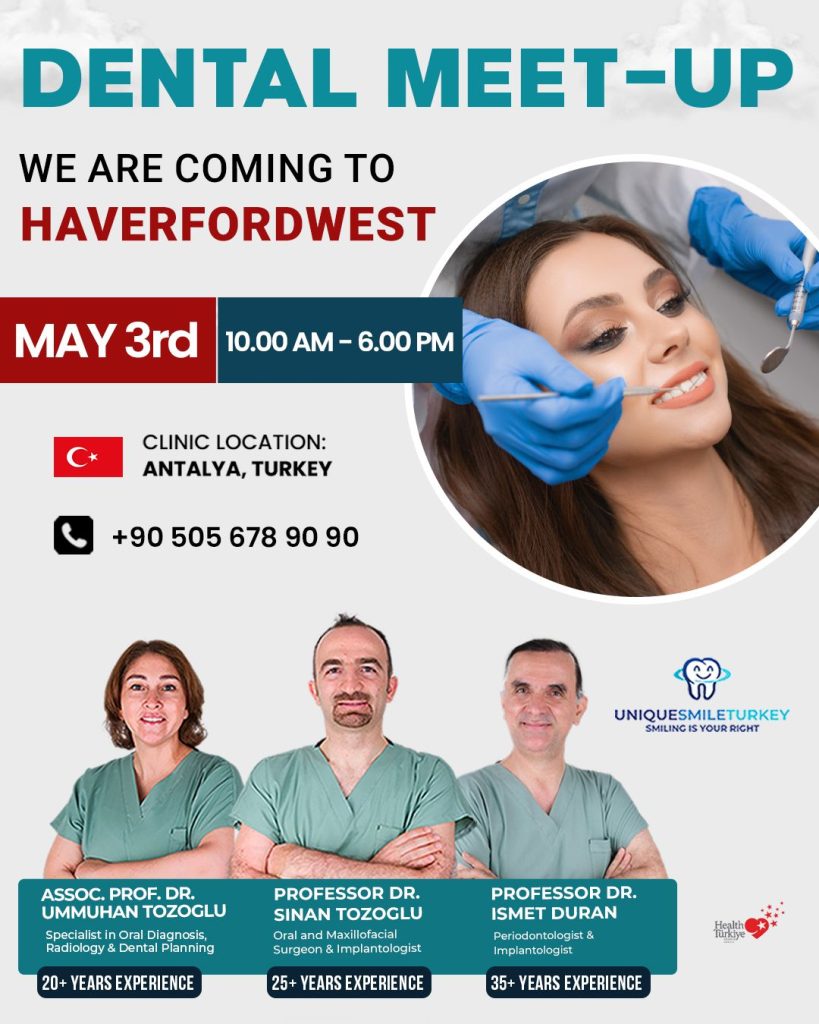
A TURKISH dental clinic is running a dental meet-up in Haverfordwest this weekend as part of a promotional visit to Wales.
Unique Smile Turkey, which has a permanent office in Wales in Swansea, says its top dentists will be coming to Haverfordwest on Sunday (May 3).
The event is being advertised as a “Dental Meet-Up” and is scheduled to run from 10:00am to 6:00pm at the Mariners Hotel.
The visit features three clinicians: Assoc Prof Dr Ummuhan Tozoglu, described as a specialist in oral diagnosis, radiology and dental planning; Professor Dr Sinan Tozoglu, described as an oral and maxillofacial surgeon and implantologist; and Professor Dr Ismet Duran, described as a periodontologist and implantologist.
The team have between twenty and 35 years of experience in their respective fields.
A contact number has also been provided for enquiries: +90 505 678 90 90.
The visit comes amid continuing interest in dental tourism, with many people in the UK looking overseas for cosmetic dentistry, implants and other private dental treatment.
Turkey has become one of the most popular destinations for such treatment, although patients are generally urged to make careful checks before committing to any procedure abroad, including aftercare arrangements, qualifications, insurance, treatment plans and what support would be available if complications arise after returning home.

Calls grow for diagnosis, care and support to become national priority
NEW figures reveal overwhelming public demand for dementia to be placed at the top of Wales’ political agenda, with voters urging action on diagnosis, treatment and support ahead of the Senedd elections.
Research by Alzheimer’s Society Cymru shows that 83% of people in Wales want dementia made a healthcare priority, while 69% believe it is currently overlooked and underfunded.
More than a thousand adults were surveyed, with the findings highlighting growing concern over diagnosis rates and access to care. Wales continues to record some of the lowest dementia diagnosis rates in the UK, leaving thousands of families without clarity or support.
Around 51,000 people are currently living with dementia in Wales, a figure expected to rise to 70,000 by 2040. Despite this, only 57% of people have received a formal diagnosis, with rates falling as low as 48% in rural areas such as Powys.
Improving diagnosis remains a key concern, with 91% of those surveyed saying access to timely diagnosis must improve, and 87% backing increased investment in diagnostic services. However, respondents also stressed that diagnosis alone is not enough, with 91% saying people with dementia must receive better support, including help for unpaid carers.
Ceri Parry, from Cardiff, said she was forced to retire early from her role as a headteacher at the age of 55 due to a lack of support for her mother, who was diagnosed with Alzheimer’s disease in 2020.
She said: “I fully support improving early and accurate diagnosis, but this must also come with improved support and care for families afterwards. There’s five years between my relatives’ diagnoses and nothing changed. On both occasions we left with a leaflet and the unknown.
“The wait for improved diagnosis, treatment and support needs to end. Dementia must be a top priority for the next Welsh Government, for families living with it now and for those who will face it in the future.
“We also found there was no diagnosis assessment available in the Welsh language. That’s a fundamental issue if a diagnosis is to be accurate and safe for people who speak Welsh as their first language. Ignoring someone’s identity is ignoring the person.”

The survey also found that visible action would be key to restoring public confidence, with 72% calling for improved dementia services, 64% backing more funding for research, and 63% wanting better access to treatments.
Gemma Roberts, National Influencing Manager at Alzheimer’s Society Cymru, said: “Dementia is Wales’s biggest killer and one of the greatest health and social care challenges we face.
“Hope is on the horizon with new treatments and faster, more accurate diagnosis, but the system is not keeping pace. Without urgent transformation, people in Wales risk missing out.

“We are at a turning point. The next Welsh Government must deliver a bold new dementia strategy that transforms diagnosis and ensures access to quality care, treatments and support.”



Community15 hours ago
Tenby phone signal crisis goes national as businesses warn of summer disruption
TRADERS SAY CARD PAYMENTS, TAXIS AND VISITOR SAFETY ARE BEING HIT BY ‘DEAD ZONE’ COVERAGE TENBY’S long-running mobile phone signal...


News19 hours ago
Final poll puts Plaid and Reform level ahead of Senedd vote
Labour faces historic setback as new modelling points to a hung Senedd PLAID CYMRU and Reform UK are projected to...

News2 days ago
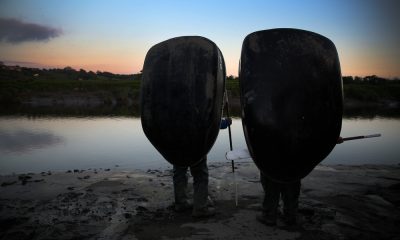
West Wales coracle fishermen raise alarm over suspected sewage pollution
A CENTURIES-old fishing tradition on the River Towy could be under threat after coracle fishermen reported suspected sewage pollution entering...


Community3 days ago
Scooter rally brings colour and nostalgia to Tenby
TENBY is buzzing with the sights and sounds of classic scooters this Bank Holiday weekend as the Welsh National Scooter...


Entertainment3 days ago
Haverfoodfest returns to Haverfordwest town centre today
HAVERFORDWEST town centre is expected to be busy today as Haverfoodfest 2026 returns for a full day of food, drink,...

Crime4 days ago
70-year-old denies assault and restraining order breach
A PENSIONER from Pembroke Dock has denied breaching a restraining order and assaulting another man. Henry Howlett, 70, of Market...

News5 days ago
Conservatives target two seats in new Ceredigion Penfro constituency
Paul Davies and Sam Kurtz say health, farming and transport are key as they seek return to the Senedd CONSERVATIVE...


Community5 days ago
Milford Haven Beer Fest returns to waterfront this May
EVENT WILL FEATURE 34 DRINKS, LIVE MUSIC AND STREET FOOD MILFORD HAVEN is preparing to raise a glass as Beer...

Community6 days ago
Cancer patients targeted with parking fines outside Haverfordwest support centre
Adam’s Bucketful of Hope says vulnerable users, elderly volunteers and charity drivers have paid more than £1,000 after Ateb introduced...

Charity6 days ago
Row erupts at Spitfire museum after Reform poster displayed at charity premises
A HAVERFORDWEST museum has become caught up in a political row after Reform UK campaign material was photographed inside the...
-

 Local Government7 days ago
Fishguard children’s home application is a ‘legal test’, not planning merits decision
-
 Community5 days ago
Dogs removed after welfare concerns at Milford Haven property
-

 Crime7 days ago
Drink-driver hit bicycle and failed to stop
-
 Crime6 days ago
Pembrokeshire hairdresser avoids prison after pub assault
-

 Crime6 days ago
Pembrokeshire man charged with making hundreds of indecent images of children
-

 Business6 days ago
Handcrafted garden furniture built to last across Pembrokeshire
-
Charity6 days ago
Row erupts at Spitfire museum after Reform poster displayed at charity premises
-
Community6 days ago
Cancer patients targeted with parking fines outside Haverfordwest support centre