


News
Sea swimming fears grow amid sewage scandal and political pressure

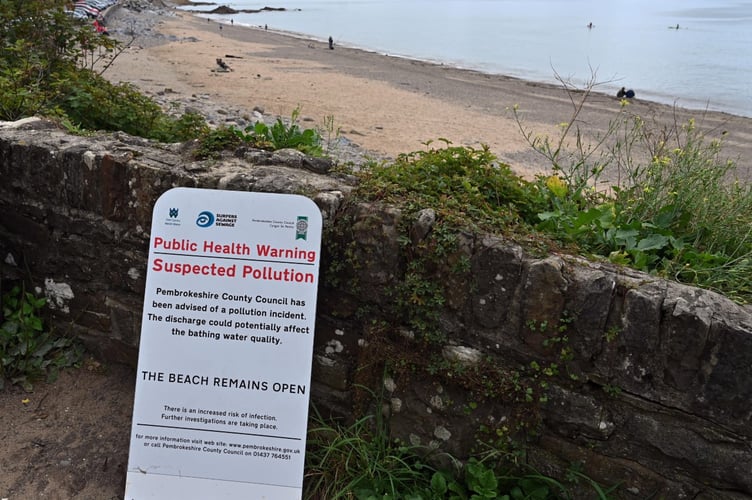
NEW data reveals that almost half of people in Britain say they would never swim in the sea during the summer — the news comes amid growing anger over sewage pollution, including on Pembrokeshire’s beaches.
A new poll commissioned by the Liberal Democrats found that 44% of people would not swim in the sea, up six percentage points in just two years. This comes despite the UK Government’s pledge to halve sewage spills by 2030.
The survey also revealed little public faith in that target. Fewer than one in five (18%) said they would be more likely to swim if sewage spills were halved, while 19% said they would be less likely. Nearly half (45%) said they still would not swim even if the target was met.
Almost three in ten (29%) of those who currently swim in the sea during summer now say they have stopped altogether because of sewage dumping — up from 23% in 2023.
Protests in Pembrokeshire


In May, around 200 people joined a “Paddle Out” protest at Broad Haven, organised by Surfers Against Sewage, to highlight repeated sewage discharges and demand urgent action from Dŵr Cymru/Welsh Water. Campaigners warned that pollution threatens public health and the tourism economy.
Welsh Water has previously admitted to sewage discharges into Pembrokeshire waters, but says these are legal storm overflow releases during heavy rainfall to prevent flooding. The company says it is investing millions in infrastructure to reduce the need for overflows.
Local concerns
Some Pembrokeshire residents say their confidence in the safety of local waters has been badly shaken. Last year, Tenby mother Jayne Etherington said her daughter became seriously ill with E. coli after swimming at Amroth, warning that people “can’t swim safely” without checking pollution alerts.
On social media, beachgoers have voiced anger at the number of Pembrokeshire bathing spots affected by sewage warnings, with one commenting that it covers “basically the entire coast.”
Political voices
Mid & South Pembrokeshire MP Henry Tufnell has repeatedly pressed Welsh Water over its environmental record and executive pay while sewage discharges continue. He has highlighted figures showing the equivalent of 17 tanker-loads of sewage a day being released into a protected conservation area in Haverfordwest as “simply unacceptable.”
Tufnell has chaired public meetings on river and coastal water quality, worked with local environmental groups such as The Cleddau Project, and called for tougher regulation and enforcement. He regularly checks water-quality monitoring data for Pembrokeshire’s beaches and has raised concerns over conditions in Newport and Fishguard.
Welsh Liberal Democrat Senedd candidate for Ceredigion Penfro, Sandra Jervis, has also made water quality a campaign priority. She says both the UK and Welsh Governments have failed to address the sewage scandal and is calling for a ban on executive bonuses at water companies, higher fines for polluters, and stronger regulatory powers.

Welsh Water response
Welsh Water says it is committed to cutting sewage spills by investing in upgrades, better monitoring, and nature-based solutions. It points to Natural Resources Wales data showing most Pembrokeshire bathing waters rated “good” or “excellent” last season.
The company says it operates within environmental permits and that meeting the 2030 target will require continued cooperation between water companies, governments, regulators and communities.
Protecting Pembrokeshire’s coastline
While campaigners, politicians and residents may disagree on the pace of change, there is broad agreement that Pembrokeshire’s coastline is central to its identity, economy and quality of life. The question now is not whether action is needed — but how quickly it can be delivered.
Commenting, Welsh Liberal Democrat Senedd Candidate for Ceredigion Penfro (Ceredigion & Pembrokshire) Sandra Jervis said: “This coastline crisis threatens to wreck Welsh summers, with people afraid of swimming in the sea due to rampant sewage dumping. These polluting firms have been let off the hook at every turn, and it is our local environments and people’s summer holidays that are suffering the consequences.
“In communities like mine, the sewage crisis poses a serious risk not only to wildlife and human health, but also to our thriving tourism industry.
“Both the UK and Welsh Governments have failed to get to grips with this crisis, and the public expect more than a job half done.
“The Welsh Liberal Democrats will be running on a platform to clean up our waterways for good at next year’s Senedd elections. That means a full ban on water company executive bonuses, higher and more persistent fines for breaches and for a strong regulatory body that actually enforces the rules.”



LUCY HINKSMAN has been officially appointed to Haverfordwest Town Council as the newest representative for Castle Ward.
Cllr Hinksman was welcomed to the council this evening by fellow members, including Cllr Josh Odlin, Deputy Mayor Cllr Adam Benson-Davies, and the Sheriff of Haverfordwest, Cllr Dani Thomas-Turner.
She brings experience from her work with People First and is known locally for her advocacy on inclusion, equality, and ensuring people’s voices are heard.
Cllr Randell Izaiah Thomas-Turner welcomed the appointment, saying Lucy’s commitment to supporting people and strengthening the community would make her a strong asset to both Castle Ward and Haverfordwest.
He said he looked forward to working with her as the council continues its work for the town.

Labour, Plaid Cymru and Green members leave chamber as political tensions boil over in first major clash of new Senedd term
A HEATED row erupted in the Senedd after a Reform UK Member of the Senedd made remarks that prompted politicians from Labour, Plaid Cymru and the Green Party to walk out of the debating chamber in protest.
The dramatic scenes unfolded during a debate when Reform MS Joe Martin criticised the state of education in Wales, making comments about literacy standards that opponents said were insulting and disrespectful.
Video of the exchange quickly spread across social media, drawing strong reactions from supporters and critics alike.
During his speech, Martin referred to concerns about educational attainment in Wales and questioned the performance of the Welsh education system. However, opposition members accused him of crossing a line by mocking Welsh pupils and making remarks they considered offensive.
As tensions rose, members from Labour, Plaid Cymru and the Green Party left the chamber in a coordinated walkout, signalling their disapproval of the comments.
The incident marks one of the most significant confrontations since the newly elected Senedd first convened following the May election.
Growing political divide
The walkout highlights the increasingly confrontational atmosphere that has developed between Reform UK and the other parties represented in the Welsh Parliament.
Reform entered the Senedd with a significantly larger presence following the election, fundamentally changing the political landscape and creating a more divided chamber than in previous terms.
Supporters of Reform argued that Martin was highlighting genuine concerns about educational standards and literacy rates in Wales, while opponents maintained that criticism of government policy should not come at the expense of pupils and communities.
The exchange quickly became a major talking point online, with clips attracting thousands of views and generating fierce debate about standards of political discourse in Wales.
Education remains key battleground
Education is expected to remain one of the most fiercely contested issues during the current Senedd term.
Recent years have seen repeated concerns raised about educational performance, attendance levels and attainment gaps, while Welsh Government ministers have defended ongoing reforms and investment in schools.

The latest clash demonstrates how debates over education are likely to become increasingly political as parties seek to define themselves ahead of future elections.
While walkouts are relatively uncommon in the Senedd, Wednesday’s protest underscored the strength of feeling among opposition members and provided an early indication of the battles that may lie ahead in the new parliamentary term.
The incident is likely to fuel further debate both inside and outside the Senedd over political standards, educational performance and the direction of Welsh public policy under the new political landscape.

Council admits demand exceeds supply as housing issues contribute to hospital discharge delays
PEMBROKESHIRE COUNTY COUNCIL has acknowledged that there is not enough suitable accessible housing in the county to meet demand, with more than 400 people currently waiting for accommodation that meets their needs.
The admission came in response to questions from The Pembrokeshire Herald about housing, health and accessibility in Pembrokeshire.
The council revealed that 403 people are currently registered on the Pembrokeshire Accessible Housing Register waiting for accessible social housing.
Of those, 81% are in the highest-priority gold band, while 62% require one-bedroom accessible accommodation.
The authority also disclosed that 111 cases are currently awaiting occupational therapy assessment through to approval of assessed works under Disabled Facilities Grants and discretionary disabled assistance grants.
The figures highlight growing pressure on housing services in a county with an ageing population and increasing demand for homes that can accommodate people with disabilities, mobility problems and long-term health conditions.
A council spokesperson said: “Within Pembrokeshire, we recognise that there are challenges around unsuitable housing, often linked with an ageing housing stock across all tenures of accommodation.
“We recognise that poor and inaccessible housing can be a contributing factor to ill health and increased demand on housing, health and social care services.”
Hospital discharge concerns
The council also confirmed that housing-related issues can affect hospital discharge planning.
Officials said there had been an increase in housing-related discharge delays in recent years, often because people leaving hospital require home adaptations or alternative accommodation that better suits their needs following changes in their health or mobility.
The spokesperson said: “There are concerns related to housing-related delays which impact hospital discharge planning locally.
“There has been an increase in housing related delays due to a range of factors, including the need for suitable accommodation following changes in an individual’s health or functioning, which subsequently can lead to a need for home adaptations, or alternative accessible accommodation sourced.”

The council stressed that housing-related factors still represent a relatively small proportion of overall discharge delays in Pembrokeshire.
Shortage recognised
Asked whether enough suitable housing exists locally for older residents and people with disabilities or long-term health conditions, the council accepted that current provision falls short of demand.
The spokesperson said: “Given the numbers we have on our Accessible Housing Register as well as the ageing population in the county, we acknowledge that there is insufficient suitable accessible housing to currently meet demand.”
The authority said the issue has already been identified within the Local Housing Market Assessment 2023 and the Pembrokeshire Housing Strategy 2024-2027.
Working to improve provision
The council said its Occupational Therapy Service works closely with housing providers across Pembrokeshire to assess needs and support the delivery of appropriate housing solutions, including adaptations to existing homes and the development of adapted properties.
For social housing tenants requiring adaptations, needs are assessed by occupational therapists, with work either carried out by landlords or, where necessary, alternative accommodation sought.
The authority also said that new social housing developments are designed to meet Lifetime Homes standards under Welsh Government housing requirements.
Housing and social care teams work together to help shape the type and design of new homes being developed in the county, using information from the Accessible Housing Register to identify future demand.
The comments come amid growing national concern over the impact of unsuitable housing on health, independence and demand for public services, particularly as Wales’ population continues to age.
This is a cleaner local government/housing story that stands on its own and avoids repeating the earlier Welsh Government/NHS-focused piece.



News9 hours ago
Motorcyclist, 22, dies in A4075 crash in Pembrokeshire
A 22-year-old woman remains in hospital after two-vehicle collision A MOTORCYCLIST has died following a serious two-vehicle crash on the...


Community9 hours ago
Why police will be visiting every home in Pembrokeshire
New operation aims to knock on more than 257,000 doors across Dyfed-Powys over the next three years DYFED-POWYS POLICE has...


Crime12 hours ago
Prisons at breaking point: MPs warn Wales is paying the price of a failing system
Frozen healthcare budgets, overcrowded jails, homelessness on release and mounting pressure on staff are undermining rehabilitation across Wales, according to...


News1 day ago
Brexit at 10: How Britain was sold a dream that cost us dearly
A decade after the referendum, the promised benefits remain hard to find while the economic costs are increasingly difficult to...


Crime1 day ago
Worcestershire man jailed after violent attack on woman in Tenby
Defendant was already serving a suspended sentence when serious assault took place A WORCESTERSHIRE man has been jailed for more...


Climate1 day ago
Offshore wind ‘could bring new generation of jobs to Milford Haven’
Pembrokeshire ports and Celtic Sea projects placed at centre of Wales’ green energy ambitions MILFORD HAVEN and Pembroke Dock could...


Community2 days ago
Police officer hailed hero after midnight sea rescue in Milford Haven
PC swam 100 metres offshore to save distressed woman heard calling for help in darkness A DYFED-POWYS POLICE officer has...


Local Government2 days ago
Security privately arranged by Mayor at Beating of the Bounds
HAVERFORDWEST TOWN COUNCIL has confirmed that security personnel seen at this year’s Beating of the Bounds were privately arranged and...


Business3 days ago
Celtic Freeport five-year plan puts Milford Haven at centre of green energy future
Strategy promises investment, skilled jobs and new supply chains, but major barriers remain over grid connections, planning and delivery THE...


Education3 days ago
Closure of Ysgol Clydau approved after emotional council debate
COUNCILLORS WARNED RURAL COMMUNITIES WILL REMEMBER DECISION PEMBROKESHIRE councillors have voted to close Ysgol Clydau following an emotional debate over...
-

 Community4 days ago
Pembrokeshire Chess Club crowned Welsh champions
-
Local Government2 days ago
Security privately arranged by Mayor at Beating of the Bounds
-

 Crime14 hours ago
Milford Haven man jailed for breaching domestic violence protection order
-

 Education6 days ago
Diocese threatens legal action as Manorbier school closure battle intensifies
-

 News8 hours ago
Crash on Freeman’s Way causes school-run chaos across Haverfordwest
-

 Crime2 days ago
Man wanted by court after failing to attend hearing over alleged shop thefts
-

 Local Government6 days ago
Taxi suspended after county-wide licensing checks
-

 Crime2 days ago
Man jailed after admitting strangulation and assaults