


Politics
Wales’ Commonwealth Games hopes ‘dashed by underinvestment’

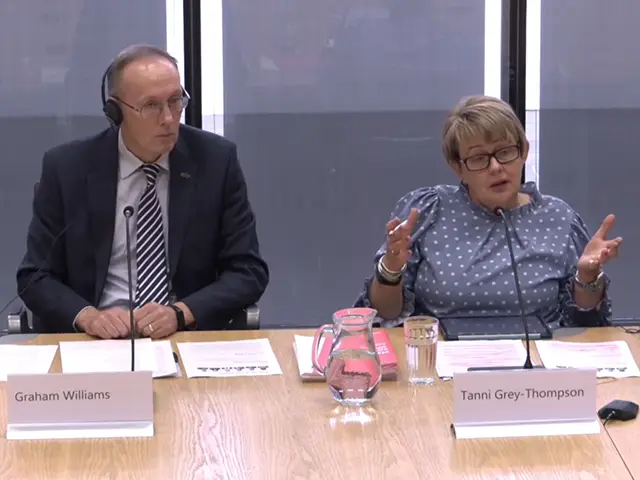
THE DREAM of hosting another Commonwealth Games on Welsh soil is currently impossible due to decades of underinvestment in Wales’ sporting facilities, a committee has heard.
Sport Wales chair Tanni Grey-Thompson said: “It’s important we have events in Wales. Sadly, I don’t think we could ever probably host the Commonwealth Games.”
Pressed about why, Baroness Grey-Thompson pointed to the lack of a suitable athletics stadium but said Wales could host parts of the Games with a pool and velodrome.
“It would be amazing to have a Commonwealth Games on home soil,” she said. “But that’s a longer term set of decisions and strategy. It’s about having the infrastructure and legacy.”
Citing “decades of underinvestment”, Labour’s Alun Davies asked: “Don’t you think it’s quite a commentary on the state of Welsh sporting facilities that… we don’t have the facilities to host the Commonwealth Games?”

Baroness Grey-Thompson concluded: “It comes down to money.”
Baroness Grey-Thompson appeared before the Welsh Parliament’s culture and sport committee for annual scrutiny on September 25.
Delyth Jewell, who chairs the committee, asked about the potential impact of the Welsh Government’s planned “business-as-usual” budget which will rise in line with inflation.

Baroness Grey-Thompson said: “We do recognise that it’s a really tough time financially… and the committee’s own analysis of the sport sector shows that it’s funded lower than other comparable European nations.”
She stressed the value of sport and physical activity to Welsh society, referring to comments from the chief medical officer who described sport as a “miracle drug”.
The Paralympian told Senedd Members: “We understand you’ve got to spread the money a long way but we’re really ambitious… not necessarily money going into Sport Wales but going into physical activity in the wider sector.
“There would be an impact in terms of the scale of our ambition.”

She told the committee Sport Wales needs about £20m a year to catch up with other home nation sports councils and £200m to be in line with the average of other European countries.
“Wow,” Mr Davies exclaimed in response to the figure.
Baroness Grey-Thompson, who called for multi-year settlements for day-to-day revenue and longer-term capital funding, said “I think with what we have, we’re pretty efficient.”
She recognised that £200m is a “long way off” what Sport Wales can reasonably expect.
Graham Williams, director at Sport Wales, described plans for a “flatline” budget as a missed opportunity, particularly to invest in changing young people’s activity patterns.
Mr Williams reminded Senedd Members that Sport Wales – which funds partners including governing bodies – received a “challenging” 10.5% cut in 2024/25, equivalent to £2.4m.
Mr Davies, a former minister, said: “It feels to me like unplanned, almost panic budgeting as you’d find in some sort of financial crisis – it takes me back to 2010.”
Baroness Grey-Thompson replied: “It wasn’t an easy time for anyone,” but she welcomed transparency from the Welsh Government which aided Sport Wales’ planning.
Wales ranked third from bottom of European countries in terms of spending for each person on recreational and sporting services, according to a culture committee report.
The country was languishing second from bottom in the league table for cultural services in January’s report which warned of the impact of a decade of cuts.
Cardiff hosted the then-British Empire and Commonwealth Games in 1958 – one of the biggest sporting events ever held in Wales at the time.



SHADOW HEALTH SECRETARY Natasha Asghar MS has written to the Justice Secretary seeking assurances over the prison placement and official recording of convicted sex offender Paula Stanton.
Stanton, 62, was jailed after admitting an act outraging public decency at the University Hospital of Wales in Cardiff, where court proceedings heard NHS staff were forced to witness a sexual act while carrying out their duties.
The case has prompted renewed political scrutiny over how transgender offenders with histories of sexual offending are managed in custody, and how such offences are recorded in criminal justice statistics.
Ministry of Justice policy for England and Wales states that transgender women who retain male genitalia, or who have been convicted of sexual or violent offences, should not normally be held in the general women’s estate except in the most exceptional circumstances.
Ms Asghar said the immediate focus must be on the hospital staff affected.
She said: “This was a disgusting offence committed against NHS workers who were simply trying to do their jobs.
“NHS staff already face enormous pressure. They should not have to endure predatory or deeply distressing behaviour in their workplace, and they deserve proper protection and support.
“What makes this case even more concerning is Stanton’s significant history of sexual offending, including previous convictions for outraging public decency and indecent exposure.
“I have written to the Justice Secretary seeking assurances that Stanton is being held in a male prison, in line with Ministry of Justice policy on male-born sex offenders.
“I have also asked for confirmation that these offences will be recorded accurately in official crime and criminal justice statistics.
“The public are entitled to clear, accurate reporting of serious crimes. That is particularly important where offences involve male-pattern sexual offending.”
The case sits within a wider and often highly sensitive debate about the rights and safety of transgender prisoners, female prisoners, staff and victims.

Campaigners on one side argue that biological sex must be recorded clearly in cases involving sexual offending, particularly where victims are women or where offenders have male genitalia. Others stress that transgender prisoners can also be vulnerable in custody and must be treated lawfully, decently and safely.
Ms Asghar said her concern was not only about prison policy, but also about the working conditions of NHS staff.
She added: “Above all, my thoughts are with the NHS staff who were subjected to this appalling behaviour. They were the victims in this case and they deserve our full support.
“I have also raised the matter with the Cabinet Secretary for Health and Social Care to seek assurances about the safety of NHS staff.”

New plans aim to cut delays, reduce costs and stop house sales collapsing
THOUSANDS of homebuyers across Wales could save time and money under a major overhaul of the property-buying process announced by the UK Government.
The reforms are designed to tackle long-standing problems in the housing market, including lengthy delays, failed transactions and unexpected costs which can leave buyers and sellers out of pocket.
Ministers say the changes could reduce the average time taken to buy a home by around four weeks and save first-time buyers an average of £650.
Under the proposals, sellers and estate agents would be required to provide key information about a property when it is listed for sale. New “sales packs” would include details about a home’s condition, leasehold charges and the status of any buying chain.
The Government also plans to introduce earlier legally binding agreements between buyers and sellers to reduce the number of transactions which collapse late in the process.
A major part of the reforms will focus on replacing paper-based systems with digital property logbooks, electronic signatures, online identity checks and AI-assisted conveyancing.
Welsh Secretary Jo Stevens said: “Thousands of people across Wales will benefit from these reforms which will make buying a home faster, simpler and fairer.
“For too long the system has been difficult and complex. This government’s changes will save working people and families valuable time and money when they are buying their new home.”
Prime Minister Sir Keir Starmer said the current system leaves many families “in limbo” and makes home ownership more difficult than it should be.
Housing Secretary Steve Reed said buying or selling a home should not be “a drawn-out nightmare of delays, hidden costs, and failed deals.”
The Government says the reforms will be introduced in stages, with a new Code of Practice for property agents expected later this year.
From 2027, ministers plan to consult on mandatory qualifications for estate agents and the wider use of digital tools.

Legislation requiring sales packs, binding contracts and digital property information systems is expected before the end of the current Parliament.

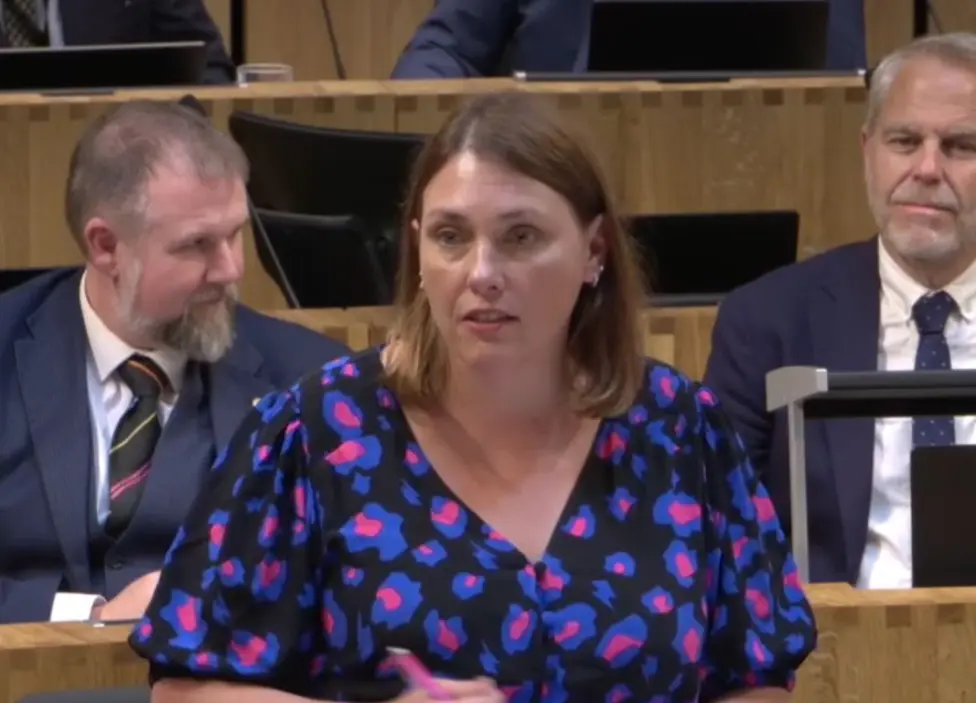
CULTURE and sport “are not a nice to have – they are part of the solution to creating a healthier, more prosperous society”, according to Wales’ new culture and sport minister.
Outlining her priorities in the Senedd on Tuesday June 16, Heledd Fychan highlighted the importance of the arts and sport in preventative health.
She also spoke of the importance of the Welsh language and Wales’ music industry, and called for the devolution of broadcasting,
“These priorities mark the beginning of a journey and the beginning of a new chapter for culture and sport here in Wales,” Ms Fychan told the Siambr.
She continued: “This government believes in the power of culture and sport to transform lives, to contribute to the vision of moving towards a preventative health agenda to put our health service on a more sustainable footing, and because we are determined to build a Wales where creativity thrives.”
Ms Fychan, of Pontypridd Cynon Merthyr, was quizzed on her government’s calls for the devolution of broadcasting.
In her statement, the minister pledged to create a “stronger media environment” which reflects a “confident and prosperous Wales”.
Laying out her priorities for broadcasting, she said: “Wales deserves a confident, diverse and sustainable media landscape rooted in public value and national ambition.
“To achieve this, Wales must have a voice in the decisions that affect us. That is why we are determined to continue to make the case for the devolution of powers over broadcasting.”
She revealed work is underway to set up a shadow broadcasting and communications authority – designed to build a “stronger and more accountable” media landscape in Wales.
She also highlighted her plans to support public-interest journalism and “safeguard the provision of high-quality news”.
Describing the development of a shadow broadcasting authority as “completely unnecessary”, Reform’s Louise Emery – who is shadow minister for culture – said: “This is more constitutional navel-gazing, more quangos, more slow state-building towards independence, and more cost.”


Ms Emery went on to criticise the government’s plans to support public-interest journalism and said: “On this side of the chamber, we feel we already have a state-funded news outlet with blatant political bias, and we don’t need any more.
“I would suggest that state-funded journalism in Wales will mean state-funded interference, and I would also suggest that ‘high-quality news’ is a highly subjective phrase. Who is going to decide what is high-quality journalism and therefore needs state help?”
She added: “How can we ensure there is no foreign interference when allocating Books Council of Wales funding to news outlets?”
Ms Emery’s comments were met with laughter in the Siambr from opposing politicians.
However, Ms Fychan made no reference to Ms Emery’s comments in her response.
Paul Davies, Welsh Conservative spokesperson for the Welsh language, culture and sport, echoed Ms Emery’s criticisms of the devolution of broadcasting powers.

Outlining his party’s opposition to broadcasting devolution, Mr Davies said: “Given the challenges that the cabinet minister has already highlighted in her statement today, surely this is not the best possible use of resources, especially given that these powers are not devolved.”
Mr Davies called for Ms Fychan to reveal how much was spent on the new authority, how it will be funded, and how it will operate.
Similarly as with Ms Emery, Ms Fychan did not reference Mr Davies’ broadcasting comments in her response.
Ms Fychan described use of the Welsh language, particularly social use, as an “integral” part of her priorities.
Discussing the upcoming Eisteddfod – which is celebrating it’s 850th anniversary – she said: “A contribution of £0.25 million from the government will support a programme of activities to inspire people to use the language and raise the international profile of the National Eisteddfod.
“Our financial support will also ensure that local low-income families have free access to the festival.
“It is vital that everybody has an opportunity to enjoy our culture, language and National Eisteddfod.”
Reform’s shadow minister noted that she was “really glad” to hear the Welsh language was being prioritised.
Responding briefly to the cabinet minister in Welsh, Ms Emery shared that she has been learning Welsh for two years and is hoping to practice her skills at the Eisteddfod this summer.
However, she questioned Plaid’s plans to get people speaking the language, adding that “coercion drives resentment, not fluency”.
She said: “If the Welsh Government is serious about one million Welsh speakers, it needs to invest in the conditions that make people choose the language, not mandate it on those who don’t speak it.
“Welsh culture, the arts and sport should lift people up and bring communities together – that we agree on. But they can do that in whatever language they choose.”
In her statement, Ms Fychan said: “For too long, culture, the arts and sport have been pitted against the NHS rather than being recognised as completely connected to it.
“These sectors are not a ‘nice to have’; they are part of the solution to creating a healthier society. Our manifesto commits to making culture and sport accessible to all.
“That includes addressing inequalities in access, whether due to cost, geography, disability or other barriers.”
Reform’s shadow minister for health, prevention and sport, James Evans, noted that he “never thought [he’d] find the day” he would agree with the minister on so much.
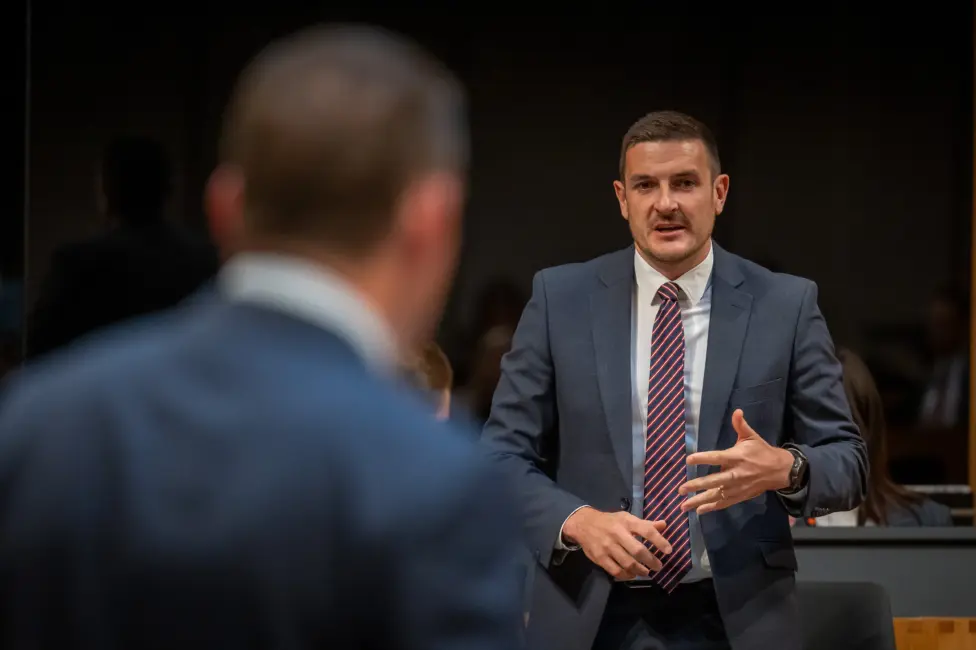
Mr Evans described sport as a “key part” of the prevention agenda, before questioning the minister on how much of the NHS budget will be reallocated to sports.
He said: “We’ve heard a lot today about money being moved, but I think a lot of the sports organisations listening to today’s proceedings would like to know exactly what proportion that’s going to be.”
In response Ms Fychan said: “In terms of the exact figures and how we will do this, this is a completely new way of working for government, and what I can give you the assurance of is that there is an acknowledgement across government of the importance of this, that we are ensuring that those discussions are now taking place within those first 100 days and we will update the Senedd as we can.”

Labour’s Mike Hedges questioned the minister on music tourism and it’s importance to both Welsh culture and the economy.
Stating that music touring in Wales, “attracted 834,000 visitors, supported 3,650 jobs, and generated £384 million for the economy” in 2024, Mr Hedges pressed the minister to commit to supporting Welsh music.
He said the Welsh Government must “grow Welsh music through smart public investment, bring down barriers to exporting Welsh music, ensure music education is accessible to all, and support home-grown creativity and new music that drives Welsh tourism”.
In response, Ms Fychan referenced a report released last year which showed that traditional music in Wales was in danger of “disappearing entirely”.
Noting that fewer children are taking GCSEs in music, drama, and art and that universities are cutting courses in creative areas, Ms Fychan said often these areas are seen as “not worth investing in” – adding that, “of course”, they are.
Closing her response to the member she said: “Hopefully we will then see, […], that there will be a future for creative people here in Wales, and a future for these sectors that are seen as economically beneficial.”


Community11 minutes ago
Why police will be visiting every home in Pembrokeshire
New operation aims to knock on more than 257,000 doors across Dyfed-Powys over the next three years DYFED-POWYS POLICE has...


Crime3 hours ago
Prisons at breaking point: MPs warn Wales is paying the price of a failing system
Frozen healthcare budgets, overcrowded jails, homelessness on release and mounting pressure on staff are undermining rehabilitation across Wales, according to...


News17 hours ago
Brexit at 10: How Britain was sold a dream that cost us dearly
A decade after the referendum, the promised benefits remain hard to find while the economic costs are increasingly difficult to...


Crime18 hours ago
Worcestershire man jailed after violent attack on woman in Tenby
Defendant was already serving a suspended sentence when serious assault took place A WORCESTERSHIRE man has been jailed for more...


Climate20 hours ago
Offshore wind ‘could bring new generation of jobs to Milford Haven’
Pembrokeshire ports and Celtic Sea projects placed at centre of Wales’ green energy ambitions MILFORD HAVEN and Pembroke Dock could...


Community2 days ago
Police officer hailed hero after midnight sea rescue in Milford Haven
PC swam 100 metres offshore to save distressed woman heard calling for help in darkness A DYFED-POWYS POLICE officer has...


Local Government2 days ago
Security privately arranged by Mayor at Beating of the Bounds
HAVERFORDWEST TOWN COUNCIL has confirmed that security personnel seen at this year’s Beating of the Bounds were privately arranged and...


Business3 days ago
Celtic Freeport five-year plan puts Milford Haven at centre of green energy future
Strategy promises investment, skilled jobs and new supply chains, but major barriers remain over grid connections, planning and delivery THE...


Education3 days ago
Closure of Ysgol Clydau approved after emotional council debate
COUNCILLORS WARNED RURAL COMMUNITIES WILL REMEMBER DECISION PEMBROKESHIRE councillors have voted to close Ysgol Clydau following an emotional debate over...


Education3 days ago
Manorbier school closure process to continue after narrow council vote
Questions remain over insurance, rebuilding costs and possible legal action by Diocese PEMBROKESHIRE councillors have voted to press ahead with...
-
 Community4 days ago
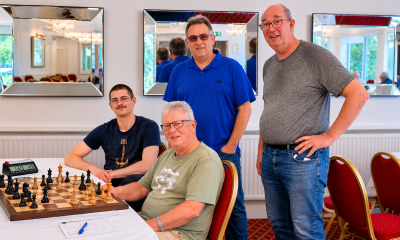
Pembrokeshire Chess Club crowned Welsh champions
-
Local Government2 days ago
Security privately arranged by Mayor at Beating of the Bounds
-

 Crime7 days ago
Pembroke Dock teenager sentenced over train strangulation attack
-

 Education6 days ago
Diocese threatens legal action as Manorbier school closure battle intensifies
-

 Crime2 days ago
Man wanted by court after failing to attend hearing over alleged shop thefts
-

 Crime4 hours ago
Milford Haven man jailed for breaching domestic violence protection order
-

 Local Government6 days ago
Taxi suspended after county-wide licensing checks
-
 Crime2 days ago
Man banned from roads after drink-driving offence