


Crime
Violence in Welsh prisons blamed on staff shortages, drugs and neglect


Inspectors warn of rising assaults as inmates spend longer locked in cells with little rehabilitation
VIOLENCE across Welsh prisons has reached crisis levels, with assaults between prisoners and attacks on staff soaring amid chronic staff shortages, rampant drug use and long lock-up hours.
A growing body of evidence, including Ministry of Justice data, inspection findings and independent research, paints a picture of a prison system buckling under pressure. In some institutions, assaults have more than doubled in five years, with serious injuries becoming alarmingly routine.
At HMP Cardiff, assaults on staff rose from 20 in 2022/23 to 52 last year – a 160 per cent increase. The prison also recorded 168 prisoner-on-prisoner attacks, up 42 per cent in five years. Across Wales, the picture is much the same, as overcrowding, poor rehabilitation and undertrained officers drive a spiral of violence and despair.
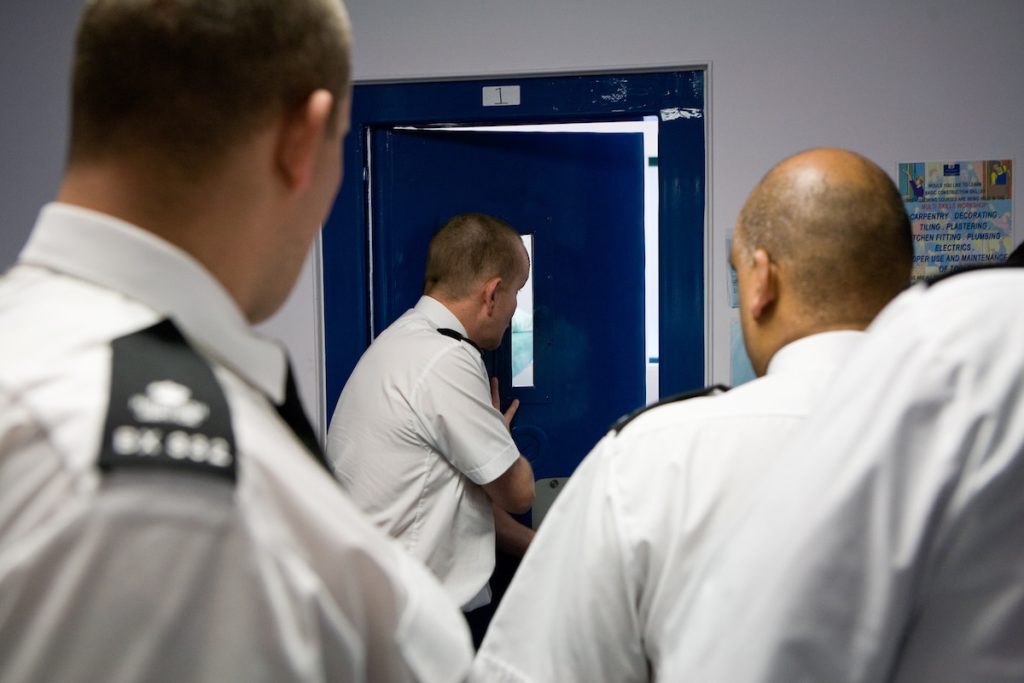
A system on the brink
Figures show that prisoner-on-prisoner assaults across Welsh prisons rose 80 per cent in 2023, while assaults on staff rose 69 per cent. Self-harm incidents are up more than half, and deaths in custody have risen steeply, particularly in prisons where drug use is rife.
The causes are interlinked: inexperience, understaffing, mental health decline, drugs, debt and boredom. Overcrowded jails and endless hours behind locked doors are fuelling frustration and aggression.

A senior officer told The Herald: “When a prisoner owes money for drugs, it doesn’t just disappear – it ends in a beating, a stabbing, or worse. The gangs run the wings because there aren’t enough experienced officers to control them.”
Drugs, debt and retribution

Synthetic drugs such as Spice are flooding prisons across Wales. Drones and corrupt smuggling routes are feeding a thriving black market, and prisoners are racking up debts they cannot pay. Violence is often the result.
At HMP Parc in Bridgend, inspectors found that 57 per cent of prisoners said it was easy to get drugs. In one year there were nearly 900 drug finds, and the number of drug-related deaths rose dramatically. Prisoners described days locked up for 21 hours, with no meaningful activity and little food.
Drugs create their own power structures inside the walls. Those who control supply control the prison, while those in debt are left vulnerable to beatings, extortion and retribution.
Parc Prison’s shocking decline
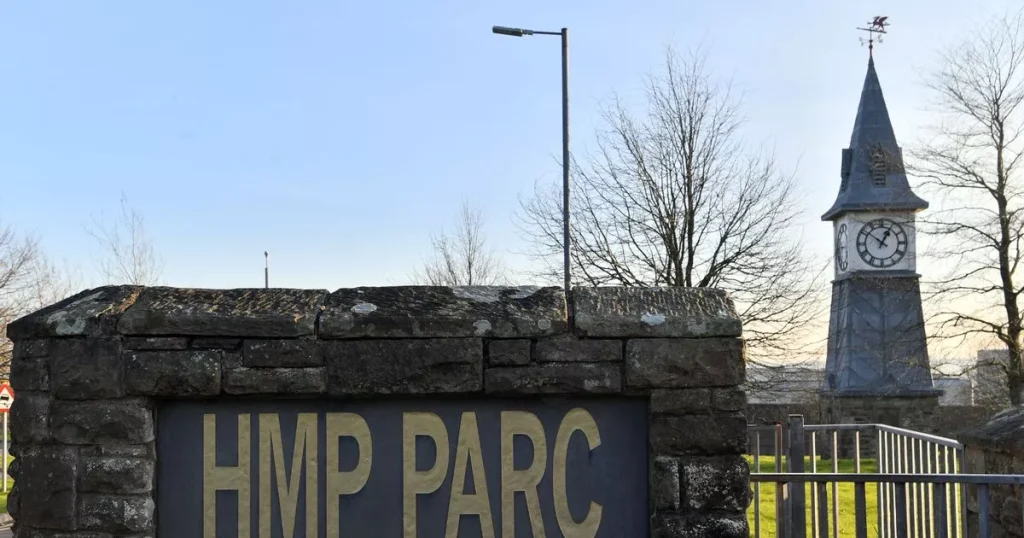
Once considered one of the UK’s better-run prisons, Parc has become a byword for crisis. Inspectors recorded 722 assaults in the 12 months before their 2025 visit – 110 of them serious – representing a 60 per cent rise since the previous inspection.
Seventeen inmates died there in one year, 12 of them in just six months. Violence, drugs and self-harm have soared. The inspection concluded that Parc had “declined significantly” and was now “too violent, too drug-ridden and too unstable.”
The prison is operated by private firm G4S, and critics say profit motives have made matters worse. Staff turnover is high, morale is low, and rehabilitation programmes have withered. Former prisoners describe a chaotic regime: “You’re either locked up, off your head, or fighting over debt. The staff just shut the doors and hope it blows over.”

Cardiff: overcrowding and rising assaults

Cardiff, a local Victorian prison in the Adamsdown area, has not escaped the violence. Figures obtained under the Freedom of Information Act show that prisoner-on-prisoner assaults have risen by 42 per cent in five years, reaching 168 in 2024/25.
Assaults on staff more than doubled between 2022/23 and 2024/25, from 20 to 52 – a 160 per cent increase.
The most recent inspection found that almost two-thirds of prisoners were sharing single cells, with many locked up for long periods. Nearly half said drugs were easy to get, and self-harm incidents rose by a third in 2023 alone.
Despite strong leadership and generally good relationships between staff and prisoners, the report described a “pressured and overcrowded” establishment. Cardiff had ten suicides since 2019 and remains among the most stretched prisons in Wales.
Patrick Mallon, a solicitor at JF Law, said: “The alarming year-on-year rise in assaults in UK prisons is a stark reflection of a system under immense strain. With populations growing and so many prisons officially overcrowded, the Ministry of Justice is facing a crisis where violence becomes increasingly common.”
Swansea: safer but under strain
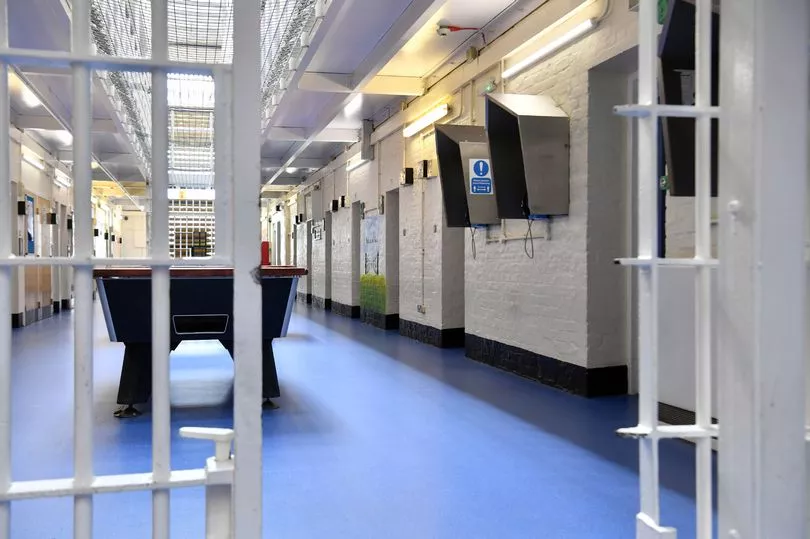
HMP Swansea remains an exception – for now. The latest inspection found just 34 prisoner-on-prisoner assaults in a year, and violence against staff described as “among the lowest of all reception prisons.”
However, inspectors warned that the prison’s relative calm depended on stable staffing and leadership. Work and education spaces were limited, leaving many prisoners idle. With overcrowding rising elsewhere, there are fears Swansea could follow the same pattern as Parc and Cardiff if staffing levels fall.
Overcrowding and long lock-ups
The Welsh prison population has grown steadily for three decades, mirroring the national trend. Across England and Wales there are now more than 88,000 inmates – double the number held in 1994 – yet the number of uniformed officers has barely increased.
Many prisoners spend more than 20 hours a day locked in their cells. With little access to work, training or exercise, frustration boils over. In an already volatile environment, small disputes escalate into violence.
Long hours alone also take a toll on mental health. Self-harm incidents across Wales rose 53 per cent in 2023, and inspectors report growing numbers of prisoners on suicide prevention measures.
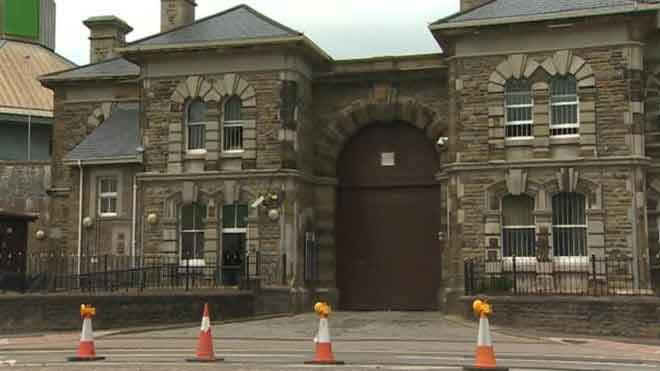
Private profit and public cost
Campaigners argue that the private operation of Parc has exposed the risks of running prisons for profit. With cost pressures and high staff turnover, safety and rehabilitation often fall by the wayside.
A spokesperson for the Prison Officers’ Association said: “You can’t run safe prisons on minimum wage and profit margins. Officers are undertrained, overworked and terrified. It’s a ticking time bomb.”
A broken duty of care
Under law, prison authorities have a duty of care to protect those in custody and to provide a safe working environment for staff. Where that duty is breached, both prisoners and officers have the right to seek compensation for physical or psychological harm.
But campaigners say litigation should not be the only route to accountability. The system itself needs reform.
Legal Expert’s analysis points out that for every ten extra prisoners per thousand, assaults on staff rise by 1.5 and prisoner-on-prisoner assaults by one. The conclusion is stark: violence is built into overcrowding.
Calls for reform
Experts and unions are united in calling for reform. They say the government’s £40 million “Plan for Change,” which promises 14,000 new prison places by 2031, will not be enough without investment in staff training, rehabilitation and mental health care.
Proposed solutions include better pay and retention schemes for officers, more purposeful activity for inmates, and tighter control of contraband. Independent monitoring boards have also urged greater transparency and tougher oversight of private contracts.

The human cost
Behind the statistics are broken people – inmates and officers alike. Many of those injured will never fully recover, and each death in custody represents a failure of care.
Families of those who died at Parc and Cardiff say they were failed by a system that could not keep their loved ones safe. Officers speak of colleagues assaulted or traumatised beyond repair.
Until the root causes – drugs, debt, understaffing and neglect – are tackled head-on, violence will continue to define life inside Welsh prisons. The cost is measured not only in bruises and broken bones, but in trust, safety and human dignity.



A PEMBROKESHIRE drug trafficker jailed after a major cocaine and cannabis seizure has been ordered to repay more than £33,000.
Dean Evans, 44, returned to Swansea Crown Court for a Proceeds of Crime Act hearing after prosecutors sought to recover money made through his offending.
The court heard it had been agreed that Evans benefited from criminal conduct by £496,533.94. However, his available assets were calculated at £33,337.37.
Judge Catherine Richards made a confiscation order for that amount and gave Evans three months to pay. If he fails to do so, he faces a further year in prison.
Evans, of St Clements Park, Freystrop, is already serving an eight-year sentence after admitting possession with intent to supply cocaine and cannabis.
He was caught after Dyfed-Powys Police’s Roads Policing Unit stopped his Seat Ateca on Holyland Road, Pembroke, at around 10:25am on January 2.
Officers searched the vehicle after Evans admitted they would find “stuff” inside.
They discovered around one kilogram of cocaine in a cardboard box in the boot, together with 5.4 kilograms of cannabis in a black bin bag. The cannabis had been split into ten vacuum-sealed bags.
Swansea Crown Court was previously told the drugs had a combined potential street value of up to £185,000, made up of around £125,000 of cocaine and cannabis worth up to £60,000.
A mobile phone seized from Evans revealed what prosecutors described as a “dealer’s list”, with dozens of names and sums believed to be owed. Messages also showed Evans directing dealers below him in the supply chain.
At the original sentencing hearing, the court was told Evans had 23 previous convictions for 62 offences, including rape and robbery. His previous drug matters had related only to possession.
Sarah John, mitigating, said he had pleaded guilty at the earliest opportunity and had stayed out of trouble for a “fairly lengthy period”, with his last conviction in 2016.

Jailing Evans for eight years, Judge Paul Thomas KC said: “You are clearly a man with few criminal boundaries.
“You ensnared users and low-level drug dealers into debt, dragging them into a vicious circle of criminality.”
After sentencing, DC Phill Jones, of Pembrokeshire’s Serious Organised Crime Unit, said illegal drugs brought misery to local communities and would not be tolerated.
He said: “This sentence should serve as a stark warning to any others who are tempted into the illegal drugs trade. You will get caught and you will go to prison.”
Photo caption: Drugs seized:
Dean Evans was caught with cocaine and cannabis worth up to £185,000 in his car (Pic: Dyfed-Powys Police).

A MAN is wanted by the courts after failing to attend a hearing relating to a series of alleged shop thefts in Pembrokeshire.
Jack Morgan, of Pembroke, was due to appear before Haverfordwest Magistrates’ Court on Tuesday (Jun 16) but failed to attend.
The court heard that Morgan faces several allegations of shop theft from businesses in Pembrokeshire.
The charges include the alleged theft of vodka from the Co-op in Pembroke Dock, along with food and drink items including sausages, crisps and Dragon Soop from The Green Garage.
The alleged offences are said to have taken place on various dates earlier this year.
After Morgan failed to attend court, magistrates issued a warrant for his arrest without bail.
He will now be brought before the court once located by police.
Court officials heard that the matters remain before the court and no pleas have yet been entered.

A WOMAN has admitted shoplifting alcohol from a Haverfordwest store.
Esme Hoyle appeared before Haverfordwest Magistrates’ Court on Tuesday (Jun 16) charged with theft from a shop.
The court heard that Hoyle stole alcohol worth £17 from B&M in Haverfordwest on Sunday, April 6.
Hoyle pleaded guilty to the offence.
Magistrates sentenced Hoyle following her guilty plea and imposed financial penalties, including prosecution costs and a victim surcharge.
The court was told the offence related to a low-value retail theft from the town centre store.
Retail theft continues to place pressure on local businesses across Pembrokeshire, with stores increasingly reporting repeated incidents of shoplifting.



Community10 hours ago
Police officer hailed hero after midnight sea rescue in Milford Haven
PC swam 100 metres offshore to save distressed woman heard calling for help in darkness A DYFED-POWYS POLICE officer has...


Local Government16 hours ago
Security privately arranged by Mayor at Beating of the Bounds
HAVERFORDWEST TOWN COUNCIL has confirmed that security personnel seen at this year’s Beating of the Bounds were privately arranged and...


Business2 days ago
Celtic Freeport five-year plan puts Milford Haven at centre of green energy future
Strategy promises investment, skilled jobs and new supply chains, but major barriers remain over grid connections, planning and delivery THE...


Education2 days ago
Closure of Ysgol Clydau approved after emotional council debate
COUNCILLORS WARNED RURAL COMMUNITIES WILL REMEMBER DECISION PEMBROKESHIRE councillors have voted to close Ysgol Clydau following an emotional debate over...


Education2 days ago
Manorbier school closure process to continue after narrow council vote
Questions remain over insurance, rebuilding costs and possible legal action by Diocese PEMBROKESHIRE councillors have voted to press ahead with...


Community2 days ago
The father, son and daughter lifeguard trio saving lives in Pembrokeshire
A FATHER, son and daughter are preparing to help keep beachgoers safe on the Pembrokeshire coast this summer as part...


Community2 days ago
Beating of the Bounds brings music, boats and tradition to Haverfordwest
CENTURIES-OLD CEREMONY DRAWS FAMILIES TO THE RIVERSIDE HAVERFORDWEST’S historic Beating of the Bounds returned on Sunday (Jun 14), with boats,...


Community3 days ago
Milford Haven School pupil praised after stepping in during real-life emergency
A YEAR 11 pupil at Milford Haven School has been praised after putting his first aid training into action to...


Community3 days ago
River festival brings crowds to Haverfordwest
A CELEBRATION of the River Cleddau brought crowds into Haverfordwest on Saturday (June 13) as the town’s River Festival returned...


Charity3 days ago
Voices at the Castle hailed as unforgettable night after weather setback
Russell Watson headlines spectacular charity concert at Pembroke Castle A SPECTACULAR evening of live music at Pembroke Castle has been...
-

 Community2 days ago
Pembrokeshire Chess Club crowned Welsh champions
-
Local Government16 hours ago
Security privately arranged by Mayor at Beating of the Bounds
-

 Crime6 days ago
Pembroke Dock teenager sentenced over train strangulation attack
-

 Education5 days ago
Diocese threatens legal action as Manorbier school closure battle intensifies
-

 Crime6 days ago
Man accused of six rapes including alleged Haverfordwest offence
-

 Local Government5 days ago
Taxi suspended after county-wide licensing checks
-

 Crime6 days ago
Brothers found guilty of causing death of Welsh dad in ‘reckless’ race
-

 Crime5 days ago
Currys worker denies stealing £2,500 of store stock