


News
Study finds Reform getting disproportionate visibility in Welsh TV coverage


Cardiff University research raises questions over impartiality rules in devolved politics
CARDIFF UNIVERSITY researchers have found that Reform UK is receiving almost as much broadcast visibility in Wales as Plaid Cymru and the Conservatives – despite holding only one seat in the Senedd.
The study, part of an Arts and Humanities Research Council project into media impartiality, analysed BBC Wales and ITV Wales coverage of the Caerphilly by-election between September 26 and October 14. It looked at television, online and social-media output from both broadcasters.
Researchers found that Welsh Labour, as the governing party, was unsurprisingly the most referenced – an example of the so-called “incumbency bonus” enjoyed by governments. However, Reform UK came second overall, ahead of Plaid Cymru and close to the Conservatives in frequency of mention.
Nigel Farage, who campaigned personally in Caerphilly, was the only UK party leader to visit during the by-election and became the most-referenced politician in Wales after First Minister Vaughan Gething. His prominence, the report says, could “benefit Reform” given polling that shows him as the most popular UK party leader in Wales.
While broadcasters are bound by Ofcom rules requiring fair airtime based on past performance and opinion-poll trends, the research suggests those criteria may no longer suit Wales’s devolved political system. Reform is leading UK-wide polls but remains a minor force at Cardiff Bay.

The study also found that coverage of the by-election itself has been limited. Out of 341 posts analysed on the X (Twitter) accounts of BBC Wales and ITV Wales, only ten made direct reference to the Caerphilly contest – most focusing on campaign process rather than policy debate. Smaller parties such as the Liberal Democrats and Greens received little or no attention.
Researchers noted that broadcasters face a dilemma between numerical balance and issue balance. While airtime may appear even, the substance of what is discussed – for example, Reform’s focus on immigration, which is not devolved – can still distort public understanding of what the Senedd controls.
The report concludes that impartiality remains essential but increasingly difficult to maintain when UK-level political figures dominate Welsh coverage through personality and controversy rather than devolved policy debate.

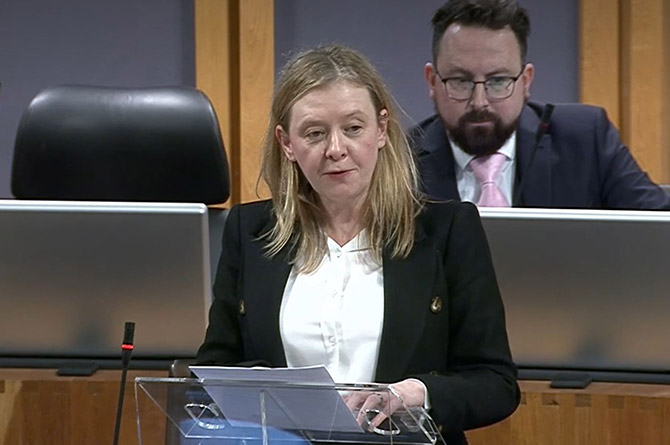
Labour says urgent action is needed as Plaid Cymru outlines plans for housing and town centre reform
WELSH LABOUR has accused the Plaid Cymru-led Welsh Government of relying too heavily on reviews and task forces rather than taking immediate action to tackle housing pressures and struggling high streets across Wales.
The criticism came after comments from Welsh Labour spokesperson for Housing and Communities, Jayne Bryant MS, who said Plaid Cymru had failed to match ambition with delivery.
In a statement issued on Tuesday (June 9), Ms Bryant said Labour supported efforts to improve access to housing and revitalise town centres, but argued that progress was being slowed by further assessments rather than concrete policies.
She said: “We all want to see better access to housing and thriving high streets across Wales. But yet again today, we hear of reviews and task forces from Plaid Cymru, but no immediate actions.
“The Welsh Labour Government delivered almost 20,000 homes in five years, protected Help to Buy Wales when it was scrapped in England, and improved renters’ rights. When will we see tangible action from Plaid Cymru?”
She added: “This is now a running theme from this Plaid Cymru government – discussion over delivery, reviews over rollout.”
The comments follow recent announcements by the Plaid Cymru-led administration indicating that housing access and regeneration will be subject to further assessment, with ministers signalling new reviews into how communities can be supported.
Housing remains one of the most politically sensitive issues in Wales, particularly in rural and coastal areas such as Pembrokeshire, where rising house prices, second homes and shortages of affordable housing continue to place pressure on local residents.
Town centres across Wales have also faced increasing challenges in recent years, with changing shopping habits, business closures and economic pressures prompting calls for renewed investment and reform.

Plaid Cymru has previously defended its approach, arguing that long-term structural problems require careful planning and evidence-based policy rather than short-term fixes.
The political row comes as housing affordability and local economic regeneration are expected to remain key battleground issues in Welsh politics over the coming months.
Welsh Government says it will apply the law following Supreme Court ruling on definition of sex
ALL FOUR Plaid Cymru MPs have backed a Westminster motion opposing the UK Government’s draft Code of Practice on services, public functions and associations.
The code follows the UK Supreme Court ruling that, for the purposes of the Equality Act 2010, the terms “sex”, “woman” and “man” refer to biological sex.
Early Day Motion 240, tabled at Westminster on June 1, states: “That the draft Code of Practice for Services, public functions and associations, a copy of which was laid before this House on 21 May, be disapproved.”
The four Plaid Cymru MPs listed as supporters are Liz Saville Roberts, Ben Lake, Llinos Medi and Ann Davies, who all signed the motion on June 3.
The issue has sparked criticism from Conservatives and Reform, who argue the guidance is needed to protect women-only spaces such as domestic abuse refuges, hospital wards and changing rooms.
Natasha Asghar MS, Welsh Conservative Member of the Senedd for Casnewydd Islwyn, said: “Women in Wales deserve clarity, dignity and safety. That means having the right to single-sex spaces enshrined and protected in law.
“Plaid Cymru’s MPs have just voted against the guidance designed to make that a reality.
“Plaid needs to explain why they are siding against women-only spaces. These are not legal technicalities. They are refuges for domestic abuse survivors, hospital wards and changing rooms. Real spaces where real women have a right to privacy and safety.”
Laura Anne Jones MS also raised the issue in the Senedd, accusing Plaid MPs of a “complete betrayal of women and girls.”
She challenged Deputy First Minister Sioned Williams over women’s refuges, girls’ changing rooms and other protected spaces.
Ms Jones said: “It is shocking that all four of your Plaid MPs in Westminster backed a motion this week opposing single-sex services for women.
“This is nothing short of a complete betrayal of women and girls right across Wales.”

Responding in the Senedd, Sioned Williams accused Reform of trying to turn a sensitive legal issue into a culture war.
She said the Welsh Government had a duty to implement the law and was already applying the Supreme Court judgment.
Ms Williams said: “As a Government, we have a duty to implement the law, and as I said, we are already applying the current law, including the judgment of the Supreme Court.
“We have made clear that we will fully abide by our legal obligations. If the code of practice is approved, we will apply it lawfully in line with our legal duties.”
She added that Westminster MPs of all parties had the right to scrutinise whether the guidance “gets the balance right.”
The Welsh Government has now issued a further statement to The Herald.
A Welsh Government spokesperson said: “We are committed to tackling discrimination and supporting women and girls, in a respectful and inclusive way that upholds the rights and dignity of all people.
“We respect the Supreme Court’s decision and are carefully reviewing the draft Code and its implications for Wales.
“We will lawfully and fully apply the EHRC Code of Practice in a way that continues to support inclusive services and work with public bodies and service providers to ensure the Code is implemented consistently, while maintaining dignity and respect for everyone.”
The issue remains politically sensitive, with opponents of Plaid’s position saying the draft code is necessary for clarity over single-sex spaces, while the Welsh Government says it will apply the law while maintaining dignity and respect for all groups.

Pembrokeshire Care, Share & Give highlighted at Haverfordwest River Festival
A LONG-RUNNING Pembrokeshire charity that has quietly helped thousands of people over more than a decade was given recognition during the Haverfordwest River Festival.
County councillor Thomas Tudor met with charity founder Amanda Absalom-Lowe during Saturday’s (June 13) event at the Riverside Shopping Centre, praising the work of Pembrokeshire Care, Share & Give.
Cllr Tudor said it was “lovely to catch up” with Amanda, describing the organisation as a charity that does “amazing work in our community.”
Founded in 2009, Pembrokeshire Care, Share & Give has spent more than 13 years helping vulnerable people across Pembrokeshire and beyond by combining environmental recycling projects with practical community support.
The charity, based in Haverfordwest, helps redistribute surplus food, unwanted household items, clothing and essential goods to people struggling financially, homeless people, hospitals, charities and community groups.
Its work also includes providing “Rainbow Emergency Packs” for patients unexpectedly admitted to hospital, Christmas toy donations for children, emergency household support for families affected by fires or hardship, and aid for animal rescue centres.
The group says it has helped divert tonnes of waste from landfill through its recycling initiatives, encouraging residents to donate items rather than throw them away.
Amanda Absalom-Lowe, founder and chairperson of the charity, has received a string of honours for her work over the years, including the Radio Pembrokeshire Local Hero Green Award, the Haverfordwest Town Council Award of Merit, and the Pembrokeshire Association of Voluntary Services Volunteer of the Year Award.
In 2020, she was also recognised nationally after being named in the BBC Radio 4 Woman’s Hour Power List, celebrating inspirational women making a difference.
The charity has supported numerous causes including Patch Charity, Wales Air Ambulance, Paul Sartori Foundation, Blood Bikes, Greenacres Rescue, Bristol Children’s Hospital, children’s wards across Wales and homeless support initiatives.
Pembrokeshire Care, Share & Give operates from Kiln Road in Haverfordwest and relies heavily on donations and community support.
The charity’s message remains simple: “Recycle4Charity — don’t throw it away, donate it.”

Community support: Amanda Absalom-Lowe with County Councillor Thomas Tudor at the Haverfordwest River Festival (Pic: Supplied).



Community2 hours ago
River festival brings crowds to Haverfordwest
A CELEBRATION of the River Cleddau brought crowds into Haverfordwest on Saturday (June 13) as the town’s River Festival returned...


Charity2 hours ago
Voices at the Castle hailed as unforgettable night after weather setback
Russell Watson headlines spectacular charity concert at Pembroke Castle A SPECTACULAR evening of live music at Pembroke Castle has been...

Local Government20 hours ago
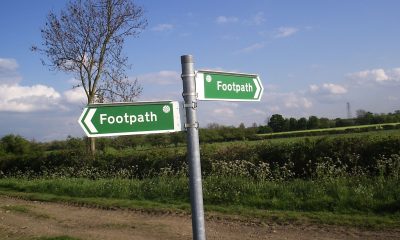
Council admits 74 rights of way complaints remain unresolved
Key post vacant since February as walker raises safety concerns over paths near Llanteg and Amroth PEMBROKESHIRE COUNTY COUNCIL has...


Education2 days ago
Diocese threatens legal action as Manorbier school closure battle intensifies
Church says council could face judicial review over fire-hit school A BITTER row over the future of Manorbier Church in...


Health2 days ago
Baby loss charity calls for urgent action after latest Wales figures published
Sands says Welsh Government must set clearer targets to reduce stillbirths and neonatal deaths A BABY loss charity has called...

Health2 days ago
Cancer delays worsening as west Wales hospitals struggle to recruit specialists
Health board admits standards are difficult to meet as doctors warn of “extremely dangerous” shortages PATIENTS in west Wales are...


News2 days ago
Rhun ap Iorwerth highlights first 25 days in office as First Minister
Plaid Cymru leader says government is moving quickly on NHS, farming and economic priorities FIRST MINISTER Rhun ap Iorwerth has...


Crime3 days ago
Man accused of six rapes including alleged Haverfordwest offence
A MAN has been sent to Crown Court accused of six rapes, including an alleged offence at a Haverfordwest campsite....


News3 days ago
Childcare row erupts as Plaid faces questions over costs and delivery
Opposition parties clash over flagship pledge as Senedd debate exposes growing divisions PLAID CYMRU’S flagship promise to create what it...


Crime4 days ago
Farmers fined in bovine TB scandal face fresh court action
Hartt family members listed at Haverfordwest Magistrates’ Court over unpaid penalties linked to major cattle prosecution TWO PEMBROKESHIRE farmers convicted...
-

 Crime6 days ago
Sex offender in senior role at Tenby family hotel
-
 Crime5 days ago
Haverfordwest pair accused of £80,000 rogue trading frauds
-
Education2 days ago
Diocese threatens legal action as Manorbier school closure battle intensifies
-

 Community6 days ago
Forgotten wartime archive found in Pembroke Dock attic after 80 years
-
Crime3 days ago
Man accused of six rapes including alleged Haverfordwest offence
-

 Crime5 days ago
Families condemn failed appeal by paddleboard boss jailed over Haverfordwest tragedy
-
 Crime5 days ago
Knife blankets call as school staff face rising violence fears
-

 Local Government2 days ago
Taxi suspended after county-wide licensing checks