


Business
Avian flu concerns rise as fresh housing rules hit West Wales farms


Producers warned to tighten biosecurity as winter migration increases risk
POULTRY farmers across West Wales are tightening biosecurity and preparing for months of disruption as the latest wave of avian influenza brings new housing requirements and restrictions across the country.
An all-Wales Avian Influenza Prevention Zone (AIPZ) remains in force, with keepers required to follow strict disease-control measures. Mandatory housing orders are now active, meaning all poultry and captive birds must be kept indoors or under cover to reduce contact with wild birds during the peak winter migration period.
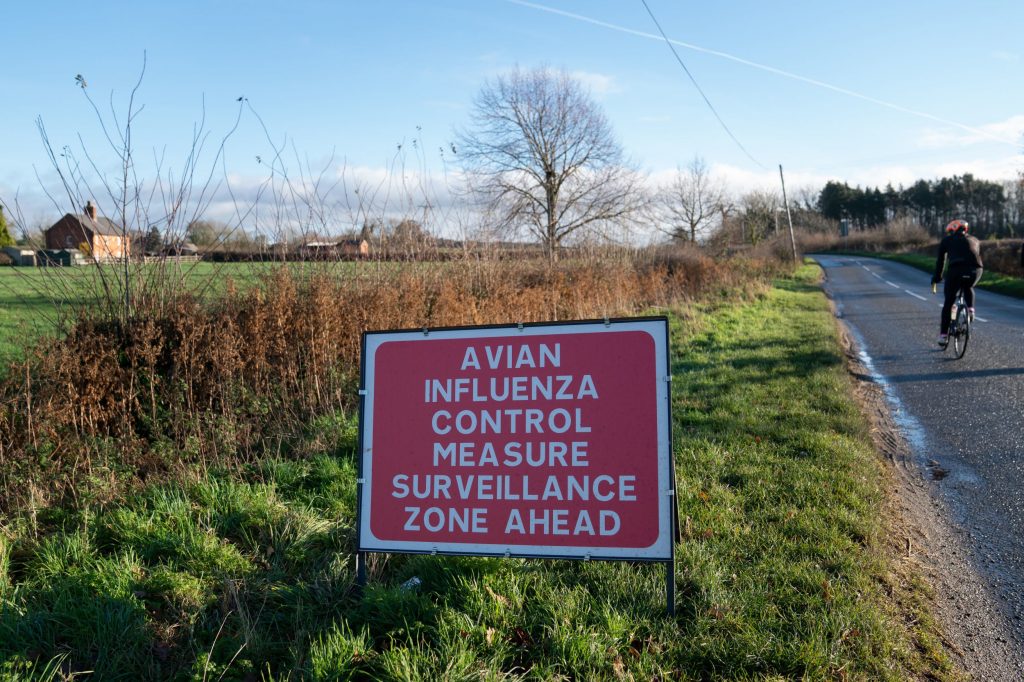
The Welsh Government said the risk of spread from wild bird populations has risen sharply in recent weeks, with cases confirmed across the UK and further outbreaks expected as colder weather pushes migratory birds into estuaries and coastal wetlands.
Local concerns in Pembrokeshire and Carmarthenshire
While no major outbreaks have been reported in West Wales so far this season, farmers say the constant tightening of rules has become part of their winter routine.
Producers in Pembrokeshire and Carmarthenshire told The Herald that rising feed costs, indoor-housing requirements and continued uncertainty around “free-range” status are putting pressure on small and medium-sized units.

One local keeper said: “When birds go inside for long periods, everything becomes more expensive — bedding, lighting, feed, labour. You also worry about the stress on the flock. It all adds up.”
Although the public health risk remains low, farmers say the economic risk to the rural sector is significant, particularly if repeated outbreaks trigger long-term culls or movement restrictions.
Background: The Capestone outbreak
West Wales has already seen how severe the consequences can be.
In September 2022, Capestone Organic Poultry Ltd, near Milford Haven, lost 130,000 organic chickens after a small outbreak of bird flu was detected in one shed. The entire flock was culled, affecting one of Pembrokeshire’s largest agricultural employers.

At the time, the business urged the Welsh Government to introduce a mandatory housing order to match measures already in place in England. Wales initially resisted housing rules, instead relying on an AIPZ and saying the scientific evidence did not yet justify compulsory containment.
The episode highlighted a long-running debate within the industry: whether early housing orders are essential to prevent spread, or whether they impose unnecessary financial strain, especially on free-range units that could lose their premium status once birds are indoors for extended periods.
That same debate has returned this winter, with ministers under pressure to balance scientific advice with the practical realities on farms.

Biosecurity rules tightened
Under current measures, all bird keepers — from major commercial producers to backyard owners — must now:
- house or net birds to avoid contact with wild birds
- clean and disinfect housing, yards, vehicles and equipment regularly
- restrict visitors and maintain movement records
- report any signs of unexplained illness, sudden deaths or drops in egg production to APHA
Failure to follow the rules can result in enforcement action, including prosecution.
The Welsh Government said the AIPZ and housing order will remain in place “until further notice”, with the situation assessed on a daily basis.
‘A difficult few months ahead’
Farmers say that, as in previous years, the biggest challenge will be uncertainty. If Wales avoids major outbreaks, restrictions may lift early. But with the UK reporting rising case numbers and Europe warning of sustained seasonal pressure, most producers are preparing for a long winter.
NFU Cymru has again urged the Welsh Government to ensure clear communication and rapid support for producers affected by culls or extended housing, warning that some family-run businesses are operating “on a knife-edge”.
For now, farmers in West Wales say they can only focus on biosecurity and hope that this year’s strain does not bring the kind of losses seen elsewhere in the UK.

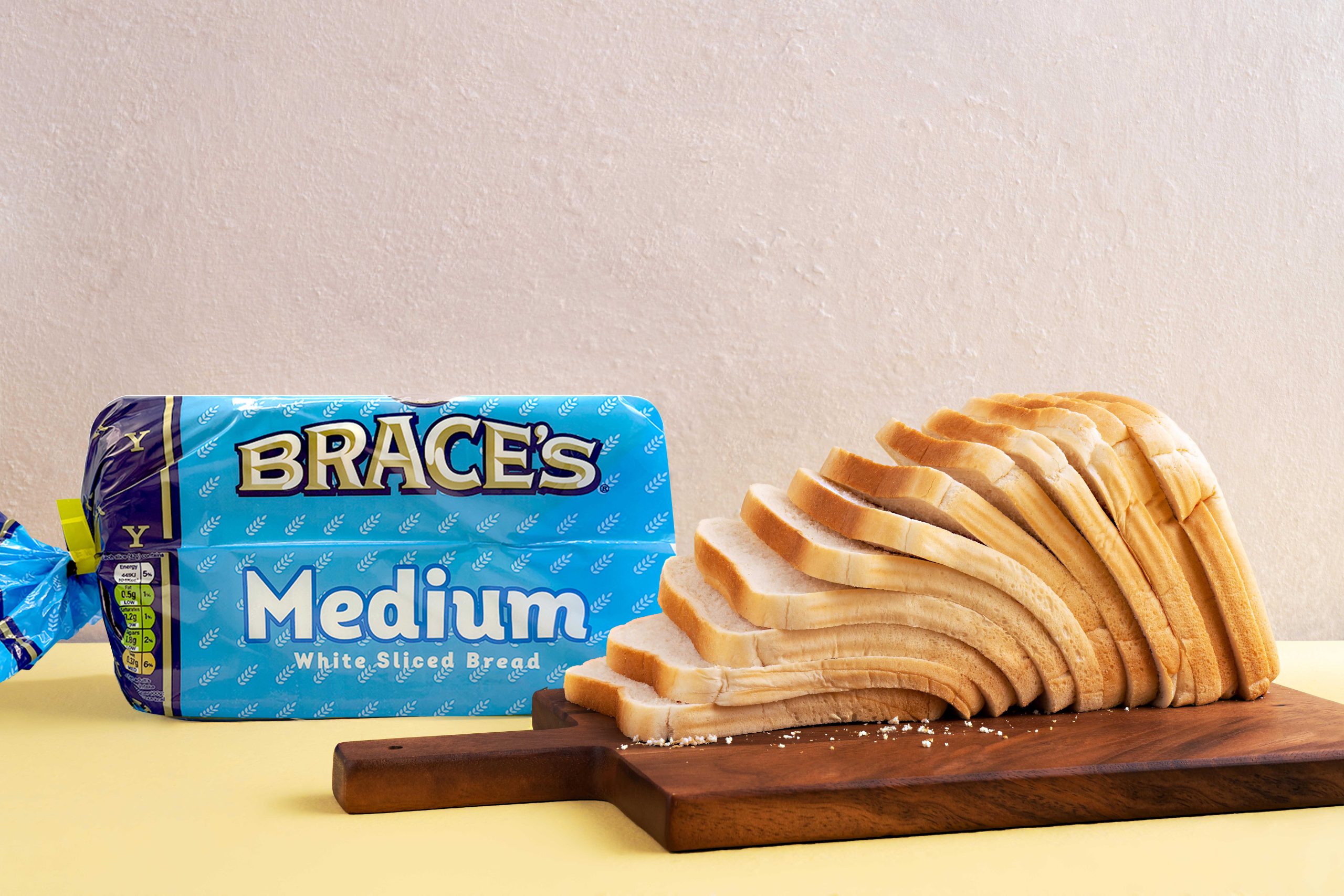
ONE of Wales’ best-known bakery brands has been acquired by Boparan Private Office in a deal said to secure the future of the business and protect hundreds of jobs.
Brace’s Bakery, founded in 1902, has been bought by Boparan Private Office, the family-owned group linked to some of the UK’s largest food manufacturing operations.
The announcement comes after growing concern over the future of the Welsh bakery, with fears over jobs and production amid falling demand for traditional sliced bread and major pressure on costs.
Brace’s is a fourth-generation family business and one of the best-known bakery brands in Wales, supplying bread, rolls and bakery products to major retailers and independent shops across Wales and the West of England.
Boparan Private Office said the acquisition would bring together Brace’s “strong regional heritage and brand recognition” with its experience of investing in British food businesses.
The group recently acquired Roberts Bakery, based in Cheshire, in 2025.
‘Iconic brand’
Ranjit Singh Boparan, President of Boparan Private Office, said: “Brace’s is an iconic brand with a rich heritage, and we are delighted to have been able to reach an agreement to step in and preserve this business, while helping to take it into a new era through investment, innovation and modernisation.
“Brace’s Bakery has been at the heart of its communities for generations, and we are absolutely committed to supporting its long-term success.
“Our focus is on providing the backing and stability the business needs to move forward and build a sustainable future while maintaining the identity and quality that customers trust.”
He said there were opportunities to invest in innovation across products, manufacturing, customer service and routes to market, while keeping the brand true to its values.
Mr Boparan also acknowledged the uncertainty faced by workers during the sale process.
He said: “We would like to take this opportunity to recognise the tremendous commitment and loyalty the Brace’s workforce has demonstrated during this challenging period.

“I recognise there has been uncertainty while discussions have taken place, which have admittedly taken longer than expected as we worked to ensure everything was in place for customers, the management team and all colleagues.”
‘A clear path forward’
Mark Brace, Managing Director at Brace’s Bakery, said the deal was an important step for the company.
He said: “This is an important step for Brace’s Bakery, and my brother and fellow director, Jonathan, and I are both delighted that Boparan Private Office has stepped in to give the brand the opportunity to build on almost 125 years of baking heritage as we move into a new era.
“Boparan Private Office understands the importance of the Brace’s brand, its people and the communities we serve.
“Their support provides a clear path forward for the business, allowing us to focus on strengthening Brace’s operations and continuing to deliver the quality products our customers expect.”
Changing market
The takeover follows a difficult period for the traditional bakery sector.
Brace’s has previously pointed to a sharp decline in demand for standard sliced bread, with changing consumer habits putting pressure on one of its core products.
Across the UK, shoppers have increasingly moved towards sourdough, seeded loaves, wraps, flatbreads, higher-fibre products and other alternatives, while many households no longer rely on toast and sandwiches in the way they once did.
At the same time, bakeries have faced rising energy, ingredient, wage, packaging and transport costs.
The deal means Brace’s, one of Wales’ most recognisable food brands, will now become part of a much larger food group with significant manufacturing interests.
Boparan Private Office is a family-owned conglomerate with divisions covering agriculture and property, UK food manufacturing, restaurants and European poultry operations.
The wider group is one of the UK’s leading food manufacturers, with turnover of more than €5 billion and around 25,000 employees.
For Wales, the announcement will be seen as a major intervention in the future of a household name which has been part of Welsh life for more than a century.
The key question now will be how much investment follows, what happens to production across Brace’s sites, and whether the new owner can modernise the brand while keeping its Welsh identity intact.

A CALL for a north Pembrokeshire farm to be able to diversify through the bottling of water from its well has been given the go-ahead.
In an application to Pembrokeshire Coast National Park, a Mr George, through agent Harries Planning Design Management, sought permission for a change of use of part of an existing agricultural shed to a use for the bottling of water as a form of farm diversification at Trerhys, near St Dogmaels, Cardigan.
A supporting statement said: “The water bottling plant will be run and under control by the applicant, who also has direct control of the associated farm known as Trerhys. The water bottling plant seeks to diversify the farm income to provide future economic sustainability and increase revenue from the land.
“The increase in profits generated by the water bottling plant business will be siphoned back into the farm business, to allow for necessary improvements and works to the farm to ensure its future within a worsening agricultural economy.”
It said the profits would be used for on-going repair and replacement of existing fencing around the farm which owns significant land, along with investing and increasing the suckler herd on the farm.
“The applicant underwent major surgery back in 2023 and had to cut back hours on the farm to recover. This meant that the suckler herd dipped in numbers and due to profitability, the farm has yet to be able to recover to its previous numbers.
“This increase in profit will allow the capital to be reinvested in the suckler herd, increase profit margins and overall profitability for the farm.”
It also said the profits would be “channelled into large repairs and overall, like-for-like replacement of a number of existing farm buildings,” and, depending on returns, “there may be scope to invest in the existing farmhouse on site”.
It concluded: “Overall, whilst the water bottling plant will take some time to become established and generate suitable profits, once established significant profits, these will be reinvested as above into the existing farm business to ensure its future can be secured for longer within an uncertain agricultural economy.
“Without diversification, the farm is set to reduce further in size and the buildings and farmyard become further run down and unsightly in the landscape.”
An officer report recommending approval said the scheme for Trerhys Farm, 1.7km to the north of Moylegrove, would use one bay of an existing shed and would “utilise the existing water source from a well within an existing agricultural field to the north of the farm complex”.
Concerns were raised by three members of the public on the grounds of a query on the water source and transportation of the finished product, and potential noise issues.

The report said a noise assessment found no detrimental impacts in the locality, with Highways officers having no concerns on transportation issues.
The officer report concluded: “Following careful consideration of the application and its merits, it is concluded that the proposed scheme represents an appropriate form of development in this location.”
The application was conditionally approved.

A PEMBROKESHIRE wind turbine scheme which was recommended to be refused over a lack of information on how it may affect bats, which led to it being previously withdrawn, has gained some breathing space to address the issue.
In December of last year, in an application recommended for refusal at Pembrokeshire County Council’s planning committee, Constantine Wind Energy Ltd sought permission for a 76-metre-high wind turbine at Summerton Farm, Sageston.
Back in 2024, an application to replace a current 60.5m high turbine on the site with one up to 90 metres, or just under 300 foot, at the site was refused on the grounds its height and scale would have a detrimental impact on the visual amenity of the locality, with the additional clause of failing to comply with supplementary guidance.
A report for committee members on the latest application says the smaller turbine than previously proposed, representing a 16-metre increase in height from a previously granted turbine “would not be sufficient for it to become an overbearing feature in the landscape,” with no objections from either the Council Landscape Officer or Natural Resources Wales.
However, concerns were raised by the council ecologist that the applicant’s Preliminary Ecological Appraisal Report was incomplete, with a bat survey not included.
It was recommended for refusal on the grounds that appraisal report, and technical note, “do not adequately address the impact of the proposed wind turbine on bat activity in the area”.
At the December meeting, members heard the scheme had been temporarily withdrawn to deal with issues raised, the application returning to the June meeting, again recommended for refusal on a lack of information on the potential impact on bats.
A report for members ahead of the June meeting says the application was withdrawn from the December agenda to allow the applicant time for consideration of the Council Ecologist’s request for further survey work.
It said the applicant had started a bat survey programme, with further surveys due to take place in July and September, the applicant asking for the matter to be deferred in November.
At the June meeting, Richard Grisk, on behalf of the applicants, referenced the additional surveys, calling for a further deferral, saying it would be far most cost efficient and effective for all parties, the applicants intending to resubmit an expected to be near-identical scheme, other than the bat reports, if it was refused.
After a great deal of deliberation on the matter, Cllr John Cole, who had initially proposed a deferral, moved the scheme be decided by officers under delegated powers.
This would allow them to either approve or refuse after the bat reports have been received.
Members, by 10 votes to four, supported the delegated decision, expected later this year.



News20 hours ago
Council tax shake-up in doubt as Welsh Government reviews reform plans
Questions over 2028 revaluation as ministers reconsider next steps THE FUTURE of council tax reform in Wales has been thrown...


Crime21 hours ago
Paddleboard company owner loses bid to cut sentence over Haverfordwest tragedy
A FORMER paddleboard company owner jailed over the deaths of four people on the Western Cleddau has failed in a...

Community2 days ago
Crisis response dogs launched to support people through trauma and distress
A NEW project using specially trained dogs to support people during moments of trauma, grief and crisis has been launched...


News2 days ago
Major fire breaks out at Tata Steel site in Port Talbot
TATA STEEL has confirmed that a major fire broke out at its Port Talbot steelworks on Wednesday night, with emergency...


Community3 days ago
HMS Erebus tragedy links Pembroke Dock ship to Templeton family
DNA breakthrough identifies cabin boy David Young as exhibition marks 200 years since ship’s launch ON MAY 19, 1845, a...


Community3 days ago
Narberth cash machine closures spark urgent access review
CALLS have been made for an urgent review of access to cash in Narberth after two town centre ATMs were...


Health4 days ago
First Minister quizzed on Welsh NHS pressures in his first-ever FMQs
SENEDD Members pressed the First Minister over the state of the health service in Wales, as the Plaid Cymru leader...


Community4 days ago
Historic paddle steamer Waverley to return to Fishguard this month
THE WORLD’S last seagoing paddle steamer will return to Fishguard this month as part of her annual visit to South...


Local Government4 days ago
National Express use of new Haverfordwest interchange still subject to risk checks
A RUMOUR that National Express coaches may struggle to use Haverfordwest’s new transport interchange has been denied by Pembrokeshire County...


Crime4 days ago
Milford Haven man jailed for illegal Premier League streaming service
A MILFORD HAVEN man who supplied illegal Premier League streams and loaded Firesticks to almost 2,000 customers has been jailed...
-
Crime21 hours ago
Paddleboard company owner loses bid to cut sentence over Haverfordwest tragedy
-

 Crime3 days ago
Milford Haven man bit neighbour’s neck near cashpoint
-
Crime4 days ago
Milford Haven man jailed for illegal Premier League streaming service
-

 Crime4 days ago
Haverfordwest man admits cocaine offence as Crown disputes basis of plea
-
Local Government4 days ago
National Express use of new Haverfordwest interchange still subject to risk checks
-

 Crime3 days ago
Pembroke Dock driver avoided jail after drug-drive crash
-

 Crime3 days ago
Dinas Cross man jailed over shop thefts
-

 Community6 days ago
Charles Street to come alive for Milford Haven Founders Day