


Community
Four rescued in night-time RNLI operation after vessel runs aground off Fishguard


Casualty falls into the water during tense early-morning rescue
FOUR people were rescued in the early hours of Thursday (Dec 11) after a 24-metre guard vessel ran aground near Aber Hywel, triggering a major response from Fishguard RNLI in rough seas and darkness.
The alarm was raised at around 3:30am, with HM Coastguard requesting the launch of Fishguard’s all-weather lifeboat. Crews faced a southerly force 7 wind and choppy conditions as they made their way to the stranded vessel.
Cliffs and underwater hazards added to difficulty
Coxswain Gemma Gill said the vessel’s close position to cliffs and submerged obstructions prevented the all-weather lifeboat from getting alongside.
“Because of the casualty vessel’s proximity to the cliffs and the underwater hazards between us, we were unable to safely transfer the four people onboard. I requested the launch of our inshore lifeboat, and we were aware the Coastguard helicopter had also been scrambled.”
The inshore lifeboat was launched minutes later. The crew deployed its anchor and veered down towards the vessel’s stern to begin recovering those onboard.

Casualty swept away in darkness
Crew member Cedwyn Rogers said the plan was for the four people to climb down a rope ladder into their liferaft before being taken aboard the inshore lifeboat.
Two made it safely — but the third slipped and fell into the sea.
“When there is a person in the water you become hyper-focused,” Cedwyn said. “We threw a throw bag, but they were unable to catch it and were starting to be swept further away.”
Helm Warren Bean, an RNLI volunteer with more than 30 years’ experience, manoeuvred the lifeboat alongside the drifting casualty. Crew member Huw was able to reach them, and the team hauled them aboard.

All four casualties were wearing lifejackets and proper safety equipment, which RNLI crews said made a critical difference.
The fourth person was then recovered safely before the inshore crew cut their anchor line to clear nearby rocks.
Lifeboats return to station
All casualties were transferred to the all-weather lifeboat for care and shelter on the return journey. Both lifeboats were back at Fishguard station by 5:25am.

Coxswain Gill praised the volunteers: “This rescue in the early hours, in poor weather and darkness, shows our crews are ready to respond whenever the call comes in. I’m proud of the teamwork shown by everyone, with the successful rescue of four people who will now get the chance to spend Christmas with their families.”
RNLI launches Christmas Appeal
Fishguard RNLI volunteers remain on call throughout the festive period. Last Christmas, RNLI lifeboats across the UK and Ireland launched more than 100 times.
The charity has now launched its annual Christmas Appeal, which helps fund essential kit and training for crews. Donations can be made at: RNLI.org/WinterAppeal.


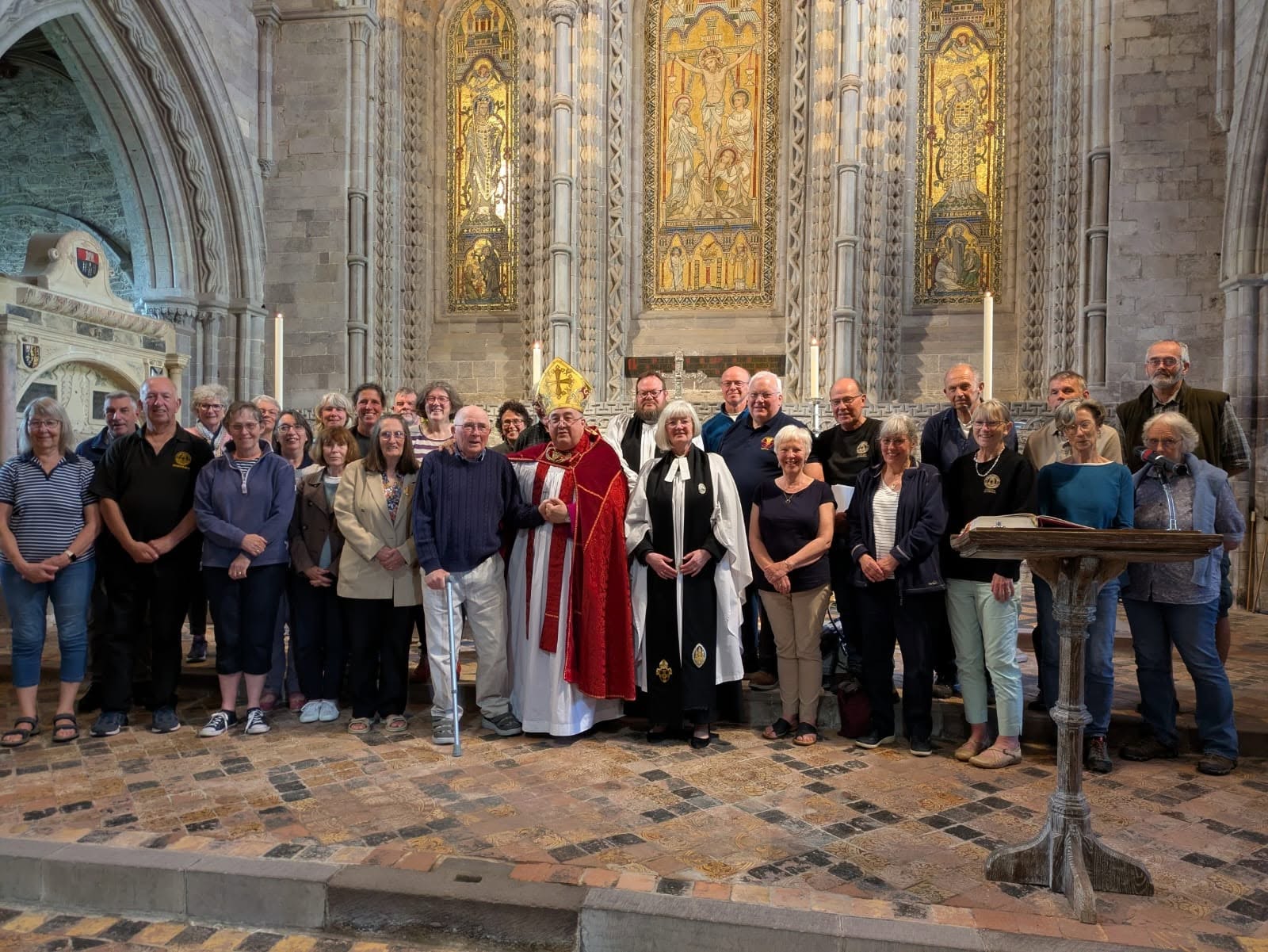
A SERVICE was held today at St Davids Cathedral for the annual meeting of the Diocesan Guild of Bellringers.
Fr Jim, the guild’s chaplain, led the service, during which the Bishop of St Davids preached and thanked members for their dedication to churches across the diocese.
He spoke about the important role bells play in marking moments of worship, celebration and remembrance, and said he had been personally moved when bells marked significant points in his own ministry.
The guild is keen to encourage new people to take up bellringing and says it is a friendly and approachable group for anyone interested in getting involved in church life.

MORE THAN 500 CHILDREN FROM 50 SCHOOLS HELP CELEBRATE BRO’R GARREG LAS
HUNDREDS of primary school children from across west Wales have come together to release a special song celebrating the communities, language and landscape of Bro’r Garreg Las.
The song, Croeso i Fro’r Garreg Las, has been recorded by pupils from 50 schools across Pembrokeshire, Ceredigion and Carmarthenshire ahead of this summer’s National Eisteddfod in Llantood.
The project marks the countdown to the festival, which will be held from August 1 to August 8.
More than 500 children have taken part, with the song celebrating the area’s Welsh language, local communities, culture and sense of identity.
The track has been released on digital platforms alongside a colourful video filmed at some of the region’s best-known locations.
Pupils travelled to sites including Cardigan, Tenby, St Davids, Pentre Ifan and Drefach Felindre to perform and help bring the song to life.
The lyrics were written by poet Ceri Wyn Jones, with the melody by Einir Dafydd. The track was produced by Mei Gwynedd and the video was filmed by Gareth Bull.
Pembrokeshire County Council leader, Cllr Tessa Hodgson said: “We are delighted to be welcoming the National Eisteddfod to Llantood this summer.
“It’s been a pleasure to see young people from the three counties come together to create a special song that celebrates the area, and builds excitement as we look forward to the Eisteddfod.
“Collaboration across Bro’r Garreg Las has been at the heart of this project.”
Cllr Catrin M S Davies, Ceredigion County Council Cabinet Member responsible for Culture, said: “This song celebrates the Welsh language and the unique character of the whole area – from the coast to the countryside.
“Ceri Wyn’s lyrics also offer a taste of our history and heritage. There will be an opportunity for the whole of Wales to enjoy our area in August and to hear some of our stories – come along!”

Cllr Glynog Davies, Carmarthenshire County Council Cabinet Member for Education and Welsh Language, said: “It has been a privilege to work with Welsh and English-medium schools across the counties to create this special song.
“Over 500 children have contributed to it, which is an incredible achievement. It is wonderful to see that the Welsh language and the Eisteddfod belong to everyone.”
The song can be heard on digital platforms now, while the video is available to watch on YouTube.
Photo caption: Children from schools across Bro’r Garreg Las have joined forces to record a special song ahead of this summer’s National Eisteddfod.

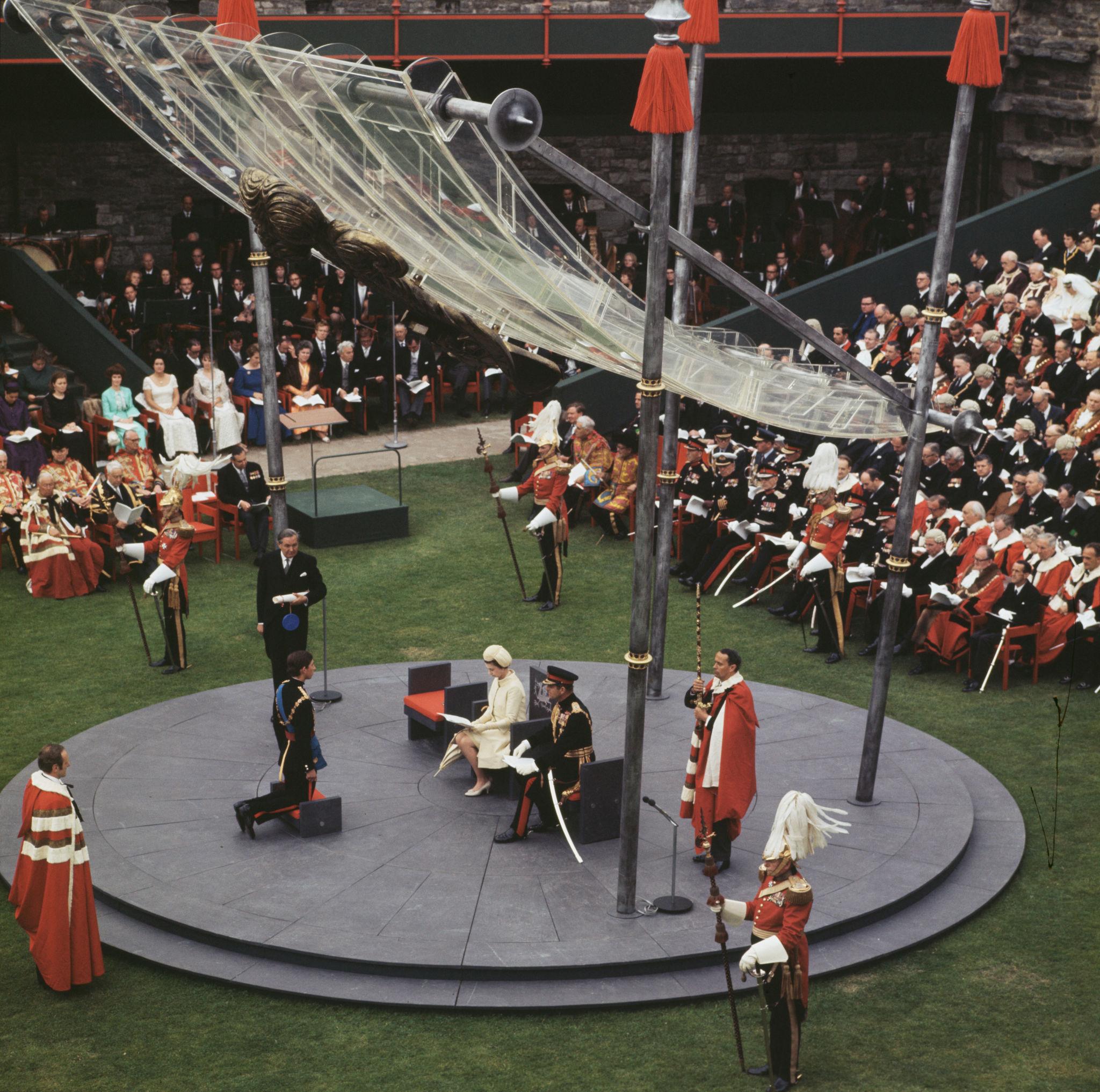
A CEREMONIAL gown worn by the grandson of former Prime Minister David Lloyd George during the 1969 investiture of Prince Charles has been discovered at an antiques roadshow in Pembrokeshire.
The gown, worn by Owen Lloyd George, 3rd Earl Lloyd George of Dwyfor, was found alongside his original invitation from Queen Elizabeth II to take part in the historic ceremony at Caernarfon Castle.
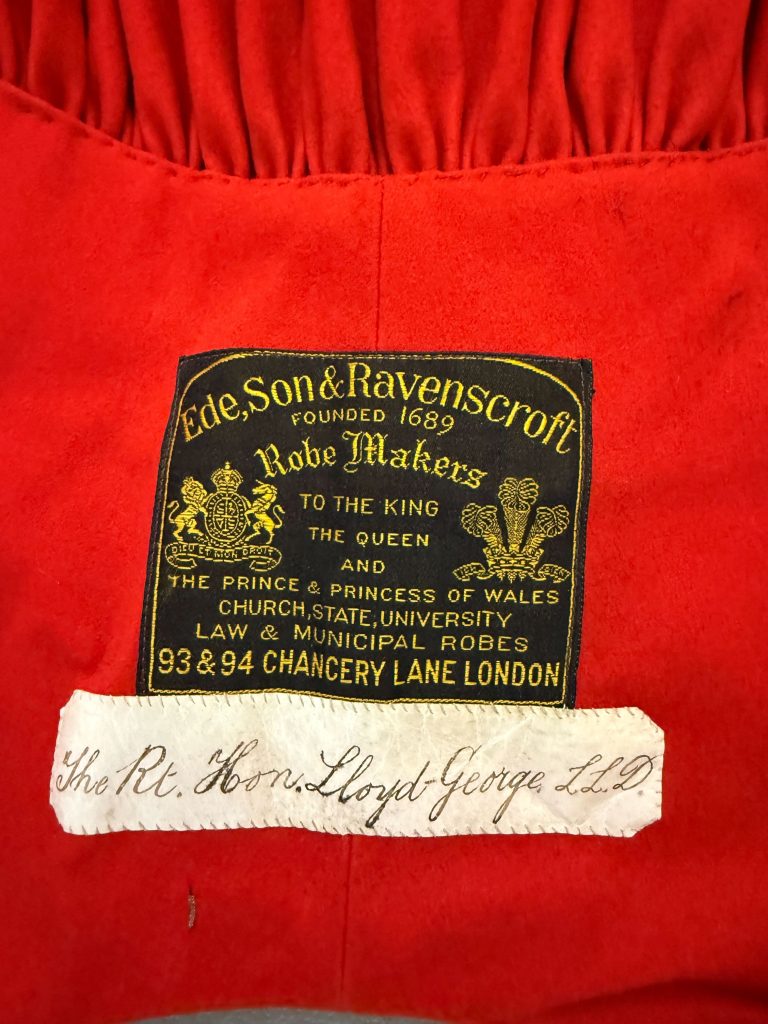
The items were brought to a WeBuyVintage roadshow in Saundersfoot by a member of the public who had acquired them after they were removed from Ffynone House, near Boncath, the Earl’s former Pembrokeshire country seat.
The Earl, who lived from 1924 to 2010, was the grandson of David Lloyd George, Britain’s wartime Prime Minister. He was given a prominent role at the investiture on July 1, 1969, carrying the ceremonial sword during the nationally televised event.
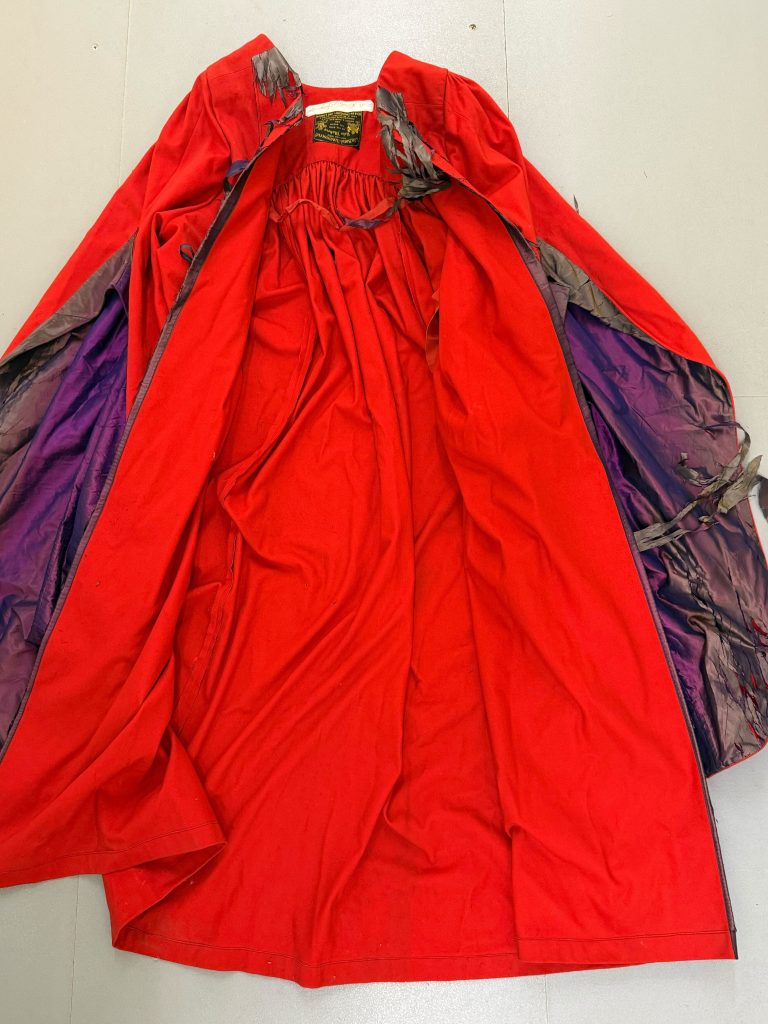
The red ceremonial gown bears the Earl’s name on a label inside and is believed to have been made especially for him for the ceremony. It was kept at Ffynone House for decades.
The current owner said she rescued the items in 2021 after seeing possessions from the house being advertised for sale.
She said: “The owner explained that many historic possessions connected to the Lloyd George family were likely to be discarded following the sale of the house and its contents.
“I felt I could not let that happen with the gown and the letter, as these felt like genuine pieces of Welsh history and I wanted to make sure they were preserved.”
Antiques specialist Neil Church, of WeBuyVintage, said the discovery was immediately significant.
He said: “Every so often, something comes through the door that truly stops you in your tracks, and this was one of those moments.
“Far more than an old ceremonial garment, it was a remarkable discovery directly connected to one of the most significant royal and historic moments in modern Welsh history, the investiture of the now King Charles.
“What made it especially fascinating was its provenance, tracing it back to the grandson of the former Prime Minister of Britain and the family’s historic country seat, Ffynone House.
“While we valued it at around £600, its historical significance reaches far beyond its monetary worth.”
The gown and invitation are now being described as a rare surviving piece of Welsh and royal ceremonial history, rediscovered in west Wales more than half a century after they were used at Caernarfon Castle.
Photo caption: Historic find: The ceremonial gown worn by Earl Lloyd George of Dwyfor at the 1969 investiture of Prince Charles was discovered at a Saundersfoot antiques roadshow (Pic: WeBuyVintage).


Local Government6 hours ago
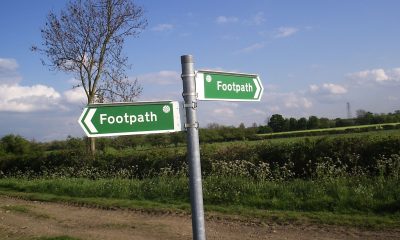
Council admits 74 rights of way complaints remain unresolved
Key post vacant since February as walker raises safety concerns over paths near Llanteg and Amroth PEMBROKESHIRE COUNTY COUNCIL has...

Education1 day ago
Diocese threatens legal action as Manorbier school closure battle intensifies
Church says council could face judicial review over fire-hit school A BITTER row over the future of Manorbier Church in...


Health1 day ago
Baby loss charity calls for urgent action after latest Wales figures published
Sands says Welsh Government must set clearer targets to reduce stillbirths and neonatal deaths A BABY loss charity has called...

Health1 day ago
Cancer delays worsening as west Wales hospitals struggle to recruit specialists
Health board admits standards are difficult to meet as doctors warn of “extremely dangerous” shortages PATIENTS in west Wales are...


News1 day ago
Rhun ap Iorwerth highlights first 25 days in office as First Minister
Plaid Cymru leader says government is moving quickly on NHS, farming and economic priorities FIRST MINISTER Rhun ap Iorwerth has...


Crime2 days ago
Man accused of six rapes including alleged Haverfordwest offence
A MAN has been sent to Crown Court accused of six rapes, including an alleged offence at a Haverfordwest campsite....


News2 days ago
Childcare row erupts as Plaid faces questions over costs and delivery
Opposition parties clash over flagship pledge as Senedd debate exposes growing divisions PLAID CYMRU’S flagship promise to create what it...


Crime3 days ago
Farmers fined in bovine TB scandal face fresh court action
Hartt family members listed at Haverfordwest Magistrates’ Court over unpaid penalties linked to major cattle prosecution TWO PEMBROKESHIRE farmers convicted...


Crime3 days ago
Pembrokeshire child killer stabbed to death in prison cell, murder trial hears
Kyle Bevan, jailed for the murder of Haverfordwest toddler Lola James, was allegedly stabbed 25 times and left ‘as if...


News4 days ago
Pendine cliff fall victim recovering after major emergency response
A 22-YEAR-OLD man who suffered serious injuries after falling from cliffs overlooking Pendine Beach is recovering well following emergency surgery....
-

 Crime5 days ago
Sex offender in senior role at Tenby family hotel
-
 Crime4 days ago
Haverfordwest pair accused of £80,000 rogue trading frauds
-
 Community5 days ago
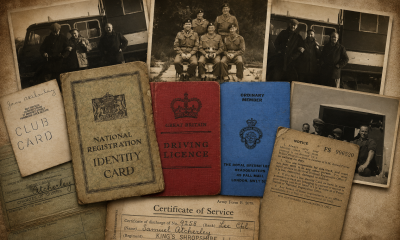
Forgotten wartime archive found in Pembroke Dock attic after 80 years
-
Education1 day ago
Diocese threatens legal action as Manorbier school closure battle intensifies
-
 Crime5 days ago
Families condemn failed appeal by paddleboard boss jailed over Haverfordwest tragedy
-
 Crime4 days ago
Knife blankets call as school staff face rising violence fears
-
Crime2 days ago
Man accused of six rapes including alleged Haverfordwest offence
-

 Local Government6 days ago
Ombudsman confirms Woodham complaint still live after Cllr Dennison’s suspension