


Crime
Wales set to cement title for highest imprisonment rate in western Europe


WALES’ unwanted title as the nation with the highest “in-country” imprisonment rate in western Europe is set to be solidified due to the expansion of HMP Parc.
The warning came as the expansion, which was approved despite the prison reaching a record 17 deaths in 2024, is projected to push the rate to 178 per 100,000 population.
Analysis by Wales Governance Centre warned the projected rate will surpass the average for the whole of Europe (177 per 100,000) and that of anywhere else in western Europe.
The “in-country” rate refers to people held in Welsh prisons, including those from England, with 167 per 100,000 currently compared with 139 per 100,000 across the border.
The Ministry of Justice (MoJ) decision to add 345 places at HMP Parc will increase the prison place surplus in Wales from 393 to an estimated 738 places, fuelling concerns about the country being used to “absorb prisoner overflows from England”.

Appearing before the Senedd’s equality committee on Monday December 15, Rob Jones, a lecturer at Cardiff University, questioned the logic of expanding the Bridgend prison.
He said: “I don’t quite understand why that decision was taken to expand that prison at that particular time – one, given the safety problems that have been widely reported on and, secondly, Wales already has the highest ‘in-country’ imprisonment rate in western Europe.”
Pressed about the reasons for the “enormously high” rate, Dr Jones pointed to the impact of poverty in Wales. He raised the example of Finland which has a rate of 51 per 100,000.

The “ill-judged” plans to extend HMP Parc were approved by Bridgend Council in November and Dr Jones urged Welsh ministers to ask the UK Government to think again.
He said: “I don’t see any reason why Parc should be expanded when there are still no answers about Wales’ imprisonment rate… I think there needs to be a very serious conversation about tackling overimprisonment in Wales, not just overcrowding.”
Since HMP Berwyn in Wrexham opened in 2017, the average number of prisoners held in Wales has increased by 34%, according to a Wales Governance Centre briefing.
The report found the number of prisoners held in England would need to increase by more than 21,000 to equal the rate in Wales following the proposed expansion.

Dr Jones told the committee: “If the Welsh Government is serious about its… commitment to reduce the number of people in prison in Wales – now is the time to show it.”
His latest factfile on imprisonment showed a record number of deaths (21) across the Welsh prison estate in 2024. Of the 17 at HMP Parc, eight were attributed to natural causes.
He said: “I think the natural cause deaths are the elephant in the room actually when we think about deaths in prison. [That’s] not to say those others that we saw, particularly at Parc last year with regards to substances, are not, of course, to be taken seriously.”
Dr Jones expressed concerns about the standards of health care in prisons, which is devolved to Wales, with the average life expectancy of prisoners “significantly lower”.
Asked about housing, Dr Jones said the “jagged edge” of Wales’ justice system is “alive and well” when it comes to homelessness and prisoner release. He warned councils, housing services and probation cannot deal with the “churn” created by short-term sentences.
Labour’s Mick Antoniw asked about people from black or minority ethnic backgrounds being disadvantaged “in just about every respect of the criminal justice system”.

Dr Jones replied: “I don’t think I’ve seen any real improvement nor change,” warning of “zero” investment in research on criminal justice in Wales.
He pointed to evidence of two-tier sentencing and cautioned Wales is “completely lost” in the context of an England-and-Wales justice system. He raised the danger of recommendations – such as those from the Lammy review and Thomas commission – sitting on a shelf.
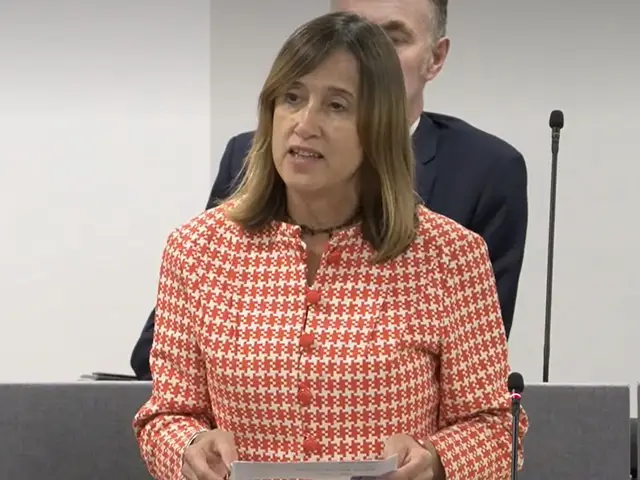
Jane Dodds, the Liberal Democrats’ leader in Wales, asked about a high and growing proportion of Welsh prisoners held on remand before their trial or sentencing.
Dr Jones warned of a lack of understanding to explain a 10% increase in prisoners on remand in 2024 (804) after reaching record levels in 2023 (730).
He raised the example of Welsh ministers’ women’s justice blueprint, with half of magistrates saying they had never heard of the plan which promotes alternatives to remand.
On a lack of “vital” information about parental imprisonment, the lecturer said he was led on a “merry dance” before his FoI for Welsh data was rejected on cost grounds.
Asked about short-term sentences for women, Dr Jones said: “There never really seems to be any determined effort to get to the bottom of problems.”



A SPITTAL man is to stand trial accused of assaulting a man and causing actual bodily harm.
Robert Hedley, 41, of Wesley Way, Spittal, Haverfordwest, is charged with assaulting Liam Morley-Trivett at St Clears on August 30, 2025.
The case was before Haverfordwest Magistrates’ Court on Thursday (Jun 18).
Hedley was granted unconditional bail and is due to stand trial at the same court on Monday, June 29.
The trial is listed for 10:00am and has been given a time estimate of twenty minutes.

Repeat offender stole from Tesco, Home Bargains, Food Warehouse and petrol stations in wave of offences
A MILFORD HAVEN woman who admitted a series of shop thefts committed over a matter of weeks has been handed a suspended prison sentence by magistrates.
Marion Picton, aged 46, of Hawthorn Path, Milford Haven, appeared before Haverfordwest Magistrates’ Court on Wednesday (Jun 18) and pleaded guilty to eight theft offences and a drugs-related offence.
The court heard that Picton carried out a string of thefts at stores across Milford Haven between April and June this year.
Among the offences, Picton admitted stealing meat from Food Warehouse on Apr 23, food worth £60 from Victoria Filling Station on May 29, groceries from Home Bargains on Jun 7 and Jun 8, food from Victoria Filling Station on Jun 7 and Jun 9, groceries and non-food items worth £51.09 from Tesco on Jun 16, and food worth £32.50 from Food Warehouse on the same day.
She also admitted failing to attend an initial drugs assessment after testing positive for Class A drugs, including cocaine and opiates.
Magistrates were told the offences represented persistent repeat offending and had been committed while Picton was already subject to a court order.
The bench imposed an eight-week prison sentence, suspended for 18 months.
As part of the order, Picton must complete up to 15 rehabilitation activity days under the supervision of the Probation Service.
The court ordered her to pay compensation to several of the businesses affected, including Tesco, Home Bargains, Food Warehouse and Victoria Filling Station.
In sentencing, magistrates said the offences were serious enough to justify immediate custody but suspended the sentence because there was a realistic prospect of rehabilitation and Picton appeared motivated to address her addiction issues.
Picton was warned that any further offending during the 18-month suspension period could see the prison sentence activated.

A CARMARTHENSHIRE man has appeared before magistrates accused of making a bomb hoax and assaulting police officers.
Anthony Mold, 38, of Sandy Road, Llanelli, appeared before Llanelli Magistrates’ Court on Thursday (Jun 18).
Mold is charged with communicating false information by alleging that a bomb or other explosive substance was present at Dafen Police Station.
The allegation relates to an incident on May 6 this year.
The defendant also faces charges of assaulting two police officers, damaging a police vehicle, and breaching a Community Protection Notice.
Court records show the damage charge relates to a Dyfed-Powys Police vehicle.
Mold entered guilty pleas to the offences before the court.
District Judge M Layton remanded him in custody for the preparation of reports ahead of sentencing.
The case was adjourned until Thursday, July 2, when Mold is due to be sentenced at Llanelli Magistrates’ Court.



Charity6 hours ago
Toy Story fans fill charity toy box at Haverfordwest cinema
Donations pour in for SNAP Specialist Play as families embrace Toy Story 5 launch A TOY STORY-themed charity appeal at...


Community11 hours ago
Lord Rhys emerges from the mist in St Davids
Giant puppet begins historic journey marking 850 years since the first Eisteddfod MIST swirled around St Davids Cathedral on Friday...


News1 day ago
Tragic tribute paid to Haverfordwest man after A4075 collision
FAMILY REMEMBERS “KIND AND LOVING” CALLUM HANSON THE FAMILY of a 22-year-old man from Haverfordwest who died following a road...


News2 days ago
Motorcyclist, 22, dies in A4075 crash in Pembrokeshire
A 22-year-old woman remains in hospital after two-vehicle collision A MOTORCYCLIST has died following a serious two-vehicle crash on the...


Community2 days ago
Why police will be visiting every home in Pembrokeshire
New operation aims to knock on more than 257,000 doors across Dyfed-Powys over the next three years DYFED-POWYS POLICE has...


Crime3 days ago
Prisons at breaking point: MPs warn Wales is paying the price of a failing system
Frozen healthcare budgets, overcrowded jails, homelessness on release and mounting pressure on staff are undermining rehabilitation across Wales, according to...


News3 days ago
Brexit at 10: How Britain was sold a dream that cost us dearly
A decade after the referendum, the promised benefits remain hard to find while the economic costs are increasingly difficult to...


Crime3 days ago
Worcestershire man jailed after violent attack on woman in Tenby
Defendant was already serving a suspended sentence when serious assault took place A WORCESTERSHIRE man has been jailed for more...


Climate3 days ago
Offshore wind ‘could bring new generation of jobs to Milford Haven’
Pembrokeshire ports and Celtic Sea projects placed at centre of Wales’ green energy ambitions MILFORD HAVEN and Pembroke Dock could...


Community4 days ago
Police officer hailed hero after midnight sea rescue in Milford Haven
PC swam 100 metres offshore to save distressed woman heard calling for help in darkness A DYFED-POWYS POLICE officer has...
-

 Community6 days ago
Pembrokeshire Chess Club crowned Welsh champions
-

 Crime3 days ago
Milford Haven man jailed for breaching domestic violence protection order
-

 Local Government4 days ago
Security privately arranged by Mayor at Beating of the Bounds
-

 News2 days ago
Crash on Freeman’s Way causes school-run chaos across Haverfordwest
-

 Crime4 days ago
Man wanted by court after failing to attend hearing over alleged shop thefts
-
 Crime4 days ago
Man banned from roads after drink-driving offence
-

 Crime4 days ago
Man jailed after admitting strangulation and assaults
-

 Crime4 days ago
Man sentenced over stalking campaign and lock knife offence