


News
Funding available to help fishing crews build skills and stay safe at sea

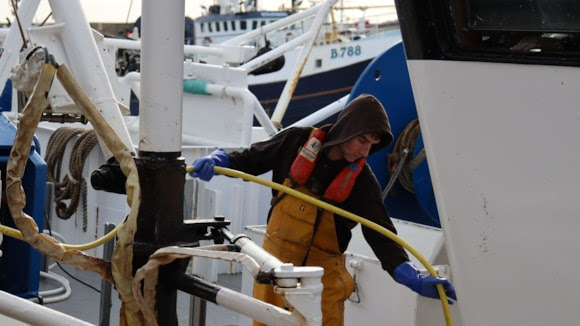
Support offered for safety training, qualifications and new entrants to the industry
FUNDING is now available across the UK to help fishing vessel crew improve their skills, safety knowledge and long-term career prospects.
Seafish, the public body that supports the UK seafood industry, has confirmed that financial support can be accessed by people working on UK-registered fishing vessels, as well as those who are not yet in the industry but are considering a career at sea.
The funding is being made available through the Maritime & Coastguard Agency and the four UK fisheries administrations. It is intended to support training that goes beyond the minimum legal requirements, helping to raise standards of safety and professionalism across the sector.
Training that may be supported includes refresher safety courses such as Sea Survival, Fire Fighting, First Aid and Safety Awareness. Funding may also be available for career development courses, including navigation, engineering and radio operation, for those working towards skipper certification.
Seafish says the scheme can also help people who want to enter the fishing industry for the first time, reducing barriers to entry while ensuring new recruits receive high-quality training.

Following completion of training, Seafish now issues digital certificates, allowing participants to access their qualifications more easily when required or store them electronically as part of a vessel’s safety documentation. The digital system removes the need for paper certificates and speeds up the process when proof of training is requested.
Digital certificates are also available free of charge, on request, to fishers who currently hold only paper copies of existing Seafish certificates.
Neil McAleese, Head of Industry Workforce Issues at Seafish, said the funding was aimed at strengthening both safety and skills within fishing communities.
He said the scheme gives people working at sea the opportunity to refresh essential safety knowledge, develop new skills and progress their careers, while also encouraging those considering the industry to take their first steps.

Seafish works with a network of approved training providers across the UK who can advise on course availability, eligibility and funding applications. Levels of support may vary by region, and applicants are encouraged to seek guidance on what funding is available in their area.
Funding is currently available until Monday, March 31, 2026. Full details and application information can be found on the Seafish website under funding support for training in the fishing industry.


LOW UPTAKE HAS RAISED FRESH QUESTIONS OVER THE FUTURE OF SUPPORT FOR WELSH FARMERS
REFORM WALES has called for an urgent review of the Sustainable Farming Scheme after figures showed only around half of eligible farmers have signed up.
The party said the lower-than-expected uptake showed that serious concerns remained within the farming community over the complexity of the scheme, compliance rules and uncertainty about how it will operate in the long term.
Laura Anne Jones MS, Reform Wales’ Shadow Cabinet Minister for Food, Farming and Rural Affairs, raised the issue during questions to the Welsh Government.
She said: “The figures released by the Welsh Government today confirm what many farmers have been saying for some time: the Sustainable Farming Scheme is too complex, too restrictive and too bureaucratic.
“Farmers need certainty and security, not endless paperwork and rigid requirements that fail to reflect the realities of farming in Wales.
“Reform Wales believes the scheme should be reviewed as a matter of urgency, with a greater focus on flexibility, common sense and practical outcomes.
“Welsh farmers deserve a scheme that works with them, not against them.”
The Sustainable Farming Scheme is due to replace previous systems of agricultural support in Wales and has been one of the most contentious issues facing the rural sector.
Farming unions and campaigners have repeatedly warned that any new system must be practical for family farms and must not add unnecessary red tape at a time when many businesses are already under pressure from rising costs, bovine TB and market uncertainty.
Reform Wales said the Welsh Government must now explain how it intends to respond to the level of take-up and whether changes will be made before the scheme is fully rolled out.
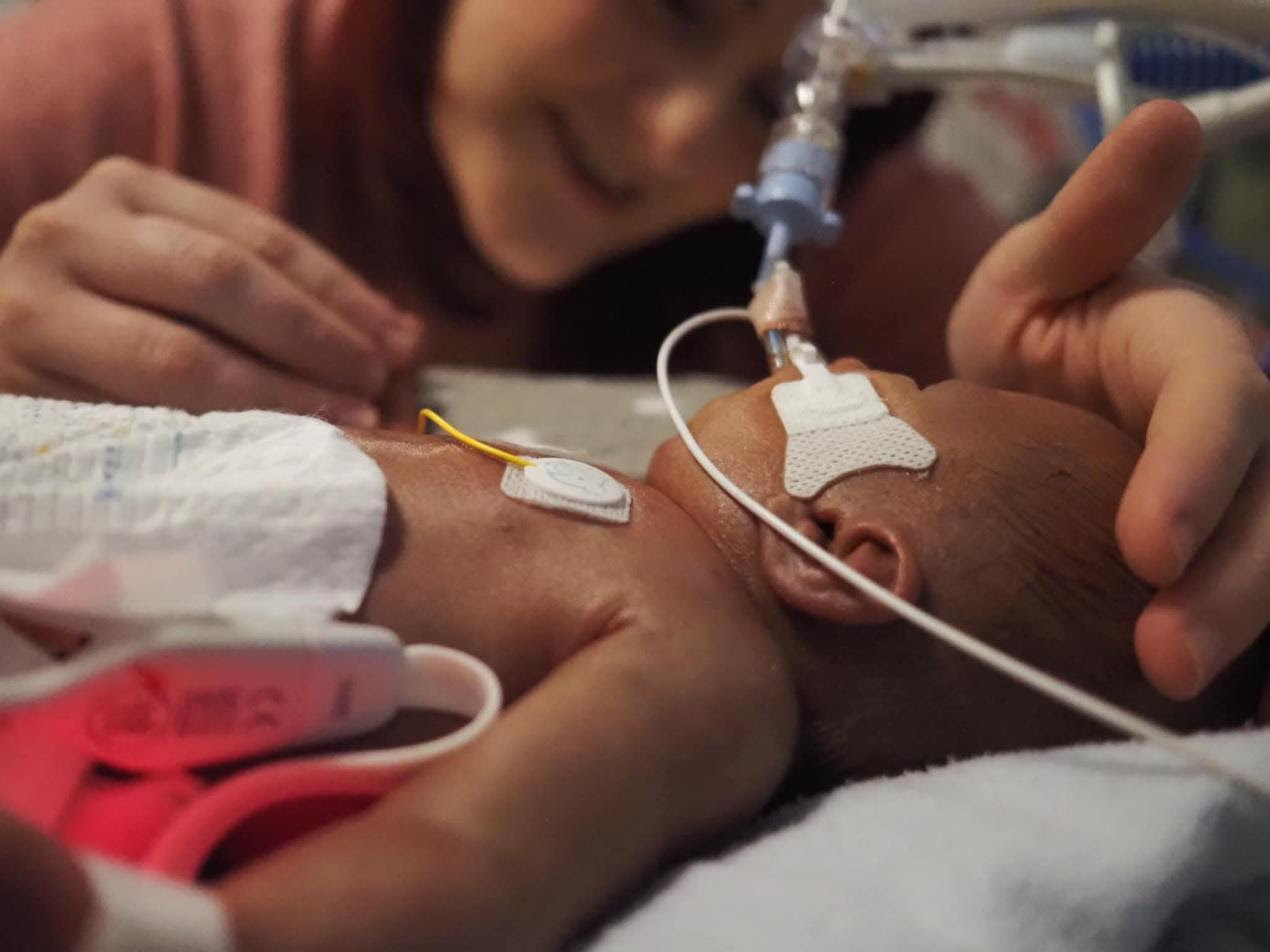
Sands calls for urgent targets to reduce baby deaths and improve mental health support for bereaved parents
WALES has recorded the highest stillbirth rate in the UK for the third year in a row, according to baby loss charity Sands.
The charity has called for urgent action from the Welsh Government following the publication of the latest MBRRACE-UK perinatal mortality surveillance report, which tracks stillbirths and neonatal deaths across the UK.
Sands says there has been a lack of political focus on maternity safety and saving babies’ lives in Wales, despite repeated reviews.
The charity is calling for clear national targets to reduce stillbirths and neonatal deaths, as well as action to eliminate inequalities linked to ethnicity and deprivation.
Aidan Smith, Wales campaign lead for Sands, said: “There has been a lack of political focus and attention on maternity safety and saving babies’ lives in Wales in recent years.
“There has been review after review, but little change. At Sands, we are supporting bereaved parents across Wales to campaign for targets to reduce stillbirths and neonatal deaths and eliminate inequalities by ethnicity and deprivation.
“Bereaved parents are calling for accountability. Targets to reduce stillbirths and neonatal deaths will help ensure that saving babies’ lives becomes the political priority it should be.”
Sands says England introduced targets to reduce baby deaths in 2015, helping focus political decision-making and transparency.
Mr Smith said analysis by the Sands and Tommy’s Joint Policy Unit suggested that more than 1,000 babies in Wales may have survived if stillbirth and neonatal mortality rates had matched the best performing countries in Europe between 2019 and 2023.
The charity wants the Welsh Government to introduce new targets running to 2035, including reducing the stillbirth rate to 2.0 stillbirths per 1,000 total births, and reducing neonatal mortality to 0.5 deaths per 1,000 live births for babies born at 24 weeks’ gestation and over.
It is also calling for inequalities in baby loss linked to ethnicity and deprivation to be eliminated.
Mr Smith said Wales also needed better monitoring of maternity outcomes, including a national data dashboard to track changes over time and identify differences between health boards and population groups.

He said more complete data was needed on ethnicity and social risk factors to understand which families were most at risk of pregnancy and baby loss.
Sands has also raised concern about a lack of specialist psychological support for bereaved parents in Wales.
Mr Smith said there was currently only one specialist NHS service providing mental health support to bereaved parents, the Onnen service in Cardiff and Vale.
He said: “The Welsh Government must evaluate the Onnen service in Cardiff and Vale and expand this to all health boards across Wales.
“All bereaved parents in Wales should have access to specialist psychological support regardless of where they live, the type of pregnancy or baby loss they experienced, or how long ago it was.”
The Welsh Government said support was available to families affected by pregnancy loss and pointed to work taking place across health boards.
A Welsh Government spokesperson said: “The loss of a baby at any stage of pregnancy is devastating. Families who experience pregnancy loss at maternity units in Wales are supported by bereavement midwives, in conjunction with Sands, and offered memory boxes, which include a certificate of birth.
“Since 2016, stillbirth rates in Wales have shown a downward trend. The latest Perinatal Mortality Surveillance report acknowledges that in Scotland, Wales, and Northern Ireland, year-to-year variation in rates is often more pronounced because of lower birth numbers.
“All health boards are committed to improving quality and safety in perinatal care – through enhanced clinical reviews, early warning surveillance, safer preterm birth care, and structured learning from incidents.”
Hywel Dda University Health Board said it recognised “how devastating the loss of a baby is for parents and their families” and said its maternity and neonatal teams worked to provide safe, compassionate and supportive care.
Dana Scott, Director of Midwifery and Professional Governance for Women and Children at Hywel Dda, said the health board had “robust safety measures and clear clinical processes” in place across its maternity services.
She said Hywel Dda’s review processes were aligned with MBRRACE-UK and the Perinatal Mortality Review Tool, ensuring the health board listened, learned and reflected on each baby loss.
Ms Scott added that every family affected by stillbirth or neonatal death had access to dedicated bereavement midwives and nurses, as well as psychological support, follow-up care and opportunities for memory-making.
She said the health board also worked closely with its local Sands group and remained committed to learning from national reports to improve maternity safety locally.
Sands said the new Welsh Government now had an opportunity to act.
Mr Smith added: “Bereaved parents across Wales are campaigning for accountability and change. The new Welsh Government has a chance to reset the narrative by implementing targets to save babies’ lives, eliminating inequalities in loss by ethnicity and deprivation, and rolling out specialist mental health support for bereaved parents across Wales.”
Sands provides support to anyone affected by pregnancy loss or the death of a baby, including a confidential helpline, email support, online groups and local peer-support networks.

A SERVICE was held today at St Davids Cathedral for the annual meeting of the Diocesan Guild of Bellringers.
Fr Jim, the guild’s chaplain, led the service, during which the Bishop of St Davids preached and thanked members for their dedication to churches across the diocese.
He spoke about the important role bells play in marking moments of worship, celebration and remembrance, and said he had been personally moved when bells marked significant points in his own ministry.
The guild is keen to encourage new people to take up bellringing and says it is a friendly and approachable group for anyone interested in getting involved in church life.



Local Government3 hours ago
Council admits 74 rights of way complaints remain unresolved
Key post vacant since February as walker raises safety concerns over paths near Llanteg and Amroth PEMBROKESHIRE COUNTY COUNCIL has...


Education1 day ago
Diocese threatens legal action as Manorbier school closure battle intensifies
Church says council could face judicial review over fire-hit school A BITTER row over the future of Manorbier Church in...


Health1 day ago
Baby loss charity calls for urgent action after latest Wales figures published
Sands says Welsh Government must set clearer targets to reduce stillbirths and neonatal deaths A BABY loss charity has called...

Health1 day ago
Cancer delays worsening as west Wales hospitals struggle to recruit specialists
Health board admits standards are difficult to meet as doctors warn of “extremely dangerous” shortages PATIENTS in west Wales are...


News1 day ago
Rhun ap Iorwerth highlights first 25 days in office as First Minister
Plaid Cymru leader says government is moving quickly on NHS, farming and economic priorities FIRST MINISTER Rhun ap Iorwerth has...


Crime2 days ago
Man accused of six rapes including alleged Haverfordwest offence
A MAN has been sent to Crown Court accused of six rapes, including an alleged offence at a Haverfordwest campsite....


News2 days ago
Childcare row erupts as Plaid faces questions over costs and delivery
Opposition parties clash over flagship pledge as Senedd debate exposes growing divisions PLAID CYMRU’S flagship promise to create what it...


Crime3 days ago
Farmers fined in bovine TB scandal face fresh court action
Hartt family members listed at Haverfordwest Magistrates’ Court over unpaid penalties linked to major cattle prosecution TWO PEMBROKESHIRE farmers convicted...


Crime3 days ago
Pembrokeshire child killer stabbed to death in prison cell, murder trial hears
Kyle Bevan, jailed for the murder of Haverfordwest toddler Lola James, was allegedly stabbed 25 times and left ‘as if...


News3 days ago
Pendine cliff fall victim recovering after major emergency response
A 22-YEAR-OLD man who suffered serious injuries after falling from cliffs overlooking Pendine Beach is recovering well following emergency surgery....
-

 Crime5 days ago
Sex offender in senior role at Tenby family hotel
-

 Crime4 days ago
Haverfordwest pair accused of £80,000 rogue trading frauds
-

 Community5 days ago
Forgotten wartime archive found in Pembroke Dock attic after 80 years
-

 Crime4 days ago
Families condemn failed appeal by paddleboard boss jailed over Haverfordwest tragedy
-
Education1 day ago
Diocese threatens legal action as Manorbier school closure battle intensifies
-
 Crime4 days ago
Knife blankets call as school staff face rising violence fears
-
Crime2 days ago
Man accused of six rapes including alleged Haverfordwest offence
-

 Local Government6 days ago
Ombudsman confirms Woodham complaint still live after Cllr Dennison’s suspension