


Business
£2.1m funding boost to help Welsh firms adopt artificial intelligence


WELSH businesses are set to benefit from a £2.1 million funding package aimed at helping small and medium-sized enterprises adopt artificial intelligence in an ethical and practical way.
The investment, announced by the Welsh Government, is designed to support SMEs, entrepreneurs and microbusinesses across Wales to use AI to improve productivity, boost innovation and strengthen competitiveness.
As part of the package, £600,000 will be allocated to the Business Wales service to develop and deliver a dedicated AI awareness and adoption programme. The work will build on recommendations from recent reviews into SME productivity and the use of artificial intelligence.
A further £500,000 will be used to support the tourism and events sectors, including an AI “pollination project” delivered in partnership with specialists from the Hartree Centre Cardiff Hub and Cardiff University’s Digital Transformation Innovation Institute. The scheme aims to accelerate the take-up of AI tools among event organisers and tourism businesses.
Up to 1,000 tourism microbusinesses and SMEs are expected to benefit from in-person workshops focused on practical AI skills for digital marketing and content creation.

An additional £1 million will be invested through the Flexible Skills Programme to create a new AI upskilling offer. The scheme will focus on closing digital skills gaps and supporting inclusive growth, with employers contributing 25 per cent of AI training costs and 50 per cent for other Flexible Skills Programme courses.
One company already making use of artificial intelligence is Swansea-based Something Different Wholesale. The giftware business, which employs seventy-five staff and serves more than 12,000 business customers worldwide, uses AI to analyse data, gain market insight, automate routine tasks and enhance customer services. The company is also launching a new global website using AI-powered translation tools.
Founder Jane Wallace-Jones said AI was advancing rapidly and that businesses which adopted it effectively would gain a competitive edge, but warned many SMEs lacked in-house expertise.
She said the funding would help Welsh businesses access high-quality training, improve productivity and support growth, innovation and job creation.

Cabinet Secretary for Economy, Energy and Planning, Rebecca Evans, said the funding built on showcases of Welsh innovation seen at recent national technology and investment events.
She said AI was already transforming the business sector and that the programme would help ensure SMEs across Wales were ready to make the most of emerging technologies in a responsible and inclusive way, while supporting the delivery of the AI Plan for Wales.
Skills Minister Jack Sargeant said the Welsh Government recognised the potential of AI to drive economic growth and was committed to helping businesses develop the skills needed for future success.

He added that the new funding would help bridge digital skills gaps and accelerate the responsible adoption of artificial intelligence across Wales’s rapidly evolving digital economy.


BT says protected mobile connection will help Welsh traders process card payments and allow organisers to share live content during periods of heavy network demand
DEDICATED 5G connectivity is being used at this year’s Royal Welsh Show to prevent card payments, livestreams and other essential digital services from being disrupted when the showground becomes crowded.
BT and the Royal Welsh Agricultural Society are demonstrating new 5G+ “network slicing” technology at the event, which is expected to attract as many as 250,000 visitors during its four-day run.
The technology creates a dedicated and protected section of the EE mobile network for specific services or organisations.
This means businesses using the connection should continue to receive reliable mobile coverage even when thousands of visitors are simultaneously using their phones, potentially placing the wider public network under significant pressure.
At the showground, the dedicated connection is supporting payment systems operated by Welsh food and drink businesses Radnor Hills and Fire and Flank.
BT says the system will help traders process card payments quickly during peak periods, reducing the risk of lengthy queues or lost sales caused by network congestion.
Chris Butler, marketing manager at Radnor Hills, said dependable connectivity was essential because thousands of visitors use the company’s stands during the show.
He said: “The Royal Welsh Show is one of the most important events in our calendar, both as a proud Welsh business and a long-standing supporter of the show itself.
“With thousands of visitors stopping by our stands every day, dependable connectivity for our payment systems is essential to keeping queues moving and making sure customers can quickly grab a drink and get back to enjoying their day.
“Having a dedicated 5G+ network slice gives us greater confidence that we can continue serving people smoothly, even during the busiest periods.”
Fire and Flank is exhibiting at the Royal Welsh Show for the first time.
Founder and director David Evans said: “When demand is high, the last thing any business wants is connectivity issues slowing down card payments or creating long queues.
“Reliable connectivity for our electronic point-of-sale systems helps us serve customers quickly, deliver a great experience and focus on what matters most, sharing our food with visitors.”
The technology is also being used by the Royal Welsh Agricultural Society’s communications team and 2026 show ambassador Teleri-Haf Thomas.
It will allow them to livestream, upload videos and share content from the showground, even when tens of thousands of visitors are using the public network.
Aled Jones, chief executive of the Royal Welsh Agricultural Society, said mobile connectivity had become increasingly important to the running of the event.
He said: “The Royal Welsh Show is about bringing together hundreds of thousands of people from across Wales and beyond, and connectivity has become an increasingly important part of that experience.
“From supporting exhibitors and traders to helping our team deliver the event safely and efficiently, reliable mobile connectivity plays a vital role.
“Working with BT to showcase 5G+ network slicing demonstrates how next-generation mobile technology can support critical operations while helping us share the best of Welsh agriculture, food and rural life with audiences both on the showground and online.”
The Royal Welsh Show trial is described as one of the first large-scale public demonstrations in the UK of network slicing being used to support both business-critical services and visitor experiences at a major event.
BT is preparing to launch its first network slicing services to customers later this summer.
Adam Price, the Welsh Government’s Minister for Enterprise, Connectivity and Energy, said: “It is important that visitors and businesses alike experience high-quality digital connectivity at nationally significant events like the Royal Welsh Show.
“BT and the Royal Welsh Agricultural Society have committed to ensuring the event benefits from world-class technology, and I am pleased Welsh Government collaboration has helped to make this possible.”
Greg McCall, BT’s chief security and networks officer, said the technology could provide businesses and organisations with more predictable connectivity during major events.
He said: “Whether it is buying food and drink from local traders, sharing moments from the show on social media or following the action online, people increasingly expect seamless connectivity wherever they are.
“By providing dedicated, high-performance connectivity for specific applications, we are helping businesses keep payments flowing, enabling reliable livestreaming and content uploads, and showing how next-generation mobile technology can support better experiences for organisations and consumers alike.”
BT has upgraded equipment at the Royal Welsh Showground and a neighbouring mobile mast in Builth Wells as part of the project.
The company says it has invested more than £500 million in fixed and mobile connectivity across Wales since 2020.


PLANS to change a former hairdressing salon in Pembrokeshire’s only city to a family-friendly coffee bar have been approved by the national park.
In an application to Pembrokeshire Coast National Park, Gerallt Nash sought permission for a change of use of 26 High Street, St Davids from a hairdressing salon to a family friendly coffee bar and children’s playroom.
The first floor, formerly used as accommodation of a tenant, would be used as an office and storage of business.
A supporting statement said: “It is proposed to open a family-friendly coffee bar with a children’s playroom on ground floor. It is not intended to cook food on the premises, therefore there will be no requirement for an extractor system.
“Other than small scale repairs to part of one floor, and the installation of a sink and serving counter in the inner room (plumbing and electrics are already in place since its last use as a salon) the main work will be the redecoration of surfaces and ceilings, the provision of new light fittings and laying of new floor coverings.
“This part of High Street has been identified as a ‘commercial’ zone by PCNPA. Existing businesses close to No 26 include outdoor and surfing outlets; restaurants; clothes shops; holiday accommodation; ice cream parlour; fish and chips outlet; delicatessen and craft shops.
“The current proposal would fill a gap in the market, as most food outlets do not open until after 11am or 12pm, or only during the evenings in some cases. It would also provide somewhere for [young] families to go to unwind whilst their children can relax in the playroom.”
The scheme was supported by St Davids City Council but one representation from a member of the public raised concerns about potential noise, smells and risk of vermin from waste storage on site.
An officer report said the county council’s public protection team has been consulted and has no objections to raise, adding the application states there is no intention to cook on the premises; the opening hours listed as 8am-6pm, Monday to Friday, and 8am-7pm on Saturdays.
In recommending approval, it said: “There are no concerns in relation to significant impacts upon amenity, subject to a condition relating to opening hours, and it is not considered that the proposal would have an impact upon the character or appearance of the St David’s Conservation Area.”
The application was conditionally approved.

Sustainability expert Rebecca Heaton and regeneration specialist Owen Davies will join the board later this year
THE PORT OF MILFORD HAVEN has appointed two new Non-Executive Directors as it prepares for a period of major investment in renewable energy, the Celtic Freeport and the wider economy of south-west Wales.
Dr Rebecca Heaton and Owen Davies will join the Port’s board later this year, bringing extensive experience in sustainability, energy transition, regional development and regeneration.
Dr Heaton has worked in sustainability and climate policy for more than 25 years, holding senior positions with organisations including Lloyds Banking Group, Drax Group, OVO Energy, Shell and BP.
Her experience includes governance, commercial strategy, risk management and stakeholder engagement. She has also served on the Climate Change Committee and the Natural Environment Research Council.
Dr Heaton said the Port occupied a central position in Wales’s energy system and had an opportunity to help deliver long-term economic and environmental benefits.
She said: “Having lived in Wales for more than 30 years, I have seen the vital role that infrastructure, industry and energy play in supporting communities and creating economic opportunity.
“The Port sits at the heart of Wales’s energy system and has a unique opportunity to help shape a stable and sustainable future.”
Mr Davies joins the board with more than 30 years’ experience in regional development, town planning and placemaking.
A Chartered Town Planner and Fellow of the Institute of Place Management, he has advised the Welsh Government on regional economic frameworks, town centre regeneration and community engagement.
He has also worked as a UK Government High Streets Task Force expert and has been involved in regeneration and master-planning projects in waterfront and coastal communities, including Pembrokeshire.
Mr Davies currently runs his own consultancy and holds several advisory and governance positions, including with the Canal & River Trust in Wales and the Plas Gunter Mansion Trust.
He said: “The Port occupies a uniquely important position within Wales as a major economic driver, a nationally significant energy gateway and the custodian of one of our most important natural assets.
“Pembrokeshire and south-west Wales are entering a period of significant opportunity, with investment in renewable energy, the Celtic Freeport and wider economic development helping to shape the region’s future.”
The appointments come as Debra Bowen Rees and Erica Cassin complete their terms as Non-Executive Directors.
Dr Sian George, Chair of the Port of Milford Haven, welcomed the new members and thanked the departing directors for their service.
She said: “Rebecca and Owen bring outstanding experience and expertise that will further strengthen the breadth of skills and perspectives around our board table.
“The Port has a unique responsibility as a Trust Port to balance commercial success with our role as custodians of the Milford Haven Waterway and as a key contributor to regional prosperity.”
Dr George said both new directors shared the Port’s commitment to sustainable growth and long-term investment.
She added: “I would also like to express my sincere thanks to Debra Bowen Rees and Erica Cassin as they complete their terms on the board.
“Both have made a significant contribution to the Port during a period of considerable progress and transformation.”
The Port of Milford Haven is Wales’s busiest port and handles around 20% of Britain’s seaborne oil and gas trade. It also owns and operates Pembroke Port and Milford Waterfront, with its activities supporting more than 4,000 jobs in and around Pembrokeshire.



Crime8 hours ago
Man, 37, found dead following major police response in Pembroke Dock
Death not being treated as suspicious as police make statutory referral to IOPC following active investigation A 37-YEAR-OLD man has...


Community11 hours ago
Household Cavalry drum horse returns home to Pembrokeshire for final farewell
Dyfed Willa Rose, who became Major Juno and the first mare to serve as a Household Cavalry Drum Horse, was...


News1 day ago
Jo Stevens out as Welsh Secretary as Burnham reshapes government
Cardiff East MP repeatedly visited Pembrokeshire to champion clean energy jobs, but her successor inherits unresolved questions over Milford Haven’s...


Crime1 day ago
Teen cleared of attempted murder but guilty of GBH after Milford teacher stabbed
Jury returns 11-1 majority verdict on charge of causing grievous bodily harm with intent, with sentencing set for September 3...


Community1 day ago
French troops march through Fishguard as Britain’s last invasion returns to life
Battle scenes, cavalry displays and a surrender procession brought one of Pembrokeshire’s most extraordinary stories back to the streets MUSKET...


News1 day ago
Andy Burnham promises new politics as he enters Downing Street
New Prime Minister admits politicians have “not been good enough” as he sets out a ten-year plan for Britain and...


Health3 days ago
Two new surgeons appointed as Hywel Dda admits orthopaedic waits remain too long
Health board says it is increasing capacity after figures revealed hip replacement patients waited an average of 64 weeks HYWEL...

Community3 days ago
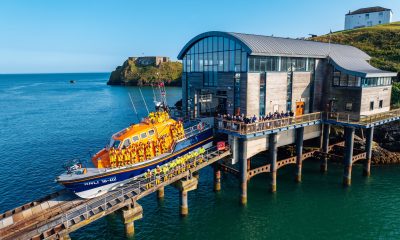
84-year-old man rescued after falling overboard near Tenby
A MAYDAY call sparked a major nighttime rescue after an 84-year-old man fell from a tender and was swept towards...


Crime4 days ago
Jury hears final arguments in Milford Haven teacher stabbing trial
Defence says there was no motive or intention to kill as judge reviews competing accounts of classroom knife incident SPECIAL...


News5 days ago
Andy Burnham becomes Labour leader and prepares to enter No 10
Former Greater Manchester mayor promises an ‘unashamedly Labour’ government after completing extraordinary return to Westminster ANDY BURNHAM has been formally...
-

 Health1 day ago
Welsh Ambulance Service invites public to AGM and Board meeting
-

 featured8 hours ago
From a father-and-son project to an award-winning campervan business
-

 Crime1 day ago
What the Milford Haven School stabbing verdict really means
-
Crime1 day ago
Teen cleared of attempted murder but guilty of GBH after Milford teacher stabbed
-

 Business2 days ago
Port appoints two new directors as energy and regeneration projects advance
-

 Entertainment2 days ago
Imperial Hotel announces four-day Bank Holiday celebration in Tenby
-
Community11 hours ago
Household Cavalry drum horse returns home to Pembrokeshire for final farewell
-

 Community2 days ago
Pembroke Dock Fire Station invites community to Open Day