


Farming
RSPCA Cymru welcomes ‘huge step’ as consultation launched on phasing out hen cages

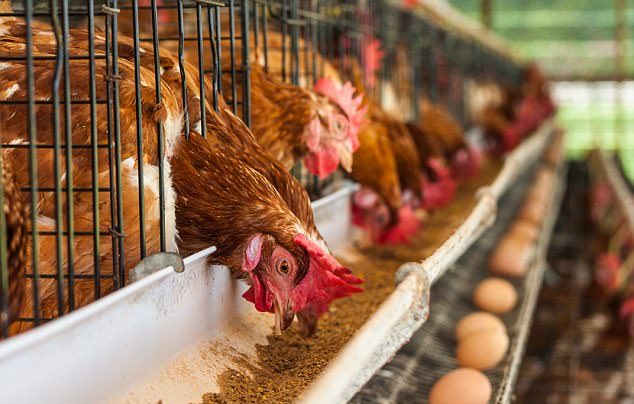
UK-WIDE plans would ban new cage systems from 2027 and end all enriched cages by 2032, as charity urges public to respond
A UK-wide public consultation on proposals to phase out cages for laying hens has been launched, with animal welfare charity RSPCA Cymru describing the move as a major step towards a cage-free future in Wales.
The consultation, led by the Department for Environment, Food and Rural Affairs (Defra) and being run jointly with the Welsh Government, Scottish Government and Northern Ireland Executive, is seeking views on reforms affecting laying hens, pullets (young hens reared for egg production) and breeder layers.
Under the proposals, the building or first-time use of any new enriched “colony” cage systems would be banned from 2027. The consultation also proposes ending the use of all such cage systems by 2032.
In addition, the plans would extend the ban to all birds currently kept in conventional “battery” cages by removing the existing exemption for smaller flocks of 350 birds or fewer.

RSPCA Cymru said the announcement was particularly significant for Wales, which it noted has one of the highest proportions of free-range hen flocks globally, and is urging the public to respond during the eight-week consultation period.
David Bowles, the RSPCA’s head of public affairs, said: “The announcement of this long-awaited consultation is a huge step forward for animal welfare in Wales… We are urging the public to make their voices heard during this eight-week consultation period so we can move closer to a cage-free future for farmed animals across the UK.
“Every year across the UK, millions of farmed animals are kept in cages, unable to express their natural behaviours and experiencing an unimaginable amount of suffering. Seventy-three per cent of the British public oppose the use of cages for hens, and we have always been clear: cages cannot be part of British farming any longer.”
The RSPCA says caged systems remain in widespread use, with around ten million hens still kept in enriched cages across the UK. The charity argues that, despite being marketed as an improvement, enriched cages provide only a limited increase in space compared with the former battery cages, and still prevent birds from fully expressing natural behaviours such as dustbathing and foraging.

The charity said its campaigning on the use of cages dates back to the 1960s, and noted that its RSPCA Assured welfare standards already prohibit cages on certified farms.
RSPCA Cymru also linked the consultation to the Senedd election due to take place in May, saying it is pressing political parties to include stronger animal welfare commitments in their manifestos. The charity’s priorities include a prohibition on enriched cages for laying hens, and restrictions on other confinement systems, including farrowing crates used in pig farming.
Mr Bowles added that between five and six million pigs reared for slaughter are born in farrowing crates each year in the UK, a practice not permitted under RSPCA welfare standards. He said the charity would continue campaigning for wider reforms, and expects further consultation later this year.



PEMBROKESHIRE farmers and land managers are being encouraged to apply for the latest round of Ffermio Bro support, with the next Expression of Interest window now open.
The scheme supports practical, farmer-led projects within the Pembrokeshire Coast National Park, helping to improve nature, water quality, habitat links, traditional boundaries, wildfire resilience and the wider farmed landscape.
The programme has already supported a range of projects across Pembrokeshire, including habitat restoration, watercourse fencing, traditional boundary restoration, firebreak creation and woodland connectivity work.
FARMERS SUPPORTED
During its first year, Ffermio Bro supported 37 farms and land managers across the National Park, with projects covering just under 3,000 hectares.
The work included more than four kilometres of hedgerow creation and restoration, over 800 metres of watercourse improvement and protection works, and around 27 hectares of woodland support and management.
A number of collaborative projects have also focused on improving biodiversity and ecosystem resilience across the National Park.
Arwel Evans, Conservation Farm Liaison Officer with the Pembrokeshire Coast National Park Authority, said: “The first year of Ffermio Bro has shown what can be achieved when farmers and land managers are supported to deliver practical conservation work on the ground.
“We’ve worked with farms across the National Park on projects ranging from habitat restoration and water quality improvements to traditional boundary work and wildfire resilience.
“Looking ahead to the next two years, we’re particularly keen to support projects that improve water quality and river resilience across catchments such as the Eastern and Western Cleddau, Nyfer and Gwaun.
“That includes practical measures such as riparian fencing, buffer strips, healthier soils and habitat management that help keep rivers clean and resilient for the future.”
FARM-LED PROJECTS
Gareth Waters, Ffermio Bro Advisor, added: “One of the strengths of the scheme is that projects are designed around individual farms and local priorities.
“We’re keen to support practical projects that deliver long-term benefits for both farming businesses and the landscape, and we’d encourage interested farmers to contact us before the deadline.”

The current application window for Ffermio Bro: Farming within the Pembrokeshire Coast National Park will remain open until Monday, June 22.
Further information on the scheme, eligibility and how to submit an Expression of Interest can be found at www.pembrokeshirecoast.wales/ffermio-bro.
Caption: Farmers and land managers within the Pembrokeshire Coast National Park are invited to apply for the latest round of Ffermio Bro landscape and conservation funding.
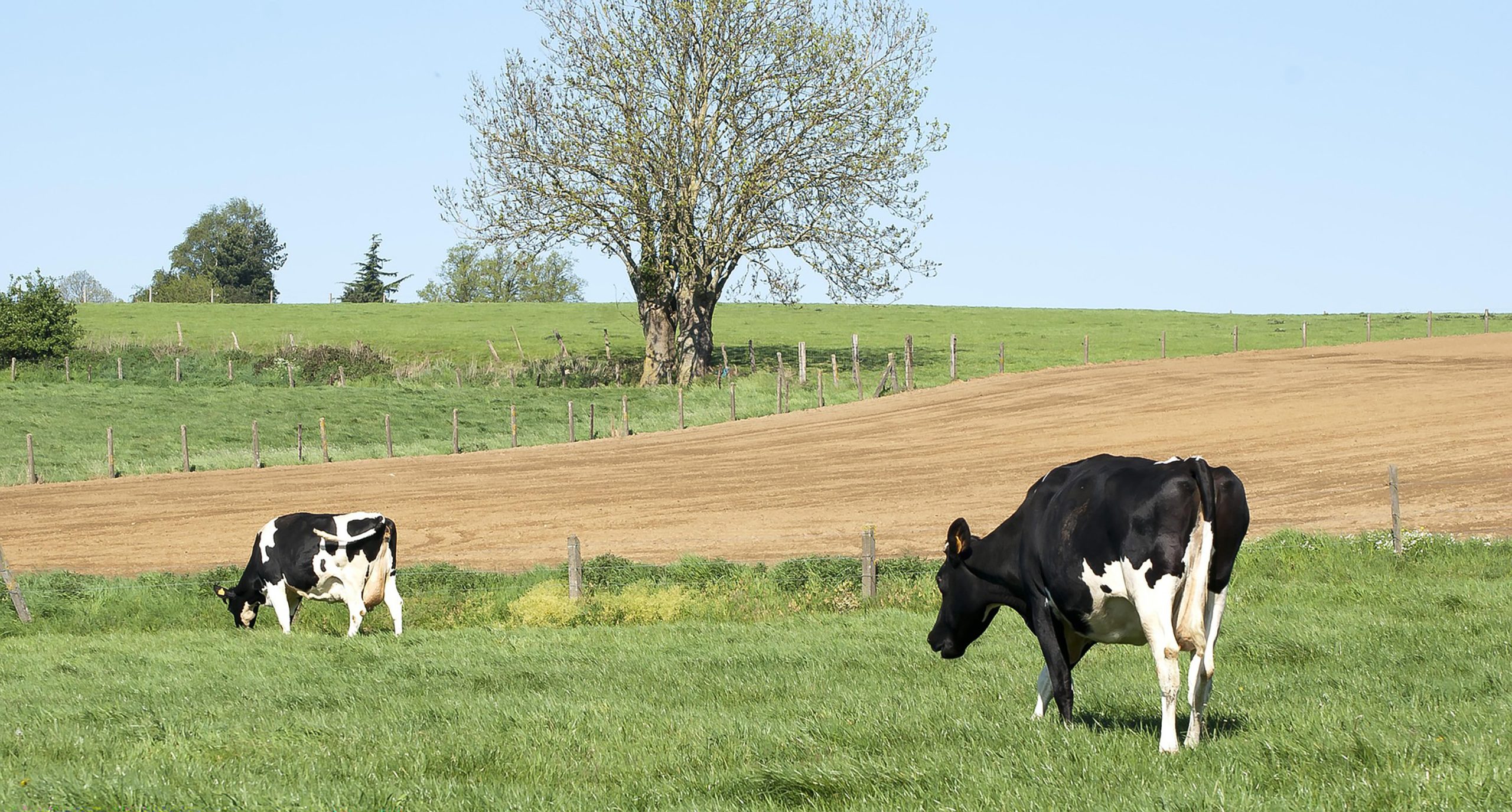
FARMERS are being warned that high summer temperatures could have long-lasting effects on autumn-born calves.
Animal health specialists say heat stress in pregnant cows can lead to weaker immunity, poorer growth rates and a higher risk of disease in calves after birth.
Nia Williams, Technical Livestock Manager at Nettex, said farmers may not immediately link hot weather now with calf performance several months later, but the impact during pregnancy can be significant.
She said: “Cows calving this autumn are at greater risk of producing calves with impaired immunity, which can increase susceptibility to diseases such as scours during the first weeks of life.”
Colostrum critical
Heat stress can reduce feed intake, alter metabolic function and suppress immunity in cows. It can also affect mammary gland development during the dry period, potentially impacting milk production in the next lactation and calf performance after birth.
Ms Williams said: “Calves born to heat-stressed cows are often lighter at birth and can show reduced growth rates both before and after weaning. That makes colostrum management absolutely critical.”
Farmers are being advised to ensure calves receive colostrum quickly after birth and to monitor passive transfer levels during the first week of life.
A blood test between one and seven days of age can help assess how well antibodies from colostrum have been absorbed into the calf’s bloodstream.
Ms Williams said this can help identify calves at greater risk of health problems, while also giving farmers a useful measure of how well colostrum management is working across the herd.
Support after birth
Calves that struggle to suckle or appear weak in the first few days may need extra nutritional support.
Ms Williams said energy-boosting supplements can be used alongside colostrum to help encourage feeding and support early vitality.
Electrolytes can also play an important role in helping calves recover from scours, which may be caused by pathogens including Cryptosporidium, E. coli, Salmonella and Rotavirus.
The warning is not limited to calves. Freshly calved cows can also struggle with reduced appetite, dehydration and electrolyte loss, particularly during hot weather.
Ms Williams said: “Water intake often declines before and during calving, increasing the risk of dehydration. During calving, cows can lose close to 60 litres of water through blood and uterine fluids, along with significant electrolyte losses.”
She warned that water alone may not be enough to restore electrolyte balance and normal cellular function after calving.
Farmers are being urged to support cows immediately after calving with energy, calcium, vitamins and electrolytes to aid recovery, encourage intake and support overall health and milk production during this critical period.
The warning comes as farmers prepare for the autumn calving season following periods of high summer temperatures.


A CALL for a north Pembrokeshire farm to be able to diversify through the bottling of water from its well has been given the go-ahead.
In an application to Pembrokeshire Coast National Park, a Mr George, through agent Harries Planning Design Management, sought permission for a change of use of part of an existing agricultural shed to a use for the bottling of water as a form of farm diversification at Trerhys, near St Dogmaels, Cardigan.
A supporting statement said: “The water bottling plant will be run and under control by the applicant, who also has direct control of the associated farm known as Trerhys. The water bottling plant seeks to diversify the farm income to provide future economic sustainability and increase revenue from the land.
“The increase in profits generated by the water bottling plant business will be siphoned back into the farm business, to allow for necessary improvements and works to the farm to ensure its future within a worsening agricultural economy.”
It said the profits would be used for on-going repair and replacement of existing fencing around the farm which owns significant land, along with investing and increasing the suckler herd on the farm.
“The applicant underwent major surgery back in 2023 and had to cut back hours on the farm to recover. This meant that the suckler herd dipped in numbers and due to profitability, the farm has yet to be able to recover to its previous numbers.
“This increase in profit will allow the capital to be reinvested in the suckler herd, increase profit margins and overall profitability for the farm.”
It also said the profits would be “channelled into large repairs and overall, like-for-like replacement of a number of existing farm buildings,” and, depending on returns, “there may be scope to invest in the existing farmhouse on site”.
It concluded: “Overall, whilst the water bottling plant will take some time to become established and generate suitable profits, once established significant profits, these will be reinvested as above into the existing farm business to ensure its future can be secured for longer within an uncertain agricultural economy.
“Without diversification, the farm is set to reduce further in size and the buildings and farmyard become further run down and unsightly in the landscape.”
An officer report recommending approval said the scheme for Trerhys Farm, 1.7km to the north of Moylegrove, would use one bay of an existing shed and would “utilise the existing water source from a well within an existing agricultural field to the north of the farm complex”.
Concerns were raised by three members of the public on the grounds of a query on the water source and transportation of the finished product, and potential noise issues.

The report said a noise assessment found no detrimental impacts in the locality, with Highways officers having no concerns on transportation issues.
The officer report concluded: “Following careful consideration of the application and its merits, it is concluded that the proposed scheme represents an appropriate form of development in this location.”
The application was conditionally approved.



Crime2 hours ago
Sex offender in senior role at Tenby family hotel
CREST HOTEL GROUP says it is investigating safeguarding concerns after staff at the Imperial Hotel in Tenby raised alarm over...


Sport14 hours ago
Runners tackle new route in Ras Y Castell 10k
MORE than 90 runners took to the streets and paths around Cardigan on Friday evening (June 5) for the annual...


Business21 hours ago
Turkish Kitchen reaches Welsh restaurant award semi-finals
Haverfordwest café praised as small independent business flies flag for Pembrokeshire A HAVERFORDWEST café has been named as a semi-finalist...


News21 hours ago
Person taken to hospital after major emergency response on Tenby Esplanade
A PERSON has been taken to hospital following a major multi-agency emergency response on The Esplanade in Tenby. Dyfed-Powys Police...


News22 hours ago
St Davids lifeboat crews rescue damaged yacht and stranded kayaker
TWO St Davids RNLI lifeboats were launched within hours of each other after a yacht was left disabled in a...


Community2 days ago
D-Day 82: Milford Haven remembers sacrifice of Normandy landings
COMMUNITIES gathered in Milford Haven on Saturday (Jun 6) to mark the 82nd anniversary of D-Day. The service, held at...


News2 days ago
D-Day at 82: The secret Pembrokeshire invasion that helped prepare for Normandy
Forgotten wartime operation saw thousands of troops storm Pembrokeshire beaches in rehearsal for D-Day LONG before Allied troops landed on...

News2 days ago
Welsh Water hit with £44.7m enforcement package over sewage failures
Pembrokeshire campaigners say regulator’s action vindicates years of concern over pollution in rivers and coastal waters DŴR Cymru Welsh Water...


News3 days ago
Council tax shake-up in doubt as Welsh Government reviews reform plans
Questions over 2028 revaluation as ministers reconsider next steps THE FUTURE of council tax reform in Wales has been thrown...


Crime3 days ago
Paddleboard company owner loses bid to cut sentence over Haverfordwest tragedy
A FORMER paddleboard company owner jailed over the deaths of four people on the Western Cleddau has failed in a...
-
Crime3 days ago
Paddleboard company owner loses bid to cut sentence over Haverfordwest tragedy
-

 Crime2 days ago
Milford Haven man admits harassment and assault
-

 Crime5 days ago
Milford Haven man bit neighbour’s neck near cashpoint
-

 Crime6 days ago
Milford Haven man jailed for illegal Premier League streaming service
-

 News2 days ago
Community appeal for privacy after serious emergency in Pendine
-

 Crime6 days ago
Haverfordwest man admits cocaine offence as Crown disputes basis of plea
-

 Crime5 days ago
Pembroke Dock driver avoided jail after drug-drive crash
-

 Local Government6 days ago
National Express use of new Haverfordwest interchange still subject to risk checks