


News
Rail powers row as Lib Dems demand full devolution — and warn Wales is being left behind


RAIL powers are set to become the next front in the constitutional tug-of-war between Cardiff Bay and Westminster after the Liberal Democrats tabled an amendment to the UK Government’s Railways Bill calling for the full devolution of rail responsibility to Wales.
The party says Wales should be placed on the same footing as Scotland, with control over rail infrastructure, services and funding transferred to Welsh Ministers within two years. If selected for a Commons vote, the amendment would force MPs to take a clear position on whether Wales should hold the same levers Scotland already has — or continue under a system where key decisions remain reserved to Westminster.
Welsh Liberal Democrat Westminster spokesperson David Chadwick MP said Wales had been treated as an “afterthought” on rail investment for too long, and argued that projects based entirely in England have repeatedly been treated as “England and Wales” schemes for funding purposes — a classification he said has left Wales losing out on investment worth billions.
“This amendment is about fairness,” he said. “It would give Wales the same control Scotland already has and stop us losing out on billions of pounds for rail projects that don’t even touch Welsh soil.”
A split system with uneven power
Rail responsibility in Wales is currently divided. The Welsh Government oversees Transport for Wales and the Wales and Borders rail contract — the face of day-to-day passenger services — but most rail infrastructure decisions remain in Westminster hands through UK-controlled structures.

Critics say the arrangement leaves Wales stuck in the worst of both worlds: expected to deliver improvements, timetables and passenger experience while lacking full control over the track, long-term investment pipeline and major infrastructure funding.
Supporters of full devolution argue it is impossible to run a coherent transport strategy when responsibility is split — and that Wales is left dependent on consultation rather than authority.
Why it matters in West Wales
In Pembrokeshire and Carmarthenshire, where communities are more reliant on a limited number of rail corridors, the impact of investment decisions made elsewhere can be felt more sharply than in big cities with multiple alternatives.
Campaigners regularly point to the practical issues affecting West Wales passengers: reliability problems, the vulnerability of services to disruption on single-track sections, limited frequency, and the knock-on effect when services are cancelled or delayed because the system has little spare capacity.

There is also a wider economic argument. Better rail connections can influence commuting options, tourism flows, access to education and training, and business confidence — but rural and coastal routes can struggle to win funding in competition with high-profile projects elsewhere.
The Liberal Democrats argue that if Welsh Ministers held the full set of powers — not just operational control of services but authority over infrastructure and long-term funding — Wales could plan upgrades around Welsh needs, rather than waiting for decisions that must fit UK priorities.
What the Railways Bill changes
The Railways Bill is intended to reshape the way Britain’s railways are run, with the creation of Great British Railways and a new model for rail governance.

The Liberal Democrats claim the reforms risk entrenching central control and leaving Wales in a weaker position — locked into a system where Welsh institutions are “consulted” but not in charge.
The party is urging Welsh Labour MPs to back the amendment, framing it as a straightforward equality issue: Wales should have what Scotland has, and not be asked to settle for less.
The Government’s likely response
Ministers are expected to argue that rail infrastructure operates as part of an integrated network and that a UK-level approach can provide stability, economies of scale and coordinated planning.
There is also a money-and-risk debate at the heart of rail devolution. Full control of infrastructure would mean full responsibility for maintenance, renewals and long-term liabilities — and critics warn that if devolution is not matched with a guaranteed and fair funding settlement, Wales could inherit responsibility without the resources to meet it.
Some Westminster voices have historically warned against a “keys but not the fuel” scenario — where Wales gains power on paper but is left with difficult choices if costs rise faster than the funding formula.
Supporters of devolution counter that the current system already exposes Wales to risk — the risk of being outvoted, overlooked, or structurally underfunded — and that true accountability requires the power to make and fund decisions at home.
Welsh Government stance
Welsh ministers have repeatedly argued that rail infrastructure should be devolved so that planning, investment and services can be aligned with Welsh transport priorities, including decarbonisation and better integration between rail and bus networks.
The Welsh Government’s case is that Wales can only fully deliver a joined-up transport strategy if it holds the whole system — not just the passenger contract but the infrastructure control needed to shape outcomes.
Whether the UK Government is prepared to go that far remains uncertain, particularly if ministers believe the Bill’s reforms are designed to strengthen national coordination.
The numbers and the politics
The Liberal Democrats have 72 MPs, but would need support from other parties — including Welsh Labour MPs — to have any realistic chance of forcing a change if the amendment is selected for a vote.
That sets up a politically awkward test for Labour MPs in Wales, caught between party discipline at Westminster and growing pressure to demonstrate that Wales will not be treated as a junior partner when national infrastructure decisions are made.
For Welsh Labour, the question is whether to back a clear-cut devolution demand — or to argue that the Government’s reforms will deliver benefits for Wales through new structures, improved coordination and a different approach to investment.
If it passes — and if it fails
If the amendment succeeded, the next battle would be over the detail: the funding formula, the transfer of assets and liabilities, and the timetable for transition. Supporters would see it as a step towards a rail system planned around Welsh priorities — including rural and coastal routes too often seen as an afterthought.
If it fails, the Liberal Democrats are likely to use the vote to sharpen their wider argument: that Wales is still being asked to accept second-tier powers — and that rail remains a symbol of a devolution settlement that does not yet match the reality of Welsh nationhood.
Either way, the amendment has ensured one thing: the Railways Bill will not pass quietly in Wales.


Final decision removed from Pembrokeshire County Council after minister concludes scheme raises national security and national planning issues
THE WELSH GOVERNMENT has taken control of the decision over controversial plans for a major military radar installation in Pembrokeshire.
Siân Gwenllian MS, Cabinet Secretary for Local Government, Housing and Planning, has called in the planning application for the proposed Deep Space Advanced Radar Capability development at Cawdor Barracks, Brawdy.
The intervention means Pembrokeshire County Council will no longer decide whether the scheme should be granted planning permission.
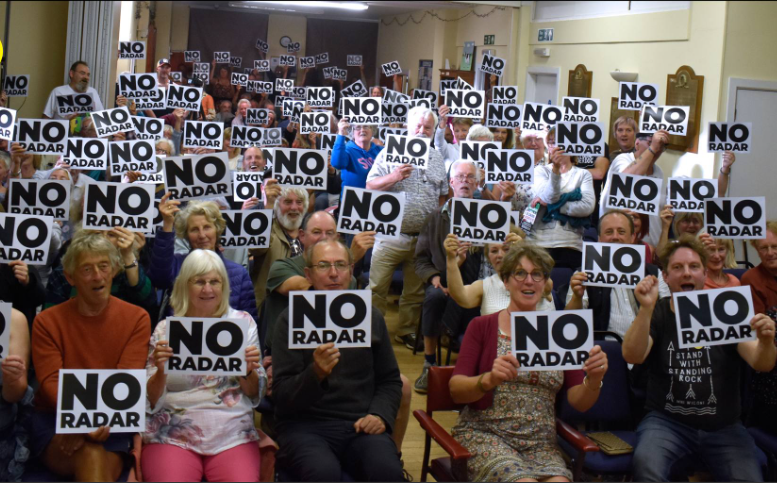
The council’s planning committee had been expected to consider application 25/1101/PA on Tuesday, July 28, following one of the largest local campaigns against a development seen in Pembrokeshire for years.
The call-in represents a major procedural victory for PARC Against DARC, which has spent two years campaigning for the decision to be taken at Welsh Government level.
However, it does not mean that the radar development has been refused.
The application will now enter a national planning process, with the evidence likely to be examined by an independent planning inspector before a recommendation is made to Welsh Ministers.
PARC Against DARC described the intervention as a “seismic and significant step” and welcomed what it said was a decision to recognise the national and international implications of the project.
A campaign spokesperson said: “Siân Gwenllian has made the right decision here, and DARC is far from a typical infrastructure project.
“Its national and international scope and implications mean it raises issues that go well beyond the local planning process, demanding consideration at Welsh Government level.”
The proposed development would involve the construction of 27 large radar dishes, consisting of six transmitters and 21 receivers, together with associated buildings, power supplies, security infrastructure and landscaping.
The Pembrokeshire installation would form the UK element of an international radar network being developed with the United States and Australia.

The Ministry of Defence says the system would track objects in deep space and help protect satellites and other critical infrastructure.
Opponents argue that the development would industrialise a sensitive rural landscape close to the Pembrokeshire Coast National Park, damage tourism and wildlife, and increase the militarisation of space.
According to the ministerial call-in letter, the proposed development raises national security issues because of its strategic defence purpose and represents a novel planning matter.
The letter also states that the scheme could conflict with national planning policy relating to landscape, ecology, sustainability and placemaking.
It adds that the application is likely to be controversial beyond the immediate area and has already attracted considerable public interest.
The minister concluded that the proposal was therefore of more than local importance and should be determined by Welsh Ministers.
Pembrokeshire County Council must now forward the planning application, consultation responses, public representations and other relevant documents to the Welsh Government.
The council will still be able to provide evidence and its assessment of the development, but its planning committee will not make the final decision.
The decision comes days after former Labour leader Jeremy Corbyn publicly supported calls for the application to be taken out of the council’s hands.
Mr Corbyn addressed campaigners during a political gathering in Wales on Saturday, where opposition to DARC and the wider militarisation of Wales formed part of the programme.
PARC says a Freedom of Information response revealed that 1,121 objections were submitted during the council’s consultation process, compared with one representation in support.
Almost 20,000 people have also signed a petition opposing the radar project.
Campaigners said the level of opposition demonstrated that the dispute had developed into something far larger than an ordinary disagreement over a planning application.
PARC said: “This is not just a group of residents objecting to a development. It is a mass movement of public opposition.
“Our national parks should not be sacrificed to military expansion. Our communities should not be ignored when they speak with such a clear and overwhelming voice.”
Plaid Cymru has repeatedly expressed opposition to the DARC proposal.
Party representatives have tabled a statement of opinion in the Senedd, while an Early Day Motion opposing the development was presented at Westminster. Plaid Cymru members also voted unanimously at the party’s 2024 conference to oppose the scheme.
Campaigners said the call-in showed that the new Plaid Cymru-led Welsh Government had listened to concerns raised by residents.
The application could now become the focus of a significant political dispute between the Welsh and UK governments.
The Ministry of Defence has promoted Brawdy as its preferred location for the UK DARC installation, while campaigners are calling on Welsh Ministers to reject the application on planning, environmental and landscape grounds.
PARC has also highlighted what it described as a historical twist involving the newly appointed Welsh Secretary, Stephen Kinnock.
The group says it has a letter sent by his father, former Labour leader Neil Kinnock, supporting campaigners who opposed a similar radar proposal in Pembrokeshire during the 1990s.
The campaign is now asking whether Stephen Kinnock will support the current Ministry of Defence proposal or reflect his father’s earlier opposition.
A demonstration had been planned outside County Hall in Haverfordwest ahead of the council planning meeting on Tuesday, July 28.
Organisers say the gathering will still take place from 9am, but will instead be held as a vigil supporting the Welsh Government’s decision to call in the application.
The next stages of the process, including whether the application will be examined through written representations, a hearing or a public inquiry, have not yet been confirmed.
Welsh Ministers will ultimately have the power to approve or refuse the development.
For campaigners, the call-in marks the most significant breakthrough of their two-year fight against DARC. The final battle over whether the radar array can be built at Brawdy, however, is still to come.

Cash machine at High Street NatWest branch was broken into during an early-hours burglary
POLICE have launched an investigation after an estimated £55,000 was stolen from a cash machine at a bank in Brecon.
Dyfed-Powys Police received a report at around 1.15am on Monday (July 20) that the ATM at the NatWest branch on High Street had been broken into.
Cash was taken from the machine, with investigating officers estimating the total amount stolen to be approximately £55,000.
Police tape was placed across the entrance to the bank and around the outside cash machine during Monday as officers carried out inquiries at the scene.
Members of the public reported seeing a police presence on the high street, with officers entering and leaving the building throughout the day.
No arrests have been made and the investigation remains ongoing.
Officers are appealing for witnesses, including anyone who noticed suspicious people or vehicles in Brecon town centre during the early hours of Monday morning.
Police would also like to hear from anybody who may have CCTV, doorbell-camera or dashcam footage which could assist the investigation.
Information can be provided to Dyfed-Powys Police online, by emailing [email protected] or by calling 101.
Those contacting police should quote reference 26*586801.
Information can also be given anonymously to the independent charity Crimestoppers by calling 0800 555 111.

Residents are being asked for their views on proposed changes affecting councillor numbers and electoral arrangements in communities across the county
PEMBROKESHIRE COUNTY COUNCIL is inviting residents, organisations and other interested parties to have their say on proposed changes to the electoral arrangements of eight community councils across the county.
The consultation follows recommendations published by the Democracy and Boundary Commission Cymru in January 2025 as part of a wider review of Pembrokeshire’s community boundaries and local electoral arrangements.
The Commission’s review considered whether the county’s existing communities and community wards continued to provide effective and convenient local government.
It examined issues including community boundaries, the number of councillors serving each area, the distribution of councillors between community wards and whether existing arrangements continued to reflect local populations and community identities.
While a number of the Commission’s recommendations involved changes to community boundaries, it also proposed alterations to the electoral arrangements of some community councils where no boundary changes were recommended.
Those particular proposals could not be introduced through the original community review process and must now be considered separately by Pembrokeshire County Council.
The latest consultation concerns the following communities:
- Lamphey
- Llanrhian
- Martletwy
- Nolton and Roch
- Pencaer
- St Dogmaels
- Stackpole and Castlemartin
- Wolfscastle
The proposals could affect matters such as the number of councillors elected to individual community councils and how council seats are distributed between community wards.
Community and town councils form the most local tier of elected government. They represent the interests of their communities and may be responsible for services and facilities including public spaces, community buildings, play areas, noticeboards and local events.
The County Council said it was seeking views from residents and organisations with connections to the communities affected to ensure that local perspectives were considered before any decisions were made.
The consultation will open on Tuesday, July 28, and close on Friday, September 11, 2026.
Full details of the proposed changes and supporting documents will be available through Pembrokeshire County Council’s Have Your Say consultation portal.

Residents will be able to review the proposals affecting their community and submit comments online.
Paper copies of the consultation documents can also be requested by contacting the Council’s Customer Contact Centre on 01437 764551 or emailing [email protected].
Anyone with questions about the proposals or the review process is encouraged to contact the Council’s electoral services team.



Crime8 hours ago
Man, 37, found dead following major police response in Pembroke Dock
Death not being treated as suspicious as police make statutory referral to IOPC following active investigation A 37-YEAR-OLD man has...


Community11 hours ago
Household Cavalry drum horse returns home to Pembrokeshire for final farewell
Dyfed Willa Rose, who became Major Juno and the first mare to serve as a Household Cavalry Drum Horse, was...


News1 day ago
Jo Stevens out as Welsh Secretary as Burnham reshapes government
Cardiff East MP repeatedly visited Pembrokeshire to champion clean energy jobs, but her successor inherits unresolved questions over Milford Haven’s...


Crime1 day ago
Teen cleared of attempted murder but guilty of GBH after Milford teacher stabbed
Jury returns 11-1 majority verdict on charge of causing grievous bodily harm with intent, with sentencing set for September 3...


Community1 day ago
French troops march through Fishguard as Britain’s last invasion returns to life
Battle scenes, cavalry displays and a surrender procession brought one of Pembrokeshire’s most extraordinary stories back to the streets MUSKET...


News1 day ago
Andy Burnham promises new politics as he enters Downing Street
New Prime Minister admits politicians have “not been good enough” as he sets out a ten-year plan for Britain and...


Health3 days ago
Two new surgeons appointed as Hywel Dda admits orthopaedic waits remain too long
Health board says it is increasing capacity after figures revealed hip replacement patients waited an average of 64 weeks HYWEL...


Community3 days ago
84-year-old man rescued after falling overboard near Tenby
A MAYDAY call sparked a major nighttime rescue after an 84-year-old man fell from a tender and was swept towards...


Crime4 days ago
Jury hears final arguments in Milford Haven teacher stabbing trial
Defence says there was no motive or intention to kill as judge reviews competing accounts of classroom knife incident SPECIAL...


News5 days ago
Andy Burnham becomes Labour leader and prepares to enter No 10
Former Greater Manchester mayor promises an ‘unashamedly Labour’ government after completing extraordinary return to Westminster ANDY BURNHAM has been formally...
-

 Health2 days ago
Welsh Ambulance Service invites public to AGM and Board meeting
-

 featured8 hours ago
From a father-and-son project to an award-winning campervan business
-
Crime1 day ago
Teen cleared of attempted murder but guilty of GBH after Milford teacher stabbed
-

 Crime1 day ago
What the Milford Haven School stabbing verdict really means
-

 Business2 days ago
Port appoints two new directors as energy and regeneration projects advance
-

 Entertainment2 days ago
Imperial Hotel announces four-day Bank Holiday celebration in Tenby
-
Community11 hours ago
Household Cavalry drum horse returns home to Pembrokeshire for final farewell
-

 Community2 days ago
Pembroke Dock Fire Station invites community to Open Day