


Business
Caulmert director of planning wary of Infrastructure (Wales) Act 2024 change


A CONSULTANCY’S director of planning believes the “devil is in the detail” when it comes to the impact of the Infrastructure (Wales) Act 2024 and its new Significant Infrastructure Projects (SIPs) regime.
Steve Ottewell, who joined Caulmert late last year, says that while the ambition behind the reforms is clear, practical challenges could shape how successful the new process proves.
Replacing Developments of National Significance and other consenting routes, the streamlined system is designed to speed up planning decisions and make Wales more attractive to investors.
SIPs will cover major schemes in energy, transport, water, and waste, requiring a single infrastructure consent that consolidates multiple authorisations for large-scale developments on land and offshore.
Projects must meet defined thresholds to qualify – for example, 35-50MW for solar and wind schemes, or 10-million cubic metres capacity for new or altered dams/reservoirs.

The intention is to create a modernised one-stop shop, similar to the Development Consent Order (DCO) process introduced in England under the Planning Act 2008.
However, Steve remains cautious, saying: “Advisors and clients alike must tread carefully. There is nothing wrong with the ambition of the new regime, but it does raise some questions and concerns.
“It is only when fresh methods are operational do we know the impact they will have. Does the bottleneck that is currently in one area of the procedure now just move to another step, for example.”
Welsh ministers will also have discretion to bring projects that fall below the thresholds into the SIP regime.

Steve continued: “On paper, this flexibility is welcome because it enables schemes that are strategically important, but not technically captured by the definitions, to benefit from the streamlined process.
“There is, however, ambiguity around the criteria ministers will apply when exercising this. Is it purely a matter or scale, or will policy alignment and political priorities weigh more heavily?
“This lack of clarity means developers face uncertainty at the very first step regarding whether to prepare for a SIP application or proceed through local planning.

“Misjudging this route could waste months of preparation and expose projects to challenge.”
Applications will be submitted to Planning and Environment Decisions Wales (PEDW), which will examine cases on behalf of Welsh ministers. Inspectors will review evidence from all stakeholders, with ministers making the final decision in most instances.
Steve said: “If a significant volume of projects are classed as SIPs, either because thresholds are broad or because ministers exercise their discretion liberally, the burden will fall squarely on these bodies.
“PEDW already manages a heavy caseload of appeals and inquiries, and the SIP regime adds a layer of complexity and intensity.
“Examinations under the act will demand specialist expertise, rigorous environmental assessment, and careful handling of compulsory acquisition powers.”
Despite the challenges, Steve views the act as a bold step towards modernising infrastructure planning in Wales.
Key to this is making the right choice at the outset regarding whether to pursue the SIPs route, seek optional designation, or remaining within local planning.
He explained: “Advisors can provide clarity here, mapping project characteristics against statutory thresholds and ministerial guidance, and framing proposals to resonate with Wales’ sustainability agenda.
“Working together, clients and advisors can ensure that the country’s new regime delivers not just on efficiency, but on its promise of sustainable growth and investment confidence.
“The team at Caulmert can help with any questions or queries you might have.”
Founded in 2008, Caulmert is on track to meet an ambitious growth and development plan.
Its expertise in a variety of engineering, environmental, planning, and project management disciplines is supported by its use of Building Information Modelling (BIM) to ISO 19650 standard on many of its projects.
For more information visit www.caulmert.com


Finance provided during 2025/26 is expected to help create 1,300 jobs and support more than 17,000 existing roles across Wales
SMALL businesses receiving British Business Bank-backed finance are forecast to generate an additional £600m in turnover and contribute £300m to the Welsh economy.
The figures, published in the government-owned development bank’s latest annual Impact Report, relate to businesses newly supported during the 2025/26 financial year.
Around 1,400 smaller businesses in Wales received bank-backed finance for the first time during the year.
Over the lifetime of that finance, the businesses are expected to create approximately 1,300 additional jobs while supporting a further 17,200 existing roles.
The forecast £300m increase in economic output represents the gross value added generated from the additional £600m in business turnover.
The bank said one of the main drivers of its activity in Wales had been the £130m Investment Fund for Wales, which was launched to improve access to finance for businesses at different stages of development.
The fund recently passed its second anniversary and has so far invested £37m through more than 102 investments involving 93 Welsh businesses.
Those investments have supported companies across a range of industries while also attracting additional private-sector funding into Wales.
Recent deals include a £3.5m investment in industrial services company Advantiv Limited, the fund’s largest equity investment to date.
The funding is intended to support the company’s expansion, the opening of additional locations across the UK and investment in operational innovation.
The British Business Bank is also supporting a new £6.5m innovation cluster in the Cardiff Capital Region.
The initiative aims to increase equity investment in high-growth businesses operating within the UK Government’s eight priority Industrial Strategy sectors.

Jess Phillips-Harris, director for Wales within the bank’s Local Growth Team, said the report demonstrated the effect that access to finance could have on businesses and communities.
She said: “This year’s Impact Report shows the real difference that British Business Bank support is making to businesses and communities across Wales.
“As the bank’s support continues to grow, we’re backing more businesses across a wider range of sectors, while bringing more private investment into Wales alongside our own funding.
“This is helping innovative companies develop new technologies, manufacturers expand their operations and entrepreneurs turn ambitious plans into long-term growth.”
She added that programmes including the Investment Fund for Wales, Start Up Loans and angel investment initiatives were helping companies grow while supporting skilled employment and local economies.
Across the UK, the British Business Bank supported £9.4bn of finance for smaller businesses during 2025/26.
The bank estimates that the finance will generate £19.7bn in additional turnover, £8.8bn in gross value added and 39,000 additional jobs over its lifetime.
Approximately 87% of the businesses newly supported during the year were based outside London.
The economic impact figures are forecasts based on the expected long-term performance of businesses receiving finance and do not represent turnover or jobs already delivered.
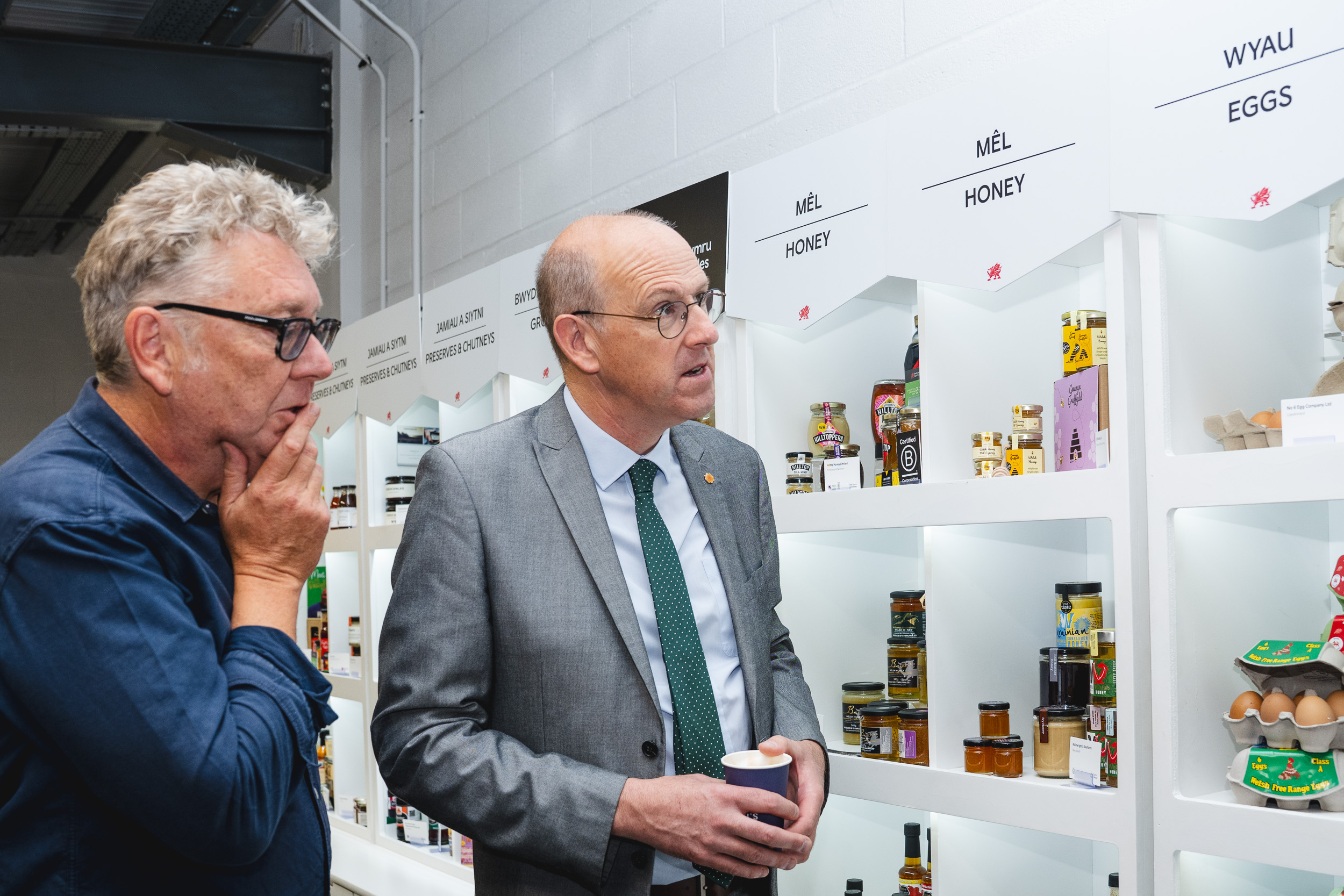
More than 300 Welsh businesses, 2,500 products and over 100 new product launches are being showcased as producers seek new buyers and markets.
Wales’ food and drink industry is taking centre stage at this year’s Royal Welsh Show, with hundreds of businesses using the event to secure new customers, launch products and explore opportunities for growth.
More than 60 companies are exhibiting in the show’s Food Hall, while the Food & Drink Wales Trade Business Lounge is representing over 300 Welsh businesses and around 2,500 products.
Organisers say more than 100 new products are being launched during the week, making the show one of the largest showcases of Welsh food and drink in the UK.
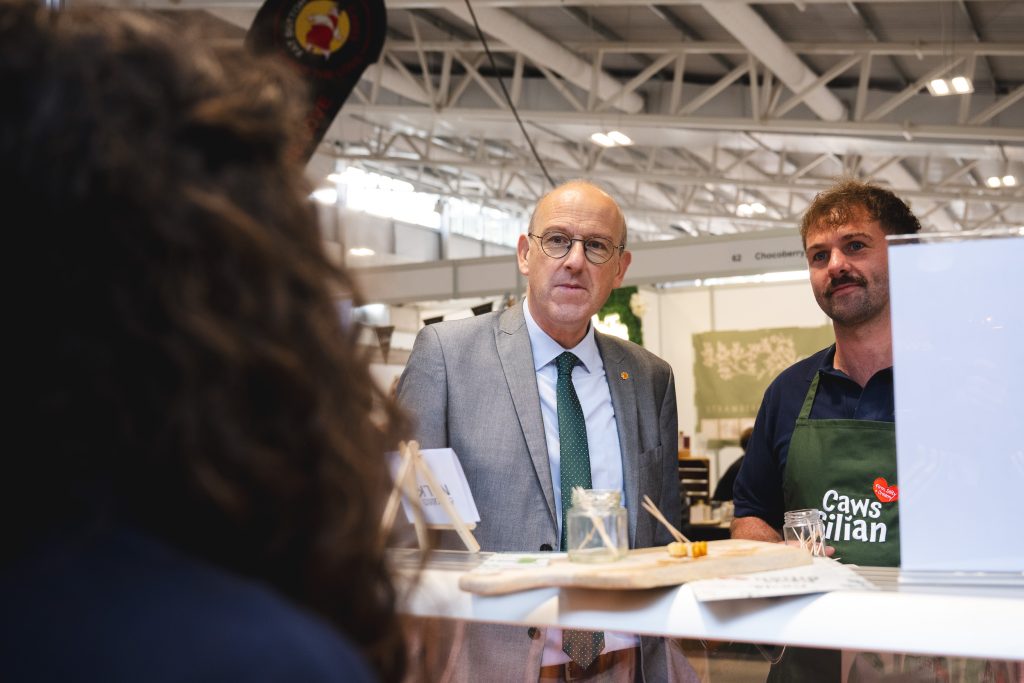
The programme brings together producers, retailers, wholesalers, hospitality businesses, public sector buyers and industry experts.
Last year, activity within the Business Lounge generated more than £3 million in confirmed sales. More than 300 trade buyers have registered to attend this year, including representatives from major retailers, foodservice operators and independent businesses.
Llyr Gruffydd MS, Cabinet Minister for Rural Resilience and Sustainability, said the show provided an opportunity to celebrate the quality and diversity of Welsh produce while helping businesses build valuable commercial relationships.
He said: “The Royal Welsh Show provides a unique opportunity to celebrate the exceptional quality, innovation and diversity of Welsh food and drink.
“Bringing together producers, buyers, industry experts and support organisations, it showcases the strength of a sector that makes a significant contribution to communities and economies across Wales and supports thousands of jobs throughout the food supply chain.”
The minister said activity at the Food Hall, Business Lounge and International Pavilion demonstrated the Welsh Government’s commitment to supporting an ambitious and growing industry.
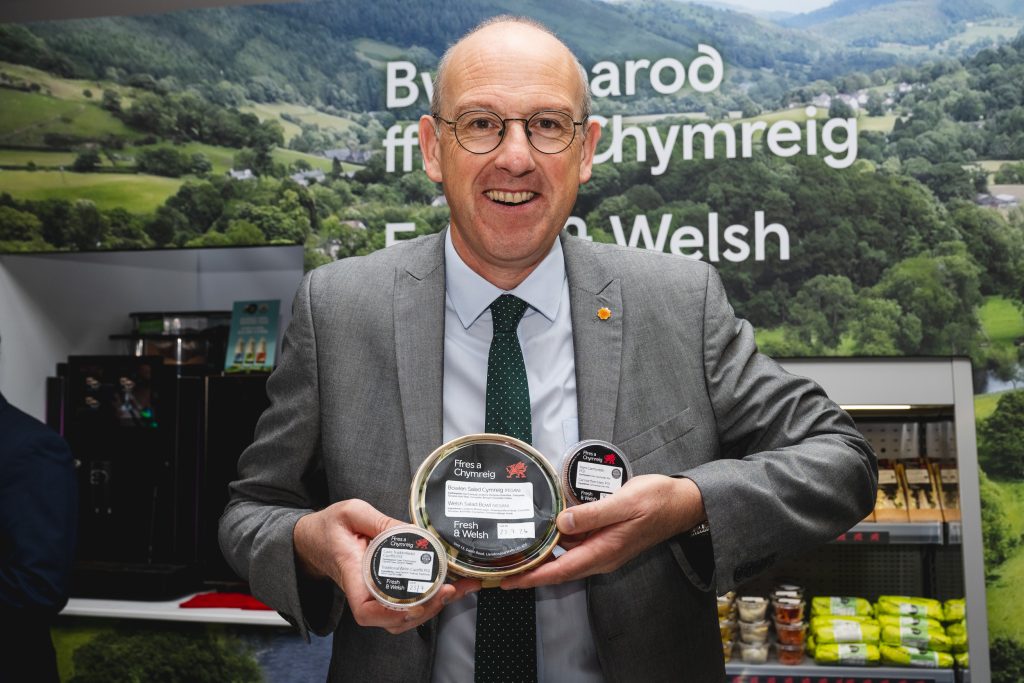
He added: “The activity also reflects our ambitions for Wales’ National Food Strategy, which will help strengthen local production, local processing and local procurement, creating a more resilient and sustainable food system for future generations.”
Businesses exhibiting in the Food Hall represent sectors ranging from dairy, meat and bakery products to alcoholic drinks, soft drinks and preserves.
Among them is Welsh Lady Preserves, whose managing director Carol Jones said the event allowed producers to meet customers and buyers while promoting Welsh products to a wider audience.
She said: “The Royal Welsh Show is a fantastic platform for Welsh food and drink businesses.
“It gives us an opportunity to showcase our products, meet customers and connect with buyers, while championing the very best of Welsh food and drink.”
This year’s displays also highlight companies working on carbon-reduction plans, achieving B Corp certification and taking part in Blas Cymru, also known as Taste Wales.
New attractions include a Fresh and Welsh food-to-go display, a Design Your Own Canapé tasting experience and an exhibition highlighting Welsh products with protected Geographical Indication status.
The International Pavilion is hosting meetings, launches and industry events throughout the week.
These include the launch of the Dairy Sheep Wales Cluster, presentations for local authority caterers and NHS procurement officers, and activities aimed at encouraging young people to pursue careers in the food and drink industry.
Welsh Government support programmes are also being promoted at the show, covering innovation, technical development, exports, sustainability, skills and business collaboration.
Figures from the latest annual report for the government-backed HELIX programme show that it generated an estimated economic impact of more than £103 million during 2025–26.
The programme supported 159 companies and helped businesses develop more than 300 new food and drink products during the year.
With thousands of products on display and buyers attending from across the UK and overseas, industry leaders hope the Royal Welsh Show will provide a platform for further investment, sales and expansion across the Welsh food and drink sector.
This could also take a stronger business headline, such as: “Royal Welsh Show puts 2,500 Welsh food and drink products before buyers”.

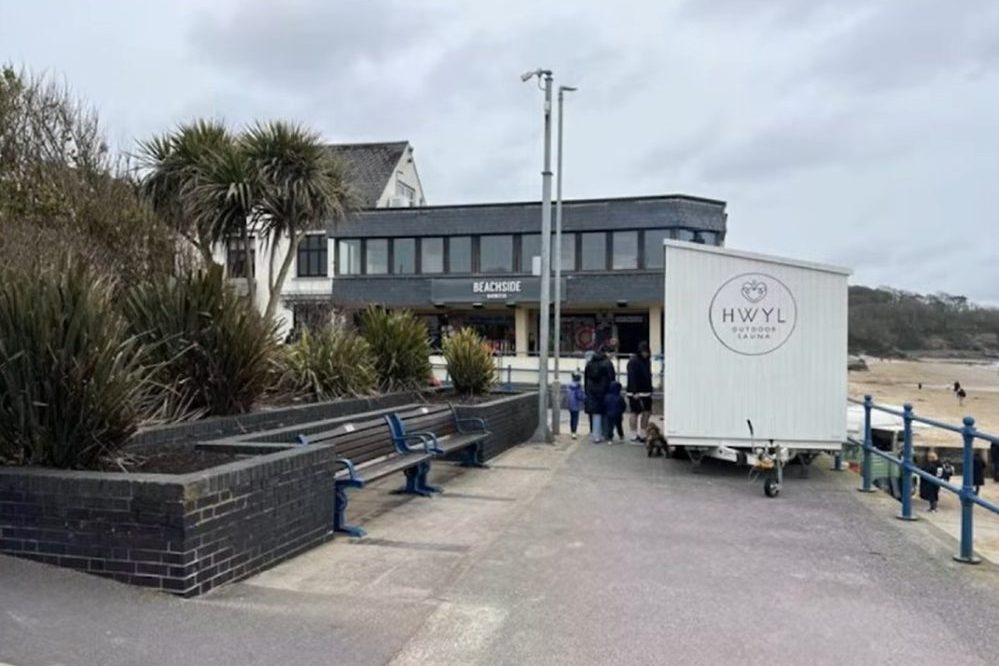
A NATIONAL park refusal of the permanent siting of an award-winning Pembrokeshire seaside village outdoor sauna, which has been featured in the national press, is likely to be appealed, its owner has said.
Back in June 2024, a temporary two-year permission for a mobile wood-fired sauna at overlooking the sea at Saundersfoot harbour was granted by Pembrokeshire Coast National Park’s development management committee.
Since then, a further application by Kerry Evans of Hwyl Outdoor Sauna to make the siting permanent was submitted to national park planners, which was refused following an officer recommendation at the July committee meeting.
Back in February, the business, set up by former superyacht worker and mum-of-two Kerry won Sauna of the Year 2026/27 at the Wales Prestige Awards, and the facility has featured in the national press.
The permanent siting proposal had gained support from the public saying it was “a major asset to the village,” and “a wellness landmark for Saundersfoot,” and “a unique offering that attracts visitors to the beach and harbour”.
It was refused on the grounds the sauna “in its current form and with the proposed location of the sauna, is considered to result in a landscape impact that harms the setting of the Saundersfoot Conservation Area,” it was “located in a position which reduces public access along the existing promenade route,” and an updated, since its previous permission, need for a Flood Consequences Assessment which hadn’t been addressed.
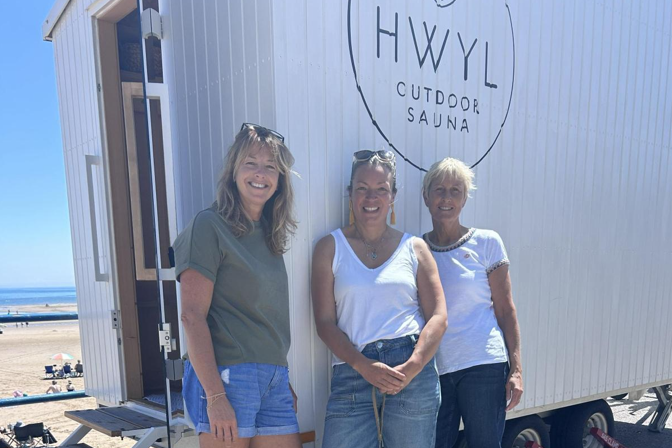
At the meeting, applicant Kerry Evans said the sauna had been a “successful local business,” which had attracted thousands to the village with a thriving community around it, with donations to charities and local fundraisers.
She said the current location against beach-side railings was “fundamental to its success,” providing users with “privacy and dignity,” while allowing them stunning views across the bay.
After the scheme was refused committee members had expressed their hopes a different harbourside location could be found for the sauna.
Speaking after the planning refusal, Kerry Evans said she had started the early stages of a potential appeal over the decision by writing to Planning and Environment Decisions Wales (PEDW), adding: “We had amazing support from Cllr Chris Williams and [former county councillor] Phil Baker, [and a petition of some 600 signatures in support]; we had all the right people in the right places but it wasn’t actually been taken on board.”
On the reasons for refusal, Kerry said the flood risk issue seemed “a little bit nonsensical,” with the sauna operating for two years without any issues, the mobile sauna being moved in poor weather conditions as “it would be foolish to leave it there”.
On potential alternative locations, she said: “If there was somewhere suitable I’m obviously happy to look at that, but having explored it quite extensively there aren’t many areas; there’s a need for privacy, I have no control about who would be looking through the window.

“Part of the magic of that sauna is the view and the magic of the Pembrokeshire coast with the amazing light; people feeling slightly uptight come out relaxed, there’s a sense of space and connection with the outside world, which is hugely important for us as human beings.”
She went on to say: “We’re trying to arrange a meeting with the officers and the CEO of the harbour,” adding: “Everyone said ‘we want this business to work,’ if they’ve got a genius idea, I’m open to suggestions.
“To me it seems like a real shame it’s been refused, the only material change is it’s now proven to be a safe and successful business.
“It’s a frustration, all that hard work is being put in jeopardy by this decision.”
Since the refusal, a change.org petition entitled Save Hwyl outdoor sauna Saundersfoot, has been set up, attracting more than 300 signatures to date.



Crime14 hours ago
Haverfordwest man jailed for seven years for historic rape and sexual assault of girl
A HAVERFORDWEST man has been jailed for seven years after being convicted of raping and indecently assaulting a girl during...


News19 hours ago
Burnham more willing to listen on Welsh devolution, says First Minister
Rhun ap Iorwerth says he will press the new Prime Minister for powers over policing, railways and Wales’ natural resources...


Crime23 hours ago
Women jailed after man chased through Milford home and attacked with knives
Kelly Rees receives further 27-month sentence while already serving prison term for notorious taxi robbery TWO women have been jailed...


Crime1 day ago
Mother headbutted and clawed police officers after threatening social worker
Court shown body-worn footage of violent confrontation at Goodwick property A COURT has been shown police body-worn footage capturing the...


Crime2 days ago
Man, 37, found dead following major police response in Pembroke Dock
Death not being treated as suspicious as police make statutory referral to IOPC following active investigation A 37-YEAR-OLD man has...


Community2 days ago
Household Cavalry drum horse returns home to Pembrokeshire for final farewell
Dyfed Willa Rose, who became Major Juno and the first mare to serve as a Household Cavalry Drum Horse, was...


News3 days ago
Jo Stevens out as Welsh Secretary as Burnham reshapes government
Cardiff East MP repeatedly visited Pembrokeshire to champion clean energy jobs, but her successor inherits unresolved questions over Milford Haven’s...


Crime3 days ago
Teen cleared of attempted murder but guilty of GBH after Milford teacher stabbed
Jury returns 11-1 majority verdict on charge of causing grievous bodily harm with intent, with sentencing set for September 3...


Community3 days ago
French troops march through Fishguard as Britain’s last invasion returns to life
Battle scenes, cavalry displays and a surrender procession brought one of Pembrokeshire’s most extraordinary stories back to the streets MUSKET...
News3 days ago
Andy Burnham promises new politics as he enters Downing Street
New Prime Minister admits politicians have “not been good enough” as he sets out a ten-year plan for Britain and...
-

 Crime1 day ago
Drunken rail passenger tried to headbutt police after being refused travel
-

 featured2 days ago
From a father-and-son project to an award-winning campervan business
-
Crime23 hours ago
Women jailed after man chased through Milford home and attacked with knives
-
Community2 days ago
Household Cavalry drum horse returns home to Pembrokeshire for final farewell
-
News19 hours ago
Burnham more willing to listen on Welsh devolution, says First Minister
-

 Entertainment2 days ago
Robin Hood: A magical show by young talent at The Torch Theatre
-
Crime14 hours ago
Haverfordwest man jailed for seven years for historic rape and sexual assault of girl
-
Crime1 day ago
Mother headbutted and clawed police officers after threatening social worker