

Health
Patients face higher costs and fewer appointments as NHS dental reforms begin


PATIENTS across Wales are being warned to expect higher charges and longer waits for appointments as sweeping changes to NHS dentistry come into force today (Tuesday, Apr 1).
The reforms — described by the British Dental Association (BDA) as “untested” — are expected to reshape how dental care is delivered, but critics fear they could deepen the already serious access crisis.
Dentists say the changes will mean many patients are seen less often, while some treatments will become more expensive at a time when households are already under pressure from rising living costs.
Under the new system, routine check-ups for new patients will rise from £20 to £27.21 — an increase of more than a third — while urgent appointments will increase from £30 to £37.50.
At the same time, recall periods for patients considered to be in good oral health could stretch to 18 or even 24 months, raising concerns that problems may go undetected for longer.

The BDA has warned that the reforms could accelerate the loss of NHS dental services, with some practices already handing back their contracts. In certain areas, more than ten per cent of NHS dental capacity has reportedly been returned by practices unwilling or unable to continue under current conditions.
That loss of capacity is likely to put further strain on remaining services, making it even harder for patients to secure appointments.
Russell Gidney, Chair of the BDA’s Welsh General Dental Practice Committee, said: “From today, many patients across Wales will have to get used to more costly, less frequent dental care.
“But the risk all now face is that utterly untested reforms will push more practices out of the NHS, taking the access crisis from bad to worse.”
The changes come at a politically sensitive time, with the Senedd election scheduled for Thursday (May 7), and mounting pressure on ministers to address long-standing problems in NHS dentistry.
Access to NHS dental care has been a growing concern in recent years, with many patients across west Wales struggling to find a dentist taking on new NHS patients.
The BDA says the reforms have been introduced without sufficient consultation and has called for a pause on full implementation until 2027, alongside a wider rescue package to stabilise the service.

It is also urging the next Welsh Government to commit to increased funding, better protection for vulnerable patients, and a reset in relations with the profession.
The Herald understands that concerns are also being raised locally about whether practices in Pembrokeshire and Carmarthenshire will be able to maintain NHS provision under the new system.
With demand already outstripping supply, there are fears that more patients could be forced to turn to private care — or go without treatment altogether.


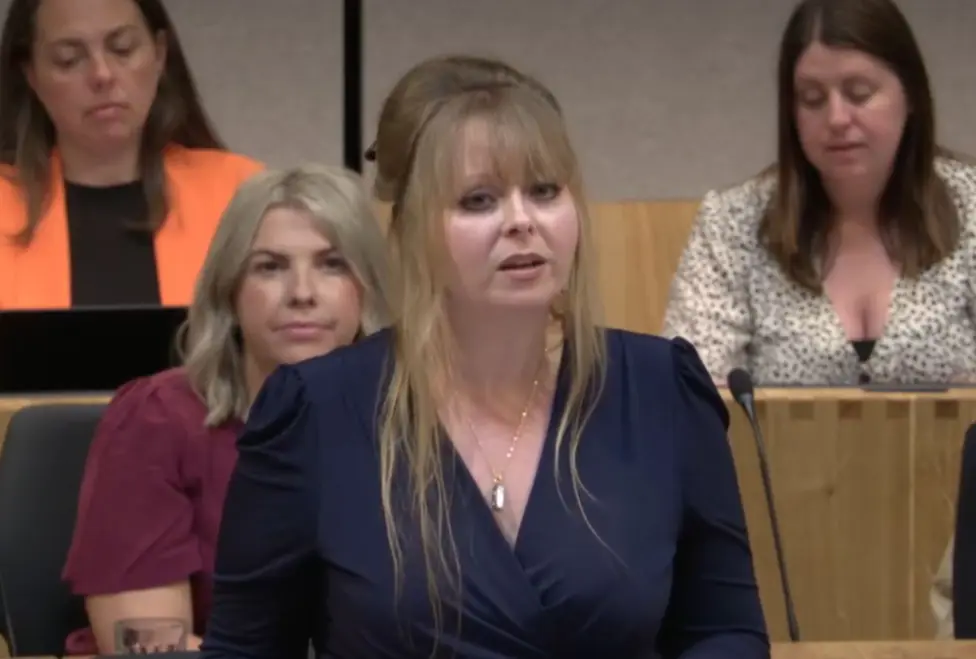
WALES’ first-ever dedicated women’s health minister has promised a major overhaul of endometriosis and abortion services.
Addressing Senedd colleagues on July 7, Blaenau Gwent Caerffili Rhymni MS Delyth Jewell vowed to tackle the “invisibility” of women’s pain in the healthcare system
Ms Jewell, who was appointed deputy minister for social care, mental health, and women’s health in May, said these areas have lacked “sufficient attention” for too long.
The Plaid Cymru MS said she would champion carers, and said she would work to ensure more carers receive the real living wage and “parity of esteem”,
She said: “Why is it that social care receives less prominence in debate than the NHS? Why shouldn’t care workers hold the same space in our psyche as nurses and doctors?”
Speaking on the importance of mental health care, Ms Jewell highlighted the need for “a fundamental change” in how services are delivered, moving towards “open-access, same-day mental health support”.
The deputy minister revealed she had met with Professor Ann John, national adviser for suicide prevention and self-harm, and pledged to provide a written statement setting out the government’s priorities – with a focus on male suicide.
Ms Jewell also said: “For too long, women’s health has been treated as an afterthought” – and pledged to tackle women’s pain in healthcare.
“How many women have been told, ‘this might hurt’, and have been afraid to speak up and say that they are in pain?” Ms Jewell asked.
“Women’s voices should be heard. Their pain should not simply be endured. I am determined to change this.”
Ms Jewell continued: “We will be refreshing elements of the NHS Wales women’s health plan, with action this year focused on improving endometriosis and abortion services.
“I will want to hear from women directly. We’ll be commissioning work to gather women’s feedback, and we’re also carefully considering the women’s health hub model to improve consistency.”
Ms Jewell confirmed plans to host a ministerial summit on the matter on July 16, and pledged to help those struggling to get appointments, families waiting too long for diagnoses, and women who have not been believed.
She said: “I want to bring hope, to bring change, and, most of all, to be a voice for those who have not been heard. I promise I am listening.”
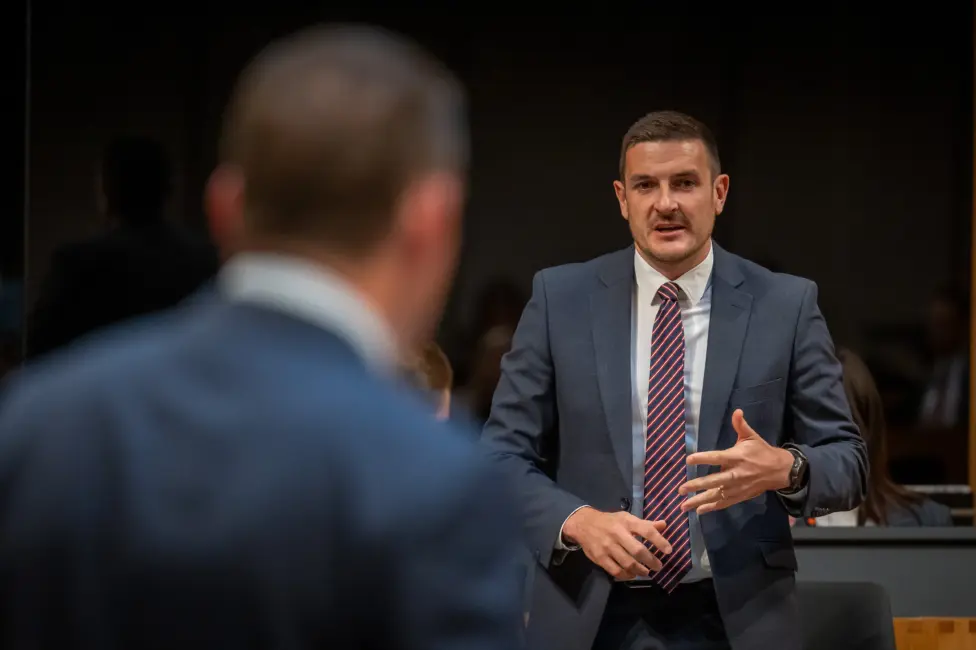
James Evans, Reform’s shadow minister for health and prevention, congratulated Ms Jewell on her appointment but reminded her that “warm words […] need to be matched by delivery, deadlines and accountability”.
Mr Evans quizzed his opposite number on her plans for a national care service, something Ms Jewell pledged would be created this Senedd term alongside a new national care academy.
But Mr Evans said he has “long opposed” its creation, describing it as an “unnecessary additional level of bureaucracy and a drain on vital public money”.
He added: “A national care academy, fair pay and conditions, better support for unpaid carers – there’s something we all want – and those significant commitments that you’ve made also need to be matched by funding.”
Mr Evans called for a “practical timetable” on this, asking when the national care academy will be online, and how the Welsh Government will ensure the national care service does not become “another layer of bureaucracy”.
In response, Ms Jewell said: “We want to make sure that what we have for people is greater than the sum of those parts, that actually there is parity of esteem for people in the workforce.
“[…] It’s bizarre, isn’t it, that there’s never been a founding moment for the care service in the way that we’ve had with the NHS. We celebrated the NHS’s birthday a few days ago; when I was talking about the same space in our psyche, we should be celebrating this work.
“Most people will come into contact with the NHS and with other areas of public service throughout the course of our lives.”
Ms Jewell spoke of the importance of increasing the status of the sector and said: “Most people only come into contact with the care service when something has either gone wrong with them or someone else they love.”
Answering Mr Evans’ questions on timescale, Ms Jewell admitted a lot of the work will take the course of the Senedd term but that some elements, such as the academy, she wants to bring forward “far earlier”.
Mr Evans also pressed Ms Jewell on her plans for suicide prevention, and welcomed the focus on male suicide.
He said: “One of the biggest groups that does suffer from suicide is young white men, and young men in general. They are the people who suffer the most and they do need to be supported.”
Mr Evans called for a dedicated men’s health plan, adding that it should not be limited solely to suicide prevention but also other issues such as cardiovascular disease and fathers struggling with newborns.
In response, Ms Jewell said: “I am prepared to engage with you and other members on this as a concept, because, of course, you’re right that certain health issues are either only apparent in men, or have a disproportionate effect on men.
“And there’s lots of work, including what I’ve said about male suicide. The upcoming cancer plan will look at improving rates of diagnosis in areas like prostate cancer. Whether we need to bring that together in one men’s health plan, I am open to the idea – let’s have further conversations.”

Labour’s spokesperson for public and preventative health, Jayne Bryant, told the Siambr that “for far too long, women’s voices and experiences in the healthcare system have not been given their due weight.”
Ms Bryant, of Casnewydd Islwyn, drew attention to the work of the previous Labour government to support women’s health – from “free period products, to menopause support, to creating women’s health hubs in every health board.”
She told the Senedd it was “disappointing” to see “no dedicated action” for women’s health in Plaid Cymru’s pledges for the first 100 days in government.
She called for the deputy minister to share the government’s plans to address endometriosis – a condition which affects one in ten women in Wales.
Ms Bryant told the Siambr that “advances are being made in diagnosis” and Wales must make sure it’s ready to adapt.
She said: “Rapid endometriosis tests have just been given the go-ahead by the National Institute for Health and Care Excellence, which will help to significantly reduce the time it takes for women to be told whether they have the condition.
“One test, I believe, provides that result in 45 minutes. Currently, getting a diagnosis can take years. So, when does the minister expect women in Wales to be able to access those new tests?”
Ms Jewell paid tribute to the work done by Labour’s Sarah Murphy and Eluned Morgan on women’s health in the last Senedd term.
She said: “It should not be normal for women to have to go for so many appointments before they get the symptom diagnosis that they deserve.
“So, I want to look at this in terms of how it is working in hubs, how it’s working in primary care, all the way through to tertiary services as well. It’s going to be a focus of the women’s health plan.”
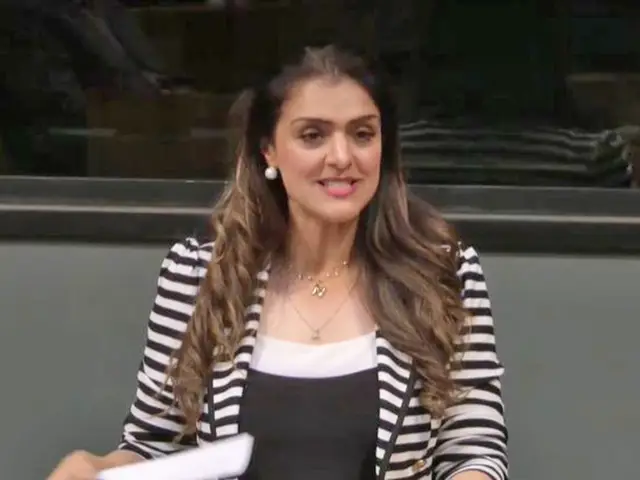
Conservative spokesperson for health and social care, Natasha Asghar, questioned the deputy minister on endometriosis and polyendocrine metabolic ovarian syndrome (PMOS), formerly known as polycystic ovary syndrome.
Ms Asghar told colleagues that NICE published draft guidelines on PMOS last week which recommended “faster diagnosis and an annual review of women and girls aged ten and over to include symptoms and signs of PMOS.”
She called on Ms Jewell to consider annual reviews of the condition alongside the training of doctors and health professionals across Wales to ensure they can spot the signs of PMOS.
Ms Jewell acknowledged the draft guidance but noted the final recommendations won’t be available until December.
Ms Asghar, of Casnewydd Islwyn, also highlighted the importance of quality education on menstrual health and menopause.
She said: “All too often, women and girls cope with endometriosis and PMOS because they believe that heavy and painful periods are a normal part of their menstrual journey.”
Ms Asghar said she had asked the previous education minister about “ensuring universal menstrual health education within the curriculum”, and asked Ms Jewell how she will ensure “quality menstrual health education” is available Wales-wide.
She also said she has raised “consistent concerns” about the delivery of advice and support for menopause alongside menstrual health.
Ms Asghar noted that Cardiff and Vale University Health Board has launched a menopause hub in Ely, and asked about their Wales-wide rollout.
In response, Ms Jewell said she is “willing and eager” to work cross-party to ensure the message gets out to women and to “empower them to use their voice”.
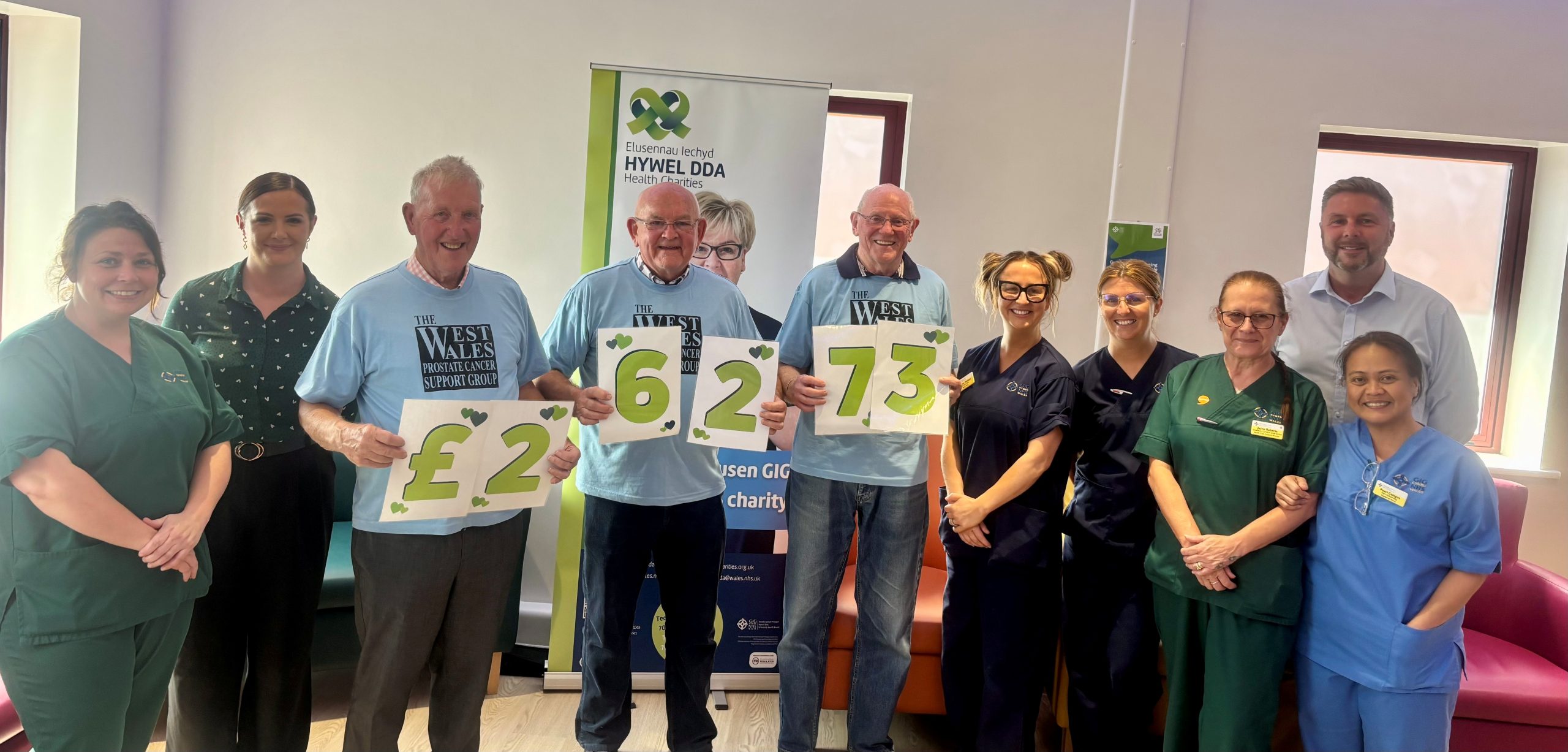
A £26,273 donation from the West Wales Prostate Cancer Support Group has helped create a calmer and more comfortable space for patients undergoing cancer treatment
A GENEROUS charitable donation has helped transform the patient waiting room at Glangwili Hospital’s Chemotherapy Day Unit.
Hywel Dda Health Charities, the official charity of Hywel Dda University Health Board, has used a £26,273 donation from the West Wales Prostate Cancer Support Group to fund a major refurbishment of the unit’s waiting room and adjacent kitchen.
The West Wales Prostate Cancer Support Group is a patient-led group of volunteers working across West and South West Wales, offering support to prostate cancer patients, as well as their families and friends.
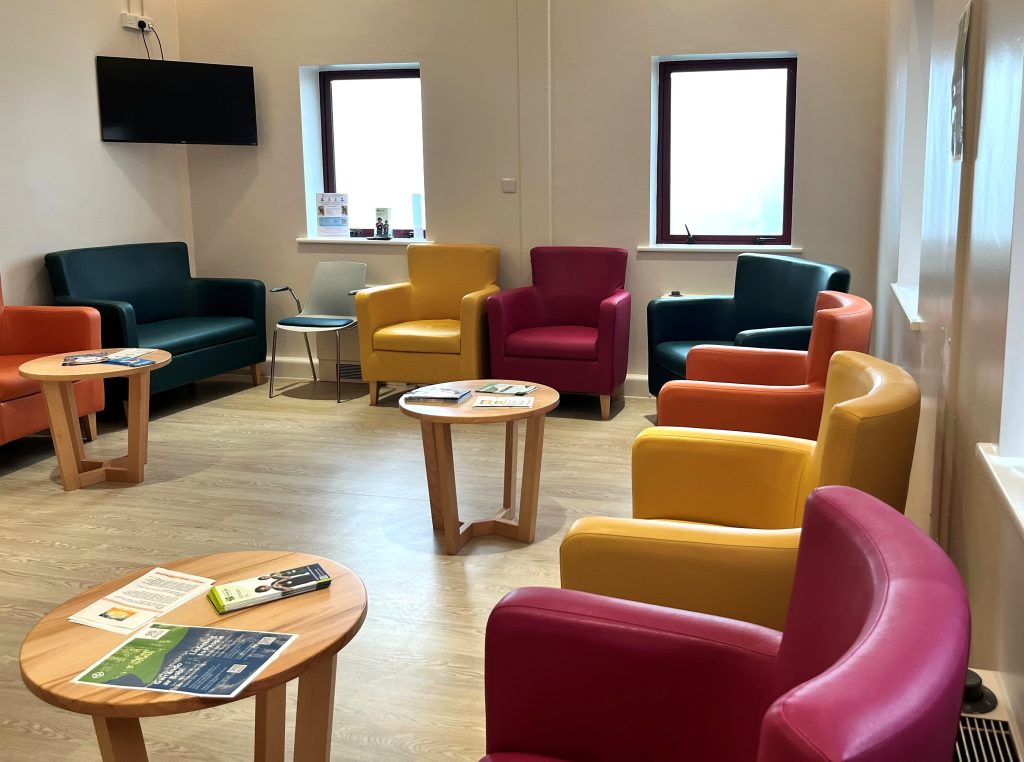
The project has created a more welcoming, comfortable and calming environment for patients receiving treatment, along with relatives and carers who accompany them to appointments.
Before the refurbishment, the waiting area was described as dated, dark and uninviting, in contrast to the compassionate care provided by staff within the unit. Patients can often spend long periods in the space before treatment or clinic appointments.
The work included the removal of old fixtures, full redecoration, new flooring and ceiling, the purchase of more comfortable furniture, and the addition of artwork to help improve the atmosphere.
Gina Beard, Lead Cancer Nurse, said: “We are so grateful for the donation from the West Wales Prostate Cancer Support Group, which has enabled us to transform the space.
“This has made a real difference to our patients. We’ve been able to create a space that feels less clinical and more comforting. The calming colours and comfortable seating help ease anxiety and make a difficult time a little more bearable for patients and their loved ones.”
Nicola Llewelyn, Head of Hywel Dda Health Charities, added: “We are deeply grateful to the West Wales Prostate Cancer Support Group for their donation.
“Your generosity has enabled us to create a pleasant and relaxing space for patients and their families.”
Hywel Dda Health Charities supports NHS patients and staff across Carmarthenshire, Ceredigion and Pembrokeshire.
Plans include same-day mental health support, a National Care Service for Wales and action on women’s health
PLANS to improve access to social care, provide same-day mental health support and strengthen women’s health services have been outlined by the Welsh Government.
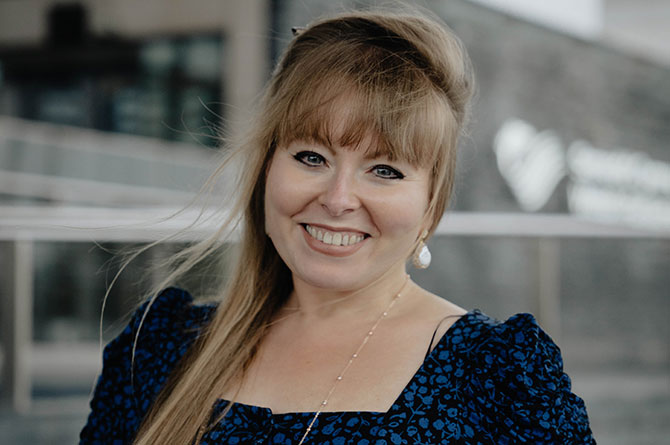
Deputy Minister for Social Care, Mental Health and Women’s Health Delyth Jewell said she wanted to give greater prominence to areas which she believes have not received the attention they deserve.
Her priorities include progressing plans for a National Care Service for Wales, with the ambition of delivering social care that is free at the point of need.
The Deputy Minister also said safeguarding arrangements would be strengthened to better protect children and adults at risk.
Mental health services are set to move towards a model of open-access, same-day support, with 21 demonstrator sites already underway and further rollout planned.
The Welsh Government said future action on dementia will also be set out in a new Dementia Strategy for Wales, focusing on brain health, earlier diagnosis and improved support.
A Women’s Health Summit will also be held later this month, bringing together women with lived experience and clinicians.
The summit will focus on tackling the normalisation of pain, with work already underway to improve endometriosis and abortion services, as well as maternity safety and support for families who experience the loss of a baby.
Delyth Jewell said: “I want to help shine a light onto areas that haven’t had the focus they are due.
“On mental health, women’s health, and yes, the social care system that for too long has been undervalued.
“These areas deserve more attention and prominence. They deserve a voice in the heart of government, and I promise I will give that to them.”
Alzheimer’s Society’s National Influencing Manager Gemma Roberts said: “We are delighted that the Welsh Government has reaffirmed its commitment to developing a new dementia strategy for Wales. We stand ready and eager to work with the Welsh Government to turn this ambition into a reality.

“People with dementia in Wales routinely face prolonged delays to diagnosis followed by gaps and stark inequalities in treatment and support. Delays of this scale have quietly become routine for dementia, Wales’s biggest killer, but would not be accepted for cancer or heart disease. It’s vital that the Plaid Cymru manifesto commitment to a diagnosis target of 12 weeks is included in the new strategy.
“The science is flying with faster, more accurate diagnosis and new treatments on the horizon. With the delivery of a bold dementia strategy for Wales that tackles diagnosis, care and support, delivering the transformation that people living with dementia need.”



Crime15 hours ago
Teacher stabbing trial: The first week of evidence
Jury hears accounts of alleged planned classroom attack, teacher’s fear she was dying, and boy’s words after leaving school A...


Community17 hours ago
Haverfordwest Castle refurbishment reaches new heights as roof goes on
Major milestone reached in project to transform historic gaol building into flagship visitor attraction A MAJOR milestone has been reached...


Business2 days ago
Pembrokeshire lands £98m share of Wales marine energy boom
New industry report says county has received the second highest level of marine energy investment in Wales, supporting more than...
Crime2 days ago
First aider tells jury teacher was “crying, shaking” after classroom stabbing
A SCHOOL first aider has told a jury that teacher Vicki Williams was “crying, shaking” and in “complete shock” after...


Crime3 days ago
Teacher feared she was dying after Milford Haven classroom stabbing
A TEACHER allegedly stabbed in the head at Milford Haven Comprehensive School told a jury she feared she was dying...


News3 days ago
Farage to resign as MP and fight Clacton by-election amid finance row
NIGEL FARAGE has announced he will resign as MP for Clacton and stand again in the by-election he intends to...
Crime3 days ago
Teacher tells jury there were ‘no issues’ with accused pupil hours before ‘stabbing’
Milford Haven teacher gives evidence as trial of 15-year-old continues at Swansea Crown Court A TEACHER allegedly stabbed at Milford...


News3 days ago
Major incident stood down after fire at Impala Terminal in Milford Haven
Fire involved decommissioned oil tank containing residual crude oil and around 60 cylinders A MAJOR incident declared during a fire...


News3 days ago
Large fire breaks out at Impala Terminal in Milford Haven
Black smoke seen for miles as emergency services respond to incident at former Puma Energy site A LARGE fire has...
Crime4 days ago
Prosecution outlines ‘planned attack’ as Milford Haven teacher stabbing trial opens
Jury hears teenager allegedly brought kitchen knife into school before teacher was stabbed in the head THE JURY in the...
-
 Education7 days ago
Education secretary vows to tackle ‘root causes’ of antisocial behaviour in schools
-

 Education7 days ago
Ysgol Glannau Gwaun celebrates prestigious Gold Active Travel award
-

 Community7 days ago
Closure-threatened Stepaside school expected to remain open
-
 Education7 days ago
First Minister pressed on biological sex, additional learning needs, and NHS jobs
-

 Farming3 days ago
Pembrokeshire slaughterhouse given urgent improvement rating after audit failure
-
News3 days ago
Large fire breaks out at Impala Terminal in Milford Haven
-

 Education4 days ago
Council failed Welsh language standards over school closure
-

 Entertainment2 days ago
Swing and big band classics heading to Torch Theatre