


Health
Connecting health and care key to cutting waiting times, says Bevan Commission

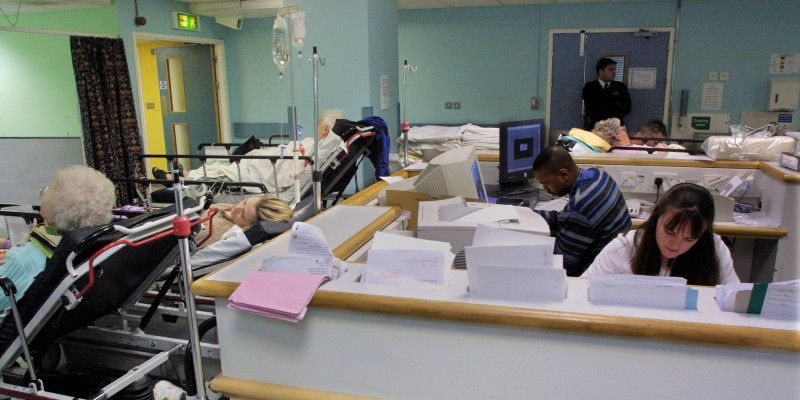
A NEW report has called for every stage of Wales’ health and care system to be better connected in order to improve patient outcomes and reduce waiting times.
The Bevan Commission, Wales’ leading independent health and care think tank, has published Chain Reaction: Managing patient flows across health and care systems and services.
The paper examines the causes of poor patient flow and sets out ways to reduce pressure on services, including earlier intervention, better community support, improved use of digital tools and closer working between health, social care and local services.
It identifies seven key areas affecting how patients move through the system: people and communities, primary and community care, social care and care homes, urgent community support, 111 and transport, emergency and minor injury care, outpatient and diagnostic services, and hospital assessment, treatment and discharge.
The commission warns that simply moving pressure from one part of the system to another will not solve the problem, and says whole-system planning is needed.

Tools such as telehealth, digital medicines, virtual wards, social prescribing and quicker responses to falls are highlighted as ways to improve patient flow and help people manage their own health more effectively.
Bevan Commission Director Dr Helen Howson said: “Health and social care services are facing huge demands and we know that we are only going to face even bigger pressures. The population in Wales is living longer, but more unhealthily. We are seeing a doubling of the over-90s and an increase in dementia.
“We believe that health is a shared responsibility, extending beyond the NHS, to include local government, workplaces, people and communities. Preventing unnecessary admissions into the system and enabling people to better manage their own health and wellbeing will be critical to help reduce demand for clinical services.”
The report says prevention and early intervention will be essential if Wales is to reduce the number of people relying on formal care services.

It also highlights programmes such as Education Programmes for Patients Cymru, which helps people living with long-term conditions and their carers gain the skills and confidence to manage their own health.
Where formal care is needed, the commission says patients must be involved in designing services around their needs. It also calls for better real-time data and digital systems to improve communication between care teams.
Dr Howson added: “This paper highlights the interdependencies of all parts of the system and the impact of one upon the other. It reinforces the urgency for whole system planning and transformation, built around patient needs.

“By connecting every part of care, we can reduce inefficiencies, improve outcomes and better meet the evolving needs of people now and in the future.”


New £2 million Nofio Ysgol programme will begin in nine council areas this September before expanding across Wales
EVERY child in Wales is to be given the opportunity to learn how to swim and stay safe around water under a new national school swimming programme.
The Welsh Government has announced that its Nofio Ysgol programme will begin in September 2026, providing pupils with a minimum of 20 swimming and water safety lessons, primarily during Years 4 and 5.
The scheme is intended to address major differences in access to school swimming across Wales. Around one in five maintained primary schools currently offers no swimming lessons, while relatively few children take part in swimming activities outside school.
For many pupils, lessons organised through their school are their only opportunity to become confident in the water, learn essential swimming techniques and develop potentially life-saving self-rescue skills.
The first phase of the programme will begin in nine pathfinder local authority areas in September, backed by £2 million of Welsh Government funding.
It will then expand to as many as 16 council areas from September 2027 before being introduced across all 22 Welsh local authorities from September 2028.
The programme will include swimming instruction, water safety education and Swim Safe Cymru sessions, together with classroom resources linked to the Curriculum for Wales.
Additional support will be provided to children and communities facing the greatest barriers to participation, including pupils in rural and deprived areas, Welsh-medium schools, disabled learners and children with Additional Learning Needs or healthcare requirements.
The programme will be funded directly by the Welsh Government and delivered through participating local authorities, with national support from Swim Wales.
Announcing the Nofio Ysgol Implementation Plan for 2026–2029, Cabinet Minister for Culture and Sport Heledd Fychan said swimming was both a life-saving skill and an important foundation for lifelong physical activity.
She said: “Every child in Wales should have the opportunity to learn to swim, understand how to stay safe in and around water, and develop skills that could one day save their life.”
The Welsh Government said the phased introduction would allow councils and schools to test different delivery models, strengthen the swimming-teaching workforce, improve the collection of information and assess the programme’s impact.

The scheme forms part of the Government’s commitment to improving preventative health, physical activity and children’s mental and physical wellbeing.
Ministers said the long-term aim was to ensure that a child’s access to swimming lessons was not determined by where they lived, the school they attended or their family’s ability to pay for private lessons.

Hywel Dda says a dedicated unit would improve patient safety and specialist support, but no final decision has been made
A SPECIALIST facility in Carmarthen has been identified as the preferred future location for adults detained by police while experiencing a mental health crisis in public.
Hywel Dda University Health Board will be asked on Thursday, July 30, to approve public and staff engagement on plans for a dedicated Section 136 Place of Safety unit at Cwm Seren, within the Hafan Derwen mental health site at St David’s Park.
The proposal could see adult provision concentrated at the Carmarthen facility rather than continuing across a number of existing sites within the health board area.
Section 136 of the Mental Health Act gives police officers the power to remove someone from a public place when they appear to be experiencing a serious mental health crisis and take them to a designated place of safety.
The person can then be assessed by mental health professionals and offered appropriate care and support. The health board has a legal responsibility to provide the service.
A review of the existing arrangements found concerns relating to the suitability of some environments and the ability to provide consistent staffing across several locations.
Five potential models were considered during a multi-agency appraisal involving Dyfed-Powys Police, local authorities, West Wales Action for Mental Health and the patient representative body Llais.
The preferred option is a purpose-built Section 136 suite at Cwm Seren.
According to the health board, the Carmarthen facility would provide the safest, most clinically effective and sustainable model of care.
It says the unit would offer immediate access to specialist mental health staff, improve the management of people considered to be at acute risk and provide better access to physical healthcare when required.
However, concentrating the service in Carmarthen could also raise questions about travelling distances for police, patients and families from Pembrokeshire, Ceredigion and more distant parts of Carmarthenshire.
The health board says those potential effects, together with measures that could reduce them, would form part of the proposed engagement process.
Andrew Carruthers, Chief Operating Officer at Hywel Dda University Health Board, said: “People who are detained under Section 136 are often experiencing some of the most difficult moments of their lives, and it is essential that we provide a safe, supportive environment where they can receive timely assessment.
“The work undertaken with our partners has carefully considered a range of options for the future provision of this service.
“The preferred option at Hafan Derwen has been identified because it offers the strongest benefits in terms of patient safety, clinical support and sustainability.”
Mr Carruthers stressed that no final decision had been taken.
He added: “Subject to Board approval, we will want to hear from staff, people with lived experience, carers, partner organisations and members of the public before any final decision is considered.
“Their feedback will be an important part of the process.”
Should the proposal be approved by board members, an eight-week engagement exercise would run from September 2 until October 26, 2026.
Staff, service users, carers, partner organisations and local communities would be asked for their views on the preferred option, its possible effects and any safeguards or mitigation that should be introduced.
The health board will consider the proposal at its meeting on Thursday, July 30. The meeting will be streamed online from 9.30am.
Almost 12,000 patients waited more than 12 hours in June as emergency doctors warned that a crisis once associated with winter had become a year-round emergency
WALES’ emergency departments have recorded their worst June for lengthy waits, with almost 12,000 patients remaining in major A&E units for more than 12 hours.
New NHS Wales figures show that 11,813 patients, equivalent to around one in six of those attending a major emergency department, waited more than half a day before being admitted, transferred or discharged.
Only 49 per cent of patients completed their journey through a major emergency department within four hours, the lowest proportion recorded and well below the NHS Wales target of 95 per cent.
Emergency doctors said the figures showed that a crisis once associated with the depths of winter had become a permanent feature of the Welsh NHS.
The Royal College of Emergency Medicine warned that patients were routinely being left on trolleys and chairs in overcrowded departments because hospitals did not have enough available ward beds.
Dr Rob Perry, the College’s Vice President for Wales, described the state of emergency care as “nothing short of shameful”.
He said: “We’re now in a situation where the majority of our patients are waiting more than four hours to pass through our department, and many are waiting more than half a day.
“This is an unacceptable state of affairs, and some of the worst waiting times since records began.
“I must be clear: no patient should wait 12 hours on a trolley, or a chair, in an overcrowded emergency department.
“Long waits like this are not only stressful and undignified, they are dangerous and put lives at risk.”
Crisis no longer confined to winter
The June figures are particularly concerning because they were recorded during summer, when hospitals are not yet dealing with the seasonal rise in flu, respiratory infections and cold-weather illnesses.
Dr Perry said: “Worse still, these are milestones which we are passing in summer.
“We aren’t even battling with flu or cold weather, but the wheels are coming off the bus anyway.”
The Welsh Government said June saw the highest number of emergency department attendances recorded for that month and pointed to additional demand caused by prolonged hot weather.
However, the Royal College argued that the number of people arriving at emergency departments was not the main cause of the deterioration.
Attendances fell compared with May and have remained broadly stable over the longer term.
Emergency doctors say the central problem is that patients who need admission cannot leave A&E because hospital wards are full.
Those wards may, in turn, contain patients who are medically well enough to leave hospital but cannot be discharged because the necessary social care, rehabilitation, equipment, home adaptations or suitable accommodation are not available.
The resulting blockage works backwards through the entire hospital.
Patients awaiting admission remain in emergency department cubicles or temporary treatment areas. Newly arriving patients cannot be moved into appropriate spaces, while ambulance crews may struggle to hand over those they have brought to hospital.
Patients trapped by hospital ‘exit block’
The Royal College describes the problem as “exit block”.
A patient may have been examined, treated and judged to need admission, but cannot be moved to a ward because no bed is available.
This can leave emergency departments attempting to provide ward-level care in spaces designed for short-term assessment and treatment.
Dr Perry said: “This is a fixable problem and we know what the causes are.
“Delayed discharges, and the accompanying lack of available beds in wards, are a serious problem, not the number of people arriving at our doors.
“Exit block makes it impossible for us to move patients in need of admission out of the emergency department.
“This complete breakdown in patient flow is causing untold misery for emergency department patients.”
Long waits do not necessarily mean a patient has received no medical attention. The NHS measurement covers the entire period between arrival and admission, transfer or discharge.
However, prolonged stays in crowded emergency departments can place patients at significant risk.
Frail and elderly people can become dehydrated, confused or physically weaker while waiting. Providing regular observations, medication, personal care and infection control also becomes more difficult when departments are caring for more patients than they were designed to hold.
Patients can be left without adequate privacy, while staff are forced to treat people in corridors, waiting areas and other unsuitable locations.
There is also a risk that conditions can deteriorate while doctors and nurses are simultaneously attempting to deal with new emergencies.
Social care pressures affecting hospitals
The problems facing emergency departments cannot be separated from the pressure on community and social care services.
Patients who are medically fit to leave hospital may still require home-care support, rehabilitation, a nursing or residential placement, specialist equipment or adaptations to their property.
When those services are unavailable, patients remain in hospital longer than clinically necessary.
That reduces the number of beds available for people waiting in A&E and contributes to congestion throughout the system.
Health and social care leaders have repeatedly warned of difficulties recruiting and retaining staff, particularly in rural areas, as well as shortages of suitable care placements and community support.
Simply discharging patients more quickly would not solve the problem if the necessary care is not available.
Patients must be able to leave hospital safely, with proper support in place to prevent them from deteriorating or being readmitted.
Pressure across west Wales
Hospitals serving Pembrokeshire, Carmarthenshire and Ceredigion are also affected by the wider pressures facing emergency care.
Withybush Hospital in Haverfordwest, Glangwili Hospital in Carmarthen and Bronglais Hospital in Aberystwyth serve large rural populations, with some patients living considerable distances from hospital, community care and specialist services.
The geography of west Wales can make it more difficult to arrange home-care visits, rehabilitation support and suitable placements, particularly when services are already facing staff shortages.
Patients discharged from hospital may also require transport, family support or changes to their homes before they can return safely.
Any failure in those services can result in hospital beds remaining occupied, even after treatment has been completed.
Ministers under pressure to deliver action
The new Welsh Government has said that reducing long waits and improving access to treatment are among its priorities.
Health and Care Minister Mabon ap Gwynfor described the latest performance as disappointing and unacceptable, while thanking NHS and social care workers for continuing to deliver services under intense pressure.
The Royal College said it welcomed the Government’s willingness to engage with emergency clinicians, but warned that discussions must now be followed by measurable action.
Dr Perry said: “The new Welsh Government has signalled that it understands the need to reduce long waits and overcrowding, and we are pleased that it is engaging with the Royal College on this issue.
“I hope, for our patients’ sake, that these words become action soon.
“As today’s figures show, the problem is only going to get worse without the proper interventions.”
The immediate test for ministers will be whether they produce a clear plan for reducing 12-hour waits, improving the movement of patients through hospitals and increasing the community and social-care capacity needed to allow people to leave hospital safely.
Without that intervention, Wales risks entering the coming winter with its emergency departments already experiencing conditions previously associated with the most difficult weeks of the year.
The crisis is no longer waiting for winter. It is already here.
Image:
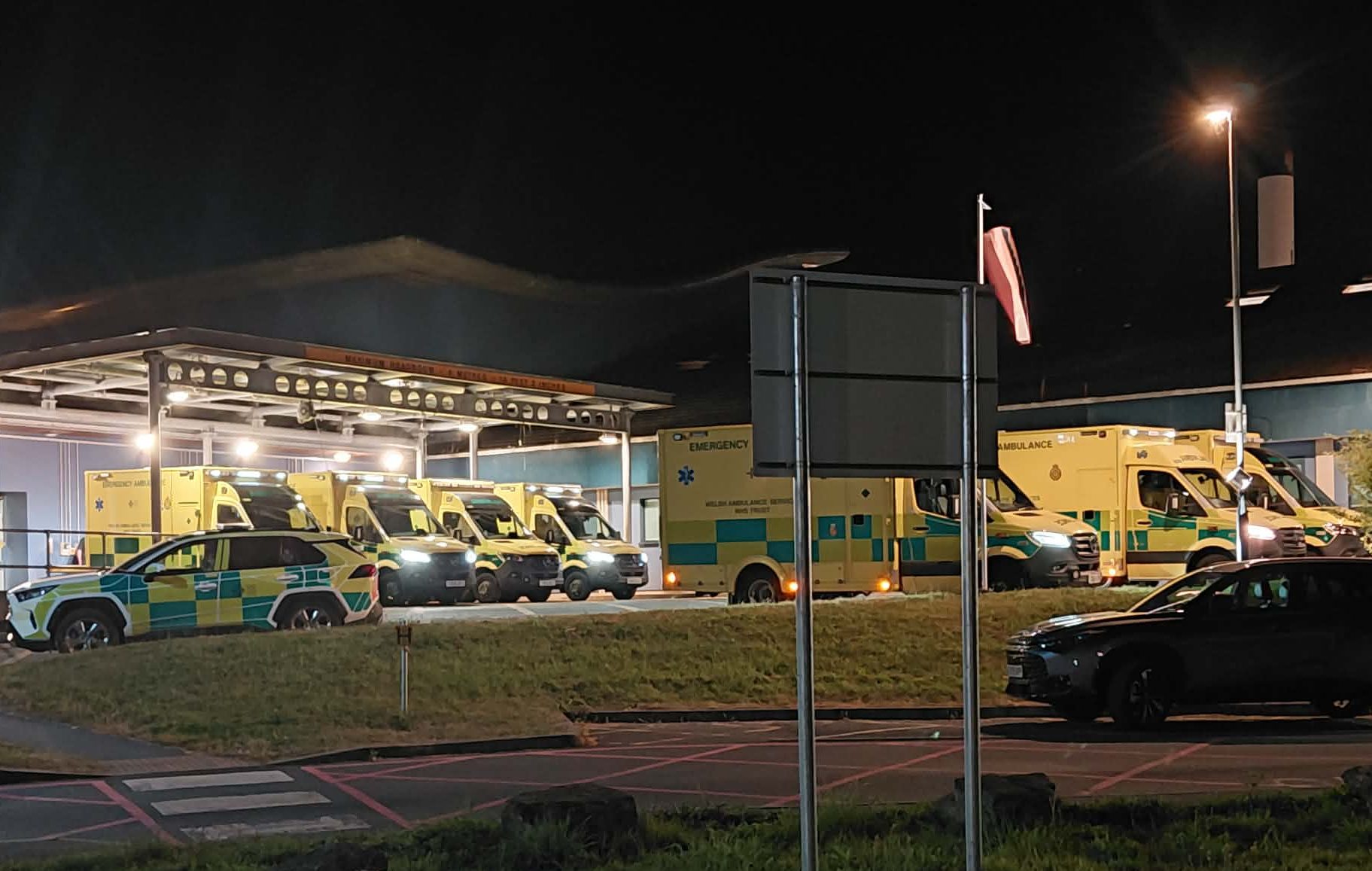
Crisis point: Ambulances waiting to unload patients at Withybush Hospital, Haverfordwest, July 2026



Community2 hours ago
Narberth bursts into colour as carnival brings Civic Week to spectacular close
Crowds lined the streets for an afternoon of floats, fancy dress, music and family entertainment at one of Pembrokeshire’s longest-running...


Community3 hours ago
More than 100 racers take to Castle Pond for Paddle West’s inaugural regatta
Successful community event raised money for Forever11 and launched three consecutive weekends of waterside activity in Pembroke MORE than 100...


News3 hours ago
NASA chief meets west Wales scientist helping search for life on Mars
Aberystwyth-led technology will guide Europe’s first Mars rover as it drills beneath the planet’s surface, while the proposed DARC radar...


News1 day ago
Princess Royal celebrates Pembrokeshire craftsmanship at family-run weaving mill
A Pembrokeshire business that began after a mother grew tired of waiting three weeks for her children’s name tapes has...


Local Government1 day ago
Burger King could be coming to Haverfordwest as plans submitted
Plans have been lodged for a Burger King outlet at the Morrisons petrol station on Bridge Meadow Lane BURGER KING...


Crime2 days ago
Murder investigation launched into death of Pembrokeshire man in 1991
A 67-YEAR-OLD man has been arrested on suspicion of murder after new potential evidence emerged in connection with a death...


Community2 days ago
‘Paying £29 to reach a cashpoint is absurd’: Narberth’s urgent ATM appeal
Residents, businesses and visitors are being urged to provide evidence after two High Street cash machines were removed, leaving the...

Crime3 days ago
Haverfordwest man jailed for seven years for historic rape and sexual assault of girl
A HAVERFORDWEST man has been jailed for seven years after being convicted of raping and indecently assaulting a girl during...


News3 days ago
Burnham more willing to listen on Welsh devolution, says First Minister
Rhun ap Iorwerth says he will press the new Prime Minister for powers over policing, railways and Wales’ natural resources...


Crime4 days ago
Women jailed after man chased through Milford home and attacked with knives
Kelly Rees receives further 27-month sentence while already serving prison term for notorious taxi robbery TWO women have been jailed...
-

 News1 day ago
Burnham’s first week – what it means for Wales
-

 Business1 day ago
Certificate of lawfulness granted for Whitesands overflow campsite
-

 Crime1 day ago
Pembrokeshire teenager given referral order after shoplifting spree
-

 Community2 days ago
‘Warn and inform’ approach for breaches of dogs on beach restrictions to continue
-

 Business1 day ago
Resubmitted call convert a former architect’s studio into long-term let
-
Local Government1 day ago
Burger King could be coming to Haverfordwest as plans submitted
-

 Local Government2 days ago
Fridges and freezers still welcome at Pembrokeshire waste centres
-

 Crime1 day ago
Driver sentenced for cannabis offences on Cleddau Bridge and in Wolverhampton