


News
The Welsh Government: ‘Inconsistent’ on councils

 LEIGHTON ANDREWS’ apparently haphazard approach to ramming through radical change to local government in Wales has come under heavy criticism from opposition AM’s.
Preseli Pembrokeshire AM Paul Davies told The Herald: “Leighton Andrews’ Local Government white paper is certainly looking to make some bold and interesting changes. There’s certainly a need for fresh blood and greater diversity in local government, but a ban on some candidates standing again may not be the fairest or most effective way to introduce younger candidates. Indeed, it’s a bit rich that the Welsh Government with some of the world’s longest serving ministers is proposing a limit on cabinet tenure of 10 years.”
Mr Davies continued: “However, there are some reforms which are also welcome. Pay levels for the most senior officers in Welsh councils have been raging out of control for some time now, at taxpayers’ expense and without any intervention from the Welsh Government to exercise restraint.”
He concluded: “A change in Labour’s local government culture is well-overdue and I, along with my colleagues at the Assembly will be monitoring the proposals in this white paper very carefully.”
Plaid Cymru Local Government spokesperson Rhodri Glyn Thomas observed: “Attempts to address the issue of senior officer pay in Local Government are long overdue and Plaid Cymru welcomes the Labour Government’s decision to heed Plaid demands for action. The wider issue of reorganisation of Local Government should be focused on improving the delivery of services and enhancing democratic accountability. I look forward to considering these proposals in more detail.

Sounding a note of caution, he concluded: “There is a danger that we see the Minister for Public Services jumping from one thing to another. First we had the Williams Commission, then he called on Local Authorities to propose voluntary mergers, they were turned down, now we are given a new introduction to look at management performance. This Labour Government needs to offer a clear vision of the future of Local Government and the delivery of public service delivery in Wales.”
Angela Burns said: “The Local Government White Paper raises some interesting proposals which will need rigorous scrutiny. However my concern is that it is yet another raft of potential changes on top of the Williams Review of boundaries and the many other initiatives currently set in train by Labour. I am not sure that the White Paper have time to be turned into a draft Bill then final Bill before the next Assembly election so it will be another costly exercise resulting in nothing.”
She suggested, however, that Labour and other parties were Johnny-come-latelies on pay restraint: “I thought it was ironic that one of the ambitions in the White Paper is to give Welsh Government tighter controls on the remuneration of Chief Executives and other Chief Officers. Given the scandals that have rocked Pembrokeshire and Carmarthenshire that is to be welcomed. However the Welsh Government, Labour backbenchers, Plaid Cymru and the Liberal Democrats all voted down a Welsh Conservative amendment to the 2013 Local Democracy (Wales) Bill which could have protected the Taxpayer from such behaviour.”
She concluded: “I find their current protestations and their actions inconsistent!”

Among the more startling proposals is the prospect of the Welsh Government time-limiting the time that Chief Executives for Welsh Councils can stay in post. A senior Pembrokeshire councillor has suggested that the idea is a non-starter and that far from broadening the diversity of the pool from which senior management can be drawn it would significantly constrict it, not least as such a policy inherently assumes that it is only older managers within local government would look to occupy such a post on such terms.
Former Pembrokeshire Chief Executive Bryn Parry-Jones, who is perhaps not the best example to rely upon, was in his mid-30’s when appointed to the post of Chief Executive of the then Llanelli Borough Council in 1991.
WLGA spokesperson Bob Wellington responded: “The WLGA recognises and supports the need to tackle the widespread challenges around diversity and disengagement in democracy generally in Welsh society. The principle of extending more power and a greater say to local people will be central to democratic renewal in Wales.”

Mr Wellington continued: “We need consistency across public services in Wales and equal treatment within the democratic sphere. The WLGA wants to see the difficult role of councillors properly valued.”
He concluded: “Any future changes to the role of local government must acknowledge the hugely challenging financial climate it operates within. Councils will also push to ensure local communities are offered a full say when it comes to developing a shared vision for the future of local public services in Wales.”



Letterston racing family at centre of BHA ruling as two winners are disqualified
TWO Pembrokeshire horse trainers from Letterston have been fined £5,000 after two racehorses failed post-race drug tests, leading to both animals being stripped of race victories.
Peter and Mickey Bowen, father and brother of champion jockey Sean Bowen, appeared before a British Horseracing Authority disciplinary panel on Thursday (May 28).

The father-and-son training partnership was operating under the same licence at the time of the positive tests, although Mickey Bowen has been the sole licence holder since May 2025.
The pair were fined £4,000 for breaching Rule (K)2.2, which states that no category B substance may be present in a horse’s system on the day it is engaged to run.
They were also fined a further £1,000 for breaching Rule (D)24, which requires trainers to keep clear and accurate records of medication given to horses in their care within 48 hours of treatment.
Two horses disqualified
The disciplinary action relates to Flying Fortune and Olivers Travels, both of which have now been disqualified from wins in 2024.
Flying Fortune has been stripped of victory in the Grade 2 Persian War Novices’ Hurdle at Chepstow on Friday (Oct 11, 2024).
The race is regarded as one of the key early contests of the National Hunt season, and the win had been a major success for the Bowen yard.
Racing reports at the time described it as a family affair, with Flying Fortune trained by Peter and Mickey Bowen and ridden by James Bowen. The mare was sent off 2/1 favourite and won by seven-and-a-half lengths.
However, a post-race urine sample later revealed the presence of procaine, a local anaesthetic.
The race has now been awarded to Intense Approach, trained by John McConnell.
Second winner loses race
Olivers Travels has also been disqualified from a 2m7f handicap chase at Worcester on Wednesday (Aug 21, 2024).

A post-race urine sample revealed the presence of dexamethasone, a corticosteroid commonly used to treat inflammation or allergic reactions.
That race has now been awarded to Galloping Pride, trained by Emma Lavelle.
The BHA said the case was dealt with by way of a plea agreement approved by the independent disciplinary panel.
A BHA statement said: “Following this morning’s hearing before the independent Disciplinary Panel, the Panel has approved a Plea Agreement.
“The penalty for breaching Rule (K)2.2 is a £4,000 fine and (D)24 a £1,000 fine.
“The two horses involved, Olivers Travels (IRE) and Flying Fortune (IRE), will be disqualified from their respective races at Worcester on 21 August 2024 and Chepstow on 11 October 2024.”
The ruling does not suggest any wrongdoing by the jockeys involved. The disciplinary action was directed at the trainers over the presence of prohibited substances on race day and failures in medication record keeping.

WEEKEND EVENTS TO MARK LANDMARK ANNIVERSARY
THE SALVATION ARMY in Tenby is celebrating 140 years of service to the town, with a weekend of music, worship and community events.
The church and charity was founded in Tenby in 1886, with its arrival described at the time in The Salvation Army’s magazine The War Cry as an “invading party”.
Although some locals were initially sceptical, the movement quickly became established and has remained a trusted presence in the town for generations.
Today, The Salvation Army in Tenby continues to offer practical help and support to vulnerable people, including emergency accommodation, employment counselling and food assistance. It also runs two weekly coffee mornings and Sunday worship.
Anniversary programme
Events begin on Saturday (May 30), with Tenby Band performing outside the hall from 12:30pm to 1:30pm, where refreshments will be available.
From 3:00pm to 4:00pm, the Divisional Fellowship Band will play at the harbour.
The main Saturday celebration will take place from 7:00pm to 9:30pm at St Mary’s Church, with an evening festival of music featuring the South and Mid Wales Fellowship Band and Wales Fellowship Chorus.
On Sunday (May 31), a morning service will be held at St Mary’s Church House at 10:30am.
This will be followed by an open-air meeting in Tudor Square from 3:00pm to 4:00pm, echoing The Salvation Army’s earliest tradition of outdoor preaching.
Senior leaders visit Tenby
The celebrations will also welcome two of The Salvation Army’s international leaders, Commissioner Edward Hill, Chief of the Staff, and Commissioner Shelley Hill, World Secretary for Women’s Ministries.
Commissioner Edward Hill said: “It will certainly be a celebration of faithful and compassionate service to a beautiful community dating back to the early days of the Movement.
“We anticipate being inspired not only by the rich heritage and ongoing ministry of The Salvation Army in Tenby, but also by its vision for the future, continuing, in the name of Jesus, to shine as a bright light and enduring source of hope for generations to come.”

Legacy of service
The Salvation Army has often stepped forward when Tenby and Pembrokeshire have needed support.
In 1996, following the Sea Empress disaster, when 72,000 tonnes of crude oil spilled off the Pembrokeshire coast, volunteers helped provide food and support to emergency workers in remote areas.
Lieutenant Colonel Jonathan Roberts, Divisional Commander for Wales, said: “The Salvation Army in Tenby has a lot to celebrate as it looks back on 140 years of service in the town and wider area.
“It is also important to recognise what it is doing today, offering a helping hand to all. I encourage the members to keep on doing that long into the future.”
Captain Clare Jones, who leads the church in Tenby, said: “We thank God for His faithfulness and for the continued mission through The Salvation Army here in Tenby.
“From its beginnings as an ‘invading party’ singing in the streets to its present role as a place of worship, welcome, and practical support, The Salvation Army continues to serve the community with compassion and hope.”
The Salvation Army in Tenby is based at Upper Park Road, Tenby, SA70 7LT. It can be contacted by emailing [email protected] or calling 01834 843537.

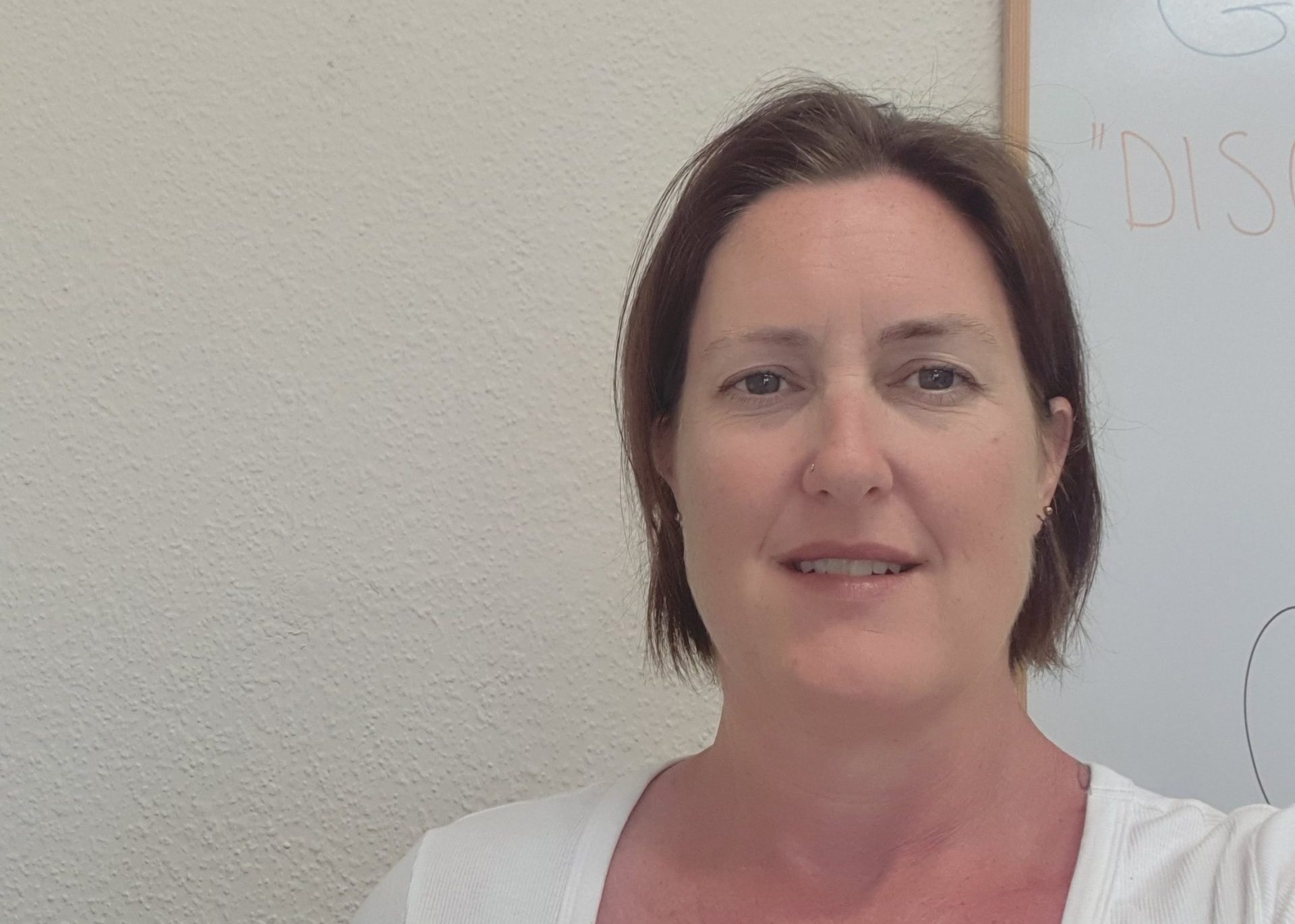
BARCUD Housing Assistant, Amanda Evans, is a brave ‘sole’ as she has agreed to do a Firewalk to help raise funds for Wales Air Ambulance. The charity, which is celebrating its 25th anniversary, relies entirely on public donations to keep both the rapid response vehicles and helicopters running.
The firewalk is a sponsored walk with a difference! It might be the shortest and hottest walk, but it takes strength of mind to complete the challenge of walking five metres, barefoot, over hot coals which reach temperatures of up to 800°C!
Amanda has never done a Firewalk before but last year she changed her mindset and since then the word ‘no’ hasn’t been in her vocabulary. She said, “Doing a Firewalk sounds awesome. I decided it would be a giggle to sign up on behalf of Barcud to raise funds for Wales Air Ambulance. Why not? It would be great to have a crowd at the Firewalk in Aberaeron to show support and cheer me on.”
Day to day Amanda works at Barcud’s office in Glyn Padarn, Aberystwyth. She works as part of a team with housing officers to provide support for tenants.
Barcud is based in mid and west Wales with a 300 strong workforce and 4,500 tenants. This is the group’s first year of fundraising for a specific charity and at the annual colleague conference last winter the majority were in favour of supporting a charity, that, like Barcud, helped and supported those living rurally.
Gail Windley, Wales Air Ambulance’s Events and Partnership Fundraiser said, “We’re delighted to be launching our firewalks this year on our special 25th anniversary year. Fundraisers will take on the ultimate challenge of walking over hot coals to helps save lives across Wales. This is a wonderful challenge aimed at all physical abilities and one that needs some courage.
“Walkers don’t need any previous experience to take part in the firewalk, as all the training will be provided on the day. We want to reiterate that this is not an activity to be tried at home and should only be done during a professionally organised event.
“The Charity relies on donations to continue to keep our helicopters in the air and our rapid response vehicles on the road. Fundraising events, like the firewalks, will help to continue this lifesaving service for the people of Wales. It will be an unforgettable day for the participants and their supporters.”
Amanda will be doing her Firewalk at Moody Meadows in Aberaeron from 6pm on Friday, 10th July 2026. Any donations to support Amanda, and Barcud reach its fundraising target of £5,000 would be very gratefully received. Click here to support Amanda online: https://firewalks.walesairambulance.com/amanda-evans



News17 hours ago
Lifeboats and helicopter join search for missing person off Broad Haven
SEARCH teams carried out a major operation at Broad Haven after reports of a missing person. Little and Broad Haven...

News1 day ago
Multi-agency rescue after child falls on rocks while coasteering
Child airlift requested after four-metre fall near Lydstep A CHILD was rescued from rocks near Lydstep after falling around four...


News2 days ago
Police investigate ‘arson’ after vehicle fire spreads to property in Pembroke
A VEHICLE is believed to have been deliberately set alight during an alleged arson in Pembroke in the early hours...


News2 days ago
Four rescued after dinghy deflates off Pendine
FOUR people were rescued off Pendine on Wednesday evening after Tenby’s all-weather lifeboat was launched to reports of an inflatable...

News2 days ago
Hundreds attend major Diocese of St Davids gathering
Churches across West Wales urged to take message of faith back into their communities HUNDREDS of people gathered at Carmarthenshire...


News2 days ago
Vehicle destroyed in early morning fire in Pembroke
POLICE are investigating after a vehicle was destroyed in an early morning fire in Pembroke. The incident happened in the...


Climate3 days ago
Pembrokeshire named among Wales’ green economy hotspots
New analysis says the county’s net zero sector supports 1,600 jobs and accounts for 5.3% of local economic output PEMBROKESHIRE...


Local Government4 days ago
Dennison code breach raises serious questions over common sense at County Hall
Standards Committee finds Milford Haven councillor breached code despite claims he only helped another councillor complete paperwork A PEMBROKESHIRE councillor...


Business6 days ago
Plaid energy policy challenged by Labour after Adam Price interview
LABOUR SAYS MINISTERS MUST EXPLAIN COST AND TIMETABLE FOR PYLON PLANS PLAID CYMRU’S approach to energy infrastructure has come under...


Community6 days ago
Pembroke Fair praised as well-organised community event
HORSES, STALLS AND FAMILY CROWDS RETURN TO MONKTON FAMILIES, horse owners and visitors turned out in force for Pembroke Fair...
-

 Health2 days ago
Paul Davies warns health board over Withybush and Bronglais services
-
 Crime3 days ago
Police tip-off leads to drink-drive ban for Pembrokeshire pensioner
-

 Crime2 days ago
Carmarthenshire man sent to Crown accused of 33 historic sexual offences
-

 Crime3 days ago
Steynton motorist banned after drink-drive collision
-

 Crime3 days ago
Warrant issued for man accused of taking wild goldfinches
-
 Crime3 days ago
Dock man given suspended prison sentence for third drink-drive offence
-

 Crime3 days ago
Dock motorist fined £1,600 after four speeding offences
-
Business6 days ago
Plaid energy policy challenged by Labour after Adam Price interview