


News
B4327 reopens after 14-hour closure following late-night crash


Police have yet to release details of the collision which shut the road between Philbeach Road and Ratford Bridge
A PEMBROKESHIRE road has reopened after being closed for more than 14 hours following a collision late on Saturday night.
The B4327 between Philbeach Road and Ratford Bridge was first reported closed shortly before 11pm on Saturday, July 25.
Dyfed-Powys Police confirmed the closure in a public alert issued at 11:49pm, advising motorists to avoid the area and use alternative routes.
A police spokesperson said: “The B4327 Dale to Ratford Bridge road is currently closed due to a collision.
“Please avoid the area and find alternative routes for your journey.”

The road remained closed in both directions throughout Sunday morning, with traffic services reporting that vehicles were unable to pass through the area.
The closure continued until shortly after 2pm, with traffic updates showing the route had reopened by around 3pm on Sunday, July 26.
Dyfed-Powys Police has not yet released any further information about the circumstances of the collision, whether anyone was injured, or why the road remained closed for such a prolonged period.
The Herald has contacted the emergency services for further information.


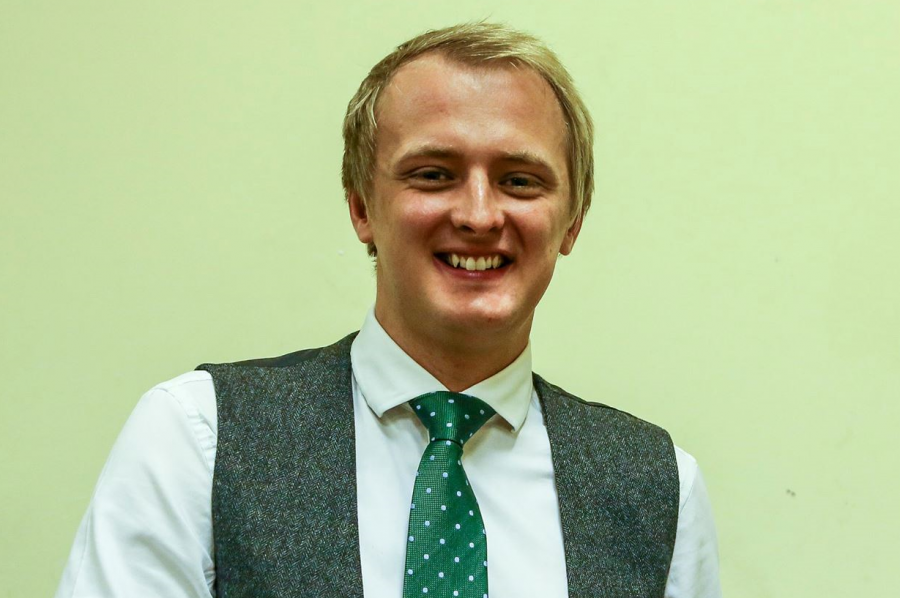
Ben Lake MP says communities in Pembrokeshire and Ceredigion have been treated as an afterthought for too long, as ministers consult on a legal duty covering councils, health boards and other public authorities
A PROPOSED new Welsh law could fundamentally change how decisions about hospitals, buses, schools, housing, energy and public services are made across rural west Wales.
The Welsh Government has opened a consultation on creating a statutory “rural proofing” duty, requiring ministers and public authorities to consider the needs of rural communities from the beginning of the decision-making process.
The proposed duty could affect decisions taken by councils, health boards, transport providers, environmental bodies and other public organisations operating across Pembrokeshire, Ceredigion and Carmarthenshire.
Plaid Cymru MP Ben Lake has welcomed the plans, describing legislation to prevent rural areas being overlooked as “long overdue”.
Mr Lake, who represents the largely rural Ceredigion Preseli constituency, said too many decisions made by government departments and public bodies failed to recognise the daily realities facing people outside major towns and cities.
He said: “I welcome the Welsh Government’s proposals to rural proof decisions in Wales.
“Requiring ministers, local authorities, health boards and other public authorities to implement a rural proofing stage in the development of all policy decisions, in addition to a dedicated strategy for rural redevelopment, is long overdue.
“I am encouraged by the action taken to ensure that rural communities are not left behind by public authorities.”
What could rural proofing mean?
In practical terms, rural proofing could require public bodies to examine whether a policy would affect people living in remote communities differently from those in urban areas.
That could include considering whether residents without cars could access a reorganised health service, whether children would face significantly longer journeys following a school closure, or whether changes to bus and rail services would leave communities isolated.
It could also require policymakers to consider the different costs faced by households without mains gas, the availability of mobile and broadband coverage, the shortage of affordable housing in tourism areas, and the difficulties rural businesses face recruiting staff and transporting goods.
The proposed law would require rural needs to be considered while policies and services are being designed, rather than only after a decision has been announced.

However, a rural proofing duty would not necessarily give communities a veto over unpopular decisions. Its importance would depend on the final wording of the legislation, the evidence public authorities were required to produce and the mechanisms available to challenge inadequate assessments.
Major implications for Pembrokeshire
The inclusion of health boards in the proposed duty could be particularly significant for communities across Pembrokeshire, Ceredigion and Carmarthenshire.
Hywel Dda University Health Board regularly takes decisions involving the location of specialist services, community facilities, minor injury provision, mental health services and the future configuration of hospital care.
Under the proposed legislation, decision-makers could be required to demonstrate that they had properly considered travel distances, limited public transport, ambulance availability and the impact on residents in remote coastal and agricultural communities.
Pembrokeshire County Council could face similar requirements when examining school reorganisation, public transport subsidies, social care provision, waste services, planning policies and the location of council facilities.
Transport providers could also be required to show that the needs of rural passengers had been considered when designing timetables, connections and replacement transport.
The legislation would not automatically reverse previous decisions or guarantee that every rural service would be retained. It could, however, make it more difficult for public authorities to rely on population figures or financial savings without demonstrating that the consequences for rural residents had been properly examined.
Decisions made far from rural reality
Mr Lake said the problems facing Ceredigion Preseli showed why a formal legal duty was needed.
“I have long argued in Westminster that central government decision-makers are far removed from the realities of rural areas such as ours,” he said.
“Consequently, decisions too often overlook the challenges that people living in rural areas face daily.”
He highlighted the large number of properties in the constituency that do not have access to mains gas.
Households outside the gas network rely on alternatives including heating oil, electricity and liquefied petroleum gas, leaving them particularly exposed to sudden price increases.
Mr Lake said: “Ceredigion Preseli presents a good example of why rural proofing government decisions is so important.
“As a constituency, we have one of the highest percentages of homes without a connection to the mains gas grid of any area in Great Britain, which leaves us particularly vulnerable to spikes in global oil prices such as the one we have experienced recently.
“Furthermore, a lack of public transport options means that residents are more dependent on the car for essential journeys, for work and education, than those living in cities.”
He said the combined cost of heating and transport placed severe pressure on household budgets and dealt a blow to the local economy.
Those pressures can be particularly acute in rural west Wales, where residents may have little choice but to travel considerable distances to reach workplaces, schools, hospitals, supermarkets and other essential services.
UK Government urged to follow Wales
Mr Lake is also calling for the UK Government to adopt a similar rural proofing process for decisions made at Westminster.
He argued that several recent UK policies might have been designed differently had ministers been required to consider their impact on farming communities and rural businesses.
He specifically cited changes to inheritance tax and Agricultural Property Relief and Business Property Relief.
The changes have been strongly criticised by farming organisations and rural politicians, who argue that some family farms may be valuable on paper while generating comparatively limited income.
Mr Lake said: “I am in no doubt that several of the changes introduced by the UK Government in recent years, including changes to inheritance tax and agricultural and business property reliefs, would not have been implemented had their potential impact on rural contexts been considered.”
He said the proposed Welsh legislation demonstrated how governments could build rural considerations into the policy process before decisions were finalised.
Rural communities at the centre of decisions
The Welsh Government says the proposed law would ensure that the needs of rural communities were considered at the beginning of the decision-making process, rather than being treated as an afterthought.
That could have far-reaching implications for the way public services are planned across west Wales.
Questions about the closure or relocation of services frequently become controversial because residents fear that decision-makers have underestimated the challenges created by distance, poor public transport and limited local alternatives.
A statutory duty could require authorities to provide clearer evidence showing how those consequences had been considered.
It could also create greater public scrutiny of decisions affecting rural areas, particularly where a proposal would result in longer journeys, increased costs or reduced access to essential services.
A potentially significant change
Mr Lake said he would now increase pressure on Westminster to follow the Welsh example.
“I am pleased the Welsh Government is proposing such a policy,” he said.
“I will redouble my efforts to persuade the UK Government to follow suit so that the distinct needs of rural areas are fully considered by all government departments in future.”
For communities across Pembrokeshire and Ceredigion, the eventual legislation could prove more consequential than its technical title suggests.
If backed by meaningful assessments, transparent reporting and effective scrutiny, rural proofing could ensure that the realities of distance, limited transport, higher energy costs and reduced access to services become central considerations in public decision-making.
For rural residents who have repeatedly argued that policies designed for cities do not always work in west Wales, the consultation could mark the beginning of a major shift in the way decisions are made.
North Wales health board chief was Wales’ highest-paid NHS manager, while 39 Hywel Dda clinicians earned more than its highest-paid director
THE CHIEF executive of Wales’ largest health board received a salary of more than £260,000 last year, according to new research examining senior NHS pay alongside waiting-time performance.
The TaxPayers’ Alliance says 574 senior NHS managers covered by its latest “NHS Rich List” received salaries greater than the Prime Minister’s £172,153 entitlement during 2024-25.
Across the organisations examined, the campaign group identified 1,758 senior managers receiving at least £100,000 in total remuneration, including 292 whose reported remuneration reached £300,000 or more.
However, the headline totals require careful interpretation. In NHS annual accounts, “total remuneration” can include accounting calculations showing changes in future pension benefits. These figures do not necessarily represent money paid to an executive during that financial year.
North Wales chief had highest Welsh salary
Carol Shillabeer, chief executive of Betsi Cadwaladr University Health Board, was identified as the highest-salaried senior NHS manager in Wales.
The health board’s accounts place her salary in the £260,000 to £265,000 band for 2024-25. The TaxPayers’ Alliance recorded the midpoint as £262,500.
Her accounts also show a total remuneration figure of between £440,000 and £445,000. This included a £180,000 pension benefit calculation, rather than £180,000 being paid directly to her during the year.
The research ranked Betsi Cadwaladr sixth out of Wales’ seven health boards for referral-to-treatment performance and last for accident and emergency waiting times.
Betsi Cadwaladr’s own annual report shows that 57.2% of patients attending its major and minor emergency departments during March 2025 completed their visit within four hours, placing the health board seventh out of seven in Wales.
It also recorded 3,763 patients spending 12 hours or longer in emergency departments during that month, again placing it last among the Welsh health boards.
The health board remains in special measures after being placed under the highest level of Welsh Government intervention in February 2023.
Cardiff executive’s reported total included pension calculation
The TaxPayers’ Alliance also highlighted Cardiff and Vale University Health Board, which it ranked last in Wales for referral-to-treatment waiting times and fifth for A&E performance.

Its report stated that Emma Cooke, executive director of therapies and health science, had total remuneration of £367,500 during 2024-25.
Official accounts show that Ms Cooke’s actual salary during the year was in the £130,000 to £135,000 band. Her full-year equivalent salary was between £140,000 and £145,000.
The total remuneration figure of between £365,000 and £370,000 included £236,000 attributed to pension benefits and £10,000 in benefits in kind. No bonus payment was recorded.
Cardiff and Vale states clearly in its accounts that the pension benefit “is not an amount which has been paid to an individual by the UHB during the year”. It is an accounting calculation that can be affected by salary changes, additional contributions and wider pension valuation factors.
Thirty-nine Hywel Dda staff earned more than chief executive
The accounts also reveal a significant West Wales dimension to the debate.
At Hywel Dda University Health Board, which provides services across Pembrokeshire, Carmarthenshire and Ceredigion, the highest-paid director received remuneration in the £225,000 to £230,000 band during 2024-25.
That was just over seven times the organisation’s median employee remuneration of £32,002.
However, 39 Hywel Dda employees received more than its highest-paid director, an increase from 35 the previous year.
The health board said all 39 were medical or dental staff who had accepted responsibilities beyond their standard job plans, including additional clinical duties and, in some cases, medical management roles.
Remuneration across the Hywel Dda workforce ranged from £23,970 to £353,573 during the year.
Unlike some of the larger figures recorded elsewhere, Hywel Dda’s fair-pay calculation excludes employer pension contributions and the cash-equivalent transfer value of pensions. It includes salary, benefits in kind and any non-consolidated performance-related pay.
The accounts show that the remuneration of Hywel Dda’s highest-paid director increased by 2%, while average remuneration across the organisation’s employees increased by 11%.
Campaigners call for performance-linked pay
Across the NHS organisations examined, the TaxPayers’ Alliance said 1,603 senior managers had salary entitlements of at least £100,000.
This included 1,267 receiving between £100,000 and £200,000, 319 receiving between £200,000 and £300,000 and 17 whose salaries exceeded £300,000.
The number receiving salaries above that of the Prime Minister reportedly rose from 512 in 2023-24 to 574 in 2024-25, an increase of 12%.
Anne Strickland, a researcher at the TaxPayers’ Alliance, said: “Taxpayers will be appalled that NHS executive pay is soaring while patients are still left waiting for care.
“Ministers must keep their promise to link performance to pay, so that failing NHS bosses are held accountable and money goes into patients’ care, not managers’ pockets.”
Senior NHS leaders oversee organisations employing thousands of staff and controlling budgets worth billions of pounds. Health boards are also responsible for complex hospital, community, mental health and primary-care services.
Nevertheless, the publication of the figures is likely to intensify scrutiny of executive pay at a time when patients across Wales continue to experience lengthy waits for emergency treatment, operations and specialist appointments.
Independent review and Consumer Panel proposals highlight fragmented regulation, consumer harm and the need for a single oversight system
TWO major reports published within days of each other have raised serious concerns about the fragmented regulation of legal services in England and Wales.
An independent review of the Legal Services Board, published by the Ministry of Justice on July 13, found that weaknesses in regulatory oversight had resulted in “significant consumer detriment”.
The review, led by consumer rights expert Richard Lloyd, examined the performance of the Legal Services Board, which oversees frontline regulators including the Solicitors Regulation Authority and the Bar Standards Board.
It concluded that gaps in oversight had contributed to regulatory failures, with the Legal Services Board acknowledging that improvements were needed.
Three days later, the Legal Services Consumer Panel published its position paper, A Regulatory Framework for the Future, calling for the existing system to be replaced by a single regulator covering solicitors, barristers and other legal professionals.
The panel also proposed a unified disciplinary process and a central intelligence function bringing together complaints, professional conduct reports and financial monitoring.
However, neither report anticipates a substantially reformed regulatory system being operational before 2029.
The findings have also highlighted the pressures already facing barristers’ chambers, which must meet direct obligations relating to anti-money laundering procedures, cybersecurity and the safeguarding of client and chambers’ finances.
Unlike many solicitors’ firms, chambers are often managed by a senior clerk and a relatively small operational team, rather than a dedicated compliance department.
Compliance information may therefore be spread across several systems, including practice-management software, spreadsheets, external cybersecurity providers and separate financial controls.
VENTRiQ, which provides operational and compliance infrastructure to barristers’ chambers, said the problems identified at national level reflected challenges already being managed within individual legal practices.
Kevin Morrow, Head of Business Development at VENTRiQ, said: “What the Consumer Panel is describing nationally, a compliance picture stitched together from systems that do not talk to each other, is what a lot of sets are running internally today.
“AML checks might be held in one place, cybersecurity managed by an outside contractor and financial safeguards recorded on a spreadsheet.
“None of it is connected or visible in one place to the person who is ultimately accountable.”
Mr Morrow said chambers did not need to wait for the introduction of a new national regulatory structure before improving their internal oversight.
He added: “Most of what is being proposed, including having one place to view risk, complaints and financial exposure together, is something a set can already put in place.
“Better-connected systems can give chambers a clearer picture of their obligations and allow potential problems to be identified much earlier.”
The Legal Services Consumer Panel said its preferred model would simplify accountability, improve information sharing and create a more consistent disciplinary process across the profession.
Its recommendations are expected to contribute to a wider debate over the future regulation of legal services and whether the current structure remains capable of protecting consumers.



Community22 hours ago
Narberth bursts into colour as carnival brings Civic Week to spectacular close
Crowds lined the streets for an afternoon of floats, fancy dress, music and family entertainment at one of Pembrokeshire’s longest-running...


Community23 hours ago
More than 100 racers take to Castle Pond for Paddle West’s inaugural regatta
Successful community event raised money for Forever11 and launched three consecutive weekends of waterside activity in Pembroke MORE than 100...


News23 hours ago
NASA chief meets west Wales scientist helping search for life on Mars
Aberystwyth-led technology will guide Europe’s first Mars rover as it drills beneath the planet’s surface, while the proposed DARC radar...


News2 days ago
Princess Royal celebrates Pembrokeshire craftsmanship at family-run weaving mill
A Pembrokeshire business that began after a mother grew tired of waiting three weeks for her children’s name tapes has...


Local Government2 days ago
Burger King could be coming to Haverfordwest as plans submitted
Plans have been lodged for a Burger King outlet at the Morrisons petrol station on Bridge Meadow Lane BURGER KING...


Crime3 days ago
Murder investigation launched into death of Pembrokeshire man in 1991
A 67-YEAR-OLD man has been arrested on suspicion of murder after new potential evidence emerged in connection with a death...


Community3 days ago
‘Paying £29 to reach a cashpoint is absurd’: Narberth’s urgent ATM appeal
Residents, businesses and visitors are being urged to provide evidence after two High Street cash machines were removed, leaving the...

Crime4 days ago
Haverfordwest man jailed for seven years for historic rape and sexual assault of girl
A HAVERFORDWEST man has been jailed for seven years after being convicted of raping and indecently assaulting a girl during...


News4 days ago
Burnham more willing to listen on Welsh devolution, says First Minister
Rhun ap Iorwerth says he will press the new Prime Minister for powers over policing, railways and Wales’ natural resources...


Crime4 days ago
Women jailed after man chased through Milford home and attacked with knives
Kelly Rees receives further 27-month sentence while already serving prison term for notorious taxi robbery TWO women have been jailed...
-

 Business2 days ago
Certificate of lawfulness granted for Whitesands overflow campsite
-
 Business2 days ago
Resubmitted call convert a former architect’s studio into long-term let
-

 Community1 day ago
Pembrokeshire biker, 75, keeps exploring with wheelchair in tow
-

 Entertainment2 days ago
From Sinatra to Bublé as The Story of Swing comes to Milford Haven
-
 Business2 days ago
Retrospective call to keep glamping pod at caravan site
-

 News2 days ago
Pembrokeshire ‘left behind’ as top-quality 5G reaches just one in 100 premises
-

 Entertainment2 days ago
Plan your journey to Eisteddfod y Garreg Las
-

 Health22 hours ago
Mental health crisis ‘place of safety’ could be centralised in Carmarthen