


Cymraeg
I fyny! i fyny! a c i ffwrdd!



Yn barod ar gyfer gweithredu
MAE ‘MEDDYGON AWYR’ newydd Cymru wedi cael caniatâd swyddogol i ddechrau hedfan ar ôl cael eu lansio gan Brif Weinidog Cymru, Carwyn Jones.
Fel rhan o EMRTS Cymru (y Gwasanaeth Adalw a Throsglwyddo Meddygol Brys), a ariennir gan Lywodraeth Cymru, bydd ymgynghorwyr yn ymuno ag ymarferwyr gofal critigol ar alwadau Ambiwlans Awyr Cymru am y tro cyntaf.
Mae’r timau’n gallu cyrraedd 95% o’r boblogaeth drwy’r awyr a 46% ar hyd y ffyrdd o fewn 30 munud.
Mae’r ‘meddygon awyr’ wedi bod yn weithredol ers diwedd mis Ebrill ac eisoes wedi cwblhau mwy na 100 o alwadau ar hofrenyddion Ambiwlans Awyr Cymru.
Hyd yn hyn, mae’r tîm wedi gwneud chwe thrallwysiad gwaed ac wedi rhoi anesthetig brys fwy nag 20 o weithiau. Mae’r tîm EMRTS wedi ymateb i achosion o drawma mewn mwy na hanner o’r galwadau.

Yn ogystal ag anfon meddygon ar hofrenyddion yr Ambiwlans Awyr, mae EMRTS Cymru hefyd wedi cyflwyno technoleg ac offer arloesol newydd gan y lluoedd arfog a datblygiadau cwbl newydd ym maes gwasanaeth hofrenyddion meddygol brys yn y DU.
Mae’r gwasanaethau sydd wedi’u huwchraddio yn cynnwys offer newydd sydd fel arfer ond ar gael mewn ysbytai, cerbydau ymateb brys 4×4 newydd a mwy o driniaethau ar gyfer pobl â salwch ac anafiadau difrifol ledled Cymru.
Mae lansio EMRTS Cymru yn golygu mai Ambiwlans Awyr Cymru yw un o’r gwasanaeth cyntaf o’i fath i sifiliaid yn Ewrop i gludo tri chynnyrch gwaed gwahanol, sy’n caniatáu i’r tîm gofal critigol wneud trallwysiadau gwaed yn y fan a’r lle. Mae hefyd wedi cyflwyno monitorau, peiriannau adeiladu, offer monitro gwaed a sganwyr uwchsain o’r radd flaenaf.
Datblygwyd EMRTS Cymru mewnpartneriaethrhwngLlywodraeth Cymru, elusen Ambiwlans Awyr Cymru, GIG Cymru, Gwasanaeth Gwaed Cymru, a Gwasanaeth Ambiwlans Cymru.

Bydd Llywodraeth Cymru yn darparu £2.868m o 2015-16 i gefnogi tîm gofal critigol EMRTS Cymru. Mae Ambiwlans Awyr Cymru yn parhau i ddibynnu ar roddion elusennol i godi £6m ofynnol bob blwyddyn i gadw’r ambiwlansys awyr yn yr awyr.
Dywedodd y Prif Weinidog Carwyn Jones: “Mae lansiad swyddogol EMRTS Cymru heddiw yn garreg filltir bwysig i’r Gwasanaeth Iechyd yng Nghymru. Bydd y timau gofal critigol newydd yn cael eu harwain gan feddygon ac yn ein galluogi i gynnig y gofal gorau posibl i’r cleifion sydd fwyaf difrifol wael yng Nghymru.
Mae hyn yn golygu bod cleifion mewn rhannau diarffordd a gwledig o Gymru yn gallu manteisio ar sgiliau ymgynghorydd neu feddygon gofal dwys a all achub bywyd a rhoi gofal critigol arbenigol.”

Un o’r bobl gyntaf i elwa ar ofal y meddygon awyr oedd Simon James, 37 oed, a gafodd drawiad ar y galon ar y cae wrth chwarae i Glwb Rygbi Brynaman ar 5 Ebrill.
Ar ôl cael triniaeth frys gan rai o’r dorf, aelodau o’i dîm ac ymatebydd cyntaf, cafodd y tad i ddau driniaeth gan y tîm ambiwlans awyr, gan gynnwys Dr Dindi Gill. Fe’i rhuthrwyd i’r ysbyty, lle treuliodd fwy nag wythnos mewn cyflwr difrifol.
Mae bellach yn gwella diolch i’r driniaeth a gafodd gan dîm EMRTS Cymru.
Dywedodd Mr James: “Roedd gan lawer o bobl ran i’w chwarae yn fy helpu, ac fe allai pethau fod wedi bod yn wahanol iawn os byddai un ohonyn nhw ddim yna. Mae siawns eitha’ da y bydden i heb ddod drwyddi.
Bydd y gwasanaeth meddygon awyr yn helpu i achub bywydau, heb unrhyw amheuaeth.
Rwy’n gyrru loris ac yn gweld damweiniau ar hyd yr M4. Mae’r gwasanaeth newydd yn golygu fydd dim rhaid aros i fynd â phobl i’r ysbyty cyn bod meddyg yn gallu eu gweld nhw – mae’r meddyg yna yn y fan a’r lle.
Gallai olygu’r gwahaniaeth rhwng byw a marw.”
Dywedodd Dr Dindi Gill o EMRTS Cymru: “Mae hyn yn enghraifft wych o’r gadwyn oroesi – mae cael meddyg yn y fan a’r lle yn rhan o’r gadwyn. Rydyn ni’n gallu cynnig gofal gwell, sy’n rhoi mwy o siawns i’r claf adfer o safbwynt niwrolegol ac yn sicrhau eu bod yn cael gofal arbenigol yn brydlon.
“Yn achos Simon, roeddwn i’n gallu rhoi anesthetig cryf iddo, a rhoi tiwb yn ei gorn gwddf i’w helpu i anadlu a gwella’i lefelau ocsigen. Hefyd rhoddais adrenalin i helpu ei bwysau gwaed a’i dawelyddu cyn ei drosglwyddo i’r ysbyty.
Pan gyrhaeddodd yn yr ysbyty, doedd dim rhaid iddo fynd i’r adran frys. Fe aeth yn syth i’r uned cardio arbenigol er mwyn cael angioplasteg i glirio’r rhydweli oedd wedi achosi’r trawiad ar y galon.
Mae hyn oll wedi rhoi mwy o siawns iddo ddod drwyddi a gwella.”
Dywedodd Angela Hughes, prif weithredwr Ambiwlans Awyr Cymru: “Mae rhoi ymgynghorwyr ar ein hofrenyddion yn gam mawr arall tuag at ddarparu’r gwasanaeth ambiwlans awyr gorau yn y byd. M
Mae’n bwysig i bobl Cymru bod gwasanaeth gofal brys o’r radd flaenaf ar gael, yn enwedig o ystyried nifer y cymunedau gwledig sydd yma. Bydd y datblygiadau hyn yn achub bywydau llawer o bobl sydd angen cymorth brys.
Rydyn ni wedi cael cefnogaeth aruthrol gan bobl yn codi arian ers ein lansio yn 2001, ac rydyn ni’n parhau i ddibynnu’n llwyr ar gyfraniadau elusennol i godi mwy na £6m y flwyddyn i gadw hofrenyddion Cymru yn yr awyr.”
Dywedodd Dr Rhys Thomas, cyd-gyfarwyddwr EMRTS Cymru: “Rydyn ni wedi cael ymateb gwych i broses recriwtio’r rhaglen ac wedi rhoi tîm o glinigwyr hynod ddawnus at ei gilydd o bob rhan o Gymru a thu hwnt.
Mae pob aelod o’r tîm wedi perfformio’n rhagorol i gwblhau eu hyfforddiant cyn mynd ar yr hofrenyddion, ac maen nhw eisoes yn gwneud cyfraniad mawr ar alwadau ledled Cymru.
Mae eu sgiliau, ynghyd â’r offer newydd sydd gennym, yn ffurfio tîm gofal critigol y gall Cymru ymfalchïo’n fawr ynddo.”



FINANCIAL backing of this year’s Eisteddfod in Pembrokeshire, to the tune of £73,000, with a potential budget of up to £200,000, has been approved by senior councillors.
The 2026 Eisteddfod, running from August 1-8 at Llantwd, north Pembrokeshire, holds particular historical significance as it marks the 850th anniversary of the first recorded Eisteddfod, held in 1176 at Castell Aberteifi.
With this year’s Maes located close to the original site, the event is expected to be a landmark occasion for the region and for Wales as a whole.
The National Eisteddfod is the largest cultural festival in Europe and one of the most prominent events in the Welsh cultural calendar, attracting approximately 175,000 visitors annually.
The festival celebrates Welsh language, literature, music, and the arts, with a diverse programme of competitions, performances, exhibitions, and community activities.
The Eisteddfod proclamation took place in Narberth last May, with hundreds attending.
At the June meeting of Pembrokeshire County Council’s Cabinet, members were asked to approve Pembrokeshire County Council to lead and deliver Pentre’r Garreg Las at the National Eisteddfod 2026.
Cabinet was also asked to approve the current financial commitment of approximately £73,751 (+ VAT), noting that further costs will be finalised as the programme develops, and endorse collaborative arrangements with Ceredigion and Carmarthenshire County Councils.
A budget for up to £200,000 for the promotion of the event is also being pencilled in; members hearing it was hoped this figure would be a ceiling of potential costs, with hopes the council’s part could be lowered by external funding.
A report for members, presented by Cabinet Member for Adult Social Care, Safeguarding and the Welsh Language Cllr Alistair Cameron, said: “The National Eisteddfod is Europe’s largest travelling cultural festival, attracting up to 170,000 visitors annually and providing a nationally significant platform for the celebration of Welsh language, culture and identity.
“As lead authority, Pembrokeshire is responsible for the overall coordination, planning and funding of the Pentre. This includes the development of the overarching concept, the curation of a coherent thematic programme, and the management of key relationships with partner authorities, stakeholders and delivery partners.”
It went on to say: “While initial site, infrastructure and concept costs have been identified at approximately £73,751 (+ VAT), it is recognised that the full delivery of Pentre’r Garreg Las, as a flagship offer led by Pembrokeshire, will necessitate a broader major events budget estimated in the region of £200,000. The funding for this is coming from the current major events budget with additional funding coming from the initiative fund reserve.”

The report said efforts will be made to maximise external funding opportunities in order to mitigate the net cost to the council.
Cabinet Member for Residents’ Services Cllr Rhys Sinnett said: “This is a fantastic opportunity for Pembrokeshire to showcase the best of this county,” adding: “The last time it was here was 2004, we get to see this opportunity maybe every 20 years, it’s down to us to make the best of the opportunity, overall it’s a fantastic story for us as a county.”
A full budget breakdown is expected at the July Cabinet meeting, members agreeing to back the recommendations.

AS THE NATIONAL Centre for Learning Welsh celebrates its highest ever number of learners – over 20,000 in 2024–2025 – it has announced a new ambassadors scheme with the aim of inspiring even more people to learn, use and enjoy the Welsh language.
The Learn Welsh Ambassadors Scheme will be launched today (May 23) at the Urdd Eisteddfod on Anglesey, as part of the Eisteddfod’s ‘Learners’ Day’ celebrations.
Four high-profile ambassadors have been appointed to the new scheme:
- Aleighcia Scott – singer and DJ, and one of the mentors on S4C’s talent show Y Llais, who will also be honoured with the Green robe at Eisteddfod Genedlaethol y Garreg Las in August.
- Tori James – adventurer and the first Welsh woman to climb Mount Everest.
- Katie Owen – DJ and social media influencer.
- Ian Gwyn Hughes – Head of Public Relations at the Football Association of Wales.
The four ambassadors will represent the Centre, sharing their personal experiences of the Welsh language, and promoting the work of the Learn Welsh sector. They will also support recruitment campaigns, encouraging people from all backgrounds to begin learning Welsh, or to continue their language journey.
The scheme reflects the Centre’s vision to attract and support a wide range of audiences to learn and use Welsh, including workforces, communities, key sectors such as Health and Social Care, the Education Workforce and Sport, young people and families.
The Centre is launching the scheme at the Urdd Eisteddfod. It works in partnership with the Urdd to provide a range of opportunities for the organisation’s staff, and the young people using its services, to strengthen their Welsh language skills or to begin learning the language.
The Centre is also pleased to support the Urdd’s medals for young Welsh learners, the Bobi Jones Medal for learners aged 19 years’ old and above, and the Learners’ Medal for learners aged under 19 years.
Dona Lewis, Chief Executive of the National Centre for Learning Welsh, said: “Creating new Welsh speakers is the Centre’s main aim, supporting them to use and enjoy the language with confidence in their everyday lives.
“I’m pleased to say the Learn Welsh sector is going from strength to strength, with more people than ever completing our courses.
“We’re delighted to welcome a group of passionate ambassadors who will share their experiences of the Welsh language and help promote and celebrate our work. We’re proud to launch this new scheme at the Urdd Eisteddfod, one of our partners.
“The Centre works creatively and in partnership across different sectors, providing one, single learning pathway to becoming a Welsh speaker. We are all here to welcome and support our learners and new speakers at every stage of their language journey.”
Aleighcia Scott said: “I’m delighted to take part in this scheme. Learning Welsh has been an important personal journey for me, and it has opened new doors – both creatively and socially.”

Tori James said: “Learning a new skill can be a bit like climbing a mountain – it can be a challenge, but every small step is a success!
“I’m very pleased to have the opportunity to support people to take their first step into learning Welsh, and to keep going – it’s a journey well worth taking.”
Katie Owen said: “I’d always wanted to learn Welsh, and it has been the best thing I’ve done. The Welsh-speaking community is so welcoming, and the National Centre for Learning Welsh offers so many opportunities to learn and use the language.”
Ian Gwyn Hughes said: “Welsh belongs to all of us, and it has been fantastic to see the positive response to our use of the language at the Football Association of Wales. I look forward to supporting the Centre’s work to extend the use of Welsh in all kinds of contexts.”

A NEW report has found that Welsh-speaking students face inconsistent access to Welsh language services across Wales’ colleges and universities.
The research, published by the Welsh Language Commissioner on Monday (May 25), gathered responses from more than 1,500 further and higher education students.
It examined four key areas: whether students can submit written work in Welsh, choose accommodation with Welsh-speaking students, access a Welsh-speaking personal tutor, and receive wellbeing support through the medium of Welsh.
The report also looked at the wider language culture on campuses, including how institutions promote Welsh language services and support students to use Welsh naturally in academic and social settings.
Osian Llywelyn, Deputy Welsh Language Commissioner, said colleges and universities had a vital role in helping students use Welsh as part of everyday life.
He said: “Given the importance of sustaining and developing the continued use of the Welsh language, it is essential to recognise the key role that further education colleges and higher education institutions play in ensuring that students have the opportunity to use Welsh naturally as part of their academic and social lives.
“While it is encouraging to see strong examples of good practice, that experience is not consistent across the sector. As a result, we have identified clear improvement actions, and we will be asking the relevant institutions to address them.”
Five improvement actions have been identified. These include standardising Welsh-medium assessment arrangements, proactively offering Welsh language services rather than simply making them available on request, addressing gaps in workforce Welsh-language skills, strengthening students’ sense of belonging through Welsh, and improving self-assessment and monitoring.
James Owen, Chief Executive of Medr, the body responsible for funding and regulating tertiary education in Wales, said the findings showed the need for more support across the sector.
He said Medr’s new Welsh Language Condition would place a clearer focus on providers promoting and supporting the use of Cymraeg, and on creating formal and informal opportunities for staff and learners to develop their Welsh-language skills.
Ioan Matthews, Chief Executive of Coleg Cymraeg Cenedlaethol, said students’ experiences of Welsh at college or university could influence their willingness and ability to use the language later in the workplace.
He said the report showed the need for the Welsh-language experience to extend “well beyond the classroom”.
The report will be officially launched at the Welsh Language Commissioner’s stand at the Urdd Eisteddfod in Anglesey at 11:00am on Monday (May 25).


Community14 hours ago
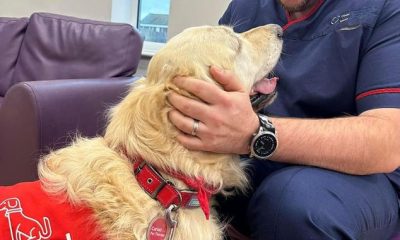
Crisis response dogs launched to support people through trauma and distress
A NEW project using specially trained dogs to support people during moments of trauma, grief and crisis has been launched...


News18 hours ago
Major fire breaks out at Tata Steel site in Port Talbot
TATA STEEL has confirmed that a major fire broke out at its Port Talbot steelworks on Wednesday night, with emergency...


Community2 days ago
HMS Erebus tragedy links Pembroke Dock ship to Templeton family
DNA breakthrough identifies cabin boy David Young as exhibition marks 200 years since ship’s launch ON MAY 19, 1845, a...


Community2 days ago
Narberth cash machine closures spark urgent access review
CALLS have been made for an urgent review of access to cash in Narberth after two town centre ATMs were...


Health2 days ago
First Minister quizzed on Welsh NHS pressures in his first-ever FMQs
SENEDD Members pressed the First Minister over the state of the health service in Wales, as the Plaid Cymru leader...


Community3 days ago
Historic paddle steamer Waverley to return to Fishguard this month
THE WORLD’S last seagoing paddle steamer will return to Fishguard this month as part of her annual visit to South...


Local Government3 days ago
National Express use of new Haverfordwest interchange still subject to risk checks
A RUMOUR that National Express coaches may struggle to use Haverfordwest’s new transport interchange has been denied by Pembrokeshire County...


Crime3 days ago
Milford Haven man jailed for illegal Premier League streaming service
A MILFORD HAVEN man who supplied illegal Premier League streams and loaded Firesticks to almost 2,000 customers has been jailed...


Community4 days ago
RNLI lifeguards rescue beachgoers during busy heatwave weekend
FOUR PEOPLE RESCUED AS RIP CURRENTS AND OFFSHORE WINDS HIT PEMBROKESHIRE BEACHES RNLI lifeguards in Pembrokeshire rescued four people and...

Local Government4 days ago
Council and school staff pay row could hit Pembrokeshire services
COUNCIL workers, carers and school support staff in Pembrokeshire could be drawn into a growing UK-wide pay dispute after GMB...
-

 Crime2 days ago
Milford Haven man bit neighbour’s neck near cashpoint
-
Crime3 days ago
Milford Haven man jailed for illegal Premier League streaming service
-

 Crime3 days ago
Haverfordwest man admits cocaine offence as Crown disputes basis of plea
-

 Crime2 days ago
Pembroke Dock driver avoided jail after drug-drive crash
-

 Crime2 days ago
Dinas Cross man jailed over shop thefts
-
Local Government3 days ago
National Express use of new Haverfordwest interchange still subject to risk checks
-

 Community5 days ago
Charles Street to come alive for Milford Haven Founders Day
-

 Business7 days ago
Historic Pembrokeshire courthouse set to be redeveloped with new lease of life