


Business
BT boosts Welsh economy ‘by £575m’

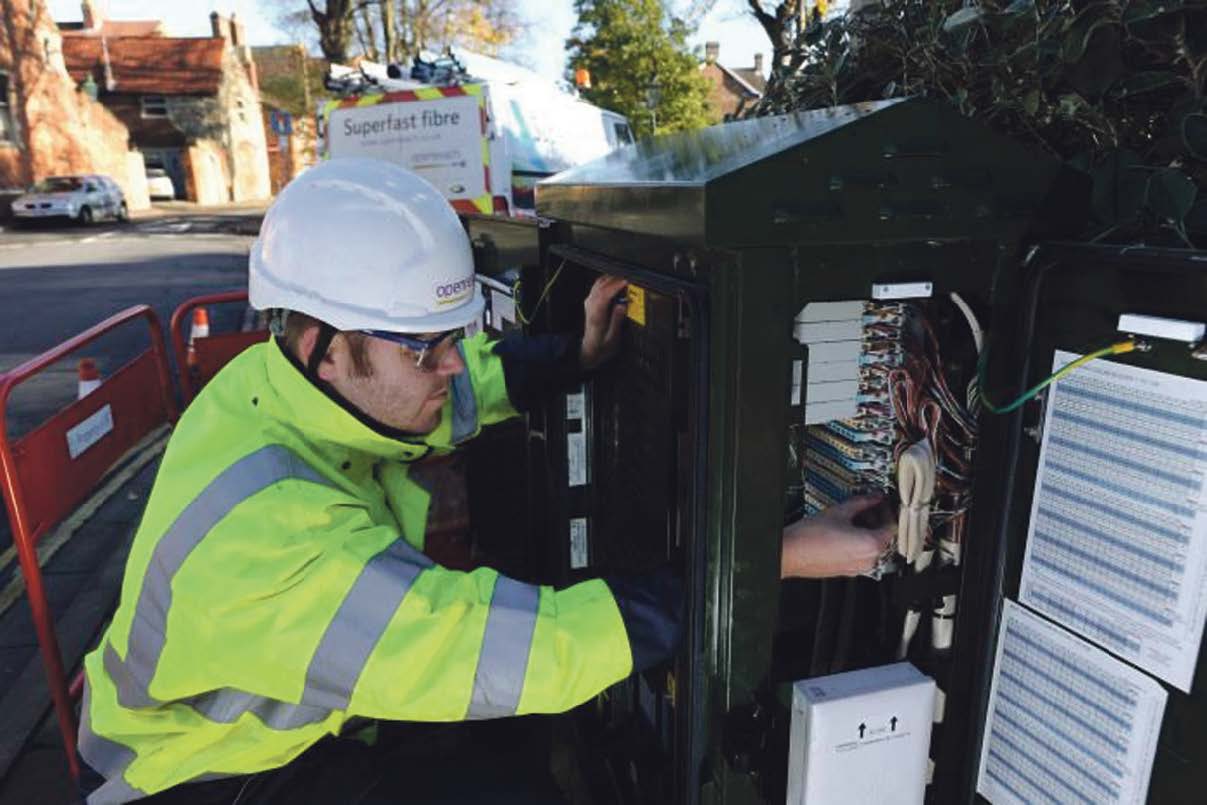

BT Employee: One of 2950 BT employs in Wales
BT generated a massive £575 m for the Welsh economy in the past year – a £35 m increase on just two years ago, according to an independent report published on Wednesday (Nov 4).
The report, by Regeneris Consulting, also shows that the communications company supports 7,520 jobs in Wales through direct employment, it’s spending with contractors and suppliers and the spending of employees.
In employment terms, BT’s impact in 2014-15 was larger than the country’s creative and media sector. Around £213 m was spent with local suppliers.
The overall beneficial financial impact of BT activities is expressed as a “Gross Value Added” (GVA)* contribution. For Wales the BT GVA totalled £575million – equivalent to £1 in every £90 of the total GVA for Wales.
Tim Fanning, associate director at Regeneris Consulting, said: “Our analysis confirms the sheer scale and reach of BT’s ongoing economic contribution to Wales and the UK as a whole.

“BT makes a contribution to every community across the UK. At the UK level, £1 in £80 of wealth created is attributable to BT – this is one of the single largest contributions to the UK economy by any firm.”
Alwen Williams, BT’s regional director for Wales, said: “There are few organisations in Wales that have a larger impact on the day-to-day life and future prospects of the country than BT.
“We are one of the largest private sector employers and investors in Wales – our investment in fibre broadband in Wales alone amounts to hundreds of millions of pounds – and the services that we provide are a vital part of every community.
“The facts and figures shown in this report highlight the full extent of BT’s contribution to the local economy as we go about the daily business of keeping people connected and introducing new technologies, which are creating fresh opportunities and transforming lives.

“Aside from the company’s activities, the report also draws attention to the positive ways BT people are contributing to the communities where they live and work, whether they are a volunteer for a worthy cause or a local shopper.”
‘Social Study 2015 – The Economic Impact of BT in the United Kingdom’ analyses the key role BT and its employees play in economic, business and community life across the English regions, Scotland, Wales and Northern Ireland.
It highlights the positive contributions made by BT through the salaries and wages of employees and contractors, and the beneficial impact of its procurement and overall expenditure around the UK.

The report highlights that BT in Wales:
- Is responsible for the employment of 2,950 people – 2,790 direct employees and 164 contractors – with a total employment income of £94 m;
- Provides work for a further 4,570 people through BT’s spending with businesses that supply its equipment and services, and the spending of employees;
- Committed more than £1 m to community, charity and voluntary programmes, spread around many regional communities in 2014/15;
- Has enabled more than three-quarters – 77 % – of its employees to work flexibly.
BT is investing more than £3 billion in the roll-out of fibre broadband in the UK through its own commercial programme and by working with the Government and local authorities in broadband partnerships to extend next generation broadband even more widely – especially to more rural and remote communities.
In Wales, BT is the major private sector partner in Superfast Cymru. Through this partnership and the company’s commercial roll-out, BT has already made fibre broadband available to more than 1.2 million Welsh homes and businesses – and this number is continuing to grow rapidly.
The report also highlights how BT is consistently one of the country’s leading investors in innovation with spending on research and development in the 2014/15 financial year reaching £50 m. Among the latest developments, the company has started trials in Swansea of ultrafast G.fast broadband, which is already delivering download speeds up to 330 megabits per second (Mbps).
This new technology will be rolled out to 10 million UK homes and businesses by the end of 2020 and the majority of premises within a decade.
Volunteering is also a core element of BT’s strategy. Last year, BT people in Wales contributed 2,416 volunteering days to worthy causes, amounting to in-kind support of nearly £750,000. Across the UK, the figure is 50,500 days, worth more than £15 m.
In addition, MyDonate – BT’s commission-free online fund-raising service – has helped to raise more than £1m for charities across Wales.
Alwen Williams added: “It’s evident BT people throughout Wales really want to make a positive contribution to the communities in which they live and work. Every day BT employees help millions of people to communicate, do business, be entertained and stay informed.”
UK-wide, BT’s total GVA contribution is assessed at £18 billion. The company supports 217,000 jobs directly and indirectly and last year spent £6.5 billion with UK-based suppliers. As a result of the full economic impact of BT, the firm supports £1 in every £80 of GVA in the UK economy and one in every 110 UK employees.


CHIP SHOP owners in Pembrokeshire say soaring costs are forcing up prices, changing customer habits, and putting pressure on young staff facing questions from customers.
Speaking to the BBC this week, Rhys McLoughlin, co-owner of Môr Ffres in Dinas Cross, said he is installing self-service tills partly to protect staff from being put on the spot over rising prices.
Mr McLoughlin said cod, once his biggest seller, is being overtaken by cheaper options such as chicken chunks as families look for ways to keep costs down.
Prices keep rising
He said: “There are lots of questions being asked. Incoming prices are going up and up.
“We have no control over that, so either we work for no money, or we follow the price increase and pass it on.”
The average price of takeaway fish and chips rose to £11.17 in March, compared with £6.48 in 2019.
Mr McLoughlin warned that cod prices could rise further by September, saying: “If these prices continue to go up, who’s going to buy fish and chips for £21? Who can afford that?”
Staff under pressure
He said the planned digital kiosks would help manage queues in the small shop during the busy summer season, but would also reduce the pressure on young staff.
Mr McLoughlin said: “We have got young staff working here and sometimes this is their first stepping stone out of school.
“It’s no fun for a boy or girl to come to work to be asked pretty abrupt questions on the spot with 20 people in the chip shop.
“We have actually lost a few members of staff through that.”
Seaside favourite
In Saundersfoot, Sy Crockford, of Marina Fish & Chips, said keeping the traditional seaside meal affordable had become increasingly difficult.

He said cod alone had risen by around 50 per cent, adding: “One thing we don’t want to do is out-price fish and chips.
“It’s nostalgia, it’s romance, to come to the beach and have fish and chips. We definitely don’t want to outprice.”
Mr Crockford said cod and haddock were becoming “a luxury, not a necessity”, and suggested more sustainable and affordable fish options may become more common on chip shop menus.
Rural shops hit
At Cegin-24 in Crymych, owner Sioned Phillips said the price of a box of cod had risen from around £36 to between £50 and £60.
She said: “When I opened, it was £6.95 for a piece of cod. I’ve had to raise it to £9, and that’s being quite reasonable.
“If I wanted to make a normal amount of profit, it should be about £11 or £12 for a piece of cod.
“For me, in such a rural community area, to justify charging elderly people and local people so much for a piece of cod is absolutely ridiculous.”
Ms Phillips said some customers were still sticking with cod despite cheaper alternatives being offered, but were cutting back elsewhere by sharing portions of chips.
The National Federation of Fish Friers said cod price rises were linked to reduced quotas in the Barents Sea, sanctions on Russian fish, and wider cost pressures.
President Andrew Crook said many customers understood fish was a premium protein, but added that higher prices had affected visit frequency and footfall in many shops.
Annual report shows strong growth and major investment, but underlying figures reveal a more complex picture
THE PORT OF MILFORD HAVEN has reported another year of growth, investment and strong trading performance, with rising cargo volumes, record turnover and major spending on infrastructure across the Haven Waterway.
The Port’s 2025 Annual Report shows gross tonnage rose by 11%, while total cargo movements increased by 17% to 38.3 million tonnes.
Turnover also reached £45.2 million, up from £43.2 million in 2024, marking a fourth consecutive year of revenue growth.
The Port said service performance remained strong, with more than 98% service availability for customers using its pilotage services.
As one of Pembrokeshire’s most important economic institutions, the Port plays a central role in jobs, energy, tourism, marine safety and long-term investment across the Haven.
Dr Siân George, Chair of the Port of Milford Haven, said: “Our continued growth has been achieved not by chance, but through deliberate choices, and reflects our long-term perspective – one that prioritises our customers and our many stakeholders.
“As a trust port, we are committed to our mandate to ensure we hand on the Port in a better condition to future generations. We do this by placing responsible growth, environmental stewardship and prosperity for the communities who depend on the Waterway, at the forefront of our decision-making process.”
Tom Sawyer, CEO at the Port, added: “I would describe 2025 as another year of solid performance; one where our service delivery and business resilience continued to improve.
“We saw our fourth consecutive year of revenue growth and another year of strong profits. We thank our customers and Waterway communities and partners for their ongoing support, collaboration and challenge helping us to continually improve.
“And our thanks to our teams who have worked with an unerring focus on ensuring the Port of Milford Haven continues to deliver what our customers and communities deserve.”
Major investment
The Port continued a major investment programme during the year, spending £18 million in 2025 following £27.4 million in 2024.
Projects included a new pilot boat, upgrades to the Vessel Traffic Services command centre, refurbishment of marine facilities and further development at Milford Docks and Milford Waterfront.

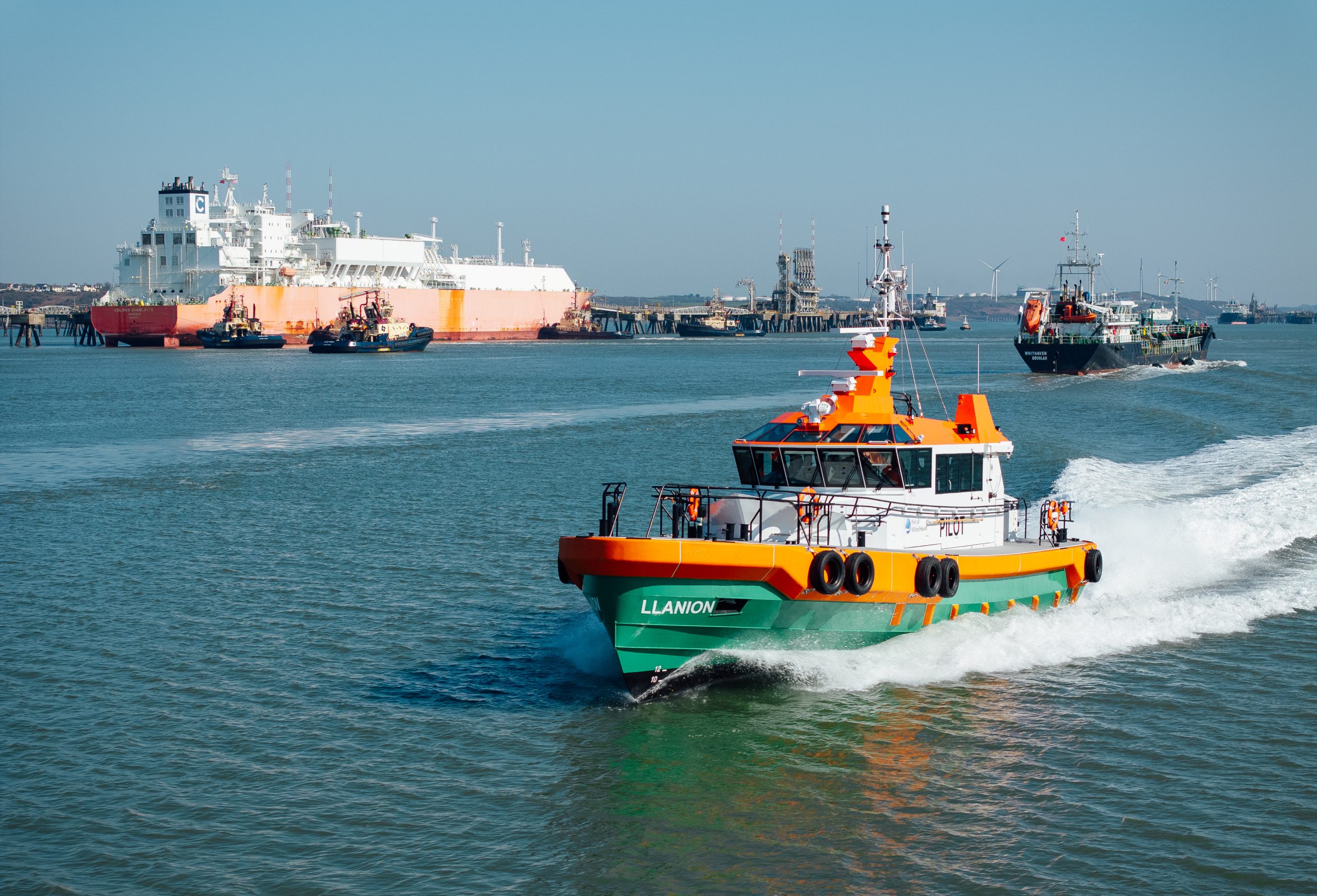
The new 22-metre pilot boat, Llanion, completed sea trials and is expected to strengthen safety and resilience for vessel movements on the Waterway.
The Port also continued to position Pembroke Port for future floating offshore wind opportunities linked to the Celtic Freeport.
Supporters of that strategy argue that Milford Haven and Pembroke Dock could become central to the next generation of energy jobs, particularly if floating offshore wind develops at the scale hoped for by government and industry.
The Port also expanded its workforce, with 25 new employees joining in 2025 and four apprentices taken on, which it described as a record intake.
Its marine team has grown by 35% over five years.
Community role
The annual report highlights the Port’s role as a trust port, meaning it does not have shareholders and reinvests profits back into the business.
It says close to £500,000 was invested in community initiatives during the year.
These included water safety programmes, youth projects, support for Milford Youth Matters, the Torch Theatre, STEM opportunities for young women and local environmental work around the Haven Waterway.
Milford Waterfront also received recognition through a Tripadvisor Travellers’ Choice Award, while the Port said its hotels and tourism assets continued to support local jobs and visitor numbers.
The organisation was also recognised as one of the UK’s Best Workplaces for Women, an achievement in a sector that has historically been male dominated.
Profit picture
But the report also shows that, beneath the positive headline figures, the Port faces financial and environmental pressures.
Although turnover increased, operating profit fell from £6.8 million in 2024 to £5.2 million in 2025.
Profit before interest and tax rose to £6.9 million, but that figure was helped by a £1.7 million gain from the revaluation of investment properties.
The Port’s underlying profit measure, which strips out some accounting costs such as depreciation and amortisation, also fell from £11 million to £9.2 million.
That suggests the organisation is still profitable, but facing higher costs and tighter margins despite increased shipping activity.
Borrowing rises
Borrowing also rose sharply during the year.
The report shows total borrowings increased from £17.5 million to £25.2 million, while net debt rose from £15.3 million to £20.7 million.
Much of that increase appears to be linked to long-term capital investment, including marine infrastructure, dock improvements and hospitality assets.
Ports are expensive businesses to run and maintain, and major investment often requires borrowing.
However, because the Port is a trust port with responsibilities to the wider community, the level of borrowing is a legitimate matter for public scrutiny.
The Port says committed financing is in place until 2028 and points to strong operating cash flow and diversified income as evidence of resilience.
Emissions increase
The report also sets out the Port’s sustainability ambitions, including a target to cut total greenhouse gas emissions by 63% by 2035 and reach net zero by or before 2050.
It generated close to five gigawatt hours of renewable energy in 2025, avoiding almost 900 tonnes of carbon dioxide equivalent emissions.
But the report also shows direct emissions increased.
Scope 1 emissions rose from 1,340.39 tonnes of carbon dioxide equivalent in 2024 to 1,578.15 tonnes in 2025, largely due to diesel use.
Carbon intensity also rose from 31.03 to 34.94 tonnes of carbon dioxide equivalent per £1 million of turnover.
The figures underline the challenge facing the Port as it tries to balance growth in marine activity with its environmental ambitions.
Executive pay
Another figure likely to attract attention is senior remuneration.
The annual report shows the highest-paid director received £494,000 in 2025, compared with £271,000 in 2024.
The Port says the figure included a one-off compensatory award following benchmarking of senior executive pay.
There is no suggestion of wrongdoing, and the Port is entitled to argue that a nationally significant energy port requires experienced leadership.
But at a time when many local households and businesses are facing rising costs, executive pay at a trust port is a legitimate public-interest question.
Balanced picture
Overall, the Port of Milford Haven remains one of Pembrokeshire’s most important economic success stories.
The report shows a business that is growing, investing and planning for the future while maintaining a crucial role in UK energy infrastructure.
It also shows an organisation contributing to local skills, tourism, community projects and long-term regeneration.
But the annual report is not simply a success story.
It also shows falling operating profit, rising borrowing, increased direct emissions and a sharp rise in the remuneration of the highest-paid director.
Those issues do not cancel out the Port’s achievements.
But they do matter.
For a trust port serving Pembrokeshire and the wider national interest, scrutiny is not hostility. It is accountability.

PEMBROKESHIRE BUSINESSES WARNED OF PRESSURE FROM FUEL, TRANSPORT AND SUPPLIER COSTS
WELSH business confidence improved in April, but firms are still facing falling orders, job cuts and rising costs, according to the latest NatWest Wales Growth Tracker.
The report, compiled by S&P Global, found that confidence among Welsh businesses picked up from March’s recent low, amid hopes of stronger demand over the coming year.
However, the overall picture remains challenging. The Wales Business Activity Index rose to 47.9 in April, up from 46.2 in March, but remained below the 50 mark which separates growth from contraction.
For Pembrokeshire businesses, particularly those in tourism, hospitality, transport, food, farming supply chains and small-scale manufacturing, the figures point to continued pressure from higher fuel, materials and delivery costs.
The report found that output and new orders were still falling, although at a slower pace than in March. New sales declined for a third month running, with firms blaming weak customer demand and wider economic uncertainty.
Employment also fell sharply. Welsh businesses recorded the steepest drop in workforce numbers of any of the 12 UK nations and regions monitored, with firms cutting staff or not replacing workers who had left.
Cost pressures were a major concern. Operating expenses rose at the fastest rate since November 2022, driven by higher fuel, transportation and supplier costs. Firms increased their own prices in response, but not by enough to fully offset the rise in costs.
Jessica Shipman, Chair of the NatWest Cymru Board, said: “Welsh business confidence ticked higher on hopes of stronger customer demand and planned investment in building resiliency.
“However, we saw contractions in output and new orders soften during April, but underlying business conditions told a challenging tale. A further drop in new sales led to sharper falls in backlogs of work and employment, as firms sought to cut costs and streamline processes.”
She added that pricing remained a key concern, with higher fuel and transport costs putting further pressure on businesses.
The report also found that Welsh export conditions improved only slightly, with weaker performance in Germany and France weighing on the outlook.
For Pembrokeshire, where many businesses rely on seasonal trade, logistics, hospitality and supply chains linked to agriculture, energy and the port economy, the figures suggest that confidence may be recovering, but margins remain under pressure ahead of the summer trading period.



Health18 hours ago
Occupational therapists urge Welsh Government to act before NHS crisis deepens
More than 300 professionals sign open letter calling for prevention-focused care and urgent reform OCCUPATIONAL therapists across Wales are urging...


Community1 day ago
Surfers take sewage protest to Broad Haven beach
CAMPAIGNERS took to the sea at Broad Haven today in a colourful protest demanding urgent action over sewage pollution in...


Health2 days ago
New NHS regional body raises questions over future hospital services in Pembrokeshire
Health bosses promise better joined-up care — but patients will want assurances over Withybush and travel distances PEMBROKESHIRE patients are...


Local Government3 days ago
Pembrokeshire County Council welcomes new chairman
CLLR DELME HARRIES has been elected chairman of Pembrokeshire County Council for the coming municipal year. Cllr Harries, who was...


News3 days ago
From Milford Mercury to County Hall for Pembrokeshire’s first female leader
Late councillor Mike Stoddart helped hold power to account for decades — now his daughter Tessa Hodgson leads the council...


Business3 days ago
Port reports record turnover, but debt, emissions and senior pay also rise
Annual report shows strong growth and major investment, but underlying figures reveal a more complex picture THE PORT OF MILFORD...


Community3 days ago
DARC radar: Campaigners ask Welsh Government to call in planning application
PARC AGAINST DARC has submitted an official request asking the new Welsh Government to call in the planning application for...


News5 days ago
State Opening overshadowed by Starmer leadership crisis
KING CHARLES has arrived at Parliament for the State Opening as Sir Keir Starmer faces the most serious crisis of...


News6 days ago
Rhun ap Iorwerth becomes Wales’ new First Minister
PLAID CYMRU TAKES POWER AFTER HISTORIC SENEDD VOTE PLAID CYMRU leader Rhun ap Iorwerth has become Wales’ new First Minister...


News6 days ago
Hotel was hit during a Luftwaffe bombing raid
THE COMMEMORATION, held on Tuesday (May 12), marked the anniversary of the wartime attack, with members of the community gathering...
-

 News3 days ago
Palestine pledge backed by 36 new Senedd Members
-

 Crime5 days ago
Teenager banned from roads after being caught six times over drug-drive limit
-
Community1 day ago
Surfers take sewage protest to Broad Haven beach
-

 Crime5 days ago
Man threatens to torch Silverdale Lodge through ‘demon drink’, court hears
-

 Crime5 days ago
Man sentenced for stalking women and threatening to torch home
-

 Crime5 days ago
Violent man jailed after ‘Banksy’ claims and campaign of domestic abuse
-

 Local Government7 days ago
Council leadership hopeful responds after anti-Tory rally photos surface
-

 Crime5 days ago
Man denies exposure in Pembrokeshire town