


News
Zoned digging introduced at The Gann

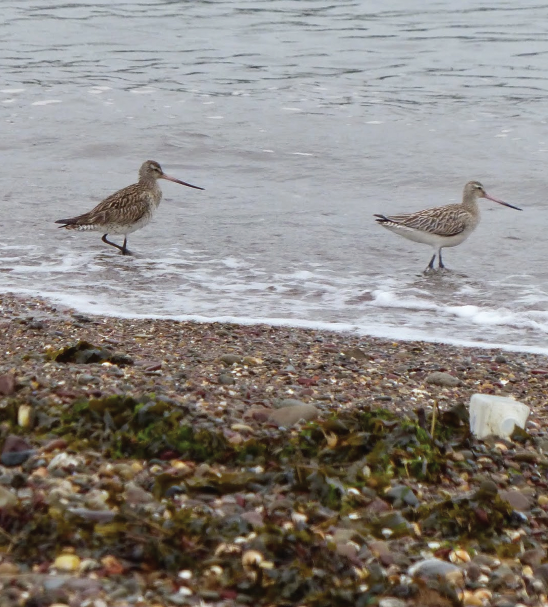

The Gann: Site of Special Scientific Interest
NATURAL RESOURCES WALES (NRW) has introduced dig and no-dig zones at The Gann, Pembrokeshire in order to protect its biodiversity.
The Gann is a Site of Special Scientific Interest (SSSI) found within the Pembrokeshire Marine Special Area of Conservation (SAC) and is used heavily for bait digging.
There have been concerns for some time that the large scale digging has the potential to impact on the biodiversity of the Gann.
Following recent partnership work NRW may now be a step closer to managing these impacts.
Recreational digging requires no licence because anyone can dig for bait that is for personal use whereas commercial diggers need the land owner’s permission.

Problems arise when commercial diggers try and pass themselves off as recreational because the two are very hard to tell apart.
The environmental damage caused by uncontrolled bait digging is not a problem unique to the Gann so any management strategy must address commercial and recreational digging equally.
NRW was very fortunate in that The Pembrokeshire Marine SAC Relevant Authorities Group (SACRAG) were able to fund a review which considered case studies from across the UK.
This proved to be invaluable in understanding the different options available to us and where the responsibilities lie.

Sue Burton, Pembrokeshire Marine SAC Officer, organised a series of meetings where stakeholders agreed to zoning the beach into ‘dig’ and ‘no dig zones’.
Restricting bait collection through zoning will eventually require a byelaw or statutory instrument to back it up. A voluntary code will be used until byelaws are put in place.
Chris Lawrence, Senior Conservation Officer for NRW, said:

“Safeguarding habitats like this is one of NRW’s main priorities.
“The area is used by local businesses and residents alike so it’s important to protect the local habitat and biodiversity from excessive digging”
“Implementing the zoning plan will help protect biodiversity at the Gann and encourage habitat recovery while continuing to allow recreational digging activities and support industries like fishing.”
NRW completed a review of the available science during the summer of 2015 and with help from partners, investigated the wildlife of The Gann, both at the surface and within the sediment.
Early results indicate that the lower, sandier shore has a high level of species including red algae, peacock worms and sand mason worms.
The upper muddy/gravel shore had the highest levels of bait digging and lower amounts of species were recorded there.
Work is being done to determine whether this is because of the digging activity on site or a natural difference due to shore height.
In future, NRW hopes to repeat the survey to ensure the efficiency of the code of conduct and ensure that any additional or alternative management measures are based on solid evidence.
A sign was put up to inform bait collectors of the new code and NRW have begun activity monitoring to ensure people are following the new rules.



Retired police officer Max Jones has adapted his Honda Goldwing trike so severe arthritis cannot stop him enjoying motorcycle adventures across Britain and Europe
A PEMBROKESHIRE motorcyclist who refused to allow severe arthritis to end his life on the open road has found an unusual way to combine his passion for biking with the mobility support he needs.
Max Jones, 75, travels on an 1800cc Honda Goldwing Tourer converted into a three-wheeled trike, towing a specially adapted trailer containing his powered wheelchair.
The arrangement allows the retired police officer to continue touring around Britain and Europe before unloading the chair and independently exploring the places he visits.
Max, who jokingly describes himself as “25 for the third time”, has been riding motorcycles since the 1970s. Over the decades, he has toured extensively through Ireland, Scotland and mainland Europe, creating memories he was determined not to leave behind as his mobility deteriorated.
Severe arthritis eventually made conventional motorcycling and walking increasingly difficult. Converting the Goldwing into a trike gave Max greater stability and back support, but another problem remained.
Although he could reach his destination, he was often unable to explore it.
“I bought my first powered chair because I was becoming increasingly isolated,” Max said.
“We would visit places such as National Trust homes and gardens, but I was forever leaning on a stick, which was painful, and always looking for somewhere to sit down.
“In the end, my wife would go off on her own while I sat in the car park and read a book. I couldn’t carry on like that.”
Max needed a powered chair capable of supporting his six-foot-three frame while still fitting inside the trailer behind his trike. After trying several options, he chose a WHILL C2 powerchair, which can cope with different surfaces and longer days out.
The chair now travels behind the Goldwing, allowing Max to switch from the saddle to powered mobility whenever he reaches a destination.
He has since added a lighter folding model for journeys by car, bus and train.

The couple recently stopped at mobility specialist TGA while travelling to Norfolk for a motorcycle holiday. During the trip they visited Norwich Cathedral, Norwich Castle, Blickling Estate and the Norfolk and Suffolk Aviation Museum.
Max said the powered chair made it possible to explore places he would otherwise have been forced to miss.
“I would never have managed to get around all those places on foot, especially the vast gardens at Blickling,” he said.
“I was able to travel across the grass and tackle the hills without any trouble.”
Max spent 27 years in the police, serving as a constable and later as a sergeant in different parts of South Wales. He also spent two years working as a law instructor at the Welsh Police Training Centre.
He recalls that policing in his early career involved considerably less comfortable vehicles than the Goldwing he now rides.
“In those early days, being six-foot-three was hard when packed into a Mini Panda car with four other burly officers doing a top speed of around 40mph,” he joked.
When off duty, Max also helped teach safer riding skills to people beginning their lives on two wheels.
His involvement with motorcycling has continued into retirement through the Blue Knights International Law Enforcement Motorcycle Club, an organisation for serving and former police and law enforcement officers.
Max and his wife attend motorcycle events with the club and help raise money for charitable causes.
For Max, the trike is about much more than simply getting from one place to another. It provides a connection with the countryside and a sense of freedom he does not believe can be replicated inside a car.
“You can see the animals and birds, sense the atmosphere and smell your surroundings,” he said. “You cannot experience that in the same way from a car.”
He now hopes his experience will encourage other former bikers who have given up riding because of age, disability or health concerns to consider whether an adapted machine could help them return to the road.
“There must be so many people who still want to ride a motorcycle but feel they cannot because of health issues,” he said.
“With a trike, trailer and powered chair, it may still be possible. Take your time and do not put yourself under pressure. Learn something new slowly. That is the best way to broaden your horizons.”
Despite the challenges caused by arthritis, Max said continuing to travel has made a significant difference to his independence and wellbeing.
“We think we don’t look our age because we are happy,” he said.
“We are happy doing what we want to be doing, which is riding on the open road. It is a huge thing for us and massively important for our mental health.”
Picture caption:
Pembrokeshire biker Max Jones with his adapted Honda Goldwing trike and wheelchair trailer.

THOUSANDS of visitors are expected to travel to Eisteddfod y Garreg Las from communities across Wales and beyond.
Whether you are arriving by car, bus, train, coach or taxi, planning your journey in advance will help ensure you reach the Maes safely and in good time.
Travelling by car
Drivers should follow the yellow ‘Eisteddfod’ signs, which will direct traffic to the Maes and the free visitor car parks.
The Eisteddfod site at Llantwd is situated a few miles south of Cardigan.
From Fishguard
Follow the A487 north through Newport and continue towards the Maes entrance, following the yellow Eisteddfod signs as you approach the site.
From Narberth or Carmarthen
Leave the A40 at the Penblewin roundabout and take the A478 towards Cardigan.
Continue to the junction with the B4332 at Postgwyn, turn left and travel west for approximately two miles. Follow the Eisteddfod signs, which will direct traffic north from the B4332 before reaching Eglwyswrw.
From Crymych and Boncath
Travel to the junction of the B4332 and A478 at Postgwyn, then continue west and follow the Eisteddfod signs.
From Cardigan and the north
Travel south from Cardigan and follow the yellow Eisteddfod signs to the Maes.
Visitors should use the designated free car parks and must not park on the roadside. Parking restrictions will be in place around the site.
Travelling by bus
Additional bus services will make it easier for visitors to leave the car at home during the Eisteddfod.
TrawsCymru T5
The TrawsCymru T5 service will take passengers directly to the Maes at Llantwd, with regular services operating between Haverfordwest and Cardigan via Fishguard and Newport.

More frequent buses and late-evening services will operate between Fishguard and Cardigan throughout Eisteddfod week.
Service 430
The 430 bus provides a link between Narberth and Cardigan via Crymych.
Thanks to support from Pembrokeshire County Council, the service will operate every day during the Eisteddfod, with all journeys running to and from Narberth.
An additional late-evening bus will leave directly from the Maes at 11.15pm. Passengers travelling onwards will need to change at Cardigan.
The special T5 and 430 timetables can be downloaded from:
https://www.pembrokeshire.gov.uk/bus-routes-and-timetables/planned-bus-service-changes
Travel is free for passengers with an All-Wales Concessionary Bus Pass.
Young people aged 21 and under can travel for £1 per journey, with a maximum daily fare of £3. Passengers aged between 16 and 21 will need a MyTravelPass.
Special Eisteddfod fares are also available from Transport for Wales:
https://traws.cymru/en/catch-the-t5-bus-straight-to-the-eisteddfod
Free shuttle from Cardigan
Visitors can also use Bws yr Arglwydd Rhys, a free shuttle bus operating between Finch Square in Cardigan and the Maes.
The service will run every hour, on the hour, from 7am until midnight.
Travelling by train
Transport for Wales will operate regular free shuttle buses between Carmarthen railway station and the Maes.
Further information about rail services is available at:
https://tfw.wales/ways-to-travel
Visitors can also plan their journeys through Traveline Cymru:
Special coach excursions
Several operators are organising dedicated trips to the Eisteddfod.
Jones Login
Jones Login will operate excursions on Monday, Wednesday and Friday.
The coach will leave Carmarthen at 7.35am, with pick-up points in St Clears, Whitland, Penblewin, Narberth and along the A478.
Information and booking:
https://www.joneslogin.co.uk/Tour/Eisteddfod-Genedlaethol-Cymru
Windy Corner Coaches
Windy Corner Coaches will operate trips on Monday and Friday, as well as a special excursion on the first Saturday for the Super Furry Animals concert.
Information and booking:
https://windycornercoaches.co.uk/day-trips
Midway Motors
Midway Motors will operate services to the Maes every day throughout the Eisteddfod.
The daytime service will depart from:
- Tegryn at 10am
- Llanfyrnach at 10.05am
- Hermon at 10.10am
- Crymych at 10.15am
- Blaenffos at 10.20am
- Boncath at 10.25am
- Eglwyswrw at 10.35am
The return journey will leave the Maes at 6pm.
An evening service will also operate, departing from:
- Tegryn at 5.15pm
- Llanfyrnach at 5.20pm
- Hermon at 5.25pm
- Crymych at 5.30pm
- Blaenffos at 5.40pm
- Boncath at 5.45pm
- Eglwyswrw at 5.50pm
The evening return journey will leave the Maes at 11pm.
Fares are £5 for adults and £1 for children.
To book, call 01239 831267.
Travelling by taxi
Local taxi and private-hire firms serving the Maes include:
Kyle’s Taxis, H J Taxis Ltd, Tony’s Taxis, Fishguard Taxis, Morgans Private Hire, Letterston Taxi Service, Frank’s Cabs and St David’s Taxis, A2B Minibuses and Taxis, H&S Cab Service, Robins Taxis and Home James.
Visitors are advised to book taxis and coach seats in advance, particularly for late-evening journeys and major Eisteddfod events.

MUSIC lovers are invited to take a journey through the golden age of swing when SOS Big Band – The Story of Swing arrives at the Torch Theatre this August.
Presented by award-winning vocalist and world-class trumpet player Gareth John, alongside the acclaimed SOS Big Band, the show celebrates decades of iconic swing and big band music.
Audiences can expect much-loved classics made famous by Bobby Darin, Frank Sinatra, Dean Martin and Sammy Davis Jr, as well as more modern hits associated with Michael Bublé, Robbie Williams, Matt Goss, Paul Anka and Harry Connick Jr.
Renowned for his showmanship and passion for the genre, Gareth brings a natural warmth and energy to the stage, building an easy rapport with audiences wherever he performs.
During his career, he has shared the stage with a number of household names, including The Beautiful South and The Specials.
The production has already received enthusiastic reviews during its tour, with one audience member at the Core Theatre in Solihull describing it as “a brilliant show”.
SOS Big Band – The Story of Swing will be performed at the Torch Theatre, Milford Haven, on Saturday, August 1, at 7.30pm.
Tickets cost £28.50 and can be booked through the Torch Theatre website or by calling the box office on 01646 695267.



News1 day ago
Princess Royal celebrates Pembrokeshire craftsmanship at family-run weaving mill
A Pembrokeshire business that began after a mother grew tired of waiting three weeks for her children’s name tapes has...


Local Government1 day ago
Burger King could be coming to Haverfordwest as plans submitted
Plans have been lodged for a Burger King outlet at the Morrisons petrol station on Bridge Meadow Lane BURGER KING...


Crime2 days ago
Murder investigation launched into death of Pembrokeshire man in 1991
A 67-YEAR-OLD man has been arrested on suspicion of murder after new potential evidence emerged in connection with a death...


Community2 days ago
‘Paying £29 to reach a cashpoint is absurd’: Narberth’s urgent ATM appeal
Residents, businesses and visitors are being urged to provide evidence after two High Street cash machines were removed, leaving the...


Crime3 days ago
Haverfordwest man jailed for seven years for historic rape and sexual assault of girl
A HAVERFORDWEST man has been jailed for seven years after being convicted of raping and indecently assaulting a girl during...


News3 days ago
Burnham more willing to listen on Welsh devolution, says First Minister
Rhun ap Iorwerth says he will press the new Prime Minister for powers over policing, railways and Wales’ natural resources...


Crime3 days ago
Women jailed after man chased through Milford home and attacked with knives
Kelly Rees receives further 27-month sentence while already serving prison term for notorious taxi robbery TWO women have been jailed...


Crime3 days ago
Mother headbutted and clawed police officers after threatening social worker
Court shown body-worn footage of violent confrontation at Goodwick property A COURT has been shown police body-worn footage capturing the...


Crime4 days ago
Man, 37, found dead following major police response in Pembroke Dock
Death not being treated as suspicious as police make statutory referral to IOPC following active investigation A 37-YEAR-OLD man has...

Community4 days ago
Household Cavalry drum horse returns home to Pembrokeshire for final farewell
Dyfed Willa Rose, who became Major Juno and the first mare to serve as a Household Cavalry Drum Horse, was...
-

 News1 day ago
Burnham’s first week – what it means for Wales
-
 Community2 days ago
‘Warn and inform’ approach for breaches of dogs on beach restrictions to continue
-

 Crime1 day ago
Pembrokeshire teenager given referral order after shoplifting spree
-
 Business24 hours ago
Certificate of lawfulness granted for Whitesands overflow campsite
-
 Business2 days ago
Tenby North Beach outdoor mobile sauna plans submitted to planners
-
Local Government1 day ago
Burger King could be coming to Haverfordwest as plans submitted
-

 Local Government2 days ago
Fridges and freezers still welcome at Pembrokeshire waste centres
-
 Business2 days ago
Dinas Cross housing scheme application submitted