


Politics
Conservatives unveil housing pledges

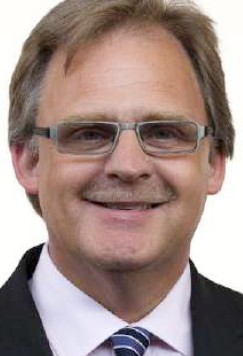

Whole-market approach to housing needed: Mark Isherwood AM
THE WELSH Conservative Party has announced a ‘radical’ new housing programme, which it is claimed could lead to 70,000 new properties being built in Wales over the next five years.
A party spokesperson described the plans as: “a whole-market approach which recognises the need for 70,000 new properties in Wales over an Assembly term, and the scrapping of stamp duty for first-time buyers on all properties up to the value of £250,000.”
The party says it will work with house builders, social landlords, Local Councils and the private rented sector to deliver the plan.
Shadow Housing Minister Mark Isherwood AM has said the Welsh Labour Government has ‘consistently failed to meet the challenges’ posed within the housing sector, and says all other political parties in Wales “have shown no foresight, ambition or desire” to do things differently.
As part of their commitments to tackle a ‘crisis in housing’, Welsh Conservatives unveiled an ambitious five-point plan to fuel responsible housing development in the right places, offer comprehensive support to firsttime buyers and cut housing waiting lists.

The plan includes:
- Launching an ambitious programme of home-building; stimulating a wholemarket approach, recognising the need for 70,000 new properties for rent, lowcost home ownership and open market purchase over an Assembly term
- Scrapping Stamp Duty for first time buyers on all properties up to the value of £250,000, and developing low-cost home-ownership schemes, including a ‘Starter Home Cymru’ initiative to deliver below market value properties for first time buyers Releasing capital to build new social housing; protecting the ‘Right to Buy’ for tenants wanting to buy their council home; restoring the full discount and reinvesting proceeds into new social housing – increasing the number of people homed; whilst offering Housing Associations the choice to provide ‘Right to Buy’ to tenants where this would help delivery of individual housing schemes
- Reforming planning guidance to encourage building on brownfield and publicly-owned land, supporting a land for housing scheme, and developing a national register of contaminated land sites; whilst delivering a right to bid, allowing communities to bring forward community-led housing developments
- Working with social housing landlords, protecting relevant funding and targeting need; linking new and renovated housing supply to sustainable community regeneration and public health needs
- The plan’s publication comes as a new report is published outlining the extent of challenges faced by first-time buyers in Wales. Estate agents Hamptons found a single first-time buyer faces a nine-year wait to build up a deposit – emphasising the need for support with obstacles to house purchase, such as potentially prohibitive stamp duty costs.
It also follows the release of figures which show Wales is the only UK nation where housing developments fell from 2014 to 2015, emphasising the need to secure real change in Wales. Figures released by the National House Building Council in February showed that the UK averaged a 7% increase, but the figures in Wales fell by 2% – underlining Labour’s failure to meet the housing challenge.
Mr Isherwood AM said: “Housing is crucial to health, wellbeing and regeneration.
“Sadly, Wales faces a crisis in housing supply, affordability and support, which other political parties in Wales have shown no foresight, ambition or desire to deal with. Whilst progress has been made in other parts of the UK, Wales risks falling further behind.

“To secure real change in housing, the next Welsh Government must inspire a whole-market approach to developments, which recognises that Wales needs to be developing 70,000 new properties during an Assembly term – and to do so responsibly, and in the right places.
“People also need comprehensive support to get onto the housing ladder – and the scrapping of stamp duty for first-time buyers, as part of plans to make Wales the UK’s low-tax capital, would remove a major barrier to home ownership for many people.
“Labour, in Wales, has consistently failed to meet the challenges facing the housing sector and those in housing need.

“It is also vital new properties are built in the right places. From involving local communities in the planning process, to reforming guidance to encourage building on brownfield and publicly-owned land, Welsh Conservatives will responsibly meet the challenges facing the housing sector in Wales.”



New Prime Minister admits politicians have “not been good enough” as he sets out a ten-year plan for Britain and pledges early action on the cost of living
ANDY BURNHAM has become Prime Minister of the United Kingdom, promising a more stable and responsible government while admitting that politicians must do better to regain the public’s trust.
The former Mayor of Greater Manchester entered Downing Street on Monday, July 20, after being formally invited by King Charles III to form a government following the resignation of Sir Keir Starmer.
Burnham becomes Britain’s seventh prime minister in just over a decade and takes charge of a Labour government with a substantial Commons majority, but facing deep public frustration over living standards, struggling services and political instability.
In an unusually informal arrival, Burnham walked along Downing Street greeting supporters, shaking hands and sharing hugs before speaking outside Number 10 without a lectern or visible notes.
He used his first address as Prime Minister to acknowledge the scale of public disillusionment with Westminster.
Burnham said he knew “people at home are fed up with politics” and called on those in public life to rise to the challenge facing the country.
“I want to be honest with you: we have not been good enough and we need to be better. We will be,” he said.
A promise of honesty and stability
Burnham presented his arrival as a moment of reflection and resolution for a country that has experienced repeated changes of leadership and growing distrust in its political institutions.
He promised a more stable and responsible style of government, arguing that stability must be used to produce real improvements in people’s lives rather than simply preserve the political status quo.
The new Prime Minister said the country needed honesty about the scale of the challenges it faces and a government willing to confront problems that have been repeatedly postponed.
His message was intended to mark a break from the point-scoring and short-term political calculations that he has repeatedly criticised.
Burnham has said his government will focus on solving problems rather than manufacturing political conflict, with ministers expected to be judged on delivery.

He also paid tribute to Starmer’s service and indicated that his government would build on parts of the previous administration’s record rather than attempt to erase it.
However, his declaration that politicians had not been good enough amounted to a clear acknowledgement that Labour’s first two years in office had failed to meet public expectations.
Ten-year plan for Britain
At the centre of Burnham’s new government will be a proposed ten-year plan to change how Britain is governed and reverse the decline experienced by many communities.
The programme is expected to focus on the cost of living, housing, public services, social care, transport, industrial investment and the transfer of power away from Westminster.
Burnham has argued that Britain’s problems cannot be solved through announcements designed around a single Budget or electoral cycle.
Instead, he wants the government to make early investments and pursue longer-term reforms intended to raise living standards and rebuild economic strength across the country.
His plans include a major social and council housebuilding programme, reforms to social care, greater public control over essential services and a substantial expansion of regional devolution.
Burnham has also proposed establishing a “Number 10 North” operation in Manchester, focused on housing, utilities and economic regeneration.
The challenge will be turning that broad vision into funded policies at a time when the public finances remain under pressure.
Cost-of-living action expected
Burnham has indicated that helping households with the cost of living will be one of his government’s first priorities.
Families across Britain continue to face pressure from food prices, energy bills, rents, mortgages and stagnant wages.
The new Prime Minister is expected to announce early measures intended to give households greater breathing space, with energy costs and transport fares likely to be among the areas considered.
He has already abandoned the previous government’s proposed national digital identity scheme, saying resources should instead be concentrated on policies that make an immediate difference to people’s lives.
Burnham has also spoken about the need to reform an economic model which, he believes, has failed to deliver secure housing, reliable services and rising living standards for large parts of the population.
However, he inherits limited financial room, major defence commitments, pressure on the NHS and an unresolved social care crisis.
Any substantial spending commitments will need to be accompanied by a credible explanation of how they will be funded.
Starmer says his “work is done”
Sir Keir Starmer delivered his final address outside Number 10 before travelling to Buckingham Palace to formally tender his resignation.
He said it had been the privilege of his life to serve as Prime Minister and defended the achievements of his two years in office.
Starmer said Britain was stronger and fairer than when Labour entered government in 2024 and highlighted progress on workers’ rights, child poverty, immigration, defence and NHS waiting times.
He concluded by saying his “work is done” and that he was leaving Downing Street with good grace, a smile and pride in what his government had achieved.
Starmer also offered Burnham his full support as he passed responsibility for the country to his successor.
His departure followed months of pressure from Labour MPs over the direction of the government, its handling of the economy and the party’s declining public support.
Although Labour retains a large parliamentary majority, Britain has changed prime minister without holding a general election.
There is no constitutional requirement for Burnham to seek an immediate public mandate, although opposition parties are expected to continue demanding an early national vote.
From the “King of the North” to Number 10
Burnham enters Downing Street with a political identity built largely outside Westminster.
During his time as Mayor of Greater Manchester, he presented himself as a champion of communities overlooked by governments in London.
His public clashes with Whitehall during the coronavirus pandemic earned him the nickname the “King of the North” and helped turn him into one of Labour’s most recognisable figures.
Burnham returned to Parliament after winning the Makerfield by-election before securing overwhelming support from Labour MPs to succeed Starmer.
He was confirmed as Labour leader after receiving 379 nominations from Labour MPs and facing no rival candidate.
His political argument is that Britain has become too centralised and that decisions affecting communities are too often taken by institutions with little understanding of local needs.
As Greater Manchester mayor, Burnham oversaw the return of local bus services to public control and promoted a model of cooperation between government, councils and business.
He now wants to apply that approach nationally.
First Minister calls for a new relationship with Wales
Burnham’s arrival could have major consequences for Wales.
For the first time, a Labour Prime Minister at Westminster will work with a Plaid Cymru-led Welsh Government following Rhun ap Iorwerth’s election as First Minister.
Responding to Burnham’s appointment, the First Minister said the change at Number 10 presented an opportunity to redefine the relationship between the Welsh and UK governments.
Rhun ap Iorwerth said: “I congratulate Andy Burnham on his appointment as Prime Minister, which presents an opportunity to redefine the relationship between the Welsh and UK Governments.
“I know that Andy Burnham shares my belief in the power of devolution to improve the lives of the people we serve.
“In that spirit, I hope we can speak the same language when it comes to devolving powers out of Westminster by strengthening, not bypassing, Wales’s national parliament and its ability to empower people and communities.
“I look forward to an early meeting with the new Prime Minister to agree how we can give Wales the powers it needs to grow the economy and build a fairer, more prosperous future for all.”
The reference to strengthening rather than bypassing the Senedd is likely to become central to the early relationship between the two governments.
Burnham has spoken frequently about transferring power away from Westminster, but much of his political record has focused on English councils, combined authorities and city regions.
The Welsh Government will seek assurances that any new programme of decentralisation recognises the Senedd as Wales’s national parliament.
It will oppose any attempt to transfer powers directly from Westminster to Welsh councils without the involvement of Cardiff Bay.
Pressure for further devolution
Plaid Cymru is expected to press Burnham over the devolution of rail infrastructure, policing, justice and control of the Crown Estate.
The Welsh Government will also seek a new approach to funding, arguing that Wales has repeatedly lost out through decisions made in Westminster.
Burnham’s record suggests he understands the frustration caused by excessive centralisation.
However, he will now have to demonstrate that his support for devolution extends beyond England’s large cities.
His promise to govern differently will be tested by whether he is prepared to strengthen the powers of a Welsh Government controlled by a political opponent.
The planned early meeting between Burnham and Rhun ap Iorwerth could therefore set the tone for relations between Westminster and Cardiff Bay for the remainder of the parliamentary term.
Welsh Labour sees an opportunity
The change at Number 10 also presents both an opportunity and a challenge for Welsh Labour.
Ken Skates, recently confirmed as the permanent leader of Welsh Labour, has welcomed Burnham’s emphasis on decentralisation and giving communities greater control.
Welsh Labour will hope the new Prime Minister’s popularity and more traditional Labour message can help the party rebuild following its historic defeat in the Senedd election.
However, tensions are likely between the Labour government at Westminster and the Plaid Cymru administration in Cardiff Bay.
Both parties will seek to claim credit for any additional funding or powers secured for Wales.
Plaid Cymru will argue that pressure from a non-Labour Welsh Government is necessary to win concessions.
Welsh Labour, meanwhile, will portray Burnham as a Prime Minister who understands the needs of communities beyond London and can deliver for Wales from within the Union.
What it could mean for Pembrokeshire
For Pembrokeshire, the test will not be the words delivered outside Downing Street but whether Burnham’s government produces visible investment and better services.
His promise to shift power and economic activity away from London could benefit rural and coastal communities that have long argued that national policy is designed around major cities.
However, a model based heavily on English city regions will not automatically answer the needs of west Wales.
Pembrokeshire faces limited public transport, shortages of affordable housing, pressure on health and social care, seasonal employment, fragile town centres and the continued loss of young people who feel they must leave the county to find secure work.
A genuine programme of national renewal would need to recognise that rural isolation can be every bit as damaging as deprivation in large urban areas.
Burnham’s plans for industrial investment could also have significant implications for Milford Haven and the wider Haven waterway.
The area is already central to Britain’s energy system and is seeking to position itself at the heart of future developments involving offshore wind, hydrogen, port infrastructure and lower-carbon industry.
A UK Government committed to reindustrialisation could bring substantial opportunities to Pembrokeshire.
Local businesses and communities will, however, want firm decisions on energy policy, grid capacity, investment and skilled employment rather than another series of announcements without delivery.
West Wales will also be watching closely for changes to rail funding and transport policy.
Successive Welsh governments have argued that Wales has not received a fair share of major UK rail investment.
Burnham’s claim that he will govern for overlooked places will carry little weight locally unless communities west of Swansea see better connectivity and a fairer distribution of infrastructure spending.
No guaranteed honeymoon
Despite Labour’s large Commons majority, Burnham is unlikely to enjoy an easy transition.
The Conservatives and Reform UK have questioned his mandate, arguing that the public voted for a government led by Starmer rather than Burnham.
They are expected to demand an early general election and portray the leadership change as an internal Labour appointment rather than a national endorsement.
Burnham must also manage competing pressures within his own party.
Some Labour MPs want a decisive break from the cautious approach associated with Starmer, while others fear ambitious spending commitments could damage confidence in the economy.
Businesses, investors and trade unions will closely examine his first Cabinet appointments and the details of his economic programme.
The first major decisions of the new government are expected quickly, with Burnham promising that political stability will be accompanied by action rather than delay.
A moment of possibility
Burnham enters Number 10 with considerable political advantages.
He is an experienced former Cabinet minister, a strong communicator and one of the few senior politicians to have developed a substantial political power base outside Westminster.
His informal arrival, without a lectern or prepared notes, was intended to demonstrate a more direct and personal approach to leadership.
But style alone will not be enough.
The new Prime Minister has promised honesty, stability, a ten-year programme of renewal and an economy that works for every part of the country.
For Wales, the central question is whether his belief in decentralisation will translate into greater respect, fairer funding and meaningful additional powers.
For Pembrokeshire, the question is simpler.
Will the arrival of a self-declared champion of overlooked communities finally bring investment and opportunity beyond Britain’s largest cities?
Andy Burnham has reached Downing Street promising that politics will be better.
His premiership will ultimately be judged on whether people hundreds of miles from Number 10 can feel the difference.
Photo: Getty Images
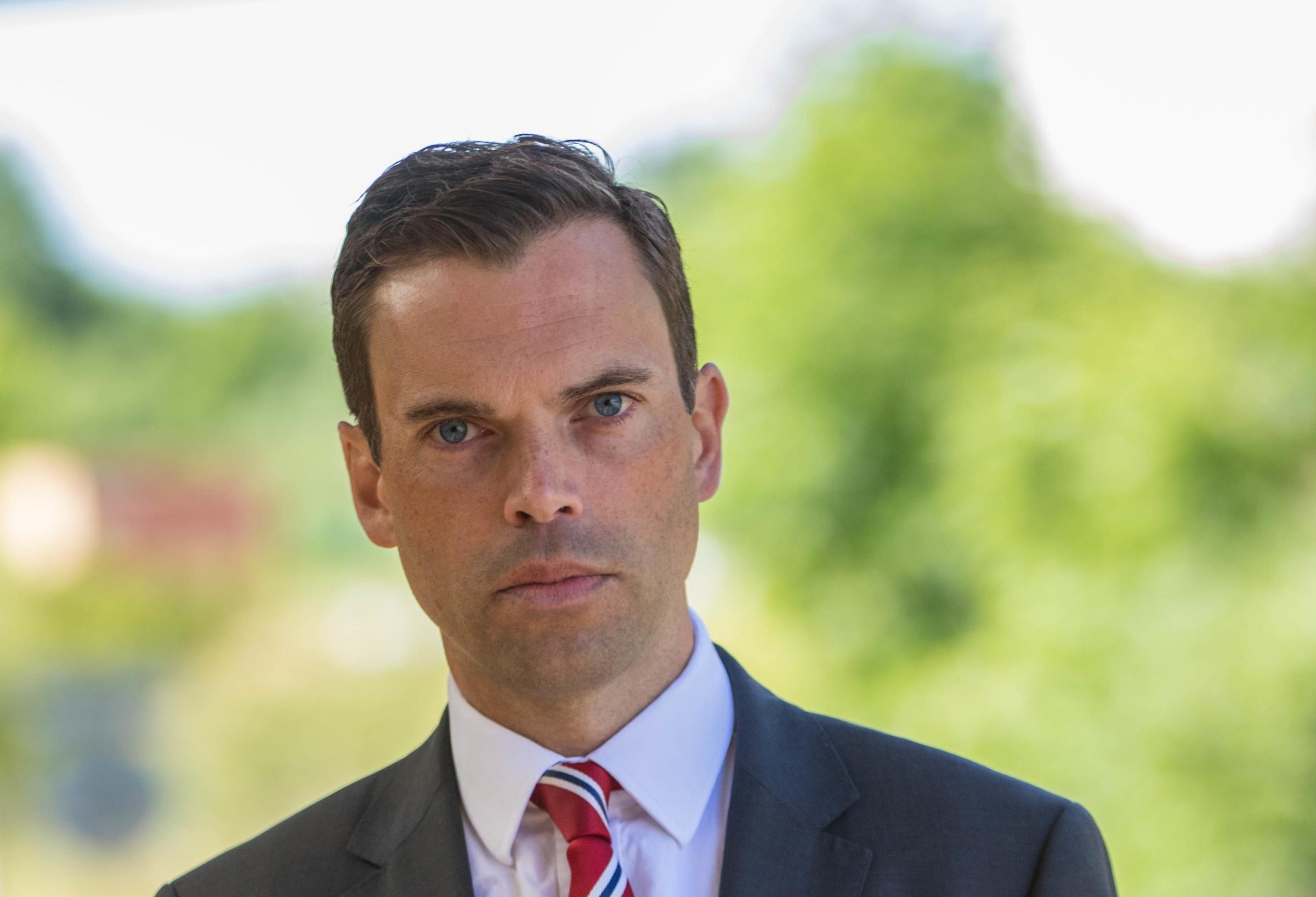
Former economy and transport minister takes charge after party’s historic Senedd election defeat
KEN SKATES has been confirmed as the permanent leader of Welsh Labour after receiving the unanimous backing of the party’s nine remaining Senedd members.
The former Welsh Government minister had served as interim leader since May, following Eluned Morgan’s resignation after Labour’s historic defeat in the Senedd election.
Welsh Labour opened nominations for a permanent successor last week, beginning with nominations from the Labour group in the Senedd. All nine members nominated Mr Skates, meaning he was confirmed as leader without the need for a wider contest.
He now faces the considerable task of rebuilding a party which governed Wales for more than a quarter of a century but was reduced to third place at the election, behind Plaid Cymru and Reform UK.
Accepting the leadership, Mr Skates said he was “deeply honoured” to have received the unanimous support of his Senedd colleagues.
He said: “I joined the party as a 14-year-old, and my belief still stands that no child’s future should be determined by their background.
“That no young person should be judged on anything other than the efforts they make and the decency they show to others.
“The Labour movement for me is a movement for fairness, justice, security and liberty. It is a movement that seeks to empower people and communities, to fight against injustice, intolerance, nepotism and cruelty.”
Mr Skates was first elected to the Senedd in 2011 and has held a series of senior Welsh Government positions, including responsibility for transport, the economy and infrastructure.
He was returned to the Senedd in May as a member for the new Fflint Wrecsam constituency.
His appointment comes as Welsh Labour attempts to understand the reasons behind its dramatic electoral decline and establish a new role in opposition.
Deputy Welsh Labour leader Carolyn Harris MP said Mr Skates had her full support as he began the process of rebuilding the party.
She said: “I offer my warm congratulations to Ken. He has my full backing as he undertakes the big task ahead of him, listening, learning, rebuilding and doing that crucial job of holding Plaid Cymru and Reform UK to account in the Senedd.
“I have no doubt he has the energy, thoughtfulness and optimism to take us forward and I look forward to working alongside him.”
Mr Skates must now seek to restore public confidence in Welsh Labour while distinguishing the party from the new Plaid Cymru-led Welsh Government and the Labour administration at Westminster.
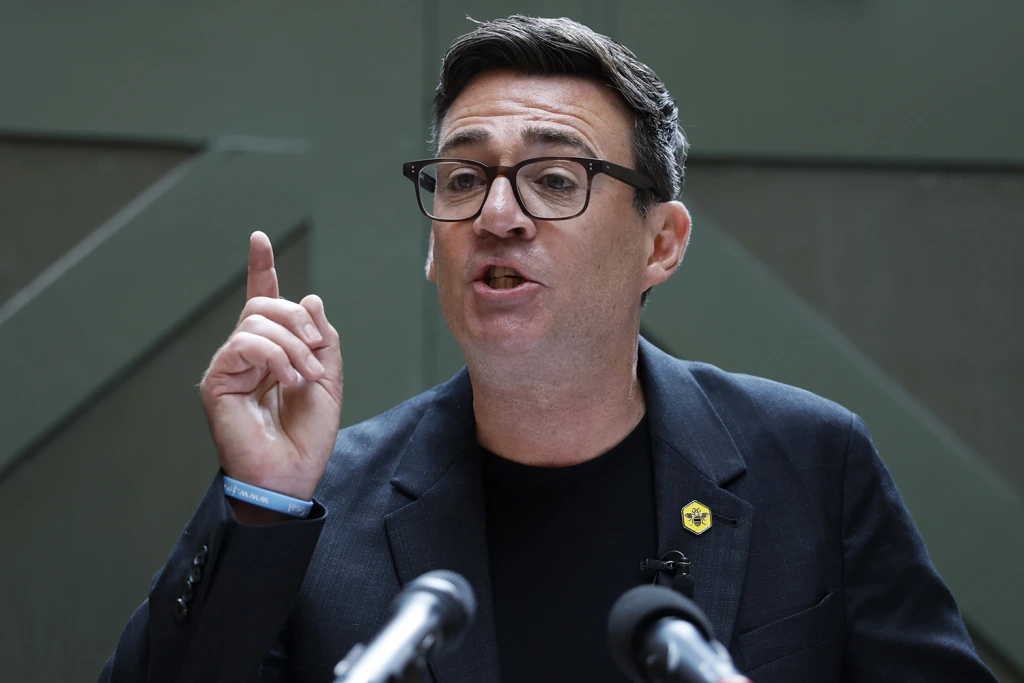
Incoming Prime Minister pledges to move power out of Westminster and deliver growth in every postcode, but questions remain over funding, devolution and what his new government will mean for Pembrokeshire
ANDY BURNHAM is preparing to enter Downing Street on Monday as Britain’s new Prime Minister, beginning another chapter of political change at Westminster.
The former Mayor of Greater Manchester was formally elected leader of the Labour Party on Friday, receiving the support of 379 Labour MPs and 23 affiliated organisations.
Sir Keir Starmer is expected to tender his resignation to the King on Monday, before Mr Burnham is invited to Buckingham Palace and asked to form a government.
He will then travel to Downing Street, deliver his first address as Prime Minister and begin appointing his Cabinet.
Mr Burnham is expected to place the cost of living, regional inequality and the transfer of power away from Westminster at the heart of his administration.
His arrival will be watched closely in Wales, where political leaders, businesses and communities will want to know whether his promise to bring “good growth to every postcode” will extend to rural and coastal areas far from Britain’s largest cities.
For Pembrokeshire, the central question will be whether a change of Prime Minister produces tangible investment in energy, transport, public services and employment, or simply another change of leadership in London.
A promise to spread power
Mr Burnham has built much of his political identity around the argument that Britain is too centralised and that decisions affecting communities should not always be made in Westminster and Whitehall.
He has promised to transfer power to nations, regions and local communities, describing Westminster as a system which has failed too many parts of the country.
However, his proposals for Wales have already created questions about where any additional powers would go.
During a major speech in June, Mr Burnham said he would offer new opportunities to extend devolution in Wales. He suggested that this could mean moving decision-making closer to councils and communities, rather than simply transferring additional responsibilities from Westminster to the Senedd.
That distinction could become one of the first significant points of debate between the new Prime Minister and the Welsh Government.

First Minister Rhun ap Iorwerth has said Wales needs fairer funding and parity of powers with Scotland, while Welsh Labour figures have welcomed the principle of bringing decision-making closer to local communities.
Opposition parties have also called for clarity over whether Mr Burnham intends to devolve control over areas including rail infrastructure, the Crown Estate, taxation and borrowing.
What will change for Pembrokeshire?
In west Wales, the new government is likely to be judged less by its political slogans and more by whether people see improvements in their everyday lives.
Pembrokeshire’s energy industry will be among the most important issues.
The Milford Haven Waterway remains central to Britain’s energy infrastructure, while the transition towards renewable energy and floating offshore wind could determine the future of thousands of jobs across the region.
Local businesses and workers will want clear commitments on port infrastructure, grid capacity, skills, investment and the protection of well-paid industrial employment.
Transport will present another test.
Long rail journeys, limited services and poor connections continue to make it harder for residents and businesses in west Wales to access opportunities elsewhere in the country.
If Mr Burnham intends to build his premiership around reducing regional inequality, campaigners will argue that investment cannot stop in Manchester, Birmingham, Cardiff or Swansea.
The particular pressures facing rural communities will also require attention.
Many households in Pembrokeshire are heavily dependent on cars, face higher transport costs and have limited access to public services. Rising food, energy and housing costs can be particularly severe in communities where wages remain below the UK average.
The future of tourism, agriculture, fishing and small businesses will also depend on decisions made by the new government on taxation, employment rules, energy prices and support for regional economies.
Cost of living to be early priority
Mr Burnham’s allies have indicated that helping households with the cost of living will be one of his immediate priorities.
He is expected to scrap the government’s planned digital identity scheme and redirect attention and resources towards household finances.
Measures to reduce energy bills and transport costs are also reportedly being considered, although the full details of his programme are unlikely to become clear until he has appointed his Cabinet and addressed Parliament.
Mr Burnham has indicated that he will broadly retain Labour’s commitment not to increase income tax, National Insurance or VAT.
However, he will inherit significant financial pressures across the NHS, social care, defence, local government and public infrastructure.
Those pressures could make it difficult to deliver major improvements without additional borrowing, spending reductions or changes elsewhere in the tax system.
No immediate general election expected
Mr Burnham will become Prime Minister without a general election, as the Labour Party continues to hold a majority in the House of Commons following its 2024 election victory.
Under Britain’s parliamentary system, a governing party can replace its leader without immediately returning to the electorate.
Opposition parties are nevertheless expected to demand an early general election, arguing that Mr Burnham should seek a personal mandate for any substantial change in government policy.
The incoming Labour leader has so far indicated that political stability is needed and that he does not intend to call an immediate election.
He will become the sixth person to serve as Prime Minister in a decade, inheriting a country facing stretched public services, economic uncertainty and growing public frustration with Westminster politics.
Wales will expect more than warm words
Mr Burnham enters office presenting himself as a champion of places which have been overlooked by successive governments.
His record in Greater Manchester means expectations will be high, particularly among communities which believe economic investment and political attention have been concentrated elsewhere.
But governing for the whole of the United Kingdom will require him to demonstrate that his regional agenda can work beyond England’s major metropolitan areas.
For Wales, that will mean resolving questions about funding, constitutional powers, rail infrastructure and the relationship between Westminster, the Senedd and local councils.
For Pembrokeshire, it will mean showing that promises of growth, investment and decentralisation can reach communities at the western edge of the country.
The names and faces inside Downing Street may be changing once again.
The test for Andy Burnham will be whether anything changes outside it.



Crime21 minutes ago
Teen cleared of attempted murder but guilty of GBH after Milford teacher stabbed
Jury returns 11-1 majority verdict on charge of causing grievous bodily harm with intent, with sentencing set for September 3...


Community1 hour ago
French troops march through Fishguard as Britain’s last invasion returns to life
Battle scenes, cavalry displays and a surrender procession brought one of Pembrokeshire’s most extraordinary stories back to the streets MUSKET...


News2 hours ago
Andy Burnham promises new politics as he enters Downing Street
New Prime Minister admits politicians have “not been good enough” as he sets out a ten-year plan for Britain and...


Health1 day ago
Two new surgeons appointed as Hywel Dda admits orthopaedic waits remain too long
Health board says it is increasing capacity after figures revealed hip replacement patients waited an average of 64 weeks HYWEL...


Community2 days ago
84-year-old man rescued after falling overboard near Tenby
A MAYDAY call sparked a major nighttime rescue after an 84-year-old man fell from a tender and was swept towards...


Crime3 days ago
Jury hears final arguments in Milford Haven teacher stabbing trial
Defence says there was no motive or intention to kill as judge reviews competing accounts of classroom knife incident SPECIAL...

News3 days ago
Andy Burnham becomes Labour leader and prepares to enter No 10
Former Greater Manchester mayor promises an ‘unashamedly Labour’ government after completing extraordinary return to Westminster ANDY BURNHAM has been formally...


News3 days ago
Motorcyclist dies following collision near Narberth
Police appeal for witnesses and footage after fatal crash on B4313 at Redstone A MOTORCYCLIST has died following a collision...


Local Government4 days ago
Stepaside school saved as council abandons closure proposal
Governors welcome decision but maintain original plans were based on outdated information STEPASIDE Community Primary School will remain open after...

Crime4 days ago
Footballer given 200 hours’ unpaid work for eye-gouging assault during match
Magistrates heard Robert Hedley put an opposing player in a headlock before gouging at his eyes during a match in...
-
Community2 days ago
84-year-old man rescued after falling overboard near Tenby
-

 Health2 hours ago
Welsh Ambulance Service invites public to AGM and Board meeting
-
News19 hours ago
Andy Burnham set for No 10 as Wales awaits change
-

 Crime2 days ago
Drug-driver sent vehicles airborne in terrifying M4 collision
-
Health1 day ago
Two new surgeons appointed as Hywel Dda admits orthopaedic waits remain too long
-
Crime21 minutes ago
Teen cleared of attempted murder but guilty of GBH after Milford teacher stabbed
-
 Business1 day ago
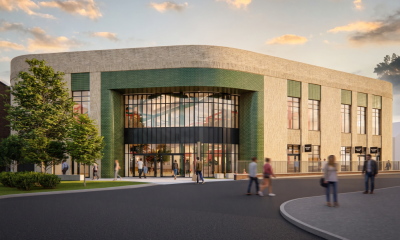
First look at plans for new Llanelli indoor market
-

 Business4 hours ago
Port appoints two new directors as energy and regeneration projects advance