


News
Snakes, marine life and egg races


 OVER THE EASTER weekend Sea Trust celebrated the holidays by showcasing a diverse mix of marine wildlife and exotic creatures.
For Easter Sunday Sea trust organised another of their increasingly popular Strumble Head porpoise watches which, despite the weather, was attended by many wishing to get a sight of some of the rich marine life that the north coastline has to offer.
Cliff Benson, Sea Trust director said: “Our Sea Trust Strumble porpoise watch was hit by hail, thunderstorms, rain and gales in the morning”
None the less and amazingly, around forty brave souls arrived on Sunday afternoon to join the watch and the sun came out to reward us!” Cliff said.
“In recent years several different species of cetaceans (whales and dolphins) as well as porpoises have been recorded from Strumble including Risso’s, Common and Bottlenose Dolphins.

“Also Minke, Fin, Humpback and Killer Whales. On our New Year’s watch, Risso’s dolphins and an otter joined the resident porpoises giving an incredible show.”
The large gathering saw porpoises, a couple of Grey Seals and some nice views from some Gannets, Cormorants and other seabirds.
Cliff said: “Our volunteers were there, helping people to spot things and Ken Barnett was giving handy photographic hints and getting shots of the porpoises that I missed.”
As well as the porpoise watch Sea Trust also set up a ‘Strumble Egg Rolling competition’ Which Cliff said: “was a pretty exclusive affair but Jessica was the champion and also had the prettiest egg. Lizzie came a close second with several jewel like eggs!”

The eggs were rolled down the hill in a race to see who could get to the bottom quickest, however not all of them made it to the bottom of the hill as Cliff’s Labrador Zorro joined in, chomping two of the eggs mid roll!
After Zorro was finally persuaded to leave them alone and Jessica made a record breaking roll, clinching her title as ‘Strumble Egg Roller 2016’.
Sea Trust followed up Sunday’s porpoise watch at by hosting Russ and Ginny of Silent World 2U at the Goodwick Ocean Lab on Easter Monday.

About thirty children, Mums, Dads, Grannies and Granddads had a great morning learning about and handling a mixture of incredible and exotic creatures.
These included Royal Pythons, King Snakes and Milk snakes as well as stick insects and beautiful Chameleons from Madagascar.
Cliff explained: “We love having Russ and Ginny here because it’s another way of opening people’s eyes to the wonders of nature. Once people have handled these reptiles they see they are fascinating not slimy or scary! Russ and Ginny are real experts and incredibly enthusiastic and everybody had a great time!”


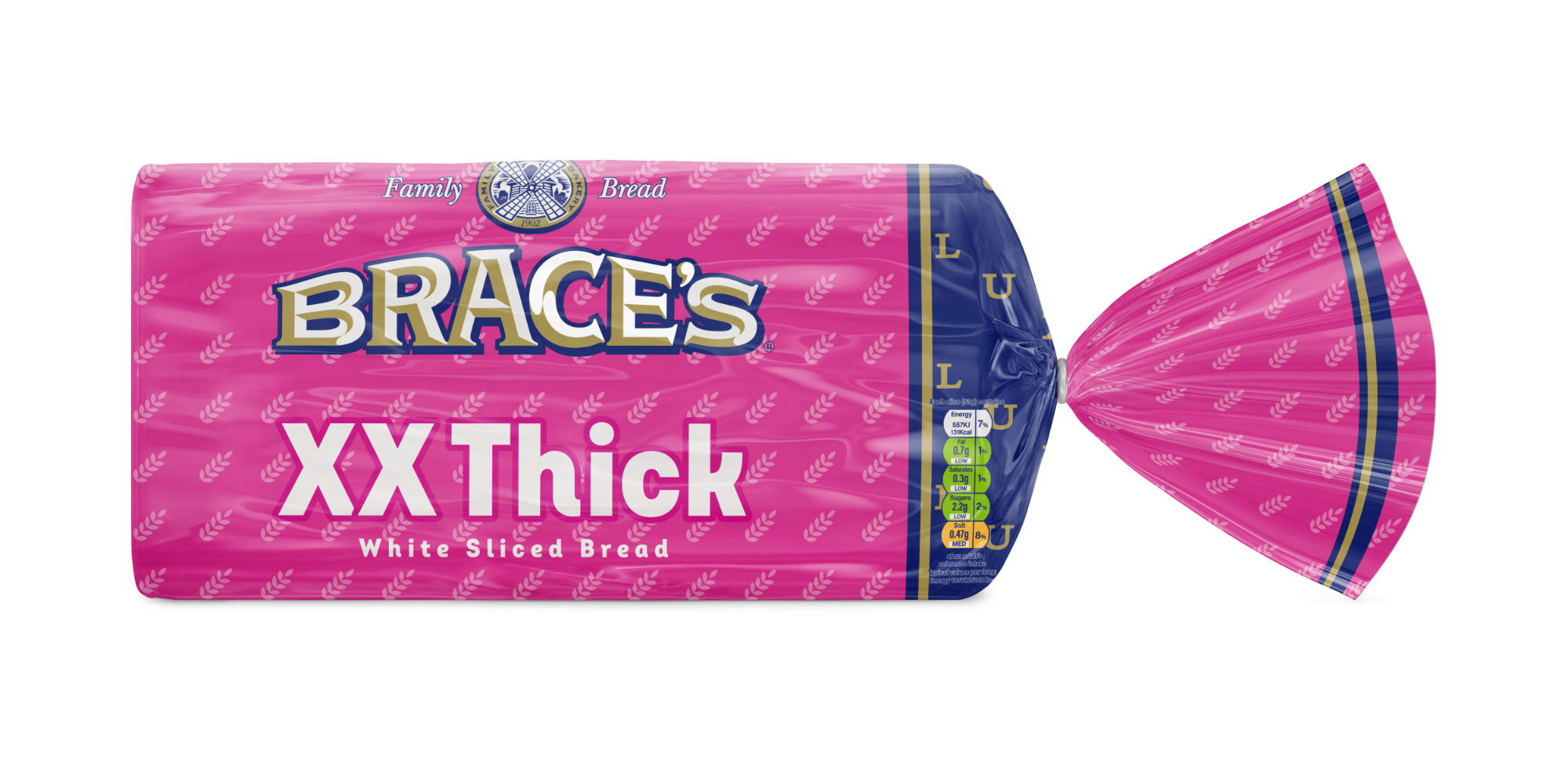
Concern mounts over future of production as Wales’ famous bakery battles falling sales and changing consumer tastes
ONE of Wales’ best-known bakery brands is facing a major threat as changing eating habits, rising costs and falling demand for the traditional sliced loaf put pressure on jobs and production.

Brace’s Bakery, founded in 1902, has warned that the market for standard sliced bread has changed dramatically, with the company blaming an “acceleration of the decline in standard sliced bread” for its recent financial pressures.
The issue has now taken on fresh urgency amid fears over the future of production at one of the company’s Welsh sites.
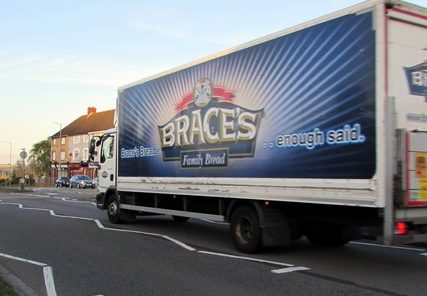
Industry reports have said Brace’s planned to close its Pen-y-Fan Industrial Estate site as part of a wider business “reset”, with production being consolidated at its larger Croespenmaen operation. Earlier reports suggested the company expected fewer than 20 redundancies, with most staff transferring, but latest local reporting has raised concerns among workers that the situation may be moving faster than previously expected.
The company has said the Pen-y-Fan factory has one production line, while Croespenmaen has two sliced bread plants and also produces Welsh cakes, rolls and artisan-style products.
Brace’s director Mark Brace has previously described the pressures facing the industry as severe.
He said: “We are a long-standing family business in a very challenging marketplace as the rest of the baking industry is UK wide.”

He added that since Covid there had been a slow annual decline in standard bread sales, but that in the last two years major competitors such as Kingsmill and Hovis had also seen declines of more than 15 per cent.
Leon James, director of finance at Brace’s, gave an even starker assessment, saying: “There has been a massive reduction in the consumption of standard white bread – and the white loaf is our cash cow.”
He also warned of the difficulty in passing rising costs on to customers, saying: “If we put our prices up, customers will very quickly switch.”
The problem is not unique to Brace’s. Across Britain, the traditional wrapped sliced loaf has been losing ground as shoppers change the way they eat. Market research cited by The Guardian found that sliced loaf bread sales had fallen by around 15 per cent over five years, while only around a third of people now eat sliced loaf bread daily, down from about half in 2015.

Kiti Soininen, head of food and drink research at Mintel, said: “Whenever a new breakfast or lunch option comes into the market, more often than not it’s bread that loses out.”

Younger consumers are increasingly turning to wraps, flatbreads, oats, yoghurt, salads, rice bowls, noodles, sushi and higher-protein meals. At the same time, concerns over ultra-processed foods and refined carbohydrates have pushed some shoppers towards seeded, wholegrain, sourdough and higher-fibre breads.
The UK bread industry is already responding with consolidation. Associated British Foods, the owner of Kingsmill, agreed a £75m deal to buy Hovis, a move expected to create the UK’s biggest bread brand if approved by the Competition and Markets Authority. The deal follows falling sales and losses in parts of the traditional bread sector.
For Wales, however, Brace’s carries a particular significance. This is not just another food manufacturer. It is a household name whose loaves have been bought in corner shops, supermarkets and family kitchens for generations.
The crisis highlights a wider question for Welsh manufacturing: how can long-established family firms survive when consumer habits change faster than factories can adapt?
Brace’s has already shifted more attention towards Welsh cakes, rolls, premium loaves and artisan-style products. But the pressure on the standard sliced loaf remains a serious challenge for a company whose name has long been associated with everyday bread.
Bread itself is not disappearing from Welsh homes. But the kind of bread people buy, and the way they eat it, has changed.
For Brace’s, the future may now depend on whether one of Wales’ most familiar food brands can move beyond the old white sliced loaf without losing the loyalty, identity and scale that made it famous.

WEST WALES passengers could get direct trains to Bristol before the end of the year — but the plan has sparked a row between the Welsh Government and Great Western Railway.
Transport for Wales wants to introduce new services from Milford Haven or Fishguard, running through Carmarthen, Llanelli, Swansea and Cardiff to Bristol Temple Meads.
The proposal would mean passengers from Pembrokeshire and Carmarthenshire could travel directly to Bristol without having to change trains at Cardiff Central.
TfW hopes to run the service every two hours from Monday to Saturday, with some trains starting in west Wales and one beginning in Cardiff. The aim is to launch the route by December 2026.
The plan would be particularly significant for Pembrokeshire, where rail links remain limited and passengers travelling to England often face long journey times and inconvenient changes.
It could also improve access for people using Fishguard Harbour for ferry connections to Ireland, as well as students, workers, tourists and families travelling between west Wales and the West Country.
However, Great Western Railway, which already operates services between Cardiff and Bristol, has raised concerns about the impact on its income and existing services.
GWR said the new TfW trains were likely to have a “significant effect” on its revenue and could affect services in the Bristol area.
The Welsh Government has reacted angrily, accusing GWR of trying to disrupt improvements for passengers.
Deputy Minister for Transport, Mark Hooper said it was “extremely disappointing” that GWR would seek to “disrupt these plans to improve things for passengers on both sides of the Severn”.
He said: “If Great Western Railway’s objection succeeds, it would negatively impact tens of thousands who could benefit from this service.
“I will be writing to the UK Transport Minister to urgently ask for clarification and call for some common sense on this issue.”

For many west Wales passengers, the current journey to Bristol involves changing at Cardiff, adding inconvenience and uncertainty to already long journeys.
A direct service from Milford Haven or Fishguard would mark a major improvement for communities along the west Wales main line, including Haverfordwest, Whitland, Carmarthen, Llanelli and Swansea.
GWR said it welcomed enhancements for passengers, but added that any changes must not be “detrimental to existing services or already agreed future services which will serve south Wales”.
The final decision on TfW’s application will be made by the Office of Rail and Road.

Historic 198kHz transmission to end this month as amateur radio enthusiasts prepare farewell events
THE BBC is to switch off its historic Long Wave radio service later this month, bringing to an end almost 92 years of broadcasting on 198kHz.
The service, which currently carries BBC Radio 4 programming, will cease transmission at 1:00am BST on Saturday, June 27.
The closure will see the shutdown of the BBC’s remaining Long Wave transmitters at Droitwich in Worcestershire, Westerglen near Stirling, and Burghead overlooking the Moray Firth in Scotland.
The move marks the end of one of Britain’s most iconic broadcasting technologies, which has played a vital role in national communications since the 1930s. Long Wave radio became a trusted source of news, entertainment and emergency information for generations of listeners, particularly in rural and coastal communities where signal reliability was valued.
In Pembrokeshire, the loss of Long Wave will be felt particularly keenly in rural villages, coastal communities and farming areas where FM, DAB and mobile signals can still be patchy. For many older listeners, boat users and people living in more remote parts of the county, 198kHz has remained one of the few reliable ways to receive BBC Radio 4, weather updates and national information when other services fail.
The decision has prompted tributes from radio enthusiasts and amateur operators across the UK, many of whom see the switch-off as the end of an era in British broadcasting.
To mark the occasion, the Radio Society of Great Britain (RSGB), working alongside the BBC Amateur Radio Group, will operate special amateur radio stations in the days leading up to the closure.
Volunteers are being sought to activate a special callsign during the final week of broadcasting and on the day the transmitters are turned off.
In addition, three amateur radio clubs will operate commemorative special event stations on June 27 to celebrate the remarkable legacy of the Long Wave network before the signal finally falls silent.
For many listeners, BBC Radio 4 Long Wave has remained a familiar companion, particularly for specialist programming, shipping forecasts and rural audiences, even as digital and internet services increasingly dominate broadcasting.
The end of Long Wave broadcasting will leave only digital, FM, DAB, television and online platforms carrying BBC Radio 4 content.
Photo caption:

End of an era: The BBC’s Long Wave transmitter network, including the historic 198kHz service, will be switched off on June 27 after almost 92 years of broadcasting (Pic: RSGB/BBC Amateur Radio Group).



Health12 hours ago
First Minister quizzed on Welsh NHS pressures in his first-ever FMQs
SENEDD Members pressed the First Minister over the state of the health service in Wales, as the Plaid Cymru leader...


Community20 hours ago
Historic paddle steamer Waverley to return to Fishguard this month
THE WORLD’S last seagoing paddle steamer will return to Fishguard this month as part of her annual visit to South...


Local Government22 hours ago
National Express use of new Haverfordwest interchange still subject to risk checks
A RUMOUR that National Express coaches may struggle to use Haverfordwest’s new transport interchange has been denied by Pembrokeshire County...


Crime23 hours ago
Milford Haven man jailed for illegal Premier League streaming service
A MILFORD HAVEN man who supplied illegal Premier League streams and loaded Firesticks to almost 2,000 customers has been jailed...


Community2 days ago
RNLI lifeguards rescue beachgoers during busy heatwave weekend
FOUR PEOPLE RESCUED AS RIP CURRENTS AND OFFSHORE WINDS HIT PEMBROKESHIRE BEACHES RNLI lifeguards in Pembrokeshire rescued four people and...


Local Government2 days ago
Council and school staff pay row could hit Pembrokeshire services
COUNCIL workers, carers and school support staff in Pembrokeshire could be drawn into a growing UK-wide pay dispute after GMB...

Health2 days ago
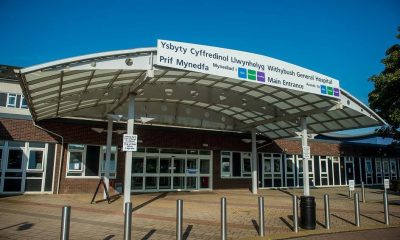
Hywel Dda to hold second consultation on future of stroke services
A SECOND phase of public consultation is to be held on the future of stroke services across Hywel Dda University...


Community2 days ago
Warning as algal blooms mistaken for sewage on Welsh coast
Beachgoers urged to avoid contact with suspicious foam and report pollution concerns NATURAL RESOURCES WALES has issued summer advice to...


News3 days ago
Yacht towed to safety after engine failure off Tenby
A YACHT was towed to safety by Tenby RNLI after suffering total engine failure around 15 miles south-east of the...


Crime4 days ago
Haverfordwest sex offender jailed over child abuse material
Registered offender used library computers to hide social media accounts A HAVERFORDWEST sex offender who used public library computers to...
-

 Health6 days ago
Paul Davies warns health board over Withybush and Bronglais services
-
Crime6 days ago
Carmarthenshire man sent to Crown accused of 33 historic sexual offences
-
Crime23 hours ago
Milford Haven man jailed for illegal Premier League streaming service
-

 Crime6 days ago
Suspended prison sentence for man who left dogs without vet care
-
Crime23 hours ago
Haverfordwest man admits cocaine offence as Crown disputes basis of plea
-

 News6 days ago
Vehicle destroyed in early morning fire in Pembroke
-

 Crime6 days ago
Man accused of police station bomb hoax remanded in custody
-

 News6 days ago
Davies calls for NHS foreign language interpreters to be scrapped