


News
Call for change: Air gun attacks on cats



46% of feline air gun shootings prove fatal: 78% of the public support the introduction of air gun licensing
A CALL for a change in legislation to restrict the sale and use of weapons has arisen following the distressing rise in fatal air gun attacks on cats.
Over 1,000 vets across the country, as well as 1,000 cat owners and 1,000 non-cat owners, were surveyed by Cats Protection, the leading feline welfare charity, which has sadly revealed that many more cats are killed today in gun-related attacks than 20 years ago.
The survey also revealed that a shocking 44% of vets questioned by the charity had treated cats within the past year which had been the victim of attacks by air-powered weapons, with a horrific 46% of these shootings proving fatal.
This research was undertaken by Cats Protection to mark the 20th anniversary since it first investigated the issue of air gun attacks.
In 1996, although 74% of vets had treated cats for air weapon attacks, just 11% of the feline victims passed away. Therefore, although attacks seem to be less common these days, they are far more likely to prove fatal.

The rise in fatal attacks suggests that more powerful air guns are being used. Injuries to the head and body are most common, with many cats left blind or partially sighted.
Cats Protection, vets and feline lovers alike are now calling on governments in England and Wales to officially make it a criminal offence to own an air gun without a licence or permit in a bid to reduce the number of cats who have to suffer from gun violence across the UK.
A leading criminologist states that many people who injure or shoot cats with air guns are worryingly far more likely to go on to commit similar crimes against humans.
Dr Adam Lynes, Criminologist and Lecturer at Birmingham City University, said: “There is an increasing body of research that examines the relationship between animal cruelty and the move towards attacking and murdering humans.

“It is argued that through the process of social learning theory, a theoretical framework in which criminal behaviour is learned, that some offenders will gain positive stimuli from engaging in animal cruelty which may lead to aggression towards humans. This is known as the ‘graduation hypothesis’.
“While it is acknowledged that a crime such as serial murder is incredibly rare, this relationship between animal cruelty and aggression towards humans may explain why some individuals commit acts of violence towards animals prior to attacking humans.”
Alongside this, nearly two-thirds of people surveyed believe that those who attack cats who go on to commit crimes against humans also, indicating a clear public concern.

More than three-quarters of vets indicated that air gun injuries were more frequently inflicted on cats than any other type of animal.
86% of vets agreed that they would like to see a change in the current laws to ultimately restrict the sale and use of air weapons, alongside 78% of the general public who would support the introduction of air gun licensing.
Jacqui Cuff, Cats Protection’s Advocacy Manager, said: “The sheer volume of instances where cats are injured and killed by air gun attacks is very concerning.
“We are calling for much stricter regulation on the ownership of air guns, as we strongly believe this will help to protect cats and other animals from these shocking attacks, and avoid air guns falling into the wrong hands.
“We want to see England and Wales following the example of Scotland, where from next year it will be illegal to own an air gun without a licence.
“The statistics show that fewer cats are now surviving air gun attacks than they were back in 1996.
“It is disconcerting that only a small percentage of the general public, 24%, would report these incidents to the police, and that 53% said they would do nothing. This could be due to a lack of confidence that the perpetrator will be found.
“Sadly, 78% of people who reported an air gun attack on their cat said the culprit was never caught.
“If any cat owners have lost their cat to an air gun attack in the last six months, we’d be grateful if they could send any details to [email protected]. uk. It will help Cats Protection to collect more evidence about the scale of these attacks and continue to raise the issue with politicians across the UK.”
In Pembrokeshire, one cat was fatally injured by an air gun in the north county village of Puncheston.
This stray feline, who was looked after by several homes, was the second cat to be killed in the village in less than a month, leading Lisa to believe that it was not an isolated incident.
Another cat was shot by an air gun in Milford Haven, with the pellet going straight through her neck and becoming lodged in her left shoulder, in an attack which she was lucky to survive.
Daisy the cat was then taken to All Pets Vet Care to remove the pellet, which cost her owners nearly £500.
Daisy has since recovered from the incident, but the usually confident cat now remains close to her owner’s side.
Recently making headlines at The Herald was the news that a group of teenagers from Milford Haven were shot at with an air rifle whilst on a walk.
Although extremely shaken up, no serious injuries were sustained but one of the boys was left with bruising to his chest after being hit by one of the shots.
PC Laurence Rew, investigating the case, said: “This was a very frightening situation for the group of teenagers who were targeted as they walked along the path.
“Air rifles are dangerous weapons if used incorrectly and can cause serious injury and even death.”
A survey which was conducted last year by the British Veterinary Association revealed that 41% of its members had previously treated cats who had wounds caused by air guns.
Cats Protection’s survey also indicated that a massive 88% of cat-wounding culprits were aged under 25.
Current gun laws state that young people under the age of 14 are able to use an air gun on private premises with the consent of the occupier of those premises as long as they are under the supervision of a person aged 21 or over.
People aged between 14 and 16 are allowed to borrow an air gun from a person aged 18 or over and use it on private property without supervision, indicating that laws need to be altered due to the 88% of cat injurers being aged under 25.
Sean Wensley, President of the British Veterinary Association, said: “These findings are concerning for both owners and vets.
“Anyone using an air gun, whether they are an adult or child, should be aware of the very serious injuries these weapons inflict.
“Vets see shocking injuries caused to cats by air guns, so we want to see better enforcement of animal welfare legislation and urge the police and local authorities to take action where they can.”


PUBLIC INVITED TO LETTERSTON EVENT HOSTED BY TRANSITION BRO GWAUN
A FREE public screening of The People’s Emergency Briefing is to be held at Letterston Memorial Hall on Friday, May 29.
The event, hosted by Transition Bro Gwaun, starts at 7:00pm, with doors opening at 6:30pm.
The screening will be introduced by Dr Sarah Beynon, of The Bug Farm, St Davids, and will be followed by a structured discussion on climate and nature risks and what they may mean for local communities.
The 50-minute film has been adapted from the National Emergency Briefing, held at Westminster Central Hall in November 2025, where more than 1,200 MPs, peers, business leaders, cultural figures, faith representatives, sports figures and media leaders gathered to hear from experts on climate and nature risks.
The briefing, introduced by Chris Packham CBE, examines the potential impact of climate and nature breakdown on food security, public health, infrastructure, the economy and national security.
Dr Beynon said: “We are in a biodiversity and climate emergency. We have destroyed over half of our wildlife. In my late father’s lifetime, we have destroyed 97% of our wildflower meadows.
“Over 80% of our habitats are in poor condition. Over 60% of our rivers are not in good health and one in five species is at risk of extinction.
“How do we want to leave this planet for future generations? Then ask yourself if you are prepared to act. If you are, the first step is to understand the issues facing us, and this film is a vital part of understanding the situation we are in so we can all step up and do something together.”
The People’s Emergency Briefing was launched nationwide in April and is now being screened in communities across the UK. Organisers say more than 300 showings have already taken place, with around 1,000 scheduled over the summer.
Further local screenings are also planned for Solva and Cardigan in June.
Transition Bro Gwaun said the Letterston event comes at a time when communities in Pembrokeshire are facing increasing pressure from severe weather, flooding, dry spells and wildfire risks.
November and December 2025 saw flooding affect many areas, with the Met Office confirming rainfall was more than 50% above average during that period.

The group said the event was not intended to be “doom and gloom”, but would also focus on practical and hopeful responses.
Henry Tufnell MP, Pembrokeshire county councillors and town and community councillors have been invited to attend.
Tom Latter, trustee at Transition Bro Gwaun, said: “TBG welcomes the opportunity to host one of many Emergency Briefing events around the UK, addressing the climate and nature crisis.
“Co-ordinated restorative action is urgently needed, and understanding of the urgency for honest commitment to resilience planning from all branches of society.”
Free tickets are available through Transition Bro Gwaun, and refreshments will be provided.

PUBLIC INVITED TO LETTERSTON EVENT HOSTED BY TRANSITION BRO GWAUN
A FREE public screening of The People’s Emergency Briefing is to be held at Letterston Memorial Hall on Friday, May 29.
The event, hosted by Transition Bro Gwaun, starts at 7:00pm, with doors opening at 6:30pm.
The screening will be introduced by Dr Sarah Beynon, of The Bug Farm, St Davids, and will be followed by a structured discussion on climate and nature risks and what they may mean for local communities.
The 50-minute film has been adapted from the National Emergency Briefing, held at Westminster Central Hall in November 2025, where more than 1,200 MPs, peers, business leaders, cultural figures, faith representatives, sports figures and media leaders gathered to hear from experts on climate and nature risks.
The briefing, introduced by Chris Packham CBE, examines the potential impact of climate and nature breakdown on food security, public health, infrastructure, the economy and national security.
Dr Beynon said: “We are in a biodiversity and climate emergency. We have destroyed over half of our wildlife. In my late father’s lifetime, we have destroyed 97% of our wildflower meadows.
“Over 80% of our habitats are in poor condition. Over 60% of our rivers are not in good health and one in five species is at risk of extinction.
“How do we want to leave this planet for future generations? Then ask yourself if you are prepared to act. If you are, the first step is to understand the issues facing us, and this film is a vital part of understanding the situation we are in so we can all step up and do something together.”
The People’s Emergency Briefing was launched nationwide in April and is now being screened in communities across the UK. Organisers say more than 300 showings have already taken place, with around 1,000 scheduled over the summer.
Further local screenings are also planned for Solva and Cardigan in June.
Transition Bro Gwaun said the Letterston event comes at a time when communities in Pembrokeshire are facing increasing pressure from severe weather, flooding, dry spells and wildfire risks.
November and December 2025 saw flooding affect many areas, with the Met Office confirming rainfall was more than 50% above average during that period.

The group said the event was not intended to be “doom and gloom”, but would also focus on practical and hopeful responses.
Henry Tufnell MP, Pembrokeshire county councillors and town and community councillors have been invited to attend.
Tom Latter, trustee at Transition Bro Gwaun, said: “TBG welcomes the opportunity to host one of many Emergency Briefing events around the UK, addressing the climate and nature crisis.
“Co-ordinated restorative action is urgently needed, and understanding of the urgency for honest commitment to resilience planning from all branches of society.”
Free tickets are available through Transition Bro Gwaun, and refreshments will be provided.
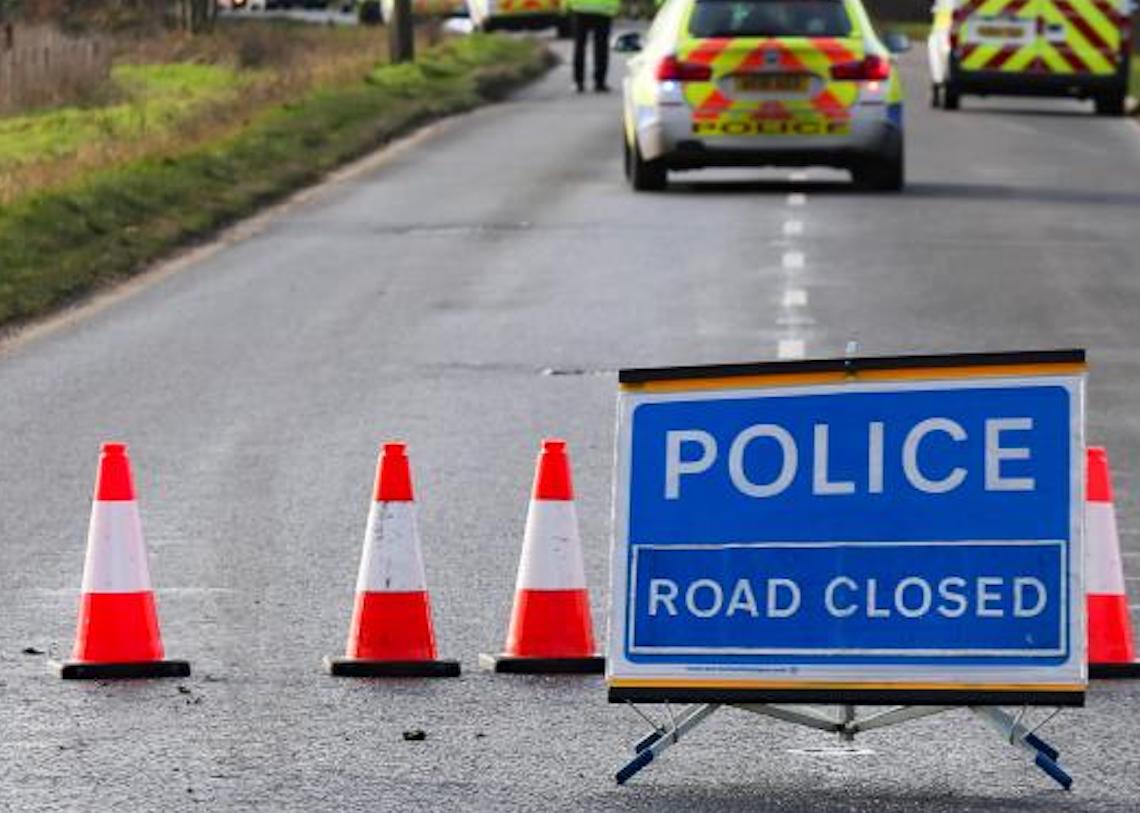
FIVE people were taken to hospital, three with serious injuries, following a collision on the A477 between Llanteg and Red Roses on Sunday (May 24).
Dyfed-Powys Police said the crash happened at around 5:00pm and involved a grey Honda Civic i-VTEC and a white Kia Soul 2.
A 23-year-old man has been arrested and remains in police custody.
Officers are appealing for anyone who was driving on the A477 at around the time of the collision, or who may have dash-cam footage of either vehicle before the crash, to come forward.
Police said visitors to Pembrokeshire who may not know the area should check their route in case they were travelling along the A477 at the relevant time.
Anyone with information can contact Dyfed-Powys Police online, by emailing [email protected], by direct message on social media, or by calling 101.
Alternatively, contact Crimestoppers anonymously on 0800 555 111.
Quote reference: 326 of May 24.


Business1 day ago
Plaid energy policy challenged by Labour after Adam Price interview
LABOUR SAYS MINISTERS MUST EXPLAIN COST AND TIMETABLE FOR PYLON PLANS PLAID CYMRU’S approach to energy infrastructure has come under...


Community1 day ago
Pembroke Fair praised as well-organised community event
HORSES, STALLS AND FAMILY CROWDS RETURN TO MONKTON FAMILIES, horse owners and visitors turned out in force for Pembroke Fair...

Local Government4 days ago
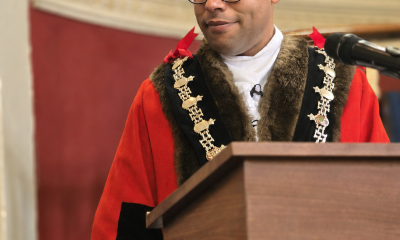
Youngest mayor in century takes office in Haverfordwest
Randell Izaiah Thomas-Turner makes history as town’s first millennial mayor and first from a diverse background HAVERFORDWEST has welcomed a...


Community4 days ago
Pembroke Fair set to return after last year’s success
STALL HOLDERS INVITED AS HORSE DRIVE PLANNED PEMBROKE Fair is set to return this weekend following the success of last...


Crime4 days ago
Neyland man accused of running over traffic worker’s foot
Jury hears conflicting accounts over roadworks incident in Milford Haven A NEYLAND man has appeared before Swansea Crown Court accused...

Community4 days ago
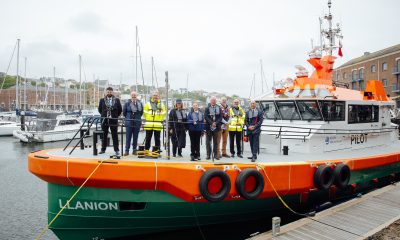
New pilot boat Llanion dedicated at emotional Milford Haven ceremony
Vessel dedicated at Mackerel Quay as Port marks major investment in safety and resilience MILFORD HAVEN’S new state-of-the-art pilot vessel...


Local Government4 days ago
Police and GoSafe to target speeding in Newport and Dinas
RESIDENTS’ concerns over speeding and anti-social driving have prompted planned enforcement action in the Newport and Dinas areas. Dyfed-Powys Police...

Community5 days ago
Safety first as Milford Haven’s new pilot boat marks end of troubled chapter
Gary Solomon, who was aboard St Davids during the 2016 collision, helped shape new self-righting vessel Llanion from conception to...


Crime5 days ago
Cocaine courier caught with £15,000 haul in Pembroke Dock
Defendant transported high-purity drugs from Cardiff to Pembrokeshire for £210 A PEMBROKESHIRE man caught transporting more than £15,000 of high-purity...

News6 days ago
Car bursts into flames near Redberth Croft as road closed after incident
Nobody injured after vehicle fire near A477 prompts emergency response A CAR was destroyed by fire near the entrance to...
-

 News3 days ago
Watchdog criticises health board over £10m GP contract checks
-

 Crime5 days ago
Farm owner in court after 26 dogs removed over welfare concerns
-

 News4 days ago
Paul Davies meets Openreach Cymru at the Senedd to discuss Full Fibre rollout
-
 Crime5 days ago
Tree surgeon sentenced for failing to provide breath test
-

 Crime5 days ago
Pembrokeshire teenager admits driving almost four times over drug-drive limit
-

 News5 days ago
Milford man admits handling stolen goods from three local properties
-

 Crime7 days ago
Builder jailed for £82,000 fraud affecting 18 victims
-
 Crime4 days ago
Milford Haven man admits affray after alleged pub incident
mitolyn reviews
January 29, 2026 at 1:16 pm
**mitolyn reviews**
Mitolyn is a carefully developed, plant-based formula created to help support metabolic efficiency and encourage healthy, lasting weight management.