


News
Struck-off solicitor’s eviction threat



Stressful times: Sheila Hill, 82, runs the pub with her family
A LOCAL solicitor who was jailed for using money from dead client’s estate to fraudulently finance his property company is back on the scene, acting as an ‘agent’ to try and bully an elderly pub landlady into leaving her Milford Haven premises.
Sheila Hill, 82, who as invested her life savings into the renovation of The Sir Charles Whetham, said that she has been so stressed by the experience of dealing with Simon Griffiths, she has been rushed to hospital because of an uncontrollable nose bleed and has had to ask her daughter to get the police to get the bankrupt lawyer off her back.
Disgraced Griffiths was hauled before the Solicitors’ Disciplinary Tribunal in 2015 after concerns were raised about his practise, Eaves Solicitors, which was based on Milford Haven Marina.
He faced a number of allegations, including failing to fulfil and undertaking and misleading another firm of solicitors, which were found proved.
But now he is back working as an ‘agent’ and ‘legal advisor’ for owners of The Sir Charles Whetham, Jac Worley and Keith May. May has confirmed this to The Herald on the telephone.

In December 15, 2015, Sheila Hill, and daughter and son-in-law Jayne and Roy Driscoll, originally from Saundersfoot sold their family home with the intention of taking over and eventually purchasing the Murray Road pub.
A COMMUNITY PUB
Locals have testified to the fact that the property has improved from being a troubled establishment known for cheap booze and drugs, to a well run establishment with excellent food, and a proper family-friendly, family-run venue.
However the family’s dream has become a nightmare following the intervention of dodgy ex-solicitor Griffiths who according to Sheila’s daughter Jayne, used legal speak to trick the family to sign a ‘Tenancy at Will’, effectively giving them no security of tenure in the premises, allowing the owners to kick them out at the drop of a hat.

Jayne told The Herald: “Ever since day one, we have been trying to get a proper lease sorted with owners Keith and Jack. We have spent a lot of money on solicitor’s fees but so far, despite ten revisions of the proposed lease, it has all come to nothing. In my view the owners have purposely stalled on getting the lease signed and procrastinated over the sale of the property to us. We are now left in limbo, and the future of Pill’s community pub is at risk.”
She added: “On Tuesday night (Mar 14) I received a text message from Simon Griffiths. It said: “I refer to my telephone call at 9.12pm. Your tenancy at will has now come to an end and we need to speak to you to make arrangements for you to leave the Sir Charles Whetham.”
Jayne said: “My mum and I nearly passed out. It’s just one thing after another. But now I have found out that Simon Griffiths is a struck off solicitor and former convict, I have my doubts if the tenancy at will is legally enforceable.”

The Herald spoke to Keith May by telephone and asked about Simon Griffith’s role. He said to us: “Simon Griffiths was our solicitor before he got struck off, we have known him for a long time, and it was a bit of a shock to us all when he got closed down. We are all aware that he is no longer a solicitor, but he is helping us out with legal bits. As our legal advisor, at the present time he is focussed on trying to get the money owed to us by the current tenants of The Whetham.”
VAT CHARGED WRONGLY
But further investigation by The Herald has shown that invoices sent by Simon Griffiths to the family for rent are not lawful. On close inspection, invoices Griffiths sent did not contain ‘a unique invoice number that follows on from the last invoice’, which, according to HMRC, invalidates the invoices.
This newspaper has also been given sight of correspondence from HMRC which shows that, at least in June 2016, VAT on the rent for the pub was not chargeable, meaning that the family have been paying more than they owed – not less.
Despite the text from Griffiths asking the family to leave the pub comments from co-owner Keith May seem to be at odds with current events. He told The Herald: “Roy and Jayne are doing a fantastic job and it would be a shame to lose them. Roy is a professionally trained chef having worked before at Cheltenham race course that is why the food is so good.”
He cheerfully added: “I am happy for them to continue there as long as we can sort stuff out. The rent is only £250 a week including accommodation and they have their whole family living there.”
WE’LL DOUBLE CHECK TAX
Jac Worley told The Herald yesterday: “If there has been a genuine error with charging VAT on the rent then we are more than happy to knock that off the outstanding rent. Unfortunately, no rent has been paid since November and that is the key issue for me here.
“I was willing to sell the pub as long as a deposit was paid, but after a year of waiting we were yet to receive a deposit.”
On questioning why there were no invoice numbers on the rent bills Mr Worley added: “This was a genuine mistake which we will correct.”
“We will contact HMRC to clarify if we need to charge VAT on the rent or not.
Jac Worley denied he had been receiving legal advice from the struck off solicitor.
After speaking to The Herald, Mr Worley said that he did want the family to stay at the pub and the matter to be resolved amicably, potentially safeguarding an important community venue.
We put this story to Simon Griffiths but there was no response from him at the time of going to print.



A CONSERVATIVE Senedd Member has condemned the Welsh Government’s decision to continue funding a tree-planting programme in Africa.
Andrew RT Davies, Member of the Senedd for Bridgend and the Vale of Glamorgan, said the Mbale Tree Planting Programme should be scrapped, arguing that public money should instead be spent on services in Wales.


The scheme began under the previous Labour administration, with Plaid Cymru’s support.
In a written response to Mr Davies, First Minister Rhun ap Iorwerth confirmed that the 2026-27 Welsh Government budget includes £350,000 for the programme.
Mr Davies said: “Plaid Cymru separatists’ decision to continue funding tree planting in Africa shows nothing has changed.
“Taxpayers’ money should be spent fixing our broken public services, not vanity projects for Plaid’s progressive activists.
“The Mbale Tree Planting Programme must be scrapped.”
The First Minister said the funding had been agreed by the Senedd on January 27, 2026, and had been committed by the previous government.

NEW specialist facilities at Portfield School in Haverfordwest have officially opened as part of a major £28.8m redevelopment aimed at transforming education for pupils with additional learning needs in Pembrokeshire.
Representatives from Pembrokeshire County Council, Portfield School and contractors gathered to mark the completion of the first main phase of the project, which will eventually deliver a fully modernised specialist education campus.
The redevelopment, supported through the Welsh Government’s Sustainable Communities for Learning Programme and Pembrokeshire County Council, has created a carbon net zero in operation school building designed to meet the growing demand for specialist education provision.
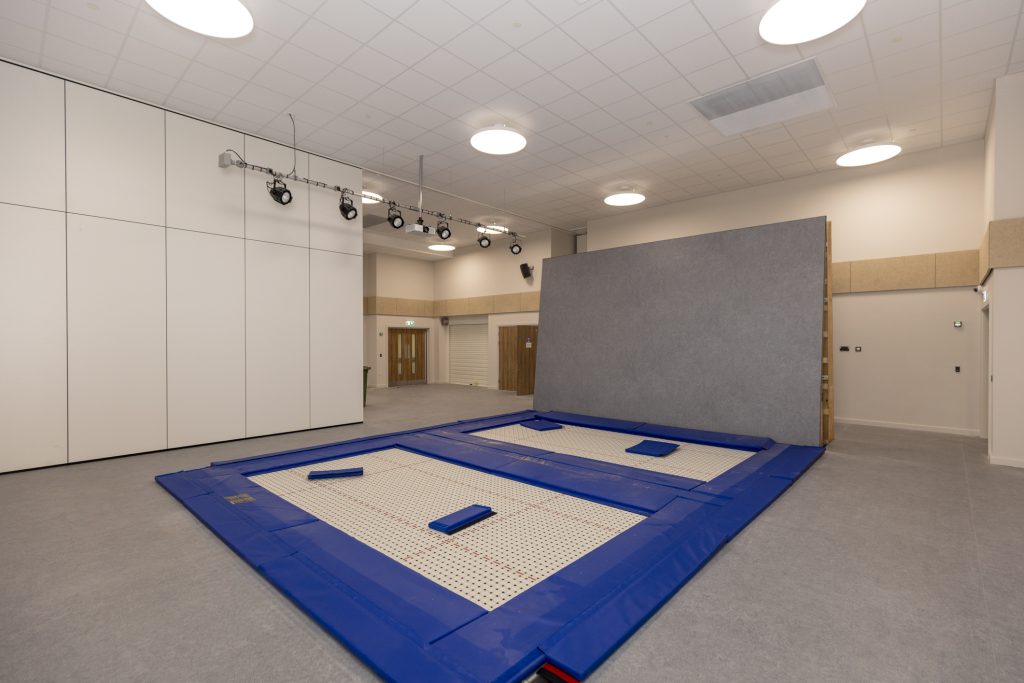


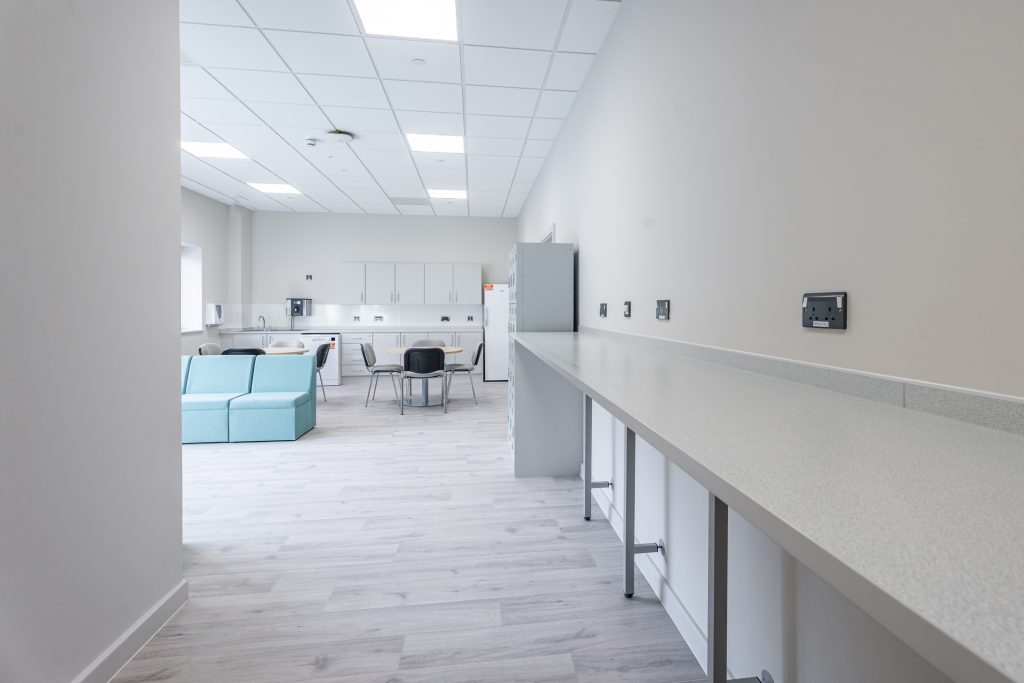
The new facilities include therapy rooms, sensory spaces, treatment rooms and a main hall equipped with a retractable trampoline. Outdoor improvements include a new multi-use games area and redesigned spaces intended to support pupils’ wellbeing and development.
A former bus lay-by has also been converted into a car park with more than 100 spaces, including ten accessible bays.
The first phase of the scheme involved refurbishing the existing school building to create a more joined-up, campus-style environment for pupils and staff.
The building has been designed to achieve net zero carbon in operation through the installation of solar panels, air source heat pumps, improved insulation and energy-efficient lighting.
Construction firm Morgan Sindall, which delivered the works through the South West Wales Regional Contractors Framework alongside engineering consultants AtkinsRéalis, said it had also exceeded its carbon reduction target during the build process.
The contractor said 95 per cent of the supply chain budget was spent locally, while 86 per cent of subcontractors used were based in the local area. Two graduates and two Pembrokeshire College work placement students were also involved in the project.
Cllr Jon Harvey, Leader of Pembrokeshire County Council, described completion of the first phase as an important milestone for both the school and the wider community.
Headteacher Sarah Hartley said: “We are delighted with the new provision for our pupils at Portfield School.
“It represents a significant step forward in ensuring every pupil has access to an inclusive, supportive and inspiring learning environment where they can thrive.

“As Headteacher, I am incredibly proud of how well the pupils have transitioned into the new site and adapted so quickly to their new learning environment.”
Morgan Sindall’s Area Director for Wales, Robert Williams, said the facilities would make “a lasting difference” to children, staff and families needing specialist education support.
The second phase of works is expected to be completed in early 2027 and will include the demolition and replacement of the respite block as well as remodelling of the SEN Sixth Form facilities.
The project follows previous collaboration between Pembrokeshire County Council and Morgan Sindall on Haverfordwest High VC School and Ysgol Gymraeg Bro Penfro.

Force says policy under review pending national guidance after referral to equality watchdog
SOUTH WALES POLICE has confirmed to The Herald it is pausing controversial guidance relating to the recording of anti-Muslim hostility following criticism from Conservative MP Claire Coutinho.
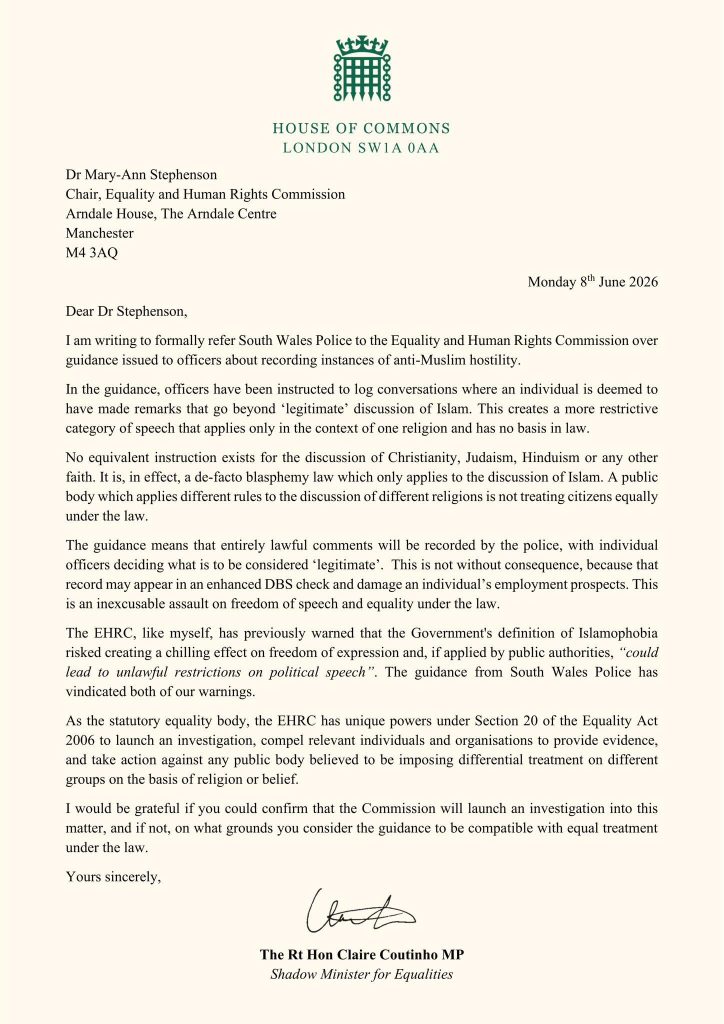
The force issued the statement after Ms Coutinho, Shadow Minister for Equalities, formally referred South Wales Police to the Equality and Human Rights Commission (EHRC), claiming the guidance risked creating a “de-facto blasphemy law” around discussion of Islam.

In a statement to The Pembrokeshire Herald, South Wales Police said: “We are pausing the aligning with this definition in order to consider whether to maintain or amend the adoption, pending guidance from NPCC. The force remains committed to ensuring the public safety of all of our communities.”
The response appears to indicate the force is reconsidering whether to continue using the definition in question while awaiting guidance from the National Police Chiefs’ Council (NPCC).
Ms Coutinho had accused the force of instructing officers to record comments deemed to go beyond “legitimate” discussion of Islam, arguing that no equivalent standard applied to other faiths.
In a letter to the EHRC chair, she wrote that the policy risked creating “a more restrictive category of speech that applies only in the context of one religion”.
The controversy centres on concerns about how non-crime incidents are recorded and whether lawful speech could be logged by police, potentially affecting public confidence in free expression and equal treatment under the law.
South Wales Police has not said whether the guidance will ultimately be scrapped, amended or reinstated following the review.



Crime48 minutes ago
Families condemn failed appeal by paddleboard boss jailed over Haverfordwest tragedy
RELATIVES SAY LATEST COURT BID HAS REOPENED PAIN AFTER FOUR DEATHS ON WESTERN CLEDDAU THE FAMILIES of victims of the...


Community17 hours ago
Forgotten wartime archive found in Pembroke Dock attic after 80 years
Remarkable family collection reveals story of father and son who served through two world wars A REMARKABLE untouched family archive...


Crime20 hours ago
Milford Haven woman left with facial fractures after drunken attack
A WOMAN in her late fifties suffered facial fractures after being repeatedly punched through the window of her car during...


Crime23 hours ago
Sex offender in senior role at Tenby family hotel
CREST HOTEL GROUP says it is investigating safeguarding concerns after staff at the Imperial Hotel in Tenby raised alarm over...


Sport1 day ago
Runners tackle new route in Ras Y Castell 10k
MORE than 90 runners took to the streets and paths around Cardigan on Friday evening (June 5) for the annual...

Business2 days ago
Turkish Kitchen reaches Welsh restaurant award semi-finals
Haverfordwest café praised as small independent business flies flag for Pembrokeshire A HAVERFORDWEST café has been named as a semi-finalist...


News2 days ago
Person taken to hospital after major emergency response on Tenby Esplanade
A PERSON has been taken to hospital following a major multi-agency emergency response on The Esplanade in Tenby. Dyfed-Powys Police...


News2 days ago
St Davids lifeboat crews rescue damaged yacht and stranded kayaker
TWO St Davids RNLI lifeboats were launched within hours of each other after a yacht was left disabled in a...


Community3 days ago
D-Day 82: Milford Haven remembers sacrifice of Normandy landings
COMMUNITIES gathered in Milford Haven on Saturday (Jun 6) to mark the 82nd anniversary of D-Day. The service, held at...


News3 days ago
D-Day at 82: The secret Pembrokeshire invasion that helped prepare for Normandy
Forgotten wartime operation saw thousands of troops storm Pembrokeshire beaches in rehearsal for D-Day LONG before Allied troops landed on...
-
Crime4 days ago
Paddleboard company owner loses bid to cut sentence over Haverfordwest tragedy
-

 Crime3 days ago
Milford Haven man admits harassment and assault
-

 Crime6 days ago
Milford Haven man bit neighbour’s neck near cashpoint
-

 News3 days ago
Community appeal for privacy after serious emergency in Pendine
-

 Crime7 days ago
Milford Haven man jailed for illegal Premier League streaming service
-
Crime7 days ago
Haverfordwest man admits cocaine offence as Crown disputes basis of plea
-

 Crime6 days ago
Pembroke Dock driver avoided jail after drug-drive crash
-

 Local Government7 days ago
National Express use of new Haverfordwest interchange still subject to risk checks