


Farming
London children embrace farm life

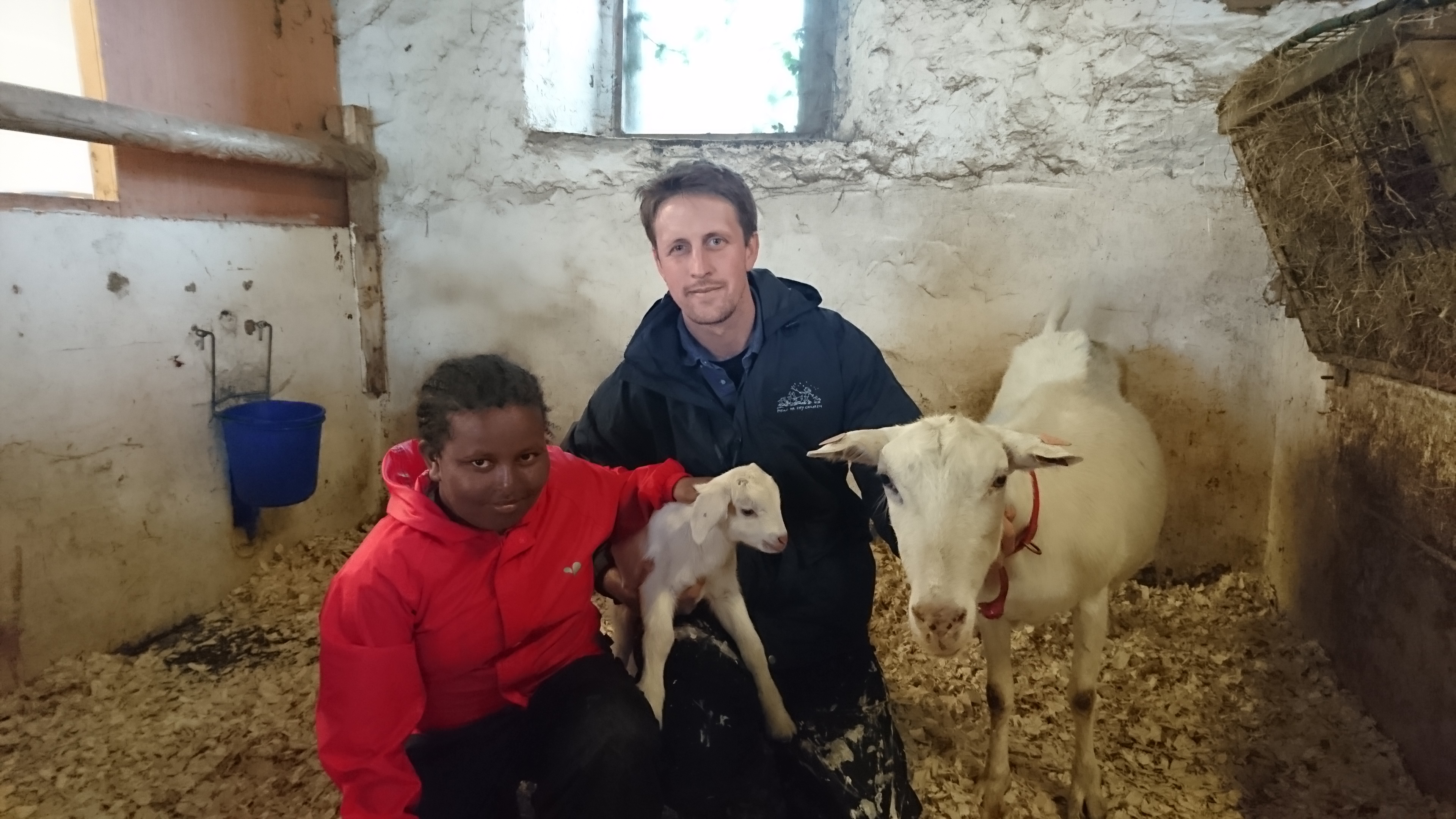
HOW MANY children across the UK have the chance to live on a working farm for a week, learning in the great outdoors and enjoying the beautiful countryside?
For some children that is a daily privilege but not necessarily for children from inner cities.
So, children’s author Michael Morpurgo and his wife Clare founded Farms for City Children (FFCC) at Nethercott House in Devon in 1976 to offer urban children from all over the country a unique opportunity to live and work together for a week at a time on a real farm in the heart of the countryside.
In 1986, FFCC acquired Lower Treginnis in Pembrokeshire on a long lease from the National Trust. After a highly successful fundraising campaign, the buildings were converted and re-structured by FFCC and in May 1989 Lower Treginnis opened for its first schools. The project won many awards for its sensitive restoration of the original farm buildings to provide a purpose-built, child-oriented space.
In 1993, a further property was secured on a 99 year lease – Wick Court in Gloucestershire, and across the three farms the charity now welcomes over 3,000 pupils and 400 teachers every year.

To see for themselves how much the children enjoy being out on farm and what the project has to offer, representatives from the Farmers’ Union of Wales joined a group of school children from London at Lower Treginnis farm, St Davids.
The farmstead dates back to 1284, and is the most westerly farm in Wales. Here Farms for City Children works in partnership with organic farmer and FUW members Rob and Eleri Davies, who keep around 900 sheep.
The award-winning buildings were converted and re-structured by FFCC to provide for up to 40 children and their teachers. Here the children help look after poultry, horses, donkeys, milking goats and a breeding herd of pigs. The farm now welcomes over 1000 pupils every year and is booked up for 32 weeks a year.
In charge of running the project in Pembrokeshire is School Farm Manager Dan Jones, who in 2009 started his teaching career in Swansea. He wanted what most teachers want – to help each child achieve their personal best, help them excel and feel fantastic about themselves. Disillusioned with the education system Dan decided to quit general education just five years later.

He explains: “The current education system makes it increasingly difficult for teachers to inspire children to learn. There is a huge workload teachers have to deal with, statistics and data inputting are a priority and that can have a real negative impact on teachers but also the children. It was more about reaching targets and getting my performance related pay and the children were no longer seen as children but as a level.
“So I quit and moved to the most westerly part of Wales – Lower Treginnis farm. The Pembrokeshire coast is now my classroom and the sheep, pigs, horses, goats and vegetables are my resources.”
The farm was not new to Dan. Every spring he would head west for a week of muck and magic with a group of Year 6 pupils and fell in love with the place.

“I would beg to be one of the team who accompanied the children and when a few years later the manager’s position at Treginnis was advertised I knew this is what I wanted to do. I was eventually appointed and am now doing my dream job. My wife, a city slicker at heart, supported my decision and we both handed in our notices and left for Treginnis. To say I am thankful to her for supporting me is an understatement,” Dan said.
Every Friday a coach load of children, aged 9-11, are welcomed to the farm and for many this is their first time away from home. FFCC aims to encourage learning, to raise self-esteem, and to enrich young lives by providing a safe and welcoming setting where children and their teachers together get involved in the working life of a real farm with real farmers.
“Treginnis is not a petting zoo, and we ask them to do real farm work. They are up at the crack of dawn milking goats, feeding pigs and poultry or looking after newborn lambs. The children are completely unplugged from the virtual world and instead can enjoy a game of chess, play cards, read a book or a kick about on the playing field.
“Three times a day the children sit at the dining table with their peers and teachers and eat together. For some that is a new experience but one that they relish. In only a week, you can see a change in the children. They are more confident, have more self-esteem and a real understanding of hard work and perseverance. These experiences and memories stay with them right the way through into their adult lives.
“It is an intense, ‘learning through doing’ experience of a different life – for children who may not know where their food comes from and have limited opportunities to explore the outside world,” explains Dan.
Alun Edwards, the FUW’s Education and Training Committee Chairman who joined the farm visit, said: “This is a fantastic project that helps children understand farming, the countryside and food production and it was great to see how teamwork helps to develop them socially and emotionally.
“The children are immersed and completely involved in a way of life that is so very different to their normal week, helping them to learn also about healthy eating and using practical, hands-on learning outside the classroom really helps with enhancing the requirements of the national curriculum.
“For some of these children it is an opportunity of a lifetime and they may never experience anything like this again. Looking at how the project here celebrates success and building self-worth through work and the completion of tasks, experiences like these should be on the national curriculum.”

Hartt family members listed at Haverfordwest Magistrates’ Court over unpaid penalties linked to major cattle prosecution
TWO PEMBROKESHIRE farmers convicted in a major bovine tuberculosis-related cattle case are due back before the courts this week over unpaid financial penalties.
Henry Hartt, 66, of Ciffig, Whitland, and Edward William Henry Hartt, 48, of Llandewi Velfrey, are both listed to appear at Haverfordwest Magistrates’ Court on Thursday (June 11).
Court records show both men face proceedings relating to the non-payment of fines of £94,739.64 imposed on March 4, 2024. Separate applications to lodge committal warrants are also listed, relating to unpaid fines of £22,300 and £22,400 respectively.
The pair were among three members of the Hartt family sentenced at Swansea Crown Court in March 2024 following a major prosecution brought by Pembrokeshire County Council involving bovine TB controls.
The court heard that cattle known to have reacted to bovine tuberculosis tests were knowingly kept on-farm, while substitute animals were allegedly presented for slaughter instead.
At the time, Henry Hartt, Edward Hartt and Charles Hartt admitted a total of 12 cattle identification offences connected to Longford Farm, Clynderwen.
The case centred on failures to comply with bovine TB restrictions and cattle tracing rules designed to prevent the spread of the disease.
Each defendant was fined £24,000, while confiscation orders and prosecution costs running into hundreds of thousands of pounds were also imposed.
Thursday’s hearing is expected to deal with enforcement proceedings connected to the unpaid financial orders rather than the original criminal offences.
The Herald will be attending court.

A CALL to keep a building which would partly be used a distillery at a Pembrokeshire farm which produces award-winning sheep milk-infused gin has been turned down by county planners.
In an application to Pembrokeshire County Council, Steven and Julie Ayers of Fifth Flock Spirits Ltd through agent Johnston Planning Ltd sought permission for the retention of a replacement building for farm diversification purposes incorporating a gin distillery with associated function/tasting room, reception area for farm businesses, including the distillery, a kennels and caravan site, along with offices and associated storage facilities at Nash Mountain Farm, Sardis.
Two previous similar 2024 and 2025 applications have been refused, the latest scheme removing some previous elements.
A supporting statement said the building would be used for farm diversification purposes for a number of established rural enterprises on the holding “but primarily in connection with Fifth Flock Spirits Ltd, a family run drinks company specializing in gin infused with milk derived from the resident flock at Nash Mountain”.

It said the 2023-erected building had replaced an earlier long-standing dilapidated farm building on the site, and is intended to play host to the three established farm enterprises which are run in conjunction with the main agricultural operation: Nash Mountain Kennels, Nash Mountain Caravan and Camping Site and primarily Fifth Flock Ltd.
It said internal works had yet to be completed, and, in addition to the retention of the building, the application also seeks permission for some external works which have not yet been carried out.
The statement said the Ayers family has farmed at 26ha Nash Mountain, which has a flock of 168 East Friesian sheep, for some five generations, the limited acreage meaning “the agricultural mainstay is not sufficient to sustain a viable business,” leading to the farm diversifications, with Fifth Flock the latest.
It said, in addition to the main farming operation, Nash Mountain also gains income from an on-site wind turbine, a caravan site, a boarding kennels with cattery, and Fifth Flock Ltd.
On the gin side, the statement says: “Fifth Flock Spirits Ltd Fifth Flock has operated from Nash Mountain since August 2025. It is at core currently a drinks enterprise based on the production of gin and rum infused with sheep’s milk, however, as set out in the accompanying business plan, the intention is to expand the offer into other sheep-based products to capitalise on the home flock.
“Since launching the enterprise has exceeded expectations with strong demand and accolades including A Taste of Pembrokeshire Award at the Pembrokeshire Food and Farming Awards in December 2025.
“Firth Flock currently source their gin from an independent distillery in Gorgeddan, Ceredigion however the intention, as reflected in this submission, is to develop the distilling element on-site and include it as part of an immersive visitor experience focussing on the home flock.
“Firth Flock has rapidly become a cornerstone of the enterprise at Nash Mountain and whilst the building at the centre of this proposal may have been premature there is a strong case for its retention as part of the overall rural enterprise on the holding.”

It adds that the Ayers are actively exploring diversification into other wool and sheep-based products.
The application was refused on the grounds including it was not demonstrated a countyside location was needed and there was not “sufficient evidence of a genuine and established rural enterprise necessitating the development,” adding: “In particular, the primary distilling process does not currently take place at the site and instead relies on off-site production, with only a future aspiration to relocate such activities.
“As a result, the proposal represents a speculative form of development that lacks a clear and direct functional link to the agricultural holding.”
It went on to say the scale of the proposals “introduces a level of intensity and built form more akin to a standalone commercial or tourism enterprise, rather than a modest farm diversification scheme”.


WELSH LABOUR has challenged Plaid Cymru over fears that badger culling could return as part of the new Welsh Government’s approach to bovine TB.
Interim Welsh Labour leader Ken Skates questioned First Minister Rhun ap Iorwerth in the Senedd today, Tuesday (Jun 9), after Plaid Cymru’s manifesto pledged a “new approach” to managing bovine TB which recognises wildlife as a source of infection and allows “scientifically validated control methods”.
Labour says the wording has raised concerns among animal welfare campaigners that badger culling could be reconsidered in Wales.
During First Minister’s Questions, Mr Skates asked: “What is Plaid Cymru’s preferred method of killing badgers? Is it to shoot badgers? To poison badgers? Perhaps bludgeon them, or gas them?
“Would you want the badgers shot or poisoned or do you have another method in mind?”
The First Minister did not rule out badger culling in his response, according to Welsh Labour.
However, Plaid Cymru has not explicitly said it will reintroduce badger culling. Its manifesto refers to “scientifically validated control methods”, wording which could cover a range of approaches unless ministers provide further clarification.
The issue remains highly sensitive in rural Wales. Farmers and farming unions have long argued that wildlife transmission must be addressed as part of any serious bovine TB strategy, while animal welfare campaigners strongly oppose any return to culling.
Labour said the previous Welsh Government rejected badger culling following research which it said showed the practice was cruel and ineffective in tackling the spread of bovine TB.
Mr Skates said: “I was appalled that the First Minister dismissed concerns raised about animal welfare today as ‘not a serious question’.
“Plaid Cymru’s approach to the outdated and cruel practice of culling badgers sets a dangerous precedent around how they will approach animal welfare. Which animal rights are they prepared to roll back on?
“Welsh Labour will continue to hold the government to account to ensure the progress made on a safer, kinder Wales for animals is not undone.”

Welsh Labour also pointed to its record on animal welfare, including bans on greyhound racing, snares and glue traps.
The Herald has asked Plaid Cymru and the Welsh Government to clarify whether badger culling is being considered.



Crime2 hours ago
Farmers fined in bovine TB scandal face fresh court action
Hartt family members listed at Haverfordwest Magistrates’ Court over unpaid penalties linked to major cattle prosecution TWO PEMBROKESHIRE farmers convicted...


Crime6 hours ago
Pembrokeshire child killer stabbed to death in prison cell, murder trial hears
Kyle Bevan, jailed for the murder of Haverfordwest toddler Lola James, was allegedly stabbed 25 times and left ‘as if...

News13 hours ago
Pendine cliff fall victim recovering after major emergency response
A 22-YEAR-OLD man who suffered serious injuries after falling from cliffs overlooking Pendine Beach is recovering well following emergency surgery....


News1 day ago
First Minister challenged over jobs for student nurses
REFORM WALES has accused the First Minister of failing to guarantee jobs for student nurses in Wales, despite continuing pressure...

Crime1 day ago
Knife blankets call as school staff face rising violence fears
GMB says protective equipment should be considered where risk assessments show staff could face blades SCHOOL staff should be given...


News1 day ago
Claire Archibald secures review of Milford Haven train times
RURAL TRANSPORT CONCERNS RAISED WITH TFW CLAIRE ARCHIBALD MS has secured a review of train times between Milford Haven and...


Crime1 day ago
PCC review calls for stronger youth crime prevention work
REPORT MAKES 13 RECOMMENDATIONS A REVIEW into crime and anti-social behaviour services for young adults has called for stronger prevention...


Crime2 days ago
Families condemn failed appeal by paddleboard boss jailed over Haverfordwest tragedy
RELATIVES SAY LATEST COURT BID HAS REOPENED PAIN AFTER FOUR DEATHS ON WESTERN CLEDDAU THE FAMILIES of victims of the...


Community2 days ago
Forgotten wartime archive found in Pembroke Dock attic after 80 years
Remarkable family collection reveals story of father and son who served through two world wars A REMARKABLE untouched family archive...


Crime2 days ago
Sex offender in senior role at Tenby family hotel
CREST HOTEL GROUP says it is investigating safeguarding concerns after staff at the Imperial Hotel in Tenby raised alarm over...
-
Crime5 days ago
Paddleboard company owner loses bid to cut sentence over Haverfordwest tragedy
-

 Crime4 days ago
Milford Haven man admits harassment and assault
-

 News4 days ago
Community appeal for privacy after serious emergency in Pendine
-
Crime2 days ago
Sex offender in senior role at Tenby family hotel
-
Community2 days ago
Forgotten wartime archive found in Pembroke Dock attic after 80 years
-

 Business5 days ago
Call for gym and Padel courts at Kiln Park Farm unanimously backed
-
Crime2 days ago
Families condemn failed appeal by paddleboard boss jailed over Haverfordwest tragedy
-

 Community4 days ago
Founders Day hailed a success despite rising costs and extra security