


News
RNLI search for missing teenager


ST DAVIDS RNLI launched on service on Saturday (Oct 7) to search for a missing teenager.
Dyfed-Powys Police and the H M Coastguard were also tasked to help in the search.
The lifeboat carried out a shoreline search between Porthgain harbour and Abercastle, using search lights, night vision goggles and a FLIR (forward looking infrared) camera.
Shortly afterwards a message was received that the teenage girl had been found safe by coastguards near Trevine and she was being conveyed to hospital for treatment.
With this information received all units were stood down with the lifeboat returning to station, arriving back at 10.45pm.


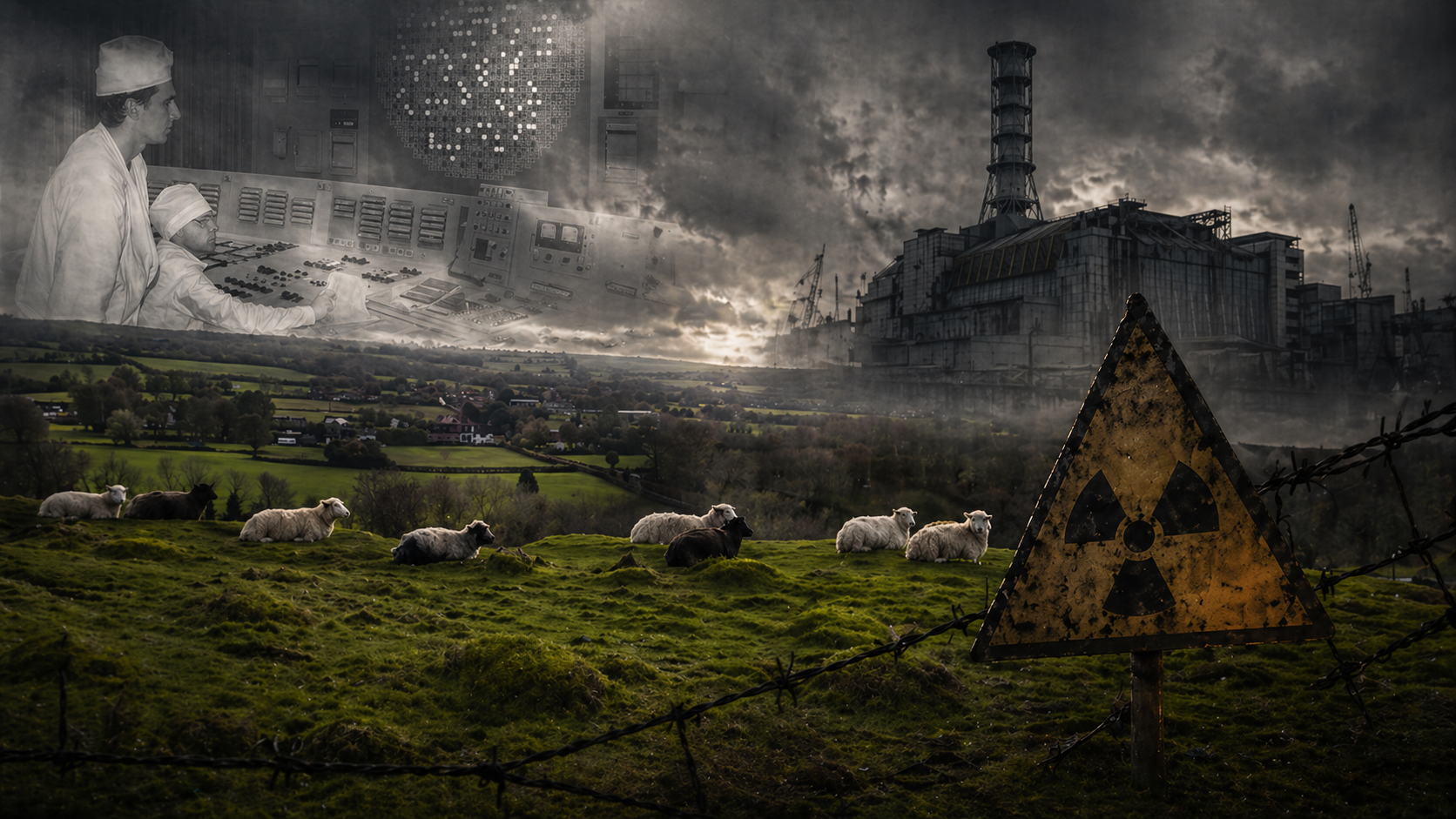
Forty years after the nuclear disaster, questions remain about fallout, farming and public reassurance
THE CHERNOBYL nuclear disaster is usually remembered as something that happened far away.
The explosion at reactor four in Ukraine, then part of the Soviet Union, took place on April 26, 1986. It caused devastation close to the plant, forced mass evacuations, and became the world’s worst nuclear accident.
But Chernobyl was not only a Soviet story.
Radioactive material released by the explosion was carried across Europe. Within days, the plume had reached Britain. Rainfall brought radioactive particles down over parts of the UK, including Wales.
The effects in Wales were real. Welsh farms, particularly in upland areas of North Wales, were placed under sheep movement restrictions after radioactive caesium was found in the environment. Some restrictions remained in force until 2012 — 26 years after the disaster.
That is not speculation. It is part of the official record.
There was also monitoring in south-west Wales.
After Chernobyl, milk was tested across Wales. In this part of the country, samples were taken from creameries and farms. Rainwater was also sampled at Milford Haven.
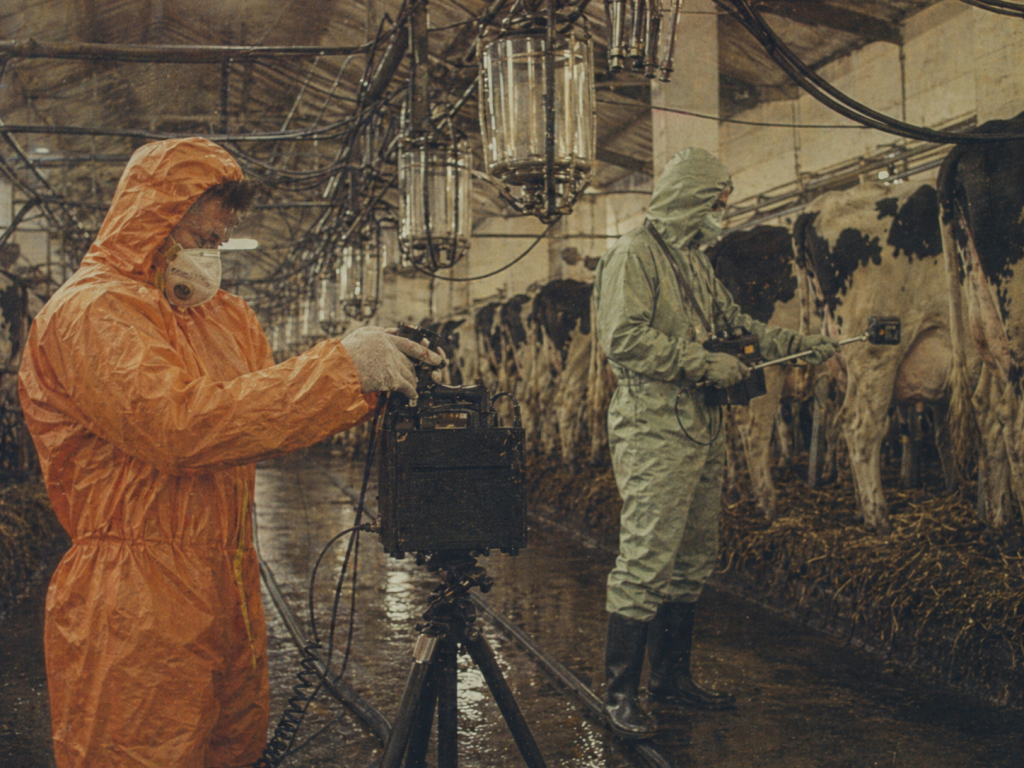
Radiation was detected locally.

In May 1986, iodine-131 was found in milk from Haverfordwest. Caesium-137 was also later detected in milk from the same source. Iodine-131 was found in rainwater at Milford Haven.
Officials said the levels were low and well below the emergency reference limits in place at the time. That is an important point. This article is not claiming that Pembrokeshire children were poisoned, or that any individual illness can be blamed on Chernobyl.
But the readings were not zero.

That is why the subject still matters.
For scientists, the figures were a matter of becquerels, half-lives and exposure levels. For parents in 1986, the issue was far simpler. Radioactive material had been found in rainwater and milk.
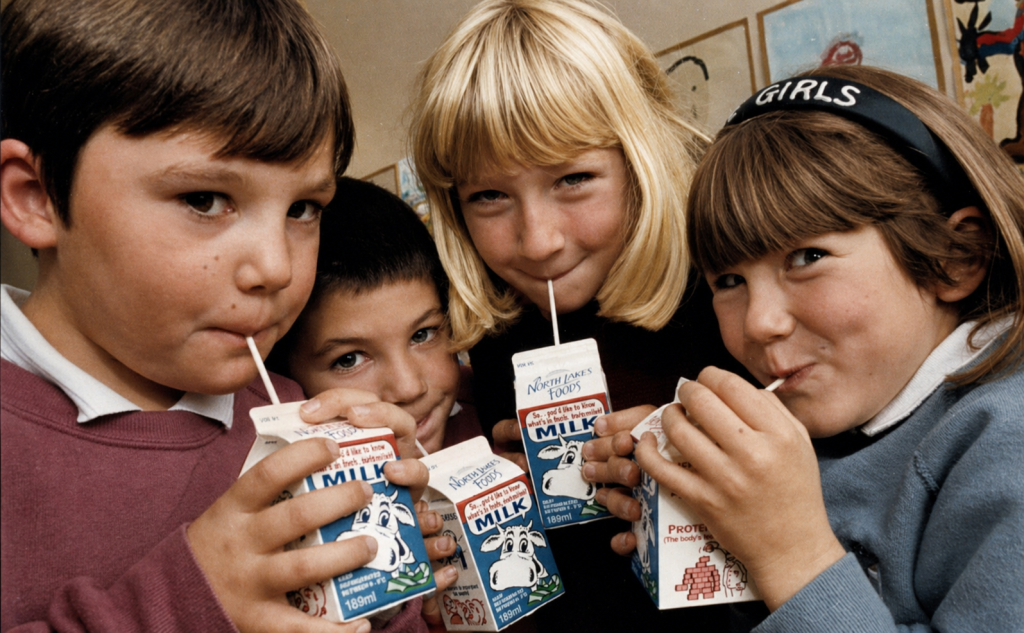
The official reassurance may have been accurate, but it was never likely to remove all public anxiety.
Children were always the group people worried about most. They drank milk. They were still developing. They were more vulnerable to some forms of exposure, particularly radioactive iodine, because iodine concentrates in the thyroid gland.
The levels recorded in Pembrokeshire were far below those seen in the worst-affected areas near Chernobyl. They were also below the action levels used by the UK authorities.
Even so, many people who grew up in Wales at that time are entitled to ask what the long-term impact may have been.
Those of us born in the late 1970s were around seven years old when Chernobyl happened. We were too young to understand the news reports or the government statements. We did not understand iodine-131, caesium-137 or the food chain.
But we were part of the generation living through it.
I remember a teacher at my secondary school later saying that our year group appeared to have been academically stunted by something. He may have been wrong. Teachers often notice differences between year groups, and there may have been many other explanations.
It could have been social factors, family pressure, poverty, schooling, or simply one difficult cohort.
But his comment stayed with me.
So has something else. A number of people from that school generation have since died from unusual or aggressive cancers at a relatively young age.
That does not prove a link to Chernobyl. Cancer is common, and apparent clusters can happen by chance. It would be wrong to claim that Chernobyl caused those deaths without evidence.
But it is also understandable that people ask questions.
Public health is not only about whether officials can prove a direct cause. It is also about public confidence, communication and whether people feel they were told enough at the time.
The government’s position in 1986 was that the readings in areas such as Pembrokeshire were low and did not require emergency action. That may well have been correct.
But it does not mean the concern was irrational.
If radiation was found in rainwater at Milford Haven and in milk from Haverfordwest, then local people had a right to know what was found, what it meant, and how the risk was being assessed.
The wider Welsh experience shows why trust was so important. In North Wales and other upland areas, sheep farmers lived with the consequences of Chernobyl for decades. Restrictions on some farms lasted until 2012.
That gave the disaster a long life in Wales. It was not a one-week scare on the television news. It affected agriculture, food safety, public confidence and the relationship between rural communities and government.
The question of whether Chernobyl affected children in Wales is harder to answer.
Official assessments have generally concluded that the levels received by the UK population were low, and that any health impact would be difficult to detect at population level. The worst health effects were seen much closer to the plant, particularly in parts of Ukraine, Belarus and Russia.
But “low risk” is not the same as “no concern”.
Nor does it mean the subject should be dismissed.
The responsible position is to say this: Chernobyl fallout reached Wales. Radioactive material was detected in parts of the Welsh food and water environment. Welsh farming was affected for decades. Children living in Wales at the time were exposed to low levels of fallout, mainly through the wider environment and food chain.
What cannot be said is that Chernobyl caused a particular illness, a particular death, or a particular school year’s difficulties in Pembrokeshire.
The evidence does not allow that.
But the question remains legitimate.
Forty years on, Chernobyl is still remembered because it showed how far the consequences of a nuclear accident can travel. Wales was not at the centre of the disaster, but it was not untouched by it either.
For Pembrokeshire, the local facts are enough to justify looking back again: rainwater was tested at Milford Haven, milk was tested in Haverfordwest, and radioactive material was found.
The official view was that the levels were low.
The public memory is more complicated.
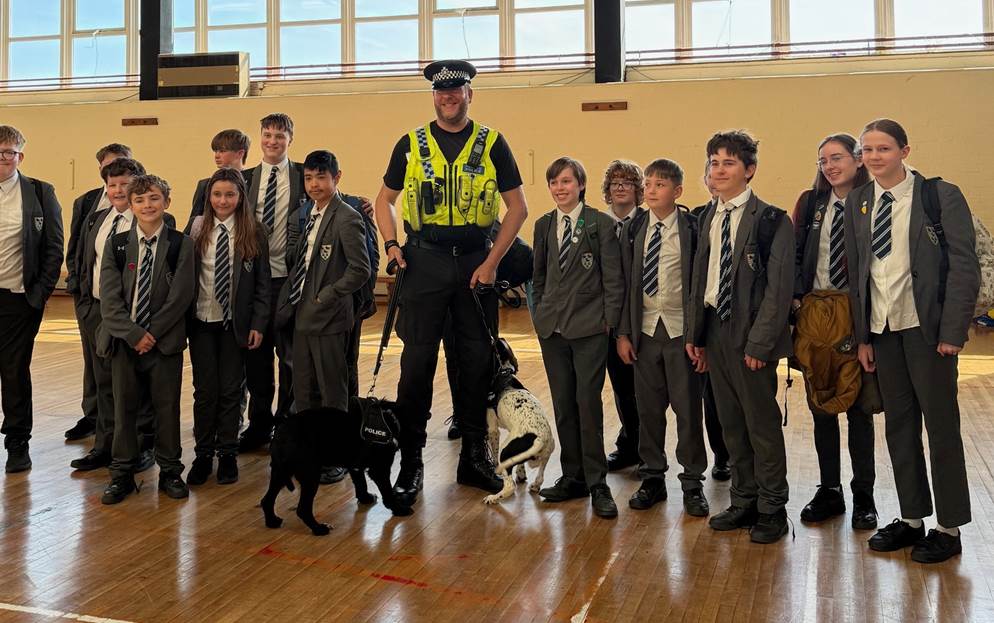
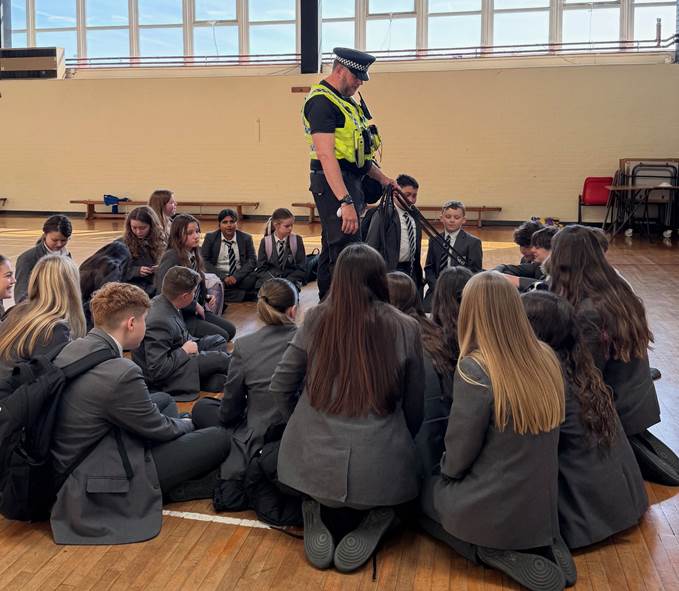
PUPILS at Ysgol Greenhill were given a close-up look at the work of police dogs during a visit from local officers.
Officers from the Tenby Neighbourhood Policing and Prevention Team attended the school on Thursday (Apr 23), joined by police dog handler PC 301 Bain and police dogs Stan and Archie.
The visit gave pupils and staff the chance to learn more about the role of police dogs, their training, and the work they carry out alongside officers.
Police said the afternoon was also an opportunity for positive engagement and relationship building between young people and the local policing team.
The visit appeared to be a hit with pupils — and with Stan and Archie, who were said to have enjoyed plenty of fuss and attention during the afternoon.

Tenby, Saundersfoot and Narberth Police thanked Greenhill School for hosting the visit.

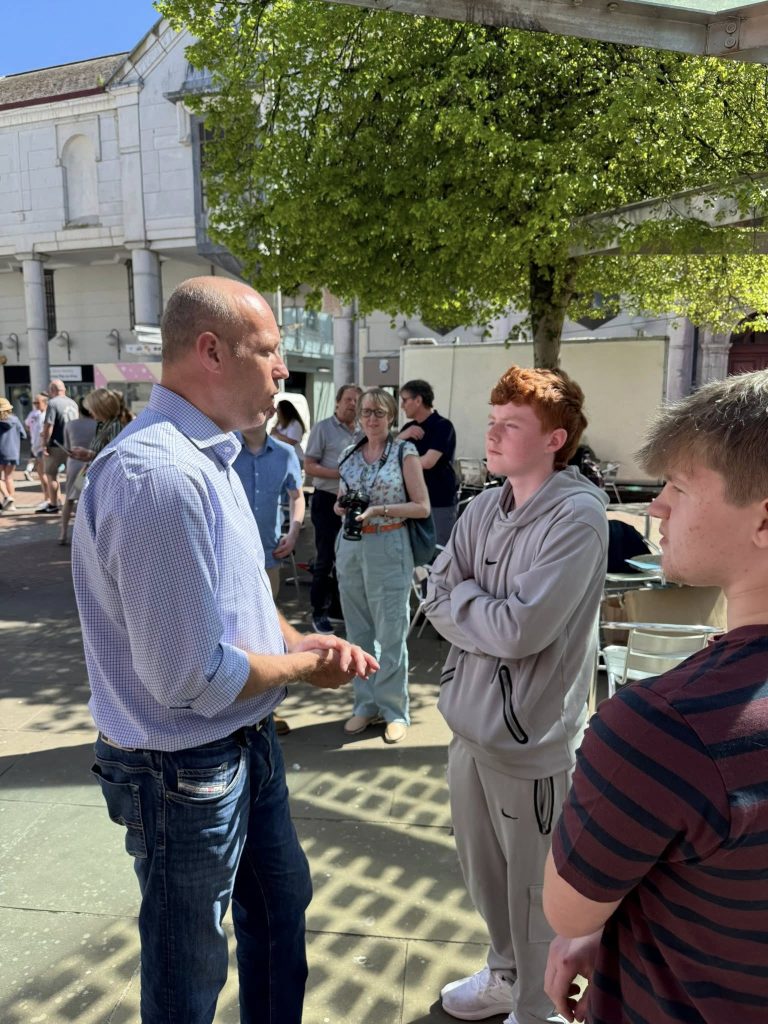
REFORM UK Wales leader Dan Thomas visited Llanelli over the weekend as the party continued its campaign ahead of next month’s Senedd election.
Mr Thomas was joined by Wales Director David Thomas, local candidates and party members for a day of canvassing and public engagement across the town.
The visit included Llanelli town centre, the market, St Elli Shopping Centre and doorstep conversations with residents.

Organisers said the day had been positive, with discussions covering local concerns and Reform UK’s policies for Wales.
Gareth Beer, lead candidate for Sir Gaerfyrddin and Carmarthenshire branch chairman, said: “There is great momentum in the county and people are pleased to speak to us and hear about our policies.
“Many people see this election as an important one, and many who have been put off voting in the past are now considering Reform.
“That’s good to hear. There is a clear shift in this area away from the mainstream parties. We are relating to a diverse range of voters which other parties may be struggling to engage with.”
He added: “A huge thank you to everyone who came out to support the visit today. It is massively appreciated.”
Mr Thomas said: “It was a pleasure to support the Carmarthenshire candidates. The branch has outstanding, relatable and hard-working candidates who have been campaigning tirelessly for several weeks, getting out there to speak to as many residents as possible.

“I was particularly pleased to support the strong Llanelli campaign, where the team is working hard to connect with local people every day and to spread the word about what Reform will do for the people of Wales.”
Party members said they would continue door-knocking across Carmarthenshire, covering both rural communities and urban areas.
During the visit, campaigners also highlighted concerns about the future of Llanelli town centre, which they said was quieter than expected for a Saturday.

Reform UK Wales says its policies include support for small businesses, changes to business rates, measures to help independent retailers and hospitality venues, and regeneration plans aimed at bringing shoppers and businesses back into town centres.
The party’s wider Senedd election pledges include cutting 1p from every band of Welsh income tax, scrapping the default 20mph speed limit in built-up areas, supporting major infrastructure projects including the M4 relief road, and improving public services.
The Senedd election takes place on Thursday, 7 May.



Sport16 hours ago
Bluebirds reach European play-off final after penalty drama in Barry
Haverfordwest County beat Barry Town United 3-1 on spot-kicks after 1-1 draw at Jenner Park HAVERFORDWEST COUNTY are one win...


News2 days ago
Barley Saturday brings bumper crowds to Cardigan
CROWDS lined the streets of Cardigan on Saturday (Apr 25) as Barley Saturday once again brought the town centre to...

Community2 days ago
Freshwater West memorial honours crews lost in wartime tragedy
VETERANS, standard bearers and civic representatives gathered at Freshwater West on Saturday (Apr 25) for a moving service of remembrance...


News2 days ago
Haverfordwest Hemp hustings to explore role in Wales’ future economy
Debate at Haverhub to link agriculture, sustainability and Senedd election issues A UNIQUE political and environmental debate is set to...


News2 days ago
Parties use postcode-targeted social media adverts in Senedd campaign
LABOUR has spent more than twice as much as any other Welsh political party on Facebook and Instagram advertising in...

News3 days ago
Pressure builds as Labour ducks farming hustings
NOT one of Labour’s seven list candidates for the Ceredigion Penfro seat turned up for farming hustings in either Pembrokeshire...

News4 days ago
Kemi Badenoch warns over loss of industry during Valero visit
Conservative leader says Wales cannot afford to lose more strategic jobs as she attacks Reform and backs Darren Millar KEMI...

News4 days ago
Waiting lists fall for ninth month — but cancer, A&E and ambulance pressures grow
Labour points to “real progress” on treatment backlogs as surgeons and Conservatives warn the next Welsh Government still faces a...

Crime4 days ago
Man on trial over historic sex offence allegations
Pembroke Dock defendant faces charges spanning from 1984 to 2008 A MAN from Pembroke Dock is standing trial at Swansea...


News5 days ago
Cardigan distillery wins gold for debut Welsh whisky
In the Welsh Wind celebrates major success at the World Whiskies Awards 2026 with Brychan, its first blended Welsh malt...
-
 Crime6 days ago
Milford man admits TV piracy offences linked to estimated £6m losses
-
 Local Government4 days ago
Unresolved building control record leaves buyer’s cottage unregistered
-

 News6 days ago
Paul Dowson defends controversial record in Herald election interview
-
 Crime7 days ago
Alleged pay TV fraud case due before Haverfordwest magistrates
-
Crime4 days ago
Man on trial over historic sex offence allegations
-
News4 days ago
Waiting lists fall for ninth month — but cancer, A&E and ambulance pressures grow
-
 Charity7 days ago
Local nurse plans 26-mile charity walk across Preseli Hills
-

 News6 days ago
Sandra Jervis warns Withybush is being stripped back by stealth