


Education
Cave beneath Pembroke Castle could rewrite Britain’s prehistoric story

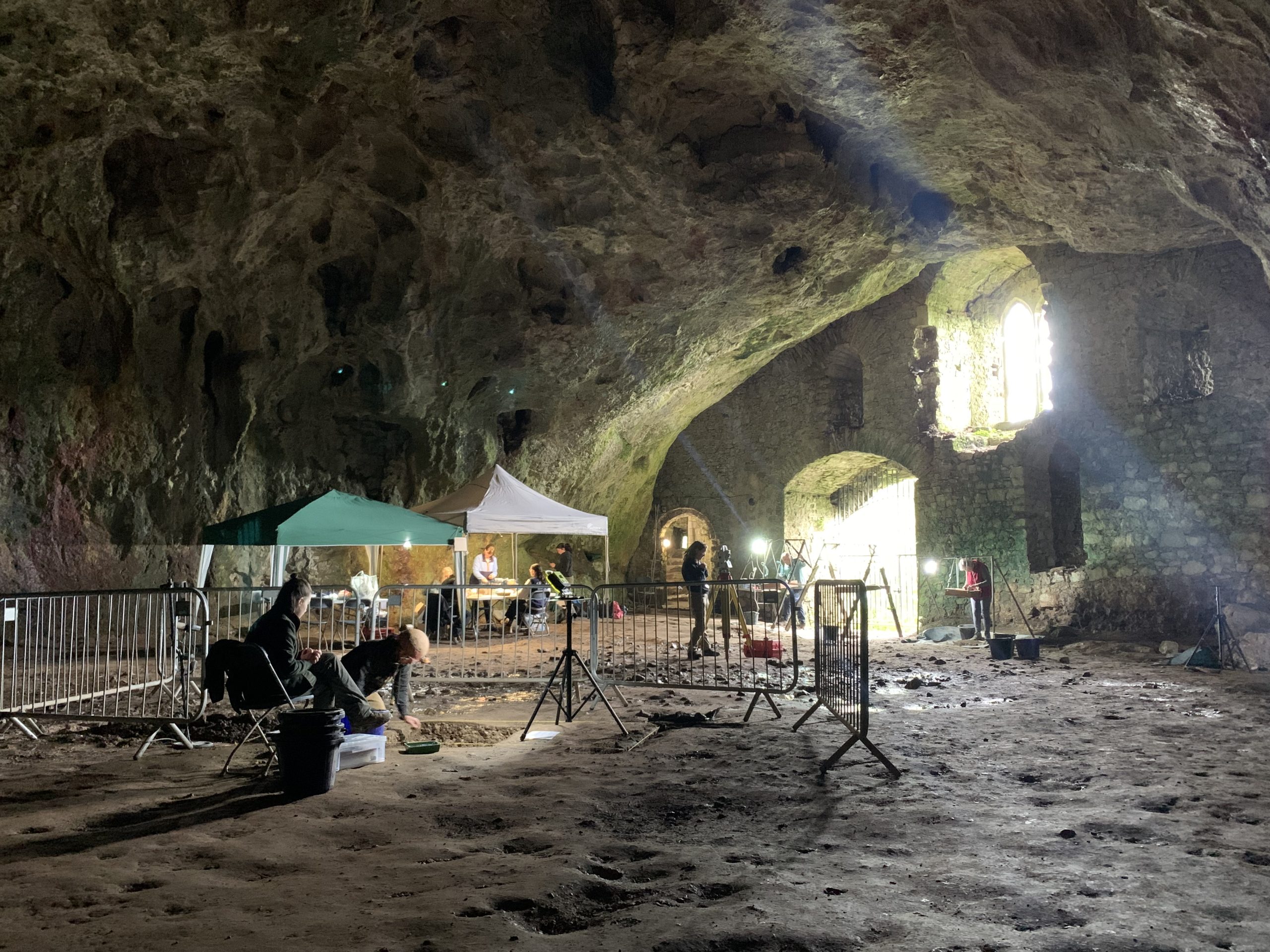
Five-year project to explore Wogan Cavern after remarkable finds including hippo bones, mammoth remains and evidence of early humans
A CAVE hidden beneath Pembroke Castle could help rewrite the story of prehistoric Britain after archaeologists uncovered evidence of human and animal activity stretching back more than 100,000 years.
A major new five-year archaeological project, led by the University of Aberdeen, will now investigate Wogan Cavern in greater depth after early excavations revealed what researchers believe may be one of the most important prehistoric archives in Britain.
Funding for the work has been awarded by the Calleva Foundation, with further support from the Pembroke Castle Trust, which is expanding its team and developing space at the castle so finds from the cavern can be preserved and kept in Pembroke.
Reached by a spiral staircase from inside the castle, the enormous cave had long been thought to have been emptied by Victorian digging, leading many to assume that little archaeological material remained.
But small-scale excavations carried out between 2021 and 2024 told a very different story.

Researchers uncovered abundant evidence of repeated human and animal visits over tens of thousands of years, with much of the cave’s sediment still intact. Finds already include the bones of mammoth, woolly rhinoceros, reindeer and wild horse, along with stone tools and signs of human occupation from several prehistoric periods.
Among the most striking discoveries are hippo bones believed to date from the last interglacial period around 120,000 years ago, when the climate was far warmer and hippopotamuses roamed what is now Wales.
Dr Rob Dinnis, who directed the first excavations and will lead the new project for the University of Aberdeen, said the significance of the site was already clear.
He said: “Despite the limited work done so far, we can already say that Wogan Cavern is a truly remarkable site.

“Not only is there extremely rare evidence for early Homo sapiens, there are also hints at even earlier human occupation, probably by Neanderthals.
“There is no other site like it in Britain – it is a once-in-a-lifetime discovery. With this new project we can learn a great deal about our early prehistoric forebears, about how they lived and what their worlds looked like.”
Archaeologists hope larger-scale excavations will reveal more about extinct animals, ancient environments and the changing climate, as well as the different groups of humans who may have used the cave.

Dr Dinnis said the team was optimistic the site could preserve a long sequence of human activity, from hunter-gatherers living there just after the last Ice Age around 11,500 years ago, back to Britain’s earliest Homo sapiens between 45,000 and 35,000 years ago, and possibly even earlier traces left by Neanderthals.
He added: “We have also found hippo bones, which probably date to the last interglacial period, around 120,000 years ago. The site could therefore tell us about how multiple changes in climate and environment affected people living there over 100,000 years or more.”
The project will make use of the University of Aberdeen’s expertise in archaeological science, alongside specialists from across Britain and Europe.
Professor Kate Britton, a specialist in science-based archaeology at the university, said the cave offered an exceptional opportunity to apply modern scientific methods.
She said: “Wogan Cavern provides a unique chance to use all the scientific techniques now available to archaeologists.
“Because the bones are well preserved, we can learn a lot about past environments and ecosystems, and do high-resolution scientific dating. Furthermore, pilot studies have shown that ancient DNA is preserved, in both the bones and the cave sediments.
“The project’s team of specialists are excited to learn as much as possible about the cave and its early inhabitants – animal and human – in the coming years.”
For Pembroke Castle, best known as the birthplace of Henry Tudor and one of Wales’ leading visitor attractions, the discovery opens an entirely new chapter in its long history.
Dr Jonquil Mogg, the newly appointed collections manager at Pembroke Castle, said: “Pembroke Castle has long been a very important part of Welsh and British history. Wogan Cavern has the potential to also establish it as a place of huge significance to British archaeology.”
Castle manager Jon Williams added: “This is incredibly exciting news for everyone at the castle.
“We have watched with great interest as Wogan Cavern has started to reveal its secrets – it’s very different from the medieval history we usually deal with at the castle.
“We are thrilled that work on this wonderful cave will continue. We very much look forward to working more with Rob and his team, and securing the collection for the people of Pembroke, Wales and beyond.”
New excavations are due to begin at the end of May.













SCHOOL leaders have warned that a Welsh Government plan to increase incentive payments for trainee teachers in priority subjects risks creating a “two-tier workforce”.
NAHT Cymru said the move may help attract some new teachers, but warned it does not address the wider recruitment and retention crisis facing schools across Wales.
The Welsh Government’s priority subject incentive scheme offers grants to eligible postgraduate teacher trainees in subjects including biology, chemistry, design and technology, digital technology and computer science, mathematics, international languages, physics and Welsh.
Laura Doel, national secretary of NAHT Cymru, said: “While we agree that an ambitious plan to help schools struggling with recruitment and retention of teachers is needed, we don’t think focusing on subject-specific incentives is the way to go.
“This risks creating a two-tier workforce and appears to be a short-term sticking plaster solution for a systemic problem.”
She said there appeared to be no requirement for teachers to remain in schools for a set number of years after induction in order to keep the payment.
Ms Doel added: “We know a significant proportion of teachers leave the profession within the first five years of teaching.”
NAHT Cymru said ministers should focus instead on the wider pressures affecting teachers, school leaders and primary schools, as well as secondary subjects where recruitment is difficult.
The union said improving pay, terms and conditions, and reducing workload would do more to make teaching an attractive long-term career.
Ms Doel said: “By going further in restoring the real-terms value of pay, which fell sharply over the previous decade, improving terms and conditions, and bearing down on unsustainable levels of workload, ministers could make the profession an attractive long-term career proposition once again.
“But schools also need fairer funding to recruit the staff and support staff they need and deliver for pupils.”
She said ensuring schools receive the full consequential funding owed through the Barnett Formula should be a priority for the new administration.

NAHT represents more than 38,000 school leaders across early years, primary, secondary and special schools in England, Wales and Northern Ireland.

Claire Archibald says proposals affecting Cilgerran and Manorbier show rural families risk losing real parental choice
A REFORM UK Senedd member has asked the Welsh Government to intervene over the future of Church schools in West Wales, following growing concern about proposals affecting rural schools in Pembrokeshire and Ceredigion.
Claire Archibald MS, who represents Ceredigion Penfro, has written to Education Minister Anna Brychan asking what safeguards are in place to protect Church schools, Christian education and parental choice.

Her intervention follows months of controversy over the future of rural education provision, including proposals affecting Cilgerran Church in Wales Voluntary Controlled School and Manorbier Church in Wales Voluntary Controlled School.
Pembrokeshire County Council has consulted on plans to discontinue Cilgerran Church in Wales VC School and establish a new 3-11 community school in its place.
In Manorbier, the council has also progressed proposals to discontinue the village’s Church in Wales school, which has been at the centre of a long-running row following a serious fire.
Ms Archibald said the issue should not be treated as a simple administrative change.
She said: “Christianity has helped shape Wales for generations. It is part of our history, our values, and the life of many of our villages and towns.

“Church schools matter. They give parents the choice of a Christian education for their children, and in rural areas that choice can be lost very easily when a school is closed, reorganised, or stripped of its Church status.
“I fully understand that councils face financial pressures and difficult decisions, but we cannot allow those pressures to quietly erase Christian school provision from rural Wales.
“These are not just technical changes. They affect parental choice, community life, and the future of Christian education in Wales.”
Rural school concerns
The Herald has previously reported on strong opposition to changes at Cilgerran, where many parents and residents have argued that the school’s Church status is part of its identity and community role.
The Manorbier case has also attracted significant local attention, with campaigners arguing that the village school should be protected following the disruption caused by the fire and the temporary relocation of pupils.
Ms Archibald said the pattern across rural Wales was worrying.
She has also raised concerns about proposals affecting village schools in Ceredigion, including Ysgol Llanfihangel y Creuddyn, a community school on a Church in Wales-owned site.
She said: “Parents should not be told they have choice on paper when the nearest realistic alternative may be many miles away.
“In rural areas, distance matters. Transport matters. Community matters.
“I have asked the Education Minister to set out what safeguards are in place to protect Church schools, Christian education, rural communities, and parental choice before these decisions are allowed to go ahead.”
Questions for ministers
In her letter, Ms Archibald asked the Welsh Government to confirm what assessment has been made of Church schools closed, discontinued, or proposed for category change in Wales.
She has also asked whether stronger guidance will be issued to councils considering proposals that affect Church schools.
The MS has requested that the minister meet affected parents, governors, local representatives and the relevant dioceses.
Councils have previously argued that school reorganisation proposals must take account of pupil numbers, building conditions, budgets, educational standards and long-term sustainability.
However, campaigners say that in rural communities the closure or reclassification of a school can have consequences beyond education, including the loss of community identity, longer journeys for children and fewer realistic choices for parents.

Community
Chapel’s call for time extension for Sunday school classroom while funding sought for permanent structure

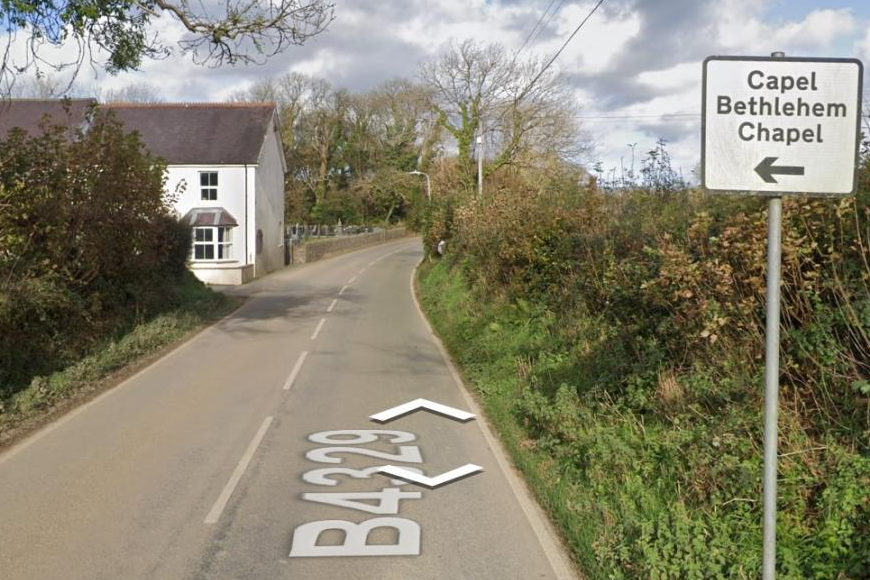
A CALL to allow a Pembrokeshire chapel to keep a temporary classroom used as a Sunday school while funding for a permanent building is sought has been submitted to county planners.
In an application to Pembrokeshire County Council, Rev Jennifer Gough, through agent Harries Planning Design Management, seeks permission for the retention of a temporary classroom at Bethlehem Chapel, Bethlehem, near Haverfordwest.
A supporting statement says: “The chapel maintains an active congregation with Sunday school provision. The temporary classroom gained planning permission in 2017 and comprises a portacabin arrangement located to the west of the chapel. It comprises a single classroom internally and simple elevations. The structure is temporary with all services located within the existing chapel.
“Planning permission was originally granted in 2018 for temporary consent for the classroom. This has been reissued twice [in 2020 and 2022 schemes] whilst the chapel secured funds and agreed designs to allow for a permanent solution.
“This application seeks to renew consent for the temporary classroom which lapsed in February 2026, to allow for a final period of use of the temporary arrangement.
“Work is underway to submit a long-term, permanent arrangement to secure a classroom for the Sunday school but future planning and building work could still take some time. Therefore, to future proof the Sunday School and continue to support the congregation, further temporary permission is sought.”
It adds: “All features of this application remain the same as previous, with no additional arrangements proposed. There will be no foul output generated from this proposal.”
In finishes: “Overall, this application seeks to retain the temporary classroom for one further period to allow a permanent solution to be submitted into planning and subsequently be built, all whilst supporting the existing Sunday school and maintaining a functional congregation and chapel.
“The temporary classroom has been deemed appropriate under previous applications and there are no changes proposed, with all detailed matters remaining acceptable.”
The application will be considered by county planners at a later date.
At the start of the year, an extension to the chapel, for community activities, was approved by planning officers.



Crime8 hours ago
Farmers fined in bovine TB scandal face fresh court action
Hartt family members listed at Haverfordwest Magistrates’ Court over unpaid penalties linked to major cattle prosecution TWO PEMBROKESHIRE farmers convicted...


Crime12 hours ago
Pembrokeshire child killer stabbed to death in prison cell, murder trial hears
Kyle Bevan, jailed for the murder of Haverfordwest toddler Lola James, was allegedly stabbed 25 times and left ‘as if...


News19 hours ago
Pendine cliff fall victim recovering after major emergency response
A 22-YEAR-OLD man who suffered serious injuries after falling from cliffs overlooking Pendine Beach is recovering well following emergency surgery....


Community20 hours ago
Commissioner launches free course to help tackle ageism in Wales
A NEW free learning course has been launched to help people across Wales recognise and challenge ageism. The Older People’s...


News2 days ago
First Minister challenged over jobs for student nurses
REFORM WALES has accused the First Minister of failing to guarantee jobs for student nurses in Wales, despite continuing pressure...


Crime2 days ago
Knife blankets call as school staff face rising violence fears
GMB says protective equipment should be considered where risk assessments show staff could face blades SCHOOL staff should be given...


News2 days ago
Claire Archibald secures review of Milford Haven train times
RURAL TRANSPORT CONCERNS RAISED WITH TFW CLAIRE ARCHIBALD MS has secured a review of train times between Milford Haven and...


Crime2 days ago
PCC review calls for stronger youth crime prevention work
REPORT MAKES 13 RECOMMENDATIONS A REVIEW into crime and anti-social behaviour services for young adults has called for stronger prevention...


Crime2 days ago
Families condemn failed appeal by paddleboard boss jailed over Haverfordwest tragedy
RELATIVES SAY LATEST COURT BID HAS REOPENED PAIN AFTER FOUR DEATHS ON WESTERN CLEDDAU THE FAMILIES of victims of the...


Crime2 days ago
MPs warn overcrowded Welsh prisons are undermining safety and rehabilitation
A DAMNING report by MPs has warned that overcrowding, staff shortages and rising pressure across Welsh prisons are undermining safety,...
-
Crime5 days ago
Paddleboard company owner loses bid to cut sentence over Haverfordwest tragedy
-

 Crime4 days ago
Milford Haven man admits harassment and assault
-

 News4 days ago
Community appeal for privacy after serious emergency in Pendine
-

 Crime3 days ago
Sex offender in senior role at Tenby family hotel
-

 Community2 days ago
Forgotten wartime archive found in Pembroke Dock attic after 80 years
-
Crime2 days ago
Families condemn failed appeal by paddleboard boss jailed over Haverfordwest tragedy
-

 Business5 days ago
Call for gym and Padel courts at Kiln Park Farm unanimously backed
-

 Community4 days ago
Founders Day hailed a success despite rising costs and extra security