


Crime
When The Herald challenged a Crown Court judge: A fight for open justice


How this newspaper’s legal battle helped shape national guidance on reporting restrictions
A LITTLE-KNOWN legal challenge by The Pembrokeshire Herald has left a lasting mark on how courts across England and Wales handle reporting restrictions.
The case originated in a high-profile local trial, a mid-trial anonymity order for defence witnesses, threats to a reporter, and public accusations of biased coverage — accusations rooted in legal restrictions rather than editorial choice.
It culminated in the Herald becoming one of the few independent regional titles to take a Crown Court judge’s decision to the Court of Appeal.
Though the appeal was dismissed on procedural grounds, the case did not end there. The following year, Re Pembrokeshire Herald / R v Oulton [2021] EWCA Crim 1165 was cited in the Judicial College’s official guidance on Reporting Restrictions in the Criminal Courts — the key reference used by judges and practitioners nationwide.
For a small independent paper serving rural Pembrokeshire, this represents a rare legacy: turning a local battle into a contribution to national standards on open justice.

A trial with limited coverage
The proceedings centred on the 2021 trial of former Haverfordwest primary school teacher James Oulton at Swansea Crown Court. He faced 30 counts of sexual assault on former pupils.
Other media outlets provided limited coverage, leaving The Herald to deliver detailed daily reporting on a case of significant local importance.
The newspaper reported the prosecution evidence extensively, consistent with the default principle of open justice: criminal trials are heard in public so that justice can be seen to be done.
Mid-trial restrictions
That changed when the trial judge imposed a reporting restriction order under section 46 of the Youth Justice and Criminal Evidence Act 1999.

The order protected the anonymity of several adult defence witnesses, based on evidence of fear and distress linked to local tensions and social media commentary.
Readers continued to see detailed prosecution accounts, but The Herald was restricted from equivalent contemporaneous reporting of the defence case.
Criticism followed swiftly, with accusations of one-sided coverage.

In truth, The Herald argued it had been legally prevented from presenting the fuller picture.
The imbalance became particularly stark after Oulton was found not guilty of all charges. Many interpreted the verdict through the lens of the earlier, necessarily incomplete reporting.
Pressures in and around court
Tensions escalated beyond editorial debate.
Herald reporter Carli Newell was allegedly threatened in the public gallery and had to be removed for her safety. The judge later apologised in open court.
The newspaper also received hostile communications.
Despite this, it continued its coverage.
An expensive appeal
Frustrated by the restrictions and their effects, The Herald took the rare step of challenging the order via section 159 of the Criminal Justice Act 1988.
This route allows media organisations to appeal certain reporting restrictions to the Court of Appeal.
With no corporate backer, the fight was very expensive — much of it funded from Editor Thomas Sinclair’s savings.
The BBC expressed sympathy but cited budget constraints for joining as co-appellant. The Press Association considered the case important enough to attend the hearing, reportedly sending the only other person in the public gallery.
The Herald was represented by barrister Matthew Graham Paul, with Sinclair and assistant Ryan Millward present.
The principle at stake
At its core, the challenge concerned open justice: the right of the public to receive fair, accurate, and contemporaneous reporting of proceedings heard in open court.
Restrictions, while sometimes necessary to protect witnesses, should be proportionate, evidence-based, and subject to proper challenge.
The Court of Appeal dismissed the application, primarily on timing and jurisdictional grounds. The challenge came after witnesses had testified in reliance on the order, and certain procedural routes were limited.
However, the judgment engaged with the important issues raised and has since been referenced in official guidance.
National impact
In 2022, the Judicial College guidance expressly cited the case in sections addressing appeals against reporting restrictions, section 159 procedures, and the limits of appellate powers.
It reinforces principles the Herald championed: fair and contemporaneous reporting, the media’s role as the “eyes and ears” of the public, and the need for restrictions to be necessary and proportionate.
Why it matters
In an era when many local newspapers have scaled back court reporting due to costs, The Herald invested heavily in coverage, endured criticism and threats, and then risked significant resources to defend the public’s right to fuller information.
It was not a fight for sensationalism, but for the ability to report more — not less.
The newspaper was blamed for imbalance while simultaneously battling for the tools to correct it.
Though the specific appeal was lost, the principles endure.
A small independent title from Pembrokeshire helped inform how courts nationwide approach the delicate balance between open justice, witness protection, and fair reporting.
Photo caption:
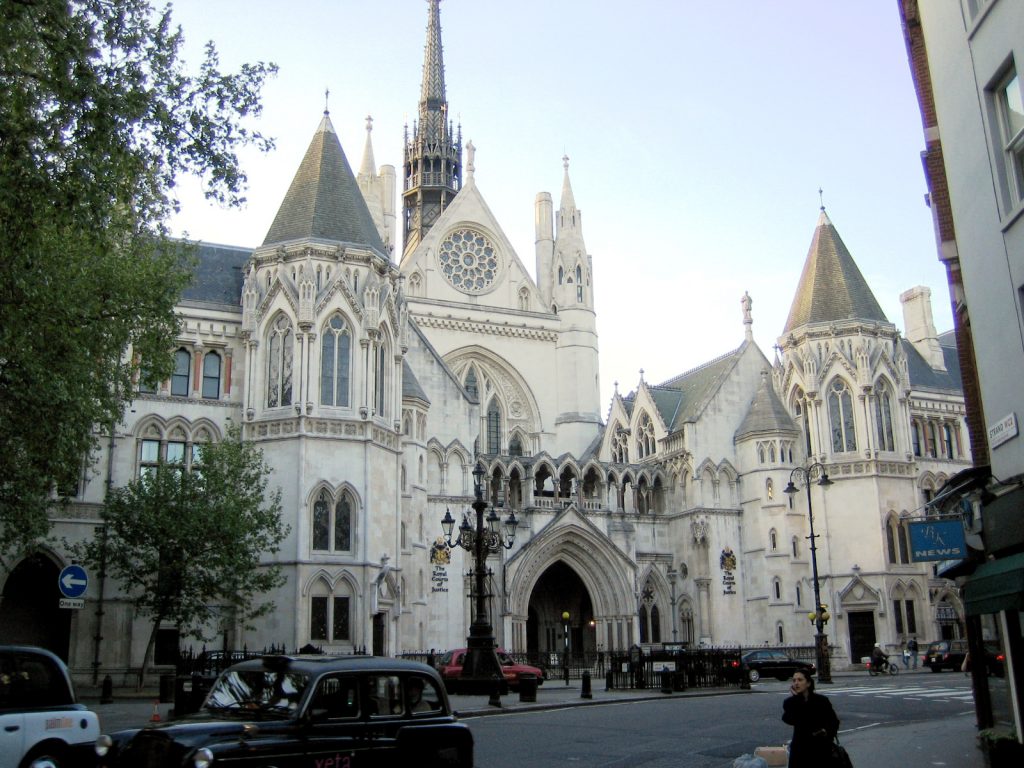
Press freedom and open justice: The Pembrokeshire Herald took its reporting restrictions battle to the Court of Appeal (Pic: Herald).



Kyle Bevan, jailed for the murder of Haverfordwest toddler Lola James, was allegedly stabbed 25 times and left ‘as if asleep’ in a maximum-security prison cell attack
KYLE BEVAN, the man jailed for murdering two-year-old Lola James in Haverfordwest, was stabbed 25 times during an attack in his prison cell, a murder trial has heard.
Bevan, 33, was serving a life sentence at HMP Wakefield after being convicted of killing his partner’s daughter, Lola, whose death shocked Pembrokeshire and led to major questions about child protection failings.
Leeds Crown Court heard that Bevan was attacked on November 5 last year by three fellow prisoners, Lee Newell, 57, Mark Fellows, 45, and David Taylor, 63.
All three deny murder.
‘Left to bleed to death’
Prosecutor Jason Pitter KC told the jury the attack lasted four minutes and 39 seconds after Bevan entered his cell on A Wing.
He said the defendants followed him in “with real purpose” before allegedly carrying out a joint attack intended to kill him.
The court heard Bevan suffered at least 30 injuries, including 25 stab wounds from a sharp weapon. His heart and major blood vessels were damaged.
Mr Pitter said Bevan was then placed in bed “as if asleep” and left to bleed to death. His body was not discovered by prison staff until roll call the following morning.
Weapons found
Jurors were told a makeshift weapon, described as a folded piece of metal, was later found hidden behind a television and had Bevan’s blood on it.
Other weapons were allegedly found hidden in a container of chilli sauce in Taylor’s cell.
The court also heard that Taylor was allegedly heard saying: “Nice working with you and the Ice Man,” with “Ice Man” said to be a nickname for Fellows.
Pembrokeshire case
Bevan was jailed in 2023 for the murder of Lola James, who died after suffering catastrophic head injuries at her home in Haverfordwest.

Her mother, Sinead James, was also jailed for causing or allowing her death.
The case caused widespread anger in Pembrokeshire and led to serious questions about how Lola had been left in danger despite concerns being known before her death.
The trial continues.

A PEMBROKESHIRE man has been remanded in custody following an alleged May Day assault against a woman in Begelly.
Tomas Baker, 34, of Ty Dee, New Road, Begelly, is accused of assaulting the woman, causing actual bodily harm, at an undisclosed location in Begelly on May 1.
Baker appeared before Haverfordwest Magistrates’ Court this week by video link from Swansea Prison.
He pleaded not guilty to the charge.
His trial will take place at Haverfordwest Magistrates’ Court on June 22.

A WATERSTON man has appeared before magistrates charged with 13 sexual offences against children, including three allegations of raping a girl under the age of 13.
Chaisee Price, 25, of Biggins Hill, Waterston, Milford Haven, appeared before Haverfordwest Magistrates’ Court this week.
He faces three charges of raping a girl under 13, eight charges of sexually assaulting girls aged between five and eight, and two charges of intentionally inciting girls under 13 to engage in sexual activity.
The offences are alleged to have taken place between 2014 and 2019.
Price denied all charges.
Because of the seriousness of the allegations, magistrates declined jurisdiction and the case will now proceed to Swansea Crown Court on July 10.
Price was released on conditional bail.
The conditions include a daily electronically monitored curfew between 6:00pm and 6:00am, no contact with the prosecution witness, no unsupervised contact with children under 18, and a requirement to surrender his passport to police.



Crime4 hours ago
Pembrokeshire child killer stabbed to death in prison cell, murder trial hears
Kyle Bevan, jailed for the murder of Haverfordwest toddler Lola James, was allegedly stabbed 25 times and left ‘as if...


News11 hours ago
Pendine cliff fall victim recovering after major emergency response
A 22-YEAR-OLD man who suffered serious injuries after falling from cliffs overlooking Pendine Beach is recovering well following emergency surgery....


News1 day ago
First Minister challenged over jobs for student nurses
REFORM WALES has accused the First Minister of failing to guarantee jobs for student nurses in Wales, despite continuing pressure...

Crime1 day ago
Knife blankets call as school staff face rising violence fears
GMB says protective equipment should be considered where risk assessments show staff could face blades SCHOOL staff should be given...


News1 day ago
Claire Archibald secures review of Milford Haven train times
RURAL TRANSPORT CONCERNS RAISED WITH TFW CLAIRE ARCHIBALD MS has secured a review of train times between Milford Haven and...


Crime1 day ago
PCC review calls for stronger youth crime prevention work
REPORT MAKES 13 RECOMMENDATIONS A REVIEW into crime and anti-social behaviour services for young adults has called for stronger prevention...


Crime1 day ago
Families condemn failed appeal by paddleboard boss jailed over Haverfordwest tragedy
RELATIVES SAY LATEST COURT BID HAS REOPENED PAIN AFTER FOUR DEATHS ON WESTERN CLEDDAU THE FAMILIES of victims of the...


Community2 days ago
Forgotten wartime archive found in Pembroke Dock attic after 80 years
Remarkable family collection reveals story of father and son who served through two world wars A REMARKABLE untouched family archive...


Crime2 days ago
Sex offender in senior role at Tenby family hotel
CREST HOTEL GROUP says it is investigating safeguarding concerns after staff at the Imperial Hotel in Tenby raised alarm over...

Sport3 days ago
Runners tackle new route in Ras Y Castell 10k
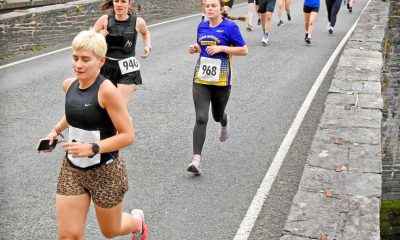
MORE than 90 runners took to the streets and paths around Cardigan on Friday evening (June 5) for the annual...
-
Crime5 days ago
Paddleboard company owner loses bid to cut sentence over Haverfordwest tragedy
-

 Crime4 days ago
Milford Haven man admits harassment and assault
-

 News4 days ago
Community appeal for privacy after serious emergency in Pendine
-
Crime2 days ago
Sex offender in senior role at Tenby family hotel
-
Community2 days ago
Forgotten wartime archive found in Pembroke Dock attic after 80 years
-

 Business5 days ago
Call for gym and Padel courts at Kiln Park Farm unanimously backed
-
Crime1 day ago
Families condemn failed appeal by paddleboard boss jailed over Haverfordwest tragedy
-

 Community4 days ago
Founders Day hailed a success despite rising costs and extra security