


Farming
Sheep farmers’ future market fears


WITH Brexit now extended until May 22 if the Prime Minister can get her deal agreed within Parliament, and April 12 if she can’t, the UK still sits on a cliff edge with a no deal being a real possibility.
NSA is again reminding policymakers of the serious implications of not finding some kind of a solution and preventing a no deal urgently. It is clear that Parliament doesn’t want a ‘no deal’.
The EU has made it clear that they will do what they can to avoid a no deal, but there is a distinct possibility that the UK could simply leave on the April 12, simply because of the absence of any agreement.
NSA Chief Executive Phil Stocker comments: “What we all feared but hoped wouldn’t happen is becoming a real possibility. While there may be no shortage of people in the UK that seem prepared to crash out and just get the job done, all evidence suggests that for the sake of the UK’s sheep industry something needs to give quickly to prevent our industry having a devastating shake-up.
“We have been repeatedly warning of the risks of a no deal Brexit, and it now seems more likely than ever that our concerns may be realised.”

NSA is continuing to call for MPs to support the Prime Ministers deal, to allow progress to be made. Mr Stocker continues: “We have to believe that at some point in the next week MPs will again be allowed to vote on the deal, which is the key to the door for a continued trading relationship with the EU. Without that, we’re facing the disturbing reality that sometime very soon we face a disorderly exit causing huge turmoil for the sheep industry. Beyond the uncertainty of what we are expecting now, farmers are bracing for what could potentially be one of the most turbulent years in our trading history. We still don’t know that we have third country status assured with the EU when we leave, and we still don’t have an Agriculture Bill in place. About all that we do know is that the sun will come up in the morning and go down again at night while our industry is being told it should plan more effectively for the future.”
While NSA welcomed the announcement of tariffs on sheepmeat into the UK to match the costs exporters will be facing, it is again warning that these tariffs do not apply to the 114,000 tonnes of sheepmeat a year entering the UK from New Zealand. Mr Stocker adds: “Again, this offers very little by the way of dealing with the imminent problem of an overburden of lamb in the UK market if our exports are disrupted. Very quickly oversupplies will drive lamb prices down, making production unprofitable, with a need to draw on Government support to avoid forcing some farmers out of business.”
Meanwhile, NSA is concerned the new UK framework for agriculture in the form of the Agriculture Bill is stagnant and has yet to pass through either House in Parliament. Mr Stocker says: “This is concerning. If we crash out in the next week or so, the UK will no longer be part of the CAP, and there will be no more funding from the EU. Until the Agriculture Bill is passed, it is all just sentiment. We need the legislation cleared to ensure future provisions are set in stone, to ensure security for the future of the industry.”

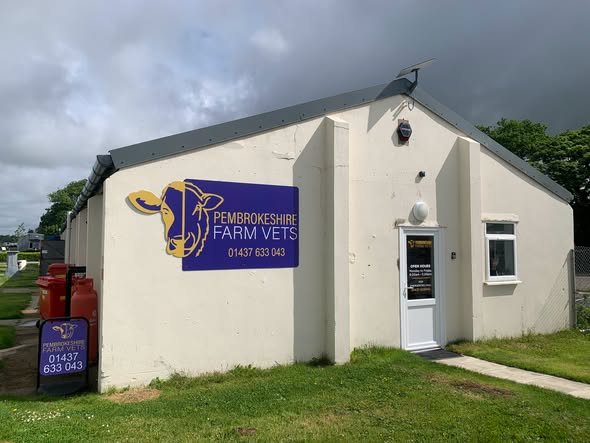
New purpose-built facility will provide round-the-clock livestock care, faster diagnostics and expanded services for farmers
Pembrokeshire Farm Vets has opened a new £236,000 veterinary practice at the Pembrokeshire County Showground in Haverfordwest.
The purpose-built, 2,000-square-foot facility replaces the practice’s former portacabin at the site and has been designed exclusively for livestock and farm veterinary work.
The investment will allow the practice to expand its services while continuing to provide 24-hour emergency care to farmers across Pembrokeshire and neighbouring areas.
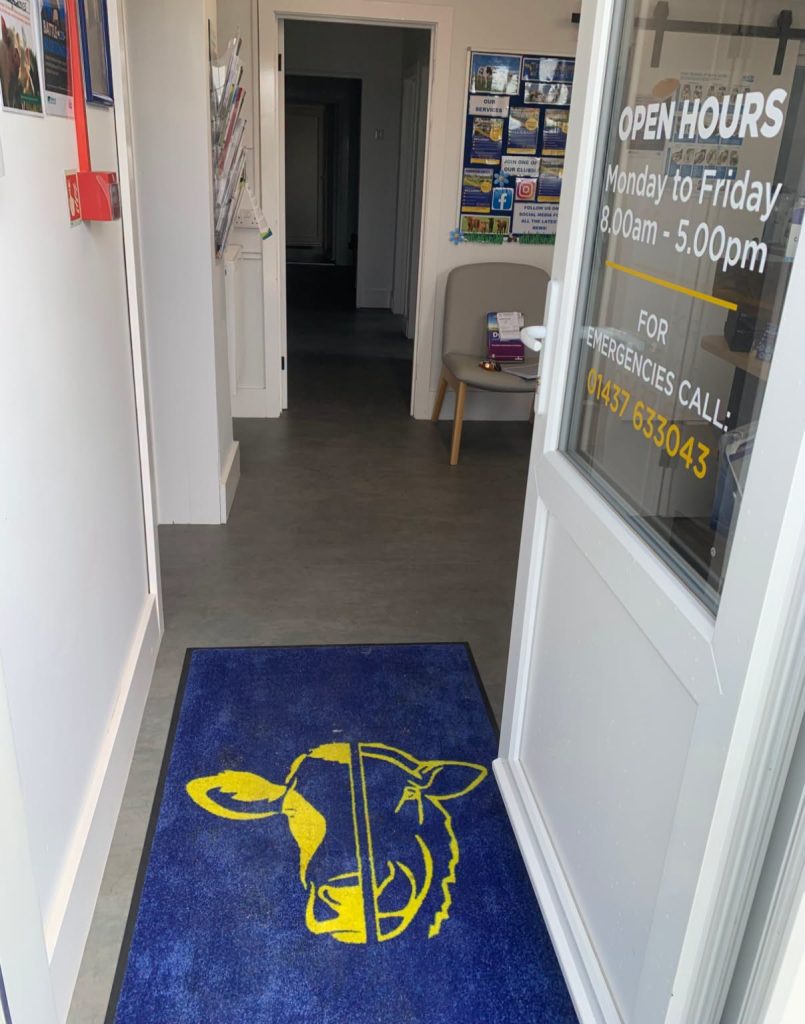
Facilities include dedicated clinical and diagnostic spaces, a specialist laboratory, a medicines store and a purpose-built lambing room.
The laboratory is equipped with an Ovacyte system for carrying out faecal worm and fluke egg counts, a Mastatest machine for analysing milk samples and equipment for in-house blood testing.
Faecal egg count results can be available within 15 minutes, allowing farmers to receive prompt advice on whether treatment is required.
An on-site Registered Animal Medicines Adviser can also help farmers select appropriate treatments and reduce unnecessary medicine use.
The new lambing room includes a hydraulic lambing table, holding pens and a roller shutter entrance, providing improved facilities for both routine and emergency lambing work.
Services offered by the practice include dairy herd visits, flock and herd health planning, bull fertility testing, pregnancy diagnosis, mastitis investigations, youngstock management, nutritional advice, TB testing and export certification.

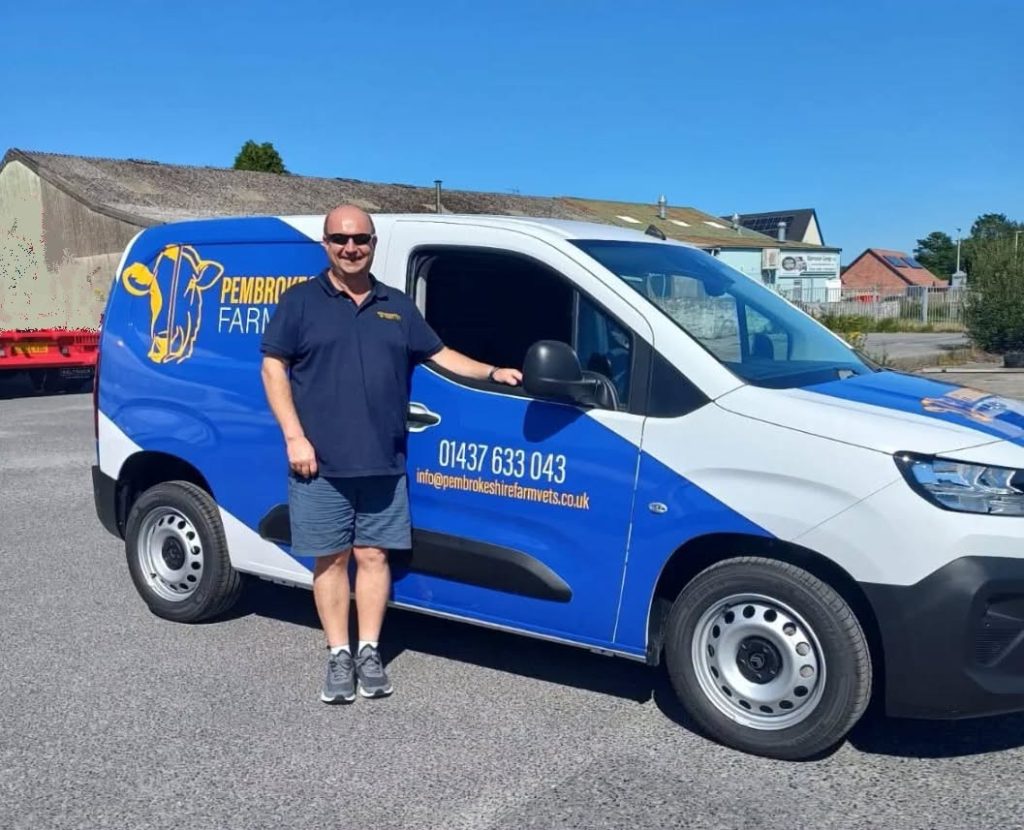
The team also provides veterinary support for goats and smallholders, as well as a number of farmer-focused schemes including its Flock Health Club, Smallholder Club, Spring Fertility Package and Growing Calf Package.
A comprehensive range of medicines and agricultural products will be stocked at the site, including vaccines, wormers, fly repellents, oral fluid therapy products, marker sprays and other everyday farm supplies.
The practice said products would be competitively priced, with a price-matching service also available. An online shop offers delivery across the UK.

The Haverfordwest facility will be staffed by a seven-strong farm team, including vets Alex, Alice, Rose and Ruben.
They will be supported by Mark, who oversees medicines and special offers, and reception staff Emma and Melanie.
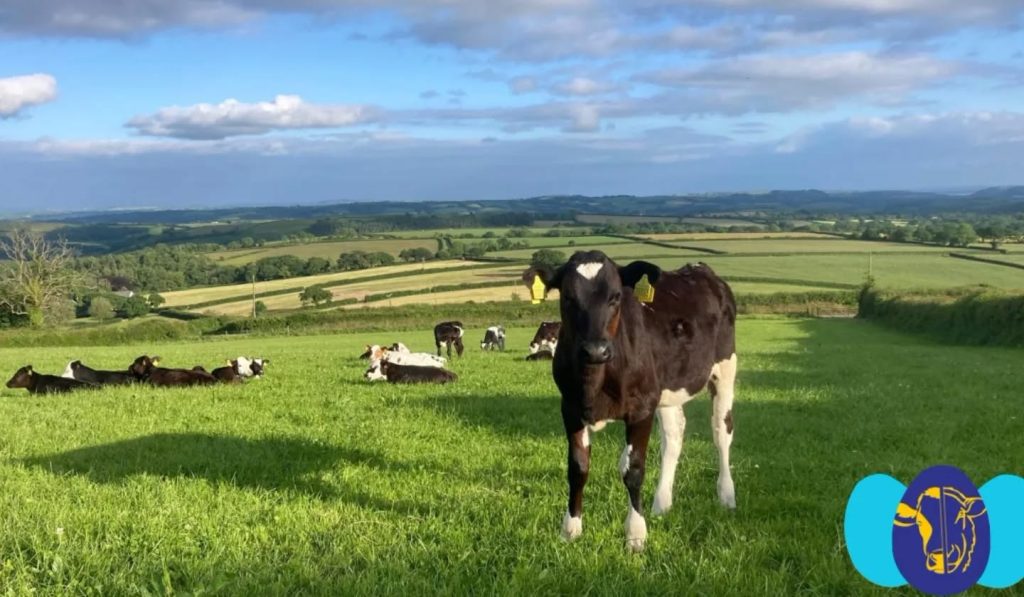
Pembrokeshire Farm Vets currently works with almost 200 farms and is accepting new clients, including dairy businesses, sheep farms and smallholders.
Clinical director Alice Davies said: “We are incredibly proud to open this new facility for the Pembrokeshire farming community.
“This building represents a major investment in local agriculture and allows us to deliver the standard of care our clients deserve, with better equipment, faster diagnostics and more space for practical support.
“Our team is passionate about helping farmers meet the challenges of modern livestock production, and this new practice will enable us to support even more farms, 24 hours a day, across the county.”
Pembrokeshire Farm Vets launched in April 2023 and provides livestock veterinary services across Pembrokeshire and other parts of south-west Wales.
The practice is based at Unit 15, Pembrokeshire County Showground, Withybush Road, Haverfordwest, and is open from 8:00am until 5:00pm, Monday to Friday.
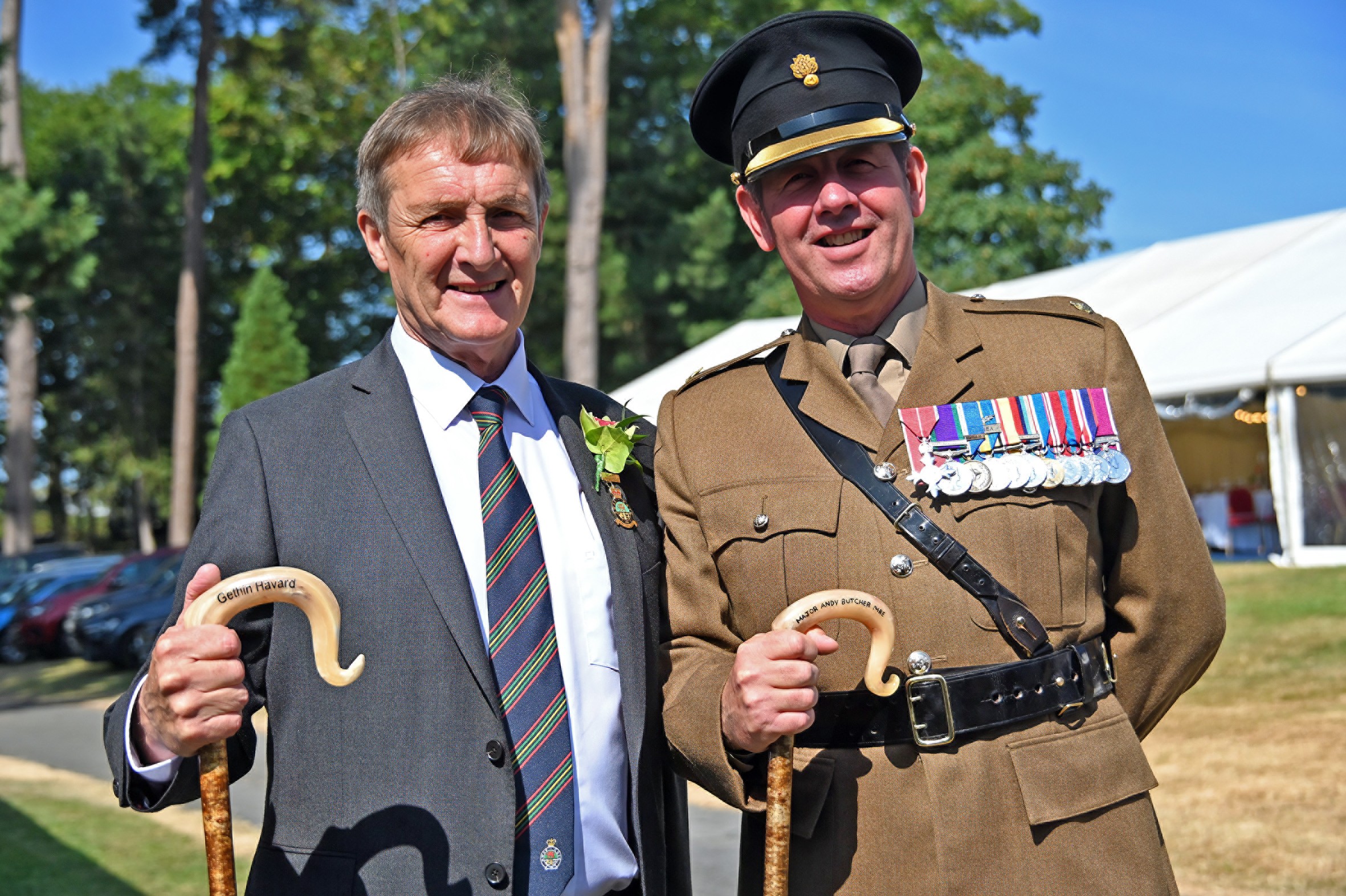
Thousands gather at Llanelwedd as Welsh farming, rural heritage and the future of food take the spotlight
THE ROYAL WELSH SHOW has opened at Llanelwedd, with thousands of visitors arriving for four days celebrating Welsh agriculture, food, countryside traditions and rural life.
Major Andrew Butcher MBE, Senior Training Safety Officer at Sennybridge Defence Training Camp, officially declared the 2026 show open during Monday’s traditional ceremony.
He was joined by Royal Welsh Agricultural Society chair of council Nicola Davies, show president Gethin Havard and representatives from farming, government and rural organisations.
First Minister Rhun ap Iorwerth was among the senior political figures attending the opening day, underlining the show’s importance not only as a major visitor attraction, but as a focal point for debate about the future of agriculture and food production in Wales.
This year, Brecknock is taking centre stage as the society’s Feature County.
It is the fifth time the county has held the honour, following previous feature years in 1964, 1980, 1997 and 2012.
The opening ceremony recognised the efforts of Mr Havard and his family, county advisory committee chair Rob Powell, honorary secretary Shelley Hughes, ambassador Teleri Haf Thomas and the many volunteers involved in organising events and raising funds throughout the year.

Last month’s Grassland Event at Cwmbrynich, hosted by the Havard family, was among the highlights of Brecknock’s feature year.
A special tribute was also paid to the families of Epynt who were displaced from their homes in 1940 when the land was taken over for use as a military training area.
Addressing the crowd, Major Butcher said agriculture remained central to the Welsh economy, environment, food security and national identity.

He said: “In a rapidly changing world, the importance of agriculture has never been clearer. It is central to our economy, to our environment and to our food security. But beyond all that, it is central to our identity.
“The Royal Welsh Show stands as a powerful reminder of that truth. It showcases excellence, encourages innovation and strengthens the bonds between us.

“It brings town and country together, offering a space where understanding can grow and where traditions can be celebrated and shared.”
The show was officially opened to a fanfare performed by the Regimental Band of The Royal Welsh.
Farming policy takes the spotlight
Away from the competitions and entertainment, the political future of Welsh farming has already emerged as one of the central themes of this year’s show.
The Welsh Government used the event to confirm that £340 million a year will be provided for three years to March 2030 to support the Sustainable Farming Scheme.
The package includes £238 million annually for the scheme’s Universal Layer and £102 million for its Optional and Collaborative Layers.
Ministers say the multi-year agreement will end the uncertainty caused by annual funding decisions and allow farmers to plan investments with greater confidence.
A new national Farm to Fork plan is also being unveiled during the show, setting out proposals for the future of food production and the wider food industry in Wales.
New sheep village launched
Among the major additions to the showground this year is Cynefin, a new Welsh Sheep Village created by the Royal Welsh Agricultural Society and the National Sheep Association.
The area was opened by Margaret Dalton OBE and Alun Evans CBE, both longstanding champions of the Welsh and UK sheep industry.
The dedicated village celebrates the people, breeds, products and traditions that have shaped sheep farming in Wales, while showcasing innovation and best practice across the sector.
Visitors can take part in educational displays, live demonstrations, discussions and interactive activities designed to improve understanding of the role sheep farming plays in the Welsh landscape, rural economy and national heritage.
Brecknock’s native breeds are also being showcased, including the Beulah Speckled Face, Brecknock Hill Cheviot, Epynt Hardy Speckled Face and Talybont Welsh Mountain.
The name Cynefin reflects the close relationship between the land, livestock, farming families and the communities shaped by the sheep industry.
The popular Horticulture Village has also returned with a packed programme of expert talks, demonstrations and practical activities.
BBC Gardeners’ World presenter Adam Frost joined the opening day as special guest judge for the Micro Show Garden Competition before taking part in a question-and-answer session with visitors.
Main Ring entertainment
The Main Ring programme began with the Royal Welsh debut of the Shetland Pony Grand National, alongside the return of the Paul Hannam Quad Bike Stunt Show, Hawkeye Falconry and displays by the RAF Falcons.
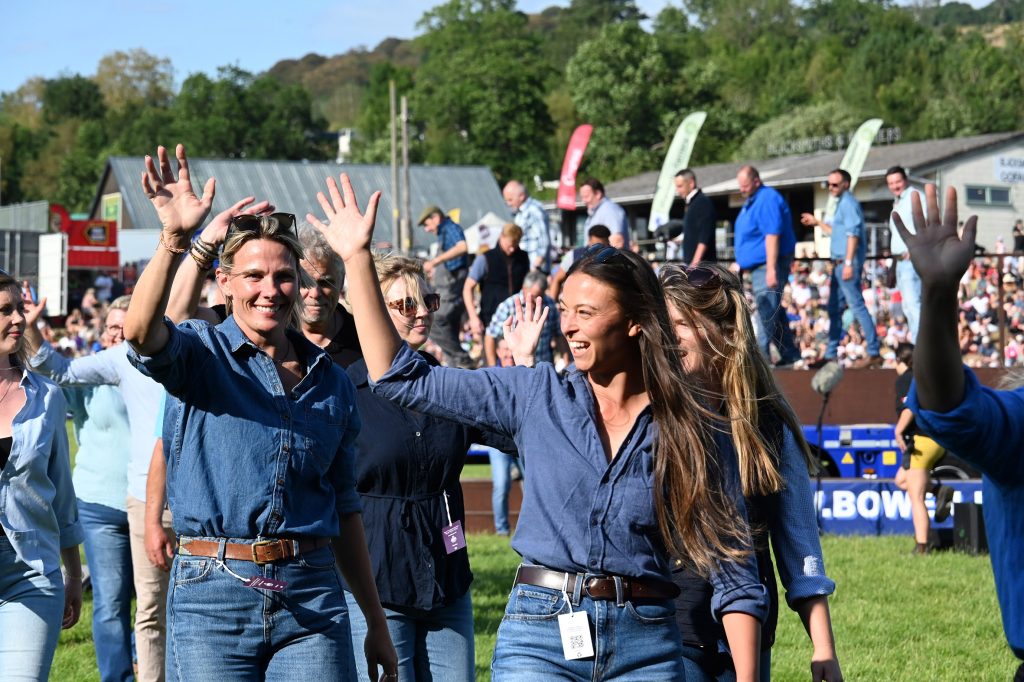
A special performance was also given by Britain’s Got Talent winners the Hawkstone Farmers’ Choir, whose members waved to the crowds from the Main Ring.
The choir has used its growing public profile to raise awareness of loneliness and mental health pressures within farming communities.
Wales YFC also marked its 90th anniversary with a colourful display celebrating the organisation’s contribution to rural life and generations of young farmers.
The Royal Welsh Show continues until Thursday, July 23, with livestock and equine competitions, forestry, horticulture, countryside sports, shopping, Welsh food and drink and a full programme of Main Ring entertainment.
Picture caption: Royal Welsh Agricultural Society president Gethin Havard with Major Andrew Butcher MBE following the opening ceremony.
Picture caption: Members of the Hawkstone Farmers’ Choir wave to the crowds from the Main Ring.
Pictures: RWAS
Initiative will bring together farmers, processors, retailers and researchers to develop new commercial opportunities across Wales
A NEW Dairy Sheep Cluster has been launched to support the development of a sustainable and commercially viable sheep milk industry in Wales.
Unveiled at the Royal Welsh Show, the initiative brings together farmers, processors, retailers, academics and other industry stakeholders to strengthen collaboration across the supply chain.
The launch marks the next phase of work commissioned by the Welsh Government to explore market opportunities and develop the infrastructure needed to grow the sector.
Research has identified significant potential for sheep milk production in Wales, driven in part by increasing global demand for specialist cheeses, yoghurts and other premium dairy products.
The Food & Drink Wales Dairy Sheep Wales Cluster will encourage knowledge sharing, build confidence among producers and buyers, and provide a coordinated approach to developing the industry.
Its work will include engaging with farmers, identifying commercial routes to market and helping to establish the conditions needed for long-term growth.
Llŷr Gruffydd MS, Cabinet Minister for Rural Resilience and Sustainability, welcomed the launch.
He said: “The launch of the Food & Drink Wales Dairy Sheep Wales Cluster represents an important step in the development of a new opportunity for Welsh agriculture and food production.
“Research commissioned by the Welsh Government has highlighted the considerable potential for sheep dairying in Wales.
“Combined with growing market demand and investment in strategic infrastructure such as the Sheep Milk Dairy at Glynllifon, there is a strong foundation upon which to grow the sector.
“The cluster will play an important role in bringing together expertise from across the supply chain and supporting the development of a resilient, innovative and commercially sustainable industry.”
The cluster will work alongside partners including Glynllifon College, which is developing a purpose-built sheep milk dairy and demonstration facility, and Farming Connect.

Together, they will support farmers and food businesses interested in exploring opportunities within the emerging sector.
James Holloway, Food & Drink Wales Dairy Sheep Cluster Lead, said the initiative followed several years of research, industry engagement and partnership working supported by the Welsh Government.
He said: “The research highlighted strong potential for sheep dairying in Wales, together with encouraging levels of interest from both producers and the wider supply chain.
“The cluster will provide a platform for collaboration, enabling stakeholders to identify opportunities, address challenges and support the development of a successful Welsh sheep milk industry.”
The launch has also been welcomed by established producers already exploring the commercial potential of sheep milk.
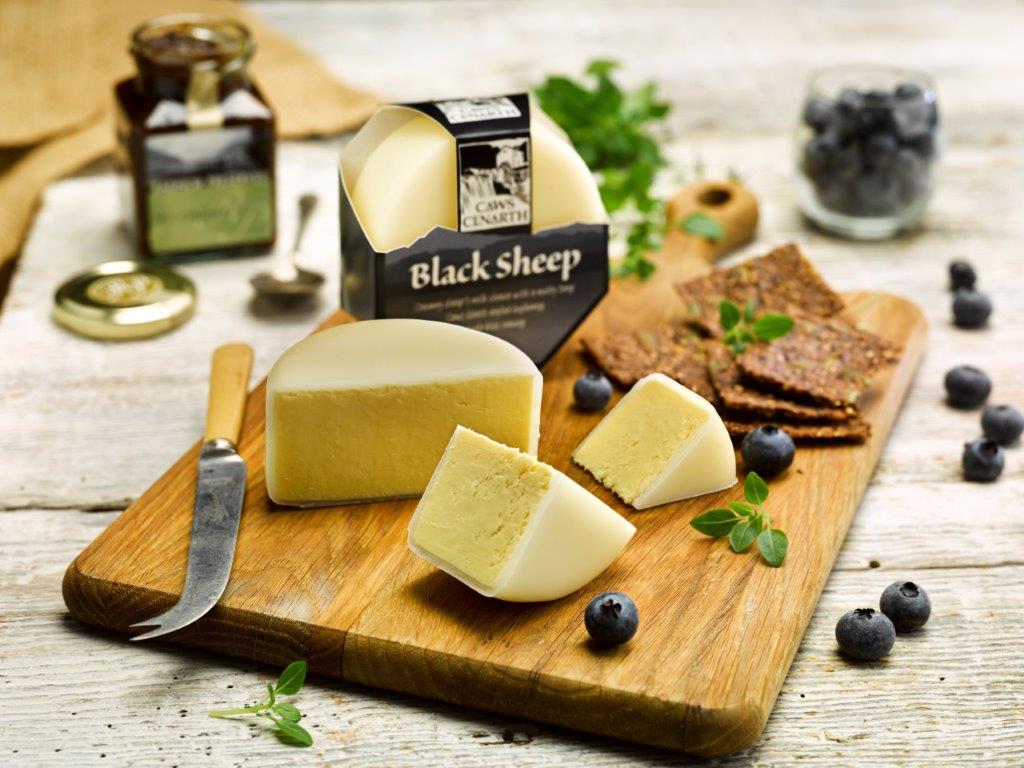
Carwyn Adams, managing director of Caws Cenarth, said: “At Caws Cenarth, we have seen first-hand the opportunities that sheep milk can offer through products such as our Black Sheep cheese, which has helped showcase the unique qualities of sheep milk to a wider consumer audience.
“There is increasing demand for premium dairy products with strong provenance and quality credentials, and Wales is well placed to respond to this growing market opportunity.
“The establishment of the cluster provides an important opportunity to bring together producers, processors and industry partners, helping to strengthen the supply chain and create new opportunities for Welsh sheep milk products.”
Supporters believe Wales’ strong sheep farming tradition, favourable climate and experience in producing high-quality dairy products give the country a firm foundation on which to develop the industry.
The cluster is expected to play a central role in establishing Wales as a recognised producer in the growing international sheep milk market.


Community14 hours ago
New creative team transforms the Maes ahead of Eisteddfod y Garreg Las
Festival site in Llantwd is taking shape ahead of the National Eisteddfod’s arrival in Pembrokeshire from August 1 to 8...


Community16 hours ago
From Tenby to Llandudno: Wales’ seaside towns face the same signal crisis
Businesses in two of Wales’s busiest resorts say unreliable mobile coverage is disrupting payments, bookings and everyday life TWO of...


Crime17 hours ago
Judge orders Dyfed-Powys Police review after £3,912 fraud error
Force responsible for policing Pembrokeshire criticised after an officer understated the amount stolen from a vulnerable care-home resident A JUDGE...


Community2 days ago
Narberth bursts into colour as carnival brings Civic Week to spectacular close
Crowds lined the streets for an afternoon of floats, fancy dress, music and family entertainment at one of Pembrokeshire’s longest-running...

Community2 days ago
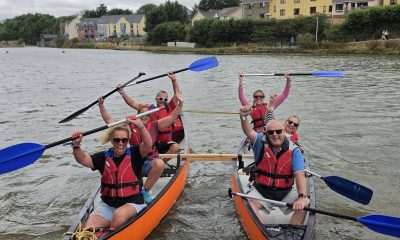
More than 100 racers take to Castle Pond for Paddle West’s inaugural regatta
Successful community event raised money for Forever11 and launched three consecutive weekends of waterside activity in Pembroke MORE than 100...


News2 days ago
NASA chief meets west Wales scientist helping search for life on Mars
Aberystwyth-led technology will guide Europe’s first Mars rover as it drills beneath the planet’s surface, while the proposed DARC radar...

News3 days ago
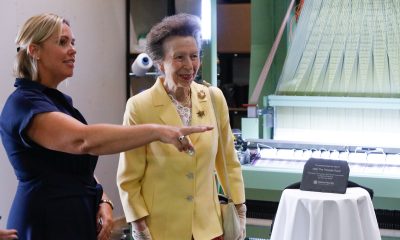
Princess Royal celebrates Pembrokeshire craftsmanship at family-run weaving mill
A Pembrokeshire business that began after a mother grew tired of waiting three weeks for her children’s name tapes has...


Local Government3 days ago
Burger King could be coming to Haverfordwest as plans submitted
Plans have been lodged for a Burger King outlet at the Morrisons petrol station on Bridge Meadow Lane BURGER KING...


Crime4 days ago
Murder investigation launched into death of Pembrokeshire man in 1991
A 67-YEAR-OLD man has been arrested on suspicion of murder after new potential evidence emerged in connection with a death...

Community4 days ago
‘Paying £29 to reach a cashpoint is absurd’: Narberth’s urgent ATM appeal
Residents, businesses and visitors are being urged to provide evidence after two High Street cash machines were removed, leaving the...
-

 Community2 days ago
Pembrokeshire biker, 75, keeps exploring with wheelchair in tow
-

 Health2 days ago
Mental health crisis ‘place of safety’ could be centralised in Carmarthen
-

 News2 days ago
Welsh Government renews call for justice and policing powers to be devolved
-

 News2 days ago
Legal services oversight ‘not fit for purpose’ as reports call for major reform
-
Community2 days ago
More than 100 racers take to Castle Pond for Paddle West’s inaugural regatta
-
Community2 days ago
Narberth bursts into colour as carnival brings Civic Week to spectacular close
-
 Entertainment2 days ago
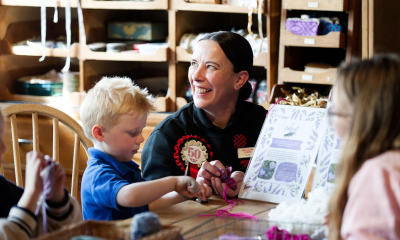
National Wool Museum marks 50th birthday with summer of family fun
-

 News2 days ago
Urgent action demanded over threat of delay to Port Talbot’s new steel furnace