

News
Ryelands Caravan Park extension gets go-ahead from council

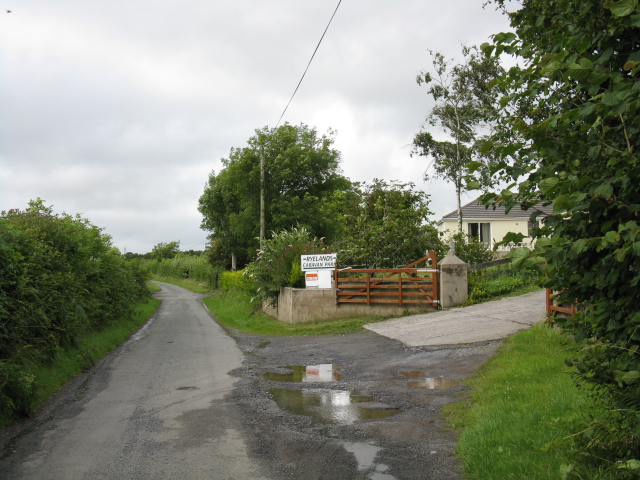
AN EXTENSION to Ryelands Caravan Park has been approved by Pembrokeshire County Council.
The Council’s Planning Committee met on Tuesday, May 21, to discuss the application which was approved by a clear majority.
There had been concerns about the road leading to the site and the number of pitches on site and a site visit was also asked for.
Members did not feel the need to go for a site visit and were reassured by the Council’s Interim Head of Planning that there would be no increase in number of caravans beyond what is allowed.
The applicant’s agent, Mr Andrew Vaughan-Harries, said: “The owner has had this site for the last few years. This is a touring site and times are changing, tourers are getting bigger and bigger and since taking on the site Mr Ormond has seen a demand that actually, people do not want to take their tourers with them any more.
“They love Pembrokeshire and they lease or buy a pitch from sites like this and they don’t want the hassle and difficulty of taking their tourers up, they’re getting much bigger these days you need a very big car or 4×4 to take them down the M4 so we are having a demand to stay on site and there is a certificate of lawfulness that we can have 78 pitches.
“This application doesn’t increase that number and objectors may say will this cause more highways danger, we don’t think so, it’s neutral and through the change of touring less and less people are taking their tourers along, they love Pembrokeshire and they want to stay at the site so they leave their tourers there.
“That is why the site is going to be enhanced, we will have more planting, more facilities so people want a little bit of privacy. It will be a lower density where these caravan pitches will be spread out.
“The town council are supportive but raise comments about highways but there shouldn’t be any increase.
“It’s a quality enhancement, integrating into the landscape, it’s well related to the village of Kilgetty, there is a train service, buses, shops, cafes and it’s in walkable distance of Folly Farm.
“Mr Ormond has said he will be looking to take on two part time or full time jobs and there is going to be an investment of around 100k for the meet and greet building and landscaping so there is going to be some boost to the local economy.
“This is a quality scheme and it is only going to enhance this area and tourism in Pembrokeshire.”
Objecting to the plans, Mr Byron Mansell said: “I have concerns about the lack of consultation regarding the resubmission. Myself and the owner of the fields adjacent to the caravan park have had no communication whatsoever from any of the agents or the council.
“There is 12 further caravans going against their boundary hedge which is 75m from my house. The meet and greet building will be approximately 100m from my house.
“I wish to object strongly to this planning application mainly on road safety grounds. My family have lived at Highlands for 40 years, we have seen many changes in this time. Ryelands Lane has been widened with a footpath and street lighting except when it comes to our house.
“It is a single track road and there is no room for any pedestrians and you would need to climb the hedge to allow vehicles to pass. Accidents are happening regularly and it is just a matter of time before somebody is seriously hurt.
“Whichever way you look at it there is going to be a significant increase in traffic in the lane.
“Kilgetty and Begelly Community Council are concerned about the road safety and describe this as a rural, narrow part of Ryelands Lane.
This has been the concern as far back as 1976.
“We have reached the limit on Ryelands Lane, please no more, we strongly recommend you refuse this application on road safety grounds or at least defer to allow a thorough consultation, road safety survey to be completed and we would like to request a site visit.”
Committee Chair, Cllr Jacob Williams read out a statement from the local member Cllr David Pugh who said: “Whilst I am generally in favour of the application, there is one issue concerning the access to the site which is along a short stretch of very narrow lane which is becoming notorious for accidents and near misses. The residents at the top of Ryelands Lane near the site have been complaining for some time about speeding vehicles. I and the community council have raised thses issues with the highways department who are supposed to be looking at these concerns but I have not heard anything lately.
“The report to the committee also states that no response was received from Kilgetty and Begelly Community Council but they sent in their response raising these concerns some time ago.”
There was some doubt about the number of pitches on the site and whether or not there would be an increase in 20 pitches. There was also concern that the touring caravans could be kept on the site all year round.
It was pointed out that the certificate of lawfulness did not have a limit on the number of pitches. The Council’s Interim Head of Planning, Mr David Popplewell said they would need to monitor the site to make sure it was being used as a caravan site.
Cllr Brian Hall moved the recommendation for approval and Cllr David Howlett seconded.



FAMILIES are being invited to celebrate the start of the school holidays with a free outdoor screening of Disney-Pixar favourite Finding Nemo at Milford Waterfront.
The Torch Theatre will launch its 2026 Sunset Cinema season at Mackerel Quay on Friday, July 17, with the marina and Milford Haven Waterway providing the backdrop.
Sponsored by Milford Waterfront, the family screening will be shown on the Torch Theatre’s new outdoor LED cinema screen. Gates will open at 1pm, with the film beginning at 2.30pm.
Admission is free, although tickets should be booked in advance through the Torch Theatre.
The entertainment will continue into the evening with a screening of the 1980s classic Back to the Future at 7pm.
Tickets for the evening film can also be purchased through the Torch Theatre website. Audiences are encouraged to arrive from 6pm and bring their own chairs and blankets.
A selection of food and drink vendors will be available throughout the afternoon and evening.
Lucy Wonnacott, Head of Communications and Marketing at the Port of Milford Haven, said: “Summer starts here. We’re delighted to kick off the Torch Theatre’s 2026 Sunset Cinema season and the school holidays with a free waterside screening of Finding Nemo.
“Then, as the sun goes down, film fans can buy tickets to join us for the ultimate time-travelling adventure, Back to the Future.
“There’s something special about watching a great film by the water, and we’re looking forward to welcoming families, friends and visitors for a day of cinema, community and summer memories at Milford Waterfront.”
Chelsey Gillard, from the Torch Theatre, added: “We’re incredibly pleased to be partnering with Milford Waterfront to offer this special Sunset Cinema screening completely free for our community.
“Watching Finding Nemo on Mackerel Quay is going to be absolutely magical. Bring a deckchair, gather the family and join Nemo, Dory and Marlin for an unforgettable adventure on the big screen.

“Let’s just hope Bruce the shark doesn’t decide to make an appearance. What a fantastic way to celebrate the end of term and kick off the summer holidays.”
Tickets for both screenings should be booked in advance through the Torch Theatre booking office.
Further details about events taking place at Milford Waterfront this summer can be found on the Milford Waterfront website.
Photo caption: Families can enjoy a free outdoor screening of Finding Nemo at Milford Waterfront on Friday, July 17.

WALES has recorded the highest rate of self-medication for anxiety and stress of any UK region, according to a new healthcare survey.
The STADA Health Report 2026 found that 31 per cent of adults surveyed in Wales said they self-medicated to manage anxiety or stress.
That was almost six percentage points above the UK average of 25.2 per cent.
The report also found comparatively low levels of trust in artificial intelligence for healthcare, alongside concerns about access to services, ageing and the amount of health information people are expected to navigate.
Just 38.5 per cent of Welsh respondents said they would trust AI to make a health diagnosis, the lowest rate recorded among the UK regions surveyed and well below the national average of 52.3 per cent.
Fewer than half, 42.4 per cent, said they would consider having a health consultation using AI, compared with 49.5 per cent across the UK.
Satisfaction with the public healthcare system was also lower in Wales. Some 57.9 per cent of Welsh respondents said they were satisfied, compared with a UK average of 65.1 per cent.
The findings form part of an international study commissioned by pharmaceutical manufacturer STADA Thornton & Ross and carried out by market research company Human8 Consulting.
A total of 2,001 adults were surveyed in the UK during February and March 2026, as part of a wider study involving 19,514 respondents across 20 countries. The company has not stated in the press material how many of the UK participants were based in Wales.
Concerns about ageing and access to care
More than two-thirds of Welsh respondents, 66.8 per cent, said they feared becoming dependent on care as they grew older.
That compared with a UK average of 54.3 per cent.
More than half of those surveyed in Wales, 55.4 per cent, also said they felt overwhelmed by the amount of health information available, against 47.7 per cent nationally.

The report’s authors said the findings suggested that some people were increasingly relying on self-management when they felt unable to access timely professional support.
However, the term “self-medication” can cover a range of behaviours, including the use of non-prescription medicines, supplements or other substances without direct advice from a healthcare professional.
Craig Shaw, general manager for STADA UK, said: “When one in three adults say they are self-medicating for anxiety or stress, it suggests many people are looking for practical ways to manage their wellbeing, but may not always feel they have access to the support they need at the right time.
“While trust in AI health tools is lower in Wales than elsewhere in the UK, the data also reinforces the enduring importance of trusted, face-to-face healthcare.
“Community pharmacists are uniquely placed to provide accessible advice, reassurance and guidance, helping people make informed decisions about managing their health and knowing when additional support is needed.”
STADA Thornton & Ross manufactures healthcare products including Covonia, Cetraben, Hedrin, Savlon and Zoflora, as well as generic and specialist medicines.
Anyone experiencing anxiety or stress is advised to speak to a GP, pharmacist or another qualified healthcare professional before taking medication that has not been prescribed for them.

ASHMOLE & CO, one of mid and west Wales’ largest bilingual accountancy firms, is delighted to be supporting Wales YFC by sponsoring its dance competition at this month’s Royal Welsh Show.
The firm has worked closely with the Welsh farming community since it was established in 1897 and remains deeply committed to the agricultural sector.
Many of Ashmole & Co’s partners and staff are past or present members of Wales YFC and have benefited personally and professionally from their involvement with the organisation.
Supporting the next generation of farmers and rural leaders is therefore of great importance to the firm.
The Royal Welsh Show is one of the highlights of the year for YFC members, with competitions including shearing, dancing, stock judging and flower arranging.
The dance competition sponsored by Ashmole & Co will take place on the main YFC stage on Tuesday, July 21, from 1pm.
Ceri Llwyd, a partner at Ashmole & Co’s Llandovery and Llandeilo offices, said: “As the auditor of Wales YFC, we understand the importance of this bilingual rural youth organisation in helping young people become successful farmers, confident individuals, effective contributors and responsible citizens.
“It has been an honour to work with Wales YFC over many years. We have developed an excellent working relationship, and I very much hope this will continue for many years to come.
“We would like to wish everyone competing at the Royal Welsh Show the very best of luck and hope they enjoy the tremendous experience.
“I will be there on Tuesday to watch the competition and show my support.”
Wales YFC is a vibrant organisation that encourages young people to take responsibility and play an active role in their communities while developing their skills through a wide range of member-led programmes and activities.
The organisation has more than 5,000 members aged between 10 and 28, as well as thousands of supporters, volunteers, parents and friends.

Mared Rand Jones, chief executive of Wales YFC, said: “The Royal Welsh Show is the pinnacle of the year for YFC members, and we look forward to seeing them once again representing their counties and competing in a wide variety of competitions.
“Wales YFC will be showcasing the very best of its membership, and the public will be entertained throughout the four days of the show.
“We thank Ashmole & Co for its tremendous support. As a charity, we depend on generous sponsorship to provide activities and competitions for our members.
“We look forward to welcoming everyone to the Wales YFC Centre during the show.”
The 2026 Royal Welsh Show will take place from Monday, July 20, to Thursday, July 23.
Widely regarded as one of the leading events in the British agricultural calendar, the show will feature four days of livestock and equine competitions, forestry, horticulture, crafts, countryside sports, shopping, food and drink, alongside a packed daily programme of entertainment, attractions and displays.



Charity12 hours ago
RSPB secures ‘missing link’ to reconnect wildlife habitats in Carmarthenshire
RSPB CYMRU has purchased a 96-hectare upland site in Carmarthenshire, describing it as a vital step towards reconnecting one of...


Crime2 days ago
Ann Widdecombe: Welsh politicians pay tribute as murder probe launched
Prime Minister Sir Keir Starmer has praised the former minister’s “conviction and dedication”, while political figures in Wales remembered her...


News2 days ago
Solardo pulls out of Haverfordwest show as organisers offer full refunds
Headline act confirms non-appearance as Park House Series announces major event changes DANCE music duo Solardo will no longer perform...


Local Government2 days ago
Conservatives win Pembroke Dock seat as Reform stalls and Dowson polls just 11
Jamie Street takes Market ward with a 43-vote majority as Reform finishes fourth despite its major Senedd breakthrough two months...


Health2 days ago
Hospital ward closed after highly contagious scabies outbreak
Hywel Dda confirms wider rise in cases across Carmarthenshire, Pembrokeshire and Ceredigion as patients and staff are offered treatment A...


Crime3 days ago
Teacher stabbing trial: The first week of evidence
Jury hears accounts of alleged planned classroom attack, teacher’s fear she was dying, and boy’s words after leaving school A...


Community3 days ago
Haverfordwest Castle refurbishment reaches new heights as roof goes on
Major milestone reached in project to transform historic gaol building into flagship visitor attraction A MAJOR milestone has been reached...


Business4 days ago
Pembrokeshire lands £98m share of Wales marine energy boom
New industry report says county has received the second highest level of marine energy investment in Wales, supporting more than...
Crime4 days ago
First aider tells jury teacher was “crying, shaking” after classroom stabbing
A SCHOOL first aider has told a jury that teacher Vicki Williams was “crying, shaking” and in “complete shock” after...


Crime5 days ago
Teacher feared she was dying after Milford Haven classroom stabbing
A TEACHER allegedly stabbed in the head at Milford Haven Comprehensive School told a jury she feared she was dying...
-

 Farming5 days ago
Pembrokeshire slaughterhouse given urgent improvement rating after audit failure
-

 Entertainment4 days ago
Swing and big band classics heading to Torch Theatre
-

 News5 days ago
Large fire breaks out at Impala Terminal in Milford Haven
-

 Education6 days ago
Council failed Welsh language standards over school closure
-

 News5 days ago
From boccia to boxing: ALN multisport events give youngsters chance to try activities
-
 Entertainment6 days ago
Crymych Arms to host weekend of local music, food and drink
-

 News5 days ago
Questions raised over Hamilton Accies finances after club’s Haverfordwest friendly
-

 Farming3 days ago
Working Carmarthenshire farm opens gates to visitors with new holiday cottages