


Politics
Johnson’s reshuffle throws up jokers

IT WAS all about ‘The Saj’.
The shock departure of the former Chancellor from the government only a few weeks before his first Budget surprised media commentators and MPs alike.
The Chancellor of the Exchequer’s ‘did-he-fall/was-he-pushed’ resignation aside, the reshuffle was a return to the traditional way of Cabinet reshuffling Cabinet members. Out with the competent and argumentative and in with a collection of flunkies and stooges who owe everything to their loyalty to Brexit and Boris Johnson.
Julian Smith became Secretary of State for Northern Ireland in July last year. In his brief tenure in that role, he managed to re-establish the Northern Ireland Assembly and a cross-party power-sharing executive after three years of constitutional limbo during its suspension. That is the sort of signal achievement which usually leads to promotion. However, Mr Smith was an advocate of a ‘softer’ Brexit than proposed by Number Ten. He had gone so far to comment, in October last year, a no-deal Brexit would be “a very, very bad idea for Northern Ireland”.
Competent and with a record of achievement in his brief Cabinet tenure, he had to go.
His replacement is former Conservative Party Chair, Brandon Lewis. Ironically, one of the Conservative MPs who broke pairing arrangements at Mr Smith’s direction when the latter was Chief Whip.
The reaction to Julian Smith’s departure was a series of aghast tributes by all sides in Northern Ireland and Mr Lewis’ appointment greeted by the sort of ‘dangerous indifference’, Irish Taoiseach Leo Varadkar suggested was behind his predecessor’s sacking.
Mr Lewis is as loyal as a loyal thing. You tell him what to be loyal to and he’ll be loyal to it. Rather like a cushion, he bears the impression of the last backside to sit on him. He will lead the nodding dog tendency in Cabinet meetings.
The only tension in the Cabinet with him in it will be whether he or Health Secretary Matt Hancock gets the first Boris Bonio after meetings.
There weren’t only high profile departures, though. Liz Truss remains in place as Secretary of State for International Trade. No. Don’t laugh. Ms Truss’ presence at the Cabinet table is a sign of hope and a beacon to others. Her continued tenure in government is evidence that no matter how dimwitted, mediocre or out-of-their-depth a person is, this is a government of opportunity for all. Her presence shows senior backbenchers with talent, intelligence, and ability that their gifts are no substitute for those qualities’ total absence. To new Conservative MPs with room temperature IQs, her example shows that they, too, can aspire to Cabinet status.
The same might be said for Matt Hancock. The Health Secretary, who’s behaviour in the election campaign marked him out as a man to watch – preferably while he sat in a padded cell rocking to himself and murmuring the words ‘forty new hospitals’ over and over – is the only person in the country to take what the Prime Minister says at face value. The incredibly credulous Hancock has chained himself to the wheel of misfortune and will spin every disaster into a triumph with puppy-like devotion. Like a whipped dog will try to make friends with its tormentor, Matt’s loyalty is endless.
The departure of Andrea Leadsom demonstrates that even Boris Johnson thinks a joke can be taken too far. Floundering in every position she ever occupied, it is difficult to conceive that she could have been the leader of her party, and subsequently PM, barely three years ago, Ms Leadsom’s legendarily argumentative nature ushered her to the Cabinet door.
Her replacement at the Department of Business, Energy, Investment and Skills (BEIS) is Ashok Sharma. Mr Sharma’s appointment is interesting. He might be dangerously half as clever as Boris Johnson thinks he is, which means he could run rings round the PM. His ability was rewarded in a particularly cunning way. Accepting a role turned down by a former PM and a former Foreign Secretary, Mr Sharma will coordinate and chair the government’s preparations for the next round of climate change talks, due to take place in Glasgow later this year.
If the conference achieves anything, highly unlikely as the US, China and India will stall any possible progress, the praise will be the government’s and therefore Boris Johnson’s. Like the Sun King, Boris is not only a state but the state. If it all goes the well-known shape of a pear, Mr Sharma gets to take the fall. Rewarding ability with a poisoned chalice: that’s the way of government these days.
Theresa Villiers’ departure from DEFRA and her replacement with George Eustice received a cautious but warm welcome from farming unions and rural organisations. Ms Villiers’ naked enthusiasm for the benefits of free trade and blindness to the consequences of it for UK agriculture did little to instil farmer with any confidence in her to do what was best for the industry. From a farming background himself, Mr Eustice is far better placed to sell any betrayal to those farmers who, free of the EU as they wished, find their businesses going down the pan if/when imports of lower quality and lower price undercut them after December 31 this year.
The Department of Culture Media and Sport (Don’t Care Much, Seriously) has a new Secretary of State in Oliver Dowden. Mr Dowden replaces Nicky Morgan, a minister you couldn’t possibly describe as two-faced as she wouldn’t wear the one she does if she was.
Mr Dowden’s main ministerial achievement in a brief parliamentary career was his replacement by Jonny (‘Did I mention I was in the Army?’) Mercer as a junior flunky in the Cabinet Office. His task is to put into place the Government’s policy of neutering the BBC and trashing public service broadcasting. A PR man before entering parliament and – as a special advisor to David Cameron – a PR man for a PR man, Mr Dowden will have to sell the Government’s plans to dismember the BBC to the public and MPs.
The appointment that caused most comment and concern was Suella Braverman’s promotion to replace Geoffrey Cox QC as Attorney General. Brexiteers hailed Mr Cox’s independence of mind and judgement when he declined to rubber-stamp Theresa May’s proposals for an Irish Backstop as part of her doomed attempts to force a Withdrawal Agreement through Parliament. He also loudly – he doesn’t do quietly – laid into the High Court’s decision that Mr Johnson’s prorogation of Parliament was unlawful. However, Mr Cox is also a person with a deep and abiding respect for the rule of law and the need for courts to act as a check and balance on poorly-made and ill-considered legislation. The growth of Judicial Reviews of governments’ laws can be partly laid at the door of those who prepare legislative measures in haste and then repent at leisure as the Court’s painstakingly explain why they are unenforceable or unlawful. Whatever his flaws as a Government minister, Geoffrey Cox is a proper lawyer with a keen understanding that bad laws and incompetently-prepared legislation are properly subjected to scrutiny by the Courts.
Suella Braverman has no such scruples. An advocate of increasing political vetting of judicial appointments, she also has no evident skills as either an advocate for sound law and sound law-making.
The role of the Attorney General is to advise the government, as impartially as possible in the circumstances, on a range of legal issues arising from its planned legislative programme. Ms Braverman’s appointment is a sign that what Boris Johnson wants most from his law officers is a nodding-dog approach, a readiness to sign-off on any crackpot plan, and knifing the Courts for doing their job properly in a plural democracy in which an overmighty executive needs curbing.
The most rabid of Brexiteers and an appalling media performer whose backside she often confuses with her humerus, Suella Braveman cannot be relied upon to do what’s right but can be relied upon to do what Boris Johnson tells her is right. Otherwise, her main qualification for her new role seems to be the gift of forgetting that she studied at the Sorbonne under the Erasmus programme and had her post-graduate studies in Paris funded by the French embassy. In other words, precisely the sort of exposure to continental education and cultural enrichment this Government is dedicated to ending.
And finally, we come to the new Chancellor. Rishi Sunak’s rise to power is proof that enormous personal wealth, a background as a merchant banker and having a job working for his indescribably wealthy father-in-law. All that might be unfair to Mr Sunak; however, replacing state-educated Sajid Javid with a privileged alumnus of Winchester could be easily interpreted as an attempt to broaden the government’s appeal to distressed billionaires.
Mr Javid’s loaded remarks around the circumstances of his dismissal, ‘no self-respecting minister would continue to serve’ (if ordered to sack his entire team of ministerial advisors) suggests Mr Sunak’s self-respect is in inverse proportion to his self-regard. It is also a sign that Mr Johnson has restored the long-forgotten tradition of the Exchequer as a money chest at the beck-and-call of a prime-ministerial whim. Mr Sunak’s one advantage is that he can scarcely be sacked after the manner of his predecessor’s leaving. At least for as long as he does what he’s told.
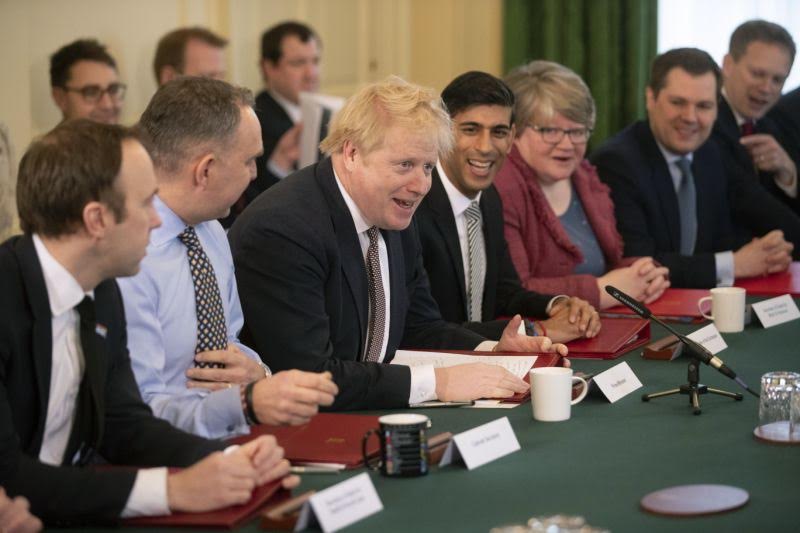
The cringe-worthy sight of Mr Johnson’s new Cabinet at its first meeting playing call and response with the class bully suggests that Boris Johnson now has a team he wants. More-or-less malleable office-holders who will do as they are told. Taking back control, it turns out, means an uncontrollable PM.

Concerns raised over Manorbier VC School and Ysgol Clydau
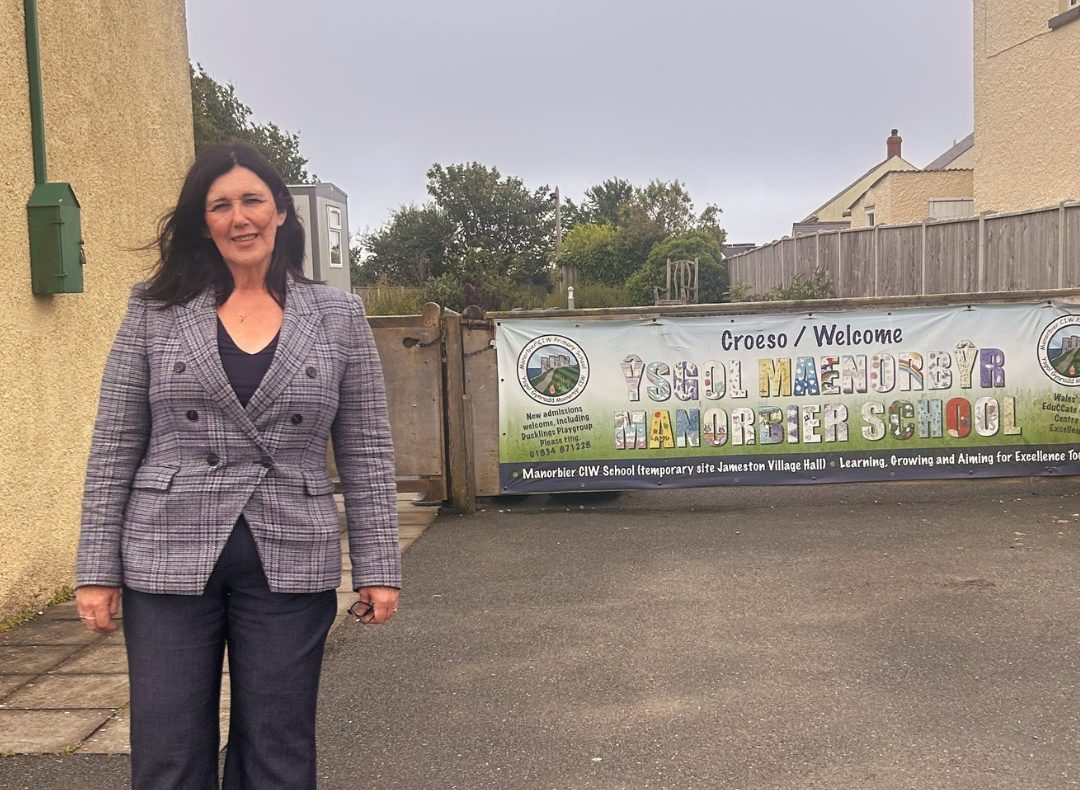
CLAIRE ARCHIBALD MS has raised concerns in the Senedd over the future of rural village schools, following proposals affecting Manorbier Church in Wales VC School and Ysgol Clydau in Pembrokeshire.
The Reform UK Member of the Senedd for Ceredigion Penfro raised the issue during the Business Statement, asking for the Education Minister to come before the Senedd with clear answers on rural school closures.
She said communities facing the loss of a local school deserved to know what protection was in place, and whether the current rules were strong enough.
Ms Archibald warned that village schools play a vital role in rural life, particularly for children who benefit from smaller, calmer and more familiar settings.
Speaking in the Senedd, she said: “When a village school closes, the village does not just lose a building, it loses its heart. Families are drawn away, and often the shops, services and community spaces close too.”

She also highlighted the importance of smaller schools for children with additional learning needs, autism, anxiety or sensory difficulties.
Ms Archibald said: “Smaller schools can offer a calmer, more familiar environment. For some children, especially those with additional learning needs, autism, anxiety or sensory difficulties, that is where they are best able to cope and learn.”
She said the issue was especially important at a time when more children were struggling with anxiety, stress and school attendance.
Following her contribution, Ms Archibald said: “Village schools are often central to the life of rural communities. They are places where children are known, families are supported, and communities still have a shared point of connection.
“Once a rural school closes, it is very unlikely to reopen. That is why these decisions must be treated with great care.
“The Welsh Government says rural schools should be protected. But if schools such as Manorbier VC School and Ysgol Clydau can still close despite strong local concern, communities will rightly ask what that protection actually means.

“I am asking the Education Minister to set out clearly whether the current safeguards are strong enough, and what action the Welsh Government will take to ensure councils properly explore every alternative before a village school is lost.”

Ms Archibald had also written to Pembrokeshire councillors before the vote on the future of Manorbier VC School and Ysgol Clydau, urging them to consider the long-term impact on children, families and rural communities.
Labour, Plaid Cymru and Green members leave chamber as political tensions boil over in first major clash of new Senedd term
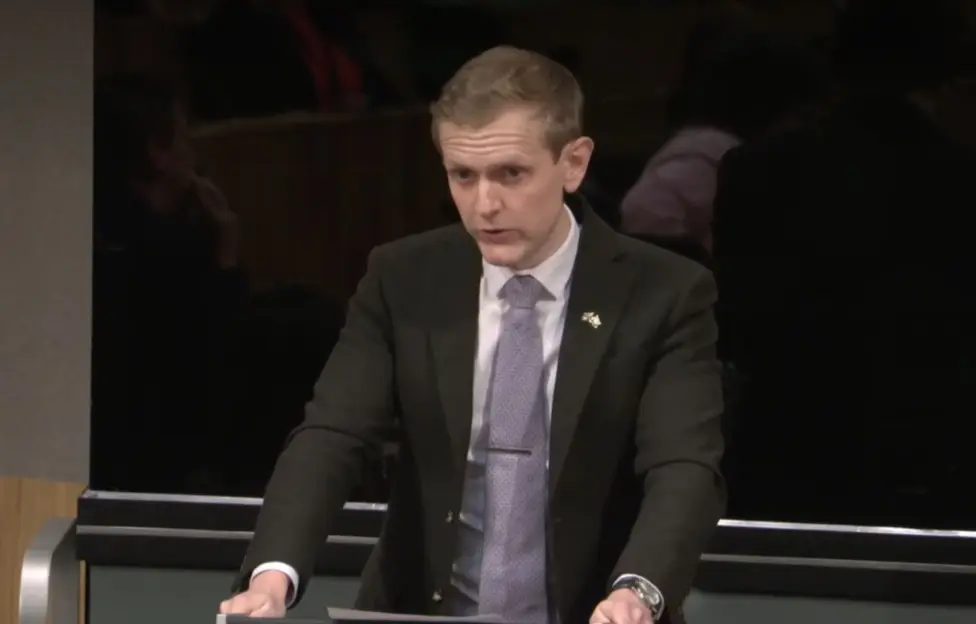
A HEATED row erupted in the Senedd after a Reform UK Member of the Senedd made remarks that prompted politicians from Labour, Plaid Cymru and the Green Party to walk out of the debating chamber in protest.
The dramatic scenes unfolded during a debate when Reform MS Joe Martin criticised the state of education in Wales, making comments about literacy standards that opponents said were insulting and disrespectful.
Video of the exchange quickly spread across social media, drawing strong reactions from supporters and critics alike.
During his speech, Martin referred to concerns about educational attainment in Wales and questioned the performance of the Welsh education system. However, opposition members accused him of crossing a line by mocking Welsh pupils and making remarks they considered offensive.
As tensions rose, members from Labour, Plaid Cymru and the Green Party left the chamber in a coordinated walkout, signalling their disapproval of the comments.
The incident marks one of the most significant confrontations since the newly elected Senedd first convened following the May election.
Growing political divide
The walkout highlights the increasingly confrontational atmosphere that has developed between Reform UK and the other parties represented in the Welsh Parliament.
Reform entered the Senedd with a significantly larger presence following the election, fundamentally changing the political landscape and creating a more divided chamber than in previous terms.
Supporters of Reform argued that Martin was highlighting genuine concerns about educational standards and literacy rates in Wales, while opponents maintained that criticism of government policy should not come at the expense of pupils and communities.
The exchange quickly became a major talking point online, with clips attracting thousands of views and generating fierce debate about standards of political discourse in Wales.
Education remains key battleground
Education is expected to remain one of the most fiercely contested issues during the current Senedd term.
Recent years have seen repeated concerns raised about educational performance, attendance levels and attainment gaps, while Welsh Government ministers have defended ongoing reforms and investment in schools.

The latest clash demonstrates how debates over education are likely to become increasingly political as parties seek to define themselves ahead of future elections.
While walkouts are relatively uncommon in the Senedd, Wednesday’s protest underscored the strength of feeling among opposition members and provided an early indication of the battles that may lie ahead in the new parliamentary term.
The incident is likely to fuel further debate both inside and outside the Senedd over political standards, educational performance and the direction of Welsh public policy under the new political landscape.

Cancer treatment targets missed again as opposition says Plaid must share responsibility for health service performance
NHS WALES is facing renewed pressure after the latest performance figures showed waiting lists rising, cancer treatment targets being missed again and more patients waiting over 12 hours in emergency departments.
The figures come as the Welsh Government announced an additional £145m for NHS Wales, including £100m to reduce waiting times and £25m for new surgical hubs.
In April, performance against the 62-day target for patients starting cancer treatment fell to 56.7%, well below the 75% target.
In Swansea Bay, just 48.4% of cancer patients began treatment within the target time.
Treatment waiting lists also increased, with 680,003 patient pathways recorded in April. The estimated number of individual patients waiting for treatment stood at 536,500.
Two-year waits rose to 3,694. In England, the comparable figure was 191.
Emergency care also came under further strain in May. The proportion of patients spending less than four hours in Welsh emergency departments fell to 64.4%, against a target of 95%.
A total of 11,066 patients waited 12 hours or more before being admitted, transferred or discharged, up from 10,287 in April. The target is zero.
Ambulance performance remained under pressure. For red calls, the median response time improved to nine minutes and 12 seconds, but the 90th percentile increased to 22 minutes and 39 seconds, meaning response time targets were still not met.
Welsh Conservative criticism
The Welsh Conservatives said the figures showed a “worrying backslide” in NHS performance and accused Plaid Cymru of sharing responsibility for the state of the health service.
Natasha Asghar MS, Welsh Conservative Shadow Cabinet Secretary for Health and Social Care, said: “These figures show a worrying backslide in NHS performance in Wales. Cancer treatment times have fallen, waiting lists have risen, two-year waits are up and more patients are being left waiting over 12 hours in emergency departments.
“Plaid Cymru cannot escape responsibility for this. They propped up the previous Welsh Labour Government by backing their budgets and are now in Government themselves. Patients across Wales need action, not more talk of improvement.

“Whilst any extra funding for the NHS is welcome, £145m will not be enough unless it is accompanied by urgent reform, a comprehensive workforce strategy and real delivery for patients.
“The Welsh Conservatives have been clear that the Welsh Government needs to declare a health emergency in our NHS. We need more beds in our hospitals, a robust NHS workforce and a serious plan to cut waiting lists and to support our emergency departments.”
Funding announced
The Welsh Government says the extra £145m will support work to reduce waiting times and improve access to treatment.
Of that, £100m has been allocated to reducing waiting lists, while £25m will be invested in new surgical hubs.
Health leaders have welcomed the additional funding, but warned that money alone will not solve the pressures facing hospitals, GP services, social care and emergency departments.
The latest figures are likely to increase pressure on ministers to show clear progress before the winter, when demand on the NHS is expected to rise further.
Welsh Government response
The Welsh Government said the figures related to April, before the new administration took office, and showed that both treatment waiting lists and the longest waits had increased.
Health and Care Minister Mabon ap Gwynfor said too many people were waiting too long for treatment, and said emergency care performance was not yet at the level patients and staff should expect.
He said: “Our focus is clear — cut waiting times, prioritise those who have been waiting the longest, improve access to services and build an NHS that can keep up with demand in the long term.
“To bring waiting times down and keep them down, we need to change the way the NHS works — making sure patients move through the system more smoothly, from their first referral all the way to treatment.
“We’ve got a plan to do this, working with the fantastic NHS staff right across Wales. The £145 million we’re announcing today will be important in tackling the waiting list and waiting times and helping people be seen quicker.”
The Welsh Government said £100m would be used to help reduce waiting lists and waiting times, £25m would be invested in new surgical and diagnostic hubs, and £20m would go towards essential maintenance across the NHS estate.


News19 hours ago
Motorcyclist, 22, dies in A4075 crash in Pembrokeshire
A 22-year-old woman remains in hospital after two-vehicle collision A MOTORCYCLIST has died following a serious two-vehicle crash on the...

Community20 hours ago
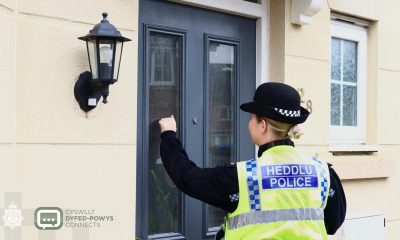
Why police will be visiting every home in Pembrokeshire
New operation aims to knock on more than 257,000 doors across Dyfed-Powys over the next three years DYFED-POWYS POLICE has...


Crime23 hours ago
Prisons at breaking point: MPs warn Wales is paying the price of a failing system
Frozen healthcare budgets, overcrowded jails, homelessness on release and mounting pressure on staff are undermining rehabilitation across Wales, according to...


News2 days ago
Brexit at 10: How Britain was sold a dream that cost us dearly
A decade after the referendum, the promised benefits remain hard to find while the economic costs are increasingly difficult to...


Crime2 days ago
Worcestershire man jailed after violent attack on woman in Tenby
Defendant was already serving a suspended sentence when serious assault took place A WORCESTERSHIRE man has been jailed for more...


Climate2 days ago
Offshore wind ‘could bring new generation of jobs to Milford Haven’
Pembrokeshire ports and Celtic Sea projects placed at centre of Wales’ green energy ambitions MILFORD HAVEN and Pembroke Dock could...


Community3 days ago
Police officer hailed hero after midnight sea rescue in Milford Haven
PC swam 100 metres offshore to save distressed woman heard calling for help in darkness A DYFED-POWYS POLICE officer has...


Local Government3 days ago
Security privately arranged by Mayor at Beating of the Bounds
HAVERFORDWEST TOWN COUNCIL has confirmed that security personnel seen at this year’s Beating of the Bounds were privately arranged and...


Business4 days ago
Celtic Freeport five-year plan puts Milford Haven at centre of green energy future
Strategy promises investment, skilled jobs and new supply chains, but major barriers remain over grid connections, planning and delivery THE...


Education4 days ago
Closure of Ysgol Clydau approved after emotional council debate
COUNCILLORS WARNED RURAL COMMUNITIES WILL REMEMBER DECISION PEMBROKESHIRE councillors have voted to close Ysgol Clydau following an emotional debate over...
-

 Community5 days ago
Pembrokeshire Chess Club crowned Welsh champions
-

 Crime1 day ago
Milford Haven man jailed for breaching domestic violence protection order
-
Local Government3 days ago
Security privately arranged by Mayor at Beating of the Bounds
-

 News19 hours ago
Crash on Freeman’s Way causes school-run chaos across Haverfordwest
-

 Education7 days ago
Diocese threatens legal action as Manorbier school closure battle intensifies
-

 Crime2 days ago
Man wanted by court after failing to attend hearing over alleged shop thefts
-

 Local Government7 days ago
Taxi suspended after county-wide licensing checks
-

 Crime2 days ago
Man jailed after admitting strangulation and assaults