


News
Welsh road use 20% lower than rest of UK


PETROL sales at filling stations across Wales are 20% lower than their counterparts in the rest of the UK, according to newly released official figures.
The Department for Business, Energy & Industrial Strategy’s research shows that while road use across the country was slowly returning to pre-lockdown levels at the end of May, Welsh road users continued to limit the use of their vehicles more than motorists in England.
The figures revealed a nationwide 7.5% weekly rise in fuel sales for the week ending 31 May. However, the same rise was not reflected in the data for Wales.
Responding to the new data, Greg Wilson, founder of Quotezone.co.uk, one of the country’s leading car insurance comparison sites, says: “It seems most motorists are taking those rules very seriously because there is a very marked difference between road use in Wales compared with road use in England.”
In Wales motorists are not allowed to travel more than five miles from their homes, whereas drivers in England no longer have any travel restrictions.

Across the UK, sales are 39% below their pre-lockdown levels despite a gradual easing of the lockdown in many regions.
In the eight weeks to 23 March – the day the lockdown began – average daily road fuel sales were 17,690 litres per filling station. By contrast, in the following ten weeks sales fell to 7,900 litres, a 45% drop.
The month of April saw the sharpest decline in fuel consumption though, when UK motorists spent 63% less on fuel than they did in February. The lowest average daily figure – 2,500 litres – was recorded on 12 April, at the peak of the pandemic. A month earlier to the day filling stations sold on average 19,500 litres.
The report used petrol and diesel sales figures from 4,500 filling stations, which make up over 50% of petrol stations in Great Britain. The study covered the period from 1 February to 31 May.
Greg Wilson added: “The lockdown has caused financial difficulties for a lot of people in the UK, but one area where many have been able to save a bit of cash is their transport costs. This new research reveals that the average amount motorists spent on fuel in April was 63% lower than in February, and an average of 45% less during the course of the lockdown.
“With a typical British household spending an average of £25 on fuel during a normal week, that means households are likely to have saved an average of £112 on fuel during the lockdown, although people with longer commutes may well have saved as much as £400 or £500.
“Of course, fuel isn’t the only expense drivers have been able to save a bit of cash on during the pandemic. Some motorists have also applied for a Statutory Off-Road Notice (SORN), which means they will have saved money on their car insurance and road tax as well.

“And it’s also worth mentioning that some car insurance companies are willing to reduce motorists’ premiums to reflect the lower mileage they’ve been doing whilst working from home, so it’s worth speaking to your insurance provider about that if you haven’t done so already.”



HAVERFORDWEST music teacher and soprano soloist Clare Harrison is set to perform at the International Eisteddfod in Llangollen next month.
Clare will sing under the baton of Sir Karl Jenkins on Tuesday, July 7, as part of the World Choir, an auditioned international chorus of singers, for the long-awaited Welsh premiere of his work One World.
She will also perform in a new commission, Greeting the Dawn, by Sam Buttler, and in Peace Child with Wrexham-based chorus NEW Voices.
Clare combines a busy teaching schedule with regular solo performances across Wales and the borders.
Her next Pembrokeshire appearance will be as soloist with Tenby Male Choir at St Mary’s Church, Tenby, on Thursday, July 16.
Caption:
Clare Harrison: The Haverfordwest soprano will perform at the International Eisteddfod in Llangollen.
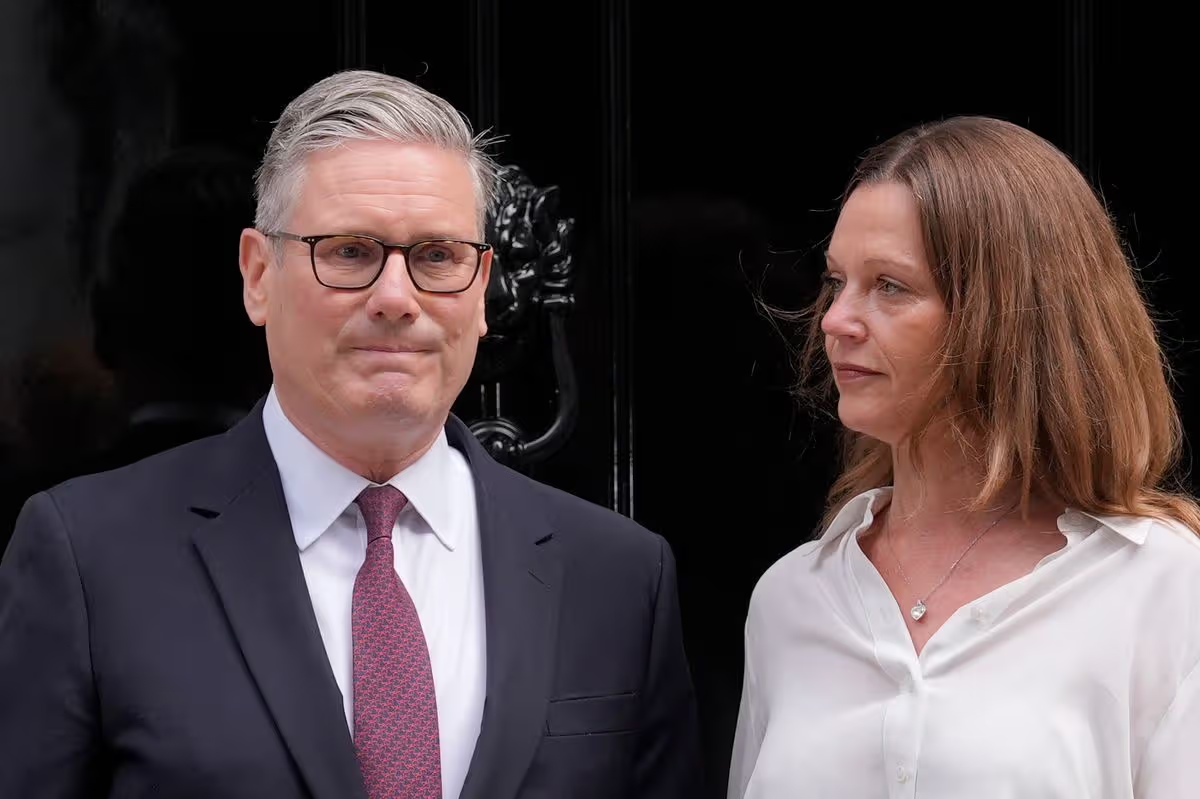
First Minister says next Prime Minister must focus on greater powers, fair funding and respect for Wales’ democratic mandate
FIRST MINISTER Rhun ap Iorwerth has said the next UK Prime Minister must commit to a “new relationship with Wales” as Sir Keir Starmer prepares to leave office.
The Plaid Cymru leader said he wished Sir Keir well, but warned that political instability in Westminster was affecting the Welsh Government’s ability to engage with Number 10 on issues that matter to people in Wales.
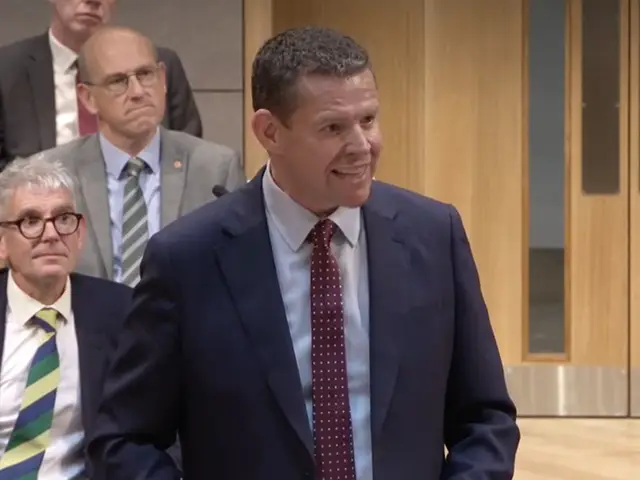
His comments came after Starmer announced on Monday (Jun 22) that he would resign as Prime Minister and leader of the Labour Party.
Starmer will remain in Downing Street until Labour selects a successor.
Mr ap Iorwerth said: “I am disappointed that the Welsh Government’s ability to engage with the UK Prime Minister on issues which matter to the people of Wales is being hampered by the turmoil in Westminster.
“I wish Sir Keir Starmer well as he prepares to leave office. I would like to see his successor recognising that Wales needs a new relationship with Westminster, with a focus on greater powers, fair funding, and respect for the democratic mandate delivered by the people of Wales.
“My government and I will always seek a constructive relationship with whoever is in Number 10, but we have clear expectations that the respect agenda must work both ways.”
In a shorter statement posted online, the First Minister added: “The next PM must commit to a new relationship with Wales — with a focus on greater powers, fair funding and respect for our mandate.”
Labour’s National Executive Committee is expected to open nominations for the party leadership on July 9, with the process due to be completed before Parliament returns from its summer break in September if a contest is required.
Andy Burnham is widely expected to enter the race after returning to Parliament following his victory in the Makerfield by-election.
The change of leadership comes at a sensitive time for Wales, with questions over fair funding, the future of devolution, public services and the relationship between Cardiff Bay and Westminster likely to feature prominently in the weeks ahead.

Darren Millar says Wales needs “tough decisions” as Labour prepares to choose a new Prime Minister
THE LEADER of the Welsh Conservatives has said Sir Keir Starmer’s resignation will not change the impact of Labour’s failures on Wales.
Darren Millar MS said replacing one Labour leader with another would not solve the problems facing families and businesses across the country.
His comments came after Starmer announced on Monday (Jun 22) that he would resign as Prime Minister and leader of the Labour Party.
Starmer will remain in office until Labour selects a successor, with Andy Burnham widely expected to enter the race.
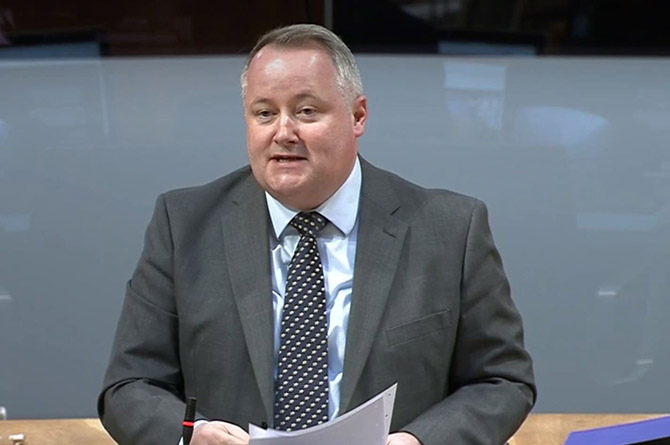
The Welsh Conservatives said Wales was still facing the consequences of Labour decisions on the cost of living, energy, welfare and defence spending.
They said the focus should now be on “getting Britain working again” rather than simply changing the person leading the Labour Party.
Mr Millar said: “Sir Keir Starmer may be going, but Labour’s failures remain.
“The last thing Wales and the rest of the UK needs is another Labour leader who won’t stand up to Labour MPs on welfare, energy, defence spending and action on the cost of living.
“His decision is a reminder that Kemi Badenoch is the only leader of a political party in the UK with the backbone to make tough decisions and get Britain working again.”
The resignation has triggered a major political transition at Westminster.
Labour’s National Executive Committee is expected to open nominations for the party leadership on July 9, with the process due to be completed before Parliament returns from its summer break in September if a contest is needed.
For Wales, the change at No 10 comes at a time of growing political pressure over public services, household costs, economic growth and the future direction of the UK Government.

Welsh Labour figures are likely to face renewed scrutiny as opposition parties seek to link the party’s record in Westminster with its long period in power in Cardiff Bay.
The Conservatives are expected to argue that a change of Labour leader will not mean a change of policy unless the party changes direction.
Starmer said in his resignation speech that becoming Prime Minister had been the “proudest moment” of his life, but accepted that his party no longer believed he was best placed to lead it into the next general election.



News18 minutes ago
Rhun ap Iorwerth urges new deal for Wales after Starmer quits
First Minister says next Prime Minister must focus on greater powers, fair funding and respect for Wales’ democratic mandate FIRST...


News50 minutes ago
How Labour’s landslide victory unravelled in just two years
Prime Minister announces resignation after losing support within his own party as Andy Burnham emerges as overwhelming favourite to take...


News13 hours ago
Long Course Weekend set to bring thousands to Pembrokeshire
Three days of swimming, cycling and running will once again transform Tenby into one of the UK’s biggest endurance sporting...


Community20 hours ago
The gentle giant behind the tattoos
Pembrokeshire security worker Josh Davies praised for professionalism, kindness and proving first impressions can be wrong JOSH Davies is hard...


Charity2 days ago
Toy Story fans fill charity toy box at Haverfordwest cinema
Donations pour in for SNAP Specialist Play as families embrace Toy Story 5 launch A TOY STORY-themed charity appeal at...


Community2 days ago
Lord Rhys emerges from the mist in St Davids
Giant puppet begins historic journey marking 850 years since the first Eisteddfod MIST swirled around St Davids Cathedral on Friday...


News3 days ago
Tragic tribute paid to Haverfordwest man after A4075 collision
FAMILY REMEMBERS “KIND AND LOVING” CALLUM HANSON THE FAMILY of a 22-year-old man from Haverfordwest who died following a road...

News4 days ago
Motorcyclist, 22, dies in A4075 crash in Pembrokeshire
A 22-year-old woman remains in hospital after two-vehicle collision A MOTORCYCLIST has died following a serious two-vehicle crash on the...


Community4 days ago
Why police will be visiting every home in Pembrokeshire
New operation aims to knock on more than 257,000 doors across Dyfed-Powys over the next three years DYFED-POWYS POLICE has...


Crime4 days ago
Prisons at breaking point: MPs warn Wales is paying the price of a failing system
Frozen healthcare budgets, overcrowded jails, homelessness on release and mounting pressure on staff are undermining rehabilitation across Wales, according to...
-

 Crime4 days ago
Milford Haven man jailed for breaching domestic violence protection order
-

 Local Government6 days ago
Security privately arranged by Mayor at Beating of the Bounds
-

 News4 days ago
Crash on Freeman’s Way causes school-run chaos across Haverfordwest
-

 Crime6 days ago
Man wanted by court after failing to attend hearing over alleged shop thefts
-
 Crime6 days ago
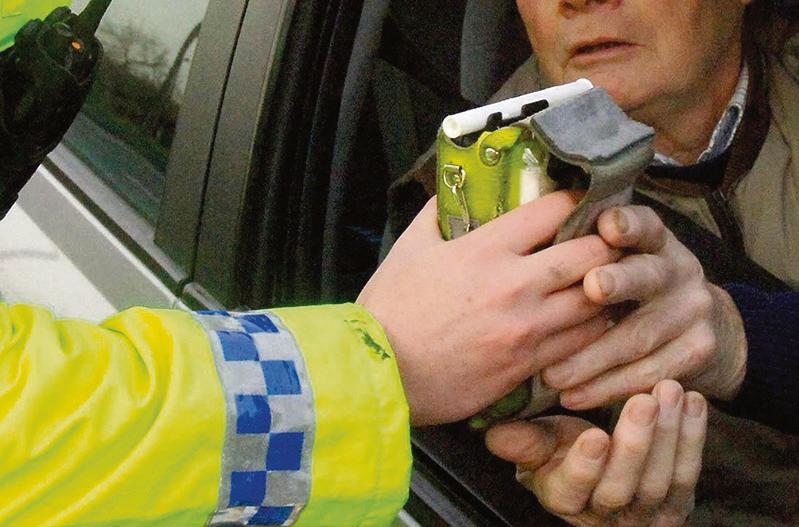
Man banned from roads after drink-driving offence
-

 Crime6 days ago
Man jailed after admitting strangulation and assaults
-

 Crime6 days ago
Drug trafficker must repay £33,000 after court rules he made nearly £500,000
-

 Crime6 days ago
Man sentenced over stalking campaign and lock knife offence