


Sport
Scarlets slide to PR014 loss

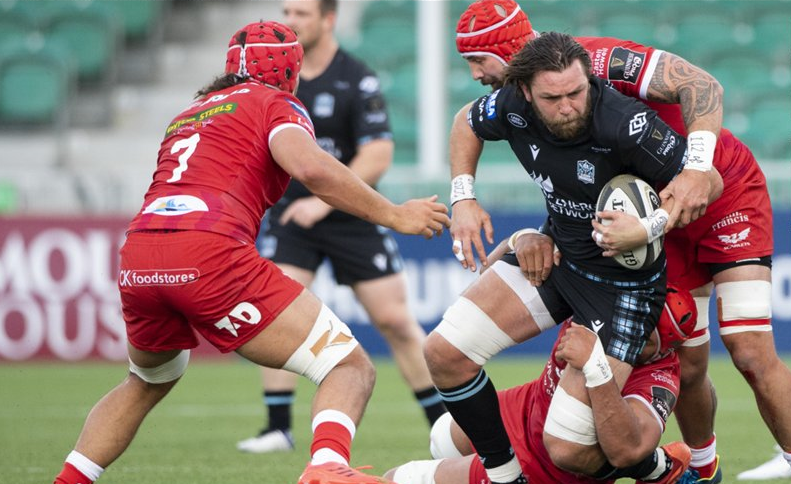
SCARLETS went down to a second defeat of the Guinness PRO14 campaign after ill-discipline cost them dear in a 20-7 loss at Scotstoun.
Trailing 10-0 at half-time, they had second row Sam Lousi red carded for a dangerous tackle two minutes into the second period and despite a spirited late resurgence left Glasgow empty handed.
On his 150th appearance, prop Samson Lee crossed for his side’s lone try to spark a comeback in the final quarter, but Scarlets were unable to take the chances they created to claw their way back into the game.
It was Lee who was handed the honour of leading out the Scarlets as the visitors looked to continue their excellent record at Scotstoun.
Both sides have built a reputation for running rugby, but the opening half proved a real arm wrestle, particularly at the breakdown.

There were threatening bursts from scrum-half Gareth Davies and centre Johnny Williams, but every time the Scarlets entered Warriors territory, they conceded a penalty.
It took 28 minutes for the scoreboard operator to be called upon with Glasgow fly-half Adam Hastings landing a long-range penalty, sandwiched between two misses from similar range.
Prop Oli Kebble then barged over from close-range with Hastings’s conversion making it 10-0 to the home side.
To compound matters Scarlets lost back-rower Josh Macleod to a leg injury, replaced by international openside James Davies.
Halfpenny was wide with his first penalty attempt as Scarlets attempted to claw back the deficit, but in the final move of the half a Williams break came to nothing as Glasgow pilfered another turnover penalty.
Needing a strong response after the restart, the second half started in disastrous fashion when Lousi was red carded for a dangerous tackle on Glasgow wing Ratu Tagive.
It wasn’t long before the Warriors took advantage of the extra man with experienced No. 8 Ryan Wilson diving over for his side’s second try.
Scotland international Adam Hastings converted and added another penalty to push the score out to 20-0, but that sparked the Scarlets into a spirited response.

With the bench making a big impact, Scarlets brought a real energy to their performance and were rewarded when Lee found a way to the line after a lovely ‘show and go’ from a couple of metres out. Halfpenny converted and suddenly the Scarlets sensed a way back.
It needed an outstanding cover tackle from Steff Evans to deny Scotland international Tommy Seymour shortly afterwards, but back came the Scarlets forcing the home side to concede a string of penalties.
It led to lock Richie Gray being shown yellow, but the visitors couldn’t make the most of it as Ken Owens had the ball dislodged as he charged towards the whitewash.
In the dying moments, the dangerous Evans almost produced a stunning solo score but wasn’t able to ground the ball in the corner, then Tom Rogers went close on the other flank.
Reduced to 13 men following the sin-binning of Nick Grigg for an illegal high shot, Glasgow were able to hold out late on, leaving the Scarlets to reflect on a second defeat of the campaign.
Speaking after the match, Scarlets head coach Glenn Delaney said: “It was a game of two halves, we weren’t accurate early in the first half. We were quite rueful we did not take the opportunities when they presented themselves. We had some territory and possession without really getting momentum with the collisions. At the breakdown area we were struggling a little bit to keep the ball and continuity going and that told.
“It was a nip and tuck first-half and they capitalised, took a chance and fair play to them for that.
“In the second period we had a red card and then we really put some momentum into the game and we looked pretty good and I felt we probably had another score in us at that point and it was all on.
“We finished with plenty of energy. That is the footie we are trying to play, we just didn’t get to do that in the first half.
“I was really proud of the effort, that is never in question with our lads. We just need to be more accurate so we can put more of a mark on our game.”
As for the injuries to Josh Macleod, Ken Owens and Blade Thomson, Delaney added: “Josh has a hamstring injury so we will have a look at that and see how he gets on. The medics are looking after him and it’s pretty early to make an assessment, we will know more in the next 24-48 hours.
“He has worked so hard to get in that Wales squad and I thought he was outstanding again today, making big plays and doing what he has been doing for us for the last 12 months.
“The form that he has shown to get us into that position he was showing that tonight so it was a shame for him. When James (Davies) came on he looked great so we have two good guys in that seven shirt.
“Ken has a shoulder injury, he has some bruising, and Blade has an elbow problem. It’s about managing it. It’s pretty early when you get those joint related things, they tend to take a day or so to really know what the severity is.”


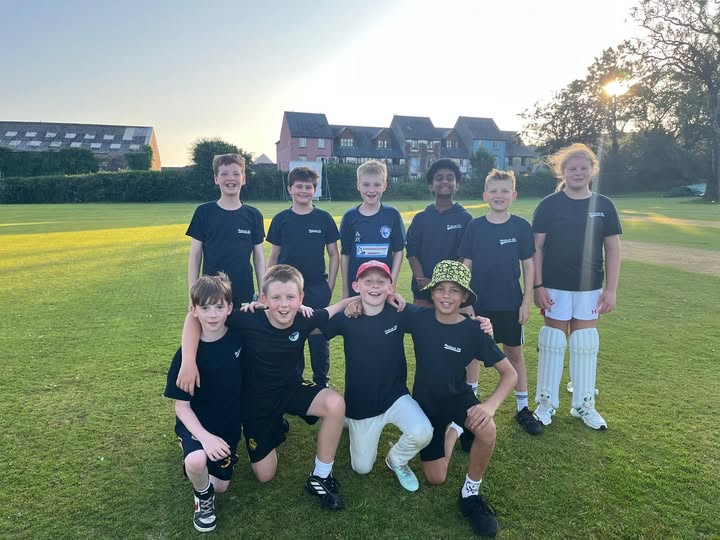
NARBERTH CRICKET CLUB’S Under-11 side produced another impressive performance on Monday evening, defeating Haverfordwest in a closely contested junior fixture.
Batting first, Narberth posted 95-3, which translated to a net score of 280 under junior cricket scoring rules. Haverfordwest replied with 77-11, finishing on 222 after losing wickets throughout their innings.
Poppy Phillips top-scored for Narberth with 17 runs, helping to anchor the home side’s innings.
The bowling attack proved decisive, with Danny Evans returning figures of 3-12 and also contributing seven runs with the bat. Archie Young claimed 1-9 and scored seven runs, while Charlie Morton (1-4), Kai De Silva (1-7), Morgan Rees (1-8), Lewis Roberts (1-10) and Tommy Phillips (1-12) all chipped in with wickets.
The victory continues a strong season for Narberth’s young cricketers, who have shown both depth in batting and discipline in the field.
A photograph shared by the club after the match showed a smiling Narberth squad celebrating the win in the evening sunshine.
Photo caption:
Victorious Narberth U11s after their win over Haverfordwest (Pic: Narberth Cricket Club).
Annual event will honour popular young footballer while raising funds for Wales Air Ambulance
FOOTBALLERS, friends and families from across Pembrokeshire will come together next month to celebrate the life of a much-loved local sportsman at the second Adam Muskett Memorial 7-a-side Tournament.
The event, organised by Tenby AFC, will take place at The Clicketts Playing Fields on Saturday, July 25, bringing together teams for a day of football, remembrance and fundraising in memory of Adam Muskett.
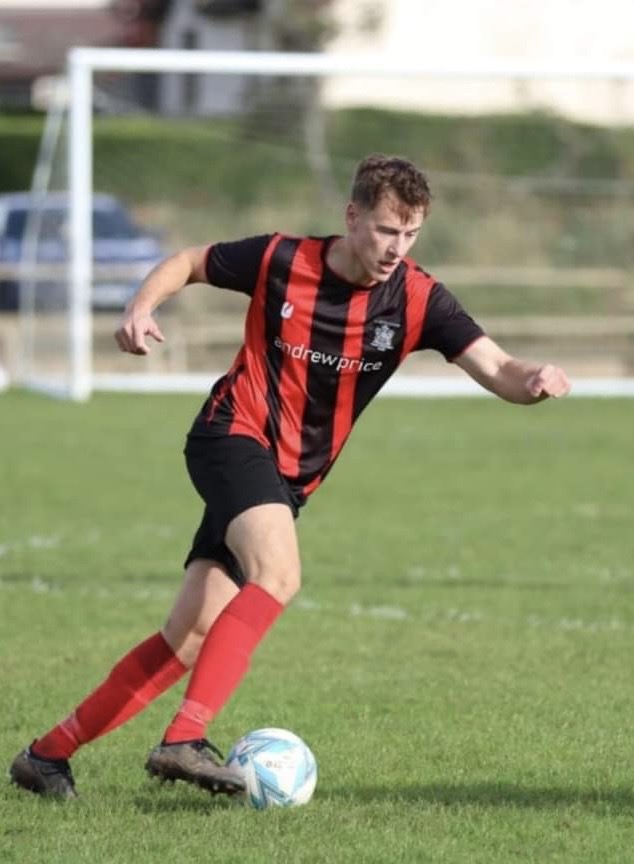
Adam, 27, tragically lost his life alongside his girlfriend, Katie Worrell, 25, in a road traffic collision in June 2024. The tournament was established by his football club as a lasting tribute to his passion for the game and the impact he had on those around him.
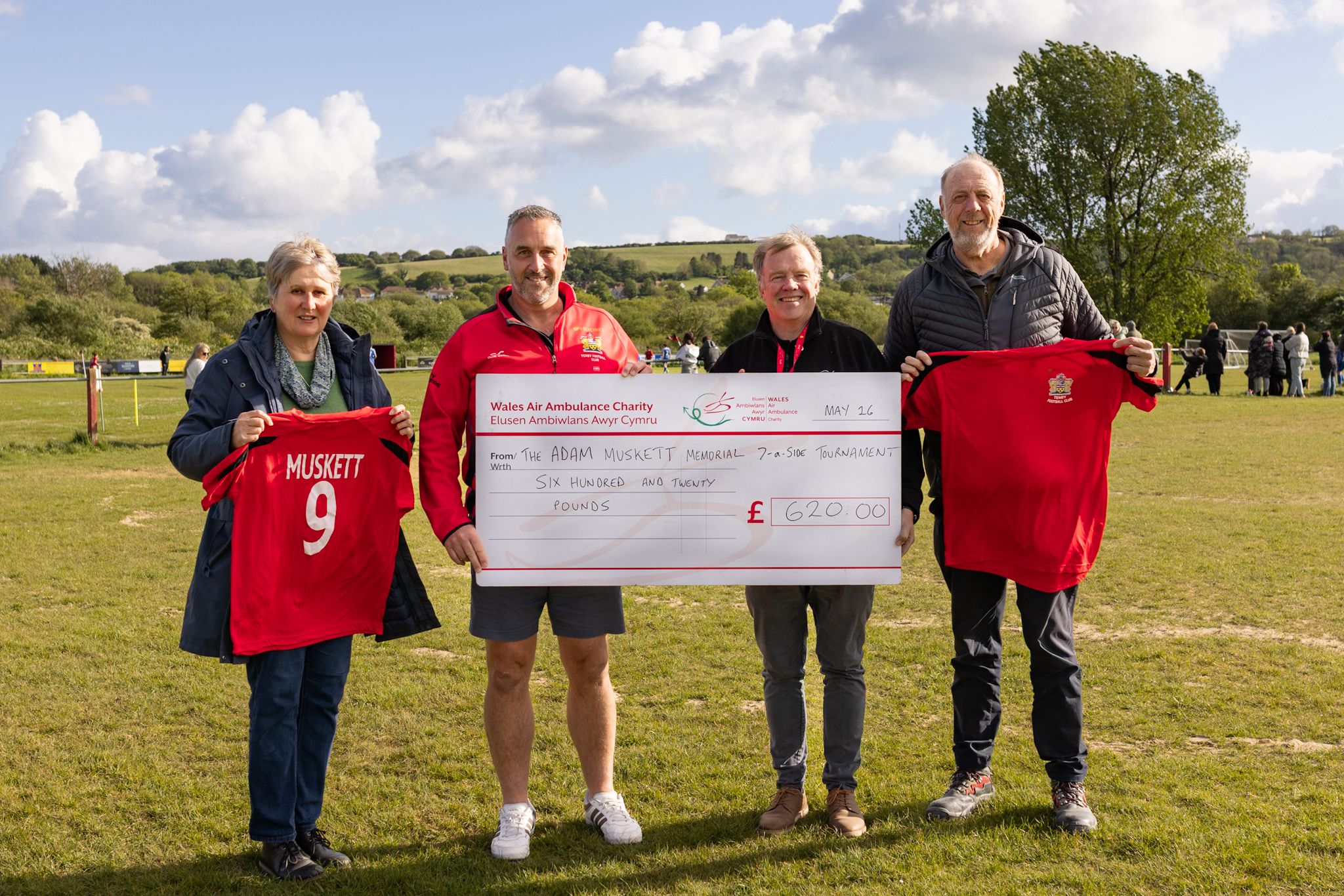
Last year’s inaugural event proved a great success, raising £620 for Wales Air Ambulance. Following the positive response from players, supporters and the wider community, Tenby AFC has committed to making the tournament an annual fixture.
Recently, Adam’s parents, Helen and Andrew Muskett, joined Tenby AFC secretary Gareth Noot in presenting a cheque to Wales Air Ambulance Regional Fundraising Manager Mike May.
Speaking ahead of this year’s tournament, Helen and Andrew said: “As a family, we are extremely grateful to Gareth and the members and players at Tenby AFC for setting up this tournament as a tribute to Adam, and for all their support over the last two years.
“In particular, Gareth has been amazing and has worked incredibly hard, in such a respectful and considerate way, to support us in this and other matters.
“Last year’s tournament was such an enjoyable day, and we want to thank everyone who attended or contributed in any way. We especially want to thank the participating players, the referees, and those who helped at the entrance and with refreshments. It was wonderful to see so many families there.
“It really was a very special day that meant an awful lot to us as a family and a fitting tribute to Adam, who was passionate about football.”
Supporting a lifesaving charity
The family said they were keen for Wales Air Ambulance to remain the main beneficiary of the fundraising efforts.
They added: “We wanted Wales Air Ambulance to benefit from the funds raised because they helped Katie at the time of the collision, and Adam would have wanted them to be the first benefactor of the tournament.
“Our heartfelt thanks go to everyone involved, and we hope the tournament will continue for many years to come.”

Wales Air Ambulance is a consultant-led service that brings hospital-standard emergency care directly to patients across Wales. Working in partnership with the NHS Emergency Medical Retrieval and Transfer Service (EMRTS), its crews can provide advanced critical care at the scene of an incident, including anaesthesia, blood transfusions and minor surgical procedures.
Mike May, Regional Fundraising Manager for Wales Air Ambulance, said: “It’s humbling to hear that Adam’s club, family and friends will continue to come together to hold an annual tournament in his memory. It’s a touching tribute.
“We are deeply grateful that Adam’s family has chosen to support Wales Air Ambulance through this tournament following the care provided at the time of the collision.
“We hope as many people as possible support this event in honour of a very popular young man who was passionate about football.”
Teams invited to enter
The tournament is open to registered senior men’s football clubs. Each squad can register up to ten players and the entry fee is £50 per team.
Organisers are hoping for another strong turnout and a day that not only celebrates football, but also keeps Adam’s memory alive while supporting a charity that provides lifesaving care throughout Wales.
For more information or to enter a team, email [email protected] or call 07815 189374.
Photo caption: Helen and Andrew Muskett with Gareth Noot, Secretary of Tenby AFC, and Mike May of Wales Air Ambulance during the cheque presentation following last year’s tournament fundraising success.
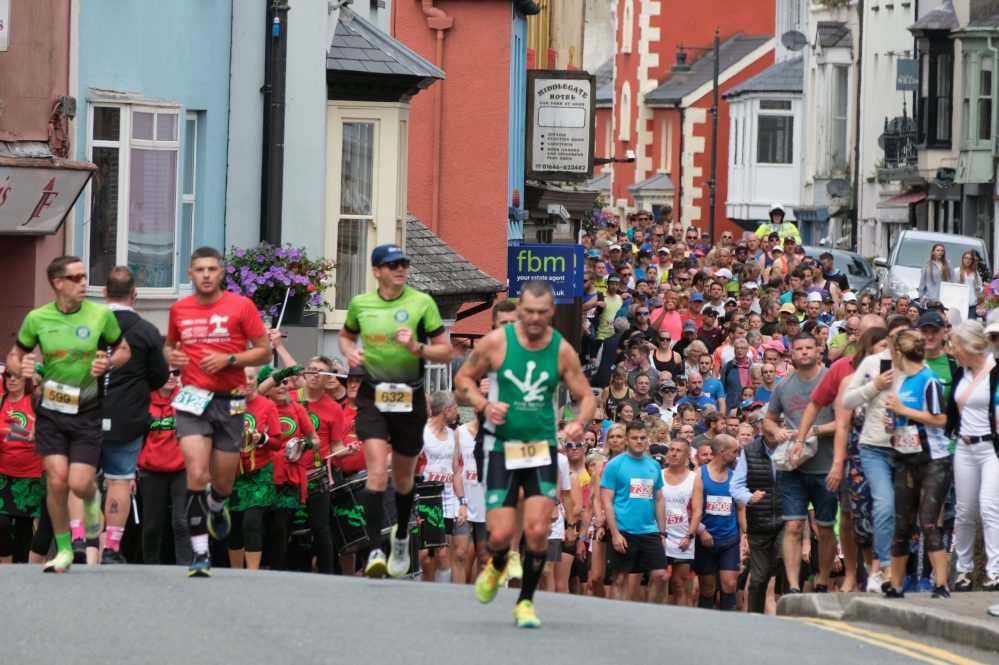
Three days of swimming, cycling and running will once again transform Tenby into one of the UK’s biggest endurance sporting festivals
TENBY is preparing to welcome thousands of athletes and spectators from across the UK and around the world as the Long Course Weekend returns to Pembrokeshire from Friday, June 26 to Sunday, June 28.
Now firmly established as one of Europe’s largest participation sporting events, Long Course Weekend Wales combines swimming, cycling and running challenges over three days, attracting everyone from elite athletes to first-time competitors.
Unlike a traditional triathlon, competitors can enter one, two or all three disciplines, choosing distances that suit their ability. Those who complete the full long-course distances across all three days earn the coveted fourth medal, one of the event’s most sought-after prizes.
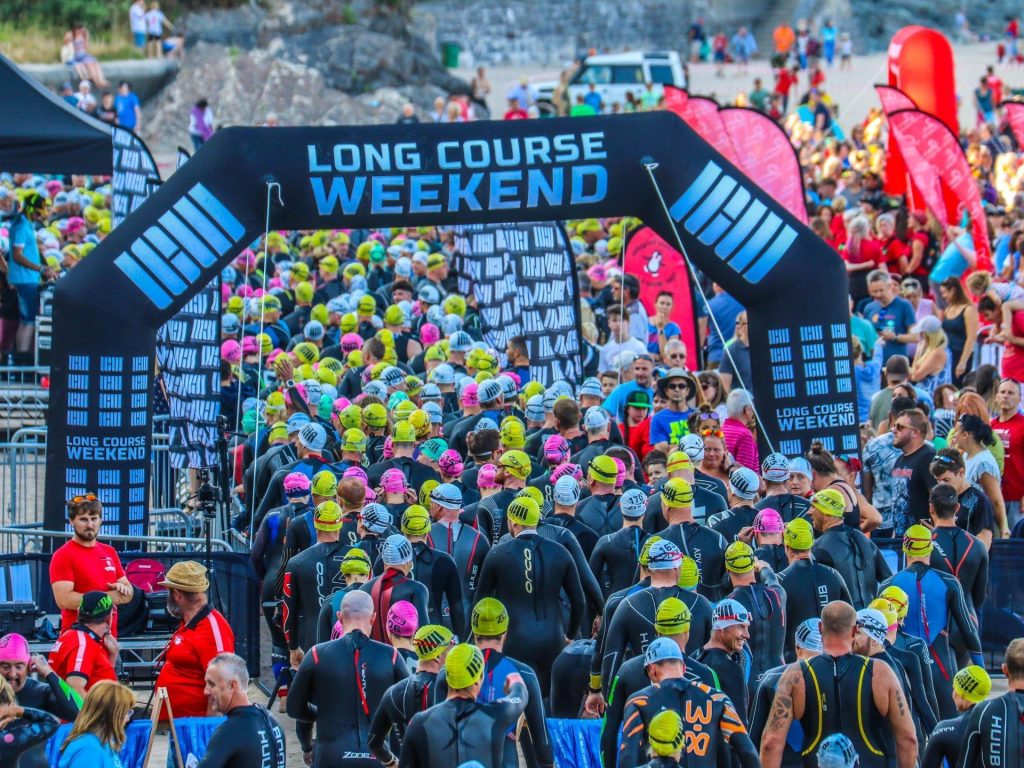
Three days of endurance
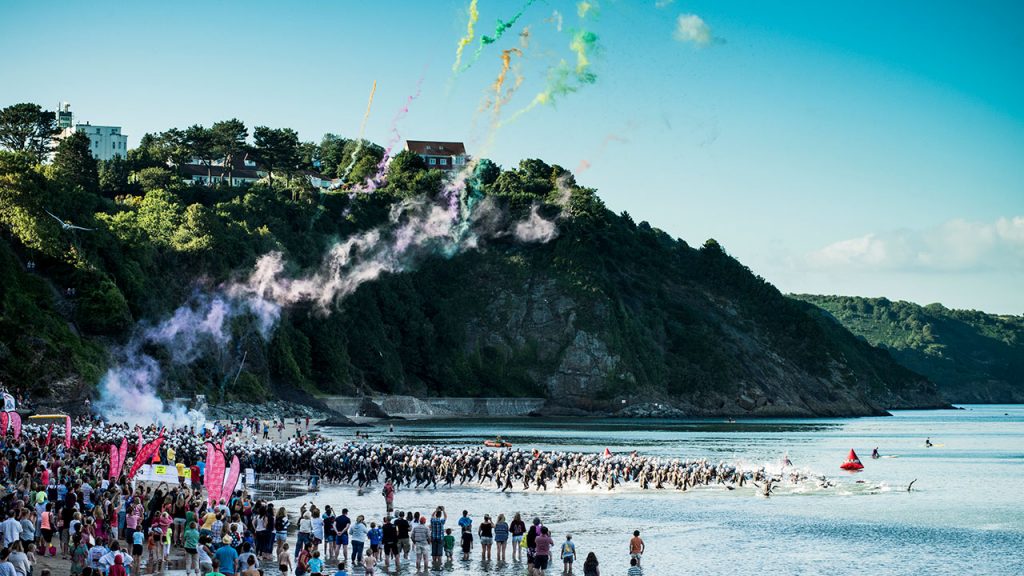
The weekend begins on Friday evening with the Wales Swim off Tenby’s famous North Beach.
Athletes will take to the waters of Carmarthen Bay in a range of distances, including the iconic 2.4-mile swim, while younger participants will have the chance to get involved through the popular LC Kinder event.
Saturday is dedicated to cycling, with thousands of riders expected to tackle the Pembrokeshire countryside during the Wales Sportive. Routes cater for a variety of abilities, from recreational cyclists to seasoned endurance competitors taking on the full long-course challenge.
The weekend reaches its climax on Sunday with a series of running events, including a 5K, 10K, half marathon and full marathon.
The marathon route is regarded as one of the most scenic and demanding road races in Wales, taking runners through some of Pembrokeshire’s most spectacular coastal and rural scenery before the final run back into Tenby and the cheers of thousands of spectators.
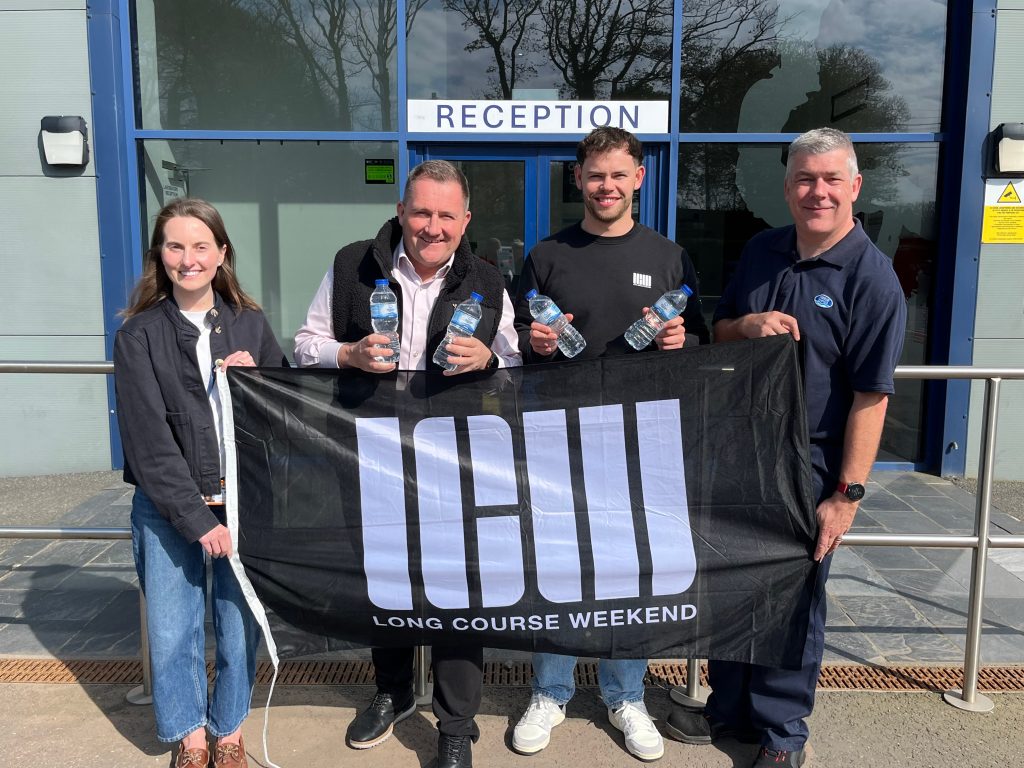
A major boost for the local economy
Long Course Weekend has become one of Pembrokeshire’s most important annual events.
Hotels, guest houses, campsites, restaurants, cafés and shops across Tenby, Saundersfoot and the wider county benefit from the influx of visitors, many of whom stay for several nights.
For many businesses, the event provides a welcome boost at the start of the summer season, filling accommodation and generating significant spending across the local economy.
The event has also helped establish Tenby as one of Britain’s leading destinations for endurance sport alongside the annual Ironman Wales competition.

Spectators welcome
One of the defining features of Long Course Weekend is the support provided by local communities.
From the swim start on North Beach to villages along the cycling and running routes, competitors are encouraged by thousands of spectators throughout the weekend.
The finish-line atmosphere in Tenby is widely regarded as one of the highlights of the event, with runners and cyclists greeted by packed crowds as they complete their challenge.
Families, residents and visitors are encouraged to come along and support participants, with viewing areas available throughout the course.
Road closures and travel advice
Residents are being urged to plan journeys carefully throughout the weekend.
Organisers have confirmed that the Wales Sportive cycling event will once again operate without full road closures, although motorists should expect increased numbers of cyclists on roads across south Pembrokeshire and are urged to drive with extra care.
Traffic restrictions and road closures will, however, be in place around Tenby and along parts of the running routes on Sunday.
Drivers should allow extra travel time and check the latest information from organisers before setting out.
Emergency access arrangements will remain in place throughout the weekend and organisers have worked closely with emergency services, local authorities and transport providers to minimise disruption while ensuring participant safety.
What to expect
For three days, Tenby becomes the centre of the endurance sports world.
Visitors can expect a festival atmosphere throughout the town, with athletes arriving from across Britain and overseas, cafés and restaurants bustling with activity, and competitors of all ages taking on personal challenges.
Some will be chasing podium places. Others will simply be aiming to cross the finish line.
Whatever their goal, Long Course Weekend continues to showcase Pembrokeshire at its best, combining world-class sporting competition with some of the finest scenery in Wales.
As thousands gather once again on the county’s coastline this weekend, organisers are promising another unforgettable celebration of endurance, determination and community spirit.
Long Course Weekend 2026 at a glance
Friday, June 26
- Wales Swim
- LC Kinder children’s events
Saturday, June 27
- Wales Sportive cycling events
Sunday, June 28
- 5K run
- 10K run
- Half marathon
- Full marathon
Location: Tenby and surrounding Pembrokeshire routes
Spectators: Free to attend
Advice: Check road closure information before travelling and allow extra time for journeys throughout the weekend.



News8 hours ago
Bus overturns in major incident near Kidwelly
All passengers rescued as emergency services remain at scene A BUS overturned on the A484 between Kidwelly and Ferryside on...


Community1 day ago
Tenby Summer Spectacular cancelled amid council row over harbour access
Organisers say popular charity events cannot safely go ahead without clear powers to control crowds TENBY ROUND TABLE has announced...


News1 day ago
Motorcyclist dies after four-vehicle crash on A40 in Carmarthenshire
A MOTORCYCLIST has died following a four-vehicle collision on the A40 between St Clears and Whitland. Dyfed-Powys Police said the...


News1 day ago
Rhun ap Iorwerth urges new deal for Wales after Starmer quits
First Minister says next Prime Minister must focus on greater powers, fair funding and respect for Wales’ democratic mandate FIRST...


News1 day ago
How Labour’s landslide victory unravelled in just two years
Prime Minister announces resignation after losing support within his own party as Andy Burnham emerges as overwhelming favourite to take...


News2 days ago
Long Course Weekend set to bring thousands to Pembrokeshire
Three days of swimming, cycling and running will once again transform Tenby into one of the UK’s biggest endurance sporting...


Community2 days ago
The gentle giant behind the tattoos
Pembrokeshire security worker Josh Davies praised for professionalism, kindness and proving first impressions can be wrong JOSH Davies is hard...


Charity3 days ago
Toy Story fans fill charity toy box at Haverfordwest cinema
Donations pour in for SNAP Specialist Play as families embrace Toy Story 5 launch A TOY STORY-themed charity appeal at...


Community3 days ago
Lord Rhys emerges from the mist in St Davids
Giant puppet begins historic journey marking 850 years since the first Eisteddfod MIST swirled around St Davids Cathedral on Friday...


News4 days ago
Tragic tribute paid to Haverfordwest man after A4075 collision
FAMILY REMEMBERS “KIND AND LOVING” CALLUM HANSON THE FAMILY of a 22-year-old man from Haverfordwest who died following a road...
-

 Crime6 days ago
Milford Haven man jailed for breaching domestic violence protection order
-

 News5 days ago
Crash on Freeman’s Way causes school-run chaos across Haverfordwest
-

 Health3 days ago
Woman jailed assaults on police, harassment and XL Bully possession
-

 Crime7 days ago
Drug trafficker must repay £33,000 after court rules he made nearly £500,000
-

 Crime3 days ago
Milford Haven woman spared jail despite string of shop thefts
-
Community2 days ago
The gentle giant behind the tattoos
-

 Crime6 days ago
Portfield Gate man faces careless driving allegation after Tufton crash
-

 Local Government5 days ago
Pembrokeshire faces accessible housing shortage as 403 people wait for homes