


News
Government ban on knives, firearms and offensive weapons has come into force across Wales


A TOUGH ban on a wide range of knives, weapons, and specific firearms comes into force on Wednesday (July 14) as part of Government action to tackle violent crime and serious violence.
Cyclone knives, spiral knives and ‘rapid-fire’ rifles are among those covered by the ban, all of which have been associated with serious violence in communities across the country.
A new legal definition of flick knives, banned since 1959, also takes effect, resulting in more of these bladed weapons being outlawed.
All weapons banned in public by the Criminal Justice Act 1988, including zombie knives, shuriken or death stars and knuckledusters, will now also be banned in private, meaning people can no longer keep them at home.
Anyone unlawfully possessing a firearm covered by the ban will face up to 10 years in prison and those possessing one of the other weapons can be sentenced to up to six months imprisonment or a fine or both.

Assistant Chief Constable Sacha Hatchett said: “The harm caused to families and communities through the tragic loss of life relating to knife crime is devastating and that is why focusing on this issue remains a top priority for policing.
“We welcome the changes to legislation being introduced by the Offensive Weapons Act. These measures will help officers to seize more dangerous weapons, deal with those intent on using them to cause harm and suffering, and crucially, make it more difficult for young people to get hold of knives and other dangerous items in the first place.
“Knife crime is not something that can be solved by policing alone. We are working closely with partners and with groups such schools and businesses to educate young people and explain why carrying a knife is never the right choice. This early intervention plays a vitally important role in stopping young people from turning to a life of crime.”
Home Secretary Priti Patel said: “There is no place in our society for violent crime and harm caused by such knives and firearms. Lives have been lost through serious violence, and this ban will help save lives by getting more knives and other weapons off the streets and out of the hands of violent criminals.
“The human suffering and hurt caused by the tragic loss of life through violent crime is unacceptable, which is why the Government will stop at nothing to give the police the powers needed to stop violent crime and protect the public.
“From today, anyone possessing one of these deadly weapons unlawfully will face the full force of the law.”
The provisions are set out in the Government’s Offensive Weapons Act, which received Royal Assent in May 2019.

From December 2020 to March 2021, the Government ran a scheme allowing members of the public to surrender to the police any items that fell within the new ban and claim compensation from the Home Office.
During the period, 14,965 knives and offensive weapons, 1,133 ‘rapid fire’ firearms (as defined within the Offensive Weapons Act) and more than 32,000 items of ancillary equipment were surrendered, with the Home Office receiving and processing 829 claims for compensation.
The Government is also reminding members of the public about forthcoming changes to the law around antique firearms.
The Antique Firearms Regulations 2021, introduced in March this year, provides for the first time a legal definition of ‘antique firearm’ to prevent criminals exploiting a lack of clarity in law to gain possession of such a weapon for use in crime.
Owners of firearms which have ceased to be antiques as a result of the 2021 Regulations have until 22 September this year to apply to the police for a firearms certificate, which allows them to own these weapons legally. Alternatively, they can surrender, sell or otherwise dispose of the firearm before 22 September.
Police continue to urge anybody to contact them should they know of anybody involved with illegal weapons to contact them via the website or by calling 101. Alternatively contact can also be made via Crimestoppers, anonymously on 0800 555 111.



Samuel Kurtz says public frustration has grown after two years of Labour controversies and policy decisions
FORMER West Wales MS Samuel Kurtz has said Sir Keir Starmer’s resignation felt “increasingly inevitable” after months of controversy and public frustration.
The Welsh Conservative said he watched the Prime Minister’s Downing Street statement with “genuine frustration”, adding that he wanted the UK to be respected regardless of which party was in government.
Starmer announced on Monday (Jun 22) that he would resign as Prime Minister and Labour leader, just 12 days before the second anniversary of Labour’s 2024 general election victory.
Mr Kurtz said: “As a British citizen, I sighed genuine frustration while watching this morning. Whatever the political colour of the Government, I want our country to be respected at home and on the international stage.

“But, in truth, this moment has felt increasingly inevitable as the weeks turned into months.”
He pointed to a series of controversies and policy decisions, including the Lord Alli gifts row, winter fuel allowance cuts, the Family Farm Tax, rising National Insurance, defence spending and domestic energy production.
Mr Kurtz said people “simply feel worse off”, adding that confidence in the economy remained low.
He said: “A Government should ultimately be judged on whether life is getting better for the people it serves.
“After two years marked by the controversies and a series of damaging policy decisions mentioned above, it’s difficult to argue this Government has passed that test.”
Mr Kurtz also questioned what would happen next, asking whether Labour would see an “Andy Burnham coronation”, whether Wes Streeting could build enough support, or whether an outsider could emerge.
He added that he would be watching the leadership contest “from the sidelines with interest”.
Labour is expected to open nominations for a new leader on July 9, with Starmer remaining in office until his successor is chosen.

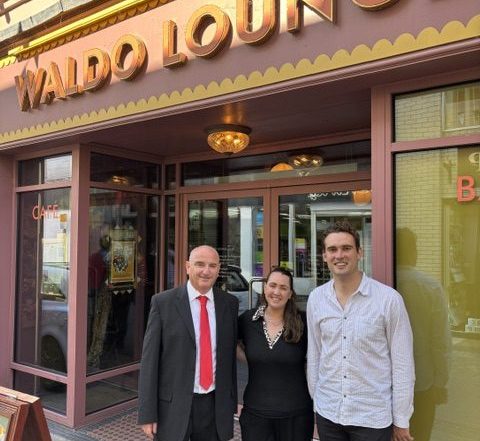
A HAVERFORDWEST venue has been praised for raising more than £2,600 for local charities through a series of community events.
Castle Ward county councillor Thomas Tudor visited The Waldo Lounge in Haverfordwest with Henry Tufnell MP, where they met manager Stephanie Davies.
Cllr Tudor said Stephanie had “truly embraced” her role in the community, organising events including a duck race, sports quiz, Mad Hatter’s tea party for Little Loungers, a bake sale and a drag night show.
Together, the events have raised £2,637 for local good causes.
Charities to benefit include The VC Gallery, Tŷ Hafan and Adam’s Bucketful of Hope Cancer Support Centre.
Cllr Tudor said: “It was lovely to introduce Henry Tufnell MP to Stephanie Davies, manager of The Waldo Lounge in Haverfordwest.
“Stephanie has truly embraced her role in the community of Haverfordwest, running many exciting initiatives and raising a staggering £2,637 for local charities.”
The fundraising continues this week, with Rock ’n’ Roll Bingo and a Wild West country and western night featuring a rodeo bull.
Caption: Community support: Thomas Tudor, Stephanie Davies and Henry Tufnell MP outside The Waldo Lounge in Haverfordwest.
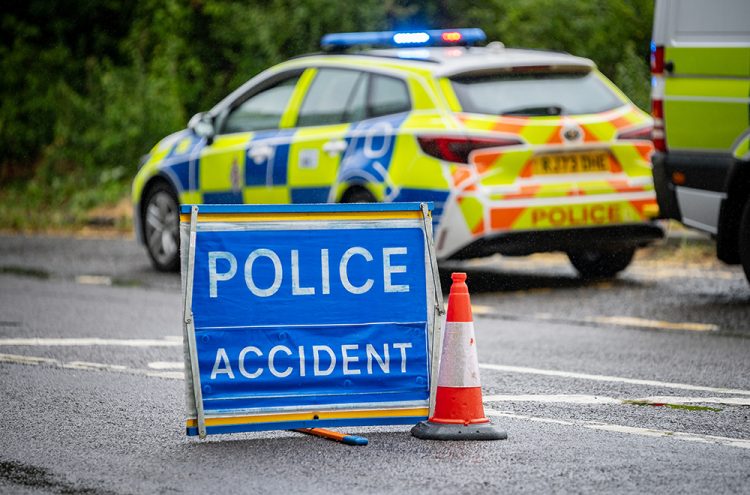
A MOTORCYCLIST has died following a four-vehicle collision on the A40 between St Clears and Whitland.
Dyfed-Powys Police said the crash happened at around 12:00pm on Sunday (Jun 21) and involved a grey Audi, a blue Seat, a grey Vauxhall and an orange KTM motorbike.
Sadly, the rider of the KTM died from their injuries and was pronounced dead at the scene. Their next of kin have been informed and are being supported by specialist officers.
A 38-year-old man has been arrested on suspicion of causing death by careless driving. He has since been released on conditional bail while further enquiries continue.
The road was closed while collision investigators examined the scene and reopened at around 8:30pm.
The latest tragedy follows two other serious motorcycle crashes in west Wales.
On Sunday afternoon, another motorcyclist was injured in a separate collision and is recovering in hospital.
Last week, a 22-year-old rider sadly died in a crash near Narberth, while his female pillion passenger was taken to hospital.
Anyone with information, or dashcam footage which could assist the investigation, is asked to contact Dyfed-Powys Police online, by emailing [email protected], by direct message on social media, or by calling 101.
Alternatively, contact Crimestoppers anonymously on 0800 555111 or visit crimestoppers-uk.org.
Quote reference: DP-20260621-177.



News2 hours ago
Motorcyclist dies after four-vehicle crash on A40 in Carmarthenshire
A MOTORCYCLIST has died following a four-vehicle collision on the A40 between St Clears and Whitland. Dyfed-Powys Police said the...


News3 hours ago
Rhun ap Iorwerth urges new deal for Wales after Starmer quits
First Minister says next Prime Minister must focus on greater powers, fair funding and respect for Wales’ democratic mandate FIRST...


News3 hours ago
How Labour’s landslide victory unravelled in just two years
Prime Minister announces resignation after losing support within his own party as Andy Burnham emerges as overwhelming favourite to take...


News16 hours ago
Long Course Weekend set to bring thousands to Pembrokeshire
Three days of swimming, cycling and running will once again transform Tenby into one of the UK’s biggest endurance sporting...


Community22 hours ago
The gentle giant behind the tattoos
Pembrokeshire security worker Josh Davies praised for professionalism, kindness and proving first impressions can be wrong JOSH Davies is hard...


Charity2 days ago
Toy Story fans fill charity toy box at Haverfordwest cinema
Donations pour in for SNAP Specialist Play as families embrace Toy Story 5 launch A TOY STORY-themed charity appeal at...


Community2 days ago
Lord Rhys emerges from the mist in St Davids
Giant puppet begins historic journey marking 850 years since the first Eisteddfod MIST swirled around St Davids Cathedral on Friday...


News3 days ago
Tragic tribute paid to Haverfordwest man after A4075 collision
FAMILY REMEMBERS “KIND AND LOVING” CALLUM HANSON THE FAMILY of a 22-year-old man from Haverfordwest who died following a road...


News4 days ago
Motorcyclist, 22, dies in A4075 crash in Pembrokeshire
A 22-year-old woman remains in hospital after two-vehicle collision A MOTORCYCLIST has died following a serious two-vehicle crash on the...


Community4 days ago
Why police will be visiting every home in Pembrokeshire
New operation aims to knock on more than 257,000 doors across Dyfed-Powys over the next three years DYFED-POWYS POLICE has...
-

 Crime4 days ago
Milford Haven man jailed for breaching domestic violence protection order
-

 Local Government6 days ago
Security privately arranged by Mayor at Beating of the Bounds
-

 News4 days ago
Crash on Freeman’s Way causes school-run chaos across Haverfordwest
-

 Crime6 days ago
Man wanted by court after failing to attend hearing over alleged shop thefts
-
 Crime6 days ago
Man banned from roads after drink-driving offence
-

 Crime6 days ago
Man jailed after admitting strangulation and assaults
-

 Crime6 days ago
Drug trafficker must repay £33,000 after court rules he made nearly £500,000
-

 Crime6 days ago
Man sentenced over stalking campaign and lock knife offence