


Sport
Neyland hold their nerve to win Alec Colley final

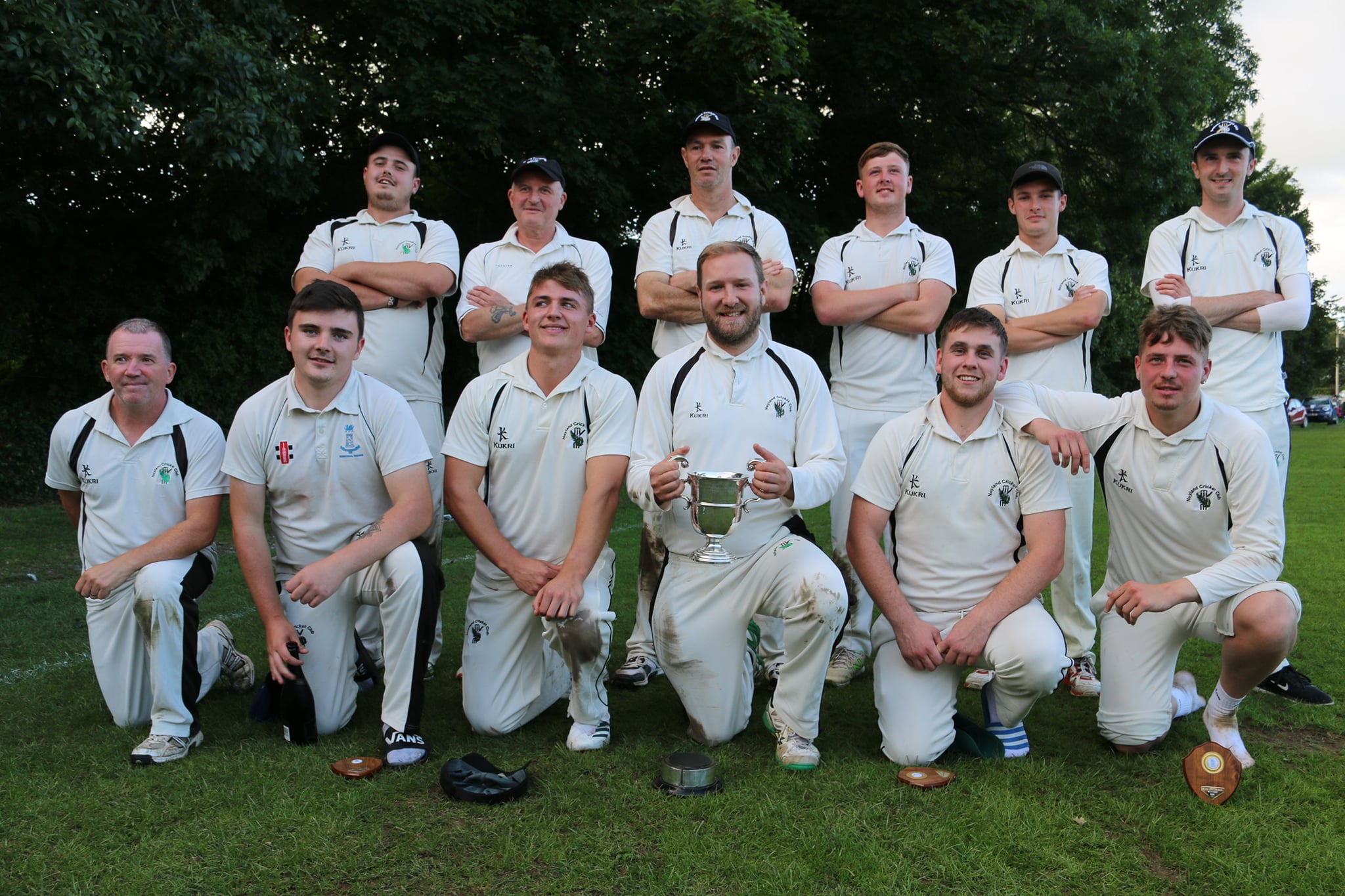
NEYLAND won the Alec Colley Cup final on Sunday (Aug 22) but they had to withstand a late fightback from Cresselly.
Batting first, Cresselly could only reach a score of 82-4 while Neyland responded with a total of 142-5 from their first innings.
That gave them a first innings lead of 60, meaning Cresselly had it all to do if they were to set Neyland a three-figure target to win the game.
They did score 150-6 in their second innings but it meant Neyland would need 88 to win.
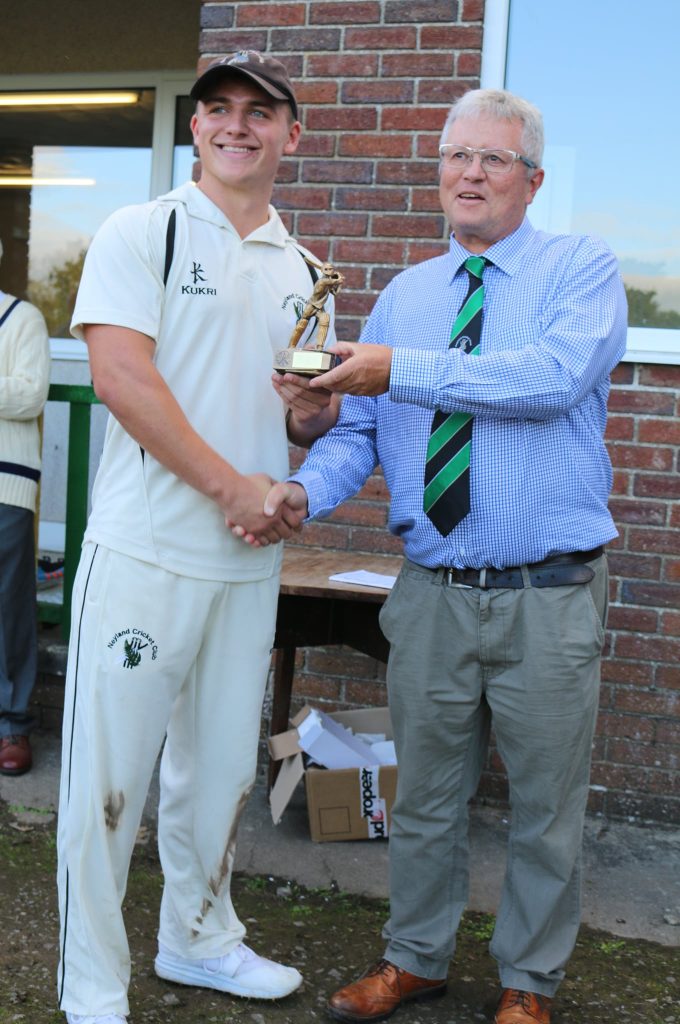
Cresselly took seven Neyland wickets as they searched for victory but Lewis Page held his nerve to finish unbeaten on 27 to see his side to a 3-wicket win.

The two sides had played each other in the Alec Colley cup final in 2019 and it was Neyland who came out on top on that occasion.
And after only restricting Cresselly 82-4 in their first innings they looked well placed to go on and repeat that.
Cresselly found runs hard to come by as they batted first on a pitch which the previous day had seen Pembroke post a score of 228 in their final Division 2 game.
It was a testament to Neyland’s bowlers that they were able to keep the score down with Tom Pritchard finishing with figures of 2-22.
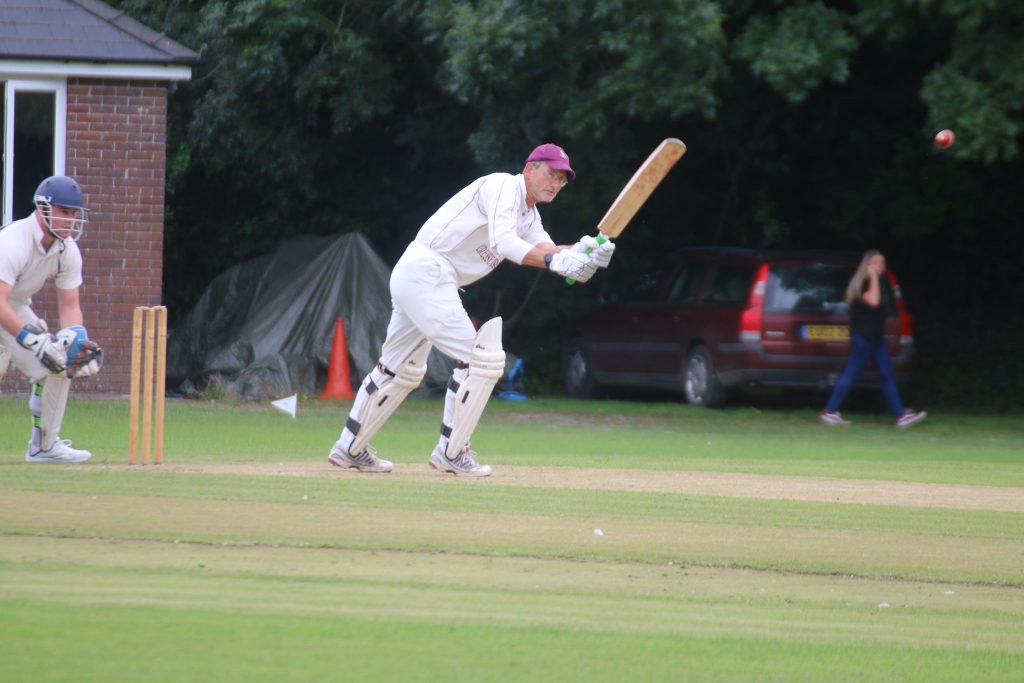
Jamie Smith (1-15) and George Evans (1-28) took the other wickets to fall.
Christian Phillips had scored 19 for Cresselly while Neal Williams scored 24 before Scott Arthur finished unbeaten on 23.
Neyland’s Will Hughes and Gregg Miller got their side off to a good start in their reply as both neared their half centuries.

More importantly it saw them into a first innings lead which ultimately proved to be the difference.
Miller fell on a score of 44 and Hughes fell on 45 but Neyland lost a couple of late wickets as Cresselly did their best to keep the lead down.
Phillips finished with figures of 2-23 while Ollie Berry (1-29) and Corey Lewis (1-31) claimed the other wickets.
It saw Neyland finish their first innings on 142-5 which gave them a big first innings lead of 60 runs.
Cresselly knew they would need to bat well to wipe out that deficit and they did just that with Damien Arthur top scoring with a knock of 55.
Julian Arthur scored 37 and Matthew Lewis finished unbeaten on 24 to help their side post 150-6 in their second innings.
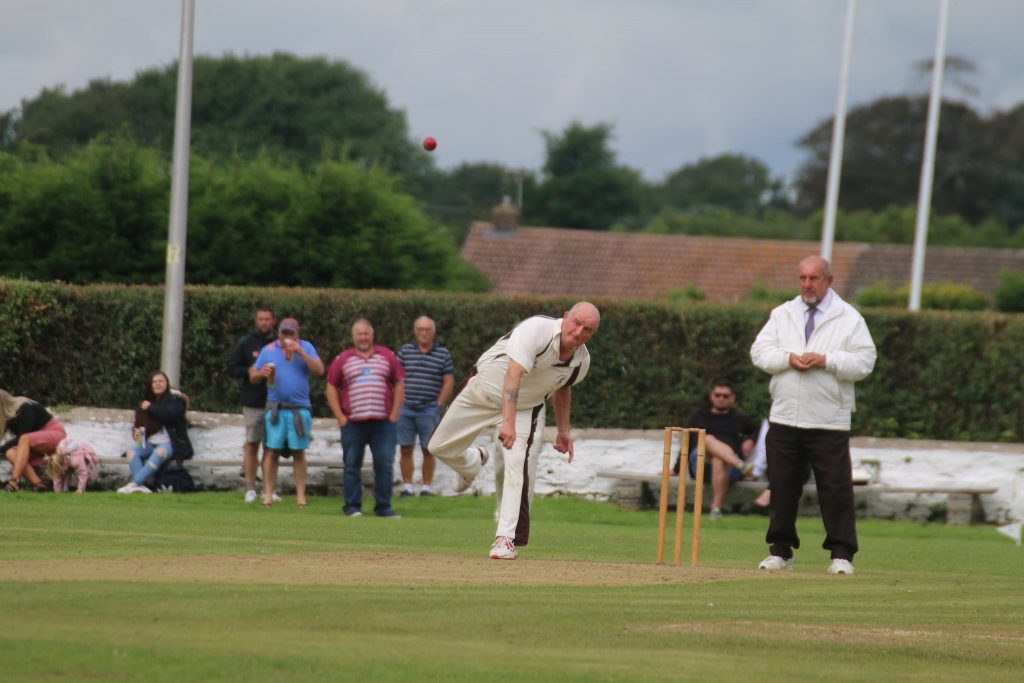
Gregg Miller took two wickets, including a caught and bowled in which he barely had to break stride, while Gary Lloyd, Jamie Smith, Kieran Arran and Tom Pritchard all picked up a wicket each.
It meant that Neyland would need just 88 to win the game but it was far from simple.
Will Hughes made another good score of 33 while Gregg Miller fell on a score of 13.
Matthew Lewis took three wickets for Cresselly for figures of 3-12 while Josh Lewis finished with figures of 2-17.
There was another wicket for Corey Lewis too as Neyland saw seven of their batsmen return to the pavilion.
However, Lewis Page held his nerve to finish unbeaten on 27 to see Neyland to another Alec Colley Cup win.
Neyland: Gregg Miller, Will Hughes, George Evans, Stephen Murray, Lewis Page, Luke Ryan, Paul Miller (Capt), Kieran Arran, Joe Campodonic, Jamie Smith, Gary Lloyd, Tom Pritchard.
Cresselly: Julian Arthur (Capt), Matthew Lewis, Damian Arthur, Scott Arthur, Neal Williams, Christian Phillips, Morgan Lewis, Corey Lewis, Josh Lewis, Phil Cole, Ollie Berry, Ollie Richards, Joseph Davies.


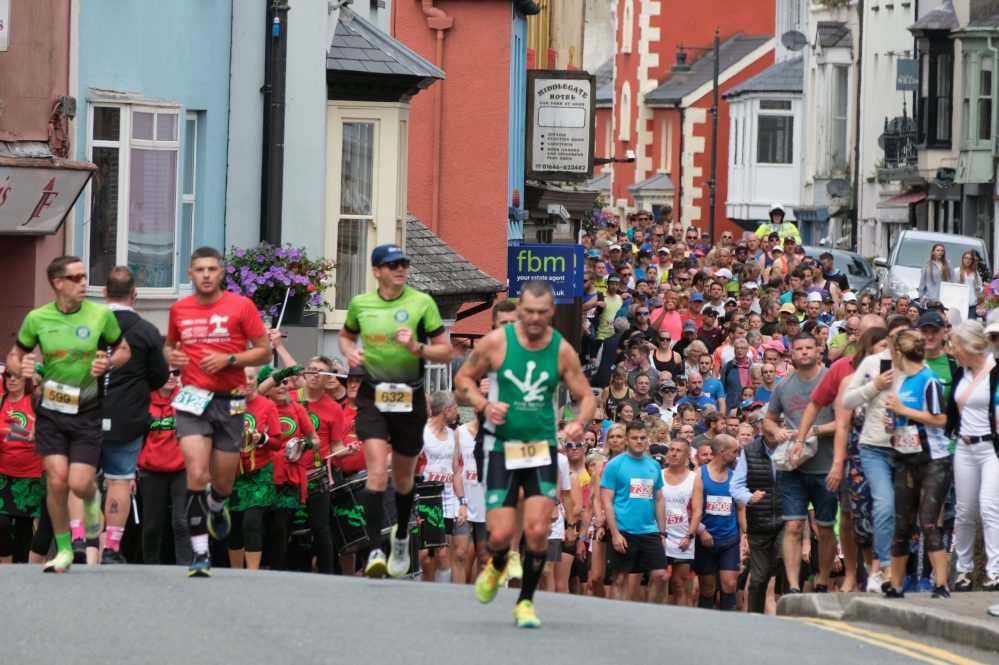
Three days of swimming, cycling and running will once again transform Tenby into one of the UK’s biggest endurance sporting festivals
TENBY is preparing to welcome thousands of athletes and spectators from across the UK and around the world as the Long Course Weekend returns to Pembrokeshire from Friday, June 26 to Sunday, June 28.
Now firmly established as one of Europe’s largest participation sporting events, Long Course Weekend Wales combines swimming, cycling and running challenges over three days, attracting everyone from elite athletes to first-time competitors.
Unlike a traditional triathlon, competitors can enter one, two or all three disciplines, choosing distances that suit their ability. Those who complete the full long-course distances across all three days earn the coveted fourth medal, one of the event’s most sought-after prizes.
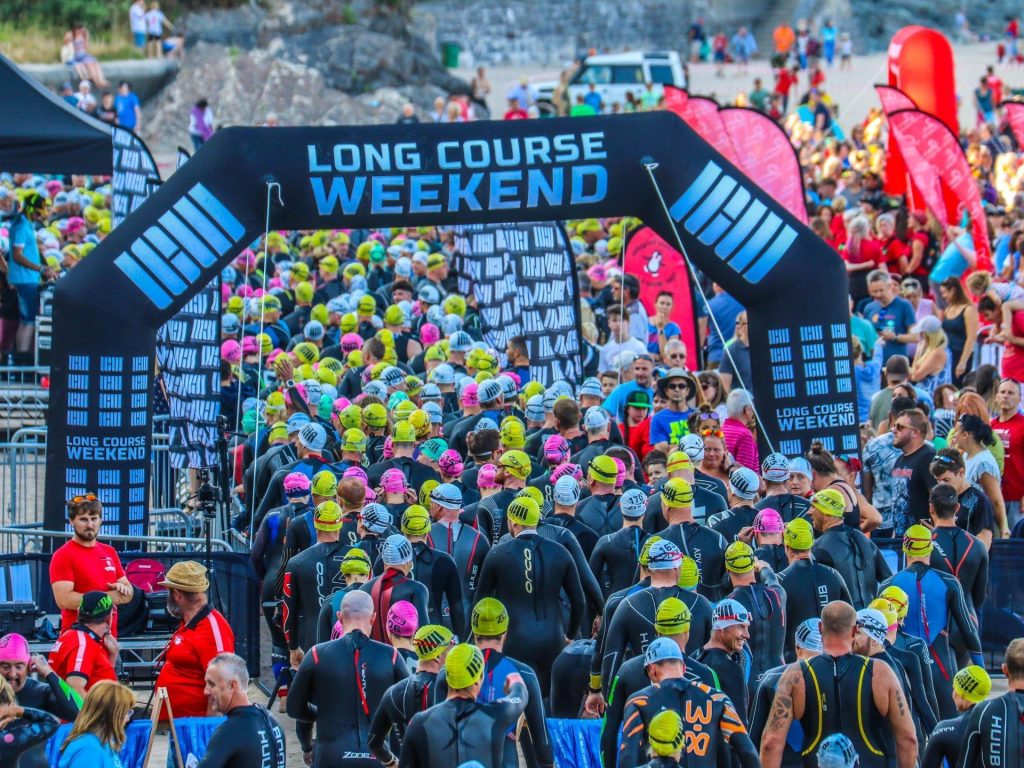
Three days of endurance
The weekend begins on Friday evening with the Wales Swim off Tenby’s famous North Beach.
Athletes will take to the waters of Carmarthen Bay in a range of distances, including the iconic 2.4-mile swim, while younger participants will have the chance to get involved through the popular LC Kinder event.
Saturday is dedicated to cycling, with thousands of riders expected to tackle the Pembrokeshire countryside during the Wales Sportive. Routes cater for a variety of abilities, from recreational cyclists to seasoned endurance competitors taking on the full long-course challenge.
The weekend reaches its climax on Sunday with a series of running events, including a 5K, 10K, half marathon and full marathon.
The marathon route is regarded as one of the most scenic and demanding road races in Wales, taking runners through some of Pembrokeshire’s most spectacular coastal and rural scenery before the final run back into Tenby and the cheers of thousands of spectators.
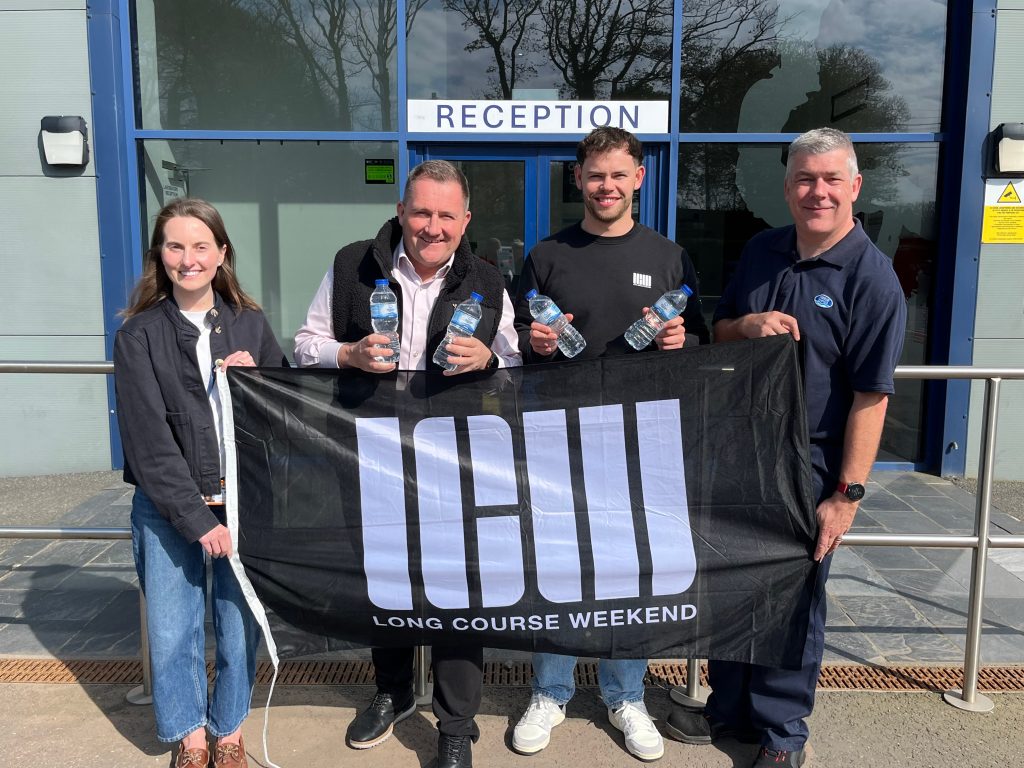
A major boost for the local economy
Long Course Weekend has become one of Pembrokeshire’s most important annual events.
Hotels, guest houses, campsites, restaurants, cafés and shops across Tenby, Saundersfoot and the wider county benefit from the influx of visitors, many of whom stay for several nights.
For many businesses, the event provides a welcome boost at the start of the summer season, filling accommodation and generating significant spending across the local economy.
The event has also helped establish Tenby as one of Britain’s leading destinations for endurance sport alongside the annual Ironman Wales competition.

Spectators welcome
One of the defining features of Long Course Weekend is the support provided by local communities.
From the swim start on North Beach to villages along the cycling and running routes, competitors are encouraged by thousands of spectators throughout the weekend.
The finish-line atmosphere in Tenby is widely regarded as one of the highlights of the event, with runners and cyclists greeted by packed crowds as they complete their challenge.
Families, residents and visitors are encouraged to come along and support participants, with viewing areas available throughout the course.

Road closures and travel advice
Residents are being urged to plan journeys carefully throughout the weekend.
Organisers have confirmed that the Wales Sportive cycling event will once again operate without full road closures, although motorists should expect increased numbers of cyclists on roads across south Pembrokeshire and are urged to drive with extra care.
Traffic restrictions and road closures will, however, be in place around Tenby and along parts of the running routes on Sunday.
Drivers should allow extra travel time and check the latest information from organisers before setting out.
Emergency access arrangements will remain in place throughout the weekend and organisers have worked closely with emergency services, local authorities and transport providers to minimise disruption while ensuring participant safety.
What to expect
For three days, Tenby becomes the centre of the endurance sports world.
Visitors can expect a festival atmosphere throughout the town, with athletes arriving from across Britain and overseas, cafés and restaurants bustling with activity, and competitors of all ages taking on personal challenges.
Some will be chasing podium places. Others will simply be aiming to cross the finish line.
Whatever their goal, Long Course Weekend continues to showcase Pembrokeshire at its best, combining world-class sporting competition with some of the finest scenery in Wales.
As thousands gather once again on the county’s coastline this weekend, organisers are promising another unforgettable celebration of endurance, determination and community spirit.
Long Course Weekend 2026 at a glance
Friday, June 26
- Wales Swim
- LC Kinder children’s events
Saturday, June 27
- Wales Sportive cycling events
Sunday, June 28
- 5K run
- 10K run
- Half marathon
- Full marathon
Location: Tenby and surrounding Pembrokeshire routes
Spectators: Free to attend
Advice: Check road closure information before travelling and allow extra time for journeys throughout the weekend.
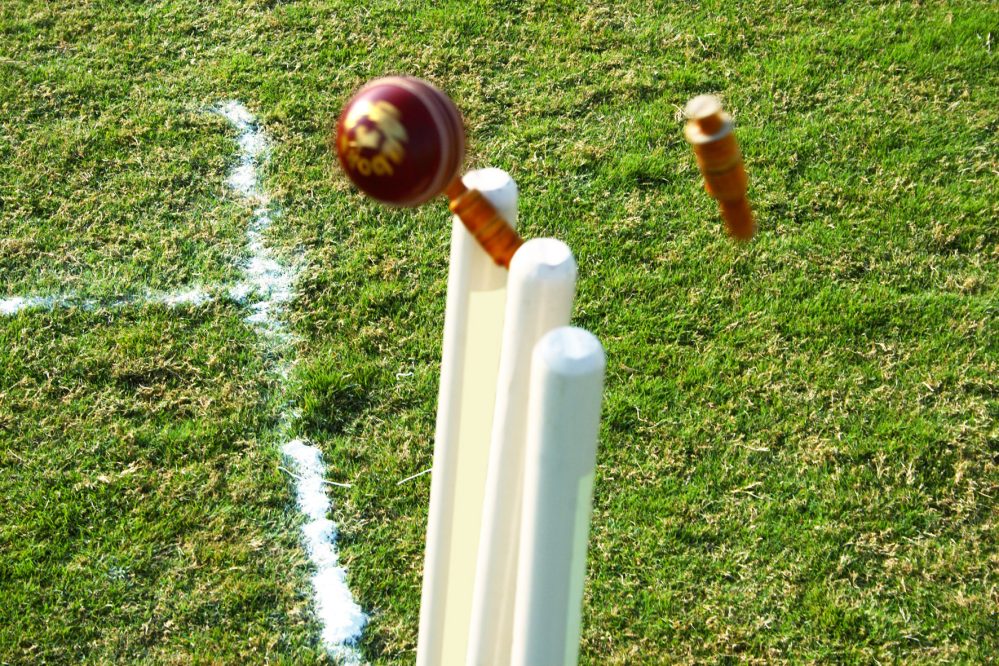
Saundersfoot extend Division One lead as Cresselly III continue unbeaten run
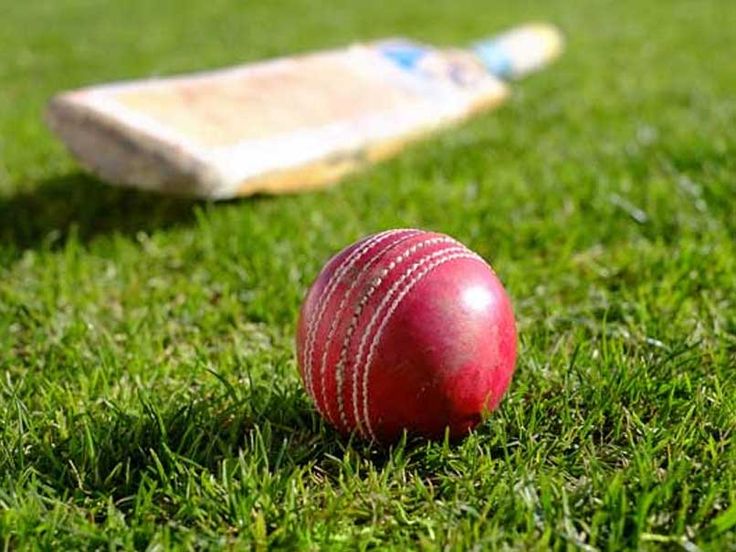
SAUNDERSFOOT strengthened their position at the top of Division One in the Thomas Carroll Pembroke County Cricket League with a convincing 145-run win over Burton.
Tom Mansbridge led the way with 86 as Saundersfoot posted 219-6, before Burton were bowled out for 74. Ollie Cook finished unbeaten on 20 and took 3-17, while Sam Franklin added 20 and 2-17.
Carew also enjoyed a strong afternoon, bowling Herbrandston out for 77 before reaching 79-2 to win by eight wickets. George Waters was the standout performer with 7-15, while Morgan Grieve made an unbeaten 61.
Cresselly kept themselves in the Division One chase with an eight-wicket win over Lawrenny. Mike Shaw took 4-10 before Tom Murphy’s unbeaten 105 saw Cresselly home.
Narberth beat Whitland by 103 runs, while St Ishmaels defeated Neyland by four wickets.
Division One results
| Fixture | Result |
|---|---|
| Saundersfoot 219-6 v Burton 74 all out | Saundersfoot won by 145 runs |
| Carew 79-2 v Herbrandston 77 all out | Carew won by eight wickets |
| Cresselly 178-2 v Lawrenny 173 all out | Cresselly won by eight wickets |
| Whitland 108-9 v Narberth 211-4 | Narberth won by 103 runs |
| St Ishmaels 139-6 v Neyland 137-8 | St Ishmaels won by four wickets |
Division One table
| Pos | Team | Pld | Points |
|---|---|---|---|
| 1 | Saundersfoot | 9 | 148 |
| 2 | Carew | 9 | 126 |
| 3 | Neyland | 9 | 117 |
| 4 | Cresselly | 9 | 116 |
| 5 | Burton | 9 | 99 |
| 6 | Herbrandston | 9 | 95 |
| 7 | Narberth | 9 | 78 |
| 8 | St Ishmaels | 9 | 64 |
| 9 | Whitland | 9 | 49 |
| 10 | Lawrenny | 9 | 47 |
Hook stay top in Division Two
HOOK remain top of Division Two after a dramatic one-wicket win over Johnston.
Johnston were bowled out for 137, with Callum James taking 4-26 and Brennan Martin 3-37. Hook then edged home on 141-9, helped by Aled Phelps’ 68.
Haverfordwest kept up the pressure with a seven-wicket win over Pembroke. Simon Williams took 5-11 and Fin Ateyo 4-19 before Ben Field’s unbeaten 43 guided Haverfordwest to victory.
Cresselly II beat Llangwm by 11 runs, Fishguard defeated Pembroke Dock by 18 runs, and Llechryd beat Llanrhian by 71 runs.
Division Two results
| Fixture | Result |
|---|---|
| Llangwm 155 all out v Cresselly II 166 all out | Cresselly II won by 11 runs |
| Pembroke Dock 57 all out v Fishguard 75 all out | Fishguard won by 18 runs |
| Pembroke 93 all out v Haverfordwest 94-3 | Haverfordwest won by seven wickets |
| Hook 141-9 v Johnston 137 all out | Hook won by one wicket |
| Llechryd 204-6 v Llanrhian 133 all out | Llechryd won by 71 runs |
Division Two table
| Pos | Team | Pld | Points |
|---|---|---|---|
| 1 | Hook | 9 | 138 |
| 2 | Haverfordwest | 9 | 133 |
| 3 | Johnston | 9 | 131 |
| 4 | Cresselly II | 9 | 129 |
| 5 | Pembroke | 9 | 129 |
| 6 | Fishguard | 9 | 93 |
| 7 | Pembroke Dock | 9 | 73 |
| 8 | Llanrhian | 9 | 73 |
| 9 | Llangwm | 9 | 70 |
| 10 | Llechryd | 9 | 65 |
Laugharne lead Division Three
LAUGHARNE stayed top of Division Three with a five-wicket win over Carew II.
Carew II were bowled out for 128 before Laugharne reached 129-5. Callum Collins-Davies took 4-13, Joe Hodges claimed 3-33 and finished 21 not out, while Matt Tait made an unbeaten 53.
Hundleton beat Kilgetty by one wicket in a close contest, Lamphey defeated Stackpole by eight wickets, Pembroke II beat Burton II by seven wickets, and Haverfordwest II beat Saundersfoot II by 43 runs.

Division Three results
| Fixture | Result |
|---|---|
| Laugharne 129-5 v Carew II 128 all out | Laugharne won by five wickets |
| Hundleton 164-9 v Kilgetty 163-5 | Hundleton won by one wicket |
| Stackpole 112-8 v Lamphey 113-2 | Lamphey won by eight wickets |
| Burton II 146 all out v Pembroke II 150-3 | Pembroke II won by seven wickets |
| Haverfordwest II 133 all out v Saundersfoot II 90 all out | Haverfordwest II won by 43 runs |
Division Three table
| Pos | Team | Pld | Points |
|---|---|---|---|
| 1 | Laugharne | 9 | 143 |
| 2 | Carew II | 9 | 113 |
| 3 | Kilgetty | 9 | 113 |
| 4 | Pembroke II | 9 | 112 |
| 5 | Lamphey | 9 | 110 |
| 6 | Saundersfoot II | 9 | 91 |
| 7 | Burton II | 8 | 87 |
| 8 | Hundleton | 9 | 78 |
| 9 | Haverfordwest II | 9 | 76 |
| 10 | Stackpole | 8 | 35 |
Division Four remains tight
LAWRENNY II remain top of Division Four, although they had no game against Carew III.
Narberth II recorded a heavy win over Crymych, making 216-7 before bowling Crymych out for 58 to win by 158 runs. Manu Iddagoda made 62 and Arron Keane 57.
Neyland II beat Hook II by seven wickets, Herbrandston II defeated Llechryd II by 85 runs, and Haverfordwest III beat St Ishmaels II by 41 runs.
Division Four results
| Fixture | Result |
|---|---|
| Lawrenny II v Carew III | No game |
| Narberth II 216-7 v Crymych 58 all out | Narberth II won by 158 runs |
| Neyland II 184-3 v Hook II 182-6 | Neyland II won by seven wickets |
| Herbrandston II 216-6 v Llechryd II 131 all out | Herbrandston II won by 85 runs |
| Haverfordwest III 128-9 v St Ishmaels II 87 all out | Haverfordwest III won by 41 runs |
Division Four table
| Pos | Team | Pld | Points |
|---|---|---|---|
| 1 | Lawrenny II | 8 | 120 |
| 2 | St Ishmaels II | 9 | 119 |
| 3 | Narberth II | 9 | 114 |
| 4 | Hook II | 9 | 109 |
| 5 | Herbrandston II | 9 | 104 |
| 6 | Neyland II | 9 | 103 |
| 7 | Crymych | 9 | 92 |
| 8 | Llechryd II | 9 | 85 |
| 9 | Haverfordwest III | 9 | 84 |
| 10 | Carew III | 8 | 45 |
Cresselly III stay unbeaten
CRESSELLY III continued their unbeaten Division Five campaign with a 15-run win over Llangwm II.
Cresselly III made 190-6, with Steffan Jenkins scoring 57, Ollie Toy 47 and George Davies 32. Llangwm II replied with 175 all out, despite Toby Asson’s 68 and Bill Brant’s 40.
Llanrhian II beat Pembroke Dock II by three wickets, helped by Michael Lawrence’s unbeaten 43 and 2-6. Pembroke III defeated Whitland II by 67 runs, with Harry Penniket making 48.
Division Five results
| Fixture | Result |
|---|---|
| Cresselly III 190-6 v Llangwm II 175 all out | Cresselly III won by 15 runs |
| Llanrhian II 104-7 v Pembroke Dock II 102 all out | Llanrhian II won by three wickets |
| Pembroke III 128-8 v Whitland II 61 all out | Pembroke III won by 67 runs |
| Llechryd III v Hundleton II | No game |
Division Five table
| Pos | Team | Pld | Points |
|---|---|---|---|
| 1 | Cresselly III | 8 | 146 |
| 2 | Llangwm II | 8 | 113 |
| 3 | Llanrhian II | 8 | 108 |
| 4 | Whitland II | 9 | 106 |
| 5 | Pembroke III | 8 | 79 |
| 6 | Pembroke Dock II | 9 | 63 |
| 7 | Llechryd III | 7 | 58 |
| 8 | Hundleton II | 7 | 28 |
Haverfordwest IV lead Division Six
ONLY one Division Six match was completed, with Haverfordwest/Cresselly beating Lamphey II by eight wickets.
Lamphey II were bowled out for 89 before Haverfordwest/Cresselly reached 90-2. Tom Rowlands was unbeaten on 66, while Dan Cole finished 12 not out and took 2-13.
Whitland III’s match with Haverfordwest IV was abandoned, as was Kilgetty II’s fixture against Laugharne II. Neyland III had a bye.
Division Six results
| Fixture | Result |
|---|---|
| Whitland III v Haverfordwest IV | Match abandoned |
| Kilgetty II v Laugharne II | Match abandoned |
| Lamphey II 89 all out v Haverfordwest/Cresselly 90-2 | Haverfordwest/Cresselly won by eight wickets |
| Neyland III | Bye |
Division Six table
| Pos | Team | Pld | Points |
|---|---|---|---|
| 1 | Haverfordwest IV | 8 | 101 |
| 2 | Lamphey II | 7 | 100 |
| 3 | Whitland III | 8 | 93 |
| 4 | Neyland III | 8 | 84 |
| 5 | Haverfordwest/Cresselly | 7 | 70 |
| 6 | Laugharne II | 8 | 65 |
| 7 | Kilgetty II | 8 | 23 |
The results and tables cover Week Nine fixtures played on Saturday (June 20).
Strong Welsh contingent among elite field heading to Lampeter and Aberystwyth
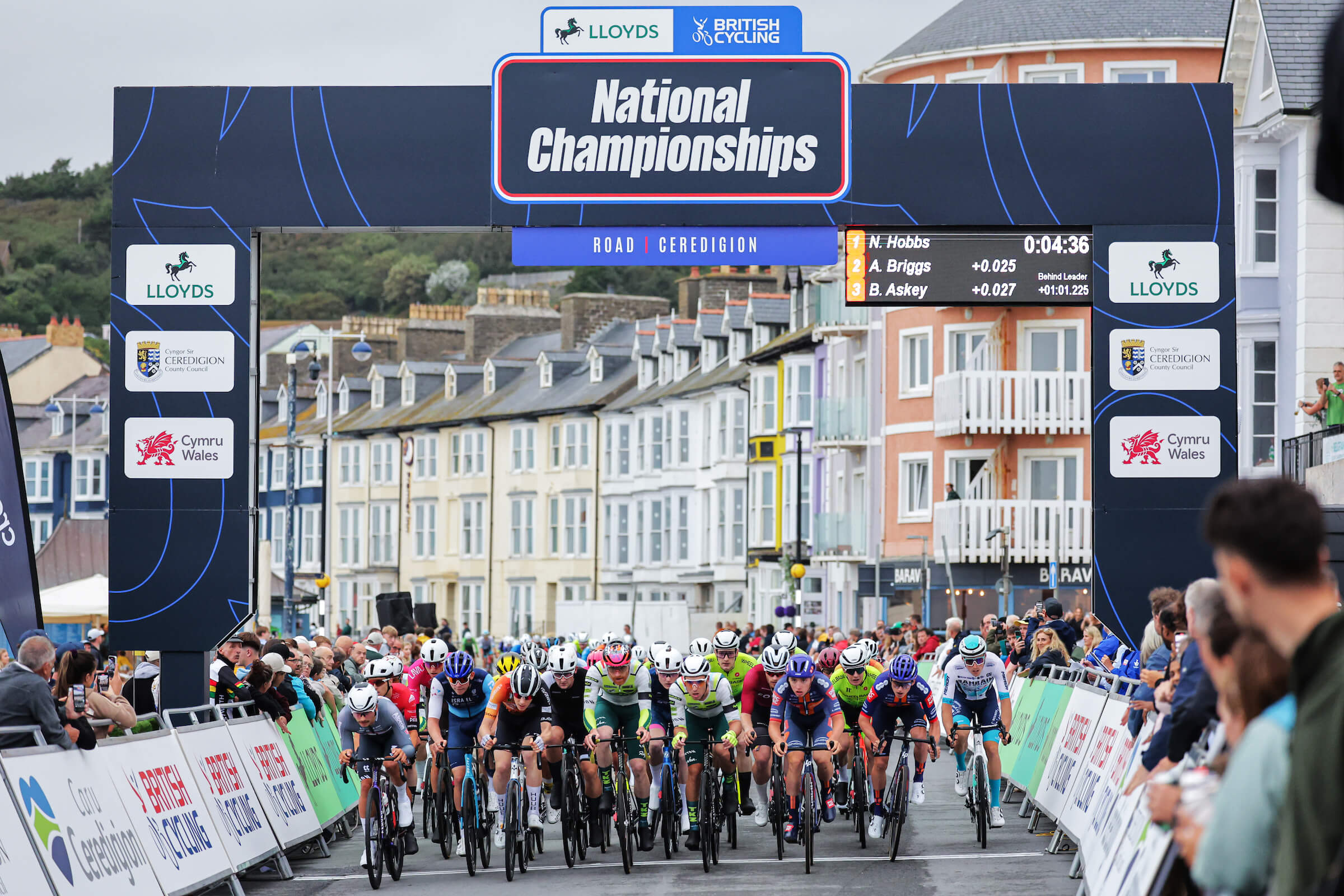
SOME of Britain’s leading cyclists will head to Wales next week as the 2026 Lloyds National Road Championships get under way.
Sixteen former elite national road champions are among the riders named for the event, which begins in Lampeter on Thursday, June 25, before moving to Aberystwyth for the circuit race and road race.
Welsh rider Zoe Backstedt, of Canyon//SRAM Zondacrypto, is expected to be one of the headline names after winning the elite women’s time-trial title at last year’s championships.
Backstedt said: “I’m super excited to come back to Wales to race national champs this year. I don’t get to race in the UK a lot, let alone in Wales, so that makes it even more exciting to be there.
“We’ve got such a strong roster of riders in the UK, so it’s never going to be easy, but I hope I’ll come into this in good shape and fighting for the win.”
Millie Couzens, of Fenix-Premier Tech, returns to defend her women’s road race title. She faces a strong field including three-time road national champion Pfeiffer Georgi, Morven Yeoman, Imogen Wolff, Cat Ferguson, Anna Henderson and Flora Perkins.
In the men’s road race, Sam Watson, of NetCompany Ineos, will look to retain his crown against a field including former national champion Ben Swift, reigning under-23 champion Matthew Brennan, Adam Howell and Ethan Hayter.
Hayter said: “Nationals always seem to bring out the best in me. I’ve managed to win a jersey in 2024 and 2025, so it would be nice to try to add another in the TT or RR.
“Each year the level gets higher, but it makes for aggressive, exciting racing.”
Cameron Mason will return to Aberystwyth to defend his open circuit race title, with Thomas Armstrong, Matt Bostock and Oliver Wood among those expected to challenge.
Kate Richardson also returns as defending women’s circuit race champion. She will be joined by a strong field including Isabel Sharp, Carys Lloyd, Xan Crees, Jenny Holl and Josie Knight.
A number of Welsh riders will also compete across the championships, including Finlay Tarling, Elynor Backstedt, Anna Morris, Owain Doull MBE and Megan Barker.
Erin Boothman, following a successful track season, will make her Lloyds National Road Championships debut in the women’s road race and under-23 women’s time-trial. Ben Wiggins will also return to Ceredigion as he looks to improve on last year’s silver medal in the under-23 men’s time-trial.
Ten national champions’ jerseys will be contested over three days of racing.
The time-trial takes place in Lampeter on Thursday, June 25. The elite women, under-23 women and under-23 men will race over 25.6km, while the elite men will cover 38.4km.
Aberystwyth will host the circuit race on Friday, June 26, and the road race on Sunday, June 28, giving spectators the chance to watch some of Britain’s best riders on Welsh roads.
The championships return to Wales with support from the Welsh Government.
Pic: Lloyds National Circuit Championship 2025 (Pic: SWPix.com)



News5 hours ago
Long Course Weekend set to bring thousands to Pembrokeshire
Three days of swimming, cycling and running will once again transform Tenby into one of the UK’s biggest endurance sporting...


Community11 hours ago
The gentle giant behind the tattoos
Pembrokeshire security worker Josh Davies praised for professionalism, kindness and proving first impressions can be wrong JOSH Davies is hard...


Charity1 day ago
Toy Story fans fill charity toy box at Haverfordwest cinema
Donations pour in for SNAP Specialist Play as families embrace Toy Story 5 launch A TOY STORY-themed charity appeal at...


Community2 days ago
Lord Rhys emerges from the mist in St Davids
Giant puppet begins historic journey marking 850 years since the first Eisteddfod MIST swirled around St Davids Cathedral on Friday...


News3 days ago
Tragic tribute paid to Haverfordwest man after A4075 collision
FAMILY REMEMBERS “KIND AND LOVING” CALLUM HANSON THE FAMILY of a 22-year-old man from Haverfordwest who died following a road...

News4 days ago
Motorcyclist, 22, dies in A4075 crash in Pembrokeshire
A 22-year-old woman remains in hospital after two-vehicle collision A MOTORCYCLIST has died following a serious two-vehicle crash on the...

Community4 days ago
Why police will be visiting every home in Pembrokeshire
New operation aims to knock on more than 257,000 doors across Dyfed-Powys over the next three years DYFED-POWYS POLICE has...


Crime4 days ago
Prisons at breaking point: MPs warn Wales is paying the price of a failing system
Frozen healthcare budgets, overcrowded jails, homelessness on release and mounting pressure on staff are undermining rehabilitation across Wales, according to...


News4 days ago
Brexit at 10: How Britain was sold a dream that cost us dearly
A decade after the referendum, the promised benefits remain hard to find while the economic costs are increasingly difficult to...


Crime4 days ago
Worcestershire man jailed after violent attack on woman in Tenby
Defendant was already serving a suspended sentence when serious assault took place A WORCESTERSHIRE man has been jailed for more...
-

 Crime4 days ago
Milford Haven man jailed for breaching domestic violence protection order
-
 Local Government6 days ago
Security privately arranged by Mayor at Beating of the Bounds
-

 News4 days ago
Crash on Freeman’s Way causes school-run chaos across Haverfordwest
-

 Crime5 days ago
Man wanted by court after failing to attend hearing over alleged shop thefts
-
 Crime5 days ago
Man banned from roads after drink-driving offence
-

 Crime5 days ago
Man jailed after admitting strangulation and assaults
-

 Crime5 days ago
Drug trafficker must repay £33,000 after court rules he made nearly £500,000
-
 Crime5 days ago
Man sentenced over stalking campaign and lock knife offence