


Community
Helicopter chief raises nearly £4,000 for charity


A PEMBROKESHIRE aviation boss has raised nearly £4,000 for two charities by walking an epic 186 miles along the coastal path.
Steven Landrey whose life was saved by the Wales Air Ambulance set off from Amroth in May and finished the Pembrokeshire Coastal Path Charity Walk at St Dogmaels in August.
Steven, 52, raised £3,900 for the Wales Air Ambulance and the British Heart Foundation.
Steve, who worked as European managing director for air ambulance operator, Babcock, collapsed while out cycling with friends. He suffered a cardiac arrest and stopped breathing.
Thankfully the Wales Air Ambulance was able to respond swiftly to the scene and gave Steve the lifesaving care he needed.

Ironically, Babcock holds the contract to run the Wales Air Ambulance’s aviation operation.
The challenge, which took place just nine months after his cardiac arrest, saw Steve covering 314km on foot in 76.5 hours, climbing over 8,400 metres in the process – just a few hundred metres shy of the summit of Mount Everest.
Steve started his epic challenge with his cardiac rehabilitation instructor David Braithwaite, who carried a defibrator ‘just in case’ throughout the 186 miles.
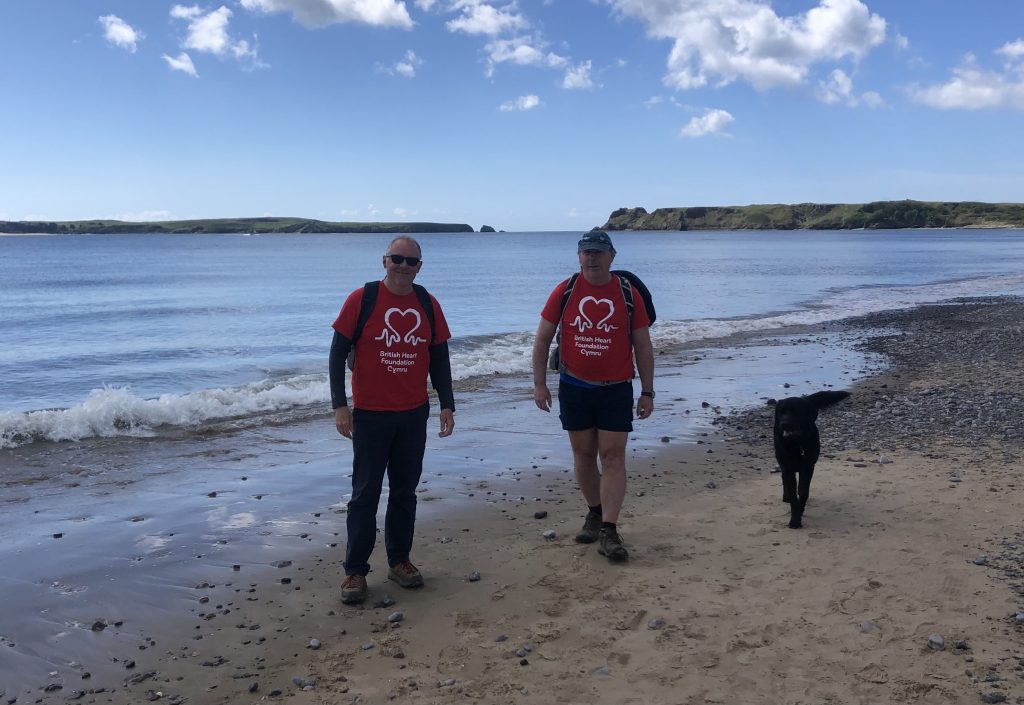
A delighted Steve said: “What an experience! There was some amazing scenery, wildlife that put a smile on your face, rain that only Wales can deliver, and sunrises that remind you how small you really are on this planet we call home.
“After ‘competing’ all my life – whether in a sporting sense, a career sense, or indeed with myself, this walk has started to educate me to focus on ‘enjoying’ rather than pushing to best I can be all the time. It’s only taken me 52 years to get to this epiphany!”
Dedicated Steve walked twice a week to get the miles in and was joined by his wife Katrina and their two dogs, Jumble and Nigel. Many family and friends showed their support to Steve by joining him on his walks throughout his fundraiser.
Steve is extremely grateful to everyone who has supported him since he became ill and during his challenge.

He added: “Most important of all, are the people that supported me on this adventure. My wife who, not just over the course this walk, but over the past 12 months, has constantly been there when I needed her most, when I’ve been at my most vulnerable and when at times I’ve lost perspective. I love you.
“David Braithwaite, who planned and guided the walk. Who helped me to be in good enough cardiac condition to do the walk and who carried a defibrillator the whole 314km’s “just in case”. Thank you.”
Steve would also like to thank everyone who has not only walked with him but has supported and encouraged him throughout. He was grateful for the company on his walks that ‘made the whole endeavour so much more enjoyable’.
Steve said: “I’m delighted by the amount of money we’ve raised, now nearing £4000. I’ve sure Wales Air Ambulance and British Heart Foundation will put the money to good use as they continue to support the health and wellbeing of our communities. Of course, none of this would have been possible without those that have supported and donated towards this charity walk, thank you so much.”
Babcock Director Hayley Belmore said: “We know what we do is important, and we are extremely proud to be part of the incredible service the Wales Air Ambulance Charity provides, but when you respond to someone you know, it really amplifies it. Everyone at Babcock is so pleased Steve has made such a good recovery and we congratulate him on his epic fundraiser!”
Wales Air Ambulance Chief Executive, Dr Sue Barnes, said: “Congratulations to Steve who raised an incredible £3,900 for two charities close to his heart. It is incredible that he set himself the challenge of walking 186 miles less than a year after his life was saved by our medics. His dedication following his experience is an absolute inspiration and it’s a great relief to hear that Steve is recovering well after his illness.
“Our Charity has worked in partnership with Babcock for many years and Steve was on the receiving end of a service that he has proactively been involved in. On behalf of our Charity, I’d like to offer my heartfelt thanks to Steve and his supporters, who have supported him throughout his recovery and fundraiser. Every contribution helps to keep our helicopters in the air so that we can continue to provide a lifesaving service for the people of Wales.”
In December 2020, the Charity achieved its aim of operating a 24/7 service. Wales now has access to the service’s Emergency Department-standard critical care around the clock and to keep the helicopters in the air, the Charity needs to raise £8 million every year.
There are several ways that the public can continue to support the Wales Air Ambulance.
These include online donations, signing up to the Charity’s Lifesaving Lottery or by coming up with their own innovative ways to fundraise at home. Further information can be found via www.walesairambulance.com.
Alternatively, a £5 text-message donation can be made by texting the word HELI to 70711.












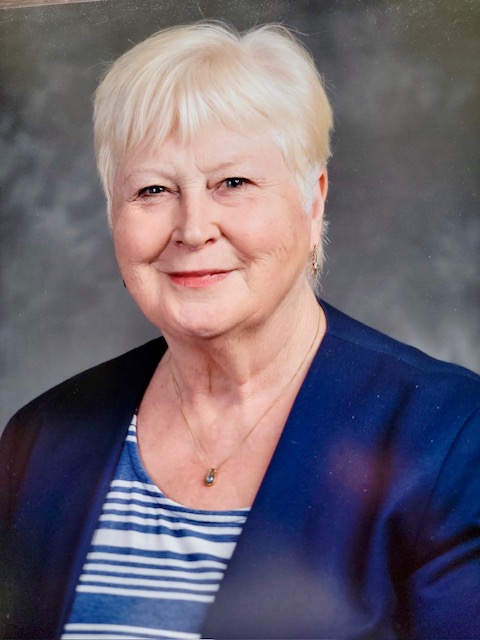
COLLEAGUES across SSAFA are saddened to share news of the death of Valerie Griggs, a dedicated volunteer whose commitment to the Armed Forces community spanned many years.
Valerie joined SSAFA following her retirement from a career in healthcare administration and quickly became a valued member of the charity’s volunteer network in west Wales.
Over the course of her volunteering career, Valerie supported countless serving personnel, veterans and military families through her work as a caseworker, Divisional Secretary for Pembrokeshire, Branch Secretary for Dyfed, and later Branch Secretary for South West Wales.
Known for her professionalism, compassion and organisational skills, Valerie worked tirelessly behind the scenes to ensure those in need received support and guidance during some of the most difficult periods of their lives.
Her dedication to SSAFA was recognised nationally in 2023 when she was invited to SSAFA’s Annual General Meeting in London and installed as an Honorary Life Member of the Association, one of the charity’s highest honours for long and distinguished service.
Valerie’s commitment to supporting the Armed Forces community reflected a lifetime spent alongside military service. As the wife of a Royal Navy submariner, she experienced first-hand the challenges faced by military families during postings across the UK and overseas, including Scotland, Hampshire and Gibraltar.
Away from SSAFA, Valerie was active within her local community, serving as Treasurer of her local Royal Naval Association branch, Secretary of St David’s Church and Lady Captain of her golf club.
Valerie passed away on May 17, 2026 at home in Pembrokeshire, with her husband David by her side.
Stephen Boswell, SSAFA Wales Regional Manager, said: “Valerie was one of those volunteers who quietly made an enormous difference. Her commitment to SSAFA, her compassion for others and her willingness to help wherever she was needed earned the respect and admiration of everyone who worked alongside her.
“Over many years she supported countless members of the Armed Forces community across west Wales and helped strengthen SSAFA through her dedication and professionalism. She will be greatly missed by friends and colleagues throughout SSAFA.
Our thoughts are with David and all of Valerie’s family at this difficult time.”

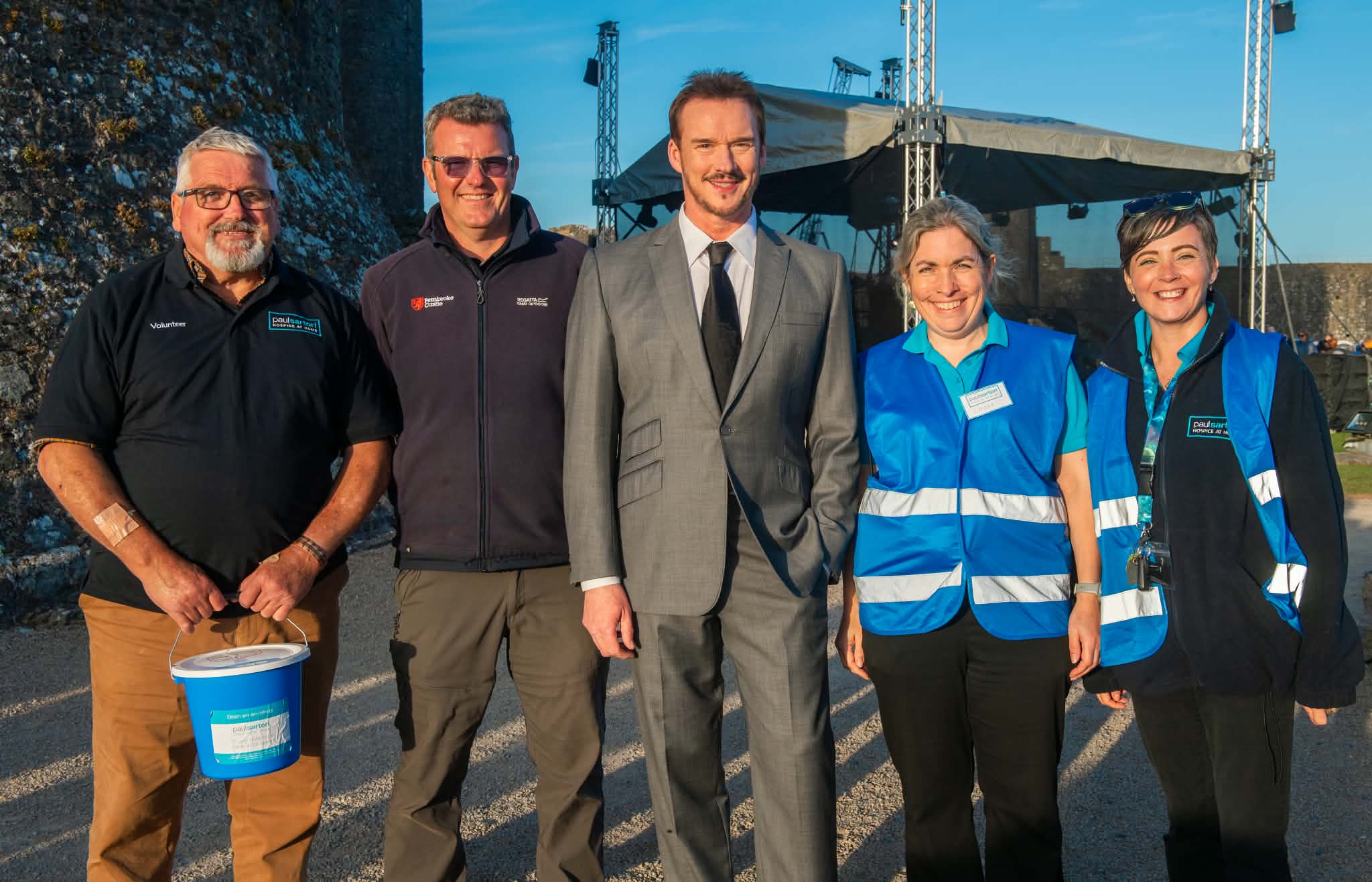
A MEMORABLE evening of music, warmth and community spirit filled Pembroke Castle as Voices at the Castle was hailed a huge success.
The event, held on Saturday (Jun 13), brought together local performers, an international star and a strong audience in one of Pembrokeshire’s most iconic settings, all in support of the Paul Sartori Foundation.
Set against the dramatic backdrop of the historic castle, the evening offered an uplifting celebration of live music and charity. Organisers said the relaxed atmosphere, sunny setting and quality of performances helped make it a night to remember.
The event opened with Pembrokeshire Pop Voices, who entertained the audience with an upbeat set including their charity single Love the Bones of You.
They were followed by Pembroke and District Male Voice Choir, who delivered a rousing selection of classic male voice choir favourites, with many in the audience joining in.
The Paul Sartori Community Choir also impressed in one of its first outdoor performances, with a confident and spirited set which included a standout rendition of an ELO classic.
Bella Voce added to the occasion with a varied programme of melodic songs, their harmonies carrying beautifully around the castle walls.
Headline act Russell Watson brought the evening to a powerful close, captivating the crowd with his humour, warmth and remarkable voice.
His set included a mixture of classical and contemporary songs, with the audience joining him for a singalong of Volare before dancing along as the evening built to its finale.
He ended the night with a moving dedication to Paul Sartori staff, performing Someone to Remember Me.
Organisers also praised compere Rod Haynes, whose warmth, humour and natural stage presence helped the event run smoothly and created a welcoming atmosphere for all.
The charity said it remained extremely disappointed that Rock the Ramparts, due to take place on the Friday evening, could not go ahead.
High winds meant it was not possible to safely install the stage roof and associated sound equipment, forcing the cancellation of the event on health and safety grounds.
The charity thanked the bands The Candy Skulls, The Cleddau Kings, Milly and The Bandits, and Saltwater for their understanding, generosity and the time they had put into rehearsing and preparing.
Thanks were also given to the staging and lighting teams, who worked throughout the day in an effort to make the event happen despite the challenging conditions.
Special thanks were extended to staff at Pembroke Castle for their continued support and for providing the setting, as well as Wayne and the team at EPS, Magnum Sound, Bluesky Marquees, Merts Medical, Elite Security, Joshua Bennet and David Halsted for their contributions to food and drink provision.
The charity also thanked Ian Richards for photographing the event on behalf of Paul Sartori.
A spokesperson said Voices at the Castle stood as a testament to what could be achieved through collaboration, dedication and a shared love of live music, adding that organisers hoped the night would live long in the memory of those who attended.
The Paul Sartori Foundation, which operates as Paul Sartori Hospice at Home, provides end-of-life care and support for people with life-limiting illnesses across Pembrokeshire.
The charity says it is keen to dispel the belief that it is only a cancer charity, with almost a third of those it supports having a non-cancer diagnosis.
It operates an open referral system, with referrals coming from patients, family members, friends, district nurses, palliative care specialists and hospital staff.
The foundation was established in memory of Father Paul Sartori, a much-loved local priest who recognised the need for hospice care before his death from cancer at the age of 39.
Photo caption: Jon Williams from Pembroke Castle with Laura Hugman, CEO of the Paul Sartori Foundation, team members and headline act Russell Watson.
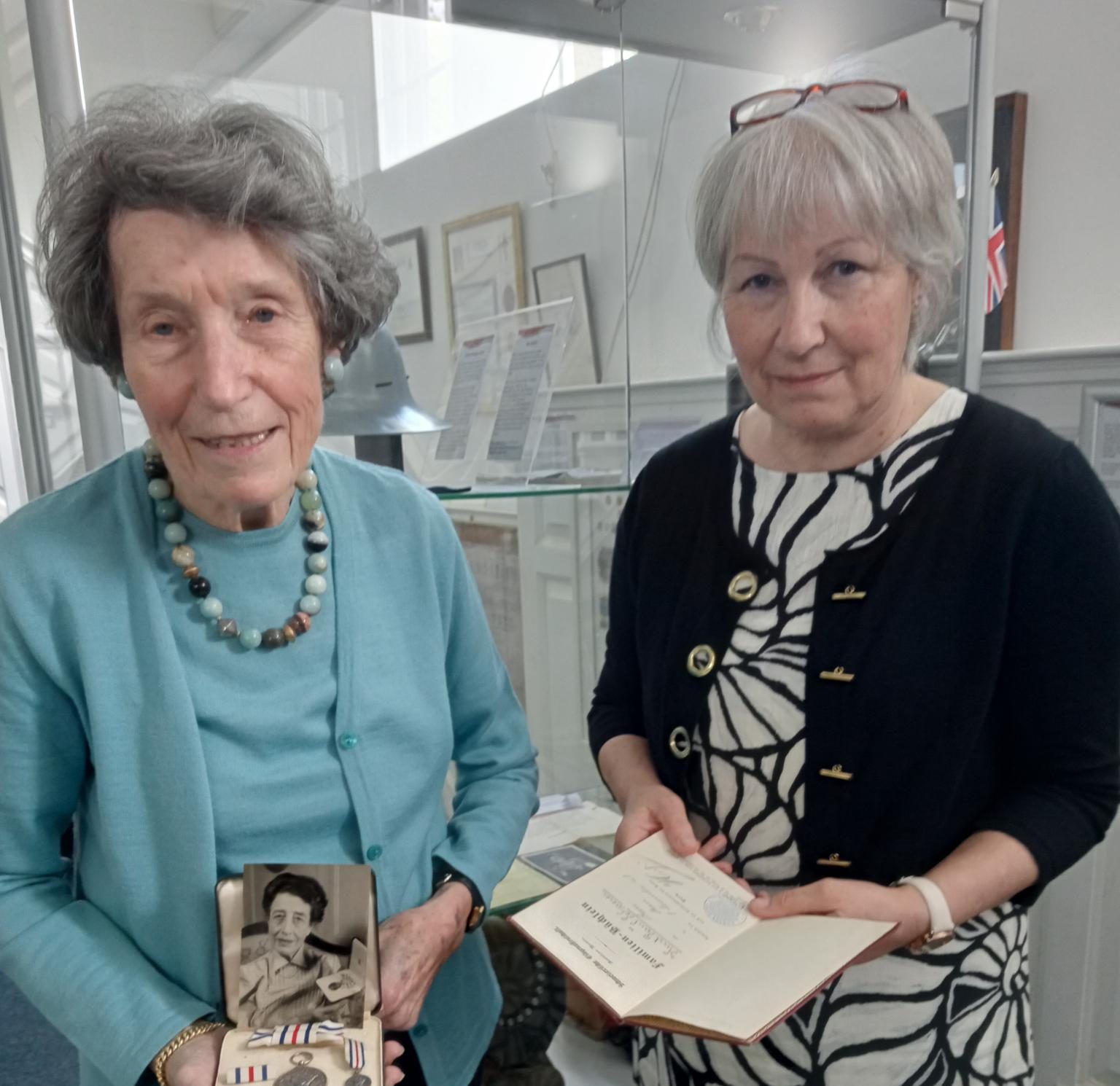
A SWISS woman has returned to Pembroke Dock Heritage Centre to see a special display celebrating her grandmother’s remarkable wartime work helping Allied servicemen who escaped into neutral Switzerland.
Therese Burckhardt, from Zurich, is the granddaughter of Mrs Beryl Schaerer Morse, a former Pembroke Dock woman who was awarded the King’s Medal in 1952 for her service during the Second World War.
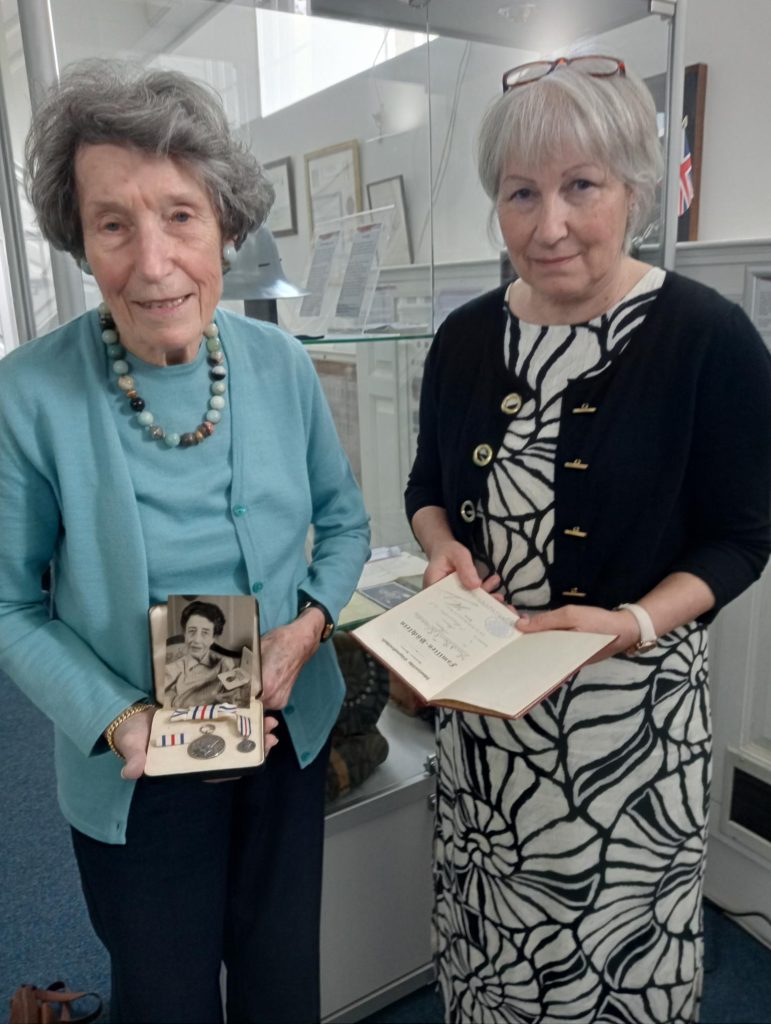
The rare medal, one of only around 2,500 awarded, is now on display at the Heritage Centre alongside photographs, family records and an information panel telling Mrs Schaerer Morse’s story.
Beryl Schaerer Morse was born in Pembroke Dock in 1887, the daughter of Mr and Mrs Thomas Harrison Morse, who lived in Pembroke Dock and later Tenby.
After marrying a Swiss banker in 1913, she settled in Switzerland for the rest of her life, but always regarded Pembrokeshire as home. She returned for many summers to the family’s house in Tenby, which her grandparents had built in the 1930s.
During the Second World War, Mrs Schaerer Morse led an organisation assisting Allied servicemen who had escaped into neutral Switzerland. Her work was later recognised with the award of the King’s Medal.
Therese first visited the Heritage Centre last summer with childhood friend Penny Tighe, of Pembroke, bringing the medal and family records with her. She has now returned with further documents and family photographs to add to the centre’s archive.
Joining her again was Penny Tighe, along with Ruth Waddington, who now lives in the Tenby house where Therese spent many happy childhood holidays with her brother Roland, known affectionately to his grandmother as “Chips”.
Mrs Schaerer Morse died in 1967 and had expressly wished to be buried near her father at Llanion Cemetery, Pembroke Dock.
Therese said: “I am very pleased with how my grandmother’s medal and her story are displayed at the Heritage Centre, and also pleased to bring more records to add to the archive there.”
Pembroke Dock Heritage Centre is based at the Royal Dockyard Chapel and tells the story of the town’s maritime, aviation, military, social and community heritage.
Pembroke Dock was Wales’ only Royal Dockyard, a major garrison town, and during the Second World War was home to the largest flying boat station in the world.

The centre is currently open Monday to Friday, from 10:00am to 4:00pm.
Therese Burckhardt shows the King’s Medal, awarded to her grandmother, to Ruth Waddington at Pembroke Dock Heritage Centre (Pic: PDHC).



News12 hours ago
Long Course Weekend set to bring thousands to Pembrokeshire
Three days of swimming, cycling and running will once again transform Tenby into one of the UK’s biggest endurance sporting...


Community19 hours ago
The gentle giant behind the tattoos
Pembrokeshire security worker Josh Davies praised for professionalism, kindness and proving first impressions can be wrong JOSH Davies is hard...


Charity2 days ago
Toy Story fans fill charity toy box at Haverfordwest cinema
Donations pour in for SNAP Specialist Play as families embrace Toy Story 5 launch A TOY STORY-themed charity appeal at...


Community2 days ago
Lord Rhys emerges from the mist in St Davids
Giant puppet begins historic journey marking 850 years since the first Eisteddfod MIST swirled around St Davids Cathedral on Friday...


News3 days ago
Tragic tribute paid to Haverfordwest man after A4075 collision
FAMILY REMEMBERS “KIND AND LOVING” CALLUM HANSON THE FAMILY of a 22-year-old man from Haverfordwest who died following a road...


News4 days ago
Motorcyclist, 22, dies in A4075 crash in Pembrokeshire
A 22-year-old woman remains in hospital after two-vehicle collision A MOTORCYCLIST has died following a serious two-vehicle crash on the...

Community4 days ago
Why police will be visiting every home in Pembrokeshire
New operation aims to knock on more than 257,000 doors across Dyfed-Powys over the next three years DYFED-POWYS POLICE has...


Crime4 days ago
Prisons at breaking point: MPs warn Wales is paying the price of a failing system
Frozen healthcare budgets, overcrowded jails, homelessness on release and mounting pressure on staff are undermining rehabilitation across Wales, according to...


News5 days ago
Brexit at 10: How Britain was sold a dream that cost us dearly
A decade after the referendum, the promised benefits remain hard to find while the economic costs are increasingly difficult to...


Crime5 days ago
Worcestershire man jailed after violent attack on woman in Tenby
Defendant was already serving a suspended sentence when serious assault took place A WORCESTERSHIRE man has been jailed for more...
-

 Crime4 days ago
Milford Haven man jailed for breaching domestic violence protection order
-

 Local Government6 days ago
Security privately arranged by Mayor at Beating of the Bounds
-

 News4 days ago
Crash on Freeman’s Way causes school-run chaos across Haverfordwest
-

 Crime6 days ago
Man wanted by court after failing to attend hearing over alleged shop thefts
-
 Crime6 days ago
Man banned from roads after drink-driving offence
-

 Crime6 days ago
Man jailed after admitting strangulation and assaults
-

 Crime5 days ago
Drug trafficker must repay £33,000 after court rules he made nearly £500,000
-
 Crime6 days ago
Man sentenced over stalking campaign and lock knife offence