


News
Mark Drakeford to discuss restriction changes Today


FIRST Minister Mark Drakeford will meet with his cabinet Today to discuss potential further restrictions across the country.
The next announcement was due to be held on Friday, December 24.
An earlier announcement is expected by The First Minister either later today or tomorrow Morning, on what further restrictions may be coming into force and whether these will be implemented from December 27 as planned or before the Christmas period.
It was confirmed on Friday, December 17, that new restrictions will be brought in from Monday, December 27. Under these new restrictions, nightclubs will be forced to close, while additional safety measures will be put in place across other industries.
Offices will have a two-metre distancing rule, as well as one-way systems, and physical barriers. Currently, there have been no decisions made about the hospitality industry.

Mark Drakeford has said that it was a possibility that limits could be placed on the number of people who can meet, as well as a return to customers wearing masks inside establishments.
On Monday, it is thought that the potential reintroduction of the “rule of six” type restriction will be discussed in the Government’s meeting, as well as limits on how many people can meet in venues.
Large sporting events could also be affected by new measures.
Speaking to BBC Radio Wales, the First Minister said: “We are moving in terms of alert levels and those measures that will be put in place in shops, in offices, and so on, look like level two measures.
“It is inevitable that we will have to throw on things that are higher up that hierarchy, but it is not a wholesale move to level two. We will learn an awful lot more over the next 10 days. For some of those things (like restricting household meetings), we didn’t feel we had all the information we would need to be able to make those determinations at this point.”
Talking about sporting events that would be held over Christmas, Mr Drakeford said: “There are major sporting events planned immediately after Christmas. We’re getting further advice on Omicron and how it operates in the open air. When you have large crowds of people coming together, we have to weigh that up against the safeguards that are already there and will come to decisions on those matters on Monday and into next week.
“The cabinet decided that we needed some extra information about the way that the variant operates in the outdoors, particularly in places where there are already safeguards like the coronavirus pass in place. That information will develop and we will talk to the organisers of those big rugby derbies (on Boxing Day), the Welsh Grand National, and the football matches that are planned, and then we’ll come to some decisions on Monday as to how they can best go ahead.”

Previously, the Welsh Government has occasionally followed the lead of the UK Government in Westminster, who announced on Sunday that new Covid measures could be introduced before Christmas.
UK Health Secretary, Sajid Javid, said there are “no guarantees” after scientific advisers made a stark warning about the threat from Omicron.
“There are no guarantees in this pandemic, I don’t think,” Mr Javid told the BBC’s Andrew Marr on Sunday. “At this point we just have to keep everything under review.”
Following the latest advice the UK Government has received from experts, he added: “It’s a very sobering analysis. We take it very seriously. We do have to challenge data and underlying assumptions, I think that is appropriate, and take into account a broader set of facts.”
A Cobra meeting was to be held on Sunday with the devolved nations, before Mr Drakeford meets with his own cabinet in Cardiff on Monday.
An official announcement on further restrictions could be made by the First Minister later in the day.
As of December 19, the latest coronavirus infection rate in Wales is 503.4 per 100,000 people. As of new cases, there were 3,462 confirmed in the latest 24-hour period.
In comparison with a year ago, the infection rate in Wales on December 19, 2020 was 592.3, while on that day there were 3,065 new cases.
The rates and new case numbers are similar when viewed side-by-side. However, in the Afternoon of December 19, 2020, the Welsh Government announced a lockdown that saw non-essential retail, close contact services, gyms and leisure centres close at the end of the day, along with pubs and restaurants.
Fortunately, a large difference between the end of 2020 and the one we’re currently facing is that the vast majority of people in Wales now have some protection from coronavirus having received at least one dose of the vaccine.
The latest figures show that more than 2.4 million people in Wales have had a first dose, while almost 2.3 million have received a second. In addition to this, more than a million people have now received their booster vaccine.
On December 16, there were 267 patients in Welsh hospitals with confirmed coronavirus, the lowest number since August and a fraction of the number seen last December (more than 1,500 as of December 22, 2020).
However, when the Welsh Government adviser Dr Giri Shankar, of Public Health Wales was asked about these improved figures, he said: “We appear to be a week or two behind what London, most parts of England, and Scotland are seeing.”
He said if case numbers climbed considerably it was inevitable that a percentage of those affected would need hospital treatment, adding: “Even that small proportion, in terms of its absolute number, is enough to tip the balance in the health and care system.”



A SPECIAL service has been held at St Davids Cathedral to celebrate 150 years of the Mothers’ Union.
Members and officials gathered for the anniversary celebration on Sunday (Jun 21), where Bishop Dorrien welcomed those attending and spent time speaking with the Provincial Chaplain.
The occasion had particular significance for Bishop Dorrien, who is the third generation of his family to be a member of the Mothers’ Union.
The organisation, founded in 1876, continues to support families, communities and church life across Wales and around the world.
Those attending said the celebration was a fitting tribute to the work of generations of members, with hopes expressed for the next 150 years.
Caption:
Celebration: Members and officials gathered at St Davids Cathedral to mark 150 years of the Mothers’ Union (Pic: Diocese of St Davids).
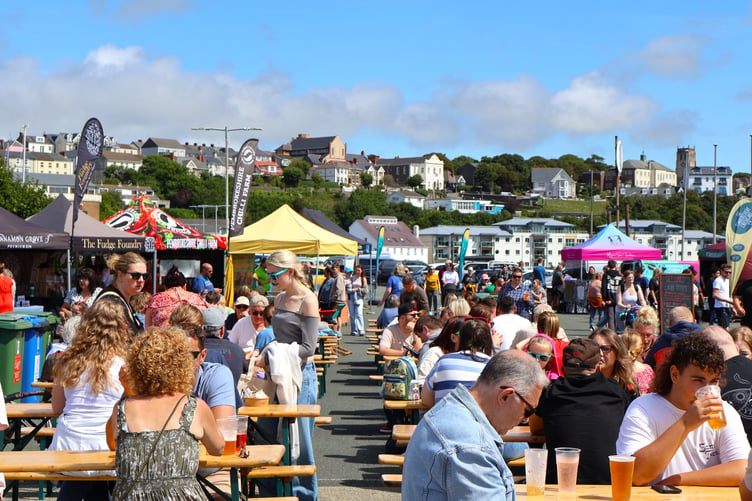
Free family festival will celebrate Milford Haven’s seafaring history and coastal community
MILFORD WATERFRONT will burst into life on Saturday, June 27, as the first Harbour Fest sails into town for a day of music, food, family fun and maritime celebration.
The free event will run from 10:00am to 6:00pm at Mackerel Quay and across the waterfront, bringing together local traders, live entertainment, coastal organisations and independent businesses for a packed day beside the water.
Organisers say the festival will celebrate everything that makes Milford Haven special, from its seafaring history and working harbour to its growing reputation as a destination for food, shopping, culture and family days out.
Visitors will be able to browse stalls from local makers and producers, enjoy street food and live performances, and explore a Marine Zone featuring organisations involved in sea safety, marine conservation and coastal life.
The Marine Zone will include Seagrass Network Cymru / Project Seagrass, Pembrokeshire Coastal Forum, Mid and West Wales Fire and Rescue Service, Dyfed-Powys Police, NCI Wooltack Point, Rudders Marine Training, RNLI Milford Haven and RNLI Angle Lifeboat.
RNLI Angle Lifeboat is expected to be based on the Mackerel Stage, while the Sea Cadets will be giving rope-tying displays at Milford Haven Museum, where craft activities will also be taking place.
Live entertainment will run throughout the day, with performances from Tom & Abz, Will Scott, Ryan Bristow, Milford Haven Town Band, Kyle Kirkhouse and ShantyJacs Sea Shanties.
Businesses across the waterfront are also joining in. All Pets Vet Care will hold a family-friendly open day with a bouncy castle, treasure hunts, quizzes, craft activities and behind-the-scenes tours. Aurora Artisan Crafts will host vocal performances, Biffy’s Bar & Restaurant will feature solo acoustic music from Laurence Lewis, and Martha’s Vineyard will offer seafood street food with live music from Ryan Bristow and Steve Bartram.
At Tŷ Milford Waterfront’s outdoor plaza there will be face painting, children’s activities, pop-up artists and an afternoon DJ set, while Phoenix Bowl and Pirate Pete’s Adventure Play will have inflatables and glitter tattoos outside.
The Waterfront Gallery will host introduction to felt-making workshops with textile artist Carole Fletcher, giving participants the chance to create a woollen felt flower pin brooch or phone/glasses case. The workshops start at 10:30am, 1:00pm and 3:30pm and cost £5 per person.
A wide range of traders will also be attending, including 5th Flock Spirits Co, Cinnamon Grove Distillery, Cwm Deri Wines & Liqueurs, Ferncraft, Get Loaded, J.J. Pottery, Major Nuts, Orange Garden Design, Pembrokeshire Chilli Farm, Pembrokeshire Gold, Pembrokeshire Lottery, Plumstone Welshcakes and SlateArtSJ.
With music drifting across the marina, food stalls lining the waterfront and lifeboats, sea safety teams and coastal groups adding a strong maritime flavour, Harbour Fest is expected to bring a lively summer atmosphere to one of Pembrokeshire’s best-known waterside destinations.

Organisers say the event is suitable for families, friends and visitors of all ages, with plenty to see and do throughout the day.
Photo caption: Harbour Fest will take place at Milford Waterfront on Saturday, June 27 (Pic: Milford Waterfront).

A NEW exhibition exploring memory, belonging and the changing face of rural life is opening in Cardigan.
West Wales artist Sue Dewhurst will present From the Outside Looking In at Oriel Cardi Bach, with the exhibition running from June 27 to July 30.
The collection brings together several new series of work reflecting on the people, places and traditions that shaped Dewhurst’s childhood in the 1970s.
At the heart of the exhibition are the Chapel Girls, a group of paintings focusing on women who might once have filled the chapels that dominated Welsh village life. In Dewhurst’s work, they are now seen finding new forms of belonging through shopping trips, bingo halls, dating apps, bottomless brunches and everyday rituals, while redundant chapels stand silent around them.
The exhibition also includes A Bit of a Do, a series inspired by weddings, family parties and village hall celebrations.
Among the familiar characters are the mysterious woman in her best hat who appears at every gathering, the accountant calculating buffet logistics, the retired nurse dancing barefoot long after everyone else has gone home, and Harry, a grumpy gent with a mysteriously missing fingertip that nobody dares ask about.
Dewhurst’s Ghost Town series will also feature, exploring the changing landscapes of northern mill towns and communities transformed beyond recognition. These works sit alongside expressive coastal paintings inspired by New Quay and the Ceredigion coast.
A further installation of miniature “party paintings” will be presented like treasured relics rescued from a forgotten village hall or working men’s club. Wrapped with handwritten stories and nostalgic memorabilia, the pieces invite visitors to remember people and moments that might otherwise disappear.
Sue said music also plays an important role in the exhibition.
She said: “Music is so evocative for me and can instantly transport me back to a certain point in time.
“I’ve always been fascinated by the lives we don’t usually celebrate – the women who held communities together, the odd characters who turned up at every family occasion, the places that shaped us and the memories that linger long after buildings and traditions have changed.
“This exhibition is really about looking back with affection and humour, while recognising that we are all, in one way or another, trying to find where we belong.”

Originally from Lancashire and now based near Llandysul, Dewhurst has spent more than thirty years working in the arts. She previously ran Oriel Haywire in Llandysul before its closure around eighteen months ago.
From the Outside Looking In opens at Oriel Cardi Bach, Cardigan, on June 27 and runs until July 30.
Visitors are invited to rediscover familiar faces, forgotten stories and the beauty found in ordinary lives.
.



Charity22 hours ago
Toy Story fans fill charity toy box at Haverfordwest cinema
Donations pour in for SNAP Specialist Play as families embrace Toy Story 5 launch A TOY STORY-themed charity appeal at...


Community1 day ago
Lord Rhys emerges from the mist in St Davids
Giant puppet begins historic journey marking 850 years since the first Eisteddfod MIST swirled around St Davids Cathedral on Friday...


News2 days ago
Tragic tribute paid to Haverfordwest man after A4075 collision
FAMILY REMEMBERS “KIND AND LOVING” CALLUM HANSON THE FAMILY of a 22-year-old man from Haverfordwest who died following a road...


News3 days ago
Motorcyclist, 22, dies in A4075 crash in Pembrokeshire
A 22-year-old woman remains in hospital after two-vehicle collision A MOTORCYCLIST has died following a serious two-vehicle crash on the...

Community3 days ago
Why police will be visiting every home in Pembrokeshire
New operation aims to knock on more than 257,000 doors across Dyfed-Powys over the next three years DYFED-POWYS POLICE has...


Crime3 days ago
Prisons at breaking point: MPs warn Wales is paying the price of a failing system
Frozen healthcare budgets, overcrowded jails, homelessness on release and mounting pressure on staff are undermining rehabilitation across Wales, according to...


News4 days ago
Brexit at 10: How Britain was sold a dream that cost us dearly
A decade after the referendum, the promised benefits remain hard to find while the economic costs are increasingly difficult to...


Crime4 days ago
Worcestershire man jailed after violent attack on woman in Tenby
Defendant was already serving a suspended sentence when serious assault took place A WORCESTERSHIRE man has been jailed for more...


Climate4 days ago
Offshore wind ‘could bring new generation of jobs to Milford Haven’
Pembrokeshire ports and Celtic Sea projects placed at centre of Wales’ green energy ambitions MILFORD HAVEN and Pembroke Dock could...

Community5 days ago
Police officer hailed hero after midnight sea rescue in Milford Haven
PC swam 100 metres offshore to save distressed woman heard calling for help in darkness A DYFED-POWYS POLICE officer has...
-

 Community7 days ago
Pembrokeshire Chess Club crowned Welsh champions
-

 Crime3 days ago
Milford Haven man jailed for breaching domestic violence protection order
-

 Local Government5 days ago
Security privately arranged by Mayor at Beating of the Bounds
-

 News3 days ago
Crash on Freeman’s Way causes school-run chaos across Haverfordwest
-

 Crime5 days ago
Man wanted by court after failing to attend hearing over alleged shop thefts
-
 Crime5 days ago
Man banned from roads after drink-driving offence
-

 Crime5 days ago
Man jailed after admitting strangulation and assaults
-

 Crime5 days ago
Man sentenced over stalking campaign and lock knife offence